
冶金

Search documents
元旦假期我市安全生产形势总体平稳
Xin Lang Cai Jing· 2026-01-04 22:09
Group 1 - The emergency management system in the city focused on safety prevention during the New Year holiday, with a total of 178 inspection teams comprising 423 personnel dispatched to check 326 enterprises, resulting in the rectification of 585 safety hazards [1] - The overall safety production situation in the city remained stable during the holiday period [1] - Experts conducted on-site inspections at 6 key hazardous chemical enterprises, identifying 46 safety hazards, all of which received rectification notices and recommendations [1] Group 2 - The city’s emergency command launched enhanced duty shifts, implementing a joint response system involving emergency services, fire departments, police, and medical teams, with daily meetings to issue timely warning information [2] - Increased frequency of online inspections for hazardous chemical enterprises was established to monitor safety operations in real-time [2] - Over 20,000 personnel from 28 city-level professional emergency rescue teams and more than 30 social emergency response teams were organized to ensure timely and effective responses to emergencies [2]
苏州工业园区出台工业企业停工停产复工复产安全生产工作指南
Su Zhou Ri Bao· 2026-01-04 01:57
Core Viewpoint - The Suzhou Industrial Park Emergency Management Bureau has developed a comprehensive safety production guideline for general industrial enterprises, focusing on systematic and standardized procedures for work stoppages and resumption, particularly during major holidays and production adjustments [1][2]. Group 1: General Requirements - The guideline specifies four basic safety production requirements: holding safety production meetings, conducting hazard inspections led by key personnel, enhancing employee safety education, and strictly controlling special operations [2]. - It emphasizes the establishment of an emergency duty system, implementation of a safety officer AB corner mechanism, and improvement of emergency communication, material storage, and accident response processes [2]. Group 2: Key Industry Areas - The guideline addresses seven high-risk areas including metal melting, dust explosion hazards, hazardous chemical usage, lithium battery production, ammonia refrigeration, confined space operations, and "in-plant" management, providing specific hazard inspection standards for each [2]. Group 3: Climate and Holiday Considerations - The guideline outlines differentiated preventive measures based on seasonal and holiday climate characteristics, including strategies for cold weather, thunderstorms, flooding, and fire/explosion risks [2].
中俄农业合作试验示范区将成为俄国际超前发展区试点项目——访俄罗斯远东和北极发展部长切昆科夫
Xin Lang Cai Jing· 2026-01-01 08:29
Core Viewpoint - The establishment of International Advanced Development Zones in Russia's Far East aims to attract foreign investment, particularly from China, by offering significant tax and regulatory incentives [1][2]. Group 1: Investment Opportunities - China is identified as the largest source of investment in Russia's Far East, with the region welcoming international partners to invest under the new International Advanced Development Zone framework [1][3]. - The International Advanced Development Zones will provide a range of benefits, including a 10-year zero income tax rate, lower insurance rates, land and infrastructure usage rights, and the ability to import labor without quotas [1][2]. - Companies must invest at least 500 million rubles to enter these zones, focusing on high value-added products or specific government-approved projects [2]. Group 2: Agricultural Cooperation - The China-Russia Agricultural Cooperation Demonstration Zone in the Primorsky Krai will serve as a pilot project for the International Advanced Development Zone, aiming to create an industrial cluster that includes agricultural processing plants and logistics facilities [2]. - The total investment from China’s Jiahua Beidahuang Agricultural Holdings in agricultural cooperation projects has exceeded 4 billion rubles, encompassing agriculture, processing, and logistics [3]. Group 3: Future Development Plans - Russia plans to unify its incentive systems in the Far East and Arctic regions by 2027, streamlining existing support mechanisms to facilitate investment under a single regulatory framework [3].
以高质量发展全面推进中国式现代化
Xin Lang Cai Jing· 2026-01-01 05:24
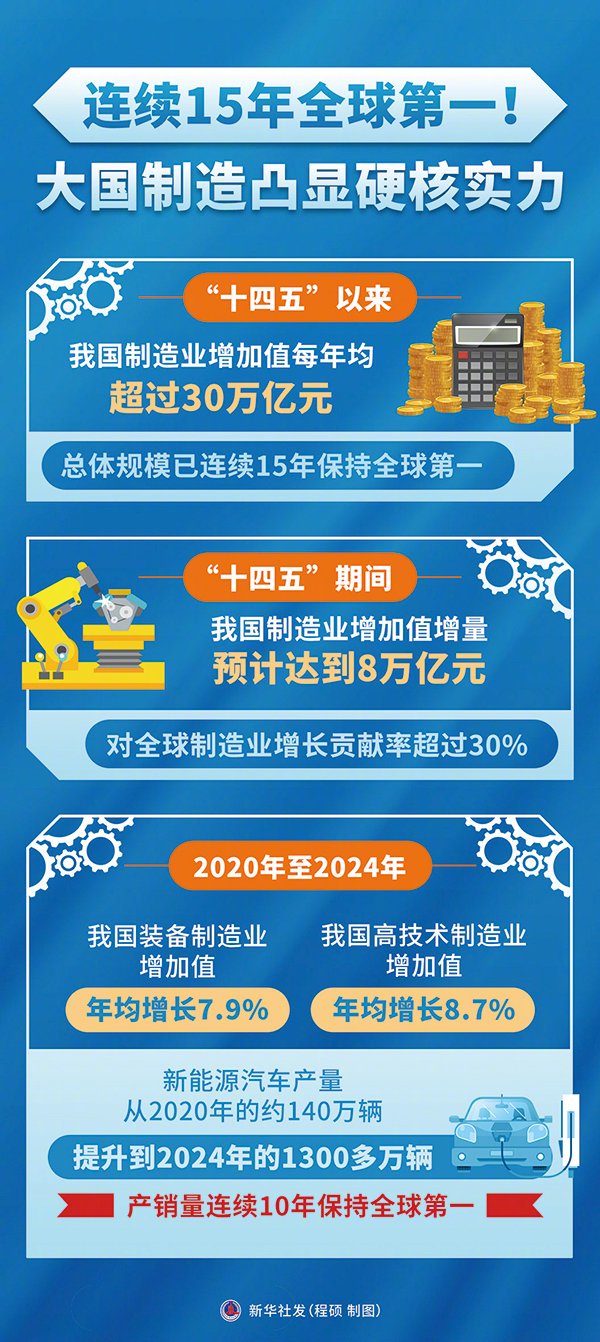
Core Viewpoint - High-quality development is essential for advancing Chinese-style modernization and is a key requirement for the overall construction of socialism in China [1][8]. Group 1: Economic Growth and Development Strategy - The "14th Five-Year Plan" has laid a solid foundation for achieving socialist modernization by 2035, which requires a strategic arrangement over three five-year plans [2]. - The "15th Five-Year Plan" is crucial for solidifying the foundation and fully exerting efforts towards achieving modernization, focusing on resolving deep-seated contradictions that hinder high-quality development [2][3]. - Economic growth must maintain an appropriate speed, with a target of an average annual GDP growth of 4.17% during the "15th" and "16th Five-Year Plans" to achieve a per capita GDP of over $20,000 by 2035 [3][6]. Group 2: Manufacturing and Industrial Development - Manufacturing is a vital foundation for modernization, with China's manufacturing value added exceeding 30 trillion yuan annually, maintaining the world's largest scale for 15 consecutive years [6][9]. - The "15th Five-Year Plan" emphasizes building a modern industrial system, optimizing traditional industries, and fostering emerging industries, particularly in advanced manufacturing and strategic emerging sectors [9][10]. Group 3: Technological Innovation - Accelerating high-level technological self-reliance is crucial for high-quality development, with significant increases in R&D funding and achievements in key technologies [10][12]. - The focus is on original innovation and breakthroughs in critical core technologies, with an emphasis on integrating technology and industry to enhance innovation capabilities [10][12]. Group 4: Domestic Market and Consumption - Expanding domestic demand is a strategic move for economic stability and security, with initiatives to boost consumption and effective investment [12][13]. - The plan includes removing unreasonable restrictions on consumption, optimizing income distribution, and enhancing consumer capacity to stimulate economic growth [12][14]. Group 5: Reform and Opening Up - Comprehensive deepening of reform and opening up is essential for high-quality development, focusing on overcoming institutional barriers and enhancing market vitality [13][14]. - The strategy includes promoting the complementary advantages of various ownership economies and optimizing the layout of state-owned enterprises [13]. Group 6: Improving People's Quality of Life - Enhancing the quality of life is a fundamental aspect of high-quality development, with policies aimed at improving employment, income distribution, and social security systems [14][15]. - The goal is to achieve common prosperity through sustainable economic growth, ensuring that public services in education, healthcare, and housing meet the needs of the population [15].

把握未来五年中国经济蕴藏的新机遇
Jing Ji Ri Bao· 2025-12-30 23:58
Core Viewpoint - The "14th Five-Year Plan" outlines strategic opportunities and challenges for China's economic and social development, emphasizing high-quality growth and a focus on various key sectors [2][3]. Economic Opportunities - The plan identifies numerous new opportunities, including the development of a modern industrial system and the strengthening of the real economy, with specific mentions of sectors such as mining, metallurgy, chemicals, and advanced technologies [3]. - The goal is to achieve significant results in high-quality development, with economic growth maintained within a reasonable range and an increase in domestic consumption driving economic growth [2][3]. Economic Challenges - Challenges include unbalanced development, insufficient effective demand, and pressures on employment and income growth, which need to be addressed to convert challenges into opportunities [4]. - The plan sets a target for per capita GDP to reach the level of moderately developed countries by 2035, requiring an average annual GDP growth of approximately 4.17% from 2025 to 2035 [4]. Consumer Income and Spending - The plan aims to increase residents' income through various channels, including wage, operational, property, and transfer income, with a focus on enhancing the share of labor remuneration in national income distribution [7][11]. - There is an emphasis on improving the structure of income distribution to promote a more reasonable allocation of income among residents [7]. Investment and Consumption - The plan suggests that increasing government spending on social welfare and implementing direct consumer support policies will enhance residents' consumption capacity [8][11]. - The importance of stabilizing the stock market to increase residents' property income and subsequently boost consumption is highlighted [14]. Capital Market Development - The stability of the capital market is crucial for enhancing investor confidence and ensuring sustainable income growth, which in turn affects consumer behavior [14][15]. - Encouraging long-term funding sources for technological innovation is essential for fostering a robust capital market and supporting economic growth [15][18]. Technological Innovation and Global Competitiveness - The plan emphasizes the need for China to cultivate high-quality listed companies with international competitiveness, particularly in the technology sector, to participate in global competition [18]. - The focus is on creating a favorable investment environment for companies to grow and attract long-term capital into the market [18].
“334”答卷绘就张家港产改新图景
Xin Hua Ri Bao· 2025-12-30 21:49
Core Insights - Zhangjiagang City has implemented the "334" work mechanism to ensure that the benefits of industrial reform reach workers, thereby injecting strong momentum into high-quality development [1] Group 1: Reform Initiatives - The city has included 15 units in its "reform circle" to achieve coordinated efforts in macro guidance, policy coordination, and organizational promotion, creating a comprehensive approach to reform [2] - Focused on 100 pilot enterprises and those with over 100 members, the city has developed a plan to cover key work and quality services in pilot enterprises within 2-3 years, effectively activating the internal motivation for comprehensive industrial reform [2] Group 2: Support Systems - Zhangjiagang has established a robust support system for industrial reform, including the first national scientific evaluation system for enterprise skill development and the launch of a specialized financial product for skilled workers [3] - The city has created platforms for industry-education integration, such as the "Shazhou Craftsman Academy," and has set up 117 union service stations and 18 psychological service centers to make services accessible [3] Group 3: Quality and Efficiency Enhancement - The city has initiated the "Three Have Reasonable Sound" brand to strengthen ideological guidance and has established 50 "Worker Excellence Classrooms" to provide training for workers [4] - The collective bargaining rate for independently established enterprises remains at 95%, and various community activities have been implemented to enhance workers' well-being [4] - A competition system for vocational skills has been developed, with 61 competitions planned by 2025, engaging 25,000 workers [4]
从“强省会”到“昆明率先”,云南对昆明有哪些期待?
Di Yi Cai Jing· 2025-12-30 15:43
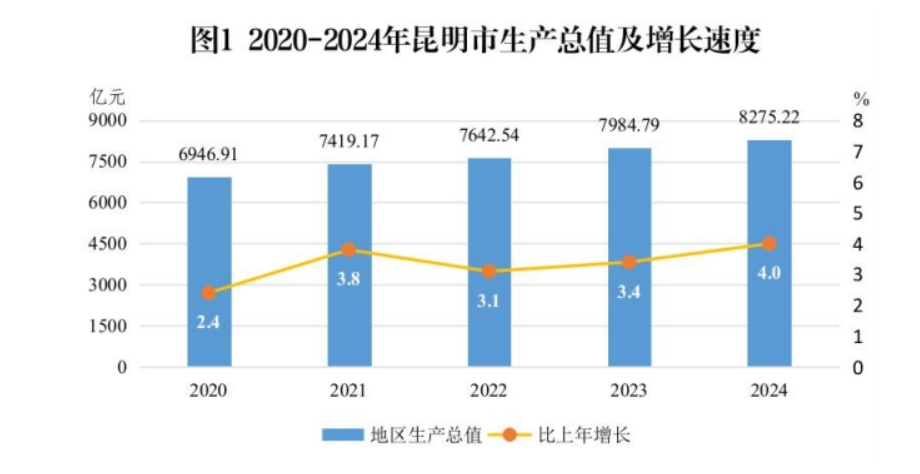
Core Viewpoint - Yunnan province has outlined a strategic plan for regional development over the next five years, emphasizing the importance of Kunming as a leading city to drive the economic growth of the central Yunnan region [2][8]. Group 1: Strategic Development Plans - The "15th Five-Year Plan" for Yunnan aims to create a coordinated development pattern with Kunming at the forefront, promoting regional collaboration and economic corridors [2]. - By 2025, Kunming's GDP is expected to account for over 30% of the province's total economic output, with strategic emerging industries contributing over 17% [2]. - The "Strong Provincial Capital" initiative has been implemented to support Kunming's development through various policies and funding mechanisms [2][3]. Group 2: Economic Performance and Contributions - Kunming's contribution to Yunnan's economic growth increased from 13.3% in 2020 to 31.9% in 2024, showcasing its role as a "locomotive" for the province [3]. - In 2024, Kunming's GDP is projected to be 827.52 billion, while the province's total GDP is expected to reach 3,153.41 billion, indicating a slight decrease in Kunming's share of the provincial GDP from 26.61% in 2021 to 26.24% in 2024 [4]. - Despite challenges from the pandemic and real estate sector, Kunming's industrial development has shown promise, with significant contributions from emerging industries [7]. Group 3: Future Outlook - The absence of the "Strong Provincial Capital" terminology in the new plan suggests a continued focus on elevating Kunming's economic status and city prominence [8]. - Analysts believe that the ongoing "Strong Provincial Capital" actions will persist, aiming for Kunming's economic metrics to align with provincial goals [8].
云南“十五五”规划建议:做强做优做大资源型产业
Xin Hua Cai Jing· 2025-12-29 05:20
Core Viewpoint - The Yunnan Provincial Party Committee has released recommendations for the 15th Five-Year Plan, emphasizing the strengthening and expansion of resource-based industries through technological advancements and deep processing [1] Group 1: Resource-Based Industries - The plan aims to enhance the position of aluminum, silicon, phosphorus, non-ferrous, and rare metals in the national industrial chain and supply chain [1] - There is a focus on promoting green aluminum towards deep processing and terminal manufacturing, with the goal of establishing a "Green Aluminum Valley" [1] - The initiative includes upgrading the silicon photovoltaic industry and creating major production bases for leading enterprises [1] Group 2: Phosphorus and Non-Ferrous Metals - The development of fine phosphorus chemicals is prioritized, aiming to couple phosphorus resources with new energy battery materials and create a national advanced manufacturing cluster for green phosphorus chemicals [1] - The plan emphasizes the deep processing of non-ferrous metals and the extension of rare metals from materials to devices and equipment, with a focus on building a national advanced manufacturing cluster for rare metals in central Yunnan [1] Group 3: Mineral Resource Exploration and Utilization - A new round of strategic actions for mineral exploration is proposed to promote the exploration, development, and increase of important mineral resources [1] - The plan aims to improve the comprehensive utilization of mineral resources and strengthen the coordinated development of strategic and advantageous minerals [1] - There is an emphasis on the comprehensive utilization of recycled resources such as aluminum, copper, and platinum group metals [1] - The initiative includes the transformation and upgrading of industries such as mining, metallurgy, chemicals, building materials, and light industry [1]
高盛:2027年底中国股市还有38%上涨空间
21世纪经济报道· 2025-12-24 14:23
记者丨崔文静 实习生张长荣 编辑| 巫燕玲 政策锚定方向: "十五五"下的科技与新质生产力主线 2025年,中国股市延续修复行情。高盛数据显示,A股和H股年内分别实现约16%和29%的回 报,自2022年底各自周期低点以来,累计反弹幅度已扩大至30%和75%。 高盛在最新报告中预测,到2027年底中国股市仍有38%的上涨空间。这一判断主要基于三方 面因素:一是企业盈利逐步修复,预计2026年和2027年盈利增速分别为14%和12%;二是估 值存在约10%的温和修复潜力;三是市场回报的驱动正从此前的估值修复转向盈利兑现与温 和的市盈率扩张。 资金层面,此前股票资产配置偏低的国内资金正在加速入场。据高盛数据,今年以来南向资 金持续流入,年化规模已达1800亿美元,远超2024年的1040亿美元,创下历史纪录。同时, 在超额储蓄与温和杠杆的支撑下,个人投资者也在增加股票配置。 外资情绪亦出现回暖迹象。全球对冲基金已逐步提高对中国市场的风险敞口,其净敞口从年 初的6.8%上升至11月底的7.8%。与此同时,新兴市场及亚洲区域共同基金对中国市场的低配 幅度也在小幅收窄。 高盛表示,中国市场具备可投资性。报告指出,全球经 ...

江苏神通:接受信达证券等投资者调研
Mei Ri Jing Ji Xin Wen· 2025-12-24 08:51
Company Overview - Jiangsu Shentong (SZ 002438) announced an investor meeting on December 23, 2025, with participation from Vice President and Board Secretary Zhang Qiang and Investor Relations Manager Zhang Jian [1] - As of the report, Jiangsu Shentong has a market capitalization of 7.9 billion yuan [1] Revenue Composition - For the first half of 2025, Jiangsu Shentong's revenue breakdown is as follows: - Nuclear power industry: 38.37% - Energy conservation and environmental protection industry: 18.78% - Metallurgy industry: 18.45% - Energy equipment industry: 17.05% - Other businesses: 7.35% [1]

