汽车芯片

Search documents
揭秘涨停丨龙虎榜资金抢筹7股
Zheng Quan Shi Bao Wang· 2025-08-20 11:02
Group 1: Market Activity - A total of 32 stocks had a closing order amount exceeding 1 billion yuan, with notable mentions including Inspur Information, Sanan Optoelectronics, and Kosen Technology, which had closing order amounts of 10.55 billion yuan, 5.5 billion yuan, and 3.59 billion yuan respectively [2][3] - The stock Ji Min Health achieved a five-day consecutive limit up, with a cumulative increase of over 70% in August [2] - The stock market saw significant net purchases, with seven stocks exceeding 1 billion yuan in net buying, including Inspur Information and Chongda Technology [8] Group 2: Industry Insights - Inspur Information is recognized as a global leader in IT infrastructure products and services, expected to benefit from global, digital, and intelligent industry developments [3] - The AI computing power investment is anticipated to remain robust, enhancing the valuation potential of leading companies in the server sector [3] - The white wine sector saw stocks like Jiu Gui Jiu and *ST Yan Shi reaching their limit up, with Jiu Gui Jiu projecting a revenue of 560 million yuan for the first half of 2025, a decrease of 43% year-on-year [4] - In the non-ferrous metals sector, stocks such as Yunnan Zhi Ye and Dongfang Zirconium are highlighted for their applications in various industries, including solar energy and ceramics [5][6] - The automotive chip market is represented by companies like Southern Precision and Sanan Optoelectronics, which are expanding their product offerings in consumer electronics and automotive applications [7]

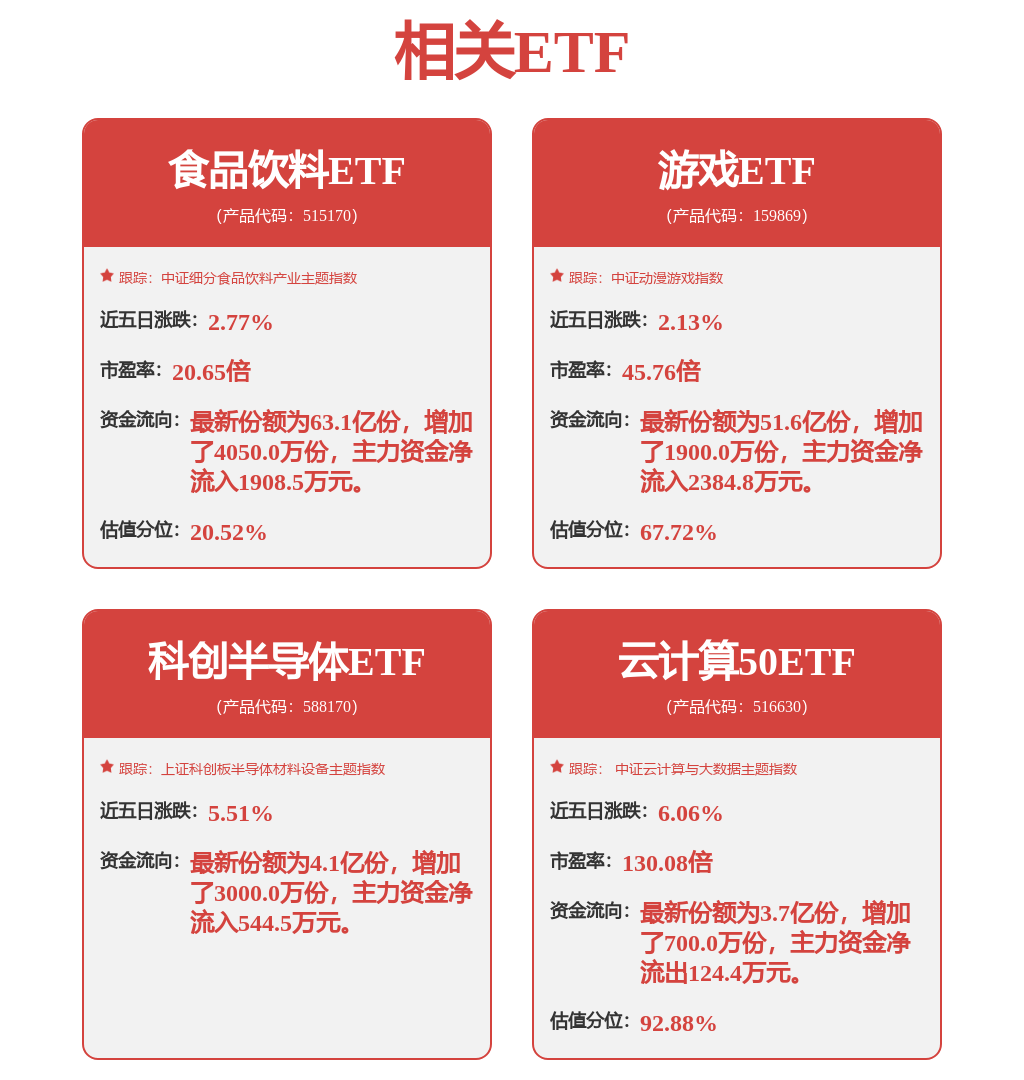
日媒:中国车企正加速换“芯”,以替代英伟达等产品
Guan Cha Zhe Wang· 2025-08-08 02:17
Group 1 - Chinese automotive manufacturers and chip companies are accelerating the replacement of foreign chip products, particularly from Nvidia [1] - Domestic chip developers such as Horizon Robotics, Huawei HiSilicon, and others are gaining traction among local automotive manufacturers [1][3] - The revenue from automotive and industrial application chips for domestic foundries has increased from less than 3% in 2020 to 10% currently [1] Group 2 - Chinese automakers, including Xpeng and NIO, are investing in self-developed chips, with projections indicating that by 2025, Chinese brands could account for 15%-20% of the total automotive chip supply [3] - The U.S. government has imposed restrictions on the export of advanced chips to China, impacting the options available for Chinese chip developers [4] - Nvidia faces ongoing regulatory challenges and scrutiny from the Chinese government, despite resuming supply of its H20 chip to China [6] Group 3 - China is expected to increase its self-sufficiency in microcontroller (MCU) chips from 19% in 2024 to 67% by 2030, with significant growth in domestic production of silicon carbide power switch chips [8] - The market for automotive digitalization is rapidly expanding, providing opportunities for new entrants in the chip sector [8] - There are challenges in producing advanced technologies like smart cockpit and autonomous driving chips due to manufacturing capacity limitations [8]

沪指年内新高!
第一财经· 2025-08-07 10:47
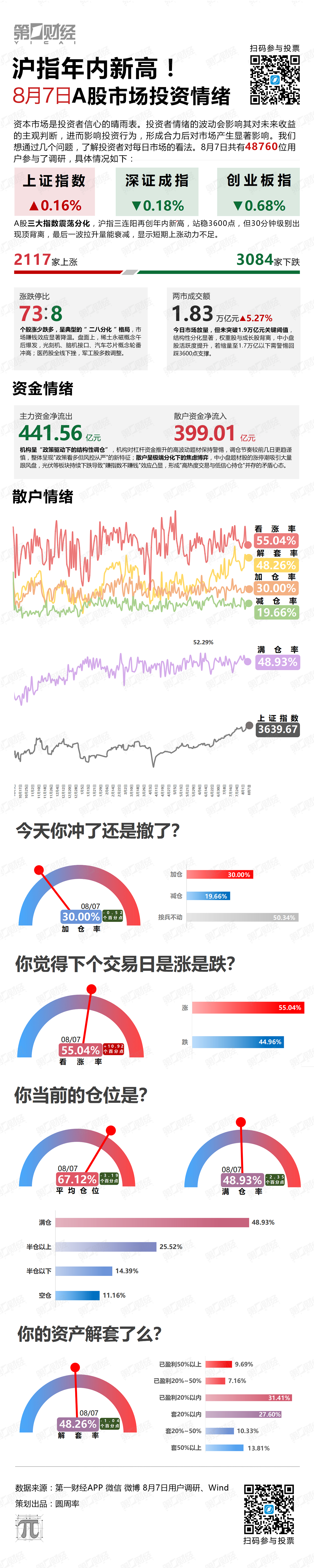
Market Overview - The market showed a significant structural differentiation with 2117 stocks rising, indicating a typical "80/20" distribution where fewer stocks are driving gains [6][7] - The trading volume reached 1.83 trillion yuan, an increase of 5.27%, but did not surpass the critical threshold of 1.9 trillion yuan, suggesting caution as a drop below 1.7 trillion yuan may test the 3600-point support level [8] Sector Performance - The rare earth permanent magnet sector experienced a surge in the afternoon, while sectors such as pharmaceuticals faced widespread declines and military stocks mostly adjusted [7] - There was a notable divergence between heavyweight stocks and growth stocks, with small and mid-cap stocks becoming more active [8] Fund Flows - There was a net outflow of funds from institutional investors, while retail investors showed a net inflow, reflecting a contrasting sentiment in the market [9] - Institutions are adopting a "policy-driven structural adjustment" approach, remaining cautious about high-volatility themes driven by leveraged funds, indicating a more prudent adjustment pace compared to previous days [10] Investor Sentiment - Retail investors are exhibiting extreme anxiety in a differentiated market, with a wave of small-cap stocks hitting the limit up, attracting significant follow-up buying, while sectors like photovoltaics continue to decline, leading to a "making money on the index but not on stocks" effect [10]

汽车芯片正在经历怎样的巨变?
半导体芯闻· 2025-08-07 10:33
Core Viewpoint - The automotive industry is undergoing a fundamental transformation, focusing on software-defined vehicles and the integration of artificial intelligence across various design and usage scenarios [2][3][15]. Group 1: Transition to Software-Defined Vehicles - The shift to software-defined vehicles is central to the automotive ecosystem, allowing for faster product launches and updates, ensuring compliance with new protocols and standards [2]. - Traditional hardware-defined methods are less flexible and more costly, putting conventional automakers at a competitive disadvantage [2]. - The adoption of continuous integration/continuous deployment (CI/CD) and DevOps practices is crucial for integrating complex systems within a virtual platform [3]. Group 2: Challenges and Innovations - Automakers face challenges related to in-vehicle cybersecurity, supply chain security, and compliance with market access regulations as they accelerate the transition to software-defined vehicles [3][4]. - The pursuit of higher levels of automation and digitalization of the cockpit is essential for enhancing user experience [3]. - The industry is moving towards centralized system management in electric vehicles, including efficient battery management systems [3]. Group 3: AI Integration - AI is expected to play a significant role in vehicle design and operation, with a focus on predicting AI performance and enhancing automated driving systems [6][9]. - The complexity of AI systems in vehicles necessitates high efficiency, especially for Level 5 autonomous vehicles, which may have over 40 sensors and billions of lines of code [6][9]. - AI is becoming a differentiating factor for automakers, with applications in user experience and safety features, such as driver monitoring systems [10]. Group 4: Market Dynamics and Supply Chain - The automotive industry is witnessing a shift towards tighter relationships between automakers and suppliers, with a trend towards vertical integration [16]. - Smaller SoC and AI accelerator companies are gaining opportunities as automakers seek to control their ecosystems more tightly [16]. - The industry is moving back towards a model where automakers dominate their ecosystems, reminiscent of the early days of vertical integration [16].

沪指年内新高!
Di Yi Cai Jing· 2025-08-07 09:07
Group 1 - The A-share market shows a mixed performance with the Shanghai Composite Index reaching a new high for the year, stabilizing above 3600 points, but indicating a lack of short-term upward momentum due to declining trading volume [1][3] - A total of 2117 stocks rose, reflecting a typical "80/20" market structure where fewer stocks are driving gains, leading to a significant decrease in the market's profitability effect [2] - The trading volume increased but did not surpass 1.9 trillion yuan, indicating structural divergence between heavyweight stocks and growth stocks, with a warning that if the volume drops below 1.7 trillion yuan, it may test the 3600-point support [3] Group 2 - There was a net outflow of 56 billion yuan from major funds, while retail investors experienced a net inflow of 299 million yuan, suggesting a cautious approach from institutional investors amid high volatility in speculative themes [5][6][7] - The sentiment among retail investors is characterized by extreme anxiety and speculative trading, with a notable divergence in performance between high-heat trading and low-confidence holdings [7] - The average position of investors is reported at 48.93%, with 30% increasing their positions and 19.66% reducing them, indicating a mixed sentiment towards market movements [12][19]
智能驾驶受追捧 汽车芯片股挖金
Zhong Guo Qi Che Bao Wang· 2025-07-31 02:18
Core Insights - The automotive chip sector is experiencing unprecedented attention and demand due to the rise of smart driving technologies, which are heavily reliant on high-performance chips [1][2][5]. Industry Overview - Smart driving is categorized into levels from L0 (no automation) to L5 (full automation), with increasing levels of automation leading to exponential growth in chip dependency [2]. - The demand for automotive chips is surging as L2 and above autonomous driving technologies become commercialized, necessitating real-time data processing from various sensors [2][5]. - The automotive chip industry is characterized as technology-intensive, with innovation being a core driver for development [7]. Company Highlights - BYD stands out in the automotive chip market due to its dual role as a vehicle manufacturer and chip designer, allowing for efficient integration and iteration of chip technology [3]. - East China Semiconductor (东芯股份) is recognized for its high-performance storage chips, which are increasingly essential in automotive electronics, leading to a steady rise in its stock price [3][4]. - Fudan Microelectronics (复旦微电) has a strong presence in the FPGA chip market, which plays a crucial role in the decision-making and control layers of smart driving, resulting in increased market recognition and stock performance [4]. - GigaDevice (兆易创新) has shown robust growth in both NOR Flash and MCU sectors, with its products being integral to automotive electronic systems, contributing to strong stock performance [4]. Market Dynamics - Government policies worldwide are increasingly supportive of smart driving and new energy vehicles, creating a favorable environment for the automotive chip industry [8]. - The rapid pace of technological updates in the automotive chip sector necessitates continuous R&D investment to maintain competitive advantages [8]. - The automotive chip supply chain is complex, and disruptions in any segment can significantly impact companies, highlighting the need for robust supply chain management [8].

汽车芯片,痛苦挣扎!
半导体行业观察· 2025-07-26 01:17
Core Viewpoint - The automotive chip market is facing significant challenges, with expectations for recovery in 2025 being overly optimistic. The industry is burdened by high inventory levels and a slow adjustment process following the pandemic-induced supply-demand imbalance [2][17]. Group 1: Texas Instruments - Texas Instruments (TI) has taken a notably pessimistic stance, indicating that the automotive chip market has not yet recovered. While other sectors show signs of recovery, the automotive sector remains stagnant [4][5]. - TI's second-quarter performance may have been artificially boosted by customers placing orders to avoid potential tariffs, suggesting underlying demand weakness [4][5]. - The company maintains a stable capital expenditure outlook for 2025 at approximately $5 billion, but has provided a wide range for 2026, indicating uncertainty about future prospects [5]. Group 2: NXP Semiconductors - NXP's CEO expresses cautious optimism, suggesting that the two-year inventory surplus in the automotive chip sector may finally end this year, with many customers' inventory levels returning to normal [6][7]. - NXP's second-quarter revenue was $2.93 billion, a 6% year-over-year decline, but still exceeded expectations, indicating potential growth in the automotive sector [7][8]. - Despite optimism, NXP's third-quarter revenue forecast suggests a slight decline compared to the previous year, reflecting the ongoing uncertainties in the market [8]. Group 3: STMicroelectronics - STMicroelectronics is experiencing severe challenges, reporting an adjusted operating loss of $133 million in the second quarter, significantly below analyst expectations [10][11]. - The company's revenue fell 14% to $2.77 billion, primarily due to a decline in automotive chip sales, highlighting its over-reliance on the automotive sector [11][12]. - The company is under pressure from shareholders, particularly the Italian and French governments, due to its poor performance, which raises governance concerns [12]. Group 4: Global Market Dynamics - The automotive chip industry's challenges are not uniform globally, with Europe facing weak electric vehicle demand and the U.S. experiencing a surge in EV sales driven by policy changes [14][15]. - In China, intense price competition is affecting order volumes and profit margins, despite ongoing orders from customers [14][15]. - The impact of tariff policies is creating uncertainty in customer orders, with some manufacturers stockpiling chips, potentially leading to further demand declines [15]. Group 5: Future Outlook - The current downturn in the automotive chip industry is seen as a significant turning point, with companies needing to adapt to new market conditions and innovate to maintain competitiveness [17][18]. - The recovery, when it occurs, is expected to reshape the industry landscape, favoring companies that can innovate and manage costs effectively [17][18].


小鹏图灵AI芯片获国际权威车规级认证
news flash· 2025-07-23 12:59
Core Insights - Xiaopeng has developed its own Turing AI chip, which has passed the most stringent international automotive-grade certification systems [1] Group 1: Certification Achievements - The chip has received ASIL-B functional safety certification [1] - It has undergone AEC-Q100 reliability testing [1] - Functional safety complies with ISO26262 ASIL-D highest standard [1] - The production process meets IATF16949 automotive quality system standards [1]
本土自给率仍不足10%? 车企加码芯片自研
Zhong Guo Jing Ying Bao· 2025-07-18 20:48
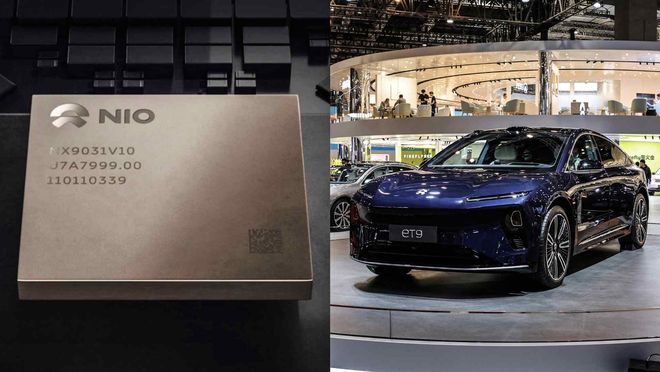
Core Insights - The automotive chip market, previously heavily reliant on imports, is undergoing significant changes as companies like NIO develop their own chips, such as the "Shenji NX9031" [3][5] - The Chinese automotive industry is aiming to increase its domestic chip supply rate from under 10% to 30%-35%, driven by the need for self-sufficiency highlighted during the global chip shortage [4][5] - Companies are investing heavily in R&D for automotive chips, with NIO and other manufacturers pursuing self-developed solutions to enhance performance and reduce costs [7][10] Industry Trends - The automotive chip market is expected to grow rapidly, with the market size projected to expand from 37.1 billion yuan in 2024 to 85.8 billion yuan by 2029 [6] - The reliance on foreign chips remains high, with over 90% of automotive chips in China imported, and 99% for computing and control chips [4] - The shift towards domestic chip production is seen as a critical opportunity for local manufacturers, especially in high-end chips [5][6] Company Developments - NIO's self-developed chip "Shenji NX9031" is reported to outperform four NVIDIA Orin-X chips, significantly enhancing vehicle safety and user experience [7][10] - Naxin Microelectronics, a leading domestic analog chip manufacturer, has achieved a compound annual growth rate of 36.4% in automotive electronics revenue from 2022 to 2024 [5][6] - Traditional automakers like Geely and Dongfeng are focusing on partnerships and investments in chip companies to bolster their technological capabilities [8][9] Challenges and Opportunities - The automotive chip development process is lengthy and costly, often taking 2-4 years for certification, which poses challenges for companies like Intel, leading to a strategic retreat from the automotive sector [10][11] - The need for high reliability and safety standards in automotive chips complicates the development process, requiring extensive testing and validation [11] - Despite challenges, the push for self-sufficiency in chip production presents a significant opportunity for growth in the domestic semiconductor industry [4][5]


高通Nakul Duggal:以“骁龙数字底盘”驱动汽车行业创新,携手中国生态共塑出行未来
Huan Qiu Wang Zi Xun· 2025-06-30 07:12
Core Insights - Qualcomm celebrates its 20 years in the automotive business and aims to leverage its "Snapdragon Digital Chassis" to drive industry transformation [3][5] - The company has established close collaborations with nearly all global automakers and numerous Chinese enterprises, witnessing explosive growth in the number of automotive manufacturers in China [3][5] Group 1: Automotive Business Development - Qualcomm has become the leading ecosystem supplier in the connected vehicle and infotainment systems sector, extending its leadership into cockpit and Advanced Driver Assistance Systems (ADAS) [3][5] - The company emphasizes the importance of ecosystem collaboration, partnering with major Chinese automotive manufacturers such as BAIC Group, Changan, and NIO [3][5] Group 2: ADAS and Safety - Qualcomm has focused on ADAS over the past two years, enhancing its competitiveness through superior chip performance, localized software support, and a comprehensive safety architecture [5][6] - The company has partnered with BMW to provide computer vision software and driving strategy stacks for the new generation of BMW models, set to launch in July 2025 [5][6] Group 3: Modular Architecture - Qualcomm is transitioning the automotive industry towards a centralized computing architecture, creating a highly complex, scalable, and modular framework that supports digital cockpit and ADAS functionalities [6][7] - The architecture's scalability allows for a range of vehicle models from entry-level to luxury, addressing market cost sensitivity [7] Group 4: Innovation and Market Impact - At the 2025 Shanghai Auto Show, over 100 vehicle designs or solutions based on Qualcomm's platform were showcased, highlighting the rapid implementation of its technology in China [9] - Qualcomm's strategy focuses on technological innovation and ecosystem collaboration, driving the automotive industry towards a smarter and safer future [9]