
石化

Search documents
山东加快推动钢铁等重点产业绿色低碳转型
Da Zhong Ri Bao· 2026-02-12 01:02
Core Viewpoint - The green and low-carbon development is essential for traditional industries like steel to achieve high-quality growth, and it is a key component in Shandong's initiative to become a leading area for green, low-carbon, and high-quality development [1] Group 1: Green Transformation Initiatives - Shandong has been actively promoting the third round of the "Four Reductions and Four Increases" action plan, focusing on key areas such as industry and energy to systematically advance green and low-carbon transformation [1] - The province has made significant progress in optimizing the steel industry layout by establishing a comprehensive ecological environment zoning control system, encouraging the concentration of petrochemical and steel industries along the coast [1] Group 2: Industry Capacity and Development - As of now, over 53% of Shandong's crude steel production capacity is located along the coast, with advanced capacity in key industries exceeding 40% [1] - The State Council has issued the "Solid Waste Comprehensive Management Action Plan," prompting Shandong to accelerate the formulation of detailed implementation plans and to prepare the "14th Five-Year" plan for solid waste pollution prevention and control [1] Group 3: Solid Waste Management - Shandong aims to enhance technological research and development to promote the green transformation of industries such as chemical and metal smelting, focusing on the recycling and utilization of large quantities of industrial solid waste like red mud and fly ash [1]
上海市实施先进制造业转型升级三年行动方案
Ke Ji Ri Bao· 2026-02-12 00:55
Core Viewpoint - The "Three-Year Action Plan for Supporting the Transformation and Upgrading of Advanced Manufacturing Industry in Shanghai (2026-2028)" aims to accelerate the establishment of a modern industrial system centered on advanced manufacturing, promoting green and digital transformation across enterprises of all sizes [1][2]. Group 1: Action Plan Overview - The action plan includes four major actions and 17 measures to enhance the development of advanced manufacturing in Shanghai [1]. - By 2028, Shanghai aims to add 100 manufacturing enterprises with an annual output value exceeding 1 billion yuan and increase the number of industrial enterprises above designated size by 500 [1]. Group 2: Development Paths - The plan outlines three development paths: - For traditional advantageous industries, it emphasizes "optimization and enhancement" [1]. - For leading industries, it promotes "strategic guidance" [1]. - For key and emerging industries, it focuses on "expansion and development" [1]. Group 3: Innovation and Support Measures - The action plan supports enterprises in high-level R&D and high-value product transformation, addressing industry pain points and overcoming key core technologies [2]. - Financial support includes one-time subsidies for R&D investments, with amounts varying based on the level of investment [2]. Group 4: Financial Incentives - Companies investing in technology transformation projects can receive interest subsidies on loans or equipment financing leases, with a maximum subsidy of 20 million yuan [3]. - Additional rewards are available for energy-saving upgrades and for companies recognized as national green factories [3].
双碳-政策专家电话会
2026-02-11 15:40
Summary of Key Points from the Conference Call on Carbon Neutrality Policies Industry Overview - The conference focused on China's carbon neutrality policies, particularly the chemical and petrochemical industries, and their implications during the 14th Five-Year Plan (2021-2025) period [1][2]. Core Points and Arguments 1. **Carbon Peak and Neutrality Goals**: China aims to peak carbon emissions around 2028 and achieve a 7%-10% reduction in emissions by 2035 after reaching the peak. The long-term goal is carbon neutrality by 2060 [2][10]. 2. **Strict Control Measures**: The chemical and petrochemical industries will face stringent controls, including local carbon budget assessments, inclusion in carbon markets, and enhanced carbon management practices [1][2]. 3. **New Mechanisms for Energy Consumption Control**: A dual control mechanism for energy consumption will be implemented, focusing on total volume control rather than just intensity, with strict evaluations at the local government level [6][5]. 4. **Expansion of Carbon Market**: By 2027, eight high-energy-consuming industries will be included in the national carbon market, with a combination of free and paid quota distribution methods to enhance emission reductions [1][9]. 5. **Challenges from Climate Change**: The chemical industry faces challenges from climate change and extreme weather, necessitating a shift from coal to renewable resources and the adoption of technologies like Carbon Capture, Utilization, and Storage (CCUS) [1][10]. 6. **Carbon Market Development**: The national carbon market has been steadily advancing since its establishment in 2021, with plans to tighten quota issuance requirements starting in 2027 [1][11]. 7. **Support for Enterprises**: The government will provide multi-dimensional support for enterprises to reduce emissions, including financial subsidies, green loans, and trading profits from carbon credits [25][26][27]. Additional Important Content 1. **New Project Approval**: New capacity additions require approval from the National Development and Reform Commission (NDRC), ensuring that total emissions do not exceed provincial limits [3][14]. 2. **Carbon Footprint Accounting**: A carbon footprint accounting system will be established for products to comply with international standards, such as the Carbon Border Adjustment Mechanism (CBAM) [5][10]. 3. **Monitoring and Data Collection**: Real-time monitoring of carbon emissions data is being improved, with expectations for more accurate data collection by 2027 [23][29]. 4. **Market Mechanisms for Emission Reduction**: The government will implement market mechanisms to encourage emission reductions, including voluntary reduction projects and the ability for non-regulated enterprises to participate in the carbon market [8][9]. 5. **Long-term Industry Transition**: The chemical industry, heavily reliant on coal, is expected to gradually reduce its coal usage from over 56% to lower levels, with a focus on sustainable development through carbon cost integration [19][20]. This summary encapsulates the critical insights and implications of the conference call regarding China's carbon neutrality policies and their impact on the chemical and petrochemical industries.
PPI上行验证,继续重视涨价链
Ge Long Hui· 2026-02-11 14:09
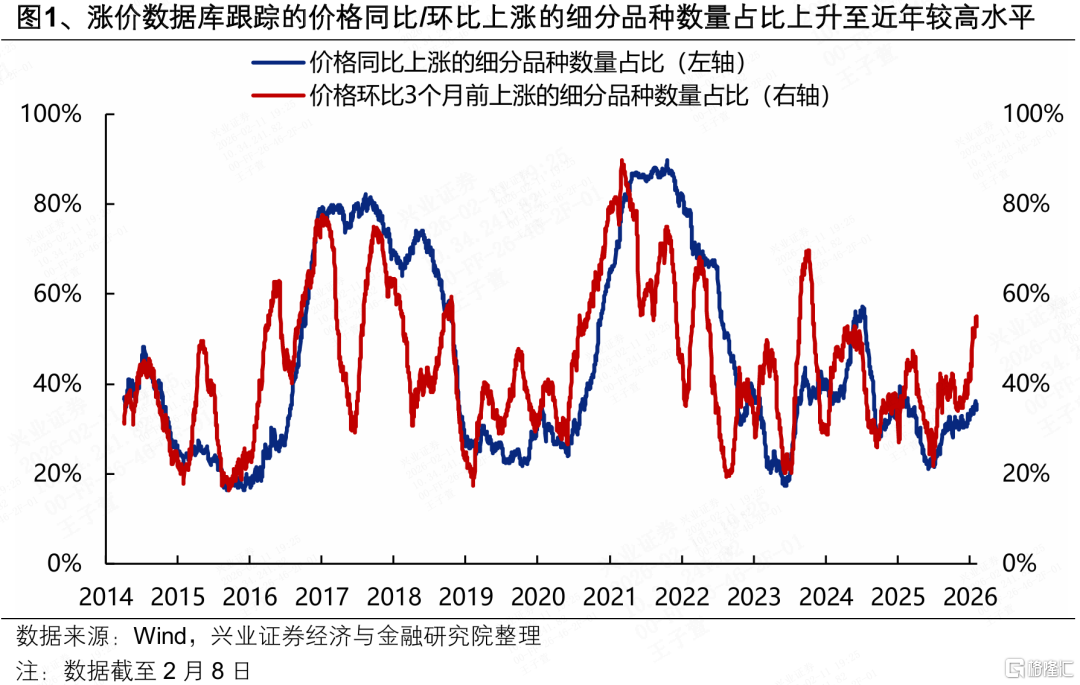
Core Viewpoint - The recovery of prices is identified as the most critical logic supporting corporate profit improvement in 2026, which may also influence market styles [1]. Price Trends and Data Analysis - The first inflation data of the year validates the momentum of price improvement, with the Producer Price Index (PPI) reaching a year-on-year high not seen since August 2024 and a month-on-month high since October 2023 [1]. - The proportion of price-increasing subcategories in the comprehensive price database has risen to a relatively high level, indicating a strong correlation with the month-on-month PPI trends [1]. - Recent price increases are characterized by a broader range and richer clues, driven by international commodity price transmission, favorable policies, and trends in the technology industry [4]. Sector-Specific Insights - The sectors with significant month-on-month PPI increases in January include non-ferrous metals, non-metallic mineral products (such as building materials), black metals, technology manufacturing, chemical fibers, and agricultural processing [4]. - The price increases in these sectors correspond with the high-frequency tracked price subcategories, indicating a robust link between input inflation and domestic price recovery [4]. Price Increase Clues - The proportion of subcategories with price increases over the past three months is at its second-highest level since 2016, only surpassed by the supply-side reform period in 2017 and the significant inflation period in 2021 [4]. - A detailed table shows various subcategories with significant price increases in January, such as oxygen pressure (62.5%), lithium concentrate (52.3%), and DRAM index (35.7%), indicating strong upward price trends across multiple sectors [6][7]. Future Outlook - The post-holiday period is seen as a critical window for validating price increases, with expectations for further price clues to emerge as the spring construction season begins and policies are implemented after the March meetings [9]. - Historical data suggests that the first quarter is typically a key period for PPI acceleration during inflation cycles, indicating a potential for sustained price increases [9]. Sector Performance Expectations - The relative performance of sectors such as TMT (Technology, Media, and Telecommunications), advanced manufacturing, and resource & infrastructure chains is expected to be strong post-Spring Festival, with higher win rates anticipated [10]. - A statistical analysis shows that industries with a positive correlation to PPI include chemicals, steel, building materials, transportation, petrochemicals, non-ferrous metals, and coal, among others [14].

博拉炭黑签约,欧洲最大裂解工厂投产!
Xin Lang Cai Jing· 2026-02-11 10:16
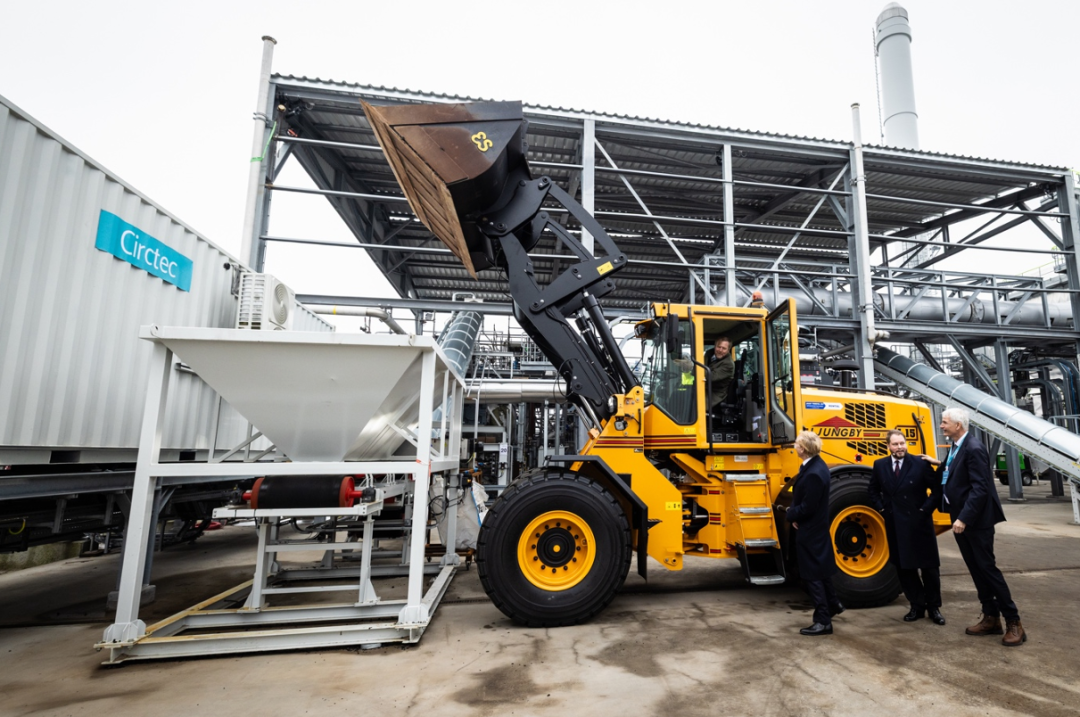
Core Insights - Circtec has officially launched its large-scale waste tire pyrolysis treatment plant in Delfzijl, Netherlands, capable of processing 50,000 tons of waste tires annually [1][8] - The plant's output includes three core products, with tire pyrolysis oil serving as a sustainable raw material for petrochemical and refining industries [1][8] Group 1: Plant Development - Circtec plans to initiate the second phase of the plant this year, which will add new production modules and increase the total recycling capacity to 200,000 tons per year [3][10] - Once fully operational, the plant is expected to cover approximately 6% of the total annual waste tire generation in Europe [3][10] - Currently, over 50% of Europe's waste tires are either incinerated in cement plants or exported to Asia for disposal, and this plant aims to change that situation [3][10] Group 2: Market Collaborations - Circtec has signed a long-term off-take agreement with Continental Carbon, which will supply recycled carbon black for its Continuum™ flagship decarbonization product line [4][10] - BP has also secured off-take agreements for the plant's HUPA brand marine fuel, recycled naphtha, and tire pyrolysis oil [6][12] Group 3: Financial Backing and Future Plans - Investment firms Novo Holdings and AP Moller have completed a €150 million financing round for Circtec, providing a solid financial foundation for its development [6][12] - Circtec aims to expand globally with multiple factory projects, utilizing both self-investment and joint venture models to achieve greater breakthroughs in waste tire processing [6][12]

大宗周期板块集体上涨,有色金属ETF基金(516650)、石化ETF(159731)双双涨超2%
Mei Ri Jing Ji Xin Wen· 2026-02-11 07:13
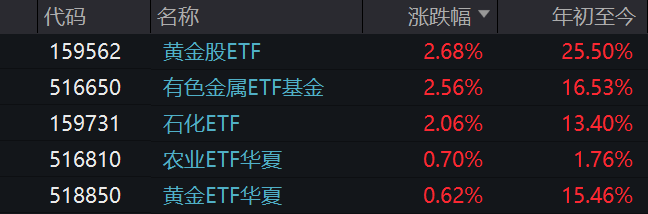
2月11日,三大指数延续震荡,上涨指数小幅飘红,盘面上,大宗周期板块,贵金属、有色金属、石 化、农业板块集体走强,截至14点43分,黄金股ETF(159562)涨2.68%,有色金属ETF基金 (516650)涨2.56%,石化ETF(159731)涨2.06%,农业ETF华夏涨0.7%,黄金ETF华夏涨0.62%。 相关分析指出,随着贵金属、有色金属、石油价格走强,越来越多的投资人意识到周期行情的魅力。大 宗周期行情演绎逻辑为贵金属最先启动,核心上涨逻辑是货币属性与避险属性,主要跟随全球流动性、 实际利率、美元走势以及通胀、避险预期,对利率预期最敏感,不依赖强经济复苏即可领先走出行情。 有色是周期"急先锋"(上游资源端,挂钩期货价格,对流动性、经济预期敏感,波动大、弹性足),石 化是"慢半拍"(资源+高端制造混合体,受油价及化工品供需双重影响,行情滞后于有色)。农产品受 上游成本传导和供给扰动,为周期行情里的最后一棒。 | 代码 | 名称 | 涨跌幅 | 年初至今 | | --- | --- | --- | --- | | 159562 | 黄金股ETF | 2.68% | 25.50% | | 51665 ...
江苏经济为何有“高原”缺“高峰”?
Zhong Guo Fa Zhan Wang· 2026-02-11 06:35
Core Viewpoint - Jiangsu, a major economic province in eastern China, is characterized by a strong industrial foundation, dense manufacturing clusters, and robust foreign trade capabilities. However, it faces challenges in cultivating globally leading enterprises and industry clusters, which limits its high-quality development potential [1]. Group 1: Formation of the "Plateau" - The formation of Jiangsu's industrial economic "plateau" is attributed to multiple advantages, including a deep economic foundation, favorable geographical conditions, a complete industrial system, a dense network of educational and research institutions, and active innovation entities [2]. Group 2: Challenges in Establishing the "Peak" - Despite a solid industrial base, Jiangsu faces deep-rooted challenges in establishing industrial "peaks." Historical path dependence has led to a reliance on a processing and manufacturing model that yields low profits and added value, positioning Jiangsu more as an executor rather than a definitional leader in the global supply chain [3]. - Traditional industries dominate Jiangsu's economy, with leading enterprises primarily in heavy industries such as petrochemicals and textiles, lacking the high-tech and internet attributes that characterize modern innovation [4]. - The innovation ecosystem suffers from a transformation bottleneck, where a focus on academic publications leads to many patents remaining unutilized, and local government funding practices may not align with the needs of agile tech startups [4]. Group 3: Pathways to Breakthrough - To transition from a "plateau" to a "peak," Jiangsu must focus on cultivating "chain leader" enterprises by implementing a "Peak Enterprise" plan during the 14th Five-Year Plan, selecting 10-20 potential leading companies for targeted support in R&D and market expansion [5]. - Strengthening basic research is essential, with increased provincial funding and the establishment of frontier science centers to facilitate early-stage technology transformation [6]. - Attracting talent is crucial, requiring competitive policies that provide a conducive research environment and support for families, transforming Jiangsu into a destination for top talent rather than a transit point [6]. - Global collaboration in technology innovation is necessary, addressing critical technological challenges through an open and structured approach to attract global resources [7]. - Systemic reforms are needed to eliminate barriers to innovation, establishing a modern governance system that fosters trust and motivation, ultimately converting Jiangsu's industrial advantages into technological peaks [7]. Conclusion - Jiangsu's "plateau" serves as a foundation, while the "peak" represents the future direction. The transition from a manufacturing powerhouse to an innovation-driven province requires strategic vision and sustained effort, aiming for a shift from "Jiangsu manufacturing" to "Jiangsu creation" on the global stage [8].
有色金属、石化等周期概念板块爆发,石化ETF(159731)涨2.35%
Sou Hu Cai Jing· 2026-02-11 03:06
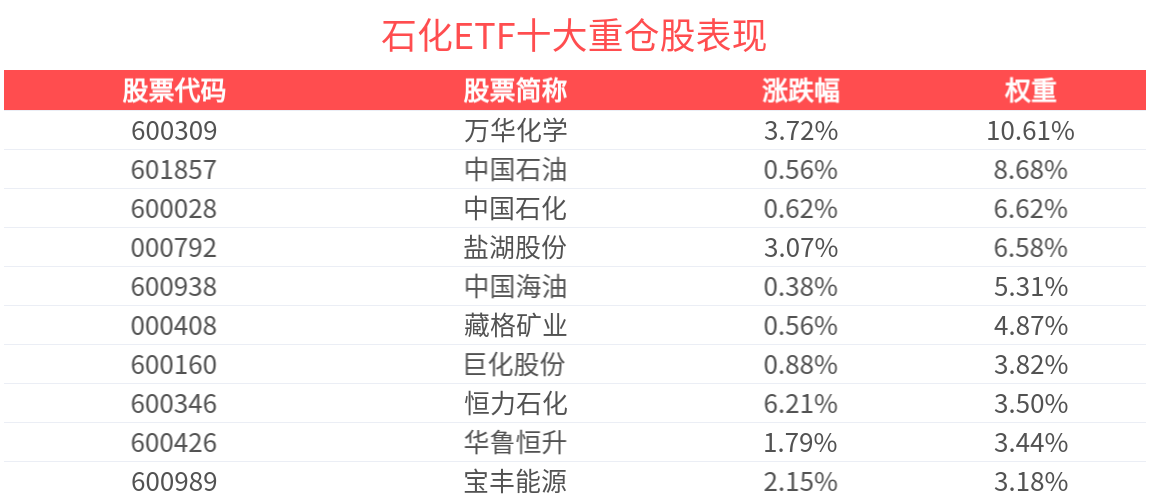
Group 1 - The core viewpoint of the articles highlights the strong performance of cyclical sectors such as petrochemicals, precious metals, and agriculture, with the Petrochemical ETF (159731) rising by 2.35% and individual stocks like Tongkun Co. and Xin Fengming increasing by 7.06% and 6.96% respectively [1] - The Petrochemical ETF has seen continuous net inflows over the past four days, totaling 76.6445 million, with its latest share count reaching 1.768 billion and total assets hitting 1.805 billion, both marking all-time highs since inception [1] - Huazhang Securities notes that lithium prices are experiencing a high-level decline, while demand in the energy storage sector is exceeding expectations, leading to a recovery in the lithium battery industry and a shift in market sentiment regarding lithium demand [1] Group 2 - The Petrochemical ETF (159731) closely tracks the CSI Petrochemical Industry Index, benefiting from both basic chemicals and oil & petrochemical sectors, and includes high dividend and high growth assets [2] - Key weighted stocks in the ETF include Wanhua Chemical (global MDI leader), China Petroleum (domestic oil and gas leader), China Petrochemical (domestic refining leader), and Salt Lake Potash (domestic potassium fertilizer leader) [2] - The table lists the performance and weight of key stocks within the ETF, with Wanhua Chemical showing a rise of 3.72% and holding a weight of 10.61% [4]





智能工厂梯度培育持续加速
Jing Ji Ri Bao· 2026-02-10 22:14
Core Insights - The establishment of leading intelligent factories is a strategic initiative for China to seize opportunities in industrial intelligence development and build future manufacturing competitive advantages [1][2][3] - The first batch of 15 leading intelligent factories has been announced, covering key industries such as equipment manufacturing, raw materials, and electronic information, showcasing beneficial explorations in manufacturing models [1][3] Group 1: Intelligent Factory Development - Over 70% of business scenarios in leading factories have integrated artificial intelligence, with more than 6,000 vertical models developed, driving the application of over 1,700 key intelligent manufacturing equipment and industrial software [1] - The intelligent factory of Xuzhou Heavy Machinery Co., Ltd. is recognized for its agile delivery of mobile cranes, achieving centralized control and dynamic visibility throughout the customer order to delivery process [1] Group 2: Performance Improvements - The transformation to leading intelligent factories has resulted in an average production efficiency increase of 29% and a reduction in product defect rates by 47% [2] - These factories serve as models for high efficiency, precision, flexibility, and quality in production, facilitating a shift from "local optimization" to "global optimization" in manufacturing [2] Group 3: Industry Impact and Future Plans - Leading intelligent factories are not only producing high-end products but also extending into scalable customization, industry chain collaboration, and predictive maintenance, transitioning from "product manufacturers" to comprehensive providers of "products + services + solutions" [2] - The Ministry of Industry and Information Technology plans to further implement intelligent manufacturing projects, support leading enterprises in exploring future manufacturing models, and promote knowledge sharing and best practices across the industry [3]
金陵石化与京东政企业务达成合作
Zhong Guo Hua Gong Bao· 2026-02-10 03:03
Core Viewpoint - Jinling Petrochemical and JD Government Business signed a strategic cooperation agreement to explore innovative paths for the integration of energy, chemicals, and digital economy [1] Group 1: Strategic Cooperation - The partnership aims to establish a regular communication mechanism between Jinling Petrochemical and JD Government Business [1] - Both companies will collaborate in areas such as supply chain, digital transformation, and rural revitalization [1] Group 2: Resource Complementation - Jinling Petrochemical has significant advantages in energy supply and chemical products, while JD Government Business offers a stable and efficient supply chain infrastructure [1] - The cooperation will include joint promotion of proprietary brands and material procurement to achieve resource complementarity [1] Group 3: Sustainability Initiatives - The collaboration will incorporate "dual carbon" goals and environmental protection into their projects [1] - Both parties will explore innovative projects in new energy services and green supply chains to inject new momentum into the sustainable development of the industry [1]
