
数字经济

Search documents
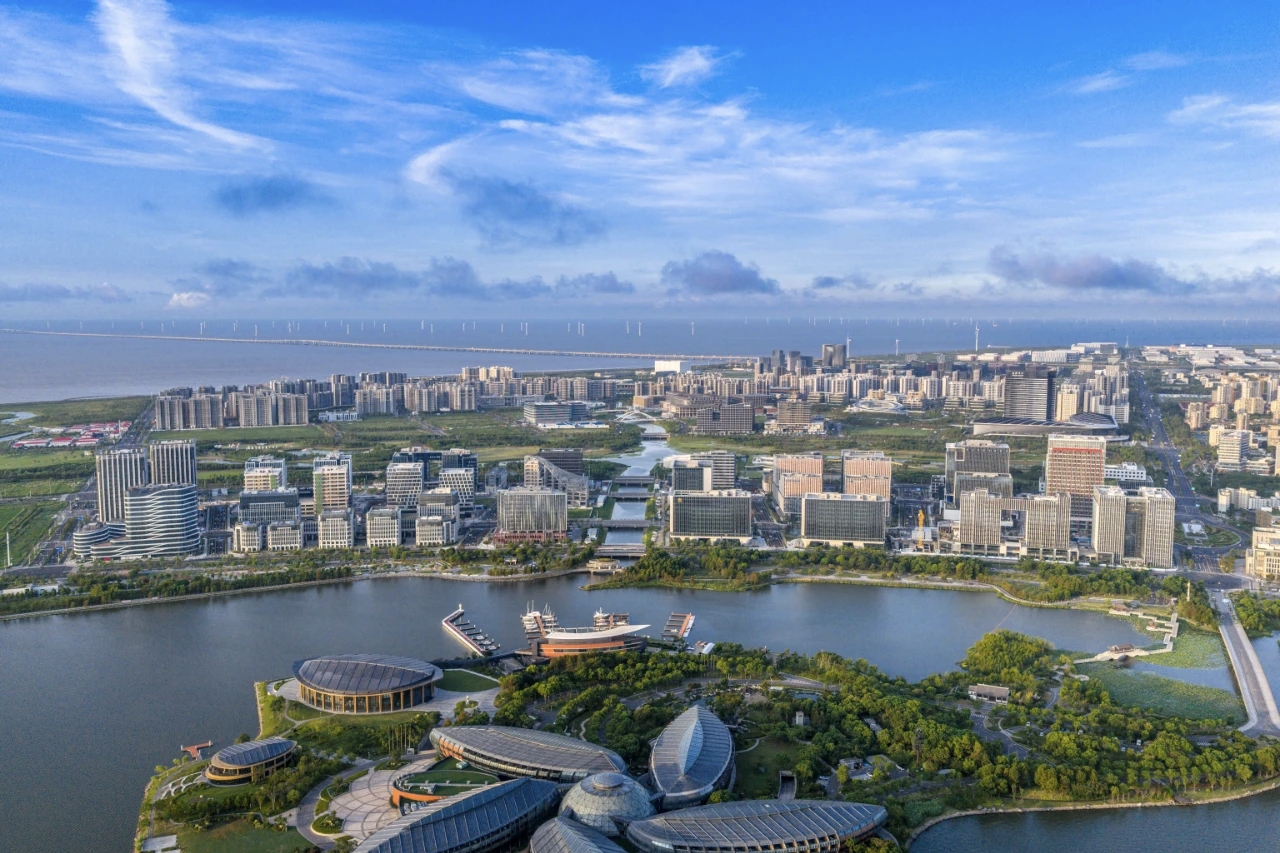
临港新片区六周年:从蓝图到热土
Guo Ji Jin Rong Bao· 2025-08-21 02:19
Core Insights - The Lingang New Area has transformed from a planning blueprint into a vibrant hub for institutional innovation and industrial aggregation over the past six years, marking its sixth anniversary on August 20, 2025 [1] Economic Growth and Development - The Lingang New Area has experienced robust economic growth, with an average annual GDP growth of 17.6%, industrial output growth of 28.4%, and fixed asset investment growth of 25.7% over the past six years [3] - The number of market entities has surged, with nearly 100,000 new businesses established, bringing the total to 156,000, showcasing the area's vitality [3] - The area has implemented 166 innovative cases, including 79 national firsts, reflecting its commitment to institutional innovation [3] Financial and Industrial Synergy - Over 700 financial institutions and investment firms have established operations in the Lingang New Area, with an average annual growth rate of 20% in both domestic and foreign currency deposits and loans [4] - The offshore trade volume reached $15.04 billion in the first half of the year, growing by 23.6% and accounting for 48.2% of the city's total [5] - The area has introduced a "zero-review" settlement mechanism for offshore trade, significantly enhancing transaction efficiency [6] Data Management and Regulatory Innovations - The Lingang New Area has adopted a field list management approach for data flow, replacing case-by-case assessments, thus balancing data security and flow freedom [4][7] - A negative list and operational guidelines have been implemented for cross-border data flow, attracting foreign enterprises to engage in value-added telecommunications [5] Industry Development and Talent Attraction - The area is focusing on key industries such as integrated circuits, civil aviation, high-end equipment, smart electric vehicles, and digital economy, with significant growth in output across these sectors [9] - Talent attraction initiatives have led to over 43,000 new residents in 2024, a 36.4% increase, supported by favorable residency policies [9][10] Future Directions and Strategic Goals - The Lingang New Area aims to enhance its innovation ecosystem by focusing on leading industry clusters, technological innovation, and educational integration [11][12] - Plans include the establishment of a comprehensive service platform for enterprises going abroad, leveraging unique advantages in offshore trade and financial innovation [13][14]

破除消费堵点,释放内需潜能
2 1 Shi Ji Jing Ji Bao Dao· 2025-08-20 22:31
Group 1 - The State Council's ninth plenary session emphasizes strengthening domestic circulation by removing restrictive measures in the consumption sector to stimulate consumer potential and promote high-quality economic development [1][2] - Systematic removal of restrictions will empower consumers with more autonomy, enhance their quality of life, and stimulate demand [1][3] - Optimizing policies in the automotive sector is crucial as it is a pillar industry that supports various supply chain segments, leading to overall industry development and transformation [1][2] Group 2 - Adjusting real estate market policies is essential to release potential demand for improved housing, which is interconnected with multiple industries such as construction and furniture [2][3] - Accelerating the growth of service consumption and new consumption models, such as online education and shared economy, is necessary to meet the evolving needs of consumers [2][4] - The execution of removing consumption restrictions should follow a scientific and orderly approach, avoiding a one-size-fits-all strategy while optimizing the business environment [3][4] Group 3 - In the automotive sector, transitioning from purchase management to usage management can alleviate traffic pressure and meet consumer needs more effectively [3][4] - The real estate sector requires a comprehensive cancellation of purchase, sale, and price restrictions to promote healthy market development [3][4] - In the service consumption area, breaking down invisible market entry barriers and enhancing the supply of high-quality services can create job opportunities and drive economic growth [4]
郭元强赴洪山区武昌区调研并召开座谈会:高质量推进城市更新产业升级 加快推动中心城区转型发展
Chang Jiang Ri Bao· 2025-08-20 14:04
来到位于洪山区的青菱都市工业园,郭元强调研传统工业园区转型发展情况,走进园区 企业筑梦科技公司,察看AI机器人及数字化产品展示。他希望园区聚焦智能制造、数字经 济等新兴产业领域,提升服务保障水平,增强对技术、人才、资金等创新要素的吸引力,着 力培育引进科技型企业,推动园区高质量发展。来到武昌区的数字经济标杆楼宇武汉数创大 厦,郭元强详细了解楼宇招商、运行情况,走进入驻企业保伦电子股份有限公司进行调研。 他勉励数创大厦要优化服务、创新管理,持续营造良好创新生态,吸引更多优质企业入驻, 为中心城区产业转型探索有益经验。 8月20日,省委常委、市委书记郭元强赴洪山区、武昌区调研都市工业园区、数字经济 楼宇,并召开座谈会专题研究中心城区转型发展。他强调,要深入学习贯彻中央城市工作会 议精神和习近平总书记考察湖北重要讲话精神,坚持把创新作为第一动力,以推进城市更新 为重要抓手,深化数智赋能产业升级,促进数字经济与先进制造业、现代服务业深度融合, 加快推动中心城区转型发展,不断塑造发展新动能新优势。 座谈会上,郭元强听取相关情况汇报,与都市工业园区、创新楼宇及产业协会代表深入 交流。他指出,中心城区是高端要素资源的重要集 ...

天娱数科:治理漩涡与现金流危局
Xin Lang Zheng Quan· 2025-08-20 10:40
Core Insights - Tianyu Digital Technology (002354.SZ) faces significant governance issues as two key executives have been implicated in legal troubles within a year, raising concerns about the company's operational integrity and investor confidence [1][2] Governance Issues - The company has been operating without a controlling shareholder since the original controller Zhu Ye exited in 2023, leading to a governance vacuum that has not been effectively addressed despite increasing independent directors to 55% [2] - The management structure is criticized for being overly centralized, with the acting responsibilities of the vice president, He Han, who holds multiple roles, raising concerns about oversight [1][2] Financial Performance - In 2024, the company's revenue declined by 10.38% to 1.579 billion yuan, while net profit improved from a loss of 1.087 billion yuan to a loss of 118 million yuan [3] - Operating cash flow plummeted by 6564.59% to -72.39 million yuan, indicating severe liquidity issues, with accounts receivable increasing by 12.14% to 455 million yuan [3][4] Technological Challenges - The company's commitment to AI technology appears hollow, with R&D expenses decreasing by 15.03% to 52 million yuan in 2024, and a further cut of 32.61% to 9.37 million yuan in Q1 2025 [4] - The lack of self-developed algorithms has rendered the company's high-cost computing center ineffective, highlighting a failure to capitalize on AI opportunities [4] Market Reaction - Following the legal troubles of executives, the stock price experienced volatility, with a 9.3% drop after the chairman's detention, while the stock slightly increased by 0.51% on the day of the recent arrest, indicating investor skepticism about the company's claims of operational independence from these issues [1][2]

国信证券张立超、王开:构筑新质生产力投资框架体系
Zhong Guo Zheng Quan Bao· 2025-08-19 23:29
Group 1: Core Concepts of New Quality Productivity - New quality productivity is a key engine driving high-quality economic development in China, representing a deep integration of technological innovation and industrial upgrading [1][2] - The concept emphasizes the cultivation of strategic emerging industries such as new energy, new materials, advanced manufacturing, and electronic information, aiming to enhance new development momentum [2][3] - The transition to new quality productivity marks a significant improvement in total factor productivity, driven by technological innovation and the restructuring of industrial value chains [3][4] Group 2: Development Pathways for Enterprises - Enterprises are the main practitioners of new quality productivity, focusing on upgrading traditional industries and strategically positioning emerging industries [4][5] - Traditional industries are essential for economic development and serve as a fertile ground for new quality productivity, while emerging industries inject new momentum into economic growth [7][8] - The development of commercial aerospace exemplifies the transition from government-led initiatives to commercial operations, highlighting the rapid growth of the industry in China [7][9] Group 3: Regional Development Strategies - Different regions in China should adopt tailored approaches to develop new quality productivity based on their resource endowments and industrial foundations [8][9] - The Guangdong-Hong Kong-Macao Greater Bay Area is a key region for cultivating new quality productivity, characterized by a complete industrial system and strong economic complementarity [9][10] - Major cities like Beijing, Shanghai, and Guangdong are focusing on specific industries such as integrated circuits, smart connected vehicles, and advanced manufacturing to drive regional economic growth [8][9] Group 4: Investment Opportunities - Investment strategies should focus on sectors that integrate digital and traditional economies, emerging industries with rapid market penetration, and future industries with technological breakthroughs [10] - The importance of selecting the right market segments is emphasized, with attention to opportunities in information technology, finance, and industrial sectors [10]

构筑新质生产力投资框架体系
Zhong Guo Zheng Quan Bao· 2025-08-19 22:15
Group 1: Core Characteristics and Development Logic of New Quality Productivity - New quality productivity represents a new understanding of the relationship between technological revolution, industrial transformation, and economic development, emphasizing the cultivation of strategic emerging industries such as new energy and advanced manufacturing [2][3] - The transition to new quality productivity is marked by a significant increase in total factor productivity, driven by technological innovation and the restructuring of industrial value chains [3][4] - The development of new quality productivity requires deep integration of education, technology, and talent, focusing on information technology empowerment and high-end talent cultivation [3] Group 2: Corporate Development Pathways - Companies can develop new quality productivity through traditional industry transformation and strategic layout of emerging industries, promoting intelligent and green transitions in manufacturing [4][5] - The effectiveness of new quality productivity can be evaluated through indicators such as corporate competitiveness, innovation efficiency, sustainability, and social value, highlighting its advanced nature compared to traditional productivity [4][5] Group 3: Core Industry Tracks of New Quality Productivity - New quality productivity investment can be broken down into six core industry tracks: digital economy, high-end equipment, biotechnology, smart electric vehicles, energy transition, and future industries [5][6] - The digital economy relies on data collection and processing, while high-end equipment encompasses key materials and core components, indicating a broad scope for investment opportunities [5][6] Group 4: Regional Development Layout - Different regions should adopt targeted approaches to develop new quality productivity based on their resource endowments and industrial foundations, with cities like Beijing, Shanghai, and Guangdong leading in various strategic sectors [8][9] - The Guangdong-Hong Kong-Macao Greater Bay Area is highlighted as a key region for cultivating new quality productivity, with a complete industrial system and strong economic complementarity [9] Group 5: Future Outlook and Investment Strategies - Future investment strategies should focus on technology-driven sectors, identifying valuable industry nodes and constructing investment portfolios that integrate traditional and emerging industries [10] - Attention should be given to sectors such as information technology, finance, and industrial opportunities, as well as mergers and acquisitions that may arise from industry logic [10]
淳中科技8月19日龙虎榜数据
Zheng Quan Shi Bao Wang· 2025-08-19 10:47
上交所公开信息显示,当日该股因日跌幅偏离值达-9.98%上榜,沪股通净卖出3191.74万元。 证券时报•数据宝统计显示,上榜的前五大买卖营业部合计成交3.83亿元,其中,买入成交额为1.49亿元,卖出成交额为2.33亿元,合计净卖出 8392.17万元。 (原标题:淳中科技8月19日龙虎榜数据) 淳中科技(603516)今日跌停,全天换手率9.53%,成交额22.53亿元,振幅8.31%。龙虎榜数据显示,沪股通净卖出3191.74万元,营业部席位合计净 卖出5200.42万元。 具体来看,今日上榜的营业部中,沪股通为第五大卖出营业部,卖出金额为3191.74万元,合计净卖出3191.74万元。 7月12日公司发布上半年业绩预告,预计实现净利润-4100.00万元至-3840.00万元,同比变动区间为-204.49%~-197.86%。(数据宝) 淳中科技8月19日交易公开信息 | 买/卖 | 会员营业部名称 | 买入金额(万元) | 卖出金额(万元) | | --- | --- | --- | --- | | 买一 | 国投证券股份有限公司上海樱花路证券营业部 | 5099.04 | | | 买二 | 中信 ...

天津红桥:聚集资源提速项目建设
Zhong Guo Jing Ji Wang· 2025-08-19 03:57
Group 1 - China Coal Energy Group signed a cooperation agreement with the Beijing-Tianjin-Hebei National Technology Innovation Center for a key national R&D project focused on disruptive technology innovation in low-carbon energy [1] - The Energy Low-Carbon Innovation Center aims to transform disruptive green energy technologies and is rooted in Tianjin Hongqiao [1] - An investment fund for disruptive technology innovation in the low-carbon energy sector was established, and a national competition for disruptive technology innovation in low-carbon energy was launched [1] Group 2 - The Tianjin Hongqiao District has accelerated the construction of the Beijing-Tianjin-Hebei Integrated Business District, with significant progress on major projects over the past two years [2] - The integration of transportation modes ("subway + high-speed rail + airplane") at Tianjin West Station enhances the development of the business district [2] - The district's GDP grew by 6.1% year-on-year, fiscal revenue increased by 10.1%, fixed asset investment rose by 16.4%, and retail sales of consumer goods increased by 12.1% in the first half of the year [2]

共建“一带一路”投资合作空间广阔(环球热点)
Ren Min Ri Bao Hai Wai Ban· 2025-08-18 22:50
二〇二四年六月,在马来西亚沙捞越,由中国能建江苏省电力设计院有限公司承建的漂浮光伏发电项目 正在建设中。 (新华社发) 据英国《金融时报》网站近日报道,一项新研究发现,今年中国企业在共建"一带一路"国家的新投资与 建设合同金额创下历史新高。安永近日发布的《中国海外投资概览(2025年上半年)》显示,2025年上 半年,中国在"一带一路"共建国家和地区,完成营业额648亿美元,同比增长7.5%。 从港口到电站,从铁路到光伏项目,在共建"一带一路"倡议框架下,中国加快海外投资步伐。专家认 为,步入新的金色十年,共建"一带一路"倡议正精准对接全球发展需求,在贸易投资、绿色转型和科技 合作等领域展现出强劲动力。 技术出海与模式创新实现突破 据中国商务部近日公布的数据,2025年上半年,中国对外直接投资呈现"回稳、质升"态势,对"一带一 路"共建国家非金融类直接投资达189亿美元,同比增长20.7%。从更长周期看,2021年至2025年上半 年,中国与共建国家双向投资规模已超过2400亿美元,其中中国对外投资超过1600亿美元,共建国家对 华投资超过800亿美元,投资合作日益深化。国际货币基金组织、联合国经济和社会事务 ...

图解宏景科技中报:第二季度单季净利润同比增长10094.82%
Zheng Quan Zhi Xing· 2025-08-18 18:04
Core Insights - The company, Hongjing Technology, reported a significant increase in its main revenue and net profit for the first half of 2025, with main revenue reaching 1.188 billion yuan, a year-on-year increase of 567.14% [1] - The net profit attributable to shareholders was 60.28 million yuan, up 725.73% year-on-year, while the non-recurring net profit was 59.34 million yuan, reflecting a 460.62% increase [1] - In Q2 2025, the company achieved a single-quarter main revenue of 699 million yuan, a 430.2% increase year-on-year, and a net profit of 38.63 million yuan, which surged by 10,094.82% [1][3] Financial Performance - The company's gross profit margin stood at 12.13%, showing a year-on-year decrease of 48.01% [6] - The return on assets was reported at 4.95%, marking a significant increase of 760.00% year-on-year [6] - Earnings per share reached 0.39 yuan, up 725.31% year-on-year, while the operating cash flow per share was 0.36 yuan, reflecting an increase of 113.78% [6] Shareholder Information - The top circulating shareholders include Zhuang Xian Cai with 3.58 million shares (4.71%), and several investment funds with varying percentages [10][11] - The number of shareholders has shown a decline from 3.05 million in Q3 2024 to 1.09 million in Q2 2025 [12]
