
能源转型

Search documents
新华全媒头条|不断增强高质量发展的确定性——从地方两会看开局之年谋篇布局
Xin Hua She· 2026-02-09 16:59
Core Viewpoint - The article emphasizes the determination to enhance high-quality development in China, as local governments outline their plans for the 14th Five-Year Plan, focusing on economic growth, innovation, and improving living standards [1][2][4]. Economic Growth Targets - Most provinces set their GDP growth targets for 2026 around 5%, with Guangdong aiming for 4.5% to 5%, Jiangsu at 5%, and Shandong expecting over 5% [3][4]. - The overall economic volume of China is projected to exceed 140 trillion yuan by 2025, necessitating a balance between quality improvement and reasonable growth [3]. Consumer Price and Budget Goals - Many provinces have set a consumer price growth target of around 2%, reflecting confidence in promoting reasonable price recovery and supporting economic circulation [3]. - Local governments also established targets for public budget revenue growth, urban unemployment rates, and energy conservation [3]. Development Plans and Innovation - Various regions have introduced development indicators for the next five years, with Zhejiang aiming for a GDP per capita close to developed economies by 2030 and a research and development investment intensity of over 3.5% [5]. - The focus on innovation is evident, with provinces like Fujian prioritizing the growth of the real economy and digital transformation [11]. Domestic Demand and Market Expansion - The central economic work conference highlighted the importance of domestic demand, with many provinces prioritizing strategies to stimulate consumption [6]. - Initiatives include expanding tax refund services in Shaanxi and creating themed consumption markets in Guizhou [6]. Regional Coordination and Development - The article discusses the collaborative efforts among regions, such as the Beijing-Tianjin-Hebei integration and the Guangdong-Hong Kong-Macau Greater Bay Area development [7]. - These efforts aim to create a high-quality regional economic layout that supports China's modernization [7]. Reform and Market Optimization - Local governments are focusing on enhancing the business environment and integrating into the national market, with initiatives in Zhejiang and Henan to improve market conditions [8]. - The emphasis is on deepening reforms to transition the economy from quantity to quality [8]. High-Level Opening and Global Integration - Regions like Hainan are promoting higher levels of openness, with significant increases in foreign investment and businesses benefiting from zero-tariff policies [9]. - Various provinces are working on enhancing their open platforms and international cooperation [9]. Modern Industrial System Development - The construction of a modern industrial system is a priority, with provinces like Jiangsu and Zhejiang focusing on future industries and technological innovation [11][12]. - The integration of traditional and emerging industries is seen as crucial for maintaining competitiveness [12]. Social Welfare and Living Standards - Improving living standards is a key focus, with initiatives aimed at job creation, income growth, and social security enhancements [14][15]. - Local governments are implementing measures to address healthcare, education, and housing needs, contributing to a better quality of life [15][16]. Safety and Governance - Enhancing public safety and governance is highlighted, with various provinces setting goals to improve safety measures and prevent risks [16]. - These initiatives are aimed at ensuring social stability and supporting economic development [16].
未知机构:能源转型巨头GEVernova交出了一份亮眼的四季度成绩单-20260129
未知机构· 2026-01-29 02:10
Summary of GEVernova's Earnings Call Company Overview - **Company**: GEVernova - **Industry**: Energy Transition Key Financial Performance - **Q4 Revenue**: $10.96 billion, exceeding market expectations of $10.27 billion [1] - **Earnings Per Share (EPS)**: $13.39, leading to a pre-market stock increase of over 7% [1] - **Annual Revenue**: $38.1 billion, achieving a 9% growth under both GAAP and organic growth metrics [10] - **Q4 Net Profit**: $3.7 billion, with a net profit margin of 33.5%, including $2.9 billion in tax benefits [11] - **Annual Net Profit**: $4.9 billion, with a net profit margin of 12.8% [12] Order Backlog and Growth Potential - **Total Order Backlog**: Increased by $31.2 billion to a historical high of $150 billion [6] - **Gas Turbine Orders**: Increased from 33 GW to 40 GW [6] - **Equipment Orders**: Grew from 62 GW to 83 GW, indicating strong future growth potential [6] - **New Orders in Q4**: $22.2 billion, with a year-over-year organic growth of 65% [8] Cash Flow and Financial Health - **Q4 Operating Cash Flow**: $2.5 billion, with free cash flow of $1.8 billion [12] - **Annual Operating Cash Flow**: $5 billion, with free cash flow of $3.7 billion [12] - **Cash Balance**: Nearly $9 billion at year-end, allowing for shareholder returns of $3.6 billion while maintaining a strong balance sheet [12] Management Outlook - **CEO Scott Strazik's Statement**: Optimistic about future growth, emphasizing the strong performance in power and electrification sectors [13] - **CFO Ken Parks' Remarks**: Highlighted the execution of financial strategy and the increase in long-term financial outlook, including the integration of Prolec GE [13] - **Future Opportunities**: Positioned well to benefit from the AI-driven surge in electricity demand and the ongoing energy transition [13] Additional Insights - **Improvement in Order Quality**: Equipment order backlog profit margins increased by 8 percentage points, reflecting favorable pricing conditions [9] - **Sustained Profitability**: Adjusted EBITDA for the year was $3.2 billion, with an EBITDA margin of 8.4%, indicating ongoing margin expansion capabilities [12]
下一个五年,“美丽北京”这样升级
Bei Jing Shang Bao· 2026-01-26 12:25
Core Viewpoint - The "15th Five-Year Plan" for Beijing emphasizes a high standard of ecological protection, quality development, and improved living standards, aiming to accelerate the construction of a harmonious relationship between humans and nature in the city [3]. Group 1: Green Transformation Initiatives - Beijing aims to deepen its green and low-carbon transformation by focusing on supply-side efforts to build a new energy system, targeting a green electricity import scale of 65 billion kilowatt-hours by 2030 [3]. - The city plans to implement energy efficiency grading for large public buildings and create zero-emission freight corridors in the Beijing-Tianjin-Hebei region [3]. - All newly built computing centers in the city will be required to use 100% green electricity [3]. Group 2: Government and Market Integration - The government will coordinate resources across various sectors, enhancing the legal, market, technological, and policy frameworks to support green development [4]. - The plan includes improving regulatory standards and establishing a robust economic policy for green low-carbon development, with a strong emphasis on developing green finance [4]. - The integration of effective markets with proactive government actions will be crucial for the ongoing management of the carbon market [4]. Group 3: Corporate Responsibility and Innovation - Companies are encouraged to adopt green production methods and enhance their internal motivation for sustainable development [4]. - The focus will be on resource conservation, promoting a circular economy, and encouraging the application of advanced technologies for energy saving and pollution control [4]. - Public access to environmental protection facilities will be promoted to guide companies in fulfilling their environmental and social responsibilities [4].

对话德勤中国首席执行官刘明华:现代化产业体系最重要就是科技与开放
Xin Lang Cai Jing· 2026-01-20 07:13
Core Insights - The core viewpoint emphasizes China's clear national strategy focusing on modernizing its industrial system, with technology and openness being paramount [1][14]. Strategic Industry Development - In the next five years, key industries for development include high-tech AI sectors, particularly embodied intelligence and physical AI [4][17]. - The pharmaceutical research and healthcare sector is projected to see significant growth, with 30% of global new drug pipelines expected to be from China by 2025 [5][18]. - The energy transition sector is highlighted as crucial, with China being a major consumer and contributor in the renewable energy field [6][19]. Opportunities for Chinese Enterprises Abroad - Eastern and Central Eastern Europe are identified as attractive regions for Chinese enterprises due to cost advantages and proximity to EU markets [8][20]. - In mature European markets like Germany, Chinese automotive companies, especially in the new energy vehicle sector, are focusing on expansion [8][20]. - The concept of "glocalization" is emphasized, where companies must adapt to local markets while maintaining global strategies [8][20]. Stages of Globalization for Chinese Enterprises - The current phase of Chinese enterprises going global is termed "Outward 3.0," which integrates technology, supply chain, and management capabilities [11][23]. - Previous phases included "Outward 1.0," focused on product trade, and "Outward 2.0," which involved establishing factories and supply chains abroad [11][23]. - The need for proactive risk management and local integration is stressed to enhance the value of Chinese enterprises in global markets [9][21][23].
中国经济以“内在连续性”从容应对外部挑战——访法国丝路商学院教授阿祖莱
Xin Hua Wang· 2026-01-11 08:34
Core Insights - The article emphasizes China's ability to maintain internal continuity while responding to external challenges, particularly through expanding domestic demand and high-quality growth [1][2]. Group 1: Economic Stability and Growth - China is enhancing its stability by expanding domestic demand and providing support to the global economy through high-quality growth and high-level openness [1][2]. - The country is not relying on short-term stimulus but is focusing on upgrading consumption structures, with significant growth in sectors like new energy vehicles, cultural products, health industries, and high-quality services [2]. Group 2: Innovation and Supply Chain Transformation - China is transitioning from a "scale + cost" advantage to an "innovation + efficiency" advantage, with new growth engines emerging in artificial intelligence, semiconductors, robotics, green energy, and biotechnology [2]. - The country benefits from institutional advantages in innovation policy, including rapid resource mobilization, flexible pilot mechanisms, and high collaboration between local governments and enterprises [2]. Group 3: Global Trade and Investment - In the context of rising uncertainty in global trade and investment, China is committed to high-level openness, which includes further easing market access and improving the business environment [2]. - Companies like Tesla and Schneider Electric have thrived in China by aligning with the country's focus on electric vehicles, digitalization, advanced manufacturing, and energy transition, contributing to China's role as a global innovation and production hub [2]. Group 4: Future Contributions to Global Economy - China's contributions to the world economy extend beyond growth momentum to include structural transformation and green development, particularly through investments in renewable energy, energy storage, and electric vehicles [3]. - The country is significantly lowering the cost barriers for global green technologies, enabling more countries to participate in energy transitions, which will have a profound impact on the world economy [3].
四类标的有望成配置主线!专家把脉2026年可转债市场→
Zheng Quan Shi Bao· 2025-12-04 14:08
Core Viewpoint - Multiple brokerage firms predict that the convertible bond market will maintain high valuations in 2026, driven by a favorable equity market, policy dividends, and continued inflow of "fixed income +" funds [1][2]. Group 1: Market Conditions - Since 2025, the convertible bond market has seen a significant recovery in valuations, primarily due to reduced risks from delistings and defaults, increased demand in a low-interest-rate environment, and improved stock market expectations [2]. - The China Convertible Bond Index reached a 10-year high in August 2025, reflecting the upward trend in convertible bond valuations [2]. Group 2: Valuation Support Factors - The optimistic outlook for the equity market is expected to be the main support for convertible bond valuations in 2026, with policy dividends from the "14th Five-Year Plan" expected to boost market risk appetite [2]. - Strong demand for equity assets and the ongoing "asset shortage" context will sustain the high valuations of convertible bonds, particularly in the first half of 2026 [2][3]. Group 3: Investment Strategies - The "dual low" strategy, which relies on low prices and low valuations, faces challenges as the number of low-priced convertible bonds decreases and their valuations rise [4]. - Companies are advised to consider index and quantitative strategies due to the increased difficulty in subjective stock selection, focusing on high-price factors and volatility factors [5][6]. Group 4: Sector Focus - Investment focus should be on technology and manufacturing sectors, particularly in areas such as computing power construction, capital expenditure, humanoid robots, solid-state batteries, and semiconductor self-sufficiency [6]. - Attention should also be given to cyclical industries like chemicals and non-ferrous metals, as well as the photovoltaic industry in response to "anti-involution" policies [6].
古巴国家主席出席第41届哈瓦那国际博览会开幕式
Shang Wu Bu Wang Zhan· 2025-12-02 17:14
Core Viewpoint - The 41st Havana International Fair aims to promote export and joint cooperation while integrating domestic production capabilities to serve both domestic and international markets [1] Group 1: Event Overview - The fair is being held from November 24 to 29 and is the largest commercial showcase in Cuba and the Caribbean, attracting representatives from 47 countries and international organizations [1] - Five thematic exhibition areas are established: Cuban manufacturing, energy transition, artificial intelligence, unique Cuba, and integrated mechanism forum [1] Group 2: Participation and Objectives - Approximately 20 chambers of commerce and 240 Cuban enterprises are participating, including 181 state-owned enterprises and 61 private small and medium-sized enterprises [1] - The fair's objectives include not only promoting exports but also fostering joint ventures and cooperation [1]
刘宁率河南代表团访问波兰并出席相关经贸活动 推进务实合作 实现互利共赢 助力高质量共建“一带一路”走深走实
He Nan Ri Bao· 2025-09-12 23:01
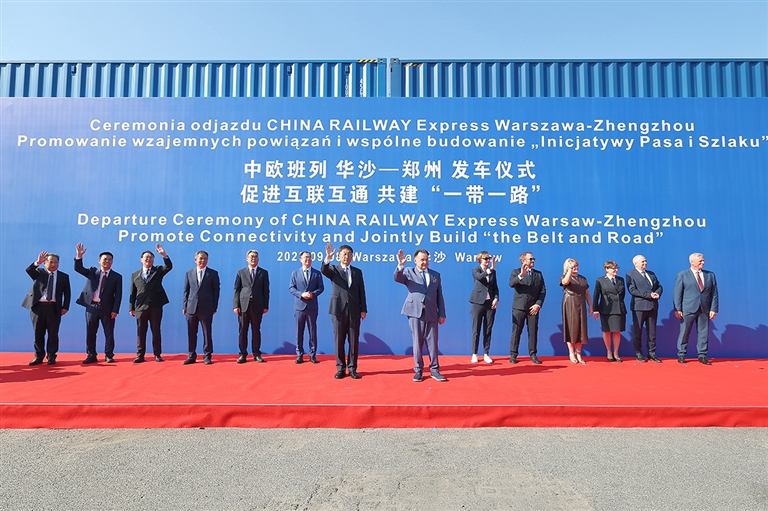
Group 1 - The launch ceremony of the China-Europe Railway Express (Warsaw-Zhengzhou) took place in Warsaw, Poland, on September 8, marking a significant step in enhancing trade and cooperation between China and the EU [2][3] - The visit of the Henan delegation, led by Secretary Liu Ning, aims to deepen practical cooperation and friendly exchanges with Poland, contributing to the high-quality development of the Belt and Road Initiative [2][3] - The cooperation between Henan and Mazovia Province is expected to focus on logistics, manufacturing, and cultural exchanges, leveraging their respective strengths for mutual benefit [3] Group 2 - A three-year cooperation action plan (2025-2028) was signed between Henan Province and Lublin Province, along with agreements between agricultural institutions, emphasizing agricultural cooperation and international logistics [4] - The Henan delegation discussed potential collaborations in agricultural trade, air freight, high-tech industries, and cultural education with Lublin Province, aiming for higher quality and broader cooperation [4] - Meetings with the Carpathian Voivodeship and Silesian Province focused on exploring cooperation in agricultural processing, technology research, and cultural tourism, with an emphasis on enhancing innovation and reducing production costs [5][6] Group 3 - The Henan delegation visited various companies and institutions, including Pszczółka Candy Company and CANPACK Group, to strengthen business ties and explore investment opportunities [7]
新质生产力投资全景图(附100+页报告)
材料汇· 2025-09-07 13:14
Core Viewpoint - New quality productivity is an inevitable path for switching economic growth momentum, characterized by high technology, high efficiency, and high quality, driven by technological breakthroughs and innovative allocation of production factors [4][10]. Group 1: Overview of New Quality Productivity - New quality productivity is defined as advanced productivity that achieves significant leaps in labor, materials, and objects through technological revolutions and deep industrial transformations [4]. - The development of new quality productivity is supported by various government policies aimed at enhancing emerging industries and future industries [5][24]. Group 2: Key Industry Core Sorting - The overall development of new quality productivity in Chinese provinces shows a trend of improvement and uneven development, with 20 provinces reaching a medium to high level since 2021 [9][10]. - High-level provinces such as Beijing, Shanghai, Zhejiang, Guangdong, and Jiangsu are expected to benefit first due to their advantages in higher education resources, innovation talent distribution, and infrastructure [9][10]. Group 3: Development Potential in Related Fields - The new quality productivity industry chain can be broken down into six core segments: digital economy, high-end equipment, biotechnology, smart electric vehicles, energy transition, and future industries [11][25]. - Each segment is expected to experience long-term favorable conditions driven by policies, with high-end equipment and energy transition showing significant growth potential [12][11]. Group 4: Investment Outlook - The focus on optimizing supply chains and actively cultivating emerging and future industries is crucial for enhancing new quality productivity [11][25]. - The government is expected to implement policies to address overcapacity in certain industries, promoting industrial restructuring and enhancing domestic demand [24][25].

“新质生产力”系列(十一):新质生产力投资全景图
Guoxin Securities· 2025-09-04 07:44
Core Insights - New quality productivity is the core engine driving high-quality economic development in China, characterized by high technology, high efficiency, and high quality, resulting from technological revolutions, innovative resource allocation, and deep industrial transformation [4][8] - The development of new quality productivity signifies a transition from old to new driving forces, marked by a significant increase in total factor productivity (TFP), emphasizing technological innovation and the restructuring of industrial value chains [4][20] - The investment opportunities in new quality productivity are categorized into six core industrial tracks: digital economy, high-end equipment, biotechnology, smart electric vehicles, energy transition, and future industries like quantum information [4][20][38] New Quality Productivity Overview - New quality productivity is defined as advanced productivity that achieves significant leaps in labor, materials, and objects through technological breakthroughs and innovative configurations [8][19] - The overall development of new quality productivity across provinces shows a gradient improvement, with high-level provinces like Beijing, Shanghai, Zhejiang, Guangdong, and Jiangsu expected to benefit first due to their advantages in higher education resources, innovation talent distribution, and infrastructure [19][18] Key Industry Core Analysis - The six core tracks of new quality productivity include: 1. Digital economy, driven by data collection and processing, cloud computing, and AI technologies [39] 2. High-end equipment, which encompasses key materials, core components, and integrated applications [46] 3. Biotechnology, focusing on medical devices and innovative drugs [49] 4. Smart electric vehicles, emphasizing intelligent connectivity [38] 5. Energy transition, which aims for carbon neutrality through the development of non-fossil energy sources [52] 6. Future industries, including quantum technology and low-altitude economy [61][68] Investment Outlook - The investment landscape is shaped by the need to optimize resource allocation efficiency and enhance total factor productivity, with a focus on avoiding overcapacity and low-level repetitive construction [23][31] - The government is expected to implement policies to promote domestic demand and facilitate the transition towards new quality productivity, which includes large-scale equipment updates and consumer goods replacement initiatives [31][32]