
核能

Search documents
从微弱信号到系统变革:2025年十大新兴技术
机器人圈· 2025-09-30 09:36
Group 1 - The report emphasizes the importance of emerging technologies in addressing global challenges and shaping a sustainable future, highlighting the need for a comprehensive ecosystem for their maturity and application [1][3][36] - The report identifies ten emerging technologies for 2025, which are expected to drive significant transformations across various sectors [2][5][36] - The selection process for the emerging technologies involved expert recommendations, AI analysis, evaluation of technological maturity, and macro-strategic considerations [4] Group 2 - Structural battery composites (SBCs) integrate energy storage and structural functions, potentially revolutionizing applications in electric vehicles and aerospace [5][6][7] - Osmotic power systems utilize salinity differences to generate energy, offering a stable and low-impact renewable energy source [8][9][10] - Advanced nuclear technologies are evolving to meet increasing energy demands while supporting decarbonization efforts, with significant investments in small modular reactors (SMRs) [11][12][13] Group 3 - Engineered living therapeutics aim to produce therapeutic substances within the body, potentially overcoming traditional drug production challenges [14][15] - GLP-1 receptor agonists, initially developed for diabetes, are being explored for their neuroprotective properties in treating neurodegenerative diseases [16][17] - Autonomous biochemical sensors enable real-time monitoring of biochemical parameters, enhancing health management and environmental monitoring [18][19][20] Group 4 - Green nitrogen fixation technologies aim to reduce the carbon footprint of ammonia production, crucial for global food supply [22][23][24] - Nanozymes, synthetic materials with enzyme-like properties, are gaining attention for their potential applications in healthcare and environmental solutions [25][26][27] - Collaborative sensing technologies enhance decision-making in connected systems, with applications in urban traffic management and environmental monitoring [28][29][30] Group 5 - Generative watermarking technologies are being developed to verify the authenticity of AI-generated content, addressing concerns over misinformation and intellectual property [31][32][33] - The report highlights the need for robust governance and guidelines to ensure the effective implementation of emerging technologies [34][35]


AI核电,美国本土造! 纽柯钢铁携手TNC点燃美国核电复兴之火
Zhi Tong Cai Jing· 2025-09-30 02:00
Core Insights - The strategic partnership between The Nuclear Company (TNC) and Nucor Steel aims to enhance the U.S. nuclear energy supply chain and support domestic manufacturing and AI systems with reliable power sources [1][2] - The collaboration focuses on assessing steel and manufacturing processes that meet ASME NQA-1 certification standards, ensuring a reliable domestic supply of nuclear-grade steel [1][6] - This partnership aligns with the U.S. government's push for nuclear energy revival, particularly under the Trump administration, which has set ambitious goals for nuclear power capacity by 2050 [1][4] Group 1: Strategic Partnership - TNC and Nucor Steel's collaboration is designed to establish a robust foundation for the revival of the U.S. nuclear power system, utilizing domestically sourced, certified nuclear-grade steel [2][5] - The partnership aims to reduce uncertainty and lower capital costs for nuclear projects, which is crucial for major tech companies investing heavily in nuclear energy [2][7] - Nucor's strategy aligns with modernizing U.S. energy infrastructure and positioning itself as a key player in the nuclear energy sector [1][5] Group 2: Market Demand and Energy Needs - The demand for electricity, particularly from nuclear sources, is surging due to unprecedented growth in data centers driven by AI and cloud computing [3][4] - A report from PJM Interconnection predicts a 70 GW increase in summer peak load over the next 15 years, highlighting the urgent need for reliable power sources [3] - The International Energy Agency forecasts that global data center electricity demand will more than double by 2030, with AI applications being the primary driver of this growth [3] Group 3: Nuclear Energy's Role - Nuclear energy is increasingly favored by major tech companies for its clean, stable, and efficient characteristics, making it a preferred power source for large data centers [4][6] - The U.S. government's renewed focus on nuclear energy, particularly under Trump, has led to significant policy changes aimed at revitalizing the nuclear sector [4][5] - The establishment of a domestic nuclear-grade supply chain is essential for the scalability of small modular reactors (SMRs), which require stable production capabilities [6][7]

“特不靠谱”?他的产业棋局,正在一个个落地成金!
Ge Long Hui· 2025-09-29 12:28
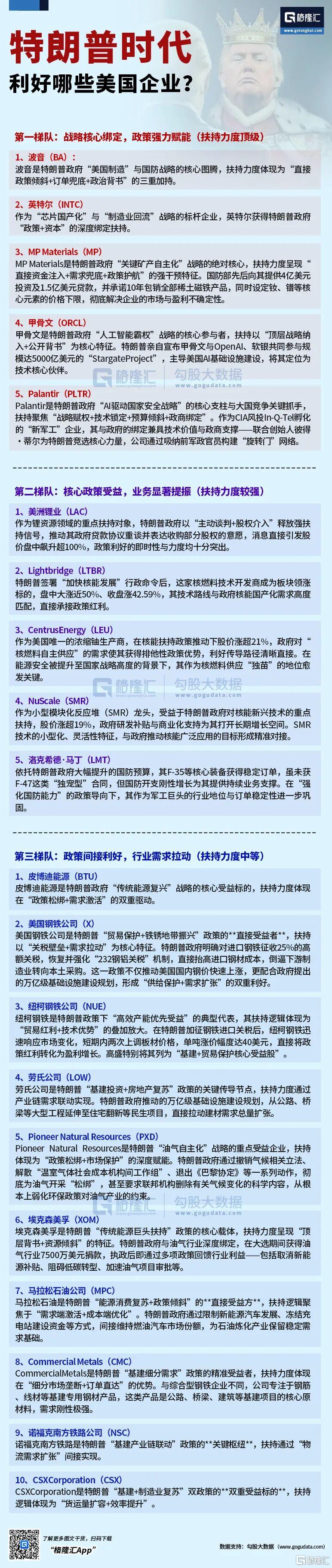
Group 1 - The article highlights the effectiveness of Trump's industrial policies, which were initially met with skepticism, but have since shown significant results in various sectors [1][14]. - The manufacturing sector has seen a return to the U.S. due to Trump's policies, with Intel and Boeing benefiting from government support and contracts [3][4]. - The U.S. steel industry has experienced a resurgence, with domestic steel prices rising and companies like U.S. Steel expanding operations due to protective tariffs and infrastructure demands [4][27]. Group 2 - Trump's focus on strategic sectors such as defense and critical resources has evolved into a systematic approach, with companies like MP Materials and Palantir positioned as key beneficiaries [6][7]. - MP Materials has transformed into a leading U.S. rare earth supplier with significant government backing, highlighting the importance of resource security [7][8]. - The nuclear energy sector has also gained traction, with companies like Centrus Energy and NuScale receiving substantial government support, leading to stock price increases [8][20][22]. Group 3 - In the energy sector, Trump's policies have led to increased domestic oil and gas production, benefiting companies like ExxonMobil and Pioneer Natural Resources through regulatory rollbacks [11][30][31]. - The infrastructure sector has seen a positive impact from Trump's $1 trillion infrastructure plan, with companies like Lowe's and Commercial Metals experiencing significant revenue growth [12][29][34]. - The article emphasizes the importance of understanding the long-term implications of Trump's policies on various industries, suggesting that companies closely aligned with these strategies are likely to thrive [15][35].



“特不靠谱”?他的产业棋局,正在一个个落地成金!
格隆汇APP· 2025-09-29 11:11
Core Viewpoint - The article emphasizes that Trump's industrial policies, once dismissed as mere rhetoric, have proven effective in reshaping the U.S. industrial landscape, creating significant investment opportunities in various sectors [2][10]. Group 1: Manufacturing and Defense - Trump's pressure on companies like Carrier and Intel to bring manufacturing back to the U.S. was initially ridiculed, but it has led to substantial investments and job creation in the semiconductor industry, with Intel's Arizona factory ramping up production [3][4]. - Boeing has secured hundreds of billions in contracts, demonstrating the effectiveness of Trump's defense policies and the importance of domestic manufacturing [4]. - The U.S. steel industry has benefited from tariffs on imported steel, with domestic steel prices rising and companies like U.S. Steel expanding operations, creating thousands of jobs [4][10]. Group 2: Strategic Resource Independence - The article highlights the rise of MP Materials as a key player in the rare earths sector, supported by government investments and contracts, showcasing the shift towards resource independence [5][6]. - The nuclear energy sector has seen significant growth, with companies like Centrus Energy and NuScale receiving government support, leading to stock price increases and project advancements [6][7]. - Palantir has experienced a dramatic increase in market value, reflecting its central role in the government's AI-driven national security strategy [7][10]. Group 3: Energy and Infrastructure - Trump's policies aimed at traditional energy have led to increased domestic oil production, with companies like ExxonMobil and Pioneer Natural Resources benefiting from regulatory rollbacks and increased market share [8][9]. - The infrastructure sector has seen a positive impact from Trump's $1 trillion infrastructure plan, with companies like Lowe's and Commercial Metals reporting significant revenue growth due to increased demand for construction materials [9][10]. Group 4: Key Beneficiary Companies - Palantir is identified as a core beneficiary of the AI-driven national security strategy, with strong government ties and significant budget allocations [13]. - MP Materials, Lightbridge, and Centrus Energy are highlighted as key players in the critical minerals and nuclear sectors, benefiting from government support and policy initiatives [14][15][16]. - U.S. Steel and Nucor Steel are recognized for their direct benefits from trade protection policies and increased domestic demand for steel [19][21].


欧洲最大核电站失控!断电超4天,核爆炸危机恐在乌克兰重演
Sou Hu Cai Jing· 2025-09-29 05:30
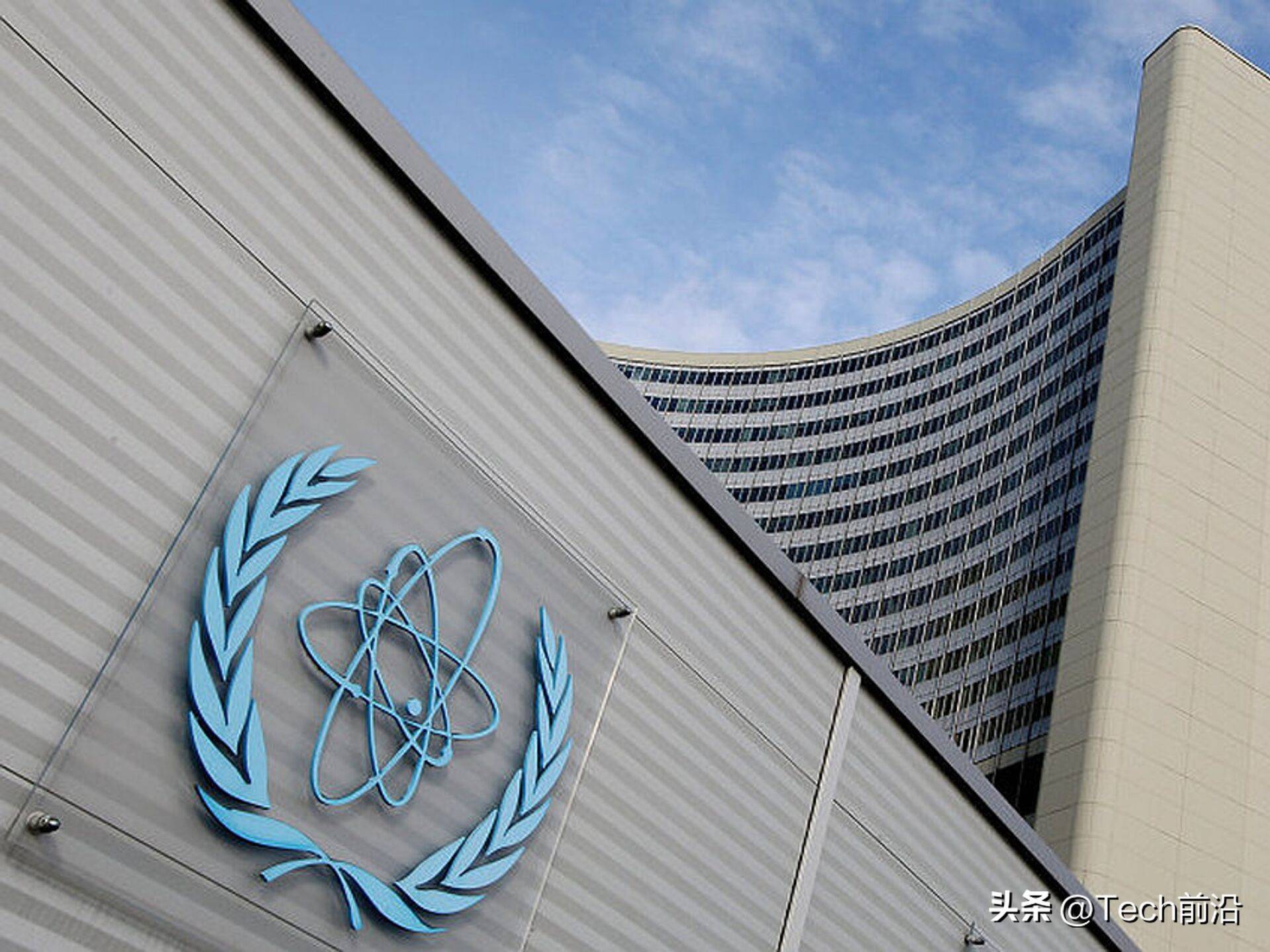
Core Viewpoint - The Zaporizhzhia Nuclear Power Plant, Europe's largest, is facing an unprecedented energy crisis due to the disconnection from the power grid, relying solely on emergency diesel generators for operation [3][4][5]. Group 1: Current Situation - The last connection to the power grid was severed, leaving the plant to depend on 72 emergency diesel generators, which are now operating continuously to supply power to critical systems [3]. - The plant's annual electricity generation accounts for one-fifth of Ukraine's total output, highlighting its significance in the national energy landscape [3]. - The situation is likened to a critically ill patient relying on life support, emphasizing the precariousness of the power supply [4]. Group 2: Historical Context - The crisis traces back to March 2022 when Russian forces took control of the plant, marking it as a dangerous hostage in the ongoing conflict [5]. - This incident marks the tenth power outage caused by military actions, with the duration of outages reaching unprecedented levels [5]. Group 3: Risks and Warnings - The International Atomic Energy Agency (IAEA) has warned that if external power is not restored within 48 hours, the reactor temperature could reach dangerous levels, reminiscent of the Fukushima disaster [7]. - Continuous monitoring of radiation data is being conducted by IAEA staff, indicating the seriousness of the situation [8]. Group 4: Broader Implications - The crisis is not just a regional issue but poses a significant threat to the energy security of Europe, especially during the winter peak demand [8]. - Emergency plans are being developed by the International Red Cross and the Ukrainian Ministry of Energy, reflecting the potential for a wider disaster [8].
能源高质量发展专家谈丨以能源安全新战略引领核能高质量发展 为推进中国式现代化建设筑牢战略支撑
国家能源局· 2025-09-29 03:41
Core Viewpoint - The article emphasizes the importance of nuclear energy in ensuring energy security, addressing climate change, and promoting green and low-carbon transformation in China, guided by the new energy security strategy proposed by President Xi Jinping [2][3]. Group 1: Historical Achievements and Transformations in Nuclear Energy - The nuclear industry has achieved significant progress and transformation under the new energy security strategy, focusing on safety, innovation, and enhancing core competitiveness [3]. - China has maintained the highest international safety standards in nuclear power development, approving over 10 nuclear power units annually for four consecutive years, with a total installed capacity leading globally [4]. - The nuclear power generation is projected to reach 450.9 billion kilowatt-hours in 2024, accounting for 4.5% of the total national power generation [4]. Group 2: Technological Advancements in Nuclear Power - China has made historic advancements in nuclear power technology, transitioning from following to leading in certain areas, with the "Hualong One" reactor becoming a key model for third-generation nuclear technology [5]. - The development of fourth-generation nuclear technology and the construction of the world's first modular small reactor "Linglong One" are notable achievements [5]. Group 3: Modern Industrial System Development - The nuclear industry has significantly enhanced its full industrial chain capabilities, focusing on uranium resource development, advanced nuclear fuel components, and digital transformation [6]. - The construction capacity for nuclear power projects has been systematically improved, enabling simultaneous construction of 40 nuclear power units [6]. Group 4: Safety and Operational Excellence - China's nuclear power operations adhere to the highest safety standards, achieving a perfect score in the WANO (World Association of Nuclear Operators) comprehensive index for its operating units in 2024, surpassing major nuclear countries [7]. Group 5: International Cooperation and Expansion - The collaboration with Russia on nuclear energy projects has set a global benchmark, with successful exports of nuclear power units to Pakistan and the establishment of the first overseas "Hualong One" reactor [8]. - China is actively participating in international nuclear fusion projects, contributing to significant global scientific endeavors [8]. Group 6: Future Opportunities and Challenges - The next decade presents significant opportunities for nuclear energy development, driven by global confidence in nuclear power and advancements in technology [9]. - Challenges include geopolitical tensions affecting the nuclear market and the need for strategic breakthroughs in cutting-edge technologies [9]. Group 7: Strategic Measures for Development - The focus is on achieving high-level self-reliance in nuclear technology, promoting innovation, and ensuring safety in nuclear power operations [10][11]. - Enhancing the industrial chain and fostering international cooperation are critical for the sustainable development of the nuclear industry [12].

美银美林:电价上涨带来居民抵制,美国数据中心面临挑战,太阳能和储能将是短期关键
美股IPO· 2025-09-29 00:18
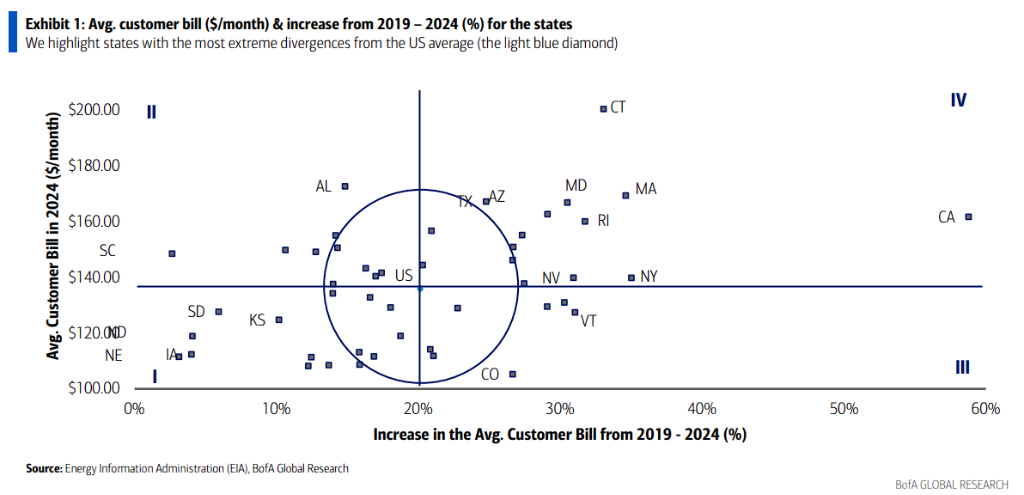
Core Viewpoint - The construction boom of AI data centers is driving a significant increase in electricity demand, leading to rising electricity prices and creating a dual challenge of "power scarcity" and "community opposition" in the U.S. [1][3][5] Group 1: Electricity Price Surge - The capacity price in the PJM interconnection has skyrocketed from $2.2 billion in the 2023/2024 delivery year to $16.1 billion in the 2026/2027 delivery year [7] - Capacity prices in the PJM "rest of market" region surged from $29 per megawatt-day in the 2024/2025 delivery year to $269 per megawatt-day in the 2025/2026 delivery year, marking an increase of over five times within a year [7][8] - This price surge has resulted in average electricity bills for residents in the PJM region increasing by 18% to 25% [8][10] Group 2: Community and Regulatory Response - At least 12 states in the U.S. are considering new policies to ensure data centers bear the costs of their electricity consumption to avoid passing these costs onto consumers [3][11] - Local policymakers are under pressure to create special rate structures that internalize the costs associated with data centers, indicating a shift in policy focus [11][12] - Community opposition, driven by concerns over rising electricity costs, water resource consumption, and noise pollution, is becoming a significant barrier to data center projects [13][14] Group 3: Energy Solutions - Solar and energy storage technologies accounted for 80% of the new electricity generation capacity in the U.S. in 2024, making them key solutions for meeting the rising electricity demand [4][16] - Natural gas is expected to play a crucial role in providing stable power in the short term, while nuclear energy is viewed as a long-term solution beyond the 2030s [18][19] - Major tech companies like Microsoft, Amazon, and Google are exploring agreements with nuclear energy firms to directly supply power to their data centers [19]

电价上涨带来居民抵制,美国数据中心面临挑战,太阳能和储能将是短期关键
Hua Er Jie Jian Wen· 2025-09-28 11:57
Core Insights - The construction of data centers in the U.S. is facing a dual challenge of power scarcity and community opposition, exacerbated by rising electricity prices driven by increased demand from these centers [1][6][8] Group 1: Electricity Price Surge - The capacity price in the PJM interconnection has skyrocketed from $2.2 billion in the 2023/2024 delivery year to $16.1 billion in the 2026/2027 delivery year, indicating a significant increase in electricity costs [3] - Capacity prices in the PJM "rest of market" area surged from $29 per megawatt-day in the 2024/2025 delivery year to $269 per megawatt-day in the 2025/2026 delivery year, marking a more than fivefold increase within a year [3] - This surge in electricity prices has resulted in an average bill increase of 18% to 25% for residents in the PJM region [3][6] Group 2: Policy Responses and Community Resistance - At least 12 states are considering new policies to ensure data centers bear the full costs of their electricity consumption, aiming to prevent the financial burden from falling on ordinary consumers [1][7] - Local policymakers are under pressure to create special rate structures that internalize the costs associated with data centers, reflecting a significant policy shift [7] - Community opposition, driven by concerns over rising electricity costs, water resource depletion, and noise pollution, is increasingly becoming a threat to data center projects [8][9] Group 3: Energy Solutions - Short-term solutions to the electricity demand crisis include solar and energy storage, which accounted for 80% of new generation capacity in the U.S. in 2024 [2][10] - The U.S. Energy Information Administration (EIA) reported that 48.6 GW of new capacity was added, with approximately 80% coming from solar and storage [10] - In the long term, natural gas and nuclear energy are viewed as essential components for ensuring stable power supply, with large tech companies exploring direct power agreements with nuclear energy providers [10][14]

信息大图:美国四分之一的核电站依赖俄罗斯铀
Sou Hu Cai Jing· 2025-09-28 11:36
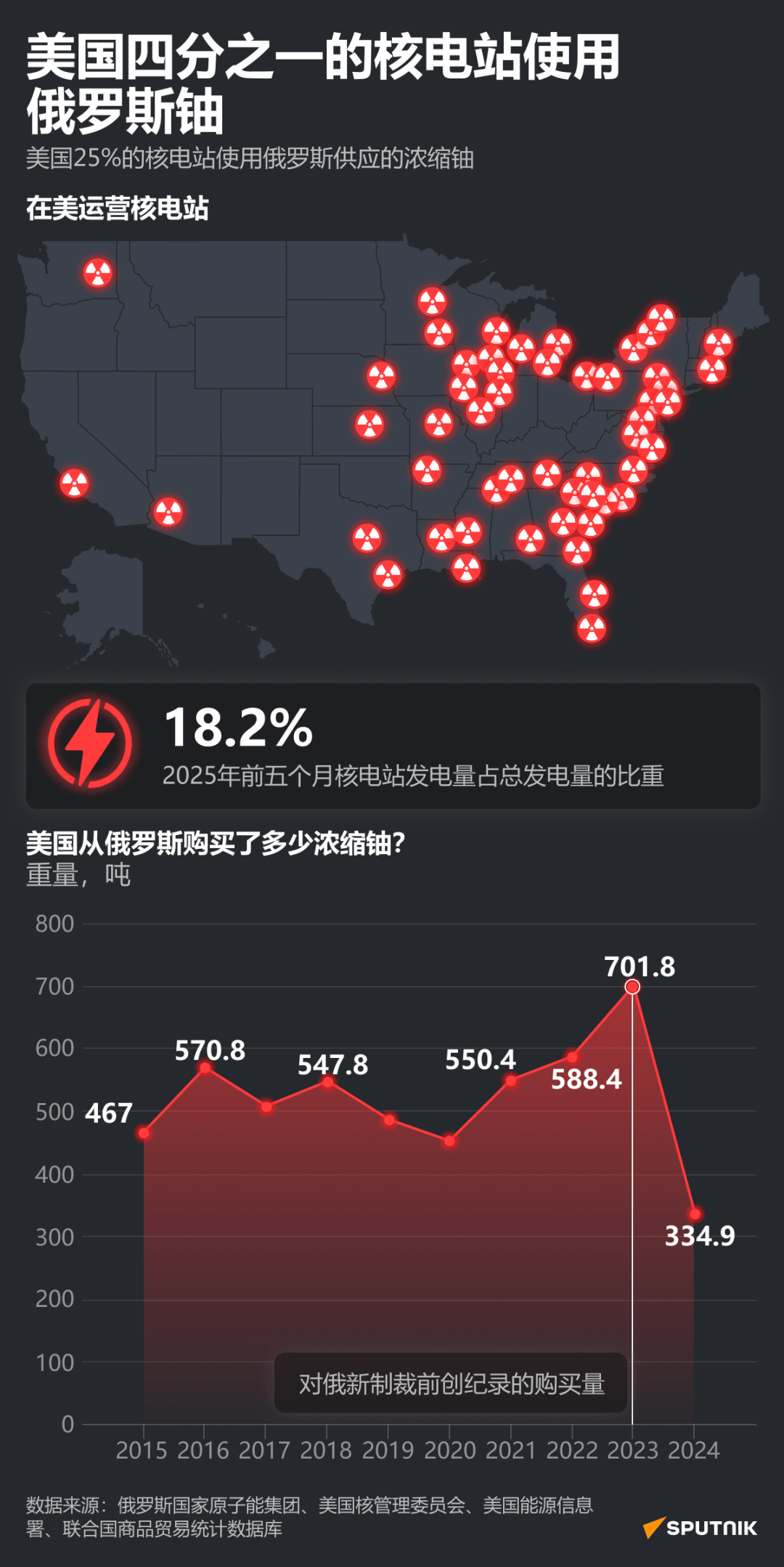
Core Insights - Despite high-profile sanctions from the United States, there is a significant ongoing purchase of enriched uranium from Russia, with projections indicating that by 2025, one-quarter of U.S. nuclear power plants will operate on Russian fuel [1]. Group 1: U.S. Nuclear Energy and Russian Uranium - In the first five months of this year, nuclear power accounted for 18.2% of the U.S. energy structure, highlighting its importance in the energy mix [1]. - The procurement of Russian uranium reached a record high of over 700 tons before new restrictions were implemented, indicating a strong reliance on Russian supplies [1]. Group 2: Data and Trends - Historical data shows a consistent increase in uranium purchases from Russia, with record levels noted prior to the introduction of new sanctions [5].
伊朗与俄罗斯签署大型核电合作协议
Xin Hua She· 2025-09-28 07:05
伊朗副总统兼伊朗原子能组织主席伊斯拉米22日率团抵达莫斯科,与俄方官员会晤并出席25日至28日在 莫斯科举行的"世界原子能周"国际论坛。(陈霄 沙达提) 据伊朗官方通讯社9月26日报道,伊朗与俄罗斯当天在莫斯科签署一项大型核电合作协议,双方将在伊 朗霍尔木兹甘省锡里克地区合作建设第三代核电站。 责任编辑:闫弘旭 签约仪式在莫斯科"世界原子能周"伊朗展馆举行,伊朗霍尔木兹公司代表伊朗原子能组织与俄罗斯国家 原子能公司签署协议。 据报道,协议金额约250亿美元,该项目是伊朗规模最大的核能工程之一,占地面积约500公顷,4个机 组总装机容量约5020兆瓦。目前已完成选址,工程设计、环境评估及前期场地准备工作正在推进。 ...