造船

Search documents
8月6日中船防务AH溢价达87.7%,位居AH股溢价率第38位
Jin Rong Jie· 2025-08-06 08:43
Group 1 - The Shanghai Composite Index rose by 0.45%, closing at 3633.99 points, while the Hang Seng Index increased by 0.03%, closing at 24910.63 points [1] - China Shipbuilding Defense's A-H share premium reached 87.7%, ranking 38th among A-H share premium rates [1] - At the close, China Shipbuilding Defense's A-shares were priced at 30.6 yuan, with a gain of 7.41%, and H-shares were priced at 17.8 HKD, up by 7.75% [1] Group 2 - China Shipbuilding Defense Equipment Co., Ltd. is a major shipbuilding enterprise under China Shipbuilding Group, originally established as Guangzhou Shipyard International Co., Ltd. [1] - The company was listed in Shanghai and Hong Kong in 1993, becoming the first A+H share listed shipbuilding enterprise in China [1] - To promote industry consolidation and enhance competitiveness, China Shipbuilding Defense acquired several companies in 2014 and 2015, integrating quality shipbuilding assets in South China [1] - The company aims to become a leading enterprise in the global marine and heavy equipment market, focusing on technology and service excellence [1]
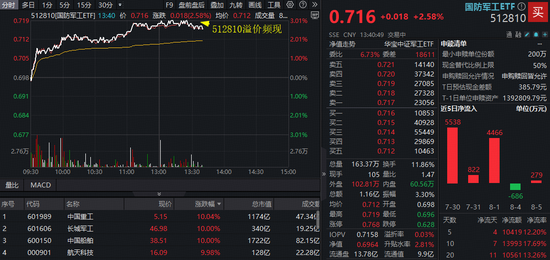
4000亿造船巨无霸关键进展!中国船舶、中国重工天量涨停,国防军工ETF放量上探3%!
Xin Lang Ji Jin· 2025-08-06 05:53
Group 1 - The defense and military industry sector continues to show strong performance, with the defense military ETF (512810) rising by 3% and reaching a three-and-a-half-year high, with a trading volume exceeding 116 million yuan [1] - The recent surge in the stocks of China Shipbuilding and China Shipbuilding Industry Corporation is attributed to the approval of their merger by the China Securities Regulatory Commission, marking a significant development in their consolidation [3] - The merger is expected to create the largest shipbuilding listed company globally, with combined total assets exceeding 400 billion yuan and projected annual revenue surpassing 130 billion yuan [3] Group 2 - Both China Shipbuilding and China Shipbuilding Industry Corporation are key components of the defense military ETF, with weightings of 5.54% and 3.85% respectively, contributing significantly to the ETF's recent performance [4] - The defense military industry is anticipated to experience a turning point in orders, driven by the ongoing goals of military modernization and upcoming events such as the September 3 military parade [4] - The defense military ETF (512810) covers a wide range of sectors, including traditional military forces and emerging technologies, and has recently lowered its investment threshold, making it more accessible to investors [6]


韩国股市今年上演大逆转
Guo Ji Jin Rong Bao· 2025-08-05 13:11
Core Viewpoint - The South Korean stock market has shown a remarkable recovery, with the KOSPI index rising significantly due to strong performances in technology, healthcare, and financial sectors, alongside government reforms aimed at improving corporate governance and attracting foreign investment [2][4]. Market Performance - On August 5, the KOSPI index closed at 3198.00 points, up 50.25 points or over 2% from the previous trading day [1]. - The KOSPI has seen a cumulative increase of over 33% since the beginning of 2025, marking a significant turnaround from being one of the worst-performing markets in Asia last year [2]. - The technology sector, which constitutes nearly 30% of the market, has surged by 45% over the past year, with major companies like Samsung Electronics and SK Hynix posting gains of 24% and 55%, respectively [2][3]. Sector Analysis - The financial sector, accounting for 13% of the market, has risen by 57%, driven by investor preference for high-dividend assets and optimistic expectations regarding loan growth following interest rate cuts by the Bank of Korea [3]. - The industrial sector, representing 17% of the market, has increased by 54%, fueled by a surge in global defense and infrastructure spending [3]. Government Initiatives - The South Korean government is implementing significant corporate governance reforms to reduce the excessive control of chaebols (family-owned conglomerates) over listed companies, aiming to enhance corporate valuations and strengthen minority shareholder rights [4][6]. - The Korean won has appreciated over 6% against the US dollar since the beginning of 2025, providing support for capital inflows [4]. Valuation Trends - The "Korea discount" phenomenon, where South Korean stocks were historically undervalued compared to other major Asian markets, has narrowed significantly this year, dropping from approximately 40% during political turmoil to below 30% by mid-July [5][6]. Economic Outlook - The South Korean Ministry of Finance is expected to announce an economic policy outlook projecting a 1% growth for the year, which is higher than current forecasts from the Bank of Korea and the International Monetary Fund [4].
宏观深度报告:跨越百年的产能调整经验,如何从失衡到再平衡
Soochow Securities· 2025-08-05 13:05
Group 1: Historical Capacity Adjustment Cases - The report analyzes three historical cases of capacity adjustment: the Long Depression (1873-1896), the Great Depression (1929), and Japan's capacity reductions in the 1970s and 1990s, highlighting their implications for supply-demand rebalancing[4] - During the Long Depression, nominal wage growth in the U.S. was only 5.4%, while industrial output increased over 300%, leading to significant supply-demand imbalances[16] - The Great Depression saw a shift from non-intervention to government intervention, with policies like the Agricultural Adjustment Act (AAA) and the National Industrial Recovery Act (NIRA) aimed at stabilizing production and prices[36] Group 2: Economic Impacts and Policy Responses - The Long Depression resulted in a cumulative CPI decline of 29.9% in the U.S., with real GDP growth averaging 3.5% annually, indicating severe deflationary pressures[19] - The AAA reduced agricultural output significantly, with oat production dropping by 57% from 1932 to 1934, leading to a price increase of 207%[37] - NIRA aimed to stabilize industrial production by setting production quotas and minimum prices, although it faced legal challenges and was eventually deemed unconstitutional[41] Group 3: Lessons for Emerging Industries - The report suggests that capacity reduction and anti-monopoly measures may alternate in emerging industries, necessitating a regulatory framework to ensure fair competition[4] - Historical cases indicate that government intervention is generally more effective than market self-correction in addressing capacity imbalances, as seen in the U.S. response to the Great Depression[4] - The transition from a production-oriented to a consumption-oriented society can be facilitated by policies that improve labor rights and wages, as evidenced by labor movements during the Long Depression[4]
宏观深度报告20250805:跨越百年的产能调整经验:如何从失衡到再平衡
Soochow Securities· 2025-08-05 11:53
Group 1: Historical Capacity Adjustment Cases - The report analyzes three historical cases of capacity adjustment: the Long Depression (1873-1896), the Great Depression (1929), and Japan's capacity reductions in the 1970s and 1990s, highlighting lessons for supply-demand rebalancing[6] - During the Long Depression, nominal wage growth was only 5.4% in the U.S., while industrial output increased over 300%, leading to a significant supply-demand imbalance[10] - The Great Depression saw a shift from non-intervention to government intervention, with policies like the Agricultural Adjustment Act (AAA) and the National Industrial Recovery Act (NIRA) implemented to stabilize production and demand[30][34] Group 2: Mechanisms of Supply-Demand Rebalancing - Capacity imbalances can create a negative feedback loop, potentially lasting 20-30 years if not controlled, as seen in the Long Depression and Japan's lost decades[1] - Government intervention is more effective than non-intervention in addressing capacity imbalances, as demonstrated by the U.S. response to the Great Depression compared to Japan's approach in the 1990s[2] - Successful rebalancing requires simultaneous efforts in controlling capacity, restoring credit, and stabilizing employment, rather than relying solely on supply or demand policies[3] Group 3: Economic and Social Implications - Large-scale supply-demand imbalances can present opportunities for improving labor wages and boosting domestic demand, facilitating a shift from production-oriented to consumption-oriented economies[4] - In the U.S., labor movements during the Long Depression led to wage increases, with wage growth eventually reaching 49% of nominal GDP growth by the late 19th century[26] - Japan's capacity adjustments in the 1970s relied on government-led initiatives, while the 1990s saw a shift towards market-driven solutions, resulting in slower recovery from imbalances[5]
韩方披露韩美贸易谈判幕后细节:一顶红色棒球帽成关键……
Huan Qiu Wang· 2025-08-05 08:20
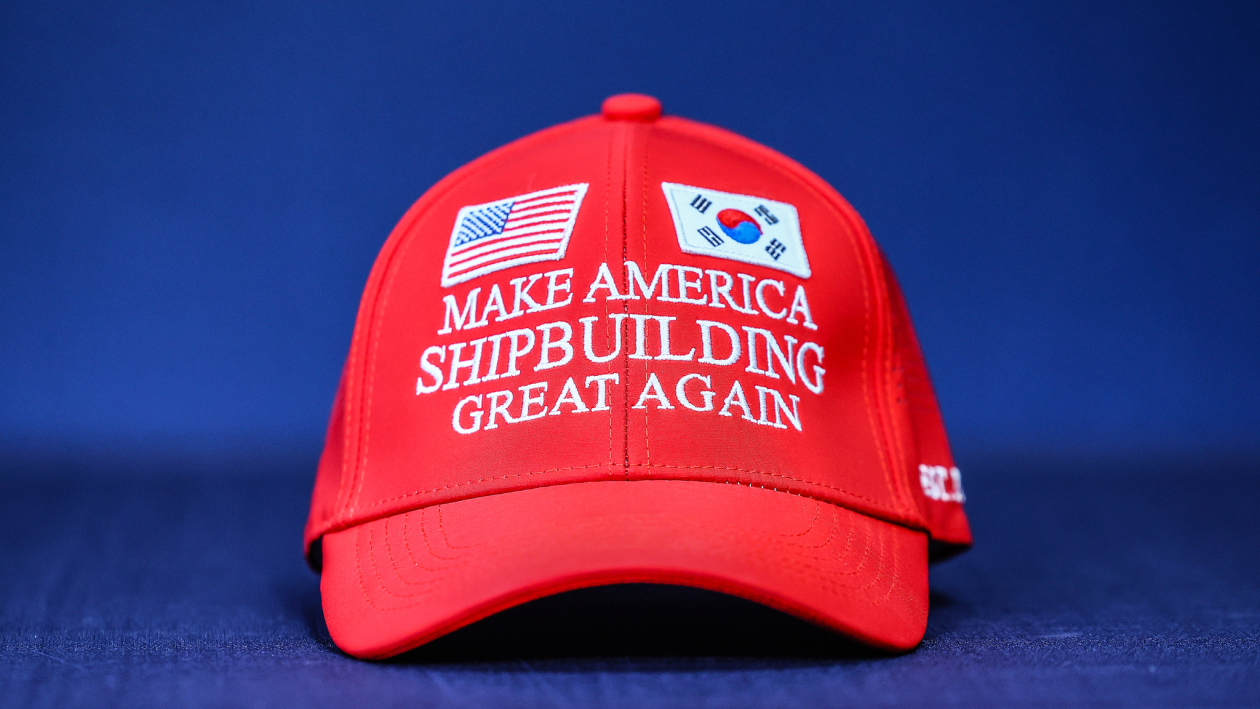
Group 1 - The core of the article discusses the recent trade agreement between the US and South Korea, highlighting the symbolic role of a red baseball cap labeled "Make American Shipbuilding Great Again" (MASGA) in the negotiations [1][3][4] - The MASGA project, led by the South Korean government, aims to encourage significant investments from South Korean shipbuilding companies in the US, supported by financial backing from public institutions like the Korea Export-Import Bank [3][6] - The design and production of the MASGA cap involved collaboration with local manufacturers in Seoul, and the concept was inspired by the preferences of the US President [3][4] Group 2 - The trade agreement framework includes South Korea investing $350 billion in the US and purchasing $100 billion worth of liquefied natural gas and other energy products [8] - Despite the agreement, there are concerns within South Korea regarding the implications of a 15% tariff on exports and the overall impact on the shipbuilding industry [9] - Ongoing discussions indicate that while a framework has been established, significant issues remain unresolved, particularly regarding agricultural topics and the specifics of the $350 billion investment [9]
港股异动|中船防务(00317)涨超5% 上半年国内船企利润释放得到验证 黄埔文冲新船订单储备将支撑公司盈利
Jin Rong Jie· 2025-08-04 03:08
Core Viewpoint - China Shipbuilding Defense (00317) has experienced a significant stock price increase, attributed to a positive earnings forecast for the first half of 2025, indicating a substantial year-on-year profit growth [1] Group 1: Earnings Forecast - The company expects a net profit attributable to shareholders of RMB 460 million to 540 million for the first half of 2025, representing a year-on-year increase of 213.25% to 267.73% [1] - Shenwan Hongyuan noted that the anticipated earnings growth for the first half of 2025 exceeds expectations, confirming the profit recovery of domestic shipbuilding enterprises [1] Group 2: Market Trends - New ship order volume declined year-on-year from January to June but showed a month-on-month recovery in June [1] - The report suggests that ship prices and order volumes are likely to rebound further, leading to an upward trend in the backlog of orders for Chinese shipbuilding companies [1] Group 3: Valuation and Growth Prospects - Jianyin International has reiterated a "outperform the market" rating for China Shipbuilding Defense, setting a target price of HKD 23.7 to reflect improved earnings visibility and easing trade tensions [1] - The report indicates an upward revision of net profit forecasts for 2025 to 2027 by 24% to 32%, based on seasonal factors in shipbuilding profits and more optimistic gross margin assumptions [1] - The subsidiary Huangpu Wenchong reportedly holds approximately RMB 54 billion in new ship orders, which is expected to support an average annual compound growth rate of 70% in profits from 2025 to 2027 [1]
海外政策周聚焦:关税谈判日期截止,特朗普关税政策后续路径如何演变?
Western Securities· 2025-08-03 07:20
Tariff Negotiations - On July 9, President Trump announced a delay in "reciprocal" tariffs until August 1, with a commitment that this date "will not change" [2] - By August 1, the U.S. had reached trade agreements with most major trading countries, reducing uncertainty around tariff policies [2] - The new tariff rates are expected to be lower than previous proposals but will still range from 10% to 20% for various countries [16] Economic Impact - The Yale Budget Lab estimates that the tariffs could generate $2.3 trillion in revenue for the U.S. government over the next 10 years, assuming import shares remain unchanged [3] - The increase in tariffs may lead to a 1.8% rise in consumer prices in 2025 if the Federal Reserve does not respond with policy changes [17] - The tariffs are projected to decrease GDP growth by 0.5 percentage points in 2025 and 2026 due to increased consumer burden and retaliatory measures [17] Currency and Investment - Increased investment in the U.S. and procurement of American goods may support the dollar's exchange rate and facilitate the return of manufacturing [24] - The combination of trade surplus and capital inflow could lead to a temporary appreciation of the dollar [24] Inflation and Federal Reserve Response - The impact of tariffs on inflation is expected to become fully evident in July and August, with price adjustments typically occurring 1-3 months after tariff implementation [25] - Following recent comments from Fed Chair Powell, the probability of a rate cut in September has dropped below 50% [25] Risk Factors - There are significant geopolitical risks that could exceed expectations, potentially impacting trade agreements and economic stability [35]
韩美FTA名存实亡?韩国用3500亿美元换15%关税后,还有这些悬念
Di Yi Cai Jing· 2025-08-01 09:21
Group 1: Trade Agreement and Tariffs - The US and South Korea have reached a trade agreement that includes a 15% tariff on South Korean goods, which eliminates uncertainty for South Korean industries but poses future challenges [1][2] - South Korea will invest $350 billion in US-selected projects, with $100 billion allocated for energy products [1][4] - The agreement includes a reduction of US tariffs on South Korean automobiles to 15%, while South Korea will not further open its rice and beef markets [1][5] Group 2: Economic Impact on Industries - The 15% tariff is seen as a negative long-term impact on South Korea's economy, especially as it loses the preferential treatment previously granted under the FTA [2][6] - The shipbuilding industry, which accounts for about 7% of South Korea's GDP, is expected to benefit from the agreement, with $150 billion earmarked for shipbuilding cooperation [4][5] - The automotive sector is significantly affected, with companies like Kia and Hyundai reporting substantial profit declines due to the new tariffs [6][7] Group 3: Future Considerations - There are uncertainties regarding the actual implementation of the $350 billion investment, which represents about 70% of South Korea's annual budget and 10% of its GDP [8] - Ongoing negotiations may lead to further disputes, particularly in the agricultural sector, where South Korea is resistant to opening its markets for rice and beef [7][8] - The potential for additional investments from South Korean conglomerates to meet US demands remains a key point of observation [7][8]
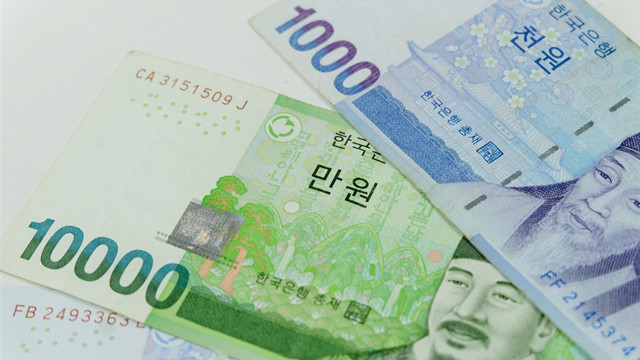
豪掷3500亿美元后,韩国汽车松了口气
汽车商业评论· 2025-07-31 23:09
尽管有贸易协议在手,韩国还是与欧盟和日本一样,面临着15%的关税。在上周日本与美国达成15%的关税税率协议后,韩国面临的压力不断增大,因 为日本是汽车和制造业领域的主要竞争对手。 作者 / 钱 亚 光 编辑 / 黄 大 路 设计 / 柴 文 静 来源 / B L O O M B E R G , K o r e a t i m e s, A u t o m o t i v e n e w s 特朗普于7月30日在其社交媒体平台上发文称:"我们已就对韩国的关税达成一致,为15%。美国则无需缴纳关税。" 就在8月1日这一各国必须与美国达成协议的最后期限的前一天,韩国方面也宣布了这一消息。若韩国未能达成协议,将面临更高的关税处罚。若韩国未 达成协议,其需缴纳的关税税率将为25%。 4月份,韩国曾短暂面临25%的关税,之后美国对一些国家暂停征收关税。此次暂停将于本周五到期。新的15%的关税高于许多国家自4月以来所支付的 最低10%的关税。 谈判内容涉及广泛 "我很高兴地宣布,美国已与韩国达成一项全面且完整的贸易协议。协议内容是,韩国将向美国提供 3500 亿美元,用于投资美国拥有和控制的项目,这 些项目将由我进行选定。 ...