
石化

Search documents
东北首个万亿之城近在眼前
Zhong Guo Xin Wen Wang· 2025-11-07 02:09
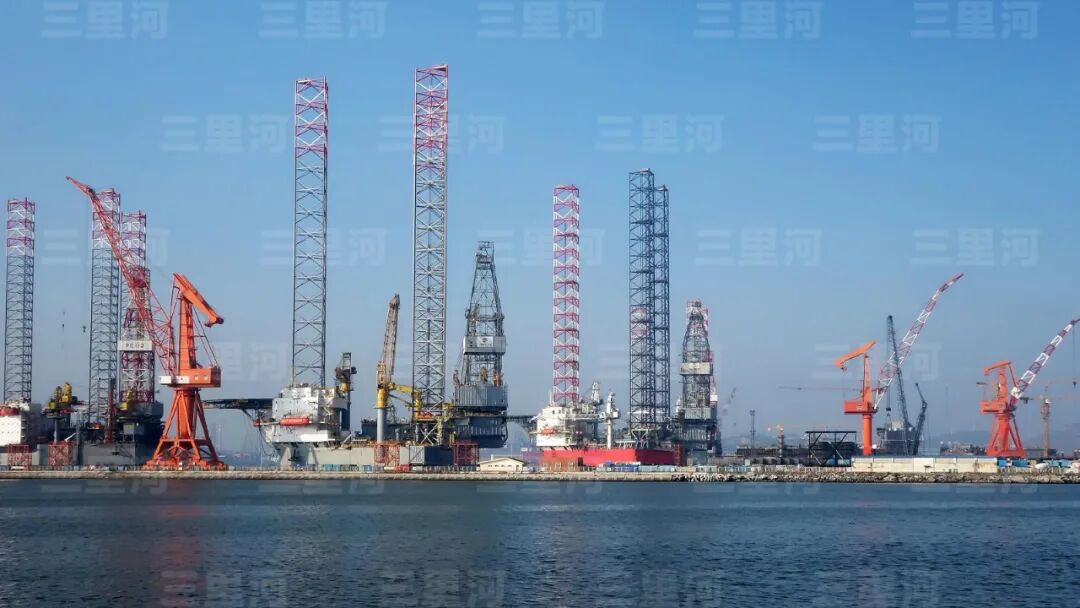
Core Viewpoint - Dalian is on track to become the first city in Northeast China to achieve a GDP of over 1 trillion yuan, with a current GDP of 951.69 billion yuan in 2024, and a growth rate of 6.0% in the first three quarters of 2025, surpassing the national average by 0.8% [1][3][5]. Economic Contributions - The industrial sector is crucial for Dalian's economy, contributing 60% to GDP growth in 2023, with the petrochemical industry leading at a projected output of 425.6 billion yuan in 2024, ranking first in Northeast China and fourth nationally [4][5]. - Dalian's port economy is another significant asset, with the port ranking fourth globally in container port performance, handling over 98% of Northeast China's foreign trade containers and 60% of crude oil transshipment [7][8]. Trade and Export Performance - Dalian's foreign trade accounts for approximately 60% of Liaoning Province's total and 40% of Northeast China's total, with exports reaching 185.58 billion yuan in the first three quarters of the year, marking a growth of 16.4% [8]. - Key export sectors such as shipbuilding, automotive parts, and vehicles have seen substantial growth rates of 32.8%, 30.4%, and 241.8% respectively [8]. Emerging Industries - Dalian is focusing on new economic drivers, with strategic emerging industries projected to account for 14% of GDP in 2024, aiming to increase to 15% this year, which will inject new vitality into the city's economic growth [8][12]. Regional Impact - Achieving the 1 trillion yuan GDP milestone would not only signify a numerical achievement for Dalian but also enhance its capacity to drive regional development, serving as a model for other cities in Northeast China [12][13].

石化ETF(159731)逆势上行,近10个交易日净流入1.04亿元
Sou Hu Cai Jing· 2025-11-07 02:08
Core Insights - The Petrochemical ETF has seen a net value increase of 23.79% over the past six months, with a maximum monthly return of 15.86% since its inception [3] - The ETF has outperformed its benchmark with an annualized excess return of 6.01% over the last six months [3] - The ETF has the lowest maximum drawdown of 6.47% compared to its benchmark and other comparable funds [3] - Tracking accuracy is high, with a tracking error of only 0.035% over the past month, the best among comparable funds [3] Performance Metrics - The Petrochemical ETF's longest winning streak lasted for six months, with a total increase of 23.51% during that period [3] - The average return during the months of increase is 5.06% [3] - The maximum drawdown relative to the benchmark is 0.14% [3] Index Composition - The ETF closely tracks the CSI Petrochemical Industry Index, with the top ten weighted stocks accounting for 56.05% of the index [3] - The top ten stocks include Wanhua Chemical, China Petroleum, and Yilong Shares, among others [3][5] - The weightings of the top stocks are as follows: Wanhua Chemical (10.47%), China Petroleum (7.63%), and Yilong Shares (6.44%) [5]




大连冲刺万亿之城助力东北振兴
Zhong Guo Xin Wen Wang· 2025-11-06 13:00
Core Viewpoint - Dalian is on track to become the first city in Northeast China to achieve a GDP of over 1 trillion yuan, with significant contributions from its industrial and port economies [1][3][4]. Economic Performance - Dalian's GDP reached 951.69 billion yuan in 2024, approaching the 1 trillion yuan mark, with a year-on-year growth of 6.0% in the first three quarters of 2025, outperforming the national average by 0.8 percentage points [1][3]. - The industrial sector contributed 60% to Dalian's GDP growth in 2023, with the petrochemical industry leading, projected to generate 425.6 billion yuan in 2024 [4]. Industrial Strengths - Dalian is home to the world's largest PTA production base and the largest single construction oil refining project in China, showcasing its industrial prowess [4]. - The city's industrial added value growth rate reached 12.8% in the first three quarters of 2025, ranking among the top 15 sub-provincial cities [4]. Port Economy - Dalian Port has risen to the fourth position globally in the Container Port Performance Index, handling over 98% of Northeast China's foreign trade containers [5]. - The port's container throughput is expected to exceed 5 million TEUs in 2024, marking a five-year high, and significantly contributing to logistics, trade, and finance sectors [5]. Emerging Industries - Dalian is focusing on new economic drivers, with strategic emerging industries projected to account for 14% of GDP in 2024, aiming to increase to 15% [6]. - Recent projects include a national AI computing center and the successful delivery of the first hydrogen fuel cell rail locomotive [6]. Regional Impact - Dalian's success in reaching the 1 trillion yuan GDP milestone could serve as a model for other cities in Northeast China, potentially attracting more investment and talent to the region [8]. - The city is expected to play a pivotal role in revitalizing the Northeast, enhancing its economic influence and collaborative networks with inland cities [7][8].
PP日报:震荡下行-20251106
Guan Tong Qi Huo· 2025-11-06 11:50
Report Industry Investment Rating - No relevant content provided Core View of the Report - The PP market is expected to experience a weak and volatile trend in the near future due to factors such as the increase in new production capacity, the decline in plastic weaving start - up rate, lower - than - expected Double Eleven stocking demand, and the lack of large - scale centralized procurement [1] Summary by Relevant Catalogs Market Analysis - PP downstream start - up rate increased by 0.24 percentage points to 52.61% week - on - week, remaining at a relatively low level compared to the same period in previous years. However, the plastic weaving start - up rate dropped by 0.2 percentage points to 44.2%, with slightly fewer orders and slightly lower than the same period last year [1][4] - On November 6th, there were few changes in maintenance devices, and the PP enterprise start - up rate remained at around 82%, at a moderately low level. The production ratio of standard wire drawing dropped to around 21% [1][4] - Petrochemical inventory is currently at a neutral level compared to the same period in recent years, with significant inventory accumulation at the beginning of the month [1][4] - In terms of cost, the market has digested the news of Russian oil sanctions, and the meeting between Chinese and US leaders was in line with market expectations. OPEC+ decided to increase production by 137,000 barrels per day in December but suspend production increases in the first quarter of next year, resulting in a narrow - range fluctuation of crude oil prices [1] - New production capacity of 400,000 tons per year from PetroChina Guangxi Petrochemical was put into operation in mid - October, and the number of maintenance devices has slightly decreased recently [1] Futures Market - The PP2601 contract decreased by 0.57% with increased positions, closing at 6471 yuan/ton, below the 20 - day moving average. The trading range was between 6415 yuan/ton and 6490 yuan/ton, and the open interest increased by 8183 lots to 652,784 lots [2] Spot Market - Most spot prices of PP in various regions declined, with wire drawing priced at 6240 - 6560 yuan/ton [3] Fundamental Tracking - On the supply side, on November 6th, there were few changes in maintenance devices, and the PP enterprise start - up rate remained at around 82%, at a moderately low level [1][4] - On the demand side, as of the week ending October 31st, the PP downstream start - up rate increased by 0.24 percentage points to 52.61% week - on - week, remaining at a relatively low level compared to the same period in previous years. The plastic weaving start - up rate dropped by 0.2 percentage points to 44.2%, with slightly fewer orders and slightly lower than the same period last year [1][4] - Petrochemical inventory in the early morning of Thursday decreased by 20,000 tons to 690,000 tons, 20,000 tons higher than the same period last year [4] - The Brent crude oil 01 contract dropped to $64 per barrel, and the CFR propylene price in China remained flat at $740 per ton [5]
五市经济增速跑赢全省 湛江梅州工业增长快
Nan Fang Ri Bao Wang Luo Ban· 2025-11-06 09:04
Economic Growth - Five cities, Meizhou, Zhanjiang, Chaozhou, Shanwei, and Qingyuan, have economic growth rates exceeding the provincial average of 4.1%, with rates of 6.0%, 5.0%, 5.0%, 4.5%, and 4.4% respectively [2] - Meizhou's economic growth accelerated significantly from 3.6% last year to 6.0% this year, maintaining the highest growth rate in the province [2] - Zhanjiang's economic growth also improved from 1.2% last year to 5.0% this year, indicating a strong recovery [2] Industrial Performance - Meizhou's industrial added value increased by 9.0%, with significant contributions from the power, electronic information, and mechanical manufacturing sectors, which grew by 7.7%, 24.7%, and 9.6% respectively [3] - Zhanjiang led the province with a 10.4% increase in industrial added value, driven by the green steel, petrochemical, and energy industries [3] - Other cities like Yunfu, Heyuan, Qingyuan, and Shaoguan also reported industrial growth rates above the provincial average of 3.5% [3] Infrastructure and Investment - Infrastructure investment in cities such as Chaozhou, Jieyang, Zhanjiang, and Meizhou grew significantly, with rates of 28.4%, 17.3%, 14.8%, and 13.9% respectively [5] - Industrial investment in Maoming surged by 30.7%, attributed to the implementation of various industrial projects [5] - Industrial technological upgrades also saw substantial growth, with Maoming, Meizhou, and Yangjiang reporting increases of 67.1%, 48.5%, and 39.0% respectively [5] Agricultural and Consumer Market - Agricultural output in cities like Shaoguan, Chaozhou, and Shanwei grew above the provincial rate of 4.9%, with respective growth rates of 6.2%, 6.2%, and 5.8% [6] - The tourism and consumption sectors showed positive trends, with Shantou's tourist turnover increasing by 8.1% and accommodation facilities seeing a 20.3% rise in overnight visitors [7] - Real estate sales also experienced growth, with Yangjiang's sales area increasing by 15.9% and Chaozhou's real estate development investment rising by 46.6% in September [7]
又一百万吨级乙烯项目,投产!
Zhong Guo Hua Gong Bao· 2025-11-06 08:45
该项目的设计产能为乙烯100万吨/年、丙烯52万吨/年、丁二烯14万吨/年、聚丙烯35万/年、BTX(苯/甲 苯/二甲苯)40万吨/年。 据印度尼西亚安塔拉通讯社报道,11月6日,乐天化学印度尼西亚公司新建的芝勒贡(Cilegon)石化工 厂举行落成仪式。 报道称,这座耗资39亿美元的工厂是印尼最大的现代化石化生产基地,生产15种石化产品,有望减少印 尼对进口石化原料的依赖,有力地促进了下游产业的发展。 ...
广东能源管理体系认证ISO50001认证办理准备材料广东认证机构办理要多久
Sou Hu Cai Jing· 2025-11-06 02:09
Core Insights - The article highlights the significant progress made by Guangdong Province in energy management system certification under the "dual carbon" strategy, with over 8,000 enterprises achieving ISO 50001 certification by the end of 2024, showcasing their commitment to green development and energy efficiency [1][2]. Group 1: Development and Current Status - Guangdong has developed a unique "Guangdong model" for energy management system certification, driven by government policies, industry associations, and proactive enterprise participation [1][2]. - The government incentivizes certification with rewards of 200,000 yuan for certified enterprises and a 50% subsidy for consulting fees, encouraging companies to engage in energy management [1][15]. Group 2: Impact of Certification - Certified enterprises have improved energy efficiency, reduced energy consumption, and lowered production costs, enhancing their market competitiveness. For instance, a precision manufacturing company in Dongguan achieved an 18% reduction in energy consumption per product, saving 20 million yuan annually [2][17]. - The widespread adoption of energy management system certification has contributed to Guangdong's overall energy conservation and emission reduction goals, positively impacting regional environmental quality and sustainable development [2][3]. Group 3: Preparation for Certification - Establishing energy benchmarks and performance indicators is crucial for achieving energy efficiency and reduction goals. Companies are encouraged to create comprehensive energy consumption databases to support management decisions [4][5]. - Engaging qualified third-party organizations for energy audits is essential to ensure data accuracy and identify potential energy-saving opportunities [5]. - A structured documentation system based on the "PDCA" (Plan-Do-Check-Act) cycle is vital for effective energy management, including energy policies, objectives, and operational guidelines [6][7]. Group 4: Certification Process - Compliance audits are critical during the certification process, requiring enterprises to adhere to local regulations and provide detailed energy consumption reports [10]. - The adoption of innovative "digital + energy-saving" models is encouraged, with examples of companies using AI and blockchain technologies to optimize energy consumption and enhance operational efficiency [11][12]. Group 5: Post-Certification Strategies - Digital upgrades of energy management systems through platforms that connect with provincial energy monitoring systems are essential for real-time data access and decision-making [13]. - Enterprises are advised to leverage policy incentives, such as subsidies for energy-saving technology upgrades, to enhance their energy management capabilities [15]. - Integrating energy management systems with carbon accounting frameworks can facilitate coordinated management of energy use and carbon emissions, leading to economic benefits through carbon trading [16]. Group 6: Case Studies and Future Outlook - The success of a precision manufacturing company in Dongguan, which implemented a "three transformations and three enhancements" strategy, serves as a model for others, achieving significant energy savings and cost reductions [17][18]. - Looking ahead, energy management system certification is expected to play a crucial role in enhancing corporate competitiveness and promoting sustainable development in the Guangdong-Hong Kong-Macao Greater Bay Area [19][20].
进口量居高不下 拉美石化业利润持续承压
Zhong Guo Hua Gong Bao· 2025-11-05 07:49
Core Insights - The Latin American chemical industry is facing significant profit pressure due to excessive imports and declining local production [1][2] - The region has become a dumping ground for surplus chemical products, leading to a lack of competitiveness for local industries [1][3] Group 1: Industry Challenges - The Latin American petrochemical sector is under continuous pressure from global supply surplus and low pricing, with local production declining while imports surge [1] - In Mexico, the state-owned oil company, Pemex, has seen its petrochemical output drop by nearly 75% over the past few years, exacerbating the need for imports [1][2] - Brazil is experiencing low demand and falling prices, with local production being squeezed by imports, despite some protective measures [2] Group 2: Infrastructure and Regulatory Issues - Mexico's natural gas production has decreased by one-third over the past 15 years, leading to a reliance on U.S. imports for 70% of its consumption, while pipeline infrastructure is at full capacity [2] - The Mexican chemical industry faces logistical challenges, with ports and transportation networks overwhelmed, and a significant increase in inspection rates causing delays [2] Group 3: Trade Policies and Solutions - Mexico has implemented aggressive trade protection measures similar to U.S. policies, including tariffs on chemical products with significant import increases [3] - The USMCA agreement allows for competitive pricing on natural gas and aims for greater self-sufficiency in raw material production [3] - Despite protective measures, the underlying issue of local production capacity remains a critical challenge for the industry [3]
SK Innovation 2025Q3 电池业务实现营收 1.81 万亿韩元,营业亏损 1248 亿韩元
HUAXI Securities· 2025-11-05 06:15
Investment Rating - The report recommends the industry [7] Core Insights - In Q3 2025, the company achieved revenue of 20.53 trillion KRW, a quarter-on-quarter increase of 1.23 trillion KRW and a year-on-year increase of 2.88 trillion KRW [3][20] - The operating profit reached 573.5 billion KRW, with a quarter-on-quarter increase of 991.1 billion KRW and a year-on-year increase of 996.8 billion KRW, primarily driven by the recovery in refining business and strong LNG power generation performance [3][20] - The battery business reported revenue of 1.81 trillion KRW with an operating loss of 124.8 billion KRW, although SK On achieved an operating profit of 17.9 billion KRW post-merger, marking the second consecutive quarter of profitability [9][20] Summary by Relevant Sections Overall Performance - Q3 2025 revenue was 20.53 trillion KRW, with a significant increase in operating profit to 573.5 billion KRW, attributed to improved refining margins and strong performance in energy and services [3][20] Business Segment Performance 1. **Refining Business** - Revenue of 12.44 trillion KRW and operating profit of 304.2 billion KRW, benefiting from higher refining margins and oil price increases [3][20] 2. **Petrochemical Business** - Revenue of 2.41 trillion KRW with an operating loss of 36.8 billion KRW, impacted by weak benzene and olefin markets [4][20] 3. **Lubricants Business** - Revenue of 980.5 billion KRW and operating profit of 170.6 billion KRW, driven by seasonal demand and inventory gains [5][20] 4. **Oil and Gas Exploration and Production** - Revenue of 320 billion KRW and operating profit of 89.3 billion KRW, affected by natural gas price declines [6][20] 5. **Battery Business** - Revenue of 1.81 trillion KRW with an operating loss of 124.8 billion KRW, but post-merger profitability was noted [9][20] 6. **Materials Division** - Revenue of 23.5 billion KRW with an operating loss of 50.1 billion KRW, showing a reduction in losses due to cost optimization [10][20] 7. **Energy and Services** - Revenue of 2.53 trillion KRW and operating profit of 255.4 billion KRW, benefiting from increased plant utilization [11][20] Outlook for Q4 2025 - The refining business may face downward pressure on oil prices due to OPEC+ production increases, but geopolitical uncertainties may support refining margins [12][20] - The petrochemical sector is expected to face challenges due to reduced supply and slow demand recovery [13][20] - The lubricants business may experience a weak market environment due to seasonal demand decline [14][20] - The battery business faces uncertainties from weak EV demand in the US and high initial costs of new plants [16][20] - The materials business aims to reduce losses through cost control and increased orders [17][20] - The energy and services division plans to maintain stable profitability through new gas field production [18][20]
逆市“吸金”超亿元,石化ETF(159731)份额创年内新高!创新驱动“提速”
Mei Ri Jing Ji Xin Wen· 2025-11-05 04:52
Group 1 - The core viewpoint of the articles highlights the performance and growth of the Petrochemical ETF (159731), which has seen a recent decline of 0.88% but has experienced continuous net inflows totaling 102 million yuan over the past eight days, reaching a new high of 188 million shares [1][2] - The latest research from the Shanxi Coal Chemical Research Institute of the Chinese Academy of Sciences introduces a strategy for trace halogenated alkane co-feeding that achieves near-zero CO2 emissions and high olefin selectivity without changing catalyst formulations, marking a significant technological breakthrough for the petrochemical industry [1] - Dongwu Securities emphasizes that technological innovation is the starting point for the petrochemical industry, investment optimization is the process, and demand expansion is the result, creating a cycle that drives high-quality growth in the industry [1] Group 2 - The Petrochemical ETF (159731) and its linked funds closely track the CSI Petrochemical Industry Index, with the top three sectors being refining and trading (25.60%), chemical products (23.72%), and agricultural chemical products (19.91%), indicating a clear direction towards green low-carbon and intelligent development in the petrochemical industry [2]