
调味品

Search documents
99%的创业者都搞反了:先抓细节,公司死得更快
3 6 Ke· 2025-11-19 00:36
Core Insights - The article emphasizes the importance of "systematic capability under detailed capability" as a key trait for successful entrepreneurs, highlighting that this skill can be developed over time rather than being innate [1][4][6] Group 1: Systematic Capability - Systematic capability refers to the ability of a company to avoid significant shortcomings in key areas and to build organizational-level capabilities [1][4] - Founders often lack systematic capabilities, leading them to seek partners or executives to fill their knowledge gaps, especially before Series B funding [2][4] - Building a system is an irreplaceable responsibility of the CEO, as a well-constructed system allows for the retention of talent and effective operations [4][7] Group 2: Detailed Capability - Detailed capability involves the pursuit of extreme professionalism in products and services, which must be established on top of systematic capability to ensure replication and iteration [1][5] - In industries like soy sauce production, the process involves numerous intricate steps where even minor changes can significantly affect the final product [5][6] - A mature business system translates strategic intentions into executable actions, with detailed capability focusing on the precise execution of these actions [5][6] Group 3: Continuous Improvement - Details serve as the core feedback source for system iteration and optimization, allowing the system to evolve based on insights from customer feedback and operational data [6][7] - Successful entrepreneurs maintain a habit of being present and engaged, using insights from various sources to identify potential system weaknesses or opportunities [6][7] Group 4: Case Studies - The article references Huawei's evolution from a hero-based management style to a structured system that emphasizes detail-oriented management, showcasing the value of a robust management system as a core asset [7]



山西省河津市市场监督管理局2025年食品安全监督抽检信息公告(第3期)
Zhong Guo Zhi Liang Xin Wen Wang· 2025-11-18 06:36
Core Viewpoint - The article reports on the results of food safety inspections conducted in Hejin City, revealing that out of 240 batches tested, 5 batches were found to be non-compliant with food safety standards, while 235 batches passed the inspections [4]. Summary by Categories Non-compliant Samples - A total of 5 batches were identified as non-compliant, specifically in the category of agricultural products, due to pesticide residue exceeding the allowed limits. The specific violations included: - Sweet peppers with excessive levels of thiamethoxam - Ginger with excessive levels of chlorpyrifos - Eggs with excessive levels of flufenoxuron [4][5]. Compliant Samples - Out of the 240 batches tested, 235 were compliant, categorized as follows: - 129 batches of agricultural products, tested for various pesticide residues including flufenoxuron, chlorpyrifos, and others [4]. - 38 batches of catering food, tested for preservatives and other additives [5]. - 2 batches of edible oils, tested for quality indicators [6]. - 17 batches of condiments, tested for various chemical residues [5]. - 6 batches of pastries, tested for preservatives and other quality indicators [6]. - 3 batches of alcoholic beverages, tested for alcohol content and preservatives [7]. - 1 batch of dairy products, tested for protein and other quality indicators [7]. - 11 batches of grain products, tested for heavy metals and toxins [8]. - 4 batches of sugar, tested for sugar content and quality indicators [8]. - 10 batches of beverages, tested for various chemical residues and microbial content [8]. - 2 batches of candy, tested for preservatives and microbial content [8]. - 3 batches of canned goods, tested for toxins and preservatives [8]. - 3 batches of starch and starch products, tested for heavy metals and preservatives [9]. - 2 batches of convenience foods, tested for preservatives and microbial content [9]. - 2 batches of vegetable products, tested for heavy metals and preservatives [9]. - 2 batches of biscuits, tested for quality indicators and microbial content [10]. Regulatory Actions - The local authorities have mandated the relevant units to conduct timely investigations and take necessary actions such as sealing, removing from shelves, and recalling the non-compliant products to mitigate food safety risks [10].
全国最大酵母蛋白专用生产线投产
Ge Long Hui· 2025-11-18 04:54
Core Viewpoint - The Yichang High-tech Zone Baiyang Angel Biotechnology Industrial Park has completed its first phase with a total investment of 1.75 billion yuan, marking the launch of a large-scale yeast protein production line, which is the most advanced in the country [1] Group 1: Investment and Production - The first phase of the industrial park was built with a total investment of 1.75 billion yuan [1] - The yeast protein production line has a monthly stable output of approximately 900 tons [1] Group 2: Industry Significance - The yeast protein production line is noted for its high production efficiency and environmental friendliness compared to traditional animal and plant proteins [1] - Yeast protein has been recognized as a high-quality supplementary protein source [1] Group 3: Regulatory Approval - By the end of 2023, the yeast protein developed by Angel has been included in the new food raw material directory by the National Health Commission, making it the first approved protein raw material in the microbial field in China [1] - This approval breaks the limitations of traditional protein sources and enhances human absorption [1]

2026年,你的钱该放哪里?一份“哑铃型”配置指南
Ge Long Hui· 2025-11-18 04:27
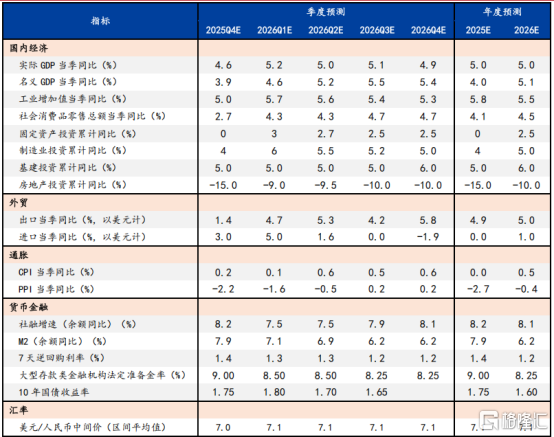
Group 1 - The core viewpoint for 2026 asset direction emphasizes "policy efforts and the rise of new momentum, with A-shares remaining the core battlefield, but structure being more important than position" [1] - In 2026, the macro environment is characterized by a "comprehensive effort period" for policies, with GDP targets expected to remain around 5%, and monetary easing and fiscal expansion as the main themes [1][2] - Key economic indicators for 2026 include a projected actual GDP growth of 5.0%, nominal GDP growth of 5.1%, and a retail sales growth of 4.5% [2][3] Group 2 - The export growth for 2026 is expected to be around 5%, with a recovery in exports to the U.S. and highlights in the "Belt and Road" initiative and AI industry chain [3][4] - The investment strategy suggested is a "barbell strategy," focusing on both growth and consumption, with a moderate rotation in between [5][6] - The technology growth sector is highlighted, focusing on "new momentum" such as AI, new energy, and self-controlled technologies, supported by the "14th Five-Year Plan" [4][5] Group 3 - The consumption sector is seen as a key area for structural recovery in 2026, with specific attention to sectors like medical services, aviation, home appliances, and non-alcoholic beverages, which show strong earnings growth and low valuations [7][8] - The "招商上证消费80ETF联接C" is recommended as a long-term investment tool for exposure to the consumer sector, with a focus on stable earnings and low fees [7][8] - The "招商中证白酒指数C" is identified as a stable investment in the consumer sector, with strong performance expected leading up to the Spring Festival [8][9]
消费行业投资机会解读
2025-11-18 01:15
Summary of Key Points from Conference Call Records Industry Overview - The conference call discusses the consumer industry, particularly focusing on the recovery of the Consumer Price Index (CPI) and its implications for consumption trends in China. The core CPI has shown a continuous recovery for six months, reaching 1.2% in October, which is expected to support short-term consumption and continue until the Spring Festival next year [1][3][4]. Core Insights and Arguments - **Economic Growth and Policy Support**: The economic growth target for 2026 is expected to remain around 5%. Macro policies will increasingly focus on domestic demand, enhancing support for consumer markets, making them more attractive in the coming year [1][4]. - **Investment Opportunities in Consumer Sectors**: The A-share market has seen increased attention on certain consumer sectors, particularly those that are undervalued and poised for recovery, such as discount retail, snacks, and domestic beauty products. High-growth service sectors like outdoor economy and medical services also present investment potential [1][5][6]. - **Sector Rotation in Q4**: The market is shifting towards a style rotation logic, with relatively low valuation sectors like medical services, aviation, home appliances, shopping goods, and condiments showing high allocation value [1][5]. - **Airline Sector Performance**: The airline sector is experiencing upward trends influenced by factors such as improved Sino-Japanese relations, tightened aircraft supply, and passenger and cargo volumes exceeding pre-pandemic levels. Stable oil prices and a strong currency also contribute positively [2][7][8]. Additional Important Insights - **Consumer Resilience**: Despite overall economic pressures, consumer performance has shown resilience, with consumption data remaining stable compared to investment declines. The government aims to increase the final consumption rate, which currently stands at about 56%, with room for improvement [3][4]. - **Focus on Specific Consumer Segments**: The call highlights specific consumer segments worth monitoring, including the IP economy and pet economy, which benefit from demographic trends like the rise of Gen Z consumers and single-person households [6]. - **Pharmaceutical Sector Opportunities**: Within the pharmaceutical industry, segments related to medical services, aesthetic medicine, and vaccines are highlighted as having investment potential due to supportive policies [9][10]. - **Trends in the Duty-Free Industry**: The duty-free sector is showing signs of recovery, with initial signs of bottoming out and an upward trend expected [14]. - **Food and Beverage Sector Dynamics**: The food and beverage industry is divided into two parts: liquor and mass-market products. The liquor sector is facing challenges, while mass-market leaders show operational resilience, particularly in frozen foods and restaurant chains [16][21][22]. Conclusion - The conference call provides a comprehensive overview of the consumer industry, highlighting the recovery of the CPI, investment opportunities across various sectors, and the implications of macroeconomic policies on consumer behavior. The airline and pharmaceutical sectors are particularly noted for their growth potential, while the food and beverage industry faces mixed challenges and opportunities.
动画电影《鬼灭之刃》让IMAX成抢票主战场;开拓海外市场仍是中企出海首要动因 | 消费早参
Mei Ri Jing Ji Xin Wen· 2025-11-17 23:15
Group 1: Film Industry - The animated film "Demon Slayer: Infinity Castle Chapter One" debuted in mainland cinemas, achieving a strong IMAX box office of 875 million yuan in its opening weekend, capturing 23% of the box office with only 1% of the screens [1] - The film's popularity has reignited the "midnight screening" trend in the Chinese film market, with IMAX midnight screenings accounting for 38% of the film's box office, generating 71 million yuan and setting a new record for IMAX midnight screenings of Japanese films in China [1] - The success of the film highlights the powerful appeal of established intellectual properties (IPs) and the importance of quality content in driving market recovery and attracting diverse international films to the Chinese market [1] Group 2: Corporate Expansion - A report by ACCA indicates that expanding overseas markets remains the primary motivation for Chinese companies venturing abroad, with traditional exports still dominating, while digital and platform-based models have a low representation [2] - From a financial management perspective, the report identifies regulatory compliance, geopolitical risks, and talent shortages as the three main financial risks faced by companies going abroad [2] - The traditional export model exposes companies to risks such as anti-dumping measures and exchange rate fluctuations, while the demand for cross-border tax compliance and localized talent is expected to benefit international audit, tax SaaS, and overseas outsourcing service providers [2] Group 3: Investment Activity - L'Oréal Group has made a minority equity investment in the Chinese skincare brand LAN, marking its first investment in a local skincare brand through its Shanghai-based investment arm [3] - This investment reflects L'Oréal's commitment to deepening its presence in the Chinese market and aims to enhance its portfolio in the clean skincare segment, while LAN is expected to benefit from resources that accelerate its internationalization [3] - The collaboration may spark a trend in the beauty industry, focusing on Eastern aesthetics and Chinese ingredients, potentially leading to a reevaluation of the value of Chinese beauty brands [3] Group 4: Corporate Financing - Tianwei Foods announced that it has submitted an application for issuing overseas listed shares (H-shares) to the Hong Kong Stock Exchange, with the application materials accepted by the China Securities Regulatory Commission [4] - This move is seen as a significant step for the company to expand its overseas financing channels and enhance its international influence, potentially attracting more international investors if the listing is successful [4] - The application process still faces uncertainties as it requires approvals from various regulatory bodies, but successful listing could provide new capital support for the company's long-term development [4]
四川天味食品集团股份有限公司关于发行境外上市股份(H股)备案申请材料获中国证监会接收的公告
Shang Hai Zheng Quan Bao· 2025-11-17 19:28
Core Viewpoint - Sichuan Tianwei Food Group Co., Ltd. has submitted an application for the issuance of overseas listed shares (H shares) to the Hong Kong Stock Exchange, which has been accepted by the China Securities Regulatory Commission (CSRC) [1][2]. Group 1 - The company submitted its application for H share issuance on October 30, 2025, and published the application materials on the Hong Kong Stock Exchange website on the same day [1]. - The application materials for the issuance have been accepted by the CSRC, indicating progress in the regulatory process [1][2]. - The company will continue to fulfill its information disclosure obligations based on the progress of the approval process from relevant regulatory bodies [2].

天味食品(603317):天味食品2025年三季报点评:外延驱动线上高增,盈利能力维持稳健
Changjiang Securities· 2025-11-17 14:12
Investment Rating - The investment rating for the company is "Buy" and is maintained [6]. Core Insights - The company's total revenue for the first three quarters of 2025 reached 2.411 billion yuan, representing a year-on-year increase of 1.98%. However, the net profit attributable to the parent company was 392 million yuan, down 9.3% year-on-year. The third quarter alone saw revenue of 1.02 billion yuan, up 13.79% year-on-year, with a net profit of 202 million yuan, an increase of 8.93% year-on-year [2][4][10]. - The company has shown a significant increase in online sales channels, with online revenue growing by 60.27% year-on-year, while offline sales decreased by 10.35% [10]. - The company maintains a stable profitability, with a gross profit margin of 39.44% for the first three quarters, slightly up by 0.16 percentage points year-on-year. The net profit margin decreased by 2.02 percentage points to 16.27% [10]. Summary by Relevant Sections Financial Performance - For the first three quarters of 2025, the company reported total revenue of 2.411 billion yuan, with a net profit of 392 million yuan, reflecting a decline in profitability compared to the previous year [2][4]. - In Q3 2025, the company achieved a revenue of 1.02 billion yuan, marking a 13.79% increase year-on-year, and a net profit of 202 million yuan, which is an 8.93% increase year-on-year [2][4]. Revenue Breakdown - Revenue from hot pot condiments was 806 million yuan (up 1.59% year-on-year), while Chinese cuisine condiments generated 1.339 billion yuan (up 5.26% year-on-year). However, sausage and cured meat condiments saw a decline of 27.87% to 158 million yuan [10]. - Online sales channels contributed 631 million yuan, showing a remarkable growth of 60.27% year-on-year, while offline sales totaled 1.764 billion yuan, down 10.35% [10]. Profitability Analysis - The company's net profit margin for the first three quarters was 16.27%, down 2.02 percentage points year-on-year, while the gross profit margin increased to 39.44% [10]. - In Q3 2025, the net profit margin was 19.81%, a decrease of 0.88 percentage points year-on-year, with a gross profit margin of 40.46%, up 1.63 percentage points year-on-year [10]. Growth Strategy - The company is focusing on external growth as a key strategy, with successful acquisitions enhancing its product innovation and market presence. The expected EPS for 2025 and 2026 are 0.57 yuan and 0.63 yuan, respectively, with corresponding PE ratios of 23 and 21 times [10].
海天味业(03288)非交易过户500万股至“佛山市海天调味食品股份有限公司-2025年A股员工持股计划”专用证券帐户
智通财经网· 2025-11-17 14:03
Core Viewpoint - Haitan Flavor Industry (03288) announced the transfer of 5 million shares to a dedicated securities account for the 2025 A-share employee stock ownership plan on November 14, 2025 [1] Group 1 - The company has completed the non-trading transfer of 5 million shares [1]

天味食品递表港交所,对外收购撑起“增长最快”调味品公司
Jing Ji Guan Cha Wang· 2025-11-17 11:46
Core Viewpoint - Tianwei Food (603317.SH) has recently filed for an IPO in Hong Kong, highlighting its status as the fastest-growing company among China's top five compound seasoning companies over the past three years, although signs of growth fatigue are emerging due to reliance on external acquisitions [1][2]. Group 1: Company Overview - Tianwei Food, headquartered in Chengdu, Sichuan, specializes in hot pot condiments, recipe-based seasonings, and sausage and cured meat seasonings, with brands including "Hao Ren Jia," "Da Hong Pao," "Tian Che," "Tianwei Food Catering High-end Customization," "Shi Cui Fang," and "Jia Dian Zi Wei" [2]. - As of 2024, Tianwei Food is projected to achieve revenue of 3.476 billion yuan and a net profit of 625 million yuan, marking new highs since its listing [2]. Group 2: Acquisition Strategy - The company has pursued external growth through acquisitions, including a 55% stake in Sichuan Shicui Food Co., Ltd. for 362 million yuan, which primarily serves B-end clients in the restaurant sector [2][3]. - Following the acquisition of Shicui Food, Tianwei Food acquired a 63.84% stake in Hangzhou Jia Dian Zi Wei Technology Co., Ltd., which specializes in compound seasonings and has seen significant revenue growth [3]. Group 3: Financial Performance - Despite the revenue boost from acquisitions, Tianwei Food reported a decline in both revenue and net profit in the first half of 2025, with revenue of 1.391 billion yuan (down 5.24%) and net profit of 190 million yuan (down 23.01%) [4]. - The company's operating cash flow also decreased significantly, dropping 44.89% year-on-year to 164 million yuan in the first half of 2025 [4]. Group 4: Market Challenges - Tianwei Food faces a competitive landscape in the seasoning market, with over 1,000 participants and more than 500 competitors in key segments like recipe-based and hot pot seasonings [5]. - The overall market for seasoning products has stabilized, with a compound annual growth rate of only 2.5% over the past five years, raising questions about the sustainability of Tianwei Food's growth through acquisitions [5].