
银行业

Search documents
2026年1月金融数据点评:开年信贷季节性大规模投放,金融数据走势较为平稳
Dong Fang Jin Cheng· 2026-02-24 06:28
Group 1: Financial Data Overview - In January 2026, new RMB loans amounted to 4.71 trillion, a year-on-year decrease of 420 billion[1] - The new social financing scale reached 7.22 trillion, a year-on-year increase of 1,662 billion[1] - M2 growth rate at the end of January was 9.0%, up 0.5 percentage points from the previous month[1] Group 2: Loan and Financing Trends - January's loan issuance was significantly lower year-on-year due to weak investment and consumption, with corporate and household loan demand remaining sluggish[2] - Corporate loans decreased by 330 billion year-on-year, with medium to long-term loans down by 280 billion[6] - Household loans showed a slight recovery, increasing by 127 billion year-on-year, driven by a low base effect from the previous year[7] Group 3: Social Financing Insights - The increase in social financing was primarily driven by government bond financing, which rose by 2,831 billion year-on-year[8] - Total social financing in January was 7.22 trillion, with a month-on-month seasonal increase of 5.01 trillion[8] - The stock growth rate of social financing at the end of January was 8.2%, slightly down by 0.1 percentage points from the previous month[8] Group 4: Monetary Supply Dynamics - M1 growth rate at the end of January was 4.9%, up 1.1 percentage points from the previous month, influenced by a low base effect[10] - The significant increase in M2 was attributed to a large rise in non-bank deposits, which increased by 2.56 trillion year-on-year[10] - The current high M2 growth rate is also supported by substantial government bond financing, which has converted into deposits for enterprises and households[12]
信贷开门红偏弱,春节后投融资景气度受关注
Di Yi Cai Jing· 2026-02-24 05:25
Core Viewpoint - The January financial data indicates a "good start" for social financing in 2026, supported by government and corporate bonds, despite overall weak credit issuance, with new RMB loans in January falling short of the previous year's figures [1][2]. Group 1: Credit Performance - In January, new RMB loans amounted to 4.71 trillion yuan, lower than 5.13 trillion yuan in January 2025, reflecting a year-on-year decrease in social financing of 317.8 billion yuan [2][3]. - The trend of loan pre-positioning is strengthening, with January loans accounting for 22%, 27%, and 32% of annual credit issuance from 2023 to 2025, respectively [2]. - The corporate sector saw a decrease in medium to long-term loans by approximately 280 billion yuan and a reduction in bill discounts by about 360 billion yuan, indicating a shift towards balanced lending practices [1][3]. Group 2: Residential Sector Insights - Residential loans increased by 456.5 billion yuan, with short-term loans rising by 1.1 trillion yuan, while medium to long-term loans decreased by 1.47 trillion yuan [8]. - The real estate market's slow recovery and early repayments are major factors affecting residential loan growth, with January's property sales down 18.9% year-on-year [8][9]. - Short-term loans are seen as a critical indicator for consumer recovery, with their growth attributed to low base effects, holiday influences, and new subsidy policies [8][9]. Group 3: Market Dynamics and Future Outlook - Analysts suggest that the demand for credit post-Spring Festival will be crucial for both corporate and residential sectors, with expectations of continued monitoring of credit structure and volume in February and March [5][7]. - The reduction in bill financing by 873.9 billion yuan indicates banks are reallocating resources towards general loans, reflecting a shift away from aggressive credit growth [7]. - The overall sentiment in the corporate sector remains cautious, with expectations of credit growth being tempered by high base effects and regulatory influences [3][6].
美联储就“移除声誉风险”监管规则征求意见,或进一步缓解加密企业去银行化
Xin Lang Cai Jing· 2026-02-24 04:54
Core Viewpoint - The Federal Reserve is seeking public comment on a proposal to officially eliminate the consideration of "reputational risk" in bank regulations, which could potentially end the trend of "Operation Chokepoint 2.0" that has led to the de-banking of legitimate industry clients, including cryptocurrency firms [1] Group 1 - The comment period for the proposal is set for 60 days [1] - If the proposal is approved, banks will not be able to pressure or restrict legitimate industry clients based on "reputational risk" [1] - Michelle Bowman, Vice Chair of Supervision at the Federal Reserve, stated that discrimination based on political stance, religious beliefs, or involvement in legal but unpopular industries is illegal [1]
抛售14亿美元黄金,俄罗斯央行为何反向操作?
Sou Hu Cai Jing· 2026-02-24 04:35
Core Viewpoint - The Russian Central Bank has reduced its gold reserves by approximately 300,000 ounces, marking the first monthly decline since October of the previous year, primarily due to increasing fiscal pressures from the ongoing conflict and sanctions [3][5]. Group 1: Reasons for Gold Sale - The sale of gold is a strategic decision to address a growing fiscal deficit, with significant expenditures related to the ongoing war and reduced energy revenues due to sanctions and price discounts [5][11]. - The Russian government has been utilizing a "mirror operation" strategy, where the Ministry of Finance sells assets from the National Welfare Fund while the Central Bank adjusts its reserves to fill budget gaps [5][11]. - The sale of 300,000 ounces, approximately 9.3 tons, represents a minor adjustment, constituting less than 0.5% of Russia's total gold reserves of over 2,300 tons [7]. Group 2: Market Impact and Gold Value - The impact of this sale on the global gold market is expected to be minimal due to the relatively small scale of the sale compared to global gold production, which is around 3,600 tons annually [9]. - Domestic demand for gold in Russia is increasing, with the removal of VAT on gold purchases leading to a projected retail purchase of over 60 tons by residents in 2025, indicating strong absorption capacity in the local market [9]. - Despite the sale, the total value of Russia's gold reserves has increased to $402.7 billion, reflecting a 23% month-on-month growth due to rising gold prices, indicating that the sale does not diminish the overall asset scale [7][11]. Group 3: Strategic Importance of Gold - Gold remains a critical asset for Russia, serving as a buffer against economic instability and geopolitical tensions, and the recent sale should not be interpreted as a long-term strategy shift away from gold [11]. - The ongoing international environment underscores the strategic value of gold, reinforcing its role as a secure asset for central banks amid rising geopolitical conflicts and economic uncertainties [11].


福布斯发布!谷爱凌收入1.6亿排名第一,代言LV、保时捷、波司登等多个顶级品牌,冬奥顶流竟非常关注AI
Jin Rong Jie· 2026-02-24 04:15
Core Insights - Gu Ailing, a prominent Chinese Winter Olympics athlete, has gained significant attention after winning 1 gold and 2 silver medals at the Milan Winter Olympics, becoming the athlete with the most medals in freestyle skiing history [1][3] Group 1: Athlete Earnings - Gu Ailing ranks first in the Forbes athlete income list for the Winter Olympics with an income of $23 million (approximately 160 million RMB) [3] - Other top earners include Auston Matthews (hockey player) with $20 million, Lindsey Vonn (alpine skier) with $8 million, Chloe Kim (snowboarder) with $4 million, and Ilya Malinin (figure skater) with $700,000 [3] Group 2: Brand Endorsements - Gu Ailing endorses over 10 top-tier brands across various industries, including Louis Vuitton (LV), Tiffany & Co., IWC, TOD'S, Bosideng, Porsche, Anta, Faction Skis, Red Bull, TCL, Mengniu, Luckin Coffee, Bank of China, and China Mobile, covering luxury goods, automotive, outdoor sports, food and beverage, finance, and telecommunications [5] - Her impressive image and achievements have made her a sought-after figure for major brands, reflecting her status as a top athlete in the Winter Olympics [5] Group 3: Personal Insights - Gu Ailing has received praise for her authenticity, notably showing emotion during a press conference upon learning of her grandmother's passing [5] - She expressed a keen interest in AI as her primary focus outside of skiing [5]

金荣中国:金价早盘过山车高位下跌,关注回落支撑位多单布局
Sou Hu Cai Jing· 2026-02-24 04:01
基本面: 周二(2月24日)黄金早盘连续大涨后,高位快速大跌,市场短期过山车行情,目前周内上涨趋势没有改变,继续关注回落下方支撑位多单布局方案。同时 亚市早盘,金价延续涨势,现货黄金一度触及5250关口附近,为1月30日以来新高。美国黄金期货4月合约同样劲升2.8%,结算价报5225.60美元/盎司。这波 涨势是多重不确定性叠加引发的避险需求集中爆发,尤其是美国总统特朗普关税政策反复带来的全球贸易不确定性,成为点燃金价的最直接导火索。 市场的应激反应:股市血流成河,金市一枝独秀面对如此密集且重大的不确定性,华尔街的反应是迅速且残酷的。美国股市周一遭遇重挫,道琼斯工业指 数、标普500指数和纳斯达克指数跌幅均超过1%。投资者恐慌性地抛售风险资产,从航空公司、旅游休闲股到金融股、软件股,无一幸免。市场弥漫着"先 卖出,再评估"的恐慌情绪。人工智能带来的潜在颠覆性冲击、与关税政策的不确定性叠加在一起,促使投资者全面重新评估他们所承担的风险。而与股市 的惨淡形成鲜明对比的,是黄金市场的璀璨光芒。现货黄金周一上涨超过2%,稳稳站上5200美元上方,周二亚洲早盘更是直接冲上5250美元的关口。连续 四个交易日的上涨,勾勒 ...
IC外汇平台:日本经济长期疲软 日元购买力降至53年最低
Sou Hu Cai Jing· 2026-02-24 03:46
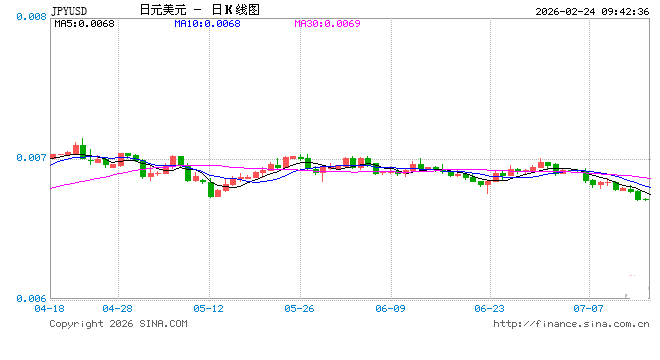
Group 1: Currency and Economic Indicators - The actual effective exchange rate index of the yen fell to 67.73 in January, the lowest since 1973, indicating a significant decline in the yen's purchasing power for overseas goods [1] - Compared to the historical high of 193.95 in April 1995, the current purchasing power of the yen has shrunk to about one-third of that level [1] - Japan's potential economic growth rate has decreased from approximately 1% in 1995 to around 0% by the end of the second decade of the 21st century, contributing to long-term low inflation and interest rates [1] Group 2: Industry and Investment Climate - Traditional manufacturing sectors in Japan, such as automotive and electronics, are facing competitive pressure from emerging economies, while the digital economy is lagging, leading to a normalization of trade deficits [3] - Domestic investment sentiment is low due to poor returns on investment, despite the theoretical boost in export competitiveness from yen depreciation [3] - The Bank of Japan has raised interest rates from -0.1% to 0.75% over the past two years, with expectations of further increases to 1.5% to 1.75%, aimed at addressing inflation and exiting ultra-loose monetary policy [3] Group 3: Macroeconomic Impact on Society - The decline in yen purchasing power directly affects the cost of living in Japan, with rising prices for imported goods like energy and food, while wage growth has not kept pace with inflation [4] - In 2025, the average real wage in Japan is projected to decrease by 1.3%, marking four consecutive years of decline, which undermines consumer confidence [4] - The Bank of Japan's monetary policy normalization must balance inflation pressures with economic resilience, as the ability of households and businesses to withstand interest rate hikes is crucial for the future economic outlook [4]
广东清远 铺就跨境人民币结算“高速路”
Jin Rong Shi Bao· 2026-02-24 03:38
Core Insights - The People's Bank of China (PBOC) in Qingyuan has focused on the core demands of foreign enterprises for "risk avoidance, cost reduction, and efficiency improvement," driving the growth of cross-border RMB settlement business since 2025 [1] Group 1: Cross-Border RMB Settlement Growth - As of October 2025, the cross-border RMB settlement scale in Qingyuan reached 22.518 billion yuan, a year-on-year increase of 20.8%, surpassing the provincial average growth rate by 1.9 percentage points [1] - The cross-border RMB settlement accounted for 35.1% of the total foreign and domestic currency payments, an increase of 3.8 percentage points compared to the same period last year [1] - The business has expanded its reach to 74 countries and regions, with 371 enterprises participating, significantly supporting local foreign trade stability and the development of the real economy [1] Group 2: Customized Services and Training - The PBOC organized 17 service meetings with eight key banks to provide tailored solutions for enterprises, addressing over ten queries related to transaction scenarios and settlement practices [2] - A total of 239 enterprises have been served by financial institutions in Qingyuan for cross-border RMB transactions over the past three years [2] - In the first ten months of 2025, the cross-border RMB payment amount in the fields of current account and direct investment reached 18.557 billion yuan, growing by 22.1%, which is 4.6 percentage points higher than the provincial average [2] Group 3: Enhanced Efficiency and Risk Management - The use of RMB for settlements has reduced the fund arrival time from three working days to within one working day, effectively mitigating exchange rate risks [3] - The number of "first-time users" of cross-border RMB settlements increased by 93, generating a business increment of 318 million yuan since 2025 [3] - Qingyuan has engaged in RMB settlement cooperation with 14 RCEP member countries, with a transaction scale exceeding 284 million yuan [3] Group 4: Quality Improvement in Cross-Border Transactions - A high-tech enterprise in Guangdong improved its RMB settlement ratio from 10% in 2022 to over 50% in 2025 after being included in the list of quality enterprises for cross-border RMB [4] - The PBOC has implemented a "white list" management for eligible enterprises, transitioning business processing online and shortening processing time by approximately two working days [4] - In the first ten months of 2025, 39 quality enterprises in Qingyuan processed 15.15 billion yuan in convenient transactions, marking a year-on-year increase of 2.7% [4]
四川自贡 非遗灯会上演“金融对话”
Jin Rong Shi Bao· 2026-02-24 03:38
Core Insights - The article highlights a creative anti-money laundering (AML) campaign by the People's Bank of China (PBOC) in conjunction with the renowned Zigong International Dinosaur Lantern Festival, integrating financial knowledge into a cultural heritage event to engage the public, especially the youth [1][2][3] Group 1: Campaign Overview - The PBOC's Zigong branch organized an AML promotional event themed "Inheriting Craftsmanship, Accompanying Anti-Money Laundering," aiming to merge financial education with the cultural significance of the lantern festival [1] - The event utilized the festival's large visitor turnout to disseminate financial safety knowledge and AML awareness in a festive atmosphere, making the information more relatable and engaging [1][3] Group 2: Interactive Elements - The campaign featured interactive installations, including promotional boxes that served as knowledge checkpoints, displaying the dangers of money laundering and prevention tips [2] - Staff dressed as traditional characters engaged visitors through games and quizzes, enhancing participation and retention of AML knowledge [2] Group 3: Public Response and Impact - The event attracted over 100,000 participants, with significant online engagement, demonstrating the effectiveness of combining education with entertainment to improve public understanding of AML issues [3] - Feedback indicated that the interactive approach made the topic of AML more accessible, shifting perceptions that it was solely a concern for banks and law enforcement [3]
跨界融合 点茶成“金”
Jin Rong Shi Bao· 2026-02-24 03:38
Group 1: Tea Industry Development in Chongqing - Chongqing is a major tea-producing area in Southwest China, with over 1 million acres of tea gardens, impacting nearly 500,000 tea farmers [1] - The tea industry faces challenges such as short harvesting periods, heavy tasks, and the need for brand promotion and product innovation, leading to urgent funding requirements [1] - Financial institutions have provided 1.189 billion yuan in support for six key tea industry chains, enhancing the integration of tea products with consumer markets [1] Group 2: Experience Economy and Rural Revitalization - The integration of tea and tourism is becoming a vital link between agricultural production and consumer markets, offering new paths for rural consumption upgrades [2] - Fushun Forestry Development Co., Ltd. has adopted a "planting + experience" model, receiving 2 million yuan in loans to enhance processing efficiency and expand its business [2] - The company has successfully transitioned from a single planting model to a comprehensive service model, contributing to rural revitalization and enhancing local consumption [2] Group 3: Cross-Industry Innovation - Chongqing tea enterprises are exploring the "micro-drunk economy" by integrating tea with alcoholic beverages, supported by timely financial interventions [3] - "Xiuyuan Craft Beer," developed by Chongqing Yun Brewing Co., Ltd., combines local tea with beer, appealing to younger consumers [3] - Chongqing Sanxia Bank provided 4 million yuan in loans to support the expansion of tea suppliers, ensuring a stable supply of raw materials for the new product [3] Group 4: Brand Development and Financial Support - The implementation plan aims to create globally recognized high-quality consumer goods by 2027, with a focus on enhancing the influence of unique local products [4] - In 2024, Nanchuan District's tea gardens generated a comprehensive output value of 1.23 billion yuan, establishing tea as a pillar industry for rural revitalization [4] - Ruikai Agricultural Development Co., Ltd. plans to expand its ecological tea base by 20,000 acres, receiving 150 million yuan in loans to support this initiative [5] Group 5: Financial Innovations and Market Potential - Financial institutions are adapting loan products to match the production cycles of tea enterprises, facilitating long-term financing solutions [5] - The integration of tea tourism, tea-alcohol products, and brand upgrades illustrates the high-quality development of Chongqing's tea industry [5] - Continued financial support is expected to enhance the production-consumption link, promoting Chongqing tea in broader markets and providing a model for other regions [5]