公用事业

Search documents
帮主郑重:5000股下跌背后的真相,下周盯紧这三个信号!
Sou Hu Cai Jing· 2025-11-21 08:47
今天打开行情软件,估计不少朋友都倒吸一口凉气吧?沪指直接低开低走失守3900点,跌了2.45%,深证成指和创业板指跌得更狠,全市场超5000只个股飘 绿,手里的票要么绿油油要么原地踏步,是不是越看越慌,甚至想点开卖出键割肉离场? 作为跑了20年财经的老记者,也是盯着中长线做投资的老兵,帮主见过太多这样的恐慌时刻。从2008年的1664点到2018年的2440点,每次市场跌得大家直 呼"扛不住"的时候,其实都是情绪在主导,而非基本面真的塌了。今天这波下跌也一样,前期涨得火的电池、能源金属、硅能源这些赛道股,不少资金赚了 钱想年末落袋为安,加上3900点这个心理关口一破,杠杆资金和止损盘集中出逃,越卖越跌形成了恶性循环,就像菜市场没人抢菜,商贩只能降价甩卖,不 管菜品好坏先清仓再说。 下周操作,帮主给中长线朋友三个实在建议。第一,绝对别割肉,尤其是手里拿着消费、金融、优质制造龙头的朋友,现在割肉就是把便宜筹码在地板上送 给别人,咱们做中长线图的是稳,不是跟着短期波动追涨杀跌。第二,分批布局,重点关注两类标的:一类是高股息的银行、公用事业股,它们分红稳定, 就像投资里的"压舱石",现在股息率比不少理财还高;另一类是 ...

60多家上市公司发布补税公告
Sou Hu Cai Jing· 2025-11-21 06:53
Core Insights - A wave of tax payments has emerged among A-share listed companies, with over 60 companies announcing tax payments totaling more than 2.8 billion yuan, primarily for the years 2021 to 2024 [1][2] Group 1: Tax Compliance and Internal Control - The tax payment phenomenon has raised concerns regarding the tax compliance, internal control quality, and financial transparency of listed companies [1][2] - Most companies initiated self-inspections through tax bureau data checks, leading to tax payments primarily consisting of late fees rather than fines [1][2] - The tax payment issues are widespread across various industries, including 15 in pharmaceuticals, 11 in chemicals, 12 in semiconductors, and others [1] Group 2: Reasons for Tax Payments - Specific tax issues include adjustments in consumption tax policies for the energy and chemical industries, complex tax matters for pharmaceutical companies, and high-tech firms facing challenges related to tax incentives [1][2] - Some tax payments stem from foreign tax authorities' requirements due to differing interpretations of investment tax incentives [2] Group 3: Impact on Financial Performance - The direct impact of tax payments on financial statements and performance may pressure company operations and strategic implementation [2] - Tax payments and late fees typically affect current profits, leading to significant cash outflows that could strain operational funding [2] - Companies may face increased debt repayment pressure, and for those already experiencing tight cash flow, substantial tax payments could trigger liquidity crises [2] Group 4: Regulatory and Market Reactions - Frequent tax payment announcements may attract heightened scrutiny from regulatory bodies, leading to stricter requirements for internal controls, accounting practices, and information disclosure [3] - Investors are increasingly demanding transparency regarding tax risk management systems and potential tax disputes, prompting companies to enhance tax information disclosure [3]
新奥股份涨2.06%,股价创历史新高
Zheng Quan Shi Bao Wang· 2025-11-21 03:05
Group 1 - The stock price of Xin'ao Co., Ltd. reached a historical high, increasing by 2.06% to 21.28 yuan, with a trading volume of 6.9788 million shares and a transaction amount of 147 million yuan, resulting in a turnover rate of 0.23% [1] - The latest total market capitalization of Xin'ao Co., Ltd. in A-shares is 65.906 billion yuan, while the circulating market capitalization is not specified [1] - In the public utility sector, the overall decline is 1.32%, with four stocks, including Xin'ao Co., Ltd., showing an increase, with the top gainers being Dazhong Public Utility and Changjiang Electric Power, rising by 3.25% and 2% respectively [1] Group 2 - As of November 20, the margin balance for Xin'ao Co., Ltd. is 197 million yuan, with a financing balance of 195 million yuan, reflecting a decrease of 15.3722 million yuan over the past ten days, a decline of 7.29% [1] - The company's Q3 report indicates that for the first three quarters, it achieved operating revenue of 95.893 billion yuan, a year-on-year decrease of 2.92%, and a net profit of 3.426 billion yuan, down 1.87% year-on-year, with basic earnings per share at 1.1100 yuan and a weighted average return on equity of 14.0% [1]

243只港股获南向资金大比例持有
Sou Hu Cai Jing· 2025-11-21 02:32
Group 1 - The overall shareholding ratio of southbound funds in Hong Kong Stock Connect stocks is 19.37%, with 243 stocks having a shareholding ratio exceeding 20% [1] - As of November 20, southbound funds hold a total of 4,896.59 million shares, accounting for 19.37% of the total share capital of the stocks, with a total market value of 62,183.87 billion HKD, representing 14.69% of the total market value [1] - The highest shareholding ratio by southbound funds is in China Telecom, with 100.39 million shares held, representing 72.33% of the issued shares [1] Group 2 - Southbound funds with a holding ratio exceeding 20% are mainly concentrated in the healthcare, industrial, and financial sectors, with 56, 37, and 34 stocks respectively [2] - The top stocks with high southbound fund holdings include China Telecom, with a holding ratio of 72.33%, followed by Dazhong Public Utilities at 69.46% and Green Power Environmental at 69.45% [2] - A significant portion of the stocks with high southbound fund holdings are AH concept stocks, with 130 out of 243 stocks (53.50%) having a holding ratio over 20% being AH stocks [1][2]

【广发宏观陈嘉荔】9月非农回升削弱降息必要性
郭磊宏观茶座· 2025-11-21 01:56
Core Viewpoint - The U.S. labor market shows signs of resilience with a notable rebound in non-farm payrolls, indicating that employment changes are not linear and that previous weaknesses were partly due to external shocks like tariffs [1][5][6]. Group 1: Non-Farm Payrolls and Employment Trends - In September, the U.S. added 119,000 non-farm jobs, significantly exceeding the expected 50,000 and the Dallas Fed's estimated 30,000 jobs needed for labor market balance [1][5]. - The healthcare sector contributed the most with 57,000 jobs, followed by leisure and hospitality with 47,000, and construction with 19,000 [1][6]. - The transportation and warehousing sector saw a decline of 25,000 jobs, reflecting broader economic sensitivity and automation trends [6]. Group 2: Unemployment Rate and Labor Force Participation - The unemployment rate rose to 4.44%, marking a high point for the current cycle, with an increase in both employed (251,000) and unemployed (219,000) individuals [2][7]. - Labor force participation slightly increased to 62.4%, with notable improvements among younger demographics, while the core working age group (25-54) saw stagnant participation and rising unemployment [7][8]. Group 3: Wage Growth and Labor Market Indicators - Average hourly earnings increased by 3.79% year-over-year, slightly lower than the previous 3.83%, while the Index of Aggregate Payrolls Private showed a stronger growth of 4.65% [12][13]. - Average weekly hours remained stable at 34.2 hours, indicating cautious labor scheduling by employers [12][13]. Group 4: Federal Reserve Outlook - The Federal Open Market Committee (FOMC) is likely to pause interest rate cuts in December, influenced by the rebound in non-farm payrolls and the lack of new data due to government shutdowns [3][14][18]. - Market expectations for a rate cut in December are modest, with a probability of 39.6%, reflecting limited changes in economic conditions [4][20]. Group 5: Market Reactions and Sector Performance - Following the employment data release, U.S. stock indices fell, with the S&P 500 down 1.56%, indicating a risk-off sentiment among investors [4][21]. - Defensive sectors such as utilities and healthcare performed relatively well, while technology stocks faced significant declines [21].

中信建投万字报告!展望2026年经济、债市、全产业链投资策略
Sou Hu Cai Jing· 2025-11-20 23:47
Group 1: Investment Strategies Overview - CITIC Securities released a comprehensive report on investment strategies for 2026, covering global capital markets, macroeconomic policies, A-shares, overseas markets, bond markets, asset allocation, and industry investment strategies [1] - The report includes insights from 19 research teams and spans approximately 30,000 words [1] Group 2: Pharmaceutical and Biotech Investment Strategies - The Chinese pharmaceutical industry is entering a critical phase characterized by "innovation realization + global layout," supported by population and domestic demand, as well as manufacturing capabilities [3][4] - The industry needs to focus on internal supply chain security and compliance while exploring diversified international expansion [3] - Key investment opportunities for 2026 include innovation commercialization, global breakthroughs, policy optimization, and industry mergers and acquisitions [3][5][6] Group 3: Medical Device Investment Strategies - The medical device sector is expected to see performance improvements in 2026 due to policy easing, new product launches, and international expansion [14] - The long-term investment opportunities in this sector stem from innovation, internationalization, and mergers and acquisitions [14] - The industry is witnessing a shift towards high-value consumables and innovative technologies such as brain-computer interfaces and AI in healthcare [14][15] Group 4: Consumer Healthcare and Bioproducts - The traditional Chinese medicine sector is expected to recover from short-term pressures, with improved demand anticipated by year-end [9] - The blood products industry is focusing on supply growth and consolidation, with significant demand for immunoglobulin and factor products [10] - The vaccine sector is under pressure but is expected to improve with new product sales and international expansion [10] Group 5: Banking Sector Investment Strategies - The banking sector is expected to continue its weak recovery in 2025, with a focus on high dividend strategies [25][26] - The sector's fundamentals are stabilizing, with credit growth projected at 7%-8% and non-interest income expected to improve [26] - High dividend yield strategies are favored, particularly for state-owned banks and those with solid fundamentals [27] Group 6: Wealth Management and Financial Products - The wealth management sector is entering a phase of product transformation and structural optimization, with an expected growth rate of 10% in 2026 [28][33] - The focus is on multi-asset and multi-strategy products, with a significant increase in mixed product offerings anticipated [29][30] - The integration of AI and digital technologies is expected to enhance risk management and operational efficiency in wealth management [30] Group 7: Non-Banking Financial Institutions - The securities industry is poised for a new growth cycle, driven by policies that enhance capital market inclusivity and adaptability [35][36] - The industry is experiencing a shift from self-operated models to collaborative, light-asset business strategies [36][37] - The internationalization of Chinese securities firms is gaining momentum, providing new opportunities for growth [38][39] Group 8: Insurance Sector Trends - The insurance industry is expected to undergo significant changes during the "14th Five-Year Plan" period, focusing on balancing interests among insurers, channels, and customers [43][44] - Key trends include the transformation of savings products, innovation in health insurance, and the development of new distribution channels [43][44] - The sector is anticipated to benefit from improved performance and valuation recovery, presenting investment opportunities [43][44] Group 9: Food and Beverage Sector - The food and beverage sector is recovering from a prolonged downturn, with a focus on premium products like liquor and health-oriented snacks [48][49] - The liquor industry is expected to stabilize as consumer confidence improves, with a focus on high-quality brands [49][50] - The snack and beverage segments are seeing growth driven by health trends and innovative product offerings [52][53]

今年A股重要股东增持金额超930亿元,创近3年新高
Huan Qiu Wang· 2025-11-20 02:06
【环球网财经综合报道】Wind数据显示,截至11月19日,今年以来A股公司重要股东合计增持超过100亿股,按照区间 交易均价计算,合计增持金额超930亿元,金额创近3年新高。 《金融时报》则发文称,近年来,外国投资者重新评估中国股市,购股力度达到四年来新高。今年1月至10月,流入 中国股票的离岸资金达5060亿美元,远超2024年的数额。这一趋势受益于中资股的强劲表现,包括人工智能的推动和 亚洲金融市场的上市热潮。 从行业看,13个行业年内增持金额超过30亿元,银行、基础化工、公用事业等行业增持金额排在前列。从单家公司 看,今年以来增持金额超10亿元的公司有17家,6家公司增持金额超过25亿元,位居榜首的是南京银行。 《南华早报》发文称,摩根士丹利首席分析师劳拉·王等人在报告中表示,2025年中国公司利润预计增长6%,并建议 投资者关注具有创新能力和符合国家科技自立五年计划目标的科技股,以及能抵御市场波动的高股息股票。 ...


17股获融资净买入额超1亿元 中际旭创居首
Zheng Quan Shi Bao Wang· 2025-11-20 01:22
Wind统计显示,11月19日,申万31个一级行业中有10个行业获融资净买入,其中,计算机行业获融资 净买入额居首,当日净买入2.85亿元;获融资净买入居前的行业还有国防军工、美容护理、纺织服饰、 公用事业、化工等。 个股方面,11月19日,有1703只个股获融资净买入,净买入金额在3000万元以上的有107股。其中,17 股获融资净买入额超1亿元。中际旭创获融资净买入额居首,净买入4.44亿元;融资净买入金额居前的 还有紫金矿业、沪电股份、立讯精密、阳光电源、多氟多、容百科技、特变电工、永太科技等股。 ...

武汉控股:2025年面向专业投资者公开发行科技创新可续期公司债券(第二期)发行结果公告
Zheng Quan Ri Bao· 2025-11-19 13:36
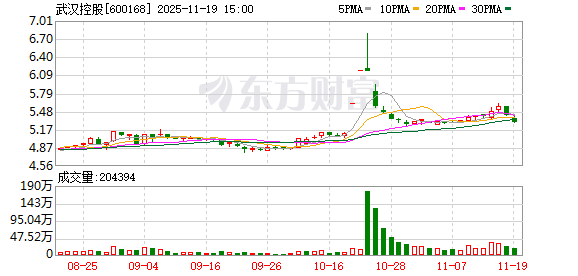
(文章来源:证券日报) 证券日报网讯 11月19日晚间,武汉控股发布公告称,根据《武汉三镇实业控股股份有限公司2025年面 向专业投资者公开发行科技创新可续期公司债券(第二期)发行公告》,武汉三镇实业控股股份有限公 司2025年面向专业投资者公开发行科技创新可续期公司债券(第二期)(以下简称"本期债券")分为两 个品种,本期债券品种一基础期限为2年,以每2个计息年度为1个重定价周期,在约定的基础期限期末 及每一个周期末,发行人有权行使续期选择权,按约定的基础期限延长1个周期,发行人不行使续期选 择权则全额到期兑付;品种二基础期限为3年,以每3个计息年度为1个重定价周期,在约定的基础期限 期末及每一个周期末,发行人有权行使续期选择权,按约定的基础期限延长1个周期,发行人不行使续 期选择权则全额到期兑付。本期债券各品种总计发行规模不超过人民币10.00亿元(含10.00亿元)。本 期债券发行工作已于2025年11月19日结束。 ...

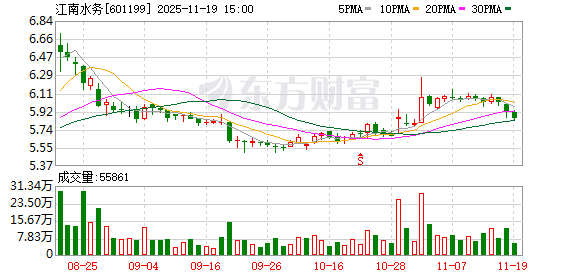
江南水务:关于中标项目签订合同的进展公告
Zheng Quan Ri Bao· 2025-11-19 09:45
Core Points - Jiangnan Water announced that its wholly-owned subsidiary, Jiangnan Water Municipal Engineering Jiangyin Co., Ltd., in partnership with China Machinery International Engineering Design and Research Institute Co., Ltd., has been awarded the EPC contract for the integrated water supply and drainage quality improvement project in the Lingang Development Zone [2] Group 1 - Jiangnan Water's subsidiary and China Machinery International were selected as the winning bidders for the project [2] - The contract for the construction project has been signed with the Jiangyin Lingang Economic Development Zone Management Committee [2]