
电力设备

Search documents
博时市场点评2月5日:两市缩量调整,大消费走强
Xin Lang Cai Jing· 2026-02-05 08:22
今日沪深三大指数震荡调整,两市成交较昨日缩量至不足2.2万亿。申万一级行业中,美容护理涨幅领 先,影视、零售等大消费板块逆势走强。中国人民银行召开2026年信贷市场工作会议,要求不断加强对 重大战略、重点领域和薄弱环节的优质金融服务,强化消费领域金融支持。要求着力支持扩大内需、科 技创新、中小微企业等重点领域,大力发展科技金融、绿色金融等。会议明确了"十五五"开局之年的信 贷支持方向,旨在强化对实体经济的精准滴灌。近期地方两会也陆续召开,多数省份更加重视高质量发 展,淡化经济增长速度目标。从已公布政府工作报告的省份来看,超六成的地方调整了2026年的经济增 速预期目标。而重点产业则聚焦人工智能、商业航天等新质生产力方向,同时扩内需、促消费重要程度 提升。国内权益市场方面,受到风险偏好下降影响,市场短期或进入震荡阶段,随着年报逐渐披露,业 绩确定性或将成为市场关注的核心。 【博时市场点评2月5日】两市缩量调整,大消费走强 每日观点 消息面 2月4日晚,国家主席习近平同美国总统特朗普通电话。美国总统特朗普在社交平台上表示,他已与中国 国家主席习近平进行长时间、深入的电话交谈,并确认将于4月访问中国。双方就贸易、军 ...
粤开市场日报-20260205
Yuekai Securities· 2026-02-05 07:58
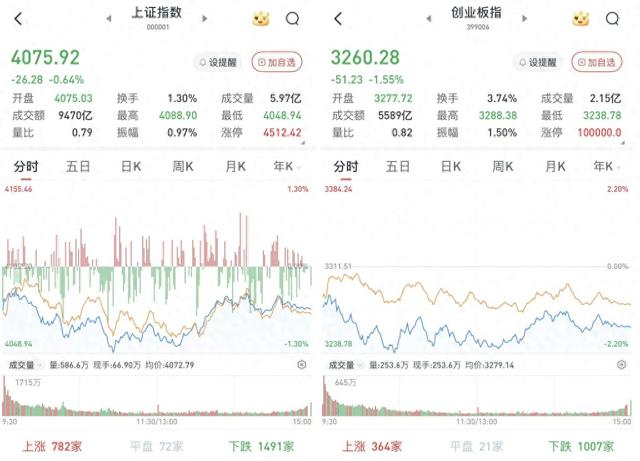
Market Overview - The A-share market saw a majority of indices decline today, with the Shanghai Composite Index down by 0.64% closing at 4075.92 points, the Shenzhen Component Index down by 1.44% at 13952.71 points, the Sci-Tech 50 down by 1.44% at 1432.52 points, and the ChiNext Index down by 1.55% at 3260.28 points [1][10] - Overall, there were 1616 stocks that rose and 3715 stocks that fell, with a total market turnover of 21762 billion, a decrease of 3048 billion compared to the previous trading day [1] Industry Performance - Among the Shenwan first-level industries, the leading sectors included Beauty Care, Banking, Food & Beverage, Retail, and Textile & Apparel, with respective gains of 3.21%, 1.57%, 1.31%, 0.90%, and 0.74% [1] - Conversely, the sectors that experienced the largest declines were Non-ferrous Metals, Electric Equipment, Communication, Coal, and Steel, with respective losses of 4.57%, 3.41%, 2.39%, 2.22%, and 2.15% [1] Concept Sectors - The top-performing concept sectors today included Cross-Strait Integration, Selected Banks, Travel & Outing, and others, while sectors like Power Equipment Selection and BC Battery experienced pullbacks [2][12]
高盛、Point72等外资1月关注哪些A股公司?多只存储芯片、太空光伏概念在列
私募排排网· 2026-02-05 07:42
Core Viewpoint - The A-share market continued its strong performance in January 2026, with major indices recording positive returns, driven by loose liquidity and optimistic expectations, particularly in technology sectors like commercial aerospace and AI applications [2][4]. Group 1: Market Performance - In January 2026, the Shanghai Composite Index, Shenzhen Component Index, and ChiNext Index rose by 3.76%, 5.03%, and 4.47% respectively, with two trading days exceeding a transaction volume of 3 trillion yuan [2]. - The market experienced a stable pattern despite fluctuations mid-month, with the non-ferrous metals sector accelerating its rise [2]. Group 2: Foreign Investment Activity - A total of 212 foreign institutions participated in A-share research in January 2026, a significant increase of 79.66% from December 2025 [2]. - Among the companies, 153 A-share firms were researched by foreign institutions, with a total of 498 research instances recorded [2]. Group 3: Companies with High Foreign Interest - 22 A-share companies were researched by at least 10 foreign institutions, with 15 of these companies (68.18%) experiencing stock price increases in January [3]. - Leading the list was Huaming Equipment, which was researched by 59 foreign institutions and saw a stock price increase of 18.93% [4]. Group 4: Notable Companies and Their Performance - Huaming Equipment specializes in transformer tap changers and reported a 45.43% year-on-year increase in export revenue for the first three quarters, significantly outpacing domestic growth [4]. - In January, 22 A-share companies saw stock price increases exceeding 30%, with seven from the semiconductor sector, including Puran Co., which surged by 140.55% [5][6]. Group 5: Foreign Institutions' Research Frequency - 24 foreign institutions conducted at least five research instances on A-share companies, including notable firms like JP Morgan, Goldman Sachs, and Point 72 [11]. - Point 72 led with 263 research instances in 2025 and continued to be active in January 2026, researching 16 A-share companies [11]. Group 6: Future Market Outlook - Goldman Sachs maintains an "overweight" rating on A-shares, predicting profit growth rates of 14% and 12% for 2026 and 2027 respectively, driven by AI expansion and corporate profitability improvements [11].


A股低开低走,缩量震荡:大消费逆势走强,两市成交超2.1万亿元
Xin Lang Cai Jing· 2026-02-05 07:33
Market Overview - The A-share market experienced a significant decline on February 5, with all three major indices opening sharply lower and showing slight recovery in the afternoon [2] - The Shanghai Composite Index fell by 0.64% to 4075.92 points, the ChiNext Index dropped by 1.55% to 3260.28 points, and the Shenzhen Component Index decreased by 1.44% to 13952.71 points [2] Stock Performance - A total of 1616 stocks rose while 3715 stocks fell across the two exchanges and the Beijing Stock Exchange, with a total trading volume of 21,762 billion yuan, down from 24,809 billion yuan in the previous trading day [3] - In terms of individual stock performance, 59 stocks saw gains of over 9%, while 42 stocks experienced declines of over 9% [4] Sector Analysis - Bank stocks showed resilience, with notable gains including Xiamen Bank reaching the daily limit, and Chongqing Bank and Shanghai Bank rising over 4% [5] - The beauty and personal care sector also performed well, with companies like Lafang Home and Dengkang Dental hitting the daily limit [5] - Conversely, the gold and precious metals sector faced significant declines due to a sharp drop in international gold prices, with several stocks hitting the daily limit down [5] Market Sentiment and Future Outlook - Analysts suggest that the A-share market is currently in a phase of repair and fluctuation, with limited potential for a new sustained trend due to recent adjustments and the upcoming Spring Festival [7] - The first quarter is expected to show the effects of growth-stabilizing policies, with liquidity remaining relatively loose [7] - Concerns over tightening U.S. dollar liquidity and rising market volatility are noted, with a warning of increased investment risks [8] - The upcoming Spring Festival is anticipated to influence consumer demand positively, potentially leading to a more stable market outlook [8]
震荡市宽基ETF受到资金青睐,A500ETF基金(512050)成交放量
Sou Hu Cai Jing· 2026-02-05 07:17
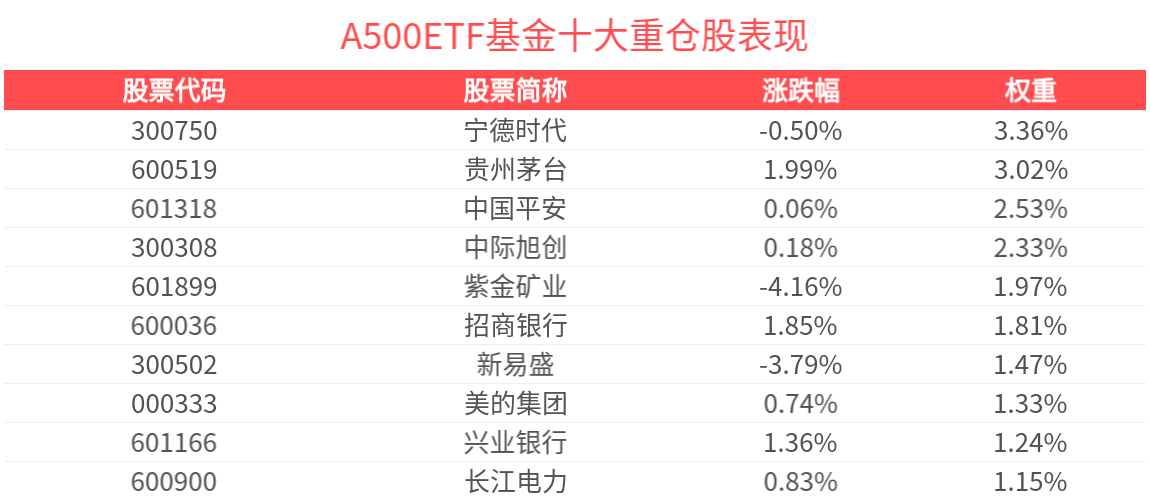
Core Viewpoint - The A-share market is experiencing fluctuations, with a shift towards high-growth and policy-supported technology and defensive sectors, as indicated by the performance of the CSI A500 Index and related ETFs [1] Group 1: Market Performance - As of February 5, the CSI A500 Index (000510) declined by 1.10%, while stocks like Light Media and Wangsu Science & Technology showed strength against the trend [1] - The A500 ETF (512050) saw a significant trading volume, exceeding 15.4 billion yuan, with a net inflow of over 570 million yuan in the past two days [1] Group 2: Investment Opportunities - The market is expected to continue showing structural opportunities amidst fluctuations, with a focus on technology growth (computing hardware) and certain defensive stocks [1] - The A500 ETF (512050) offers advantages such as a low fee rate of 0.2%, strong liquidity, and a large scale exceeding 40 billion yuan, making it an attractive option for investors [1] Group 3: Sector Allocation - The A500 ETF tracks the CSI A500 Index and employs a dual strategy of balanced industry allocation and leading stock selection, covering all 35 sub-industries [1] - Compared to the CSI 300, the A500 ETF is overweight in sectors like AI, pharmaceuticals, renewable energy, and defense, providing a natural "barbell" investment strategy [1]
数据中心电力设备商Forgent(FPS.US)乘AI东风登陆纽交所 募资15亿美元估值达82亿
Zhi Tong Cai Jing· 2026-02-05 06:44
Group 1 - Forgent Power Solutions Inc. (FPS) raised $1.5 billion in its IPO, pricing shares at $27 each, with a total of 16.6 million shares sold [1] - The company, which designs and manufactures power equipment for data centers, achieved a market valuation of approximately $8.2 billion following the IPO [1] - The IPO was well-received, with reports of double-digit oversubscription, and is positioned to benefit from the growing demand for AI infrastructure investments [1] Group 2 - Forgent's product line is narrower than competitors like Vertiv, which also supplies cooling equipment for AI infrastructure, contributing to its valuation premium [2] - The company focuses on customized electrical equipment for power transmission, benefiting from the demand for grid upgrades [2] - For the three months ending September 30, Forgent reported revenues of $283 million and a net profit of $10 million, compared to $154 million in revenue and $6.3 million in net profit in the same period last year [2]
重要信号!市场普跌,资金却在悄悄布局这三条线
Sou Hu Cai Jing· 2026-02-05 04:55
Core Viewpoint - The market is experiencing a broad decline, but there is significant structural differentiation, with funds shifting from high-volatility sectors to low-volatility sectors that show signs of internal recovery [1][2]. Market Performance - The Shanghai Composite Index fell by 1.03%, the ChiNext Index dropped by 1.94%, and the STAR Market 50 Index decreased by 2.00%, indicating significant pressure on growth styles [1]. - The half-day trading volume was 1.4475 trillion, reflecting a decrease in market activity [1]. Sector Analysis - The market shows a clear bifurcation: - Sectors that rose include "consumption + defense," with beauty care up by 3.26%, and banks and food and beverage leading the gains [1]. - Sectors that declined include "cyclical + new energy," with non-ferrous metals down by 5.21% and power equipment undergoing significant adjustments [1]. Media and Entertainment Sector - The media (film) sector is notably strong against the market trend, driven by three key factors: 1. Support from policy and funding, with the integration of "AI + audiovisual" being a long-term benefit and early allocation of film special funds acting as an immediate boost [1]. 2. A qualitative change in supply, with the pre-sale for the Spring Festival reaching over 4.4 billion, indicating a historical high and reflecting improvements in content quality due to supply-side reforms and AI technology enhancing production efficiency [1]. 3. Sustained demand verification, with strong recovery in offline entertainment consumption and diverse monetization of IPs (games, derivatives, cultural tourism) opening up valuation ceilings [2]. Investment Outlook - The film sector offers a rare "certainty combination" at this time, with short-term performance catalysts from the Spring Festival, mid-term profit margin improvements from AI efficiencies, and long-term growth potential from IP operations [2]. - The market may enter a phase of volatility for reassessing growth stock performance and valuation alignment, where sectors with performance certainty (like consumer peaks), high dividends (like banks), or clear industry improvements (like film and some innovative drugs) may show greater resilience [2].
瑞银:预计年底全球股市将上涨约10%,建议分散配置至中国、日本和欧洲
Jin Rong Jie· 2026-02-05 04:21
Group 1 - The UBS Chief Investment Office (CIO) expects global stock markets to rise by approximately 10% by the end of this year, with the US market remaining a core component of investors' equity allocations and having further upside potential [1] - Other regions outside the largest global economy also present attractive opportunities, driven by strategic autonomy, regional fiscal expansion, and structural reforms, with a particular focus on China, Japan, and Europe [1] - The Chinese government's explicit support for domestic artificial intelligence (AI) models and chip manufacturing is expected to lay the foundation for further increases in Chinese tech stocks [1] Group 2 - In a low interest rate environment, domestic investors are pursuing yields, which is likely to benefit sectors such as finance, healthcare, consumer goods, materials, and power equipment due to structural advantages from healthcare companies expanding internationally, the rise of new consumption models, and grid modernization [1]

港股异动 | 东方电气(01072)涨超4% 海外燃机供需缺口有望带来燃机出海机会
智通财经网· 2026-02-05 02:00
Core Viewpoint - Dongfang Electric (01072) has seen a stock price increase of over 4%, currently at 27.5 HKD with a trading volume of 117 million HKD, indicating positive market sentiment towards the company [1] Group 1: Company Developments - Dongfang Electric has been independently developing gas turbine products since 2009, with two models, G50 (50MW) and G15 (15MW), already launched [1] - The G50 gas turbine is expected to achieve a breakthrough in overseas markets by 2025, with three units being provided for a project in Kazakhstan [1] - Ongoing research and development includes models G80 (80MW) and G200 (200MW), indicating a commitment to expanding product offerings [1] Group 2: Market Opportunities - The construction of AIDC has intensified the electricity shortage in North America, creating opportunities for Chinese gas turbines to enter overseas markets [1] - Citigroup has reported that Dongfang Electric is in discussions with U.S. data center clients regarding potential sales of gas turbine generator sets, highlighting strong demand in this sector [1] - The pricing of gas turbine generator sets is considered attractive, prompting the company to enhance product reliability while addressing potential compliance risks and challenges [1]
量产快、扩产忙、并购热 上市公司开年首月干劲足
Shang Hai Zheng Quan Bao· 2026-02-05 00:06
Core Insights - The article highlights the accelerated pace of institutional research on A-share listed companies as they release their 2025 performance forecasts, indicating a proactive approach to investment strategies for the new year [1] Group 1: Institutional Research Trends - Over 700 A-share listed companies have received institutional research since the beginning of the year, with over 20 companies attracting more than 100 institutions each [1] - Key sectors attracting attention include electronics, machinery, and pharmaceuticals, with power equipment and non-ferrous metals also being closely monitored [1] Group 2: New Product Launches - Several companies have announced accelerated timelines for new product mass production, showcasing confidence in growth for the new year [2] - Nepean Mining revealed plans to globally promote its innovative composite liner product in 2026, supported by the gradual production ramp-up of overseas facilities [2] - Huqin Technology's robotics division is set to deliver mass-produced robots in 2026, following significant advancements in R&D and project execution [2] - Jiemai Technology is investing in a production line for critical products, with mass production expected by mid-2026 [2] Group 3: Brain-Computer Interface Developments - Companies like Xiangyu Medical and Aipeng Medical are focusing on brain-computer interface technologies, with Xiangyu Medical planning to launch nearly 100 products by the end of 2026 [3] - The integration of software with rehabilitation equipment is expected to enhance product offerings and market competitiveness [3] Group 4: Industry Expansion and Growth - The demand for AI and computing power is driving growth in sectors like optical communication and liquid cooling, prompting companies to accelerate production capacity [4] - Daikin Heavy Industries reported a tight production schedule for overseas projects, anticipating significant growth in offshore wind energy markets [4] - Zhongji Xuchuang noted a strong order backlog extending into Q4 2026, indicating sustained high demand in the industry [4] Group 5: Storage and Liquid Cooling Innovations - Dike Technology plans to increase its storage chip output target to between 30 million and 50 million units in 2026, aiming to enhance revenue and net profit [5] - Dingtong Technology is expanding its liquid cooling production capabilities to meet rising customer demand [5] - Haitai Ruisheng is building a second overseas delivery base in Southeast Asia, expected to support significant orders from major tech clients [5] Group 6: Mergers and Acquisitions - Companies are increasingly pursuing mergers and acquisitions to enter new markets and drive growth [6] - Yingtang Zhikong plans to acquire Guanglong Integration and Aojian Microelectronics to enter the optical communication sector [6] - Dinglong Co. is acquiring Haofei New Materials to tap into the lithium battery functional materials market, with expected sales growth in 2026 [6] Group 7: Strategic Investments - Tianlu Technology is reallocating funds to projects aimed at enhancing its product offerings in the display industry, with equipment for the TAC film project expected to be operational by mid-2026 [7]