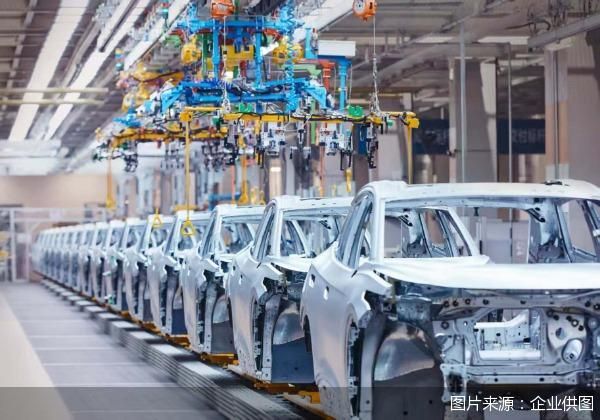
汽车整车

Search documents
比亚迪打响“账期战”
Hua Er Jie Jian Wen· 2025-06-12 10:23
Core Viewpoint - The Chinese automotive industry is experiencing a significant shift with the emergence of a "payment term war," where major automakers are committing to shorten supplier payment terms to within 60 days, contrasting the ongoing price wars that have pressured profit margins [2][5][11]. Group 1: Industry Dynamics - The announcement from GAC Group on June 10 initiated a collective response from over 10 automakers, including BYD, to align payment terms with government regulations [2][5]. - The automotive sector has been under pressure from price wars, leading to declining profit margins, with the industry's average profit rate dropping to 4.3% in 2024 and further to 3.9% in Q1 2025 [14][15]. - The new payment term policy is seen as a potential turning point for the industry, aiming to stabilize supply chains and promote healthier financial practices among automakers [7][16]. Group 2: Supplier Relations - The average accounts payable turnover days for domestic automakers previously exceeded 170 days, with some exceeding 240 days, highlighting a significant disparity compared to international standards [8][12]. - The commitment to a 60-day payment term is viewed as a positive development for suppliers, potentially alleviating financial pressures and allowing for reinvestment in technology and capacity [9][10]. - However, suppliers express skepticism regarding the actual implementation of these terms, fearing that automakers may find ways to extend payment periods through various tactics [9][10]. Group 3: Financial Implications for Automakers - The shift to a 60-day payment term poses a substantial operational and financial challenge for automakers, requiring them to manage cash flow more effectively and potentially leading to a reevaluation of their financial health [11][12]. - Many automakers, including BYD and Geely, have high levels of accounts payable, with BYD's accounts payable reaching 244 billion yuan, representing 31% of its revenue [12]. - The new payment terms will test the financial resilience of automakers, particularly those with high operational debts and negative cash flows, potentially leading to a market shakeout [13][17]. Group 4: Market Outlook - The automotive industry is transitioning from a growth phase to a more mature stage, with the "payment term war" acting as a catalyst for structural adjustments and increased market concentration [16]. - The competitive landscape is expected to shift from price-based competition to value creation, as automakers will need to focus on internal growth and efficiency improvements [16][17]. - If the 60-day payment commitment is effectively enforced, it could lead to a healthier and more sustainable automotive ecosystem, benefiting both suppliers and manufacturers in the long run [17].

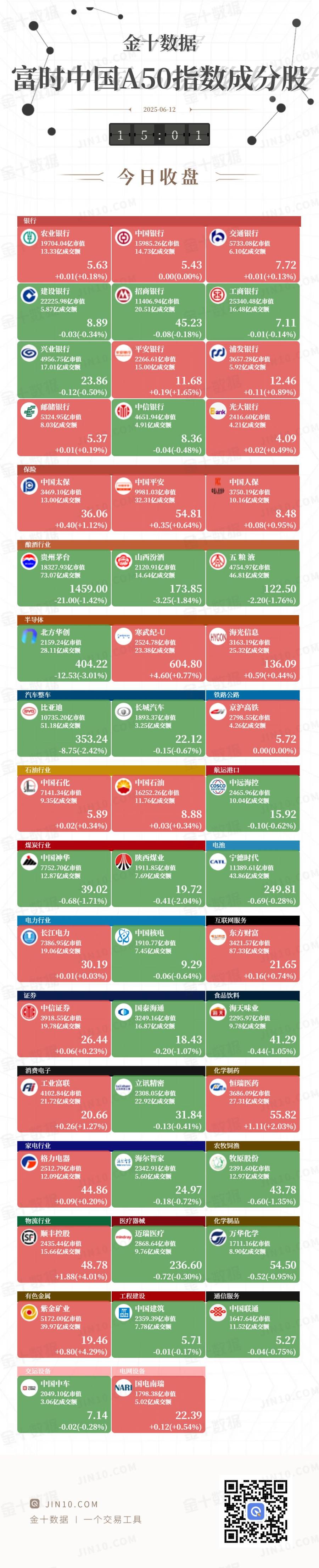
金十图示:2025年06月12日(周四)富时中国A50指数成分股今日收盘行情一览:酿酒行业飘绿,银行股涨跌不一,石油行业走强
news flash· 2025-06-12 07:04
Market Overview - The FTSE China A50 Index showed mixed performance with the liquor industry declining, banking stocks fluctuating, and the oil sector strengthening [1] Industry Performance Liquor Industry - Major companies like Kweichow Moutai, Shanxi Fenjiu, and Wuliangye experienced declines in stock prices, with Moutai down by 1.42% [3] - Market capitalizations: Kweichow Moutai at 1,832.79 billion, Shanxi Fenjiu at 212.09 billion, and Wuliangye at 475.50 billion [3] Banking Sector - China Pacific Insurance, Ping An Insurance, and China Life Insurance had varying stock performances, with Ping An up by 1.12% [3] - Market capitalizations: China Pacific Insurance at 998.10 billion, Ping An at 3,750.19 billion, and China Life at 346.91 billion [3] Semiconductor Industry - Companies like Northern Huachuang and Cambrian Technologies saw stock price changes, with Northern Huachuang down by 3.01% [3] - Market capitalizations: Northern Huachuang at 215.92 billion, Cambrian at 252.48 billion, and Haiguang Information at 316.32 billion [3] Oil Industry - The oil sector showed strength with companies like China Petroleum and China Shipping experiencing slight gains [3] - Market capitalizations: China Petroleum at 1,625.23 billion, China Shipping at 714.13 billion [3] Coal Industry - China Shenhua and Shaanxi Coal experienced declines, with Shenhua down by 2.04% [3] - Market capitalizations: China Shenhua at 191.19 billion, Shaanxi Coal at 77.52 billion [3] Electric Power Industry - Companies like Yangtze Power and China Nuclear Power had slight increases in stock prices [4] - Market capitalizations: Yangtze Power at 191.08 billion, China Nuclear Power at 83 billion [4] Internet Services - Dongfang Wealth saw a stock price increase of 0.74% [4] - Market capitalization at 738.69 billion [4] Consumer Electronics - Companies like Industrial Fulian and Luxshare Precision had mixed performances, with Industrial Fulian up by 1.27% [4] - Market capitalizations: Industrial Fulian at 410.28 billion, Luxshare at 230.80 billion [4] Logistics Industry - SF Holding experienced a significant increase of 4.01% in stock price [4] - Market capitalization at 286.86 billion [4] Construction Industry - China State Construction had a market capitalization of 517.20 billion with a stock price increase of 4.29% [4]






点评报告:票息为盾,提前“卡位”利差压缩行情
Changjiang Securities· 2025-06-12 02:45
1. Report Industry Investment Rating - Not provided in the content 2. Core Viewpoints of the Report - In the context of a volatile bond market and a passive widening of credit spreads, investors should prioritize high - coupon assets for certain returns and prepare in advance for the spread compression market driven by the seasonal inflow of wealth management funds in July [1][5]. - The current core contradiction in the credit bond market is the co - existence of weakening allocation demand and a passive widening of spreads in a volatile environment. Investors should seize pricing deviation opportunities under the protection of coupon safety cushions [5]. - The volatile market pattern caused by the interplay of multiple factors will continue, providing tactical opportunities for layout during market adjustments [6]. - The coupon strategy is the optimal solution in a volatile market, and portfolios should be constructed in a stratified manner according to the characteristics of liabilities [7]. - Investors should "pre - position" for the seasonal spread compression market in July and seize structural opportunities in specific bond varieties [8]. 3. Summary by Relevant Catalog 3.1 Yield and Spread Overview 3.1.1 Yields and Changes of Each Tenor - Yields of various types of bonds at different tenors are presented, along with their weekly changes and historical percentiles. For example, the 0.5 - year Treasury yield is 1.41%, down 4.0bp from last week, with a historical percentile of 8.4% [14]. 3.1.2 Spreads and Changes of Each Tenor - Credit spreads of various types of bonds at different tenors are shown, including their weekly changes and historical percentiles. For instance, the 0.5 - year credit spread of public non - perpetual urban investment bonds is 25bp, up 2.1bp from last week, with a historical percentile of 12.7% [16]. 3.2 Yields and Spreads of Credit Bonds by Category (Hermite Algorithm) 3.2.1 Yields and Spreads of Urban Investment Bonds by Region - **Yields and Changes of Each Tenor**: Yields of public non - perpetual urban investment bonds in different provinces at key tenors, their weekly changes, and historical percentiles are provided. For example, the 0.5 - year yield of Anhui's public non - perpetual urban investment bonds is 1.77%, up 2.6bp from last week, with a historical percentile of 1.1% [19]. - **Spreads and Changes of Each Tenor**: Credit spreads of public non - perpetual urban investment bonds in different provinces at key tenors, their weekly changes, and historical percentiles are given. For example, the 0.5 - year credit spread of Anhui's public non - perpetual urban investment bonds is 30.41bp, up 4.6bp from last week, with a historical percentile of 7.2% [22]. - **Yields and Changes of Each Implied Rating**: Yields of public non - perpetual urban investment bonds in different provinces for each implied rating, their weekly changes, and historical percentiles are presented. For example, the AAA - rated yield of Anhui's public non - perpetual urban investment bonds is 1.80%, up 3.8bp from last week, with a historical percentile of 5.1% [26]. - **Spreads and Changes of Each Implied Rating**: Credit spreads of public non - perpetual urban investment bonds in different provinces for each implied rating, their weekly changes, and historical percentiles are shown. For example, the AAA - rated credit spread of Anhui's public non - perpetual urban investment bonds is 28.96bp, up 4.8bp from last week, with a historical percentile of 32.2% [31]. - **Yields and Changes of Each Administrative Level**: Yields of public non - perpetual urban investment bonds in different provinces at each administrative level, their weekly changes, and historical percentiles are provided. For example, the provincial - level yield of Anhui's public non - perpetual urban investment bonds is 1.80%, up 3.5bp from last week, with a historical percentile of 3.7% [35].
内卷行情拨云见日,车市生态优化向上
HTSC· 2025-06-12 02:25
Investment Rating - The industry is rated as "Overweight" [6] Core Views - Multiple automakers have committed to shortening payment terms to within 60 days, which is expected to improve the automotive supply chain ecosystem [1] - The shortening of payment terms is anticipated to alleviate concerns regarding automakers' repayment capabilities and promote healthy industry development [1] - The average cash turnover rates for components, complete vehicles, and dealers in 2024 are projected to be 4.5, 2.2, and 8.9 respectively, with the new payment terms expected to enhance cash flow [1] - The reduction in payment terms aligns with international standards, potentially benefiting Chinese brands in overseas markets [2] - Price competition has paused, leading to a narrowing of discount rates, which is favorable for healthy competition within the industry [2] Summary by Sections Section 1: Impact of Shortened Payment Terms - The adjustment to a 60-day payment term is expected to have limited impact on the cash flow of complete vehicle manufacturers, as many currently operate with payment terms exceeding 110 days [2] - The new terms are expected to enhance the cash turnover ability and cash levels of upstream component manufacturers, with an estimated increase in cash funds of approximately 32 billion yuan (+37%) if accounts receivable turnover improves to 6 [3] Section 2: Export Growth of Domestic Passenger Vehicles - Domestic brands are leading in competitiveness within the market, driving foreign brands out [4] - In 2024, market shares for domestic brands in various price segments are projected to be 80%, 48%, and 42% respectively, with year-on-year increases of 7, 14, and 4 percentage points [4] - In May, domestic brand exports reached 375,000 units, a year-on-year increase of 18% and a month-on-month increase of 10% [4] - The global market is viewed as a significant growth opportunity for Chinese automakers, with a recommendation to focus on industry leaders with global competitiveness [4]




华泰证券今日早参-20250612
HTSC· 2025-06-12 02:07
Macro Insights - The US May CPI data was weaker than expected, with core CPI month-on-month declining from 0.24% in April to 0.13%, below the Bloomberg consensus of 0.3%. Year-on-year core CPI remained flat at 2.8%, also below the expected 2.9% [2][3] - The global manufacturing PMI in May showed a decline, but tariff reductions led to improvements in manufacturing PMI in several regions, including the Eurozone and ASEAN [3] Industry Trends - The TMT (Technology, Media, and Telecommunications) and advanced manufacturing sectors are showing signs of recovery, with AI trends driving growth in components, storage chains, and communication devices [4] - The automotive industry is experiencing a positive shift as major companies like BYD and Geely commit to shortening supplier payment terms to within 60 days, which is expected to enhance market health [5] - The electronics sector is facing an "innovator's dilemma," with Apple investing heavily in R&D but struggling to close the gap with competitors in AI technology [8] Company Analysis - XGIMI Technology (极米科技) is covered for the first time with a "Buy" rating and a target price of 150.0 CNY, supported by its leading self-research capabilities and strong R&D investment [9][12] - Mingyang Smart Energy (明阳智能) is positioned as a leader in the domestic offshore wind market, with expectations for significant growth in offshore wind shipments, driving profitability recovery [11]
平安证券晨会纪要-20250612
Ping An Securities· 2025-06-12 01:10
Group 1: Capital Expenditure Cycle and Industry Comparison - The capital expenditure cycle is a key driver of industry cycles in China, with capital expenditure and PB, ROE changes being interrelated. The cycle is divided into three stages: oversupply leading to performance decline, capital expenditure downtrend improving free cash flow, and supply-side clearing leading to performance recovery [7][8]. - The PB-ROE model indicates significant investment value in the second stage, where PB is low and ROE is expected to improve, and in the third stage, where PB is reasonable and ROE can steadily rise [7][8]. - Recent trends show a contraction in capital expenditure across secondary industries excluding finance and real estate, with an increase in the proportion of industries with positive free cash flow [8][9]. Group 2: Industry Opportunities and Recommendations - The report identifies 26 industries with potential investment opportunities based on supply-side improvements, focusing on consumption, cyclical, advanced manufacturing, technology, and healthcare sectors [8][9]. - A quantitative industry rotation strategy based on free cash flow has been constructed, yielding annualized returns of 11.1% and 13% for the consumption and advanced manufacturing sectors, respectively, outperforming benchmarks by 5.1 and 3.1 percentage points [9]. - Recommended companies include DeYee Co., which has a strong position in emerging markets, and AiRuo Energy, which is expected to benefit from overseas industrial storage [10][13]. Group 3: Energy Equipment and New Energy Sector - The first quarter saw a recovery in the performance of household storage inverter companies, particularly in emerging markets like India and Southeast Asia, where demand is growing [10][12]. - The report highlights the potential for rapid growth in the commercial storage market in Europe, despite a weaker overall demand in the region [10][12]. - Key players such as DeYee Co. and JinLang Technology are recommended for their strong market positions and growth potential in emerging markets [10][13]. Group 4: Automotive Industry Insights - The automotive industry's high-end strategy is categorized into two types: companies focusing on their strengths and expanding their lead, and those adopting benchmarking strategies [14][15]. - Recommended companies include Li Auto, Great Wall Motors, and Xiaomi for their distinctive brand advantages and ongoing development [15][16]. - The report notes that stricter regulations on intelligent driving are leading to increased focus on safety and compliance among automotive companies [15][16].
中美经贸磋商机制首次会议在英国伦敦举行;5月汽车产销同比均两位数增长|盘前情报
Sou Hu Cai Jing· 2025-06-12 00:35
Market Overview - On June 11, the A-share market experienced a rebound, with the ChiNext Index leading the gains. The Shanghai Composite Index closed at 3402.32, up by 0.52%, while the Shenzhen Component Index rose by 0.83% to 10246.02, and the ChiNext Index increased by 1.21% to 2061.87. The total trading volume in the Shanghai and Shenzhen markets was 1.26 trillion yuan, a decrease of 159.9 billion yuan compared to the previous trading day [2][3]. Sector Performance - The sectors that saw the most significant gains included rare earth permanent magnets, gaming, automotive parts, and securities. Conversely, sectors that experienced declines included controllable nuclear fusion, biological vaccines, communication services, and beverage manufacturing [2]. Automotive Industry Insights - According to the China Association of Automobile Manufacturers, in May 2025, China's automotive production and sales reached 2.649 million and 2.686 million units, respectively, with year-on-year growth of 11.6% and 11.2%. For the first five months of 2025, production and sales totaled 12.826 million and 12.748 million units, reflecting year-on-year increases of 12.7% and 10.9%. Notably, new energy vehicles accounted for 48.7% of total new car sales in May, with production and sales of 1.27 million and 1.307 million units, respectively, marking year-on-year growth of 35% and 36.9% [6]. International Market Overview - In the U.S. stock market on June 11, the three major indices saw slight declines. The Dow Jones Industrial Average closed at 42865.77, down by 1.10 points, while the S&P 500 fell by 16.57 points to 6022.24, a decrease of 0.27%. The Nasdaq Composite Index dropped by 99.11 points to 19615.88, down by 0.50%. In Europe, the FTSE 100 index rose by 11.27 points to 8864.35, while the CAC 40 index fell by 28.43 points to 7775.90, and the DAX index decreased by 38.66 points to 23948.90 [4][5]. Oil Market Update - On June 11, international oil prices saw a significant increase. The price of light crude oil futures for July delivery rose by $3.17 to $68.15 per barrel, a gain of 4.88%. Meanwhile, the August delivery of Brent crude oil futures increased by $2.90 to $69.77 per barrel, up by 4.34% [4][5]. U.S. Economic Indicators - The U.S. Consumer Price Index (CPI) for May showed a year-on-year increase of 2.4%, with a month-on-month rise of 0.1%. The core CPI, excluding volatile food and energy prices, also increased by 0.1% month-on-month and 2.8% year-on-year [7][8]. U.S.-China Trade Relations - The first meeting of the U.S.-China economic and trade consultation mechanism took place in London, where both sides engaged in in-depth discussions on trade issues. They reached a consensus on measures to implement the important agreements made during the recent phone call between the two countries' leaders [9][10]. Gaming Industry Developments - The gaming sector is set to benefit from strong policy support, with the Zhejiang provincial government implementing measures to promote international development in the gaming industry. Analysts predict that the revenue from Chinese games going abroad could grow at a compound annual growth rate (CAGR) of over 20%, potentially reaching $32.8 billion by 2025 [11][12].


“账期漫长”顽疾有望破解
Zhong Guo Qing Nian Bao· 2025-06-11 23:34
Core Viewpoint - The automotive industry in China is addressing the long-standing issue of extended payment terms for suppliers, with several major car manufacturers committing to a maximum payment period of 60 days to enhance the efficiency of the supply chain and support small and medium-sized enterprises [2][3]. Group 1: Industry Developments - The 2025 Chongqing International Auto Show featured the launch of 93 new vehicles, highlighting the collaborative efforts needed among suppliers, automakers, and dealers for the high-quality development of the new energy vehicle industry [2]. - Major automotive companies, including China FAW, Dongfeng Motor, and BYD, have pledged to implement a supplier payment term not exceeding 60 days, aiming to improve cash flow for small and medium enterprises [2]. - The Ministry of Industry and Information Technology and the State-owned Assets Supervision and Administration Commission have issued directives to stabilize the supply chain and promote high-quality development in the automotive sector [2][3]. Group 2: Financial Challenges - The accounts receivable turnover days in the automotive parts industry have been on the rise, indicating a growing challenge with long payment cycles for suppliers [3]. - Suppliers in various segments, such as automotive fasteners and electronic components, report facing payment cycles of 6 to 12 months, leading to significant financial strain [3]. - Analysts warn that unresolved long payment terms could hinder the efficiency of fund circulation within the supply chain, particularly affecting small suppliers who may struggle with cash flow and profit margins [3].

沪指再度站上3400点 汽车产业链全线走强
Shang Hai Zheng Quan Bao· 2025-06-11 18:42
Market Overview - The A-share market experienced fluctuations with the Shanghai Composite Index closing at 3402.32 points, up 0.52% [1] - The Shenzhen Component Index rose by 0.83% to 10246.02 points, while the ChiNext Index increased by 1.21% to 2061.87 points [1] - The total market turnover was 128.66 billion yuan, a decrease of 16.46 billion yuan from the previous trading day [1] Automotive Industry - The automotive supply chain saw a collective rise, with companies like Meichen Technology and Xinrui Technology hitting the 20% limit up [2] - Major car manufacturers announced a unified payment term of 60 days for suppliers [2] - In May, China's automotive production and sales reached 2.649 million and 2.686 million units, respectively, with year-on-year growth of 11.6% and 11.2% [2] - Guohai Securities predicts that the vehicle replacement policy will boost sales in 2024, with continued support in 2025 [2] - CITIC Securities highlights the industrialization of L4 autonomous driving as a key trend in the automotive sector [2] Brokerage Stocks - Brokerage stocks were notably active, with firms like Industrial Securities and Xinda Securities hitting the limit up [3] - Industrial Securities clarified rumors regarding a merger with Huafu Securities, stating no such plans are in place [3] - The expectation of mergers in the brokerage industry is rising due to regulatory encouragement for resource optimization [3] - Open Source Securities anticipates continued growth in brokerage earnings, supported by improving trading volumes [3] Market Outlook - Dongguan Securities suggests that the market may maintain a volatile consolidation phase, with structural opportunities emerging from positive policy implementation and economic highlights [4] - Huatai Securities indicates that the market may experience rapid sector rotation, with a focus on low-position technology sectors [5] - Tianfeng Securities recommends a defensive investment strategy, emphasizing three main directions: AI technology, consumer stock recovery, and undervalued assets [5]


汽车业“反内卷”进行时 | 承兑汇票、拖延验收,“60天”账期能否治本
Bei Jing Shang Bao· 2025-06-11 16:13
Core Viewpoint - The commitment from 17 automotive companies to a "60-day payment term" has sparked discussions, but suppliers remain skeptical about the actual implementation and potential delays in payment [2][3][4]. Group 1: Payment Terms and Supplier Concerns - The 60-day payment term is seen as a positive signal for fair industry practices, yet suppliers are concerned about the vagueness of the commitment and the potential for continued cash flow issues [3][4]. - Many suppliers face high debt levels and financing costs due to prolonged payment terms, making cash flow security a critical concern [3][4]. - The payment method involving "acceptance bills" complicates the situation, as these bills typically take six months to be honored, effectively extending the payment period beyond 60 days [4][5]. Group 2: Ambiguity in Payment Calculation - Suppliers are uncertain about the starting point for the 60-day payment term, questioning whether it begins from the invoice date or the product delivery date [6][7]. - Delays in the acceptance and invoicing process can lead to extended payment timelines, undermining the intended benefits of the 60-day term [6][7]. - The potential for companies to manipulate acceptance criteria to delay payments further complicates the situation, as suppliers may face additional hurdles in receiving timely payments [7]. Group 3: Regulatory Framework and Industry Standards - The revised "Regulations on Payment of Small and Medium Enterprises" effective June 1 mandates that large enterprises must pay small and medium enterprises within 60 days of delivery, with specific conditions outlined for payment terms [8][9]. - The regulations prohibit the use of non-cash payment methods, such as commercial bills, to extend payment periods, emphasizing the need for clear contractual agreements [9][10]. - Experts suggest that the industry should establish self-regulatory norms to ensure compliance with these regulations and address the complexities of payment practices [10][11].