酒类

Search documents
黄酒:改革蓄力,升级振兴
2025-08-11 01:21
Summary of Huangjiu Industry Conference Call Industry Overview - The Huangjiu industry faces challenges with a consumer base concentrated among the elderly and in the Jiangsu, Zhejiang, and Shanghai regions, leading to lower per capita consumption compared to Baijiu and beer [1][4] - The mainstream price range is between 10 to 30 yuan, indicating significant potential for price increases [1] Key Points and Arguments - Leading companies are optimizing flavors and packaging (e.g., sparkling Huangjiu, fruit-flavored Huangjiu) and expanding new consumption scenarios (e.g., Kuaijishan's "One Fresh a Day") to attract younger consumers [1][5] - High-end products (e.g., Guyue Longshan's Guoniang 1,959) are being launched to enhance brand strength while gradually increasing prices [1][5] - To address regional consumption concentration, leading companies are implementing national cultivation activities (e.g., Guyue Longshan's "Yuhang Tianxia") and enhancing online channels to broaden market coverage [1][6][7] Financial Performance - The Huangjiu industry size is approximately 21 billion yuan in 2023, showing slight growth, but revenue for large-scale enterprises has declined overall [1][8] - Leading companies have a compound annual growth rate (CAGR) of 9% from 2022 to 2024, with volume and price growth at 3% and 6%, respectively [1][8] - The profitability of the sector continues to improve, with a 0.7 percentage point increase in net profit margins expected in 2024 and Q1 2025 [8] Challenges - The Huangjiu industry faces multiple challenges, including a limited consumer base primarily among the elderly and in specific regions, and a lack of awareness among younger consumers [4] - The social attributes of Huangjiu are weak in business banquets and gifting scenarios, leading to lower per capita consumption compared to its main competitors [4] Strategic Responses - Leading companies are reforming and innovating by optimizing flavors and packaging, launching new products, and engaging in cross-industry collaborations to enhance brand recognition [5][11] - Price adjustments are being made, with Kuaijishan increasing prices by 4% to 5% and Guyue Longshan raising some products by 10% to 15% [5] Policy Impact - Since 2021, Huangjiu industry policies have been strengthened, with specific incentives for revenue growth expected to be announced in September 2024 [3][10] - The goal is to achieve 10 billion yuan in industry revenue by 2027, supported by a 5 million yuan budget for brand promotion [10] Role of New Channels - Platforms like Douyin are not only driving revenue growth but also serving as promotional channels to facilitate national expansion [9] Company Innovations - Guyue Longshan has launched several new products, including ice-sculpted sparkling Huangjiu, and has seen significant sales during promotional periods [11] - The company is focusing on cost reduction through smart factory initiatives and optimizing e-commerce strategies [11] Overall Industry Performance - The Huangjiu industry is experiencing improvements through the young and high-end product strategies of leading companies, achieving double-digit growth despite its smaller overall scale [13] - The health attributes of Huangjiu are also seen as a competitive advantage, contributing to its appeal among consumers [13]


上周A股过热情绪有所缓解
HTSC· 2025-08-10 10:40
Quantitative Models and Construction Methods Genetic Programming Industry Rotation Model - **Model Name**: Genetic Programming Industry Rotation Model - **Model Construction Idea**: Directly extract factors from industry index data such as volume, price, and valuation, and update the factor library at the end of each quarter[30] - **Model Construction Process**: The model adopts weekly frequency rebalancing, selecting the top five industries with the highest composite multi-factor scores for equal-weight allocation every weekend[30] - **Model Evaluation**: The model has achieved an absolute return of 28.79% this year, outperforming the industry equal-weight benchmark by 17.68 percentage points[30] - **Model Testing Results**: - Annualized Return: 31.39% - Annualized Volatility: 18.12% - Sharpe Ratio: 1.73 - Maximum Drawdown: -19.63% - Calmar Ratio: 1.60 - Last Week Performance: 3.15% - Year-to-Date (YTD): 28.79%[32] Absolute Return ETF Simulation Portfolio - **Model Name**: Absolute Return ETF Simulation Portfolio - **Model Construction Idea**: The asset allocation weights are mainly calculated based on the recent trends of various assets, with stronger trend assets assigned higher weights. The internal equity asset allocation weights directly adopt the monthly views of the monthly frequency industry rotation model[34] - **Model Construction Process**: The model's latest holdings include dividend style ETFs and ETFs related to pharmaceuticals, non-ferrous metals, media, steel, and energy chemicals[36] - **Model Evaluation**: The model has risen by 0.34% last week and has accumulated a 5.69% return this year[34] - **Model Testing Results**: - Annualized Return: 6.52% - Annualized Volatility: 3.81% - Maximum Drawdown: 4.65% - Sharpe Ratio: 1.71 - Calmar Ratio: 1.40 - Year-to-Date (YTD): 5.69% - Last Week Performance: 0.34%[39] Global Asset Allocation Simulation Portfolio - **Model Name**: Global Asset Allocation Simulation Portfolio - **Model Construction Idea**: Predict future returns of global major assets using a cycle three-factor pricing model, and construct the portfolio using a "momentum selects assets, cycle adjusts weights" risk budgeting framework[40] - **Model Construction Process**: The strategy currently overweights bonds and foreign exchange, with higher risk budgets assigned to assets such as Chinese bonds and US bonds[40] - **Model Evaluation**: The strategy has achieved an annualized return of 7.22% in the backtest period, with a Sharpe ratio of 1.50[40] - **Model Testing Results**: - Annualized Return: 7.22% - Annualized Volatility: 4.82% - Maximum Drawdown: -6.44% - Sharpe Ratio: 1.50 - Calmar Ratio: 1.12 - Year-to-Date (YTD): -3.04% - Last Week Performance: 0.61%[41] Quantitative Factors and Construction Methods Sentiment Indicators - **Factor Name**: Sentiment Indicators - **Factor Construction Idea**: Construct sentiment indicators from the perspectives of the put-call ratio, implied volatility, and basis in the options and futures markets[2] - **Factor Construction Process**: - **Put-Call Ratio**: Observe the ratio of the trading volume of call options to put options in the 50ETF and 500ETF options markets[17] - **Implied Volatility**: Construct the implied volatility ratio series of call and put options[20] - **Basis**: Construct the annualized basis rate weighted by the open interest for the four major stock index futures products[26] - **Factor Evaluation**: The sentiment indicators show that the previous overheating sentiment in the A-share market has continued to ease[2] Factor Backtesting Results Sentiment Indicators - **Put-Call Ratio**: The ratio has significantly fallen from the high levels observed on July 23, indicating a more rational market sentiment[17] - **Implied Volatility Ratio**: Despite the stock market rebound last week, the implied volatility ratio of call options to put options has been trending downward, further reflecting rational investor sentiment[20] - **Annualized Basis Rate**: The basis rate has been fluctuating downward, indicating rational sentiment in the futures market[26]

“秋一杯”点燃消费热潮,“文化场景+创新表达”如何撬动白酒市场新增量?
Sou Hu Cai Jing· 2025-08-09 07:04
Group 1 - Meituan Waimai collaborates with the domestic animated film "Langlang Mountain Little Monster" to gift 100,000 cups of Luckin coffee, highlighting the emotional connection of tea culture in modern life [2] - The National Bureau of Statistics reports that cultural enterprises in China achieved operating income of 71,292 billion yuan in the first half of 2025, a year-on-year increase of 7.4%, with 16 sub-industries showing a 13.6% growth [2] - The retail sales of tobacco and alcohol reached 3,316 billion yuan in the first half of the year, with a 5.5% year-on-year growth, while June saw a slight decline of 0.7% [2] Group 2 - The sports and entertainment goods sector experienced a retail sales increase of 22.2% in the first half of the year, reaching 858 billion yuan, indicating a shift in consumer demand towards emotional and cultural values [3] - The white liquor industry is transitioning from "enterprise-led" to "consumer-defined value," focusing on emotional value and cultural empowerment to meet diverse consumer needs [5] - The report emphasizes the need for innovation in product offerings and commercial models within the white liquor industry, leveraging cultural elements and modern branding strategies [7]



凌春鸣:红酒突围策略:以年轻化为突破口实现场景创新
Sou Hu Cai Jing· 2025-08-08 20:40
Core Viewpoint - The wine industry needs to create authentic consumption scenarios for young people to penetrate this market effectively [1][3][5] Group 1: Market Dynamics - The alcohol industry has established clear consumption scenarios: Baijiu dominates business banquets and festive gatherings, primarily targeting middle-aged men; beer is popular among young people in settings like barbecues and music festivals; and foreign wines focus on nightclubs and trendy crowds [1] - Red wine lacks a defined "home ground" in the young consumer market, which is essential for its growth [1] Group 2: Young Consumer Engagement - Young consumers are not averse to red wine; rather, the product has not aligned with their lifestyle and emotional needs [3] - Effective brand youthfulness requires more than trendy packaging or celebrity endorsements; it must create genuine connections with young people's daily lives [3][5] Group 3: Strategies for Red Wine - The first step for red wine to enter young people's lives is to "lower the barriers," simplifying the product's presentation and making it more accessible [5] - The second step is to "elevate the emotions," aligning the product with current social trends, such as enjoying a glass of wine while relaxing after work [5] - Key elements of scenario marketing include understanding time, place, roles, processes, emotions, and a sense of ritual [5] Group 4: Brand Positioning - Red wine must be integrated into relatable life moments to become memorable and relevant to young consumers [6] - The transformation towards youthfulness is not just about making the product trendy but about creating authentic scenarios that resonate with young people's experiences [6]

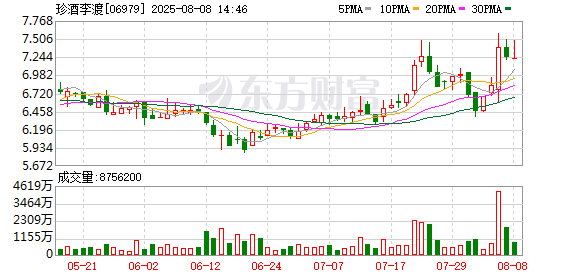
珍酒李渡董事长吴向东直播“牛市”啤酒发布
Zheng Quan Shi Bao Wang· 2025-08-08 14:05
Core Viewpoint - The launch of the high-end craft beer product "Bull Market" by Zhenjiu Lidou marks a significant entry into the premium beverage market, with a focus on quality and exclusivity [1] Company Summary - Zhenjiu Lidou's chairman, Wu Xiangdong, conducted his first live broadcast to introduce the new product [1] - The "Bull Market" beer is packaged in a 375ml aluminum bottle and has an alcohol content of 5.9% vol [1] - The retail price is set at 88 yuan per bottle and 1,056 yuan per case [1] - Wu Xiangdong highlighted that the production cost of the "Bull Market" beer is 20 times that of regular beer, justifying its higher price point [1]
洋河股份:8月8日召开董事会会议
Mei Ri Jing Ji Xin Wen· 2025-08-08 10:39
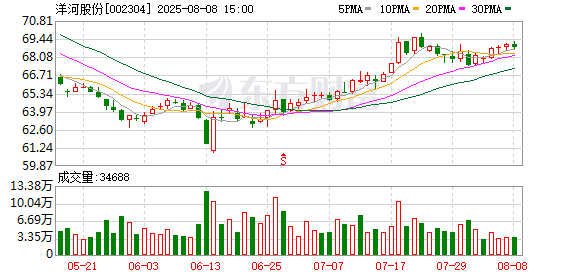
洋河股份(SZ 002304,收盘价:68.79元)8月8日晚间发布公告称,公司第八届第十二次董事会会议于 2025年8月8日以通讯表决方式召开。会议审议了《关于公司第一期核心骨干持股计划存续期展期的议 案》等文件。 2024年1至12月份,洋河股份的营业收入构成为:酒类行业占比97.83%,其他业务占比2.17%。 (文章来源:每日经济新闻) ...

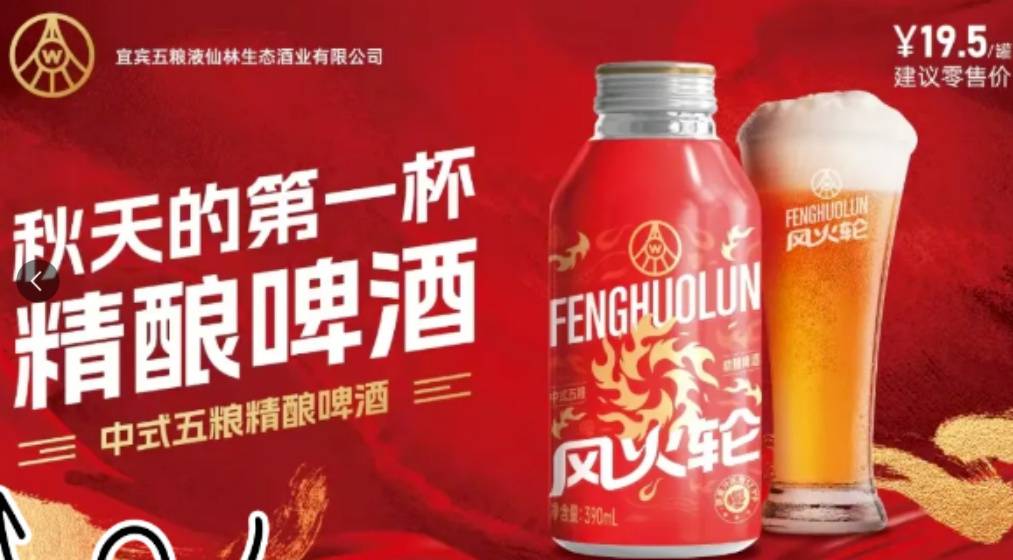
五粮液回应跨界卖啤酒:是子公司产品,名为“风火轮”,每罐19.5元
Sou Hu Cai Jing· 2025-08-08 09:33
Company Overview - Wuliangye has launched a new craft beer named "Fenghuolun," with a net content of 390ml and a suggested retail price of 19.5 yuan per can [1] - Yibin Wuliangye Xianlin Ecological Brewing Co., Ltd. is a subsidiary of Wuliangye, with a registered capital of 3 million yuan, and is primarily owned by Yibin Wuliangye Co., Ltd. (90%) and Sichuan Yibin Wuliangye Group Co., Ltd. (10%) [3] - The decision to enter the beer market was made by the subsidiary rather than Wuliangye itself, indicating a strategic move by Xianlin Ecological Brewing [3] Industry Trends - The beer market is seeing increased interest from major liquor companies, with Wuliangye and other liquor giants like Zhenjiu Lidou Group entering the craft beer segment [5] - Zhenjiu Lidou Group is set to launch a high-end craft beer named "Niushi," priced at 88 yuan per 375ml aluminum bottle, which has been in development for three years [5] - The craft beer sector is experiencing growth, with analysts noting that liquor companies have channel advantages and the craft beer market is currently thriving [5] Market Data - National Bureau of Statistics data indicates that the production of liquor in China is declining, with a 1.8% year-on-year decrease in 2024 and a 7.2% decrease in the first quarter of 2025 [5]

上半年8城销量翻倍增长,果立方的增长密码是什么?
Jiang Nan Shi Bao· 2025-08-08 07:16
Core Insights - The Chinese liquor market is facing significant challenges, particularly in the baijiu sector, leading to a reevaluation of future growth opportunities [1] - Five key dimensions driving potential growth include affordability, diverse consumption scenarios, self-indulgence, mild intoxication, and innovative channels [1] - The "low-alcohol beverages" segment is emerging as a prominent opportunity due to its appeal to new audiences and alignment with modern consumption habits [1] Industry Overview - The low-alcohol beverage sector encompasses a wide range of products, including fruit wines, craft beers, rice wines, yellow wines, and low-alcohol baijiu, indicating a dynamic market landscape [2] - The establishment of leading brands and iconic products is crucial for the maturation of the low-alcohol beverage category [2] Company Spotlight - Guoli Fang, launched in 2018, has become a representative of innovative new beverages, achieving over 100 million bottles sold, with significant growth in major cities [3][4] - The brand's success is attributed to its appealing product characteristics, such as a blend of 30% real fruit juice and an alcohol content of 15-20%, which resonates with consumers [4] Market Dynamics - The emergence of category leaders like Guoli Fang is indicative of a well-nurtured market segment, providing entry opportunities for new players [4] - The low-alcohol beverage market is projected to maintain a growth rate exceeding 20% over the next five years, with the overall market size expected to surpass 100 billion [6] Future Outlook - The low-alcohol beverage segment is seen as a vital growth engine for the liquor industry, driven by innovation and expanded market channels [5][6] - Brands that embrace new consumption scenarios and target younger demographics are likely to thrive, reshaping traditional drinking habits and aligning with global market trends [7]
白酒板块资本市场持续增长 酒企布局新赛道
Bei Jing Shang Bao· 2025-08-08 06:59
Core Insights - The liquor sector is experiencing significant growth in the capital market, with major companies like Luzhou Laojiao and Wuliangye establishing new retail companies to adapt to the digital sales landscape [1][2][4] - The establishment of new retail companies by liquor firms is driven by the influence of social media and online sales platforms on consumer marketing [3][6] Group 1: Company Developments - Luzhou Laojiao New Retail Co., Ltd. was recently established with a registered capital of 50 million yuan, focusing on self-operated e-commerce [2] - Wuliangye New Retail Management Co., Ltd. was established in May 2020 with a registered capital of 100 million yuan, and has since launched the Wuliangye Cloud Store to enhance online sales [2][4] - Both companies are leveraging online platforms to expand their sales channels, with Luzhou Laojiao reporting a dual sales model that includes traditional and emerging online channels [2][4] Group 2: Market Trends - The new retail market for liquor is projected to grow significantly, with an estimated market size of 1,167.5 billion yuan in 2020, expected to reach 1,363.1 billion yuan in 2021 [4] - Online sales channels are becoming increasingly important, with comprehensive e-commerce platforms capturing 58.2% of the online sales market [5] - The trend towards digitalization and the targeting of younger consumers is evident, as companies adapt to changing consumer preferences [5][6] Group 3: Financial Performance - Huazhi Wine achieved revenue of 2.35 billion yuan in Q1, a year-on-year increase of 81.8%, with a net profit of 190 million yuan, up 95.2% [4] - Yijiu Yijiu reported revenue of 1.455 billion yuan, a year-on-year increase of 78.11%, with a net profit of 52.75 million yuan, up 162.86% [4] - Even during challenging market conditions in 2020, Huazhi Wine reported a revenue of 4.941 billion yuan, a 32.20% increase year-on-year [4] Group 4: Consumer Engagement - The establishment of new retail companies allows liquor firms to interact more effectively with consumers, gaining insights into consumer demands and preferences [6][7] - New retail platforms serve as effective testing grounds for new products, enabling quicker feedback on pricing, packaging, and taste compared to traditional channels [6][7] - Companies are also focusing on brand integrity by reducing the risk of counterfeit products through their own retail platforms [7]

290亿白酒大佬,亲身下场卖啤酒
2 1 Shi Ji Jing Ji Bao Dao· 2025-08-08 06:46
Core Viewpoint - The liquor industry is facing significant challenges, prompting the chairman of Zhenjiu Lidou, Wu Xiangdong, to adopt innovative strategies, including launching a new beer product and engaging in live streaming to boost sales and reach younger consumers [2][4][5]. Group 1: Company Performance - Zhenjiu Lidou issued a profit warning in early August, expecting revenue between 2.4 billion to 2.55 billion yuan for the first half of the year, representing a year-on-year decline of approximately 40% [4]. - The company's net profit is projected to shrink by at least 23% due to reduced liquor consumption, particularly in business and social settings [4]. Group 2: Strategic Initiatives - Wu Xiangdong is implementing three major strategies to address declining demand: 1. Cultivating new strategic products, such as the high-end product "Dazhen·Zhenjiu," priced at 888 yuan per bottle [8][9]. 2. Strengthening the competitive position of existing flagship products, "Zhen Fifteen" and "Zhen Thirty," with suggested retail prices of 899 yuan and 1888 yuan, respectively, while addressing significant price discrepancies in the market [10][11]. 3. Expanding new consumption scenarios by launching mid-range and high-end products tailored for events like birthdays and weddings, including the newly launched "Zhen Ten" priced between 500-600 yuan [12]. Group 3: Marketing and Consumer Engagement - To attract younger consumers, Wu Xiangdong has engaged in various marketing efforts, including appointing celebrity Yao Anna as a brand ambassador and launching the "City Koi" campaign, which incentivizes purchases with a lottery [13]. - The company is also entering the high-end beer market with a new product named "Niu Shi," which took three years to develop, leveraging existing business networks for sales [14][15][16]. - As of August 7, Zhenjiu Lidou's stock closed at 7.24 HKD, with a market capitalization nearing 25 billion HKD [17].