农产品种植

Search documents
【期货热点追踪】USDA干旱报告:美国大豆受干旱影响区域比例扩大,播种能否顺利推进?
news flash· 2025-05-15 14:37
Core Insights - The USDA drought report indicates an increase in the proportion of U.S. soybean areas affected by drought, raising concerns about the progress of planting [1] Group 1 - The report highlights that the area of U.S. soybeans impacted by drought has expanded, which could hinder planting efforts [1] - The implications of the drought on soybean yields and overall agricultural output are significant, potentially affecting market prices [1]
调研报告 | 花生:预计辽宁新季种植面积企稳
对冲研投· 2025-05-15 12:11
Core Viewpoint - The article discusses the current state of the peanut market in China for the 2024/2025 production season, highlighting the reasons for the prolonged stalemate in supply and demand, the impact of natural disasters on production, and the cautious mindset of farmers regarding planting decisions [1][2][4][12]. Supply and Demand Analysis - Domestic demand for peanuts is weak, particularly in the food-grade segment, leading to a cautious purchasing attitude among various market participants. The total sales volume in key distribution areas has decreased by approximately 20% in the 80 days following the 2025 Spring Festival [1]. - The production cost has increased due to lower-than-expected yields, with the average cost of peanut production reaching around 3.0 CNY per jin, while the market price is hovering around 4.1 CNY per jin, providing a psychological support level for prices [2][4]. Market Sentiment and Inventory Pressure - Despite predictions of a peak in farmer sales, there has been no significant selling pressure observed in the market. Current inventory levels are manageable, with approximately 100,000 tons of peanuts in stock across Liaoning province, which is expected to last until August [4]. - The sentiment among farmers is cautious, with many holding back on selling due to the need to maintain prices above their production costs [4][12]. Planting Area and Cost Trends - The planting area for peanuts in traditional regions is expected to stabilize between 80% and 90%, while some peripheral areas may see a slight decrease from 70% to 60-65% [8]. - The average production cost for peanuts in Liaoning province has decreased by approximately 100 CNY per mu compared to the previous year, with seed prices dropping from 5.7-5.8 CNY per jin to around 5.1 CNY per jin [10][8]. Future Outlook - The planting pace for the upcoming season may be slower due to the cautious attitude of farmers, with potential delays in the new crop's market entry. The market may experience tight inventory levels during August and September, which could lead to a price increase above 4.5 CNY per jin [12][13]. - The impact of natural disasters on production is expected to limit the likelihood of significant selling pressure in the Liaoning market, with the focus shifting to the consumption rate of existing inventory and weather conditions affecting the upcoming crop [14].


【期货热点追踪】巴西农业巨头下调巴西大豆单产预估并指出,巴西大豆能够实现丰产全靠……
news flash· 2025-05-15 02:02
Group 1 - The core viewpoint of the article highlights that a major Brazilian agricultural company has revised down its soybean yield forecast for Brazil, indicating that the country's soybean production relies heavily on specific factors for achieving high yields [1] Group 2 - The article suggests that the adjustment in soybean yield expectations may impact the overall agricultural market in Brazil, potentially affecting supply and pricing dynamics [1] - It emphasizes the importance of monitoring agricultural conditions and production factors that influence soybean yields in Brazil [1]
油脂油料早报-20250514
Yong An Qi Huo· 2025-05-14 11:28
油脂油料早报 研究中心农产品团队 2025/05/14 隔 夜 市 场 信 息 : SPPOMA:马来西亚5月1-10日棕榈油产量环比增长22.31% 南部半岛棕榈油压榨商协会(SPPOMA)发布的数据显示,2025年5月1-10日,马来西亚棕榈油产量环比增长 22.31%,鲜果串单产增长20.20%,出油率增长0.40%。 MPOB报告:马来西亚4月底棕榈油库存环比增加19.4% 马来西亚棕榈油总署(MPOB)公布月报显示,马来西亚4月底棕榈油库存较前月增加19.37%,至187万吨。 MPOB数据显示,马来西亚4月毛棕油产量为169万吨,较前月增加21.52%。 马来西亚3月棕榈油出口量为110万吨,较前月增加9.62%。 此前的一份调査显示,预计马来西亚3月棕榈油库存为179万吨,产量料为162万吨,出口量料为110万吨。 USDA油籽报告:全球2025/26年度棕榈油产量预估为8043.6万吨 美国农业部公布的5月油籽报告显示,全球2025/26年度棕榈油产量预计为8043.6万吨,较上年度产量预估上调 219.1万吨。 全球2025/26年度棕榈油期末库存预计为1446.3万吨,较上年期未库存度预估 ...
【环时深度】全球“粮仓”“肉库”如何应对关税调整
Huan Qiu Shi Bao· 2025-05-13 22:37
Core Insights - China is diversifying its agricultural imports, with Brazil surpassing the US as the largest soybean supplier to China, and a procurement agreement worth approximately $900 million signed with Argentina [1][10] - The recent adjustments in US-China tariffs have created both opportunities and challenges for agricultural exporters in various countries, including Brazil and Australia [4][7] Group 1: Agricultural Trade Dynamics - Brazil has replaced the US as China's largest soybean supplier, with a significant procurement contract for at least 2.4 million tons of soybeans signed in April [3][4] - The US-China trade negotiations have led to a rise in soybean prices, returning to pre-trade conflict levels, which is a positive sign for US soybean farmers [3][4] - Argentina is focusing on increasing its agricultural exports to China, with 80% of its beef exports directed to the Chinese market [9][10] Group 2: Impact of Tariff Adjustments - The US soybean market is expected to face increased competition from Brazil if tariffs remain low, potentially affecting US market share in China [4][7] - Australia is experiencing pressure on its agricultural exports due to US tariffs, prompting the government to allocate funds to help farmers explore markets outside the US [5][6] - Brazil's agricultural sector is adapting to the new pricing models and is encouraged to diversify its markets to reduce reliance on a single trading partner [8][11] Group 3: Future Prospects - The ongoing US-China trade discussions are viewed as crucial for global trade stability, with experts emphasizing the importance of a cooperative approach [1][9] - China's efforts to build a more diversified agricultural supply structure are expected to create new business opportunities for countries like Argentina [10][11] - The overall sentiment in the agricultural sector is one of cautious optimism, with stakeholders recognizing both the risks and opportunities presented by the evolving trade landscape [5][7]

2025年5月美国农业部供需报告解读:2025、26年度全球农产品供需形势预测
Guo Tai Jun An Qi Huo· 2025-05-13 11:50
Report Title - 2025/26 Annual Global Agricultural Product Supply and Demand Situation Forecast - Interpretation of the May 2025 USDA Supply and Demand Report [1] Core Viewpoint - Based on the data from the May USDA global agricultural product supply and demand report, the report analyzes the supply and demand situations of global grains, oilseeds, US livestock and dairy products, and global soft commodities (cotton) in the 2025/26 period, providing an overview of the future trends of these major agricultural products [2] Industry Investment Rating - Not provided in the report Section Summaries 1. Grains - **Overall**: In the 2025/26 period, global grain production is expected to reach 2.89676 billion tons, a year-on-year increase of 57.28 million tons; total supply will increase by 27.85 million tons to 3.66349 billion tons; total consumption will increase by 38.44 million tons to 2.90735 billion tons; ending stocks will slightly decrease by 10.6 million tons to 756.14 million tons, and the stock-to-use ratio will drop by 0.72% to 26.01%. Global grains will continue to draw down stocks [4] - **Corn and Coarse Grains**: Production is expected to be 1.54952 billion tons, a year-on-year increase of 47.47 million tons; total supply will increase by 16.84 million tons to 1.86594 billion tons; total consumption will increase by 27.92 million tons to 1.5606 billion tons; ending stocks will slightly decrease by 11.08 million tons to 305.34 million tons, and the stock-to-use ratio will drop by 0.97% to 19.57%. The US corn planting area will increase by 4.7 million acres to 95.3 million acres, production is expected to increase by 1 billion bushels to 15.82 billion bushels, ending stocks will increase by 385 million bushels to 1.8 billion bushels, and the stock-to-use ratio will rise from 9.28% in the previous year to 11.64% [6] - **Wheat**: Production is expected to be 808.52 million tons, a year-on-year increase of 8.81 million tons; total supply will increase by 4.9 million tons to 1.07373 billion tons; total consumption will increase by 4.38 million tons to 808 million tons; ending stocks will slightly increase by 520,000 tons to 265.73 million tons, and the stock-to-use ratio will drop by 0.11% to 32.89%. The global wheat supply-demand pattern is basically stable [13] - **Rice**: Production is expected to be 838.71 million tons, a year-on-year increase of 9.9 million tons; total supply will increase by 6.1 million tons to 723.82 million tons; total consumption will increase by 6.14 million tons to 538.75 million tons; ending stocks will slightly decrease by 400,000 tons to 185.07 million tons, and the stock-to-use ratio will drop by 0.4% to 34.35%. The global rice supply-demand pattern has improved [17] 2. Oilseeds - **Overall**: In the 2025/26 period, global oilseed production is expected to be 692.1 million tons, a year-on-year increase of 14.94 million tons; total supply will increase by 20.12 million tons to 833.4 million tons; total consumption will increase by 18.42 million tons to 580.49 million tons; ending stocks will rise by 1.94 million tons to 143.24 million tons, and the stock-to-use ratio will drop by 0.4% to 24.68%. Global oilseed supply is relatively abundant [20] - **Protein Meal**: Production is expected to be 400.2 million tons, a year-on-year increase of 12.48 million tons; total supply will increase by 15.56 million tons to 422.5 million tons; total consumption will increase by 14.82 million tons to 394.78 million tons; ending stocks will rise by 960,000 tons to 23.31 million tons, and the stock-to-use ratio will remain basically flat at 5.9%. The global protein meal market maintains a tight balance [23] - **Oils**: Production is expected to be 234.5 million tons, a year-on-year increase of 6.78 million tons; total supply will increase by 5.08 million tons to 263.6 million tons; total consumption will increase by 4.93 million tons to 228.94 million tons; ending stocks will remain the same as the previous year at 29.14 million tons, and the stock-to-use ratio will drop by 0.2% to 12.73%. Driven by biodiesel, global oil demand has improved, and the stock-to-use ratio has slightly decreased [23] - **Soybeans**: Production is expected to be 426.8 million tons, a year-on-year increase of 5.95 million tons; total consumption will increase by 13.76 million tons to 424.05 million tons; ending stocks will rise by 7.88 million tons to 123.18 million tons, and the stock-to-use ratio will drop by 0.7% to 29.32%. South American production increases will offset the decline in US soybean production [25] - **Soybean Oil**: Production is expected to be 70.77 million tons, a year-on-year increase of 2.2 million tons; total consumption will increase by 1.84 million tons to 69.22 million tons; ending stocks will rise by 360,000 tons to 6.06 million tons, and the stock-to-use ratio will rise by 0.3% to 9.32%. The global soybean oil market is basically balanced, stocks will slightly increase, and the global oil market will maintain a tight balance [27] - **Soybean Meal**: Production is expected to be 287.6 million tons, a year-on-year increase of 9.52 million tons; total consumption will increase by 11.55 million tons to 283.37 million tons; ending stocks will rise by 730,000 tons to 18.39 million tons, and the stock-to-use ratio will remain basically flat at 6.5%. Global soybean meal demand is growing significantly, and the market will maintain a tight balance with strong supply and demand [29] 3. US Livestock and Dairy Products - **Beef**: Production is expected to be 11.43 million tons, a year-on-year decrease of 580,000 tons; total consumption will decrease by 540,000 tons to 12.57 million tons; ending stocks will drop by 10,000 tons to 260,000 tons. Although both production and demand have declined, the US beef market will generally remain in a boom cycle [32] - **Dairy Products**: Production is expected to be 103.37 million tons, a year-on-year increase of 270,000 tons; domestic consumption is expected to be 85 million tons, a year-on-year increase of 820,000 tons; the stock-to-use ratio will drop by 0.28% to 6.51%. The dairy stock-to-use ratio will further decline, dairy prices will be low, supply growth will slow down, and consumption will increase [35] 4. Soft Commodities (Cotton) - In the 2025/26 period, global cotton production is expected to be 2.565 million tons, a year-on-year decrease of 71,000 tons; total consumption will increase by 30,000 tons to 2.57 million tons; ending stocks will remain basically the same as the previous year at 1.706 million tons, and the stock-to-use ratio will drop by 0.8% to 66.38%. The global cotton market will continue to have an oversupply situation, and the high stock-to-use ratio will put pressure on cotton prices [37]
从山尖到舌尖 “贷”来重庆南川方竹笋美味传奇
Jin Rong Shi Bao· 2025-05-13 01:57
Core Viewpoint - The article highlights the efforts of the People's Bank of China in Banan District to support the bamboo shoot industry in Nanchuan, focusing on innovative financial products and integration of agriculture, culture, and tourism to enhance local economic development [1][5]. Group 1: Financial Support for Bamboo Shoot Farmers - The peak financing demand for bamboo shoot farmers occurs during the harvesting season in August and September, where they face challenges such as weak collateral and lengthy loan processes [2][3]. - The Chongqing Sanxia Bank has developed a tailored online credit product called "Bamboo Shoot Merchant Loan," which allows for rapid loan disbursement, reducing the time from one week to one day [3]. - As of April 2025, local banks have supported bamboo farmers and merchants with a total of 73.245 million yuan, contributing to job creation and income growth [3]. Group 2: Strengthening the Bamboo Shoot Industry Chain - The Chongqing Xuanrui Food Co., a key player in bamboo shoot processing, has received financial support from local banks, enabling its growth from a small workshop to two modern processing plants [4]. - The bank provided 8.3 million yuan in financing to help the company overcome cash flow issues and later granted 19 million yuan to expand its operations [4]. Group 3: Broader Agricultural Financial Initiatives - The People's Bank of China in Banan District has launched various credit products tailored to specific agricultural sectors, including "Radish Loan," "Tea Loan," and "Bamboo Shoot Loan," supporting a total of 248 million yuan in loans across several districts [5]. - The bank has established financial service hubs in food parks to enhance support for food and agricultural processing enterprises, with a total loan issuance of 564 million yuan as of April 2025 [5]. Group 4: Integration of Agriculture, Culture, and Tourism - Nanchuan District has seen the development of numerous projects that integrate agriculture, culture, and tourism, enhancing the local economy and promoting rural revitalization [6]. - The People's Bank of China collaborates with local agricultural and cultural departments to facilitate financial support for tourism-related projects, contributing to the overall economic development of the region [7].
油脂油料周报:美豆弱势震荡,棕榈油震荡走低-20250511
Guo Xin Qi Huo· 2025-05-11 07:38
Report Industry Investment Rating No relevant information provided. Core Viewpoints of the Report - This week, international oilseeds and oils showed a downward - oscillating trend, with domestic protein meal markets also under pressure. The short - term market trends of both protein meal and oils will be affected by factors such as international trade negotiations, weather conditions, and supply - demand relationships [6][71]. - In the protein meal market, the short - term outlook for US soybeans remains range - bound, and domestic soybean meal is facing pressure from increasing supply and bearish sentiment among end - users. In the oils market, international oils are affected by factors like geopolitics and production increases, while domestic oils are expected to show range - bound oscillations [134][135]. Summary by Directory 1. Protein Meal Market Analysis 1.1 Market Trends - CBOT soybeans fluctuated within a range this week, with a slightly lower price center. Domestic soybean meal futures showed a low - level oscillation. The 5 - month contract of domestic soybean meal rebounded after a post - holiday catch - up decline, while the far - month contracts were under selling pressure [6]. 1.2 US Soybean Export - As of the week ending May 1, 2025, the US soybean export inspection volume decreased by 29% compared to the previous week and 10% compared to the same period last year. The cumulative export inspection volume for the 2024/25 season reached 43,461,547 tons, accounting for 87.5% of the annual export target [12]. 1.3 US Soybean Planting Progress - As of May 4, 2025, the US soybean planting progress reached 30%, up from 18% the previous week, slightly higher than the five - year average of 23% but 6 percentage points behind the same period in 2024. The planting progress in southern states was relatively fast, while that in the northern plains was slower [26]. 1.4 Global Oilseed Market - StoneX raised its forecast for Brazil's 2024/25 soybean production to 1.684 billion tons, a 0.5% increase from the previous month and a 12.1% increase from the 2023/24 season. Argentina's soybean harvest has been delayed due to heavy rainfall [36][37]. 1.5 Domestic Soybean and Soybean Meal Inventory - As of the end of the 18th week of 2025, the domestic soybean meal inventory was 102,000 tons, a 5.57% week - on - week increase. The contract volume was 4.562 million tons, a 59.42% week - on - week increase [55]. 2. Oils Market Analysis 2.1 Market Trends - International oils oscillated downward this week, with US soybean oil leading the decline. Malaysian palm oil also showed a similar trend, while Canadian canola was relatively strong. In the domestic market, palm oil was the weakest, and rapeseed oil was the strongest [71]. 2.2 International Oils Information - Malaysian palm oil inventory is expected to increase for the second consecutive month in April. Indian palm oil imports in April are estimated to be lower than normal, but may rebound in May. The proposed budget cut of the US EPA has led to concerns about the demand for biofuels [75][76]. 2.3 Domestic Oils Inventory - As of the end of the 18th week of 2025, the total inventory of the three major domestic edible oils was 1.9469 million tons, a 1.10% week - on - week increase. Among them, soybean oil inventory was 710,900 tons, a 2.92% week - on - week increase; palm oil inventory was 330,600 tons, a 3.45% week - on - week decrease; rapeseed oil inventory was 905,500 tons, a 1.43% week - on - week increase [91]. 3. Market Outlook 3.1 Technical Analysis - For soybean meal, short - term, medium - term, and long - term indicators are bearish. For rapeseed meal, short - term and medium - term indicators are bearish, while the long - term indicator is entangled. For soybean oil, all three indicators are entangled. For palm oil, short - term and medium - term indicators are bearish, and the long - term indicator is entangled. For rapeseed oil, the short - term indicator is bullish, and medium - and long - term indicators are entangled [134]. 3.2 Fundamental Analysis - Protein Meal: The US soybean market will remain range - bound in the short term, affected by the USDA report, weather, and trade negotiations. Domestic soybean meal is under pressure from increasing supply. - Oils: International oils are affected by geopolitics and production increases. Domestic palm oil may test the 7800 - level support, while soybean oil and rapeseed oil are expected to show range - bound oscillations [135].
农产品日报:苹果西部坐果欠佳,红枣等外到货居多-20250509
Hua Tai Qi Huo· 2025-05-09 08:14
Group 1: Apple Report Industry Investment Rating - The investment strategy for apples is to be bullish with fluctuations [3] Core View - Apple futures prices closed lower yesterday, but the enthusiasm of merchants for purchasing goods is high. After the holiday, apple prices remain stable. The new season's apples have entered the fruit - setting period, with a poor performance in the western region. The late - Fuji apple's shipping speed continues to accelerate. Boosted by the traditional consumption peak season and the May Day holiday, the enthusiasm of merchants in the producing areas to search for goods is high, and the price has increased significantly compared with that before the Tomb - Sweeping Festival. The de - stocking speed of apples is faster than that of the same period last year, and the remaining inventory is at the lowest level in the same period in the past five years. Although the new season's apples are uncertain, the strengthening of the spot market is relatively certain [2] Summary by Directory - **Market News and Important Data**: The closing price of the apple 2510 contract yesterday was 7,795 yuan/ton, a change of - 91 yuan/ton from the previous day, a decrease of 1.15%. In Shandong Qixia, the price of 80 first - and second - grade late - Fuji apples was 4.10 yuan/jin, unchanged from the previous day, with a spot basis of AP10 + 405, a change of + 91 from the previous day. In Shaanxi Luochuan, the price of 70 and above semi - commercial late - Fuji apples was 4.30 yuan/jin, unchanged from the previous day, with a spot basis of AP10 + 805, a change of + 91 from the previous day. After the holiday, merchants in the apple market look for goods as needed, mainly shipping pre - packaged goods. The transaction of merchants' goods in the western producing areas is stable, and spot merchants' purchases are okay. In Shandong, the number of merchants looking for goods has slightly decreased compared with before the holiday, but the high - cost - effective goods are still selling well, and the price of in - warehouse goods is relatively stable. The sales in the sales areas are okay, and downstream wholesalers maintain on - demand purchases [1] - **Market Analysis**: Apple futures prices closed lower yesterday. The enthusiasm of merchants for purchasing goods is high, and apple prices remain stable after the holiday. The new season's apples have entered the fruit - setting period, with a poor performance in the western region. It is necessary to continuously track the weather conditions in the producing areas. The late - Fuji apple's shipping speed continues to accelerate. Boosted by the traditional consumption peak season and the May Day holiday, the enthusiasm of merchants in the producing areas to search for goods is high, and the price has increased significantly compared with that before the Tomb - Sweeping Festival. The de - stocking speed of apples is faster than that of the same period last year, and the remaining inventory is at the lowest level in the same period in the past five years. The remaining goods in the western producing areas are relatively concentrated, mainly merchants' goods. The sales of farmers' goods in Shandong are accelerating, and the secondary producing areas are gradually clearing their warehouses. The resistance to price cuts in the market is strong. In the sales areas, the arrival of goods in the Guangdong Chalong market last week increased slightly compared with the previous week, the market sales improved, downstream customers replenished goods as needed, and the digestion progress was good, with no obvious backlog in the transfer warehouses. Most producing areas have entered the flowering period, and some areas have entered the fruit - setting period. Low - temperature freezing, strong winds, high - temperature drought, etc. have a greater impact on fruit - setting. The fruit - setting in Shaanxi is generally poor. The new season's apples are uncertain, but the strengthening of the spot market is relatively certain. The market is mainly trading on the strong reality, and it is not yet known whether there is a weak expectation. It is necessary to continue to pay attention to the weather, fruit - setting, thinning, and bagging in the producing areas. Recently, seasonal fresh fruits will be on the market in large quantities, and the rising temperature may have a certain impact on apples. However, the output of melons has decreased this year, so it is necessary to pay attention to the impact of melon price fluctuations on apples. Currently, there are not many remaining goods in the producing areas, and the ownership of goods is relatively concentrated, and the enthusiasm of merchants to search for goods remains undiminished [2] - **Strategy**: The investment strategy for apples is to be bullish with fluctuations [3] Group 2: Red Dates Report Industry Investment Rating - The investment strategy for red dates is neutral [6] Core View - Red date futures closed lower yesterday. The Dragon Boat Festival stocking is in an orderly manner. The supply of goods in the sales areas is sufficient, with mostly sub - standard goods arriving. The trading volume of high - quality goods is okay. The red date production in 2024 exceeded expectations, and the market has no obvious differences in the fundamentals of red dates. The peak consumption season for red dates has passed, and the current futures and spot prices are at historical lows. The arrival of goods in the sales areas decreased slightly last week. It is currently the traditional off - season, with an increasing supply of seasonal fruits and a weakening demand for tonics. The market trading atmosphere for red dates is poor. According to the seasonal law of red dates, the off - season for consumption will last until September. Since last week, some downstream traders have started to stock up for the Dragon Boat Festival. It is necessary to pay attention to the recent replenishment intensity, and the sales may improve. The market's focus will shift to the growth of new - season red dates. Currently, the jujube trees in the southern Xinjiang main producing areas have entered the budding stage. Due to the large output of red dates in the 2024 season, there is a problem of over - exhaustion of jujube trees, so the potential hidden dangers in the new - season growth have increased, and the probability of market opportunities arising from the growth situation in the flowering and fruit - setting stages has increased [5] Summary by Directory - **Market News and Important Data**: The closing price of the red date 2509 contract yesterday was 9,015 yuan/ton, a change of - 35 yuan/ton from the previous day, a decrease of 0.39%. In Hebei, the spot price of first - grade grey jujubes was 8.30 yuan/kg, unchanged from the previous day, with a spot basis of CJ09 - 715, a change of + 35 from the previous day. In the Xinjiang grey jujube main producing areas, the jujube trees germinate in batches. Currently, the growth is normal, and the earlier - germinated jujube trees have shown flower buds. Jujube farmers are actively carrying out field management, and the bud - rubbing work has started in Hotan. As the weather warms up, it is necessary to pay attention to the growth situation and weather changes in the producing areas. In the Hebei Cuierzhuang market, 10 trucks of goods arrived at the parking area, including both sub - standard and finished products, and the prices vary according to the quality of the arrived goods. The reference price for first - grade jujubes is 8.00 - 8.50 yuan/kg, and the market transaction is average. In the Guangdong Ruyifang market, 8 trucks of goods arrived, and the mainstream market price remained stable. The prices vary according to the quality of the arrived goods. The reference price for special - grade jujubes is 10.00 - 11.00 yuan/kg, and for first - grade jujubes is 8.60 - 9.20 yuan/kg. Merchants purchase goods as needed, and about 3 trucks of goods were traded [3][4] - **Market Analysis**: Red date futures closed lower yesterday. The Dragon Boat Festival stocking is in an orderly manner. The supply of goods in the sales areas is sufficient, with mostly sub - standard goods arriving. The trading volume of high - quality goods is okay. The red date production in 2024 exceeded expectations, and the market has no obvious differences in the fundamentals of red dates. The peak consumption season for red dates has passed, and the current futures and spot prices are at historical lows. The arrival of goods in the sales areas decreased slightly last week. It is currently the traditional off - season, with an increasing supply of seasonal fruits and a weakening demand for tonics. The market trading atmosphere for red dates is poor. According to the seasonal law of red dates, the off - season for consumption will last until September. Since last week, some downstream traders have started to stock up for the Dragon Boat Festival. It is necessary to pay attention to the recent replenishment intensity, and the sales may improve. Jujube trees are light - loving crops, requiring at least 11 - 12 hours of sunlight per day. Appropriate temperature and humidity conditions are crucial for flowering and fruiting. Excessive drought or low temperature will affect the yield and quality. The market's focus will shift to the growth of new - season red dates. Currently, the jujube trees in the southern Xinjiang main producing areas have entered the budding stage. Due to the large output of red dates in the 2024 season, there is a problem of over - exhaustion of jujube trees, so the potential hidden dangers in the new - season growth have increased, and the probability of market opportunities arising from the growth situation in the flowering and fruit - setting stages has increased [5] - **Strategy**: The investment strategy for red dates is neutral. Currently, the absolute price is at a low level. In the short term, the price of red dates is still supported by the Dragon Boat Festival stocking. It is necessary to continuously pay attention to the market opportunities brought about by the impact of the over - exhaustion in the 2024 red date season and weather changes on the growth of new - season red dates [6]
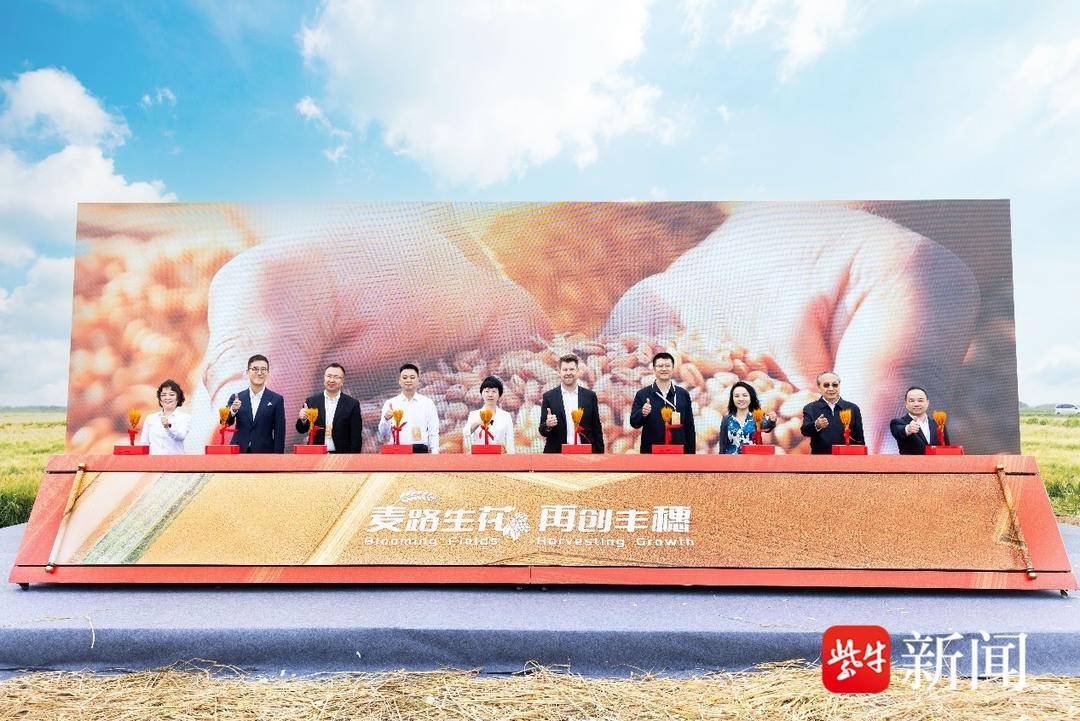
94个国际优质大麦品系落地江苏优中选优,科技“生花”助力高品质“中国酿造”
Yang Zi Wan Bao Wang· 2025-05-08 15:07
Core Insights - The collaboration between Jiangsu Agricultural Reclamation Group and Budweiser China has led to the successful cultivation of two high-quality barley varieties, Y131 and Y148, which meet high standards for beer brewing [3][4] - A modern indoor hop cultivation base of 2,200 square meters has been established in Lianyungang, enhancing the production capacity of hops through advanced agricultural technologies [6][7] - An environmentally friendly fertilization model has been developed, aiming to reduce chemical fertilizer usage by 20% while increasing barley yield by 5%-10% by 2025 [4][7] Group 1: Collaboration and Development - Since establishing a strategic partnership in 2016, Budweiser China and Jiangsu Agricultural Reclamation have deepened their cooperation in barley breeding and research [3] - Budweiser China has sourced a total of 230,000 tons of barley from Jiangsu Agricultural Reclamation Group to date [4] Group 2: Technological Innovations - The indoor hop cultivation project utilizes air-source heat pump systems and intelligent lighting technology to optimize key environmental parameters, significantly increasing the frequency of harvests from once a year to three to four times [6][7] - The innovative use of brewery by-products to develop organic fertilizers has replaced traditional fertilizers, contributing to carbon reduction [7] Group 3: Sustainability Initiatives - The partnership has initiated the 100+ Innovation Alliance to promote sustainable agriculture and development, leveraging various stakeholders for innovative technology applications [6][7] - The environmentally friendly fertilization model not only optimizes fertilization plans but also achieves significant breakthroughs in reducing chemical fertilizer use and carbon emissions [7]