光伏

Search documents
智谱,最新发声!
Zhong Guo Zheng Quan Bao· 2026-02-22 00:27
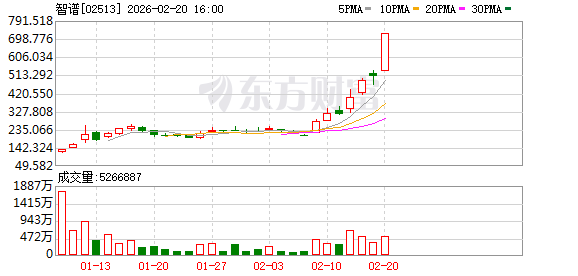
Industry News - As of February 21, 2026, China's annual box office has surpassed 7 billion yuan, with the Spring Festival box office exceeding 4.4 billion yuan. The top four films include "Fast Life 3," "Silent Awakening," "Bounty Hunter: Wind Rises in the Desert," and "Boonie Bears: Year of the Bear." China's cumulative box office has exceeded 970 million USD, surpassing North America to become the world's leading single market for box office revenue [2] - The National Energy Administration reported that in 2025, China's newly installed photovoltaic capacity reached 317 million kilowatts, a year-on-year increase of 14%. This includes 164 million kilowatts from centralized photovoltaic and 153 million kilowatts from distributed photovoltaic. By December 2025, the total installed capacity of photovoltaic power generation in China reached 1.2 billion kilowatts, a year-on-year increase of 35%, indicating rapid growth in the photovoltaic industry and significant progress in energy green and low-carbon transformation [2] - The second International Humanoid Robot Forum was held in Switzerland, focusing on the industrialization and embodied intelligence development of humanoid robots. Experts emphasized that the future breakthroughs in robotics will rely on the integration of multimodal perception and cognitive control systems, which will be crucial for the next generation of intelligent robots [3] - In 2025, the China Development Bank issued loans totaling 786.3 billion yuan to support urban renewal projects, focusing on the renovation of old residential areas, old streets, and urban infrastructure improvements, contributing to urban structure optimization and quality enhancement [3] - The first commercially operated intelligent navigation container ship, "Zhi Fei," successfully docked at the automated terminal in Qingdao Port, marking China's first achievement in fully unmanned navigation, docking, and operation of container ships [4] Company News - Zhipu announced an apology regarding the GLM Coding Plan and released a compensation scheme. The company acknowledged three main errors: insufficient transparency in rules, slow rollout of GLM-5, and poorly designed upgrade mechanisms for existing users. Zhipu stated that the GLM-5 release exceeded expectations, leading to a gradual opening for users categorized as Max, Pro, and Lite. Max users have full access, while Pro users may experience throttling during peak times, and Lite users will gradually gain access after the holiday. A refund option is available for affected Lite and Pro users [5] - X Company, owned by Elon Musk, announced that it has appealed against a 120 million euro fine imposed by the European Commission under the Digital Services Act. The company claims that the decision was based on an "incomplete and superficial" investigation and alleges serious procedural errors, arguing that the decision infringes on its rights and violates basic procedural requirements [5]

别乱换股!节后三大主线锁定,稳抓修复行情!
Sou Hu Cai Jing· 2026-02-21 05:50
Core Viewpoint - The A-share market is expected to experience a recovery post-Spring Festival, driven by three main investment themes that are supported by policy, demand recovery, and performance realization [1][8]. Group 1: Market Overview - Historical data indicates that the probability of the A-share market initiating a spring rally after the Spring Festival exceeds 70%, with an expected increase in market risk appetite due to policy expectations from the March Two Sessions [1]. - This year's market is anticipated to be structurally strong rather than a broad-based rally, focusing on specific investment themes that align with policy support and demand recovery [1]. Group 2: Investment Themes - **Theme 1: New Productive Forces (AI, High-end Manufacturing, Semiconductors)** - This theme is emphasized by regulatory bodies and is a key focus in brokerage reports, with high-tech manufacturing PMI remaining in the expansion zone and a significant increase in orders related to new productive forces [4]. - The theme combines policy support, technological implementation, and capital concentration, with a strong rebound expected post-holiday [4]. - **Theme 2: Consumption Recovery (Home Appliance Replacement, Cultural Tourism, Dining)** - The consumption recovery is evidenced by increased sales of smart wearable devices and green home appliances during the Spring Festival, with retail sales in related categories showing double-digit growth [6]. - The ongoing "old-for-new" policy in home appliances further strengthens the certainty of performance in this sector, making it a defensive investment option [6]. - **Theme 3: High Prosperity in New Energy (Photovoltaics, Energy Storage)** - The new energy sector, a core part of the national energy strategy, has seen its valuations return to reasonable levels after adjustments, with domestic photovoltaic installations and energy storage projects exceeding expectations [7]. - The sector is expected to experience valuation recovery as industry chain prices stabilize and performance reports are released, particularly for leading companies with robust cash flows [7]. Group 3: Investment Strategy - Investors are advised to focus on the identified main themes and avoid frequent stock changes, as patience and the right selection are crucial for capitalizing on post-holiday market opportunities [8].

货与钱的终极对决:为什么说中国制造才是这场博弈的硬通货?
Sou Hu Cai Jing· 2026-02-21 03:28
Group 1 - The U.S. national debt of $39 trillion poses a significant burden, with annual interest payments of $1.2 trillion exceeding Sweden's entire GDP [1] - By 2026, military spending and manufacturing repatriation plans will require $1.4 trillion, while the Federal Reserve faces a dilemma between lowering interest rates, which could trigger a mortgage crisis, and maintaining high rates, which exacerbates the debt cycle [1] - Tariffs imposed on China have resulted in 90% of the costs being passed on to American consumers, with Walmart's share of Chinese goods projected to rise to 28% in 2024, indicating that "decoupling from China" is more of a political illusion [1] Group 2 - China remains a dominant player in global manufacturing, producing over 40% of 504 major industrial products, with electric vehicle production at 13 million units annually (65% of global share) and industrial robot installations at 54% [1] - A Boston Consulting report indicates that the comprehensive cost of manufacturing in China is still 17% lower than in Vietnam and 23% lower than in Mexico, leading U.S. dental equipment importers to prefer sourcing from China despite a 25% tariff [1] - Although China's export share to the U.S. has decreased from 19.2% to 14.7%, exports to ASEAN are surging, with an 18.3% increase in 2024, and 60% of these goods are processed for final sale in Europe and the U.S. [1] Group 3 - The dominance of the U.S. dollar is facing challenges, with global foreign exchange reserves falling below 55%, 40 countries initiating local currency settlements, and the Federal Reserve's balance sheet shrinking by $1.5 trillion [2] - The renminbi, supported by China's 31% share of global manufacturing, has become the preferred settlement currency for 23 countries, highlighting a potential shift in global economic power [2] - China's high-tech product exports are projected to reach 29.8% in 2024, with solar components and lithium batteries holding global market shares of 85% and 72%, respectively, indicating a significant industrial transition [2]
大涨150%后又大跌35%,白银的过山车,开年还能捡漏上车吗?
Sou Hu Cai Jing· 2026-02-20 12:01
Core Viewpoint - The silver market experienced extreme volatility in 2025 and early 2026, driven by liquidity influx, strong industrial demand, and self-reinforcing market sentiment, leading to a dramatic price surge followed by a sharp decline [1][3][5][8]. Group 1: Liquidity and Market Dynamics - In 2025, the Federal Reserve's interest rate cuts led to a surge in liquidity, attracting significant capital into the silver market, which has a total market value only one-tenth that of gold [3]. - The influx of retail and speculative investors, drawn by low prices, resulted in unprecedented premiums for silver funds and record-high open interest in COMEX silver futures [3]. - The market's structure became increasingly crowded with long positions, setting the stage for a sharp correction when prices began to fall [9]. Group 2: Industrial Demand - Silver transitioned from being a mere precious metal to a critical industrial component, particularly in the photovoltaic sector, which consumed about one-sixth of the global silver production in 2025 [4]. - The demand for silver surged due to advancements in high-efficiency battery technologies and the expansion of data centers and electric vehicles, while supply remained rigid due to the nature of silver extraction [4]. - The London Bullion Market Association reported that deliverable silver stocks fell to levels sufficient for only 1.2 months of global consumption, indicating a precarious supply situation [4]. Group 3: Market Sentiment and Price Fluctuations - By the end of 2025, social media buzz around silver investments created a speculative bubble, with prices soaring over 140% throughout the year [5]. - On January 29, 2026, silver prices peaked at $121.65 per ounce before a sudden collapse triggered by the nomination of a hawkish Federal Reserve chair, which reversed market expectations for further rate cuts [8]. - The market's fragile structure led to a cascade of forced liquidations, resulting in a record single-day price drop of over 35%, with prices plummeting to near $74 [9]. Group 4: Long-term Supply and Demand Outlook - Despite the short-term volatility, the World Silver Survey projected a supply deficit of 67 million ounces in 2026, indicating persistent structural demand from industries like photovoltaics and AI [11]. - The rising silver prices have pressured manufacturers, particularly in the photovoltaic sector, to innovate and reduce silver usage, potentially impacting long-term demand growth [15]. - Silver's dual role as both an industrial metal and a financial asset creates a complex market dynamic, with its price sensitivity to monetary policy and industrial demand [12][15].
新股消息 | 英发睿能港股IPO招股书失效
Zhi Tong Cai Jing· 2026-02-20 01:21
Core Viewpoint - Yingfa Ruineng Technology Co., Ltd. is a leading global manufacturer of photovoltaic (PV) cells, focusing on the research, production, and sales of PV cells since its establishment in 2016 [1] Company Overview - Yingfa Ruineng specializes in the development and production of both P-type and N-type photovoltaic cells, catering to global market demands [1] - The company is positioned as an industry leader in N-type TOPCon cell technology and is advancing towards the next generation of N-type xBC cell technology [1] IPO Details - The company's Hong Kong IPO application submitted on August 20, 2025, will expire on February 20, 2026, after a six-month period [1] - CITIC Securities International and Huatai International are acting as joint sponsors for the IPO [1]

别被误导!地球上的石油储量够人类⽤三千年,能源战全是利益博弈
Sou Hu Cai Jing· 2026-02-19 21:33
Core Viewpoint - The G7's recent acknowledgment of nuclear power as a green energy source has sparked significant reactions, particularly from Germany, which has previously abandoned nuclear energy, leading to energy supply challenges [1][3][5]. Group 1: Germany's Energy Crisis - Germany's energy crisis began in 2011 after the Fukushima disaster, leading to the shutdown of nuclear power plants and a reliance on natural gas from the Nord Stream pipelines [3][5]. - The outbreak of the Russia-Ukraine war disrupted energy supplies, exacerbating Germany's economic struggles and highlighting the consequences of its decision to phase out nuclear energy [5][7]. Group 2: Global Energy Landscape - The current global proven oil reserves stand at 17,546 billion barrels, natural gas at 206 trillion cubic meters, and coal at 1,740 billion tons, with coal accounting for 58% of the total energy reserves [9][18]. - The competition for clean energy, particularly natural gas, is intensifying as countries seek to secure energy control amid geopolitical tensions [18][24]. Group 3: Nuclear Energy Potential - The Earth has proven uranium reserves of 5 million tons, which can yield energy equivalent to over 140 trillion tons of standard coal, indicating the vast potential of nuclear energy [28]. - The G7's shift in stance towards nuclear energy reflects its importance in the current energy landscape, especially as fossil fuels still dominate global energy consumption [26][28]. Group 4: Regional Energy Strategies - The U.S. remains the leading energy power, excelling in both nuclear energy and shale oil production, while countries like India are strategically purchasing cheaper Russian oil to benefit economically [32][34]. - Taiwan's energy strategy, which relies on renewable sources, faces challenges due to limited space for solar installations and mismatched energy supply and demand, leading to potential energy crises [30][32].

利弗莫尔中概股龙头指数微涨0.16%,板块分化延续,矿业光伏偏强,云计算自动驾驶承压
Jin Rong Jie· 2026-02-18 23:32
Group 1 - The Livermore Chinese Concept Stock Index rose by 0.16% on February 19, with significant divergence in individual stock performances [1] - Hilltop Metal Mining and Canadian Solar both recorded gains exceeding 4%, while Futu Holdings and Amer Sports followed with gains over 2% [1] - Century Internet experienced a drop of over 9%, with other stocks like WeRide, Kingsoft Cloud, and AHG also declining by more than 3% [1] Group 2 - The Nasdaq Golden Dragon China Index fell by 0.04%, with mixed performances among popular Chinese concept stocks [1] - Notable stocks such as Pinduoduo, Trip.com, and Bilibili saw varying degrees of increase, while Li Auto and Tencent Music experienced slight declines [1] - The Livermore Chinese Concept Stock Index has shown frequent volatility recently, with a significant drop of 2.64% on February 13, where Tencent Music fell over 10% and Pinduoduo dropped over 4% [1]
中国光伏行业协会PPT:我国光伏行业发展变化分析
Sou Hu Cai Jing· 2026-02-18 09:28
Core Insights - The report highlights the transformation of the photovoltaic (PV) industry in China, emphasizing the need for innovation and adaptation to changing market dynamics [1][2] - It identifies the dual trends of consumption structure upgrades and accelerated technological iterations as key drivers reshaping the industry landscape [1][2] Industry Development Trends - The PV industry is experiencing a restructuring of its competitive landscape, with companies that possess core technological barriers and efficient supply chain management demonstrating greater resilience [1][9] - The report notes a shift from pure competition to a "co-opetition" model, where companies collaborate for mutual benefit [1][2] - Differentiated product and service positioning is crucial for companies to break through in a saturated market, enhancing user loyalty and brand premium [1][2] Market Dynamics - Rational and quality-focused consumption has become mainstream, prompting companies to enhance product value and service systems [2][9] - The rise of new consumer demographics is creating new consumption scenarios and business models, necessitating an omnichannel approach for user engagement [2][9] Production and Export Data - In the first ten months of 2025, the production of polysilicon, silicon wafers, battery cells, and modules showed mixed results, with polysilicon production down by 29.6% year-on-year [9][13] - The total export value of PV products decreased by 13.2% year-on-year, with a notable recovery in export volumes observed in the third quarter due to policy changes in key markets [28][29] - The average prices of polysilicon, silicon wafers, battery cells, and modules have seen increases, indicating a potential stabilization in the market [9][29] Financial Performance - The main PV industry chain reported a revenue decline of 16.9% in the first three quarters of 2025, but the rate of decline is gradually narrowing [31][38] - Losses in the industry are decreasing, with total losses reaching 31.04 billion yuan in the first three quarters, a significant reduction compared to previous periods [31][38] - The gross profit margin is improving, reflecting a shift towards higher-quality orders and a response to cost-based pricing strategies [31][38] Policy and Governance - The industry is actively responding to "involution" competition through policy evolution and governance frameworks aimed at promoting orderly competition [36][37] - Central authorities are emphasizing the need for self-regulation within the industry to prevent price wars and enhance product quality [36][37]

日本慌了,韩国急了,现在的中国乌鲁木齐,制造业悄然成势
Sou Hu Cai Jing· 2026-02-17 20:31
Core Insights - The manufacturing landscape in Northeast Asia, particularly for Japan and South Korea, is being disrupted by developments in Urumqi, China, which has emerged as a significant hub for manufacturing and logistics in the region [1][20]. Group 1: Changes in Logistics and Supply Chain - The traditional reliance of Japanese and Korean companies on maritime shipping for transporting goods to Central Asia and Europe is declining, with the opening of the China-Europe Railway Express significantly reducing transit times and costs [3][16]. - Urumqi has become a central hub for logistics, allowing for faster and cheaper land-based transportation, which is challenging the previous maritime dominance of Japanese and Korean firms [3][16]. Group 2: Competitive Advantages of Urumqi - Urumqi's industrial parks are thriving, with companies like Hesheng Silicon Industry achieving production capacities that rival those of established Japanese and Korean firms [5][18]. - The local production of high-performance carbon fiber and other materials is enabling Urumqi to meet the demands of Central Asian markets directly, reducing reliance on Japanese and Korean technology and standards [8][10]. Group 3: Market Dynamics and Strategic Shifts - Japanese and Korean companies are experiencing a decline in orders as Central Asian clients increasingly source products directly from Urumqi, which offers competitive pricing and logistics [10][14]. - The shift in market dynamics is forcing Japanese and Korean manufacturers to rethink their strategies, as Urumqi's integrated supply chain and production capabilities are rapidly gaining ground [12][20]. Group 4: Future Outlook - Urumqi is expected to continue expanding its manufacturing capabilities, with investments in solar energy, carbon fiber, wind power, and hydrogen energy projected to significantly increase its output and market influence by 2025 [18][24]. - The changing landscape indicates that Japanese and Korean firms may struggle to maintain their market positions as Urumqi solidifies its role as a new manufacturing powerhouse in the region [20][24].

“大地原点”上的历史、产业、生活|故乡里的中国
Jing Ji Guan Cha Wang· 2026-02-17 05:56
Economic Development - The GDP of Jinghe New City reached 12.185 billion yuan in 2025, with a year-on-year growth of 7.6%, the highest among the new cities in the Xixian New Area, and 1.9 times the economic total at the end of the 13th Five-Year Plan [6] - The area has transitioned from traditional agriculture to a national-level new area development model, with significant infrastructure and economic changes visible [4][6] Industry and Employment - The local bus company, facing financial difficulties, established a new ride-hailing service to provide income for its drivers, indicating a shift in employment strategies due to economic pressures [3][11] - Jinghe New City has developed a "4+2" modern industrial system focusing on four strategic emerging industries: high-end equipment manufacturing, new energy, new materials, and new energy vehicles [7] - The hydrogen energy industry is also being cultivated, creating a full-chain industrial ecosystem from hydrogen production to utilization [8] Financial Challenges - Despite the growth in industrial output, profitability and tax revenue remain under pressure, particularly in the photovoltaic industry, which is experiencing a price decline across the entire supply chain [9] - In 2024, the general public budget revenue for Jinghe New City was 1.835 billion yuan, primarily supported by non-tax revenue, with tax revenue only at 286 million yuan [9] - Budget expenditures decreased by 35.62% in 2024, reflecting tightening financial conditions [10]