银行业

Search documents
黄金白银强势反弹,国际市场动荡,地缘政治风险与美联储降息预期共同推动贵金属市场深V反弹
Sou Hu Cai Jing· 2026-02-21 01:25
Core Insights - The international gold market has seen a significant surge, with spot gold prices surpassing $5000 per ounce, reaching a peak of $5021.25, while silver prices also increased by over 2% to above $78, indicating a strong market rebound after a recent downturn [1][3] Group 1: Market Dynamics - As of February 19, 2026, London spot gold was quoted at $5014.62, up $39.79, reflecting a 0.80% increase, while New York futures reached $5035.7 [3] - Domestic gold prices in China remained stable due to the Spring Festival holiday, with prices for major gold contracts at 1108.5 yuan per gram and 1110.1 yuan per gram [3] - Retail prices for gold jewelry have increased, with brands like Chow Tai Fook and Lao Feng Xiang raising their prices to 1560 yuan and 1556 yuan per gram, respectively [3] Group 2: Key Drivers of Price Increase - Geopolitical risks have intensified, particularly concerning U.S.-Iran relations, leading to increased demand for gold and silver as safe-haven assets [3][5] - Market expectations regarding the Federal Reserve's monetary policy have shifted, with potential interest rate cuts anticipated, which supports gold and silver prices by lowering the opportunity cost of holding these non-yielding assets [5] - Central banks globally have continued to purchase gold, with net purchases reaching 863 tons in 2025, indicating sustained demand and potential for future increases in gold reserves, particularly in emerging markets [5] Group 3: Silver Market Insights - Silver has outperformed gold in this rally, driven by its dual role as both a precious and industrial metal, with over 58% of its demand coming from industrial applications [6] - The photovoltaic industry is a significant growth driver for silver demand, with new solar technologies requiring 30% to 100% more silver per gigawatt compared to traditional solar cells [6][8] - Other industrial applications, such as AI and electric vehicles, are also increasing silver demand, with usage in AI servers being 3 to 5 times higher than traditional servers and electric vehicles using 2 to 3 times more silver than conventional cars [8] Group 4: Market Volatility and Future Predictions - The silver market has experienced extreme volatility, with prices previously reaching $120 before a sharp decline of over 27% due to external market factors [8] - Financial institutions have varying predictions for gold and silver prices, with UBS forecasting gold could reach $6200 per ounce by mid-2026, while other banks like ANZ and Morgan Stanley provide more conservative estimates [9] - Some analysts express caution regarding silver's rapid price increase, suggesting potential technical corrections, especially if the gold-silver ratio falls below historical averages [11]


隔夜美股 | 三大指数上涨 现货白银涨超7.7%
智通财经网· 2026-02-20 23:25
Group 1: Market Reactions - The three major U.S. stock indices recorded gains, with the Dow Jones up 0.25%, S&P 500 up 1.07%, and Nasdaq up 1.51% [2] - Notable stock performances included Google rising over 3.7%, Amazon over 2.5%, Apple over 1.5%, and Nvidia over 1% [2] - European indices also saw increases, with Germany's DAX30 up 0.92%, UK's FTSE 100 up 0.59%, and France's CAC40 up 1.39% [2] Group 2: Economic Indicators - U.S. December core PCE inflation rose 0.4% month-over-month, exceeding expectations of 0.3%, with a year-over-year increase of 3.0% compared to 2.8% in November [5] - The U.S. GDP growth for 2025 is projected at 2.2%, with a fourth-quarter annualized growth rate of 1.4%, lower than the previous quarter's 4.4% [6] - The S&P Global Composite PMI for February fell to 52.3, indicating the slowest expansion in 10 months, with GDP annualized growth rate estimated at only 1.5% [7] Group 3: Trade and Tariff Developments - The U.S. Supreme Court ruled that President Trump does not have the authority to impose tariffs under the International Emergency Economic Powers Act, impacting his economic policies [1] - Treasury Secretary Becerra indicated that despite the Supreme Court ruling, tariff revenues for 2026 are expected to remain stable due to alternative legal authorizations [8] - Jefferies analysts noted that the Supreme Court's decision could benefit consumer-driven sectors such as retail, dining, and apparel by reducing policy uncertainty [9] Group 4: Investment Trends - Bank of America reported that the share of global funds flowing into U.S. stocks is at its lowest since 2020, with only $26 out of every $100 going to U.S. equities [10] - There is a declining interest in U.S. stocks attributed to concerns over excessive investments in AI by large tech companies and the weakening dollar due to Trump administration policies [10] Group 5: Company-Specific News - Nvidia is reportedly close to investing $30 billion in OpenAI as part of a financing round, which replaces a previously planned larger investment [11]

黄金跌了价,中国黄金最新价格,2026年2月19日人民币黄金最新价格
Sou Hu Cai Jing· 2026-02-20 22:58
Group 1 - The international spot gold price is reported at $4,903 per ounce, while domestic gold prices are at ¥1,084 per gram, with silver at ¥18.3 per gram, platinum at ¥458.6 per gram, and palladium at ¥380.8 per gram [1] - Major jewelry brands have stabilized their gold jewelry prices between ¥1,499 and ¥1,516 per gram, with specific prices listed for various brands [1][2][3] - The Shanghai Gold Exchange's gold trading price is reported at ¥1,108.50 per gram, showing a decrease of ¥14.42, or 1.284%, from the previous day [4] Group 2 - The four major banks have set their gold bar prices as follows: Industrial and Commercial Bank at ¥1,105.14 per gram, Bank of China at ¥1,133.82 per gram, China Construction Bank at ¥1,109.80 per gram, and Agricultural Bank at ¥1,144.92 per gram [6][7][8][9] - The domestic gold market shows a benchmark price of ¥1,093.12 per gram, with a trading range of ¥1,075.82 to ¥1,093.19, indicating a volatility of approximately 1.6% [11] - The international gold market reports London spot gold at $4,932.37 per ounce and New York gold at $4,950.90 per ounce, with a premium of $18.53 over London gold [11] Group 3 - Current market analysis suggests that gold prices may experience fluctuations around key psychological levels, with some technical indicators showing potential resistance [13] - There are expectations for future price adjustments based on factors such as interest rate cuts, geopolitical risks, and the demand for gold as a safe-haven asset [13] - The market is characterized by high volatility, and investors are advised to focus on their investment purposes rather than chasing short-term price points [13]

持有美债超1万亿美元占比12.4% 日本债券市场隐形稳定器消退 美债风险凸显
Sou Hu Cai Jing· 2026-02-20 21:34
Core Insights - Japan's role as a "hidden stabilizer" in the global bond market is shifting, with U.S. Treasury bonds likely to be the most affected asset class [1] - As of the end of 2024, Japan is the largest foreign holder of U.S. Treasury bonds, holding over $1 trillion, which accounts for 12.4% of foreign-held federal debt [1] - The appeal of overseas assets for Japanese investors is diminishing due to rising domestic bond yields following tax cuts and spending plans initiated by Prime Minister Fumio Kishida [1] Group 1 - Japanese investors may repatriate significant funds to benefit from rising domestic bond yields, potentially leading to a decrease in global bond market stability [1] - The yield spread between Japanese 10-year bonds and U.S. 10-year bonds has narrowed by approximately 115 basis points over the past year, indicating reduced attractiveness of overseas investments [1] - DeVere Group anticipates that this shift will lead to increased long-term bond risk premiums and a steeper yield curve in major markets, tightening the global financial environment [1] Group 2 - Derek Halpern, research head at Mitsubishi UFJ Bank, believes that it is reasonable for Japanese investors to consider keeping more funds in the domestic bond market, although this process will be gradual [2] - The Government Pension Investment Fund (GPIF) currently allocates 50% of its assets to the bond market, with nearly half of that in overseas bonds, amounting to 72.8 trillion yen [2] - James Lingard, a fund manager at Schroders, notes that while the return of Japanese funds is a risk to monitor, improvements in volatility and liquidity of Japanese bonds are necessary before large-scale repatriation occurs [2]
黄金跌价了,26年2月20日,金条降价,各大银行黄金金条最新价格
Sou Hu Cai Jing· 2026-02-20 18:41
Domestic Gold Price Trends - Domestic gold prices decreased by 17 yuan per gram, with brand gold jewelry prices ranging from 1284 to 1518 yuan per gram [1] - The lowest price for Shui Bei gold is approximately 1284 yuan per gram, while major brands like Chow Tai Fook and Chow Sang Sang are priced at 1499 and 1500 yuan per gram respectively [1][2] - Bank gold bars are priced at a benchmark of 1122 yuan per gram, and silver is priced at 19.1 yuan per gram [1] Jewelry Brand Gold Prices - There is a significant price difference among jewelry brands, with Shui Bei gold being the lowest at 1284 yuan per gram, while major retail brands are priced between 1497 and 1518 yuan per gram [2] - Specific examples include Chow Tai Fook's 40-gram bracelet priced at approximately 59960 yuan and Chow Sang Sang's 25-gram bracelet at about 37500 yuan [2] Financial Institutions Gold Bar Prices - Bank and exchange gold bar prices range from 1105 to 1296 yuan per gram, with specific banks like China Construction Bank and Industrial and Commercial Bank offering prices around 1123.5 and 1125.52 yuan per gram respectively [3] - The Shanghai Gold Exchange has a minimum benchmark price of 1104.95 yuan per gram [3] Precious Metal Recycling Prices - The recycling market shows transparency with gold recycling prices at 1105 yuan per gram for 99.90% purity, while K-gold recycling prices vary significantly [4] - Silver recycling prices are approximately 18.31 yuan per gram for pure silver and 451 yuan per gram for platinum [4] Industry Outlook and Long-term Analysis - Short-term gold price volatility is increasing, but the industry remains optimistic about long-term trends, with a reported 65% increase in London spot gold prices in 2025 [7] - Factors influencing gold as a strategic asset include weakened G7 sovereign currency credit and low asset allocation by institutions and households [7] - The market is currently seeking a new equilibrium amid supply and demand dynamics, despite short-term price corrections [8]
周五(2月20日),美联储隔夜逆回购协议(RRP)使用规模为4.96亿美元(交易对手4家),上个交易日报6.32亿美元。
Sou Hu Cai Jing· 2026-02-20 18:30
Group 1 - The Federal Reserve's overnight reverse repurchase agreement (RRP) usage on February 20 was $496 million, with four counterparties involved [1] - This represents a decrease from the previous day's RRP usage of $632 million [1]
黄金跌价了,26年2月19日,金条降价,各大银行黄金金条最新价格
Sou Hu Cai Jing· 2026-02-20 17:08
Group 1: Domestic Retail and Recovery Price Dynamics - Domestic gold retail prices have generally decreased, with brand gold prices ranging from 1494 to 1536 CNY per gram, showing a drop of 5 to 30 CNY compared to the previous day [2][3] - The recovery price for gold has also shown a downward trend, falling to 1050 CNY per gram on February 19, down from 1090 CNY per gram earlier in the week, indicating ongoing market adjustments [3] Group 2: International Market and Commodity Performance - International precious metals have strengthened, with spot gold priced at 4927.79 USD per ounce, marking a daily increase of 50.09 USD or 1.03% [4] - Spot silver has reached 75.03 USD per ounce, up by 1.52 USD or 2.06%, breaking the psychological barrier of 75 USD [5] - Spot platinum has increased to 2051.67 USD per ounce, rising by 41.04 USD or 2.04%, while spot palladium is at 1712.82 USD per ounce, up by 30.47 USD or 1.81% [6][7] Group 3: Market Drivers and Institutional Insights - Expectations of interest rate cuts are supporting gold prices, with analysts predicting at least one rate cut by the Federal Reserve this year, contributing to a decline in 10-year Treasury yields [9] - Geopolitical risks and central bank gold purchases are expected to provide long-term support for gold prices, with Goldman Sachs maintaining a bullish outlook, forecasting gold prices to reach 5400 USD per ounce by the end of 2026 [9][10] Group 4: Market Trends and Industry Dynamics - Global central banks have maintained a net buying position in gold for 16 consecutive years, with emerging market central banks having significant room for increasing their gold reserves [11] - The demand for gold jewelry is expected to remain strong, particularly in China, driven by economic challenges and a preference for gold as a hedge against inflation [10][11] - Recent price adjustments in the retail market indicate a trend towards higher prices for gold products, with brands like Chow Tai Fook and others announcing price increases [11]
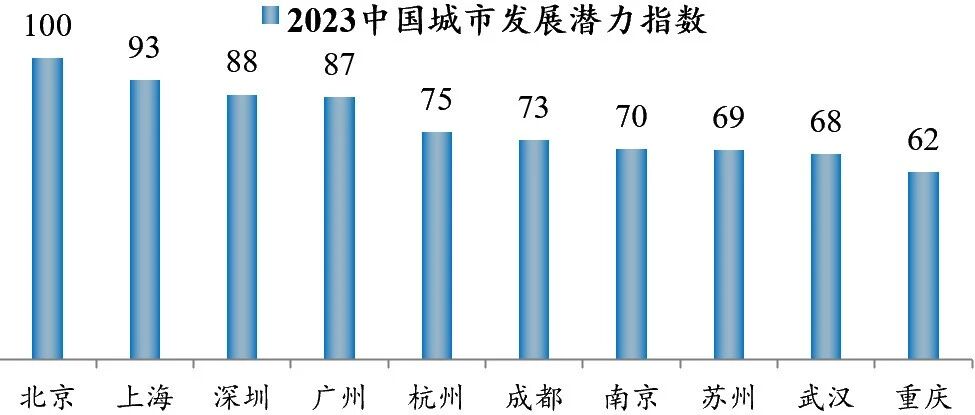
中国十大最具发展潜力城市
泽平宏观· 2026-02-20 16:05
Core Viewpoint - The article discusses the competitive landscape of Chinese cities, highlighting the rapid urbanization and the emergence of new economic centers, while ranking the development potential of 337 cities in China, with Beijing, Shanghai, Shenzhen, and others leading the list [2]. Group 1: Beijing - Beijing is positioned as the political, cultural, international exchange, and technological innovation center of China, with a GDP exceeding 4.1 trillion yuan in 2022, making it the second-largest city after Shanghai [9][10]. - The service sector accounts for 84% of Beijing's economy, with finance, headquarters economy, and technological innovation as key pillars [10]. - Future plans include transforming Beijing into a world-class harmonious city while optimizing population distribution to enhance urban vitality [11][13]. Group 2: Shanghai - Shanghai has established itself as an international economic center, with a GDP of approximately 4.5 trillion yuan in 2022, and aims to rival New York in global economic influence [16][24]. - The city’s industrial structure is supported by the automotive, electronics, and financial sectors, with finance contributing 19.3% to the GDP [17][19]. - Shanghai plans to continue its open policies and develop into a globally competitive city, enhancing the Yangtze River Delta region [24]. Group 3: Shenzhen - Shenzhen's GDP surpassed 3.2 trillion yuan in 2022, marking it as the third-largest city in China, with a significant annual population increase of around 600,000 [25][26]. - The city is recognized as a leading innovation hub, with strategic emerging industries accounting for over 41% of its GDP [26]. - Future initiatives focus on enhancing collaboration within the Guangdong-Hong Kong-Macau Greater Bay Area to solidify its status as a global innovation city [29]. Group 4: Guangzhou - Guangzhou's GDP reached approximately 2.9 trillion yuan in 2022, ranking fifth nationally, with a strong manufacturing base in automotive and electronics [30][31]. - The city faces challenges in innovation capacity and financial sector development, with financial services contributing only 9.2% to the GDP [33]. - Future goals include enhancing its role as a national center city and participating in global economic cooperation [34]. Group 5: Hangzhou - Hangzhou's economy has shown robust growth, with a GDP of around 1.9 trillion yuan in 2022, driven by a vibrant private and digital economy [36][37]. - The city is recognized for its strong digital economy, with core digital industries contributing 27.1% to the GDP [37]. - Plans for the future include improving transportation infrastructure and fostering a more open and innovative business environment [41][42]. Group 6: Chengdu - Chengdu's GDP exceeded 2 trillion yuan in 2022, accounting for 36.7% of Sichuan province's economy, and it is recognized as a key economic hub in Western China [43][44]. - The electronics sector is a major contributor, with a significant portion of the industrial output [44]. - Future strategies involve enhancing its role as a national center city and collaborating with Chongqing to develop the Western economic highland [49]. Group 7: Nanjing - Nanjing's GDP approached 1.7 trillion yuan in 2022, with a per capita GDP of 179,000 yuan, ranking fifth among major cities [50][51]. - The city is focusing on developing its automotive, steel, electronics, and petrochemical industries while nurturing emerging sectors [51]. - Future aspirations include becoming an "innovation city" and enhancing its influence in the Yangtze River Delta region [54]. Group 8: Suzhou - Suzhou's GDP reached nearly 2.4 trillion yuan in 2022, making it the top city among prefecture-level cities in China [56]. - The city is recognized as a global industrial powerhouse, with significant contributions from electronics and manufacturing sectors [56]. - Future plans emphasize its role in the Yangtze River Delta urban cluster and advancing towards a high-tech manufacturing base [59].
美元上涨0.9%,有望创下十月以来最佳单周表现
Xin Lang Cai Jing· 2026-02-20 15:47
Core Viewpoint - The US dollar is experiencing a tactical rebound due to reduced bets on Federal Reserve rate cuts and increased demand for safe-haven assets amid geopolitical tensions [1][4]. Group 1: Market Sentiment and Federal Reserve Expectations - Market pricing for Federal Reserve rate cuts is currently at 58 basis points, with a shift towards a bullish sentiment for the dollar [2][5]. - Traders are reassessing the Fed's policy path, leading to a decrease in expectations for significant rate cuts, which has contributed to a 0.9% increase in the Bloomberg Dollar Spot Index this week, potentially marking its best weekly performance since October [2][5]. - Recent military deployments by the US in the Gulf region have further supported the dollar, as market participants perceive a higher likelihood of conflict between the US and Iran [2][5]. Group 2: Changes in Market Dynamics - The market sentiment has notably shifted compared to previous months when the dollar was under pressure due to expectations of further rate cuts and uncertainties surrounding US trade policies [2][5]. - The dollar recorded its largest decline in eight years in 2025, but recent Federal Reserve meeting minutes indicate a more cautious stance on rate cuts, with officials suggesting that borrowing costs may need to rise if inflation remains high [2][5]. - A significant drop in initial jobless claims has further weakened the rationale for aggressive easing policies, leading traders to adjust their expectations for rate cuts to approximately 58 basis points, down from 63 basis points [2][5]. Group 3: Positioning and Market Reactions - Positioning data shows that speculative traders hold a net short position in the dollar of about $19.9 billion, the most bearish level since June [3][6]. - The options market has turned more bullish, with short-term positioning reaching the most favorable outlook for the dollar since November [3][6]. - The Japanese yen has declined by 1.8% to around 155.50 yen per dollar, while the euro has dropped by 1% to 1.1750 dollars [3][6].
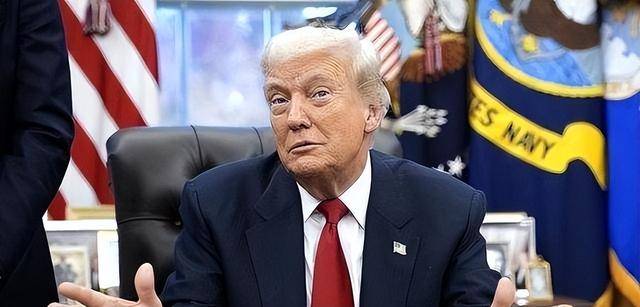
美债清零?游戏结束,中方不救美元了,特朗普决策错误,急求和谈
Sou Hu Cai Jing· 2026-02-20 15:36
Core Viewpoint - The article discusses the significant reduction of China's holdings of U.S. Treasury bonds and the broader implications for global financial stability and the shift towards de-dollarization, highlighting the impact of U.S. fiscal policies and geopolitical tensions on international finance [2][5][17]. Group 1: U.S. Treasury Bonds and China's Holdings - As of November 2025, China's holdings of U.S. Treasury bonds have decreased to $682.6 billion, nearly half of the peak of $1.32 trillion in 2013 [2][5]. - From March 2025, China has been gradually reducing its U.S. Treasury bond holdings by tens of billions of dollars each month, with a further decline to approximately $683 billion by January 2026 [5][11]. - This gradual reduction strategy aims to avoid market volatility, contrasting with the emergency sell-off during the 2008 financial crisis [5][17]. Group 2: U.S. Fiscal Policies and Economic Impact - The U.S. federal debt has risen to $38.72 trillion, with interest payments expected to exceed $1 trillion in the 2026 fiscal year, limiting investment in defense and infrastructure [2][7]. - The trade deficit has expanded from $800 billion in 2024 to $1 trillion in 2025, despite tax cuts and tariffs intended to boost manufacturing and reduce the trade gap [4][11]. - High inflation rates above 4% have compelled the Federal Reserve to maintain high interest rates, causing U.S. Treasury yields to rise from 2% in 2024 to 4.5% by February 2026, effectively doubling financing costs [5][11]. Group 3: Global Financial Shifts and De-dollarization - Countries like India and Saudi Arabia are also reducing their U.S. Treasury holdings, contributing to a shift of funds towards euros and gold, reflecting a move away from dollar dependence [2][5]. - The use of the Chinese yuan in cross-border trade has increased, with its share rising to 20% by January 2026, up 10% from 2024, indicating a trend towards the internationalization of the yuan [7][11]. - The BRICS nations have seen the proportion of trade conducted in yuan increase from 40% in 2025 to 50% in early 2026, further promoting a multi-polar international financial landscape [11][17]. Group 4: China's Financial Strategy and Resilience - China has increased its gold reserves to 74.19 million ounces (approximately 2308 tons) by January 2026, enhancing its financial resilience against currency fluctuations [5][11]. - The diversification of China's foreign exchange reserves aims to mitigate risks associated with U.S. policies, moving away from a reliance on U.S. Treasury bonds [15][17]. - The ongoing reduction of U.S. Treasury holdings is viewed as a means for China to assert its financial sovereignty and avoid bearing the costs of U.S. policy failures [17].