保险业

Search documents
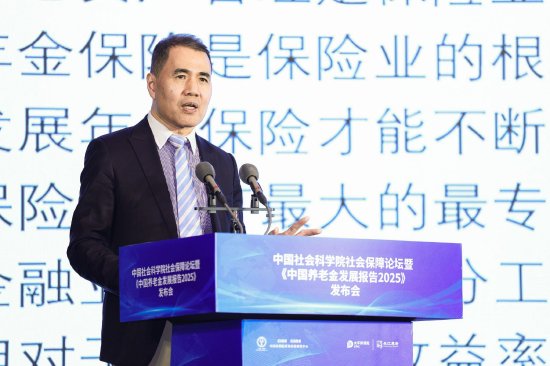
商敬国:年金保险是保险业参与养老金体系独家的先发优势,不能丢
Xin Lang Cai Jing· 2025-12-06 05:21
Core Viewpoint - The development of annuity insurance is crucial for the insurance industry to maintain its competitive advantage in the pension system, while asset management serves as a latecomer advantage that leverages traditional insurance's large asset base [1][3]. Group 1: Annuity Insurance - Annuity insurance is considered the foundation of the insurance industry and essential for the sustainable development of retirement communities [1][3]. - Research indicates that retirement communities need to achieve a high occupancy rate to avoid losses, and annuity insurance can effectively match the payment needs of these communities [1][3]. - The development of annuity insurance is seen as a way to strengthen the competitive advantage of the insurance industry and alleviate the operational pressures faced by retirement communities [1][3]. Group 2: Asset Management - Asset management is viewed as a latecomer advantage, utilizing the long-term asset management experience built on a substantial asset base from traditional insurance [1][3]. - The insurance industry is increasingly excelling in the integration of asset management into the pension sector [1][3]. Group 3: Professional Workforce - The insurance industry possesses the largest and most professional construction workforce, which is a competitive edge in developing annuity insurance [1][3]. - There is a call to utilize the specialized talent within the industry to enhance the development of annuity insurance [1][3].

张盈华宣介 《中国养老金发展报告2025》
Xin Lang Cai Jing· 2025-12-06 03:59
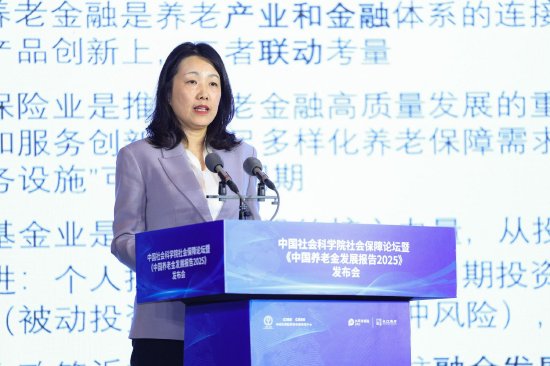
Core Insights - The report titled "China Pension Development Report 2025" was introduced at the China Social Sciences Academy Social Security Forum, highlighting the urgent need for pension reform due to rapid aging and declining replacement rates of the first pillar pension system [1][3][4] Group 1: Background and Context - China's aging process is accelerating, transitioning from aging to deep aging and then to super aging within a span of just over a decade [3][4] - The replacement rate of the first pillar basic pension insurance has decreased from over 80% in the 1990s to approximately 50% currently, necessitating supplementary pension insurance to fill the gap [3][4][14] - The year 2025 marks a significant milestone for pension finance, coinciding with the 25th anniversary of the National Social Security Fund Council and the full implementation of the personal pension system [3][4][14] Group 2: Key Themes and Findings - The report emphasizes the transition from a pay-as-you-go system to a partially funded pension system, addressing the challenges posed by declining population growth and economic stability [5][15] - The concept of "value preservation and appreciation" was introduced in the 20th Central Committee's Fourth Plenary Session, highlighting the importance of pension wealth management [5][16] - The report consists of three main sections: theoretical, Chinese, and international, totaling 42 sub-reports and approximately 1 million words, covering various aspects of pension systems and wealth management [7][18] Group 3: Pension System Structure - The asset-based pension system is characterized by multi-pillar, account-based long-term accumulation and wealth management, emphasizing both state and individual responsibilities [7][18][21] - The report discusses the shift in welfare models, with countries like Germany moving from fully funded to partially funded or asset-based pension systems [19][20] - The integration of pension finance with the broader pension industry and the need for tax reforms to encourage participation in supplementary pension schemes are also highlighted [20][21] Group 4: Future Directions - The total scale of the asset-based pension system is estimated to be around 25 trillion yuan, with expectations to exceed 20 trillion yuan this year [21] - The report calls for continued research and policy advocacy to advance the development of the pension system, with a focus on high-quality growth in asset-based pension systems [21][22]
陈文辉:养老金融将有力促进现代化产业体系的建设
Xin Lang Cai Jing· 2025-12-06 03:18
Core Insights - The forum highlighted the significant role of pension finance in promoting the construction of a modern industrial system, with the accumulation of pensions and long-term life insurance contributing to the formation of patient capital [3][6]. - Addressing the aging population issue is expected to drive the development of various emerging industries, including socialized elderly care, transformation of traditional labor-intensive industries, and the growth of health care and pharmaceutical sectors [3][6]. Group 1: Socialized Elderly Care Industry - The rise of the socialized elderly care industry is emphasized, with the insurance sector playing a crucial role. Companies like Dajia Insurance, Taikang, and Taibao Group are exploring different models ranging from light asset to heavy asset, which is considered a global innovation [3][6]. Group 2: Transformation of Traditional Industries - The aging population is leading to a labor shortage in traditional labor-intensive industries. However, technological upgrades can help retain quality industries and core profits [3][6]. Group 3: Health Care and Pharmaceutical Industries - The health care and elderly care industries are expected to flourish, driven by the urgent medical needs of the aging population. China's pharmaceutical industry has become the second largest globally, and advancements in artificial intelligence are making drug development more precise and efficient, enhancing the quality of life for the elderly [4][7].

多方回应“小电驴”国标争议,险资入市再松绑丨一周热点回顾
Di Yi Cai Jing· 2025-12-06 02:10
其他热点还有:我国首部上市公司监督条例征求意见,豆包手机助手引发热议。 国务院部署新型城镇化重点任务 12月3日,国务院以"深入推进以人为本的新型城镇化,着力构建城乡融合发展新格局"为主题,进行第 十七次专题学习。国务院总理李强在主持学习时强调,坚持以人为本提高城镇化质量水平,充分释放城 乡融合发展蕴藏的巨大内需潜力,为经济社会发展提供强劲动力。 新型城镇化是个系统工程。李强提到四方面的重点任务:要因地制宜实施好新型城镇化规划;要科学有 序推进农业转移人口市民化,解决好农业转移人口的就业、社保、安居、子女教育等问题;要深入实施 城市更新行动,把城市更新和消除安全隐患、稳楼市等工作结合起来,扎实推进好房子建设和房地产高 质量发展;要着力破解城乡二元结构,推进基本公共服务均等化,促进城乡融合发展。 【点评】新型城镇化不仅能扩大有效益的投资,而且能激发有潜能的消费,是统筹投资和消费的黄金结 合点。尽管我国城镇化已经进入快速发展阶段的后期,但仍有提升空间。为此,要继续深入推进新型城 镇化,重点要解决农业转移人口的就业、社保等问题,推动城乡融合发展,同时利用REITs等创新融资 方式支持城市更新项目,这些系统性的规划与 ...
12.4债市午盘,利率债大幅下跌,投资者心凉意冷
Sou Hu Cai Jing· 2025-12-05 22:20
Group 1 - The bond market is experiencing a significant downturn, with the yield on 10-year government bonds rising over 3 basis points in the morning, indicating a bearish sentiment among investors [1][3] - Various types of bonds, including government bonds, credit bonds, and interbank certificates, are all trending downward, while the stock market remains relatively stable with a slight increase of 0.04% in the Shanghai Composite Index [3] - The liquidity in the market is tightening, as evidenced by the weighted average rate of DR007 being around 1.42% at the beginning of the month, and a net withdrawal from the open market for five consecutive trading days, shifting sentiment from loose to neutral [3] Group 2 - There is a noticeable increase in transaction volume, signaling a significant sell-off of government bonds, with banks and insurance companies taking the opportunity to increase their positions while funds and brokerages are primarily selling [4] - The trading sentiment is declining, with both government and credit bond transaction ratios falling below 50%, indicating a lack of enthusiasm in the market [5] - The performance of pure bond funds is generally poor, particularly with 30-year government bonds experiencing significant volatility, while mixed bond funds show a mixed performance, suggesting a shift in market dynamics [7][9]

险资股票投资风险因子调降10%落地
Di Yi Cai Jing Zi Xun· 2025-12-05 14:44
Core Viewpoint - The recent policy adjustment by the National Financial Regulatory Administration aims to lower the risk factors for insurance companies' equity investments, encouraging increased market participation and long-term holding of quality stocks [2][3]. Group 1: Policy Changes - The risk factor for stocks held over three years in the CSI 300 index and the CSI Low Volatility 100 index has been reduced from 0.3 to 0.27, a 10% decrease [2][3]. - The risk factor for stocks held over two years in the Sci-Tech Innovation Board has been lowered from 0.4 to 0.36, also a 10% reduction [2][3]. - The adjustments are designed to promote long-term capital and support technological innovation by differentiating risk factors based on holding periods [3]. Group 2: Market Impact - The policy is expected to release approximately 108.6 billion yuan into the market if the minimum capital is fully allocated to the CSI 300 stocks [4]. - As of the end of the third quarter, insurance capital invested in stocks reached 3.62 trillion yuan, with a significant increase of 1.19 trillion yuan compared to the end of the previous year [7]. - The total core equity assets held by insurance companies, including securities investment funds, approached 5.6 trillion yuan, marking an increase of nearly 1.5 trillion yuan since the beginning of the year [7]. Group 3: Industry Trends - Insurance companies have been increasing their equity investments this year, driven by favorable market conditions and supportive policies [6][7]. - The regulatory body has implemented a series of measures to encourage insurance capital to enter the market, including the approval of additional long-term investment quotas [5][6]. - The long-term investment strategy is expected to focus on companies with stable fundamentals and dividends, aligning with the broader economic shift towards high-quality development [6][7].

金融监管总局:强化风险管理筑牢安全防线,稳妥处置存量风险
Zheng Quan Shi Bao Wang· 2025-12-05 13:49
Core Viewpoint - The Financial Regulatory Administration emphasizes the need for problem-oriented reforms in the banking and insurance sectors, focusing on core business, governance improvement, and maintaining a healthy market order [1] Group 1: Reform and Governance - The Financial Regulatory Administration held a series of eight seminars to implement the spirit of the 20th National Congress of the Communist Party [1] - Li Yunzhe, the head of the Financial Regulatory Administration, highlighted the importance of deepening reforms and enhancing governance in the banking and insurance industries [1] Group 2: Risk Management - There is a strong emphasis on strengthening risk management to build a solid safety net, including the prudent handling of existing risks and the prevention of new risks [1] - The administration plans to increase capital replenishment efforts to solidify the foundation for development and ensure that systemic risks do not occur [1]
“特朗普乌云”压顶之下,美联储降息恐成“哑炮”?
Jin Shi Shu Ju· 2025-12-05 13:22
Group 1 - The Federal Reserve officials are preparing to lower interest rates again next week, but the economic benefits may take longer to materialize and could be undermined by factors beyond monetary policy control [1] - Industries sensitive to interest rates, such as real estate, may only see limited benefits from lower borrowing costs due to historically high home prices and concerns about the labor market [1] - Other sectors, like manufacturing, are delaying investments due to the uncertainty surrounding President Trump's fluctuating tariff policies, which low interest rates cannot alleviate [1] Group 2 - The typical time for the Federal Reserve's policies to impact consumers and businesses may extend up to 18 months, and this may not apply in the current economic context [2] - The chief economist at Nationwide Mutual Insurance Co. noted that businesses are pausing hiring not solely due to high interest rates, but also because of uncertainties related to tariffs and other economic policy changes [2] - Wealthier households are benefiting more from the current interest rate cuts compared to low-income groups, as they have seen a significant rebound in the stock market, leading to increased retirement savings and consumer willingness [2] Group 3 - The clarity of interest rates and tariff policies is crucial for boosting business confidence and encouraging investment among clients [3] - U.S. manufacturers have been experiencing a downturn, with factory activity contracting for nine consecutive months, despite favorable tax provisions and lower borrowing costs [3] - Capital expenditures are essentially stagnant, as business leaders express that low interest rates alone will not influence their operations without a degree of certainty regarding tariffs [3]
超千亿险资活水要来了
财联社· 2025-12-05 12:36
Core Viewpoint - The recent adjustment by the National Financial Regulatory Administration to lower risk factors for insurance companies' investments in stocks is expected to significantly enhance market liquidity and encourage long-term investments in specific sectors like the CSI 300 and STAR Market [1][2][3]. Group 1: Impact on Stock Market - The adjustment could potentially bring over 100 billion yuan in incremental funds to the stock market if insurance capital fully reallocates to the affected stocks, significantly boosting market liquidity [2]. - The reduction in risk factors for long-term holdings of CSI 300 and STAR Market stocks is seen as a targeted benefit for these sectors, aiding in industrial upgrades [2][5]. - The adjustment is expected to stabilize market sentiment and enhance investor confidence, despite some industry players indicating that the immediate impact may be limited due to current investment strategies [2][4]. Group 2: Specific Adjustments - For stocks held for over three years in the CSI 300 and the low-volatility dividend index, the risk factor has been reduced from 0.3 to 0.27 [4]. - For STAR Market stocks held for over two years, the risk factor has been lowered from 0.4 to 0.36 [4]. - The adjustments are based on historical average holding periods, aiming to encourage longer-term investments [4][6]. Group 3: Broader Implications - The changes are expected to enhance the long-term investment management capabilities of insurance companies and improve their solvency management [6]. - The adjustments to risk factors for export credit and overseas investment insurance are designed to support foreign trade enterprises and align with national strategies [7]. - Insurance companies are encouraged to refine their internal controls and accurately measure investment holding periods to ensure compliance and enhance capital management [7][8].

货币市场日报:12月5日
Xin Hua Cai Jing· 2025-12-05 12:30
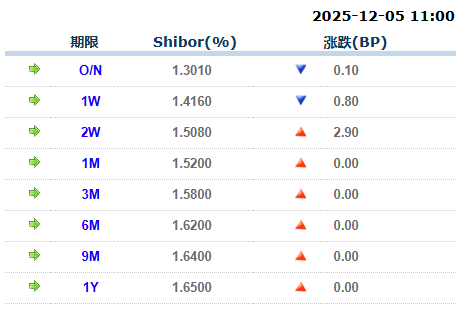
新华财经北京12月5日电 人民银行5日开展1398亿元7天期逆回购操作,操作利率为1.40%,与此前持平;鉴于当日有3013亿元逆回购到期,公开市场实现 净回笼1615亿元。本周人民银行共进行6638亿元逆回购操作,因当周有15118亿元逆回购到期,公开市场合计实现净回笼8480亿元。 | | | | 2025-12-05 11:00 | | --- | --- | --- | --- | | | 期限 | Shibor(%) | 涨跌(BP) | | tr | O/N | 1.3010 | 0.10 | | 1 | 1W | 1.4160 | 0.80 | | � | 2W | 1.5080 | 2.90 | | 业 | 1M | 1.5200 | 0.00 | | � | 3M | 1.5800 | 0.00 | | tr | 6M | 1.6200 | 0.00 | | t | 9M | 1.6400 | 0.00 | | 1 | 1Y | 1.6500 | 0.00 | 来源:全国银行间同业拆借中心 银行间质押式回购市场方面,短期品种利率小幅上行。具体看,DR001、R001加权平均利率分别上行0.1 ...