建筑

Search documents
国泰海通 · 晨报260303|汽车、固收
国泰海通证券研究· 2026-03-02 14:02
Group 1: Automotive Industry Insights - The core viewpoint of the article emphasizes the need for the automotive industry to break through by focusing on high-end products and expanding into overseas markets [1] - In 2025, domestic passenger car wholesale sales reached 23.797 million units, a year-on-year increase of 6%, while exports totaled 5.731 million units, up 21% year-on-year, driven by policy support and consumer recovery [3] - The penetration rate of new energy vehicles (NEVs) in the 100,000 to 150,000 yuan passenger car market increased from 45% in 2024 to 54% in 2025, indicating a rapid adoption of mid-to-low-end NEVs [3] - For 2026, passenger car sales are expected to grow moderately to approximately 29.82 million units, a year-on-year increase of 1%, with NEV sales projected at about 17.05 million units, reflecting a 10% increase [3] - The article predicts that the new vehicle replacement policy will marginally benefit mid-to-high-end NEV models, with diverse supply in high-end NEVs, MPVs, and SUVs [3] Group 2: Investment Recommendations - The company is optimistic about automakers that lead in global expansion, demonstrate strong high-end performance, and possess advanced intelligent capabilities [4]


长江大宗2026年3月金股推荐
Changjiang Securities· 2026-03-01 13:08
Group 1: Metal Sector - Hongda Co. (600331.SH) is projected to have a net profit of 0.36 billion CNY in 2024, but is expected to incur a loss of 0.80 billion CNY in 2025, with a significant recovery to 4.00 billion CNY in 2026, resulting in a PE ratio of 131.36[17] - Zijin Mining (601899.SH) is forecasted to achieve a net profit of 320.51 billion CNY in 2024, increasing to 913.17 billion CNY by 2026, with a PE ratio dropping from 32.86 to 11.53[17] - Huaxi Nonferrous (600301.SH) is expected to see net profits rise from 6.58 billion CNY in 2024 to 12.69 billion CNY in 2026, with a PE ratio of 32.29[17] Group 2: Construction Materials - Oriental Yuhong (002271.SZ) is projected to have net profits of 1.08 billion CNY in 2024, increasing to 21.94 billion CNY by 2026, with a PE ratio of 19.60[17] - China Jushi (600176.SH) is expected to grow its net profit from 24.45 billion CNY in 2024 to 47.80 billion CNY in 2026, with a PE ratio of 22.65[17] - The construction materials sector is facing a significant supply exit, with 2024 commodity housing sales expected to decline by approximately 47% compared to 2021[44] Group 3: Transportation - YTO Express (600233.SH) is forecasted to achieve net profits of 40.12 billion CNY in 2024, increasing to 50.84 billion CNY by 2026, with a PE ratio of 13.20[17] - COSCO Shipping Energy (600026.SH) is expected to see net profits rise from 40.37 billion CNY in 2024 to 98.19 billion CNY in 2026, with a PE ratio of 10.94[17] Group 4: Chemical Sector - Boyuan Chemical (000683.SZ) is projected to have net profits of 18.11 billion CNY in 2024, decreasing to 23.43 billion CNY by 2026, with a PE ratio of 14.87[17] - Xingfa Group (600141.SH) is expected to see net profits rise from 16.01 billion CNY in 2024 to 24.54 billion CNY in 2026, with a PE ratio of 19.62[17] Group 5: Power and Coal - Longyuan Power (001289.SZ) is forecasted to achieve net profits of 63.45 billion CNY in 2024, with a slight decrease to 61.52 billion CNY by 2026, maintaining a PE ratio of 17.20[17] - Electric Power Investment (002128.SZ) is expected to see net profits rise from 53.42 billion CNY in 2024 to 68.98 billion CNY in 2026, with a PE ratio of 9.98[17]






申万宏源建筑周报:统筹发展和安全,牢固树立和践行正确政绩观-20260301
Shenwan Hongyuan Securities· 2026-03-01 11:13
建筑装饰 2026 年 03 月 01 日 行 业 研 究 / 行 业 点 评 相关研究 证 券 研 究 报 告 证券分析师 袁豪 A0230520120001 yuanhao@swsresearch.com 唐猛 A0230523080003 tangmeng@swsresearch.com 研究支持 唐猛 A0230523080003 tangmeng@swsresearch.com 联系人 唐猛 A0230523080003 tangmeng@swsresearch.com 统筹发展和安全,牢固树立和践行正确政绩观 看好 ——申万宏源建筑周报(20260223-20260227) 本期投资提示: 请务必仔细阅读正文之后的各项信息披露与声明 本研究报告仅通过邮件提供给 中庚基金 使用。1 行 业 及 产 业 - ⚫ 一周板块回顾:板块表现方面,SW 建筑装饰指数+4.97%,沪深 300 指 数+1.08%,相对收益为+3.89pct。周涨幅最大的三个子行业分别为国际 工程(+8.33%)、基建民企(+6.10%)、专业工程(+5.91%),对应行 业内三个公司:中铝国际(+16.12%)、成都路桥(+1 ...
3月配置:关注通信、有色、电子、汽车、军工
CAITONG SECURITIES· 2026-03-01 10:31
- The report introduces a style rotation solution, which includes a value-growth style rotation strategy and a large-small cap style rotation strategy. The value-growth style rotation strategy scores 6 for March 2026, indicating a higher score for the growth style[2][6] - The large-small cap style rotation strategy scores 2 for March 2026, indicating a higher score for the small cap style[2][8] - The industry rotation solution is constructed using four dimensions: macroeconomic indicators, mid-level fundamental indicators, micro-level technical indicators, and trading congestion indicators. The comprehensive score for the industry rotation strategy since 2017 shows an annualized return of 18.4%, with a benchmark annualized return of 4.9%, resulting in an excess annualized return of 13.5% and a monthly IC average of 12.1%[2][11][12] - The macroeconomic indicators divide the primary industries into five sectors: upstream cycle, midstream manufacturing, downstream consumption, TMT, and big finance. For March 2026, the macroeconomic growth dimension is in the "deepening recession/expansion slowdown" stage, and the liquidity dimension is in the "easing intensification/tightening slowdown" stage[15] - The fundamental indicators include historical prosperity, prosperity changes, and prosperity expectations. For March 2026, the top five industries ranked by fundamental indicators are non-ferrous metals, automobiles, electronics, non-bank finance, and machinery, while the bottom five are home appliances, real estate, construction, coal, and agriculture, forestry, animal husbandry, and fishery[17] - The technical indicators include index momentum, leading stock momentum, and K-line patterns. For March 2026, the top five industries ranked by technical indicators are communication, national defense and military industry, basic chemicals, non-ferrous metals, and computers, while the bottom five are real estate, food and beverage, transportation, electricity and public utilities, and retail[20] - The congestion indicators include financing inflows, turnover rate, and transaction ratio. For March 2026, the top five industries with high congestion are media, petrochemicals, building materials, national defense and military industry, and non-ferrous metals, while the bottom five industries with low congestion are automobiles, textiles and apparel, non-bank finance, banking, and home appliances[21] - The comprehensive industry rotation solution combines the positive scores of the macro, fundamental, and technical dimensions, while negatively configuring the congestion factor. For March 2026, the top five recommended industries are communication, non-ferrous metals, electronics, automobiles, and national defense and military industry, while the bottom seven are real estate, construction, home appliances, coal, food and beverage, retail, and electricity and public utilities[25] Model Backtest Results - Value-growth style rotation strategy, comprehensive score: 6 for March 2026[6] - Large-small cap style rotation strategy, comprehensive score: 2 for March 2026[8] - Industry rotation strategy, annualized return: 18.4%, benchmark annualized return: 4.9%, excess annualized return: 13.5%, monthly IC average: 12.1%[12][13]
市场再次触及阻力线
Guolian Minsheng Securities· 2026-03-01 09:41
Quantitative Models and Construction Methods Model 1: Hot Trend ETF Strategy - **Model Name**: Hot Trend ETF Strategy - **Model Construction Idea**: The strategy is based on selecting ETFs with the highest and lowest price patterns and constructing a risk parity portfolio with the top 10 ETFs showing the highest short-term market attention. - **Model Construction Process**: - Select ETFs with both highest and lowest prices in an upward pattern. - Construct support and resistance factors based on the relative steepness of the regression coefficients of the highest and lowest prices over the past 20 days. - Choose the top 10 ETFs with the highest turnover rate in the past 5 days relative to the past 20 days. - Construct a risk parity portfolio with these ETFs. - **Model Evaluation**: The strategy achieved a return of 59.92% since 2025, with an excess return of 36.61% compared to the CSI 300 Index[28][29]. Model 2: Three-Strategy Fusion ETF Rotation - **Model Name**: Three-Strategy Fusion ETF Rotation - **Model Construction Idea**: The strategy combines three industry rotation strategies driven by quantitative fundamentals, quality low volatility, and distressed reversal to achieve factor and style complementarity. - **Model Construction Process**: - Construct industry rotation strategies based on fundamental rotation, quality low volatility, and distressed reversal. - Combine these strategies equally to select industries from different dimensions. - Achieve factor and style complementarity to reduce the risk of a single strategy. - **Model Evaluation**: The strategy achieved a cumulative return of 12.16% from April 10, 2017, to February 27, 2026, with a Sharpe ratio of 0.74. The strategy's annual performance and latest holdings are also detailed[32][34][37]. Model 3: All-Weather Strategy - **Model Name**: All-Weather Strategy - **Model Construction Idea**: The strategy aims to achieve stable returns by avoiding the "prediction" dilemma through diversified risk. It follows three basic principles: asset selection, risk adjustment, and structural hedging. - **Model Construction Process**: - Use a cyclic hedging design to bypass macro factors and directly address asset volatility for long-term return balance. - Construct high-volatility and low-volatility portfolios based on risk levels. - **Model Evaluation**: As of 2025, the high-volatility version had an annualized return of 11.8%, an average maximum drawdown of 3.6%, and a Sharpe ratio of 2.3. The low-volatility version had an annualized return of 8.8%, an average maximum drawdown of 2.0%, and a Sharpe ratio of 3.4. Since 2026, the high-volatility and low-volatility versions had returns of 2.7% and 1.1%, respectively[49][59][60]. Model Backtest Results - **Hot Trend ETF Strategy**: - Return since 2025: 59.92% - Excess return compared to CSI 300 Index: 36.61%[28][29] - **Three-Strategy Fusion ETF Rotation**: - Cumulative return (April 10, 2017 - February 27, 2026): 12.16% - Sharpe ratio: 0.74 - Annual performance and latest holdings detailed[32][34][37] - **All-Weather Strategy**: - High-volatility version (as of 2025): Annualized return 11.8%, average maximum drawdown 3.6%, Sharpe ratio 2.3 - Low-volatility version (as of 2025): Annualized return 8.8%, average maximum drawdown 2.0%, Sharpe ratio 3.4 - Returns since 2026: High-volatility 2.7%, Low-volatility 1.1%[49][59][60] Quantitative Factors and Construction Methods Factor 1: Beta Factor - **Factor Name**: Beta Factor - **Factor Construction Idea**: Measures the sensitivity of a stock's returns to market returns. - **Factor Construction Process**: Calculate the beta coefficient of each stock based on its historical returns relative to the market index. - **Factor Evaluation**: The beta factor recorded a positive return of 3.26% this week, indicating that high-beta stocks regained market favor[62]. Factor 2: Momentum Factor - **Factor Name**: Momentum Factor - **Factor Construction Idea**: Measures the tendency of stocks to continue their past performance. - **Factor Construction Process**: Calculate the momentum of each stock based on its historical returns over a specified period. - **Factor Evaluation**: The momentum factor recorded a positive return of 2.37% this week, reflecting that high-momentum stocks gained market attention[62]. Factor 3: Liquidity Factor - **Factor Name**: Liquidity Factor - **Factor Construction Idea**: Measures the ease with which a stock can be traded. - **Factor Construction Process**: Calculate the liquidity of each stock based on its trading volume and bid-ask spread. - **Factor Evaluation**: The liquidity factor recorded a positive return of 2.21% this week, indicating that liquid stocks gained market attention[62]. Factor Backtest Results - **Beta Factor**: - Weekly return: 3.26%[62] - **Momentum Factor**: - Weekly return: 2.37%[62] - **Liquidity Factor**: - Weekly return: 2.21%[62]
广发宏观:高频数据下的2月经济:数量篇
GF SECURITIES· 2026-03-01 06:46
Economic Indicators - The China Business Conditions Index (BCI) for February is 52.4, slightly down from January's 53.7 but higher than the readings from April to December last year, indicating a positive economic outlook for January and February[3] - The total cross-regional population flow during the Spring Festival period reached 6.5 billion, a year-on-year increase of 5.9% compared to the same period last year[3] Transportation and Travel - Daily average passenger volumes for rail, road, waterway, and civil aviation during the Spring Festival period increased by 6.3%, 5.9%, 21.3%, and 6.1% respectively compared to last year[4] - The average daily sales of key retail and catering enterprises during the Spring Festival increased by 5.7% compared to the previous year, with a notable 24.0% increase in daily retail sales for major retail enterprises[6] Consumer Behavior - The demand for services saw significant growth, with car rental orders increasing by 51% and cross-regional orders rising by 251% compared to last year's Spring Festival[7] - The total domestic travel during the Spring Festival reached 596 million, with total spending of 803.48 billion yuan, marking a historical high for both visitor numbers and expenditures[7] Real Estate Market - The average daily transaction area for new homes in 30 major cities was 124,000 square meters, showing a year-on-year decrease of 24.7% for January and February combined[12] - The transaction volume for second-hand homes during the Spring Festival period increased by 57.3% year-on-year, indicating a strong recovery in the real estate market[13] Industrial Activity - The operating rate of high furnaces across 247 enterprises increased by 2.0 percentage points year-on-year, reflecting a positive trend in industrial activity[14] - The construction site resumption rate as of February 25 was 8.9%, with labor utilization and funding availability also showing improvements compared to last year[13] Export and Shipping - Container throughput at domestic ports increased by 6.7% year-on-year, indicating resilience in export activities despite global economic uncertainties[17] - The number of container ships sent from China to the U.S. increased by 3.9% year-on-year, suggesting stable trade relations[18]
“后巴菲特时代”首封股东信:巴菲特仍坐镇,手握3700亿现金,坚守日本投资策略
美股IPO· 2026-02-28 23:16
Core Viewpoint - The new CEO Greg Abel emphasizes the continued leadership of Warren Buffett, who remains active in his role, while outlining the company's financial strength and strategic focus on long-term value creation without dividends [1][3][4]. Financial Performance - In 2025, the company achieved an operating profit of $44.5 billion, slightly down from $47.4 billion in 2024, but above the five-year average of $37.5 billion [40]. - The net cash flow from operating activities reached $46 billion, exceeding the five-year average of over $40 billion [40]. - The insurance float increased to $176 billion by the end of 2025, significantly up from $88 billion a decade ago [41][48]. Capital Management - The company holds over $370 billion in cash and U.S. Treasury bonds, a historical high, and maintains a strict policy against paying dividends unless retained earnings can create more than $1 in market value for shareholders [4][24][30]. - The company made strategic acquisitions in 2025, including OxyChem and Bell Labs, to enhance its operational capabilities [29][30]. Investment Strategy - The company continues to focus on concentrated investments in core holdings, with a combined market value of $194 billion in its top U.S. positions and five major Japanese trading companies [7]. - The company remains committed to a disciplined capital allocation strategy, prioritizing investments that align with its long-term value creation goals [25][27]. Insurance Business - The insurance segment reported a combined ratio of 87.1%, significantly better than the five-year average of 90.7%, reflecting strong underwriting discipline [41]. - The company anticipates ongoing market pressures in the insurance sector due to increased capital inflow and potential pricing declines [6][45]. Non-Insurance Operations - The non-insurance segment, which includes railroads, utilities, and manufacturing, continues to show resilience, with the Burlington Northern Santa Fe Railway achieving a net cash flow of $8.1 billion in 2025 [51]. - The energy sector is entering a significant investment cycle driven by rising electricity demand from data centers, while the company emphasizes that infrastructure costs should be borne by customers [5][53]. Corporate Culture and Values - The company maintains a decentralized management structure, empowering leaders across its various businesses while holding them accountable for performance [17][18]. - Integrity and financial strength are core values, with a commitment to maintaining a robust balance sheet and prudent debt management [22][23].

扬州瘦西湖旅发集团:党建引领,书写国企高质量发展答卷
Xin Lang Cai Jing· 2026-02-27 20:32
Group 1 - The core viewpoint of the articles emphasizes the integration of party leadership into the development strategies of the Yangzhou Shouxihu Tourism Development Group, showcasing how this approach enhances cultural heritage, urban construction, and industrial upgrading [1][2][3] Group 2 - The company is committed to cultural heritage as a responsibility, with initiatives like the establishment of a "Red Special Team" to tackle both heritage protection and tourism development at the Tangzi City scenic area [1] - The Yangzhou Jingyun Bay project, covering a total construction area of 93,100 square meters and a land area of approximately 39,600 square meters, is highlighted as a key project reflecting the company's commitment to public welfare and quality construction [2] - The company aims to create a comprehensive industrial group by integrating resources across various sectors, including finance, cultural tourism, and smart construction, while promoting innovation and collaboration among its members [3] - The leadership of the company expresses a strong commitment to further integrating party leadership with core business operations, aiming for a new development model characterized by "party leadership, enterprise integration, and mutual benefit" [3]
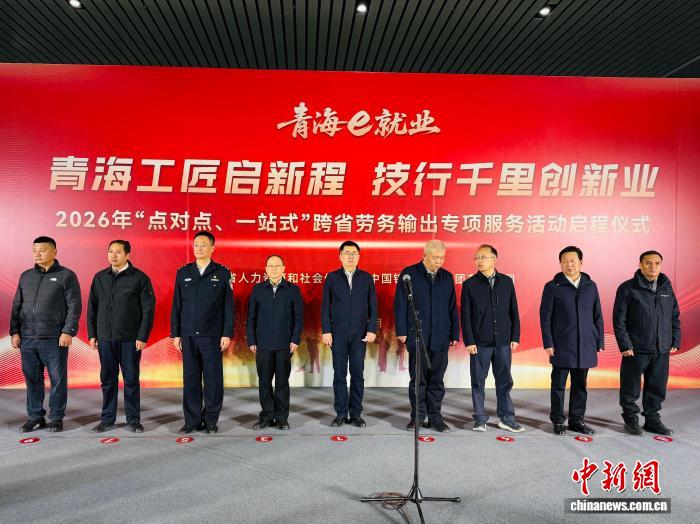
青海组织2026年首批近430名务工人员跨省就业
Zhong Guo Xin Wen Wang· 2026-02-27 14:02
Core Viewpoint - Qinghai Province has initiated a special service activity for cross-province labor export in 2026, sending nearly 430 workers to various provinces for employment opportunities in multiple industries, with an average monthly salary of 6,000 yuan [1][3]. Group 1 - The first batch of nearly 430 workers is being transported to Jiangsu, Fujian, and Guangdong provinces, primarily for jobs in automotive parts processing, new energy materials manufacturing, electronic component assembly, and construction [1][3]. - The Qinghai Provincial Human Resources and Social Security Department has identified over 12,000 reliable job positions in eastern regions, ensuring that workers have access to quality employment opportunities [3]. - The initiative includes on-site verification of salary, working conditions, and living arrangements to ensure the quality of job placements for the workers [3]. Group 2 - Workers express confidence in the program, noting that employment opportunities outside the province offer better income stability and skill development compared to local options [5]. - The program aims to support workers as key contributors to family and economic development, providing them with resources and encouragement to learn new skills and potentially return to start their own businesses [7].
世界首次五百强断崖差,日本149家,美国151家,中国3家,现在呢?
Sou Hu Cai Jing· 2026-02-27 13:53
Core Insights - The global economic landscape has shifted from a US-Japan dominance to a US-China rivalry, with Japan losing its prominence and falling to a third-tier position [2][4]. Group 1: US Economic Performance - The US maintains a strong economic presence, with a slight decrease in the number of Fortune 500 companies from 151 in 1995 to 138 in 2025, reflecting a loss of only 13 companies [4]. - Major US tech companies like Apple, Microsoft, and Amazon dominate the high-value sectors, achieving an average profit of $9.7 billion, which is more than double that of Chinese firms [4]. Group 2: Japan's Decline - Japan's representation in the Fortune 500 has drastically decreased from 149 companies in 1995 to only 38 in 2025, a decline of over 70% [4]. - The once-strong Japanese electronics and automotive sectors have either been surpassed by Chinese and Korean competitors or have gradually diminished, with only Toyota and Mitsubishi UFJ Financial Group remaining in the top 100 [4]. Group 3: China's Rise - China has seen a remarkable increase in Fortune 500 companies, growing from 3 in 1995 to 130 in 2025, making it the second-largest country in terms of representation, just behind the US [6][10]. - The rise of Chinese companies is attributed to a gradual process, starting with state-owned enterprises in energy and finance, followed by the emergence of private firms like BYD and Pinduoduo, which have quickly climbed the rankings [6][10]. Group 4: Financial Performance of Chinese Companies - The top Chinese companies by revenue include State Grid Corporation with ¥42,322.24 million and China National Petroleum Corporation with ¥31,844.66 million, showcasing significant earnings [7]. - Despite the increase in quantity, the average profit of Chinese firms is only $4.2 billion, significantly lower than that of US companies, indicating a need for improvement in quality and international presence [7][8]. Group 5: Economic Transition - The last thirty years have seen a shift in the global economic center, driven by different developmental paths: the US leveraging innovation and globalization, Japan lagging due to industrial upgrades, and China capitalizing on reform and a complete industrial chain [8][10].