景区

Search documents
商社行业周报(2025.12.29-2026.1.4):元旦出行热度高,三亚免税销售迎开门红-20260104
国泰海通· 2026-01-04 09:34
Investment Rating - The report assigns an "Accumulate" rating for the industry [4]. Core Insights - The travel industry is expected to continue outperforming expectations, with a positive outlook on the travel chain including OTA (Ctrip, Tongcheng), hotels (Atour, Huazhu, Jinjiang, Shoulv), duty-free (China Duty Free), and scenic spots (Emei Mountain, Three Gorges Tourism, Changbai Mountain) [4]. - The competitive landscape has significantly improved, particularly for companies like Huatu Mountain Ding, Caibai Co., and Laopu Gold [4]. - Notable dividend stocks include Sumida, Action Education, and Chongqing Department Store [4]. - The AI+ sector shows promise with companies like Konnate Optical, Fenbi, Tianli International Holdings, Kevin Education, and Doushen Education [4]. - Oversold stocks identified include China Oriental Education, Guoquan, Gaoxin Retail, and Junting Hotel [4]. Industry Updates - In the social service industry, Sanya's duty-free sales reached 163 million yuan on January 1, 2026, marking an 83.2% year-on-year increase, indicating a strong start for duty-free sales in 2026 [4]. - Ctrip's New Year travel report indicates that domestic scenic spot ticket bookings have increased over fourfold year-on-year, with significant growth in inbound travel bookings, sparking the first consumption boom of 2026 [4]. - Tongcheng Travel's report highlights a surge in travel demand during the New Year holiday, driven by a three-day holiday and the "request 3 days off for 8 days" trend, leading to increased bookings for flights, hotels, and homestays [4]. - Retail sector updates include: - Pang Donglai Group's sales in 2025 reached 23.531 billion yuan, a 39% increase from 16.9 billion yuan in 2024 [4]. - Hema's overall revenue growth exceeded 40% in 2025, with its core formats serving over 100 million consumers [4]. - Sam's Club in China surpassed 140 billion yuan in sales in 2025, with a year-on-year growth of approximately 40% [4]. Company Announcements - Kid King announced a profit forecast for 2025, expecting a net profit attributable to shareholders of 275 million to 330 million yuan, representing a year-on-year growth of 51.72% to 82.06% [4]. - Qingmu Technology's chairman reduced his stake by 464,100 shares, accounting for 0.50% of the company's total share capital, with a reduction price of 59.68 yuan [4].



2026年元旦假期三亚接待游客超65万人次
Zhong Guo Xin Wen Wang· 2026-01-04 05:36
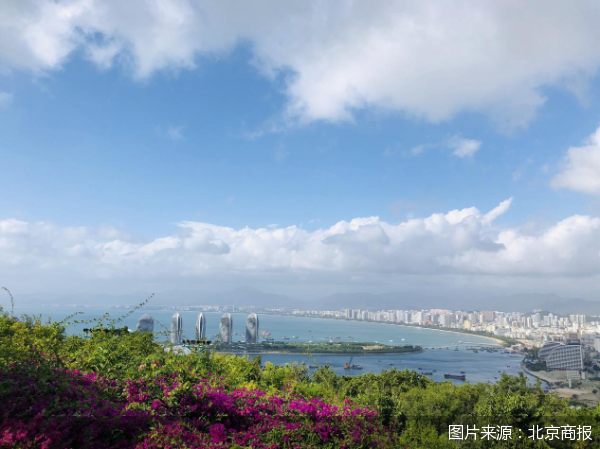
1月1日,游客在三亚大东海旅游区节庆装置前打卡拍照。张月和 摄 2026年元旦假期三亚接待游客超65万人次 中新网三亚1月4日电 (张月和)三亚市旅游和文化广电体育局4日公布数据显示,2026年元旦假期该市共 接待游客65.08万人次,同口径比增长17.84%。游客总花费12.99亿元,同口径比增长18.37%。 广告等商务合作,请点击这里 1月1日,游客在三亚蜈支洲岛旅游区体验水上项目。张月和 摄 酒店行业也迎来近年元旦假期的最高入住率,全市酒店平均入住率超90%。三亚半山海景VOCO酒店总 经理孙良受访时说,今年元旦假期该酒店入住率接近满房,远超此前预期,"预计三亚旅游市场的火热 态势将持续至春节后"。(完) 来源:中国新闻网 编辑:付健青 元旦假期是海南自贸港封关后的首个假期,作为冬季热门旅游目的地,三亚旅游市场人气火旺。三亚凤 凰国际机场累计进出港航班1350架次,同比增长22.84%。火车站累计发送到达旅客19.83万人次,同比 增长34.71%。水上项目、离岛免税、酒店等多领域实现"开门红"。 乘游艇出海、上海岛游玩是诸多游客冬季来到三亚的必选项。据三亚海事局统计,元旦假期期间,三亚 辖区船舶进出 ...


2026元旦假期首日,济南市30家景区共纳客40.95万人次
Qi Lu Wan Bao· 2026-01-01 10:39
Core Insights - The New Year's Day holiday in Jinan featured over a hundred cultural and tourism activities, creating a vibrant and safe atmosphere for citizens and tourists [1] - Key tourist attractions received approximately 409,500 visitors, generating revenue of 15.07 million yuan by January 1, 2026 [1] Group 1: Diverse Product Supply - Jinan's tourist spots and unique streets launched a series of engaging and rich experiential activities, effectively stimulating market vitality [2] - Notable events included a music party at Jinan Sunac Cultural Tourism City, extended hours at Jinan Fantawild, and interactive experiences at Ming Shui Ancient City, catering to various customer segments [2] Group 2: Prominent Ice and Snow Theme - Ice and snow tourism emerged as a popular trend during the holiday, with attractions offering unique experiences centered around a "romantic ice and snow season" [4] - Activities included professional skiing and fun competitions at Jinxiang Mountain Ski Resort, and immersive experiences at Jiuru Mountain Resort and Red Leaf Valley Ice Waterfall Festival [4] Group 3: Rich Cultural Activities - Jinan's cultural venues organized a series of themed events to meet the spiritual and cultural needs of citizens [7] - Highlights included exhibitions at the Shandong Art Museum and Jinan Museum, as well as a New Year intangible cultural heritage garden party, contributing to a festive cultural atmosphere [7]

国信证券:重视服务消费布局元年 看好细分景气与周期改善
Zhi Tong Cai Jing· 2025-12-31 02:05
Core Viewpoint - The report from Guosen Securities emphasizes that boosting domestic demand will be a key focus for economic development in 2026, with significant potential for growth in service consumption compared to overseas markets, supported by monetary, temporal, and supply-side constraints [1] Group 1: Sector Overview - Overall, there is a moderate recovery in the consumption sector, with service consumption growth outpacing goods consumption and restaurant growth, leading to an increasing share of service consumption [1] - Changes in demand, policy, and technology are driving structural shifts in the market, with younger consumers favoring experiential spending, while B2B demand remains at a low point [1] - Policy factors and globalization are influencing corporate decisions, leading to market reshuffling and transformations in industries like high-end dining, while outbound consumption remains a significant growth curve [1] Group 2: Market Performance - The consumer services sector has underperformed year-to-date, with overall gains of 14.55%, lagging behind the CSI 300 by 3.81 percentage points; however, the sector has shown signs of stabilization since Q4, outperforming the benchmark [2] - The proportion of holdings in consumer services sector funds has dropped to a historical low of 0.29% as of Q3 2025, down 0.10 percentage points from Q2 2025 [2] Group 3: Sub-industry Insights - Duty-Free: Domestic duty-free is expected to gradually capture high-end demand due to policy support and strengthened supply chains, potentially leading to a new cycle and valuation uplift [3] - Hotels: Opportunities arise from improving supply-demand dynamics, with steady growth in leisure tourism and a gradual bottoming out of business travel demand [3] - Scenic Areas: The performance of scenic areas is influenced by calendar effects, with a focus on trends that align with demographic changes and local asset integration [3] - OTA: Online Travel Agencies are likely to benefit directly from service consumption policies, with stable profit margins being the main trend [3] - Chain Dining: As delivery subsidies taper off, leading brands are innovating product lines to address market pressures, with potential for recovery if CPI trends improve [3] Group 4: Education Sector - The education sector is expected to maintain its attractiveness due to strong employment orientation and the relative lag in public examination recruitment and vocational training, alongside advancements in AI applications [4] Group 5: Human Resources - Human resources are viewed as a barometer for economic recovery, with a focus on improving labor sentiment among enterprises and the empowerment of AI technology [5]

汕尾市市场监督管理局关于规范元旦假期旅游市场价格行为的提醒告诫书
Xin Lang Cai Jing· 2025-12-29 11:02
Group 1 - The core message emphasizes the need for strict adherence to pricing laws and regulations in the tourism market to protect consumer rights during the upcoming New Year holiday [1][2] - Businesses in tourism, accommodation, dining, transportation, and scenic spots are reminded to follow fair pricing practices and maintain market order [1] - Operators must clearly display prices and any changes, ensuring no hidden fees are charged to consumers [1][2] Group 2 - Accommodation, dining, and entertainment providers are required to honor price commitments made on e-commerce platforms and cannot unilaterally change prices after orders are confirmed [2] - There is a prohibition on vague pricing terms for seasonal fresh goods, requiring clear price tags that correspond to specific items [2] - Market regulatory authorities will increase inspections and take serious action against pricing violations, including public exposure and severe penalties for non-compliance [2]
连休三天!元旦假期攻略来了→
Jin Rong Shi Bao· 2025-12-29 10:22
Group 1 - The travel market is expected to show characteristics of "having fun and doing more" during the New Year's holiday in 2026, with a significant increase in consumer travel willingness [1] - Popular long-distance routes such as Shenzhen-Harbin, Beijing-Kunming, and Beijing-Xishuangbanna are seeing a surge in travelers, with numbers exceeding those on December 31 [1] - Cities with unique features like "immersive experiences," "nearby micro-vacations," and "high-cost performance ski resorts" are emerging as unexpected popular destinations for the New Year's holiday [1] Group 2 - The trend of "new entrants expanding and main players upgrading" is evident, with a 130% year-on-year increase in bookings from travelers born after 2005, indicating strong growth potential among younger demographics [2] - Travelers aged 1990-1999, known as the "post-90s," represent 40% of New Year's holiday bookings, with an average order value increasing by 17% year-on-year, reflecting a willingness to pay for high-quality services and experiences [2] - Hotel bookings in popular areas for New Year's Eve, such as Changsha, Xi'an, and Chongqing, have seen significant year-on-year growth, with some locations experiencing increases of up to 5 times [2]
元旦假期将至 解锁跨年迎新“N种”仪式感
Yang Shi Wang· 2025-12-26 16:35
Group 1 - The upcoming New Year's holiday in 2026 is expected to see diverse travel experiences, with people choosing various ways to celebrate, such as enjoying snow in the north or warmth in the south [1] - There is a significant increase in interest for travel destinations, with a 150% week-on-week rise in searches for "New Year good places" and nearly a 5-fold increase in booking volume compared to the same period last year [2] - Young people, particularly those born in the 1990s, are the main demographic for travel, accounting for 40% of bookings, with a 17% increase in average spending on travel experiences [2] Group 2 - Staying in homestays with friends and family has become a popular trend for New Year's celebrations, with bookings for standalone homestays increasing by 140% year-on-year, and the 2000s generation making up 52% of these bookings [3] - Various regions are enhancing their homestay offerings to create a unique New Year experience, incorporating local culture and traditions into their services [3] - Cultural and experiential tourism is on the rise, with interactive experiences allowing visitors to engage with historical narratives and local customs, such as in the Qingming Riverside Landscape Garden in Henan and the "Seeing Minnan" theme park in Fujian [4]
元旦春节飞海口机票预订量飙升
Xin Lang Cai Jing· 2025-12-21 16:36
Core Insights - The official launch of the Hainan island-wide customs closure on December 18, 2025, is expected to significantly boost the tourism market in Haikou, with increased visitor numbers and enhanced shopping experiences [2][8] Tourism and Shopping Trends - Following the customs closure, Haikou's duty-free shopping has seen a substantial increase, with the first day recording sales of 1.61 billion RMB, a year-on-year increase of 61%, with 24,800 visitors participating [3][5] - The variety of duty-free products has expanded from over 1,900 to more than 6,000, enhancing consumer choice and experience [4] - Tourists are experiencing significant savings, with one shopper reporting a reduction of nearly 5,000 RMB on purchases due to promotional activities launched post-closure [2][3] Visitor Demographics and Behavior - There has been a notable increase in flight bookings to Haikou, with a 19% rise in bookings for New Year's and a 130% increase for the Spring Festival compared to the previous year [5] - International visitors are also increasing, with a 40% rise in inbound international flight bookings for the upcoming New Year season [5] Local Economic Impact - The tourism boom is positively impacting local accommodation and dining sectors, with hotels reporting full occupancy and restaurants experiencing longer wait times due to increased patronage [6] - The overall tourism revenue in Hainan has doubled from 95.016 billion RMB in 2018 to 204.014 billion RMB in 2024, with tourism contributing 33.4% to the GDP [6] Future Prospects - The customs closure is expected to further enhance the quality of tourism products and services in Hainan, with plans to develop cultural performances and digital consumption sectors [6][7] - Local stakeholders express optimism about the long-term benefits of the customs closure, anticipating that increased visitor numbers will lead to broader economic advantages for the community [7][8]
商社行业周报(2025.12.15-2025.12.21):社零增速平稳,海南封关运作落地-20251220
国泰海通· 2025-12-20 15:05
Investment Rating - The report assigns an "Accumulate" rating for the industry [4]. Core Insights - The report highlights investment opportunities in the travel industry chain, gold and jewelry, and AI+ sectors [2]. - The upcoming New Year holiday is expected to boost travel and consumption, with specific recommendations for various companies in the travel and hospitality sectors [3][4]. - The retail sector showed a 6.58% increase last week, with the consumer services sector up 4.40%, ranking first and second among 30 industries [3]. Industry Summary - **Travel and Hospitality**: - Recommendations include Ctrip Group and Tongcheng Travel for OTA, Huazhu Group-S, Jinjiang Hotels, and Shoulv Hotels for hotels, and Changbai Mountain for scenic spots [3][4]. - **Gold and Jewelry**: - Recommended stocks include Lao Pu Gold, Caibai Shares, Luk Fook Holdings, Chow Tai Fook, and Chao Hong Ji, with a focus on Emperor Jewelry [3][4]. - **Dividend Stocks**: - Recommended stocks include Sumida, Action Education, and Chongqing Department Store [3]. - **AI+ Sector**: - Recommended stocks include Conant Optical, Chalk, Tianli International Holdings, and Core International, with a focus on Kevin Education and Dou Shen Education [3]. - **Stock Price Movements**: - Notable stock price increases include Hongqi Chain (+22.79%), Jiajiayue (+15.76%), Yonghui Supermarket (+15.20%), and Tianhong Shares (+13.85%) [3]. - **Key Industry Updates**: - Hainan Free Trade Port officially launched its island-wide customs closure operation, achieving sales of over 250 million yuan on the first day, a year-on-year increase of 90% [3]. - McDonald's China announced a price increase of 0.5 to 1 yuan for some menu items [3]. - Luckin Coffee and Dazhong Capital are evaluating the acquisition of Blue Bottle Coffee from Nestlé to enhance brand image and enter the high-end coffee market [3]. - **Retail Sector Data**: - November retail sales data showed a year-on-year increase of 1.3%, with a slowdown attributed to the early "Double Eleven" promotions [3]. - New store openings include JD's discount supermarket in Beijing and Meituan's Xiaoxiang Supermarket, with significant first-day revenues reported [3].




海南自贸港封关下的旅游业:酒店热门房型售罄、出入境人次持续增长、跨境医疗加速跑
Bei Jing Shang Bao· 2025-12-17 13:31
Core Viewpoint - The official launch of the Hainan Free Trade Port's full island closure is expected to significantly boost tourism and consumption in Hainan, driven by favorable policies such as duty-free shopping and enhanced international travel accessibility [1][3]. Tourism and Hospitality - Following the closure, popular hotel types in cities like Sanya and Haikou sold out during the first weekend, with family rooms and sea-view suites being the most sought after [3]. - The closure is anticipated to enhance the hotel market, with travel agencies moving towards internationalization due to increased demand from both international tourists and high-end domestic consumers [3]. - The implementation of new duty-free policies has led to a 27.1% year-on-year increase in duty-free shopping amounts in Hainan, reaching 2.38 billion yuan in November 2025 [3]. International Travel and Accessibility - Hainan has expanded its international travel network, launching multiple new routes and reducing check-in times for certain flights, which enhances the convenience for inbound tourists [8]. - The number of countries with visa-free access has increased to 86, and various new visa policies have been introduced to facilitate international travel, contributing to a record high of 1.4 million international passengers at Haikou Meilan Airport [9][10]. Medical Tourism - The "zero tariff" policy for imported medical products is expected to attract international medical resources and enhance the integration of medical and tourism sectors in Hainan [12][13]. - The introduction of personalized medical tourism routes and services is anticipated to increase the appeal of Hainan as a destination for medical tourists, with a reported 64% year-on-year increase in medical tourism visitors to Boao Lecheng [13][14]. Economic Impact - The closure is projected to create a more favorable environment for trade and tourism, potentially making Hainan the largest and most well-regulated provincial duty-free market in China [4][5]. - The combination of favorable policies and geographical advantages is expected to attract more foreign medical institutions and enhance Hainan's position in the global medical tourism market [14].