电商

Search documents
美团、京东、阿里巴巴,大涨
Di Yi Cai Jing Zi Xun· 2026-03-25 08:49
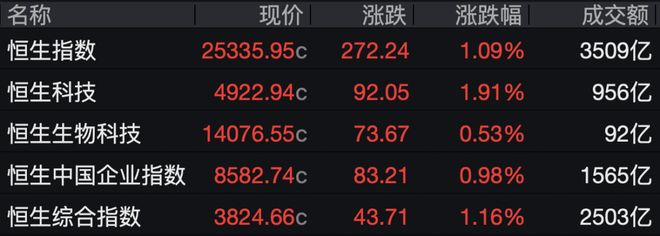
Group 1 - Tech stocks surged, with Meituan leading the rise at nearly 14%, while JD Group and Alibaba both increased by over 4% [1][2] - The Hang Seng Index rose by 1.09%, and the Hang Seng Tech Index increased by 1.91% on March 25 [3] - The semiconductor sector saw a collective increase, with Guomin Technology rising over 21%, and other companies like Lanke Technology and SMIC also showing gains [4][5] Group 2 - Pop Mart's stock fell over 22% despite reporting a revenue of 37.12 billion yuan for 2025, a year-on-year increase of 184.7%, and an adjusted net profit of 13.08 billion yuan, up 284.5% [5][6] - Analysts noted that while Pop Mart's overall revenue is strong, the LABUBU series contributes excessively to the company's performance [6] - Haidilao's stock dropped over 11% [7]


阿里巴巴-W:闪购补贴导致盈利大幅下滑,AI+云推动收入增长(繁体版)-20260325
First Shanghai Securities· 2026-03-25 05:40
Investment Rating - The report maintains a "Buy" rating for Alibaba with a target price of USD 175 / HKD 170, reflecting a potential upside of 39% / 42% from the current price [4][36][37]. Core Insights - Alibaba's revenue for FY2026 Q3 was CNY 284.84 billion, showing a year-over-year growth of 2%. Excluding disposed businesses, the year-over-year growth was 9%. The revenue growth was primarily driven by the Cloud Intelligence Group and the rapid expansion of the instant retail segment [2][9]. - The company's profitability has been significantly impacted by strategic investments, with operating profit down 74% year-over-year to CNY 10.65 billion, and net profit down 66% to CNY 15.63 billion. Adjusted EBITDA was CNY 34.06 billion, down 45% year-over-year [2][30]. - Despite short-term profitability pressures, Alibaba's strong cash reserves of CNY 560.18 billion (approximately USD 80.10 billion) provide a solid foundation for ongoing strategic investments [11][36]. Revenue Breakdown - **Alibaba China E-commerce Group**: Revenue was CNY 159.35 billion, up 6% year-over-year, driven by instant retail and customer management. Adjusted EBITA was CNY 34.61 billion, down 43% year-over-year, with a margin of 21.7% [4][14][17]. - **Alibaba International Digital Commerce Group**: Revenue reached CNY 39.20 billion, up 4% year-over-year, with a significant reduction in losses, adjusted EBITA loss narrowed by 59% to CNY 2.02 billion [4][22][23]. - **Cloud Intelligence Group**: Revenue was CNY 43.28 billion, up 36% year-over-year, with adjusted EBITA of CNY 3.91 billion, reflecting a 25% increase. The growth was driven by public cloud services and AI-related products [3][25][26]. - **Other Segments**: Revenue declined by 25% to CNY 67.34 billion, with an adjusted EBITA loss of CNY 9.79 billion, primarily due to increased investments in technology [27]. Financial Performance - The overall operating cost was CNY 169.53 billion, up 4.31% year-over-year, leading to a gross margin of 40.5%, down 1.5 percentage points year-over-year. The increase in costs was attributed to rising logistics and bandwidth expenses [29][30]. - Total operating expenses were CNY 96.76 billion, up 26.61% year-over-year, significantly impacting overall profitability [30][31].

阿里巴巴-W:闪购补贴导致盈利大幅下滑,AI+云推动收入增长(简体版)-20260325
First Shanghai Securities· 2026-03-25 05:40
Investment Rating - The report maintains a "Buy" rating for the company, with a target price set at $175 for US shares and HK$170 for Hong Kong shares, reflecting a potential upside of approximately 39% and 42% respectively [4][36]. Core Insights - The company experienced a significant decline in profitability due to strategic investments in instant retail and technology, leading to a 74% year-over-year decrease in operating profit and a 66% drop in net profit [4][30]. - Despite the short-term pressure on profits, the company has a strong cash reserve of approximately CNY 560.18 billion (around $80.1 billion), which supports ongoing strategic investments [11][36]. - The cloud business is projected to exceed $100 billion in revenue over the next five years, driven by strong growth in public cloud services and AI-related products [3][25]. Summary by Sections Revenue and Profitability - For FY2026 Q3, the company reported revenue of CNY 284.84 billion, a 2% year-over-year increase, with a 9% increase when excluding disposed businesses [2][9]. - The Alibaba China E-commerce Group generated revenue of CNY 159.35 billion, up 6% year-over-year, while the Cloud Intelligence Group saw revenue growth of 36% to CNY 432.84 billion [4][14]. Business Segments - The Alibaba China E-commerce Group's adjusted EBITA was CNY 346.13 billion, reflecting a 43% decline year-over-year, primarily due to increased investments in instant retail [4][17]. - The Alibaba International Digital Commerce Group reported revenue of CNY 392.01 billion, with a significant reduction in losses, achieving an adjusted EBITA loss of CNY 20.16 billion, down 59% from the previous year [4][22]. - The Cloud Intelligence Group's adjusted EBITA was CNY 39.11 billion, a 25% increase year-over-year, maintaining a profit margin of 9% despite increased investments [3][25]. Cash Flow and Financial Health - Operating cash flow decreased by 49% year-over-year to CNY 360.32 billion, while free cash flow fell by 71% to CNY 113.46 billion, largely due to increased investments in instant retail [11][30]. - The company’s cash and cash equivalents, along with short-term investments, totaled CNY 560.18 billion, indicating a robust liquidity position [11][36]. Strategic Outlook - The company aims to achieve over $100 billion in cloud and AI commercialization revenue within the next five years, leveraging its advancements in AI infrastructure and public cloud services [3][25]. - The report highlights that the current market valuation reflects pessimistic profit expectations, suggesting that the company’s strong cash reserves provide a solid foundation for long-term strategic investments [4][36].
全球大公司要闻 | 苹果Siri迎革命性升级,小米汽车业务实现盈利
Wind万得· 2026-03-25 01:05
Group 1 - Xiaomi Group reported a record revenue of 116.917 billion yuan for Q4 2025, a year-on-year increase of 7.3%, with adjusted net profit of 6.349 billion yuan, down 23.7% [2] - For the full year 2025, Xiaomi's total revenue reached 457.287 billion yuan, up 25% year-on-year, and adjusted net profit was 39.2 billion yuan, an increase of 43.8%, both hitting new highs [2] - Xiaomi's automotive business achieved annual profitability for the first time, with an operating profit of 900 million yuan [2] - The company plans to invest over 200 billion yuan in R&D over the next five years, and there may be potential product price increases due to unexpected memory price hikes [2] Group 2 - ARM plans to sell its own chips for the first time, aiming for annual sales of $15 billion in the AI sector within five years [3] - Li Auto's board approved a share repurchase plan of up to $1 billion, reflecting strong confidence in its strategic roadmap and future value creation [3] - Apple is upgrading its Siri voice assistant and testing a standalone Siri app, with a new version expected to be unveiled at the June 8 global developer conference [3] Group 3 - Alibaba's DAMO Academy launched the new flagship CPU, Xuantie C950, which achieved a score of over 70 in the SPECint2006 benchmark, setting a new record for RISC-V CPUs [6] - Nongfu Spring reported a total revenue of 52.553 billion yuan for 2025, a year-on-year increase of 22.5%, with net profit attributable to shareholders of 15.868 billion yuan, up 30.9% [6] - China Telecom achieved a net profit of 33.2 billion yuan for 2025, a slight increase of 0.5%, with strong growth in its digital industry business [6] Group 4 - Haidilao reported a revenue of 43.225 billion yuan for 2025, a year-on-year increase of 1.1%, but core operating profit decreased by 13.3% [8] - JD.com made progress in AI research and development, open-sourcing its foundational model JoyAI-LLM Flash, which performed well in 19 authoritative benchmark tests [7] Group 5 - OpenAI's valuation reached $730 billion after a new round of financing, with plans to raise an additional $10 billion from investors [10] - Microsoft partnered with NVIDIA to develop AI tools for the nuclear energy sector and expanded its AI infrastructure by leasing data centers [10] - Amazon acquired Fauna Robotics to enter the consumer humanoid robot market and plans to launch Robotaxi services later this year [11] Group 6 - Nintendo reduced its production target for the Switch 2 game console to 4 million units due to lower-than-expected sales, particularly in the U.S. market [13] - Samsung Electronics achieved over 60% yield in its 2nm process technology, comparable to TSMC [13] - Toyota completed its acquisition of Toyota Industries, which will accelerate its electrification transformation [13]





早报|张雪峰因心源性猝死抢救无效去世;Token中文名定了:词元;汽车之家多个平台账号被禁止关注;OpenClaw升级现严重事故
虎嗅APP· 2026-03-25 00:32
Group 1 - Zhang Xuefeng, the founder of Suzhou Fengxue Weilai Education Technology Co., Ltd., passed away on March 24, 2026, due to cardiac arrest [2] - OpenAI has reportedly completed the preliminary development of a new AI model, with Sam Altman shifting focus towards data center construction and fundraising [4] - The U.S. government has proposed a 15-point negotiation plan to Iran, addressing nuclear capabilities and regional issues, with potential sanctions relief as a trade-off [6] - Apple is testing a standalone Siri application for iOS 27, aiming for a significant AI upgrade, with a planned announcement at the WWDC on June 8 [7] - The term "Token" has been officially translated to "词元" in China, highlighting its importance in the AI industry as a billing unit for large model usage [9][10] Group 2 - Automotive platform "Autohome" has faced restrictions on multiple social media accounts due to regulatory violations, following previous criticisms for misleading evaluations [11] - Xiaomi's management acknowledged challenges due to rising memory costs, indicating that while pressure is significant, the company may adapt better than competitors due to its high-end strategy [24] - Estée Lauder has confirmed discussions regarding a potential merger with Spanish beauty company PUIG, although no agreement has been reached yet [20][21] - Nvidia's CEO Jensen Huang predicts a significant increase in the GDP share attributed to AI computing, suggesting that the economic role of computing has fundamentally shifted from storage to production [32][33]

盘前必读丨银行密集发布贵金属风险提示;理想汽车宣布10亿美元股票回购计划
Di Yi Cai Jing Zi Xun· 2026-03-25 00:01
Group 1: Economic Events and Policies - The People's Bank of China will conduct a 500 billion MLF operation with a one-year term on March 25, 2026, to maintain liquidity in the banking system [1] - The China Development Forum highlighted the importance of "Token" as a value anchor in the smart era, linking technology supply with business demand [1] Group 2: Banking and Investment Insights - Several Chinese banks, including Bank of China and Industrial and Commercial Bank of China, issued risk warnings regarding the volatile precious metals market, advising clients to enhance risk awareness and manage their investment positions [2] - Goldman Sachs' chief China equity strategist noted a significant increase in international investors' interest in Chinese stocks, with only about 10% of surveyed clients considering the Chinese stock market "non-investable," down from approximately 40% two years ago [5] Group 3: Energy Sector Developments - Philippine President Marcos declared a national energy emergency to address energy supply issues stemming from Middle Eastern conflicts, implementing measures to stabilize energy supply for key sectors [3] - The shipping traffic through the Strait of Hormuz has decreased by 95% since the outbreak of the conflict, significantly impacting global energy transportation [3] Group 4: Corporate Announcements and Financial Performance - Ideal Auto announced a share repurchase plan, authorized to buy up to $1 billion of its Class A common stock and/or American Depositary Shares by March 31, 2027 [5] - Hainan Mining reported a 38.99% year-on-year decline in net profit for 2025 and proposed a dividend of 0.8 yuan per share [8] - South China Power signed an EPC contract worth 827 million yuan for a coal power project in Inner Mongolia [8]


指望淘天很快交出高分,是不现实的
美股研究社· 2026-03-24 11:41
这次阿里巴巴26财年Q3的财报,淘天集团明显处于"阵痛期"。 客户管理收入 (CMR) 同比增长 0.82%,增速是比较缓慢的 。一方面是国补和软件服务费造 成的高基数影响,另一方面是今年春节比去年晚了19天,导致实物消费爆发力推迟到了下一季 度。 经调整 EBITA 为 346.13 亿元 ,同比下降 42.69% ,闪购"烧钱换规模"并未停止,影响了 利润表现。 虽然管理层在电话会表示,由于淘宝闪购的拉动, 实物 电商的年度活跃买家增长 1亿,但仅 从CMR和EBITA看,目前还看不出闪购对实物消费的规模提升有明显作用。 财报当天,阿里巴巴股价下跌超过7个百分点。股市有句老话,"涨,什么都是对的;跌,什么 都是错的",这两天有不少投资者怪罪在淘天身上, 开始用放大镜找茬,"闪购业务拖累淘 天"的论调再次被提及。 这种焦虑非常容易理解,毕竟真金白银买了不少。但我在想,投资者是不是有点太过心急了。 用一个季度财报去评判一家公司的长远布局,就像百米冲刺的成绩去评判马拉松一样,似乎本 身就不太公平。 被 误 读 的 " 拖 累 " , 市 场 为 何 市场似乎早已默认了一个前提,业务扩张周期的投资应该立刻见效。 ...

京东押注欧洲:不是出海,而是在重写供应链战争
美股研究社· 2026-03-24 11:41
Core Viewpoint - The growth logic of the domestic e-commerce industry has fundamentally shifted from simple traffic accumulation to supply chain expansion and efficiency release, as traditional expansion models are no longer sustainable [1][5]. Group 1: Market Context - The Chinese e-commerce growth model is reaching its peak, with competition shifting from "incremental competition" to "stock competition" as user growth plateaus and traffic benefits diminish [6][5]. - The rise of live-streaming and social e-commerce has further fragmented user attention, leading to price wars and subsidy battles that compress profit margins [6][5]. Group 2: Strategic Move to Europe - JD's entry into Europe is not merely a story of expansion but a strategic necessity to redefine its boundaries and test its core capabilities on a global scale [3][4]. - Europe is viewed as a "must-have option" for JD, as the domestic market presents hard constraints on growth, making international expansion essential for survival [4][5]. Group 3: Competitive Landscape - The European market offers a unique structure with strong consumer purchasing power and high average order values, but fragmented e-commerce infrastructure presents opportunities for improvement [6][5]. - Unlike the strong platform model of Amazon, European retail is more fragmented, allowing JD to leverage its logistics expertise to enhance delivery efficiency [6][5]. Group 4: Supply Chain Strategy - JD aims to "sell capabilities" rather than just traffic, focusing on exporting its successful supply chain efficiency to fill local infrastructure gaps in Europe [7][9]. - The collaboration with brands like BayMar is not just about introducing European products but about competing for supply chain entry points, positioning JD as a global supply chain organizer [9][10]. Group 5: Long-term Vision - JD's strategy involves building a dual-track approach: importing quality European goods to China while establishing a local retail presence in Europe through Joybuy [10][11]. - This approach aims to create a closed-loop system that ensures stable supply and consistent user experience, integrating supply chain management across borders [10][11]. Group 6: Financial Implications - The European venture may initially lead to financial losses due to high infrastructure costs and user education, but it serves as a testing ground for JD's ability to replicate its supply chain model globally [13][12]. - If successful, JD could transition from a traditional e-commerce model to a global supply chain service provider, altering its revenue structure and valuation logic [13][12]. Group 7: Competitive Challenges - JD faces significant competition not only from e-commerce platforms but also from established local retailers and logistics companies in Europe [14][12]. - The battle is not just about e-commerce but about establishing new global standards for supply chain efficiency, which could redefine the competitive landscape [14][12]. Conclusion - JD's move into Europe represents a critical step in its evolution from a domestic retailer to a global supply chain leader, emphasizing the importance of supply chain depth and breadth in determining retail success [17][15].

阿里巴巴-W:重申“增持”评级,阿里云与即时零售估值被忽略-20260324
摩根大通· 2026-03-24 09:45
Investment Rating - The report maintains an "Overweight" rating for Alibaba Group (BABA.US) [1] Core Insights - Morgan Stanley has adjusted its revenue and adjusted earnings per share forecasts for Alibaba for the fiscal year 2026 down by 1% and 10% respectively, reflecting the performance in the December quarter [1] - For the fiscal year 2027, revenue and adjusted earnings per share forecasts have been reduced by 3% and 5% respectively, leading to a target price reduction for Alibaba's US stock from $215 to $205 and for its Hong Kong stock from HKD 210 to HKD 200 [1] - The report highlights that the current market valuation of Alibaba only reflects the value of its domestic e-commerce business, with the cloud and instant retail platforms being completely overlooked in the valuation [1] Revenue and Profit Forecasts - The report predicts that Alibaba's domestic e-commerce profit for the fiscal year 2027 will be approximately RMB 196 billion, which, at a price-to-earnings ratio of about 10 times, indicates that the cloud and instant retail platforms are not accounted for in the current valuation [1] - Alibaba Cloud's revenue growth has rebounded from a low of 7% six quarters ago to 36% in the most recent quarter, with AI product revenue experiencing triple-digit growth for ten consecutive quarters [1] - Management aims for cloud business revenue to reach $100 billion over the next five years, implying a compound annual growth rate of about 47%, and the report suggests that recent quarterly data does not contradict this target [1] - If the target is achieved and receives a reasonable valuation, the cloud business alone could be valued at $400 billion, exceeding Alibaba's current market value of approximately $298 billion [1]
京东京造,加速制造 AI+ 爆款
晚点LatePost· 2026-03-24 04:42
Core Viewpoint - JD's 2025 financial report shows a revenue of 1.31 trillion yuan, marking a 12.94% year-on-year growth, driven by AI technology [3] Group 1: AI Integration and Product Development - AI technology has been fully integrated into JD's operations, enhancing user experience and operational efficiency [3] - The self-developed model JoyAI saw a nearly 100-fold increase in token usage in 2025, applied in over 2000 business scenarios [3] - JD's self-owned brand, Jingzao, has successfully launched AI products, including AI toys that quickly sold out, demonstrating the effective application of AI in consumer products [4][6] Group 2: Jingzao's Market Strategy - Jingzao leverages JD's supply chain advantages to develop self-owned brand products, focusing on filling market gaps where consumer demand is not met [8] - The initial strategy of Jingzao was to offer high-quality products at lower prices, leading to rapid growth and a user base exceeding 10 million [9] - Jingzao's first major success was a latex pillow, which was priced significantly lower than competitors, validating the "single product explosion" strategy [9] Group 3: Product Innovation and User Engagement - Jingzao's product development has evolved from "quality-price ratio" to "superior quality," focusing on innovative designs and materials [10] - The introduction of AI-powered plush toys aims to enhance emotional engagement and companionship, addressing a significant market need [11] - Jingzao's innovative approach includes the use of new materials like carbon fiber to improve product performance while maintaining cost efficiency [12] Group 4: Supply Chain and Operational Efficiency - Jingzao operates within a highly integrated supply chain system, enhancing efficiency and reducing costs across all business operations [20] - The company has successfully adapted its production strategies to optimize costs, such as relocating manufacturing to lower-cost regions [21] - Jingzao's approach to product development emphasizes a narrow product range within broad categories, focusing on high-demand items to maximize supply chain efficiency [16] Group 5: Future Goals and Market Positioning - Jingzao aims to further enhance product quality, innovation, and original design, targeting the creation of new users for JD [22] - The company plans to continue expanding its product offerings in categories with unmet consumer needs, leveraging its supply chain capabilities for rapid market response [18]