
高科技

Search documents
博时基金市场异动陪伴10月14日:A股三大指数调整,创业板跌近4%
Xin Lang Ji Jin· 2025-10-14 07:32
Market Performance - On October 14, the A-share market experienced a correction, with the ChiNext index falling nearly 4% [1][2]. Analysis of Market Movements - The recent escalation of China-U.S. trade tensions has raised concerns about the stability of global supply chains and the foreign trade environment, particularly in areas such as shipping costs, rare earth controls, and tariff threats [2]. - Technical adjustment pressures within the market have also contributed to the volatility, as the A-share market has accumulated significant gains since the beginning of the year, prompting some profit-taking amid external disturbances [2]. - The complex and changing international geopolitical landscape, including uncertainties in the policy directions of major economies like France and Japan, has led to a cautious market sentiment [2]. Impact of Trade Tensions - The recent escalation in China-U.S. trade tensions has implications beyond traditional trade, with China's export controls on rare earths and related technologies targeting the core supply chains of the global high-tech industry [2]. - The U.S. has threatened higher tariffs, which exacerbates tensions in the global trade system, creating uncertainty and risk aversion in the market, particularly affecting industries reliant on China-U.S. trade and those closely tied to globalization in high-tech and manufacturing sectors [2]. Market Outlook - Short-term volatility in the A-share market may increase, but there is no need for excessive pessimism in the medium term [3]. - The evolution of China-U.S. relations, especially with key events like the upcoming APEC summit, will be critical observation points for the market [3]. - The market focus is expected to shift towards internal drivers, particularly the policy dividends from the "14th Five-Year Plan" and the certainty of third-quarter earnings [3]. - In terms of asset allocation, a balanced strategy is recommended, focusing on sectors that highlight strategic value and benefit from domestic industrial policy support, such as technology and new energy [3]. - Additionally, sectors with relatively low valuations and improving fundamentals may also present investment opportunities [3]. - Continuous monitoring of incremental capital movements and changes in the external environment is advised for flexible portfolio adjustments [3].

中国9月出口增长超预期
Ge Lin Qi Huo· 2025-10-13 09:36
Group 1: Overall Trade Performance - China's September exports denominated in US dollars increased by 8.3% year-on-year, exceeding the forecast of 5.7% and the previous value of 4.4%; imports increased by 7.4% year-on-year, exceeding the forecast of 1.4% and the previous value of 1.3%; the trade surplus was $90.45 billion, compared with a previous surplus of $102.33 billion [1][4]. - From January to September, China's cumulative export amount increased by 6.1% year-on-year, compared with a 5.82% increase for the whole of last year; the cumulative import amount decreased by 1.1% year-on-year, compared with a 1.03% increase for the whole of last year [4]. Group 2: Export by Region - In September, China's exports to ASEAN increased by 15.6% year-on-year (14.7% from January to September, 12% for the whole of last year); exports to the EU increased by 14.2% year-on-year (8.2% from January to September, 3.0% for the whole of last year); exports to the US decreased by 27.0% year-on-year (-16.9% from January to September, 4.9% for the whole of last year); exports to South Korea increased by 7.0% year-on-year (-0.3% from January to September, -1.8% for the whole of last year); exports to Japan increased by 1.8% year-on-year (4.4% from January to September, -3.5% for the whole of last year) [2][5]. - In September, China's exports to countries and regions other than the top five export destinations increased by 16.5% year-on-year, faster than the overall export growth rate of 8.3% [2][5]. - In the first nine months of this year, China's exports to countries participating in the Belt and Road Initiative increased by 11.4% year-on-year; exports to Africa from January to September increased by 28.3% year-on-year, compared with a 3.5% increase for the whole of 2024; exports to Latin America from January to September increased by 6.9% year-on-year, compared with a 13.0% increase for the whole of 2024 [2][5]. Group 3: Export by Product Category - In the first nine months, China's exports of mechanical and electrical products reached $1.55 trillion, a year-on-year increase of 8.6% (8.1% from January to August, 7.5% for the whole of last year); high-tech product exports increased by 7.1% year-on-year (6.4% from January to August, 4.8% for the whole of last year); integrated circuit exports increased by 23.3% year-on-year (22.1% from January to August, 17.4% for the whole of last year); exports of automobiles (including chassis) increased by 10.8% year-on-year (10.8% from January to August, 15.5% for the whole of last year); exports of ships increased by 21.4% year-on-year (18.3% from January to August, 57.3% for the whole of last year) [2][8]. - In the first nine months, exports of household appliances decreased by 2.2% year-on-year (-1.2% from January to August, 14.1% for the whole of last year); exports of mobile phones decreased by 9.8% year-on-year (-11.5% from January to August, -3.1% for the whole of last year); exports of clothing and clothing accessories decreased by 2.5% year-on-year (-1.7% from January to August, 0.3% for the whole of last year); exports of toys decreased by 8.3% year-on-year (-5.2% from January to August, -1.7% for the whole of last year); exports of furniture and parts decreased by 4.8% year-on-year (-5.3% from January to August, 5.8% for the whole of last year); exports of luggage and similar containers decreased by 11.5% year-on-year (-11.5% from January to August, -3.2% for the whole of last year) [2][8]. Group 4: Import Performance - In September, China's imports exceeded expectations. The import of integrated circuits was 55.5 billion units, a year-on-year increase of 12%, with an amount of $41 billion, a year-on-year increase of 14%; the import of copper ore concentrates was 2.59 million tons, a year-on-year increase of 6%, and the amount spent was $7.3 billion, a year-on-year increase of 24% due to the year-on-year increase in copper prices; the import of iron ore concentrates was 116 million tons, a year-on-year increase of 12%, and the amount spent was $11.3 billion, a year-on-year increase of 13% as the price was slightly higher than the same period last year; the import of crude oil was 47.25 million tons, a year-on-year increase of 4%, and the amount spent was $23.8 billion, a year-on-year decrease of 7% as the crude oil price fell compared with the same period last year; the import of automobiles (including chassis) was 41,000 units, a year-on-year decrease of 26%, and the amount spent was $2 billion, a year-on-year decrease of 36% [3][9][10]. - In September, the largest year-on-year increase in imports was for aircraft with an empty weight of more than 2 tons. 27 were imported, a year-on-year increase of 93%, and the amount spent was $2 billion, a year-on-year increase of 201% [10]. Group 5: International Trade Environment and Outlook - In September, South Korea's exports increased by 12.7% year-on-year (1.3% in August), and Vietnam's exports increased by 24.7% year-on-year (14.5% in August), indicating that the overall international trade environment in September was good [3][11]. - In September, the eurozone's manufacturing Purchasing Managers' Index (PMI) was 49.5, falling below the boom - bust line again, indicating that the eurozone's manufacturing industry was in recession; the US ISM manufacturing PMI new orders index in September was 48.9, falling back below the boom - bust line, and the US ISM services PMI index in September was 50.0 [3][11]. - In the fourth quarter, China's year-on-year export growth rate is expected to slow down due to the high base last year, and the results of a new round of Sino - US trade negotiations will also have a certain impact on China's exports [3][11]. - The World Trade Organization raised its forecast for global goods trade growth in 2025 from 0.9% to 2.4% on October 7, and significantly lowered its forecast for global goods trade growth in 2026 to 0.5%, compared with 1.8% in August [11].
特朗普对华威胁关税点评:如何理解中美摩擦升级?
CMS· 2025-10-11 10:51
Group 1: U.S.-China Trade Tensions - Trump announced a 100% tariff on Chinese goods starting November 1, 2025, in response to China's rare earth export controls[1] - The U.S. Customs and Border Protection will impose port fees on Chinese-owned vessels starting October 14, 2025[1] - The U.S. Department of Commerce added several Chinese entities to the export control list on October 8, 2025[1] Group 2: Strategic Implications - The tariff threat is seen as a bargaining chip rather than a definitive action, with a low probability of the 100% tariff being implemented[2] - Both countries are likely to extend export controls to more sectors, with the U.S. potentially adding more Chinese companies to the control list[2] - Trump's immediate goal is to secure more direct investments and benefits for U.S. farmers, particularly in agricultural exports to China[2] Group 3: Economic Impact - If the 100% tariff is fully implemented, it could reduce China's exports by approximately 11.3 percentage points and increase U.S. inflation by about 3.2 percentage points[3] - The report suggests that the actual impact may be less severe due to factors like re-exports and delays in tariff transmission[3] Group 4: Market Reactions - Increased tariff risks may lead to heightened volatility in equity markets, with potential adjustments of 10-20% expected[2] - Despite short-term risks, the long-term outlook for equity assets remains cautiously optimistic as Trump may seek to stabilize the situation[2]
光启技术现4笔大宗交易 合计成交620.00万股
Zheng Quan Shi Bao Wang· 2025-10-09 09:25
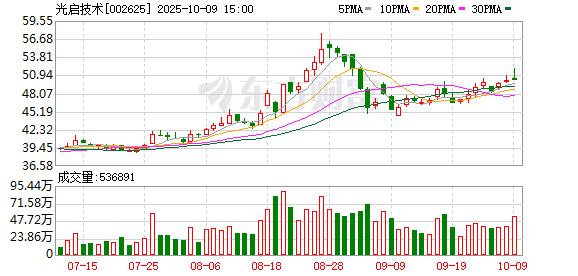
Core Insights - On October 9, 2023, Guangqi Technology executed four block trades totaling 6.20 million shares, with a transaction value of 303 million yuan, at a price of 48.95 yuan, reflecting a discount of 2.49% compared to the closing price of the day [2][2][2] Trading Activity - In the last three months, Guangqi Technology has recorded a total of 60 block trades, amounting to 4.667 billion yuan [2] - The closing price of Guangqi Technology on October 9 was 50.20 yuan, with a daily turnover rate of 2.49% and a total trading volume of 2.740 billion yuan [2][2] - The net outflow of main funds for the day was 194 million yuan, while the stock has increased by 2.43% over the past five days, with a total net outflow of 436 million yuan during the same period [2][2] Margin Financing - The latest margin financing balance for Guangqi Technology stands at 7.711 billion yuan, with an increase of 115 million yuan over the past five days, representing a growth rate of 1.51% [2][2] Company Background - Guangqi Technology Co., Ltd. was established on July 18, 2001, with a registered capital of 2.154588762 billion yuan [2]


美国大豆卖不出,中国稀土买不到,这世界将更黑暗还是将更光明?
Sou Hu Cai Jing· 2025-10-07 04:39
Group 1: U.S. Soybean Market Impact - China has completely stopped purchasing U.S. soybeans, which was unexpected for the U.S. market, leading to a significant shift in trade dynamics [2][4] - Historically, China imported around 100 million tons of soybeans annually, with domestic production at approximately 20 million tons; this year, over 70% of imports came from Brazil [2] - The share of U.S. soybeans in China's imports has drastically decreased from 57% in 2017 to 42% in 2024, with a sudden halt in purchases resulting in a substantial loss of market share for the U.S. [5] Group 2: Argentina's Role - Argentina, despite receiving U.S. financial aid, has increased its soybean exports to China, shipping 30 to 40 vessels in a short period, which has severely impacted U.S. soybean trade [4] - This move by Argentina may indicate a strategic alignment with China and BRICS nations, aiming to re-enter a trade network centered around China [4] Group 3: Global Trade Dynamics - The halt in Chinese soybean purchases has led to a supply glut in the U.S., causing prices to plummet and forcing other countries to wait for discounted offers before purchasing [5] - The trend is shifting towards South American countries as primary suppliers, indicating a long-term replacement of U.S. soybeans in the global market [5] Group 4: U.S.-China Trade Relations - The U.S. government's unilateral trade actions, particularly under Trump's administration, lack a cohesive global economic strategy, making it vulnerable to targeted responses from China [9] - China is using key commodities like rare earths and soybeans as leverage in trade negotiations, complicating U.S. efforts to secure these resources [9][10] Group 5: Broader Economic Implications - If U.S. hostility continues, China has various economic tools at its disposal to respond, potentially affecting U.S. tech companies and their supply chains [10] - China's zero-tariff policy towards Africa is reshaping international economic relations, encouraging African nations to align their trade practices with Chinese demands [11] - The potential for a collective response from developing countries against U.S. trade practices could significantly impact U.S. economic interests globally [11]


你的钱正在悄悄“缩水”:普通人打响2025年资产保卫战!
Sou Hu Cai Jing· 2025-10-03 12:49
Core Insights - Inflation is eroding the purchasing power of cash savings, making it a significant concern for individuals [1][2] - The current economic environment is characterized by slow global recovery, fluctuating central bank policies, and geopolitical risks, leading to asset devaluation pressures [2] Group 1: Cash and Inflation - The belief that saving money in banks is a safe choice is a dangerous illusion in a high inflation environment [2] - Actual inflation rates are significantly higher than official CPI figures, increasing the risk associated with holding cash [2][6] Group 2: Investment Strategies - Successful investors should focus on "hard assets" and companies with a "high moat" that can pass on cost increases to consumers [4][7] - Investing in funds that track high-tech indices or essential consumer goods indices is a simpler and effective strategy for ordinary investors [5] Group 3: Asset Allocation - Gold is recognized as an effective tool for hedging against currency devaluation, serving as a "lifeboat" during financial turmoil [7] - Companies with strong brand power, technological barriers, or monopolistic positions can maintain or increase profit margins despite rising costs [7] Group 4: Leveraging Debt - In an inflationary environment, quality debt can become an ally, as fixed-rate loans become easier to repay over time [8] - The strategy involves using low-cost, controllable long-term debt to acquire quality assets that yield returns exceeding the loan interest rates [8] Group 5: Call to Action - The key to navigating inflation is proactive learning and decisive action, rather than complacency [9] - Individuals are encouraged to reassess their cash holdings and invest in resilient "hard assets" and "high moat" companies [9][10]

23只科技股,外资扎堆调研
Zheng Quan Shi Bao· 2025-10-03 01:21
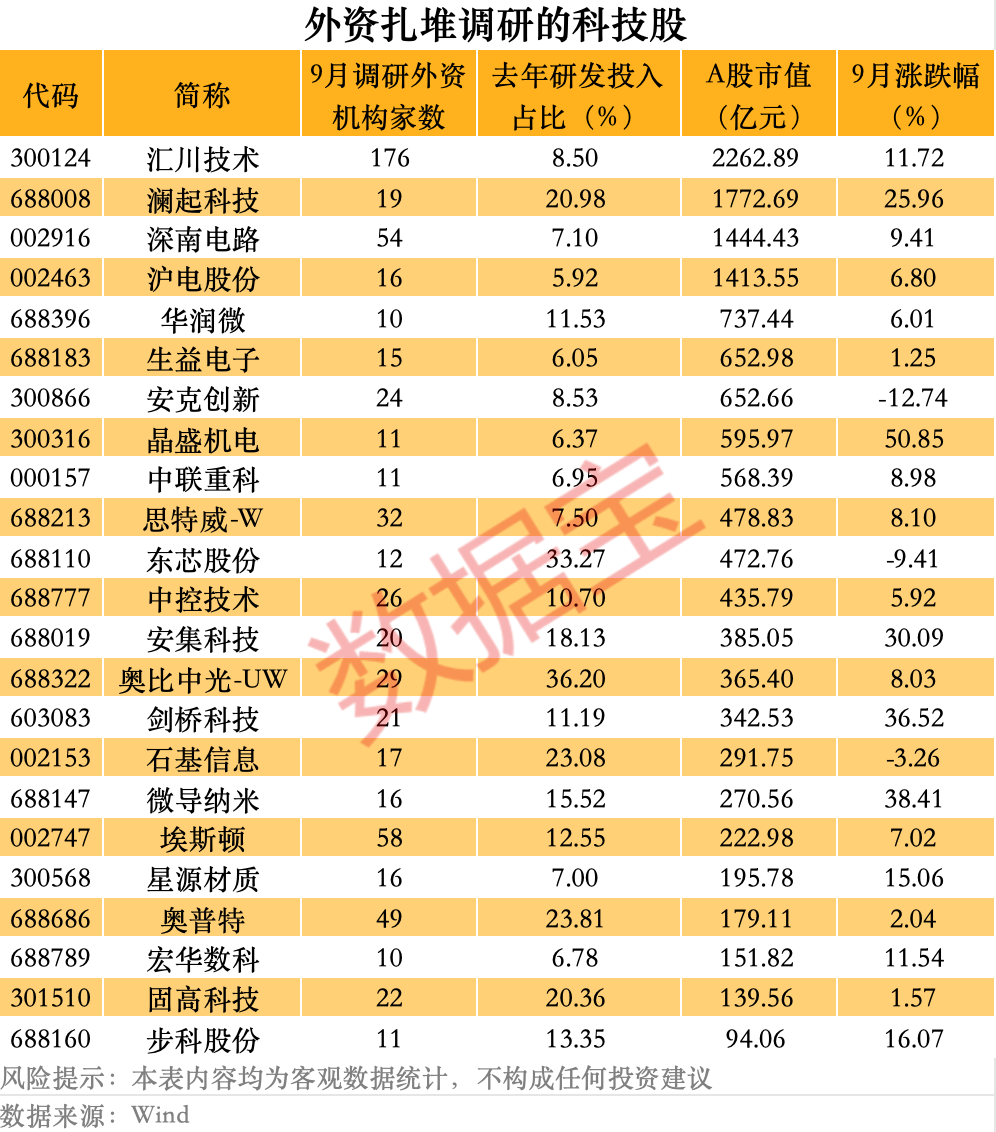
Core Viewpoint - The article discusses the strong interest of foreign institutions in China's technology stocks, particularly in the context of the country's economic recovery and high R&D investments by these companies [1][2]. Group 1: Foreign Investment Interest - In September, 23 companies attracted visits from 10 or more foreign institutions, primarily high-tech firms with R&D expenditures exceeding 5% of their revenue [1]. - Huichuan Technology led with 176 foreign institution visits, followed by Estun and Shenzhen South Circuit with 58 and 54 visits, respectively [1]. - High R&D investment is a common characteristic attracting foreign interest, with companies like Aobi Zhongguang and Dongxin Co. having R&D ratios of 36.2% and 33.3%, respectively [1]. Group 2: R&D Focus Areas - Huichuan Technology plans to allocate 8% to 10% of its revenue to R&D, focusing on software, overseas market products, and humanoid robots [2]. - Siwei-W is recognized for its leadership in machine vision, with products widely used in various industries, showcasing significant technological influence [2]. Group 3: Market Capitalization and Performance - Among the 15 companies listed, 5 have market capitalizations exceeding 300 billion yuan, with Huichuan Technology leading at 226.3 billion yuan [3]. - Foreign investment is strategically focused on "high-end manufacturing + core components," with companies like Huichuan Technology and Shenzhen South Circuit positioned in critical domestic replacement sectors [3]. Group 4: Stock Performance - The average stock price increase for the listed companies in September was nearly 12%, outperforming the CSI 300 index by about 9 percentage points [4]. - The stock of Jing Sheng Electric saw a remarkable increase of 50.8%, marking it as a "technology dark horse" [4]. - A shift in valuation logic is noted, with foreign investors favoring a sales-to-valuation model combined with technological leadership rather than traditional PEG models [4].

最新,外资扎堆调研的科技股,23股上榜
Zheng Quan Shi Bao· 2025-10-02 10:59
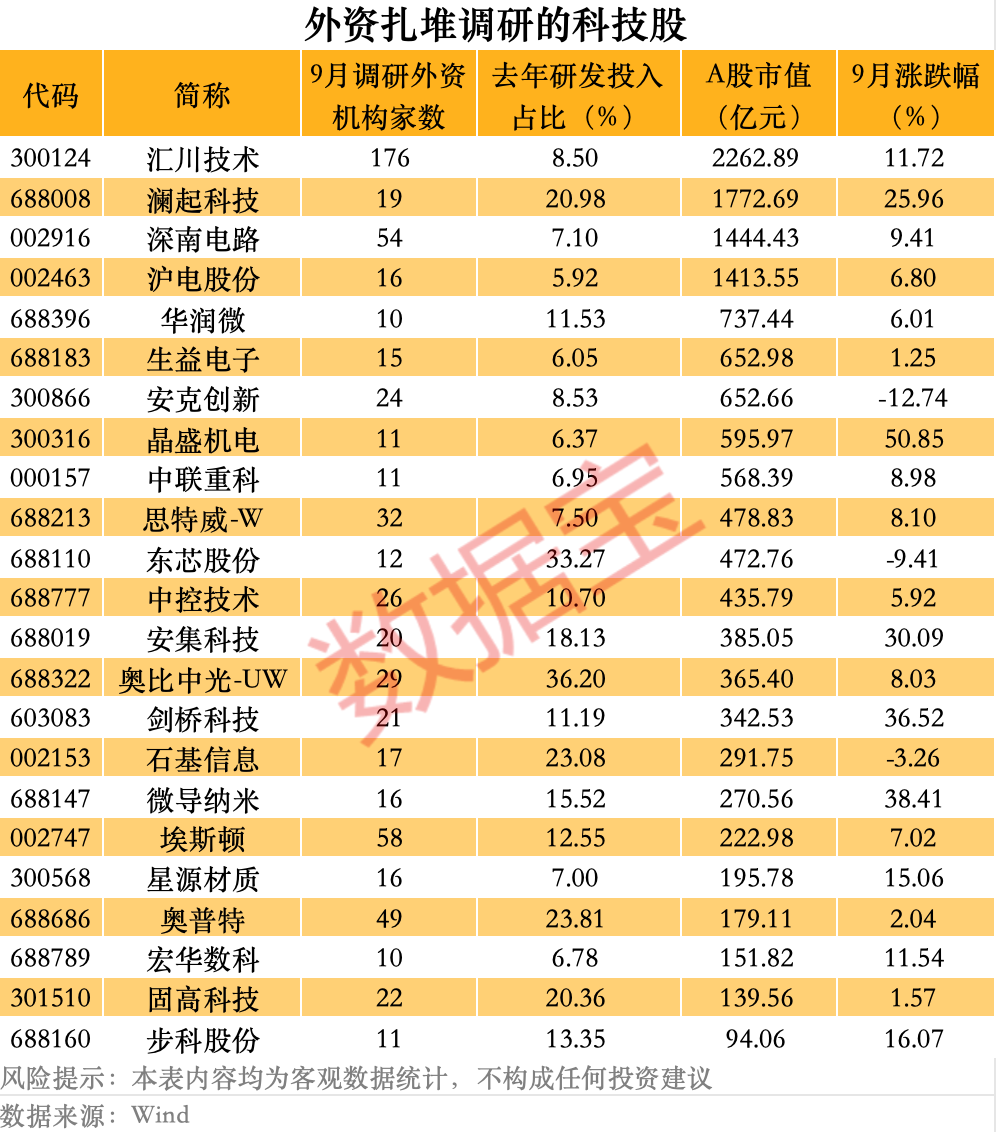
Core Viewpoint - The article discusses the strong interest of foreign institutions in China's technology stocks, particularly in the context of the country's economic recovery and high R&D investments by these companies [1][2]. Group 1: Foreign Investment Interest - In September, 23 companies attracted visits from 10 or more foreign institutions, primarily high-tech firms with R&D expenditures exceeding 5% of their revenue [1]. - 汇川技术 (Inovance Technology) led with 176 foreign institution visits, followed by 埃斯顿 (Estun Automation) and 深南电路 (Shennan Circuits) with 58 and 54 visits respectively [1][6]. - High R&D investment is a common characteristic attracting foreign interest, with 奥比中光 (Obi Technology) having the highest R&D expenditure ratio at 36.2% [1][6]. Group 2: R&D Focus and Strategic Directions - 汇川技术 plans to allocate 8% to 10% of its revenue to R&D, focusing on software, overseas market products, and humanoid robots [2]. - 思特威-W (SITW) is recognized for its leadership in machine vision technology, with products widely used in various industries and applications [2]. Group 3: Market Capitalization and Performance - Among the companies surveyed, 15 have a market capitalization exceeding 30 billion yuan, with 汇川技术 leading at 226.3 billion yuan [3][6]. - The average stock price increase for these companies in September was nearly 12%, outperforming the沪深300 index by approximately 9 percentage points [4]. Group 4: Valuation Trends - The valuation logic for hard technology stocks is shifting, with foreign investors favoring a sales-based valuation model combined with technological leadership rather than traditional PEG models [4].
关税战第三次延期?美国的底气正在消失,谁才是世界第一大经济体
Sou Hu Cai Jing· 2025-10-02 03:48
Core Viewpoint - The trade dynamics between the US and China have shifted, with the US showing unexpected compromises despite its historical position as a dominant economic power [1][12]. Economic Comparison - According to purchasing power parity, China's economic scale has surpassed that of the US, indicating that significant value creation is occurring in China [4]. - In 2024, China's GDP is projected to be 189.4 trillion USD, while the US GDP is 291.8 trillion USD, highlighting the economic scale difference [8]. - China's industrial production capabilities are unmatched globally, with steel production accounting for half of the world's output and aluminum nearly 60% [3][7]. Trade and Tariff Impacts - The US initially believed that imposing tariffs would force China to concede, but the outcome resulted in increased costs for American consumers and businesses [10][12]. - The trade conflict has led to significant disruptions in the US supply chain, affecting retail and manufacturing sectors, which in turn has caused price increases for everyday goods [10][13]. Strategic Resource Control - China's control over critical resources, such as rare earth elements, poses a significant challenge to the US, particularly in its military and high-tech industries [15]. - The US's attempts to limit technology transfers to China have backfired, as China's strategic responses have highlighted its importance in global supply chains [10][15]. Global Economic Landscape - The current economic landscape emphasizes the importance of industrial production and supply chain control over traditional financial dominance [16][18]. - The shift in power dynamics indicates that the ability to rapidly scale production and meet market demands is now a key determinant of economic strength, with China emerging as the clear leader in this regard [18].

慧源同创科技注销1.748亿份购股权
Zhi Tong Cai Jing· 2025-09-30 12:48
Core Viewpoint - Huiyuan Tongchuang Technology (01116) announced the cancellation of 174.8 million unvested and unexercised stock options granted to Ling Li, effective September 24, 2025, due to unmet vesting conditions as per the advisor agreement and stock option plan [1] Group 1 - The board of directors decided to cancel the stock options to ensure compliance and proper management of the plan [1] - The cancellation is deemed to be in the best interest of the company and its shareholders [1] - Independent legal advice was considered in making the decision [1]