
农产品

Search documents
视频丨销量翻倍、订单排满 节前消费市场活力十足
Yang Shi Xin Wen Ke Hu Duan· 2026-01-25 23:56
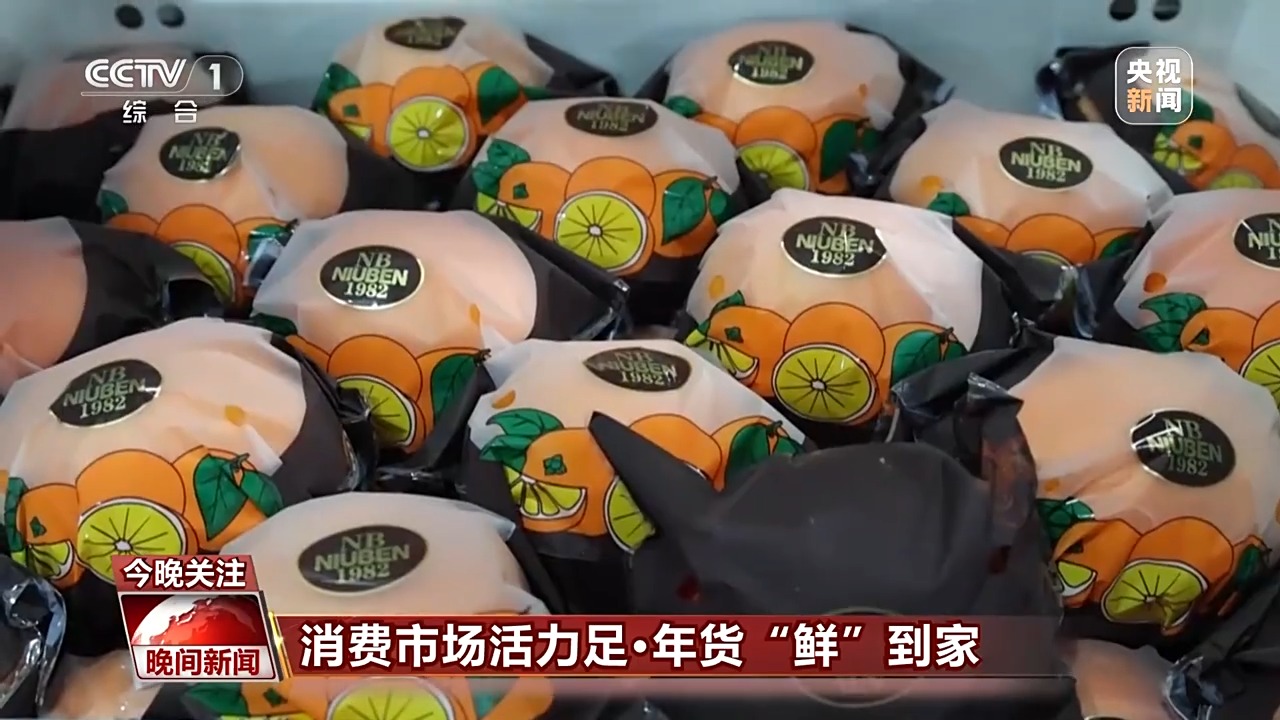
Group 1: Seasonal Products - Seasonal seafood, fruits, and fresh vegetables are abundantly available as the Spring Festival approaches, enriching the dining tables of the public [1] - In county-level agricultural wholesale markets, various citrus fruits such as sugar oranges and jelly oranges are being showcased [3] - The introduction of new strawberry varieties in Shandong's agricultural wholesale market has led to increased sales [5] Group 2: Agricultural Market Dynamics - Guangxi is a major production base for autumn and winter vegetables, with around 700 tons of agricultural products being transported daily to consumers [7] - The development of cold chain logistics has enabled a wider variety of fresh vegetables to reach markets quickly, ensuring same-day and next-day delivery [7] - The seafood trading center in Fuzhou is experiencing peak trading volumes, with high-end seafood sales, such as grouper and king crab, significantly increasing as the festival approaches [9] Group 3: Home Service Industry - The demand for home cleaning services is surging as families prepare for the Spring Festival, with orders for full-house cleaning increasing by 20% to 30% weekly [12][15] - Home service companies are adapting by offering new services like pet care and storage solutions, targeting younger consumers [14][17] - Digital services are becoming integral to the home service industry, allowing consumers to easily book cleaning services through various online platforms [22] Group 4: Winter Sports and Consumer Trends - The popularity of winter sports is rising, contributing to a boost in consumer spending as schools enter winter break [25] - Skiing winter camps are experiencing a surge in participation among youth, reflecting a growing interest in winter sports [27] - New urban night skiing facilities are being developed, making skiing more accessible to residents and enhancing local recreational options [30]

大宗商品市场贵金属支撑性强
Jing Ji Ri Bao· 2026-01-25 22:02
Group 1: Market Overview - The commodity market in 2026 is at a critical juncture, moving away from the traditional linear model of economic recovery and demand rebound, influenced by geopolitical factors, industrial transformation, financial attributes, and policy dynamics [1][3] - The market is transitioning from a "macro barometer" to a "safety thermometer," "industry weather vane," and "financial amplifier" [1] Group 2: Market Differentiation - The traditional correlation of commodities moving together is diminishing, with "variety logic" becoming dominant, where prices depend more on individual supply chains, constraints, policies, and geopolitical disturbances [2] - Three types of differentiation are occurring: 1. Demand-side differentiation, with traditional demand slowing and new demand from sectors like renewable energy and infrastructure growing [2] 2. Supply-side differentiation, where reduced capital expenditure and environmental constraints have led to decreased supply elasticity [2] 3. Institutional differentiation, with increased use of tariffs, export controls, and strategic reserves affecting pricing [2] Group 3: Energy Market Dynamics - The global energy supply and demand are undergoing deep adjustments, with rising penetration of renewable energy and insufficient investment in traditional oil and gas leading to decreased marginal supply elasticity [4] - Energy security has become a core policy goal for many countries, with supply chain restructuring particularly acute in the energy transition sector [4][6] Group 4: Metal Market Repricing - Metals are becoming crucial for the new industrial revolution, with demand for industrial metals being influenced by the manufacturing cycle, while strategic minerals like copper and lithium are expected to remain in tight supply due to new energy and storage needs [7] - The pricing power in the metal market is shifting from "production scale" to "strategic attributes" as resource nationalism increases [7] Group 5: Precious Metals Role - Precious metals are evolving in their role, with gold remaining a stabilizer in the financial system, while platinum and silver seek a balance between industrial and financial attributes [8] - The driving factors for precious metals in 2026 will include trends in real interest rates, central bank balance sheet expansions, and geopolitical risks [8] Group 6: Agricultural Market Insights - The agricultural market is experiencing significant changes due to climate change, geopolitical conflicts, and trade protectionism, leading to increased vulnerability in the global food system [9] - The market is expected to see a gradual upward trend in prices as supply excess diminishes and demand stabilizes, influenced by domestic policies and weather risks [9] Group 7: Strategic Recommendations - The commodity market in 2026 is characterized by structural reconstruction, elevated price levels, and normalized volatility, making resource security a critical aspect of industrial competitiveness [10] - Companies are advised to enhance energy efficiency, optimize processes, and develop green supply chains, while financial tools should be utilized for risk management rather than speculation [10]
2025年云南对东盟进出口1320.8亿元 创历史新高
Xin Lang Cai Jing· 2026-01-25 15:08
Core Insights - In 2025, Yunnan's import and export volume with ASEAN reached 132.08 billion yuan, marking a historical high with a year-on-year growth of 20.8% [1] - During the 14th Five-Year Plan period, Yunnan's total import and export volume reached 1.39 trillion yuan, an increase of 40.8% compared to the 13th Five-Year Plan [1] - Yunnan's trade partners have expanded to 193 countries and regions, with 146 of them experiencing growth in import and export activities [1] Trade Performance - In 2025, Yunnan's total goods trade import and export volume was 273.74 billion yuan, growing by 10.2%, which is 6.4 percentage points faster than the national average [1] - The import and export volume with Belt and Road countries was 235.86 billion yuan, reflecting a growth of 16.1% [1] - Trade with the Middle East, Latin America, and Africa saw significant increases of 3.7%, 51.1%, and 75.6% respectively, collectively accounting for 33.4% of Yunnan's total import and export value [1] Cross-Border Trade Developments - The cross-border freight volume on the China-Laos Railway increased by 13.9%, with the value growing by 42.9% [1] - Yunnan has implemented a pilot project for the smart import of Lao cement at the first land port in the country [1] - Nine new categories of high-quality agricultural and food products from neighboring countries have been approved for import [1] Agricultural Exports - Yunnan has taken the lead in batch inspection and quarantine reforms in the country, with agricultural exports reaching 19.79 billion yuan in 2025, accounting for 21% of total exports [2] - The export scale of fresh-cut flowers and coffee ranks first in the country, while vegetables and fruits rank third [2] - Exports of "new three items" such as photovoltaic products and lithium batteries reached 3.35 billion yuan, increasing by 140% [2] - Tin ingot exports also saw a significant rise to 5.04 billion yuan, reflecting a growth of 140% [2]
“媒体+”唱响东方诚意,乐昌黄金柰李销往全球|广货行天下
Nan Fang Nong Cun Bao· 2026-01-25 13:33
Core Viewpoint - The event "Media + 12221: Let the Brand Shine" held in Guangzhou aims to promote the global sales of Lechang Golden Kai Li, a premium fruit from Guangdong, through innovative media integration and agricultural branding strategies [2][3][4]. Group 1: Event Overview - The "Media + 12221" seminar and the launch of the publication "Singing the Eastern Sincerity of Lechang Golden Kai Li" took place on January 25 [2][3]. - The event focused on exploring the integration of media and agricultural products to enhance brand visibility and market reach [4][10]. Group 2: Product Highlight - Lechang Golden Kai Li is referred to as the "Hermès of plums," known for its golden flesh and sweet, juicy taste [9][25]. - The fruit has gained significant recognition, being featured in major global locations such as Times Square in New York and is now available in international markets including Indonesia, UAE, France, and the USA [30][34]. Group 3: Economic Impact - The "Media + 12221" initiative has led to a substantial increase in the farm gate price of Lechang Golden Kai Li, rising from 4.5 yuan per jin in 2021 to 10 yuan per jin, resulting in over 500 million yuan in additional income for farmers [31][32]. - The program has also significantly boosted e-commerce sales, accounting for over 60% of total sales, while reducing logistics costs [31]. Group 4: Future Directions - The local government plans to continue leveraging the "Media + 12221" model to enhance media empowerment, strengthen technology and quality, and promote the integration of agriculture, culture, and tourism [42][44]. - There is a commitment to improving mechanisms that benefit farmers and ensure that the results of industrial development are more widely shared among rural communities [43][44].

广货行天下,湾区添年礼!粤味珍品·清远丝苗米香飘深圳社区
Nan Fang Nong Cun Bao· 2026-01-25 13:33
Core Viewpoint - The promotion of Qingyuan fragrant rice in Shenzhen communities is a successful initiative that connects local agricultural products with consumers, enhancing brand visibility and market penetration in the Greater Bay Area [2][22][28]. Group 1: Event Overview - The Qingyuan fragrant rice promotion event took place on January 24, featuring a community-focused approach in various neighborhoods in Shenzhen [3][4]. - The event utilized a "taste before purchase" strategy, allowing residents to sample the rice before buying, which effectively brought the product closer to consumers [5][6]. Group 2: Sales Performance - The event saw significant sales, with over 150 bags of one-kilogram Qingyuan fragrant rice sold in a single day at a previous exhibition [18][19]. - The rapid sales led to the need for urgent supply logistics, with products being transported overnight from Qingyuan to meet demand [20]. Group 3: Market Strategy - Shenzhen, as a core city in the Guangdong-Hong Kong-Macao Greater Bay Area, presents a mature consumer network, making it an ideal location for agricultural product promotions [22][23]. - The community engagement strategy aims to bridge the gap between agricultural producers and consumers, enhancing the brand's presence in daily life [24][26]. Group 4: Brand Building - The event not only focused on immediate sales but also aimed to establish a long-term brand presence in the community, fostering a deeper connection with consumers [29][30]. - The initiative is expected to strengthen the public brand image of Qingyuan fragrant rice, making it a staple in local households [31][32].
行业比较周跟踪:A股估值及行业中观景气跟踪周报-20260125
Shenwan Hongyuan Securities· 2026-01-25 13:14
Valuation Summary - The overall valuation of A-shares as of January 23, 2026, shows the CSI All Share (excluding ST) PE at 22.7x and PB at 1.9x, positioned at the historical 83rd and 52nd percentiles respectively [2] - The Shanghai Stock Exchange 50 PE is at 11.5x and PB at 1.3x, at the historical 58th and 36th percentiles [2] - The CSI 300 PE is at 14.1x and PB at 1.5x, at the historical 63rd and 37th percentiles [2] - The CSI 500 PE is at 38.9x and PB at 2.7x, at the historical 71st and 63rd percentiles [2] - The CSI 1000 PE is at 51.5x and PB at 2.7x, at the historical 74th and 61st percentiles [2] - The National Index 2000 PE is at 64.1x and PB at 3.0x, at the historical 79th and 71st percentiles [2] - The ChiNext Index PE is at 43.0x and PB at 5.8x, at the historical 42nd and 68th percentiles [2] - The Sci-Tech 50 PE is at 180.4x and PB at 6.9x, at the historical 98th and 83rd percentiles [2] Industry Valuation Comparison - Industries with PE valuations above the historical 85th percentile include Real Estate, Automation Equipment, Retail, Chemical Pharmaceuticals, Electronics (Semiconductors), and IT Services [2] - Industries with PB valuations above the historical 85th percentile include Defense and Military, Electronics (Semiconductors), and Communications [2] - Industries with both PE and PB valuations below the historical 15th percentile include Aquaculture and White Goods [2] Industry Sentiment Tracking New Energy - In the photovoltaic sector, downstream spot prices continue to rise, while upstream polysilicon futures prices fell by 10.8% [2] - Battery materials show mixed trends, with cobalt prices down by 3.7% and lithium carbonate prices up by 9.8% [2] Technology TMT - The Philadelphia Semiconductor Index rose by 0.4%, and the Taiwan Semiconductor Index increased by 2.3% [3] - The DRAM price index increased by 3.0%, while NAND prices surged by 10.8% [3] Real Estate Chain - The average price of rebar fell by 1.3%, while iron ore prices decreased by 2.2% [3] - National commercial housing sales area decreased by 8.7% year-on-year, with real estate development investment down by 17.2% [3] Consumer Sector - The average price of live pigs increased by 1.5%, while pork wholesale prices rose by 2.1% [3] - Retail sales growth for 2025 is projected at 3.7%, with December's growth at 0.9%, below expectations [3] Midstream Manufacturing - Manufacturing investment grew by 0.6% year-on-year, while narrow infrastructure investment fell by 2.2% [3] - Heavy truck sales increased by 13.0% year-on-year in December, with a total annual growth of approximately 26% [3] Cyclical Industries - Brent crude oil futures closed up by 3.2% at $66.23 per barrel, influenced by geopolitical tensions [3] - The Baltic Dry Index rose by 12.4%, indicating increased shipping demand [3]
人民网:烟火气里品荆楚 地理标志年味浓
Ren Min Wang· 2026-01-25 01:38
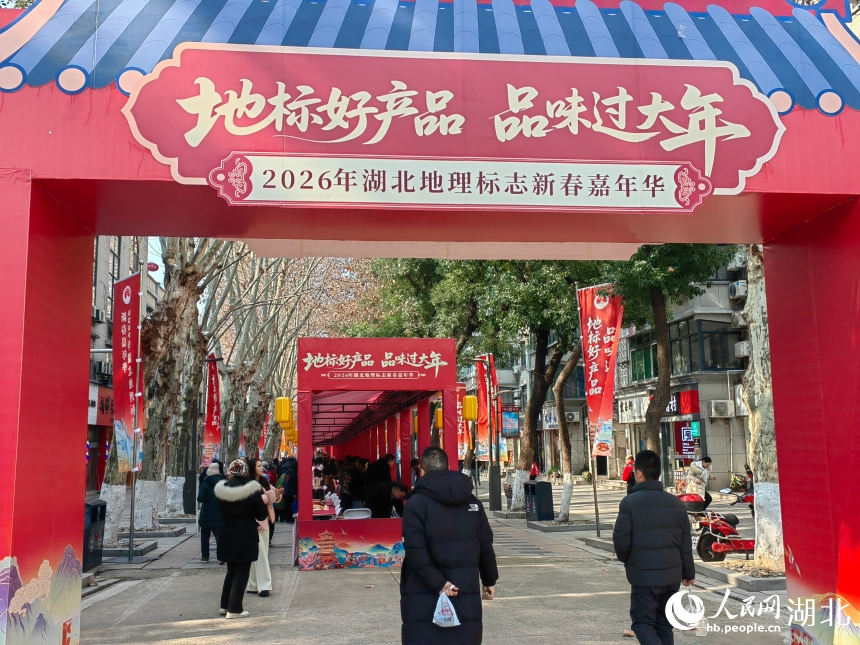
Group 1 - The "2026 Hubei Geographical Indication Carnival" commenced in Wuhan on January 23, featuring 105 geographical indication agricultural products from 123 enterprises across 17 cities in Hubei, aimed at igniting consumer enthusiasm for local products during the festive season [2] - The event showcased popular local products such as the golden, juicy Zhi Gui navel oranges and the tender Hongshan vegetable, which became sought-after items for the New Year celebrations, with long queues forming at various stalls [2] - The carnival combined culinary experiences with cultural education, featuring interactive sessions and informative displays that revealed the quality stories and identity markers behind geographical indications, as well as tourism routes linked to local specialties [2] Group 2 - The live broadcast area next to the main stage was lively, with local officials promoting their hometown products, effectively bridging the gap between geographical indication products and consumers through storytelling [3] - The event, running until January 24, serves as a comprehensive celebration of local culture and commerce, contributing to rural revitalization and enhancing the Hubei brand [3] - Participants expressed that bringing home geographical indication products enriched their festive experience, highlighting the cultural significance and authenticity of Hubei flavors [3]

高原特产走向全球
Jing Ji Ri Bao· 2026-01-24 22:00
Core Insights - Qinghai's foreign trade is experiencing rapid growth, with total import and export value reaching 7.07 billion yuan in 2025, an increase of 17.6%, and exports amounting to 6.19 billion yuan, up by 41.9% [1] - The lithium battery sector has emerged as a key driver, with exports soaring to 2.99 billion yuan, a staggering increase of 380%, making it the province's largest export product [1] - Agricultural products from Qinghai are also thriving, with exports reaching 750 million yuan, marking a historical high, driven by the appeal of highland green and organic labels [2] Industry Performance - The lithium battery exports are attributed to the booming electric vehicle industry, showcasing Qinghai's rich lithium resources [1] - Salt lake chemical products also performed well, with total exports of 860 million yuan, a growth of 80.2%, particularly in magnesium products which saw over 100% growth [1] - The province has implemented tailored services for businesses, including "one enterprise, one policy" strategies, enhancing support for companies in key industries [2] Market Expansion - Qinghai's products are now reaching 122 countries and regions, with over 80% of exports going to countries involved in the Belt and Road Initiative [3] - The province has increased its international freight train services to 187 trains in 2025, a growth of 38.5%, facilitating the export of bulk commodities and reducing logistics costs [2] - The province aims to double its total import and export value by 2030, focusing on enhancing industry specialization, innovation, and sustainability [3]
市政协委员刘久刚:破解产业堵点,为区域经济注入民生动能
Bei Jing Shang Bao· 2026-01-24 10:30
Group 1 - The "Jinghua Discussion Hall" initiative has conducted 230 diverse consultation activities across 16 districts in Beijing, engaging over 10,000 participants including national, municipal, and district committee members and representatives from various sectors [1] - The Huairou District has organized 13 activities focusing on themes such as elderly care, agricultural product sales, and the development of the private economy, aiming to address urgent community needs and provide practical policy suggestions [1] - A collaborative platform was established to address the issue of unsold agricultural products post-disaster, facilitating unified procurement and sales agreements for chestnuts in affected areas, while promoting a model that integrates agriculture, cultural creativity, and e-commerce [1] Group 2 - In the realm of private economic development, committee members engaged in face-to-face discussions with government departments and business representatives to reach consensus on topics such as cost reduction, policy support, and extending industrial chains, resulting in actionable recommendations [1]
2026北京两会丨市政协委员刘久刚:破解产业堵点,为区域经济注入民生动能
Bei Jing Shang Bao· 2026-01-24 10:16
Group 1 - The "Jinghua Discussion Hall" initiative has conducted 230 diverse consultation activities across 16 districts in Beijing, engaging over 10,000 participants including national, municipal, and district committee members as well as representatives from various sectors [1][1][1] - In Huairou District, 13 activities were held focusing on themes such as elderly care, agricultural product sales, and the development of the private economy, aiming to address urgent community needs and provide practical policy suggestions [1][1][1] - A collaborative platform was established to address the issue of unsold agricultural products post-disaster, facilitating unified procurement and sales agreements for chestnuts in affected areas, while promoting a model that integrates agriculture, cultural creativity, and e-commerce [1][1][1] Group 2 - In the realm of private economic development, consultations were held between committee members and representatives from relevant departments and enterprises, focusing on cost reduction, policy support, and the extension of industrial chains, resulting in actionable recommendations [1][1][1]