
医美

Search documents
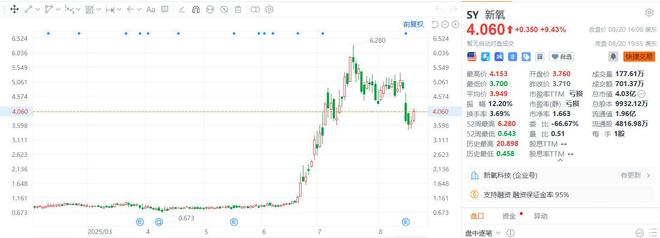
美股异动丨新氧收涨9.43%,Q2医美诊疗服务营收暴增426.1%
Ge Long Hui· 2025-08-21 01:03
Core Viewpoint - The company, Xinyang (SY.US), experienced a significant stock increase of 9.43%, closing at $4.06, with a total market capitalization of $403 million. The Q2 2025 financial report indicates robust growth in the company's revenue, particularly in its offline light medical beauty segment, which has become the largest revenue source for the company [1]. Financial Performance - In Q2 2025, the company achieved total revenue of 379 million yuan [1]. - The revenue from medical beauty treatment services reached 144 million yuan, reflecting a year-on-year growth rate of 426.1% [1]. Business Expansion - The number of medical beauty clinics under the light medical beauty chain brand "Xinyang Youth Clinic" has increased to 33 [1]. - The company's Chairman and CEO, Jin Xing, stated that there will be an increased density of Xinyang Youth Clinics in major cities such as Beijing and Guangzhou, with an expectation to reach 50 clinics by the end of the year [1].


新氧20250820
2025-08-20 14:49
Summary of the Conference Call for Xinyang Company Overview - **Company**: Xinyang - **Industry**: Medical Aesthetics Key Points and Arguments Financial Performance - In Q2, Xinyang recorded 67,000 service transactions and 155,000 treatment projects, with over 100,000 active users, indicating strong user engagement [2][3] - Despite an increase in net profit loss, revenue from the chain business grew by 46% quarter-over-quarter, reflecting improved operational efficiency [2][5] - The net profit loss in Q2 was primarily due to overspending in upstream and platform operations, with a total operational loss of approximately 3 million yuan more than Q1 [5] Business Strategy - Xinyang's strategy focuses on expanding its chain business in major cities while optimizing operational costs and improving efficiency [4][13] - The company plans to streamline its POP business and reduce SKUs to enhance consumer decision-making in selecting medical aesthetic institutions [20] - Xinyang aims to maintain a balance between short-term capital investment and long-term strategy by controlling costs and ensuring the chain business achieves profitability [5][23] Market Position and User Demographics - The core target demographic for Xinyang is middle-class middle-aged women, primarily seeking light medical aesthetic anti-aging services [2][8] - The company is exploring new service categories, such as nutritional drip projects, leveraging its existing user base to minimize marketing costs [8] Competitive Advantage - Xinyang employs a high-low product strategy, offering both proprietary and mainstream market products to build consumer trust and gradually shift users to its own products [9][10] - The company has successfully positioned its products, such as Fortinasti, as cost-effective alternatives to mainstream offerings [10] Growth Potential - Despite Q3 typically being a slow season for the medical aesthetics industry, Xinyang's chain business continues to show high growth, primarily driven by existing stores [11] - The company is focused on increasing the proportion of core hero products in its service offerings, which currently stands at over 30% [5] Supply Chain and Product Development - Xinyang has signed contracts with new upstream suppliers to significantly reduce product procurement costs, enhancing gross margins [7] - The company anticipates that self-developed products, such as the three-category water light and future products, will further reduce costs and increase profit margins [7] Expansion Strategy - Xinyang's expansion strategy in first-tier cities involves increasing store density in key shopping areas to lower customer acquisition and operational costs [4][13] - The company plans to adopt a saturation attack strategy in second-tier cities, expanding its presence to enhance operational advantages and brand effect [16] Operational Efficiency - The operational model of Xinyang differs from traditional medical aesthetic institutions, relying on a strong central management system to streamline operations across multiple locations [19] - The company expects mature stores in first-tier cities to achieve monthly revenue of 7,000 yuan per square meter, with potential for higher performance in select locations [24][27] Future Outlook - Xinyang's cash reserves are currently sufficient to support future expansion without immediate plans for refinancing [23] - The company is optimistic about further improving revenue per square meter through flexible pricing strategies and new product launches [27] Additional Important Insights - The medical aesthetics industry allows for premium pricing as customer willingness to pay for quality treatments remains high [3][6] - Xinyang's focus on user retention and satisfaction metrics, such as repurchase rates and active user counts, is critical for long-term success [3][5]
爱美客(300896):2025年半年报点评:短期业绩承压,关注国际化并购与新品管线
Minsheng Securities· 2025-08-20 13:37
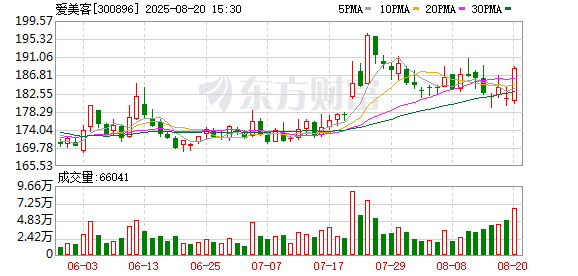
Investment Rating - The report maintains a "Recommended" rating for the company, with a current price of 188.50 CNY [6][11]. Core Insights - The company experienced short-term performance pressure, with H1 2025 revenue of 1.299 billion CNY, down 21.59% year-on-year, and a net profit of 789 million CNY, down 29.57% year-on-year [1]. - The company has a rich pipeline of products under development, including 12 approved Class III medical devices and new products in the biopharmaceutical and chemical drug sectors, which are expected to drive sustainable growth [2]. - The company is undergoing an internationalization transformation through acquisitions, notably acquiring 85% of Korean REGEN for 190 million USD, which will enhance its global presence and production capacity [4]. Financial Performance Summary - In H1 2025, the company's gross margin was 93.44%, a decrease of 1.48 percentage points year-on-year, with a net profit margin of 60.77%, down 6.88 percentage points year-on-year [3]. - Revenue projections for 2025-2027 are 3.213 billion CNY, 3.574 billion CNY, and 4.263 billion CNY, with corresponding net profits of 2.048 billion CNY, 2.303 billion CNY, and 2.778 billion CNY, reflecting growth rates of 4.6%, 12.4%, and 20.6% respectively [5][8]. - The company’s PE ratios for 2025, 2026, and 2027 are projected to be 28X, 25X, and 21X respectively, indicating a favorable valuation trend [4][5].
透视半年报|医美茅爱美客承压:营收净利双降 子公司涉重大仲裁
Xin Jing Bao· 2025-08-20 12:59
Core Viewpoint - Aimeike, one of the "three swordsmen" in the medical beauty industry, is experiencing a decline in both revenue and net profit, indicating a significant shift in its business performance and market position [1][2]. Financial Performance - For the first half of 2025, Aimeike reported a revenue decrease of 21.59% to 1.299 billion yuan and a net profit drop of 29.57% to approximately 789 million yuan [1]. - The company's cash flow from operating activities also fell by 43.05%, reflecting pressure on profit quality [1]. - In contrast, from 2020 to 2023, Aimeike had previously shown strong growth, with revenues increasing from 709 million yuan in 2020 to 2.869 billion yuan in 2023, and net profits rising from 440 million yuan to 1.858 billion yuan during the same period [2]. Product Performance - The revenue from solution-type injection products decreased by 23.79% to 744 million yuan, while the revenue from gel-type injection products fell by 23.99% to 493 million yuan in the first half of 2025 [4][5]. - The gross margin for solution-type products was 93.15%, and for gel-type products, it was 97.75%, both showing slight declines compared to the previous year [4]. Market Competition - The medical beauty industry is facing increased competition as more injection products receive regulatory approval, leading to a shift from scale expansion to a focus on quality and effectiveness [3][5]. - Aimeike's core products are currently in a transitional phase, which is impacting overall performance [5]. Legal Challenges - Aimeike's subsidiary Regen is involved in a significant arbitration case regarding the exclusive distribution rights of the "AestheFill" product, which could result in a potential claim of 1.6 billion yuan [8][9]. - The arbitration stems from a dispute with a partner company over the distribution rights, which could affect Aimeike's future product strategy and market positioning [9].

医美茅爱美客承压:营收净利双降、子公司涉16亿代理权仲裁案
Xin Jing Bao· 2025-08-20 12:02
Core Viewpoint - Aimeike (300896), one of the "three swordsmen" in the medical beauty industry, is experiencing a decline in performance, with both revenue and net profit decreasing significantly in the first half of 2025, indicating potential challenges ahead for the company [1][2]. Financial Performance - In the first half of 2025, Aimeike reported a revenue of 1.299 billion yuan, a year-on-year decrease of 21.59%, and a net profit of approximately 789 million yuan, down 29.57% [1]. - The company's cash flow from operating activities also fell by 43.05%, indicating pressure on profit quality [1]. - Aimeike's revenue growth slowed significantly in 2024, with a mere 5.45% increase to 3.026 billion yuan and a net profit growth of 5.33% to approximately 1.958 billion yuan [2]. Product Performance - The company's solution and gel injection products have seen a substantial decline, with solution products generating 744 million yuan in revenue, down 23.79%, and gel products at 493 million yuan, down 23.99% [4]. - The decline in revenue is attributed to increased competition and a shift in the industry towards quality and effectiveness, as more medical beauty injection products receive regulatory approval [3][4]. Market Competition - The medical beauty market is becoming increasingly competitive, with more approved products providing consumers with a wider range of compliant options [3]. - Aimeike's core products are facing challenges due to the introduction of competing products, such as the "Renzhi·Gegge" injection launched by Huaxi Biological, which directly competes with Aimeike's "Haitai" [4]. Legal Challenges - Aimeike's subsidiary Regen is involved in a significant arbitration case regarding the agency rights for the "AestheFill" product, which could result in a claim of 1.6 billion yuan [1][8]. - The arbitration stems from a dispute over the exclusive sales rights for AestheFill, with potential implications for Aimeike's future product strategy and market positioning [7][8].
爱美客(300896):25H1业绩阶段性承压 看好管线落地及出海空间
Xin Lang Cai Jing· 2025-08-20 08:40
Core Viewpoint - The company reported a significant decline in revenue and net profit for the first half of 2025, indicating challenges in the industry due to slowing growth and increased competition [1][2]. Financial Performance - For H1 2025, the company achieved a revenue of 1.299 billion yuan, down 21.59% year-on-year; net profit attributable to shareholders was 789 million yuan, down 29.57% year-on-year; and net profit excluding non-recurring items was 722 million yuan, down 33.70% year-on-year [1]. - In Q2 2025, revenue was 636 million yuan, down 25.11% year-on-year; net profit attributable to shareholders was 346 million yuan, down 41.75% year-on-year; and net profit excluding non-recurring items was 320 million yuan, down 42.83% year-on-year [1]. Profitability Metrics - The gross margin for H1 2025 was 93.44%, a decrease of 1.48 percentage points year-on-year; the net profit margin attributable to shareholders was 60.77%, down 6.88 percentage points year-on-year [2]. - In Q2 2025, the gross margin was 93.00%, down 2.26 percentage points year-on-year; the net profit margin attributable to shareholders was 54.38%, down 15.53 percentage points year-on-year [2]. Expense Ratios - The sales expense ratio for H1 2025 was 11.10%, an increase of 2.58 percentage points year-on-year; the management expense ratio was 5.34%, up 1.25 percentage points year-on-year; and the R&D expense ratio was 12.05%, up 4.46 percentage points year-on-year [2]. - In Q2 2025, the sales expense ratio was 12.39%, up 3.70 percentage points year-on-year; the management expense ratio was 5.99%, up 1.88 percentage points year-on-year; and the R&D expense ratio was 15.42%, up 7.38 percentage points year-on-year [2]. Product Performance - Revenue from solution-type injection products in H1 2025 was 744 million yuan, down 23.79% year-on-year, accounting for 57.27% of total revenue; gross margin was 93.15%, down 0.83 percentage points year-on-year [2]. - Revenue from gel-type injection products was 493 million yuan, down 23.99% year-on-year, accounting for 37.97% of total revenue; gross margin was 97.75%, down 0.23 percentage points year-on-year [2]. - Revenue from freeze-dried powder injection products was 19 million yuan, accounting for 1.50% of total revenue; revenue from facial implant lines was 3 million yuan, down 4.56% year-on-year, accounting for 0.26% of total revenue [2]. Other Income - Other income amounted to 39 million yuan, an increase of 38.88% year-on-year, accounting for 3.01% of total revenue [3]. R&D and Pipeline - The company has a strong R&D pipeline, with products such as botulinum toxin type A and minoxidil lotion submitted for review, and a local anesthetic cream application accepted for listing; other products are in clinical trials, which are expected to strengthen the company's leading position in the medical aesthetics sector [4]. Strategic Acquisition - The company completed the payment for 95% of the transaction price for the acquisition of South Korean REGEN, a key move in its internationalization strategy, which is expected to enhance its leading position in the medical aesthetic injection market and facilitate overseas business expansion [5]. Future Outlook - The company has adjusted its revenue and profit forecasts for 2025-2027 due to industry slowdown and increased competition, projecting revenues of 2.724 billion yuan, 3.190 billion yuan, and 3.715 billion yuan, and net profits of 1.630 billion yuan, 1.942 billion yuan, and 2.343 billion yuan for the respective years [5].
天风证券给予爱美客买入评级
Mei Ri Jing Ji Xin Wen· 2025-08-20 08:30
Group 1 - The core viewpoint of the report is that Tianfeng Securities has given a "buy" rating for Aimeike (300896.SZ) based on its recent performance and future potential [2] - Aimeike's R&D investment continues to increase, indicating a commitment to innovation despite profit pressures [2] - The industry is experiencing a slowdown in growth and intensified competition, which is affecting the growth rate of Aimeike's core products [2] Group 2 - Aimeike has a rich pipeline reserve and strong R&D capabilities, positioning the company well for future developments [2] - The acquisition of South Korean company REGEN opens up new international market opportunities for Aimeike [2]

“医美茅”爱美客上市后首现营利双降
Sou Hu Cai Jing· 2025-08-20 07:05
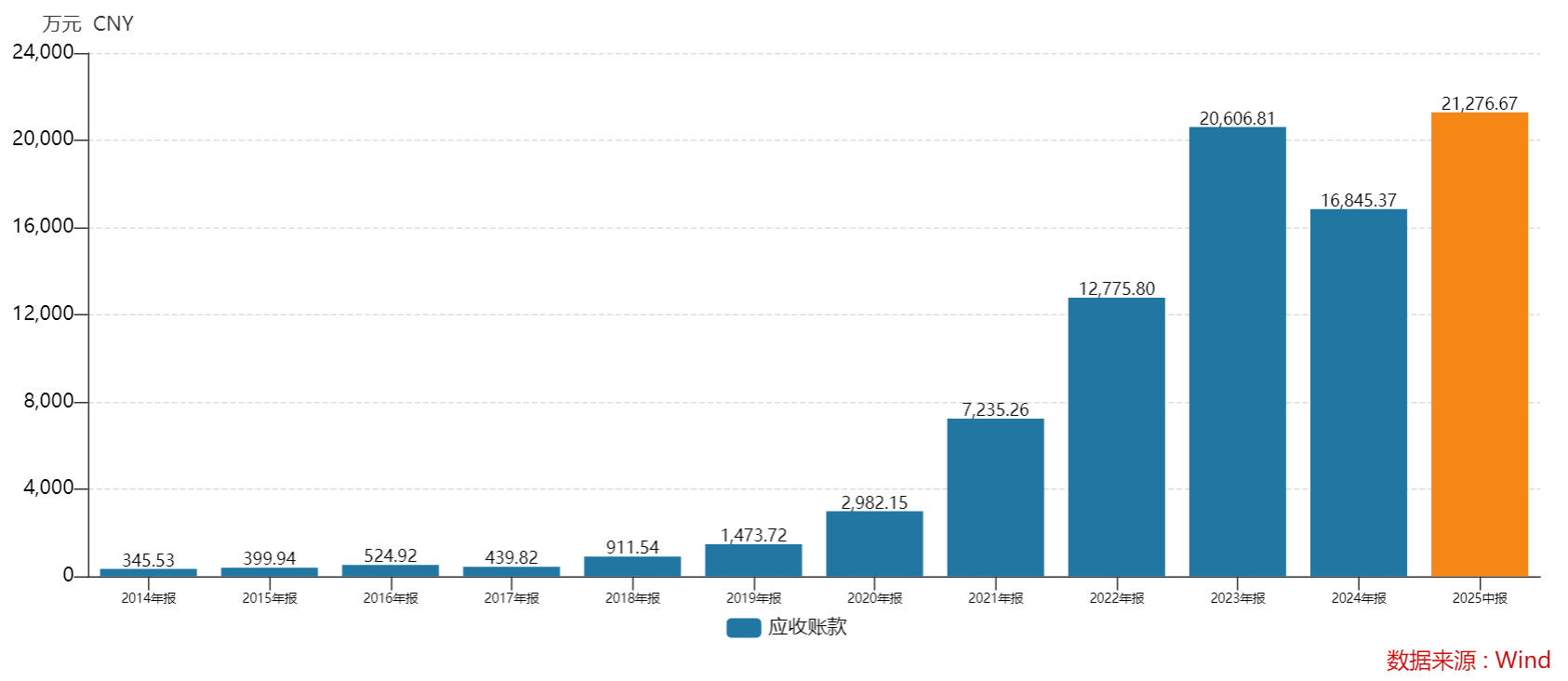
Core Viewpoint - The beauty business, particularly in the medical aesthetics sector, is facing significant challenges, as evidenced by the declining performance of major players like Aimeike, which reported substantial drops in revenue and profit in the first half of 2025 [1][6]. Financial Performance - Aimeike's revenue for the first half of 2025 was 1.299 billion yuan, a year-on-year decrease of 21.59% [1] - The net profit attributable to shareholders was 789 million yuan, down 29.57% year-on-year [1] - The net profit after deducting non-recurring items was 722 million yuan, a decline of 33.7% [1] - Operating cash flow net amount was 655 million yuan, a significant drop of 43.06% [1] - In Q2 alone, revenue fell by 25.11% and net profit dropped by 41.75% year-on-year [1] Inventory and Receivables - Aimeike's accounts receivable reached a historical high of 213 million yuan by the end of June, an increase of 26.79% from the end of the previous year [1][5] - Inventory also hit a record high of 82 million yuan by the end of June [3] - The simultaneous rise in accounts receivable and inventory indicates challenges in product sales and suggests that the company's performance has not yet bottomed out [5] Industry Context - The entire medical aesthetics industry is experiencing a downturn, with competitors like Huaxi Biological also reporting significant declines, including a 58.13% drop in net profit in Q1 [6] Strategic Acquisitions - Aimeike announced the acquisition of 85% of South Korean REGEN for $190 million, aiming to expand its product offerings with "童颜针" (youthful needle) products [7][8] - REGEN is recognized for its AestheFill and PowerFill products, which are expected to complement Aimeike's existing product matrix [8] Legal Challenges - Following the acquisition, REGEN faced legal issues with a previous distributor, 达透医疗, which is seeking 1.6 billion yuan in damages due to alleged breaches of contract [11][13] - If the arbitration favors 达透医疗, Aimeike's cash reserves could drop below 1.5 billion yuan [13] Research and Development - Despite the declining performance, Aimeike increased its R&D investment to 1.566 billion yuan, a year-on-year increase of 24.47%, marking a record high for the period [14] - Ongoing projects include traditional medical aesthetic products as well as new weight loss and hair regeneration products [15] Market Expansion Efforts - In response to the industry's downturn, Aimeike is actively seeking to expand into new markets [16]
爱美客深陷“内忧外患”:核心产品遭围剿,并购标的遇仲裁且面临16亿元索赔
Zheng Quan Zhi Xing· 2025-08-20 02:13
Core Viewpoint - The growth myth of Aimeike (300896.SZ), known as the "beauty medical king," is collapsing as the company faces significant revenue and profit declines amid intensified competition in the medical aesthetics industry [1][2][3]. Financial Performance - In the first half of this year, Aimeike's revenue dropped by 21.59% to 1.299 billion yuan, and net profit attributable to shareholders fell by 29.57% to 789 million yuan, marking the first time the company experienced a dual decline in mid-year performance since its listing [3][4]. - The second quarter saw a dramatic decline in net profit, plummeting by 41.75% to 346 million yuan, with revenue down 25.11% to 636 million yuan [3][4]. - Aimeike's cash flow from operating activities also showed a warning sign, decreasing by 43.06% from 1.15 billion yuan in the same period last year to 655 million yuan [3]. Market Competition - The medical aesthetics industry is entering a fully competitive phase, with numerous new entrants, including Huaxi Biological, which has disrupted Aimeike's monopoly on its flagship product "Haitai" [1][5]. - The core product "Haitai," which was once the market leader, is now facing declining sales and market share due to increased competition and the introduction of new products [5][6]. Product Performance - Aimeike's solution injection products generated revenue of 744 million yuan in the first half of the year, a decline of 23.79% year-on-year, primarily due to intensified industry competition [4][6]. - The revenue from gel injection products, represented by "Ruhua Tianzi," also showed signs of slowing growth, with a 23.99% decline in the first half of the year [6]. Strategic Moves - To overcome growth bottlenecks, Aimeike invested heavily in acquiring the Korean company REGEN, aiming to enter the "youthful needle" market [1][7]. - However, the acquisition has led to a significant arbitration dispute over agency rights, with potential financial implications of up to 1.6 billion yuan [8][9]. Industry Outlook - According to a report, the Chinese medical aesthetics industry is expected to experience continuous market growth but with a slowdown in growth rates, indicating a strategic transition from scale expansion to value reconstruction [5].
万和财富早班车-20250820
Vanho Securities· 2025-08-20 01:46
Core Insights - The report highlights the rapid growth in the AI and manufacturing sectors, with specific initiatives launched in Shanghai and Guangdong to promote technological advancements [5]. - The DRAM market has reached a historical quarterly high, indicating strong demand and growth potential in the semiconductor industry [7]. - Several companies have reported significant financial results, showcasing both growth and challenges within their respective sectors [9]. Domestic Financial Market - The report notes a mixed performance in the financial market, with major indices experiencing slight declines despite a high trading volume of 2.59 trillion yuan [11]. - AI hardware stocks remain strong, with Industrial Fulian hitting a record high, while other sectors like military and insurance are undergoing adjustments [11]. Industry Latest Developments - OCP has announced the establishment of a light exchange project, with related stocks including Saiwei Electronics and Lingyun Optics [7]. - The report mentions breakthroughs in manned lunar exploration, with companies like Tianyin Machinery and Aerospace Electronics being highlighted [7]. Company Focus - Weilan Lithium Chip reported a total revenue of 3.727 billion yuan and a net profit of 333 million yuan, marking a 99.09% year-on-year increase [9]. - Zhifei Biological experienced a significant revenue drop of 73.06%, resulting in a net loss of 597 million yuan [9]. - Aimeike achieved a revenue of 1.299 billion yuan with a net profit of 789 million yuan, proposing a dividend of 12 yuan per share [9]. - Shengquan Group reported a revenue of 5.351 billion yuan and a net profit increase of 51.19% [9].


