
电网设备

Search documents
趋势仍在,结构再平衡
Ge Long Hui· 2026-01-11 22:55
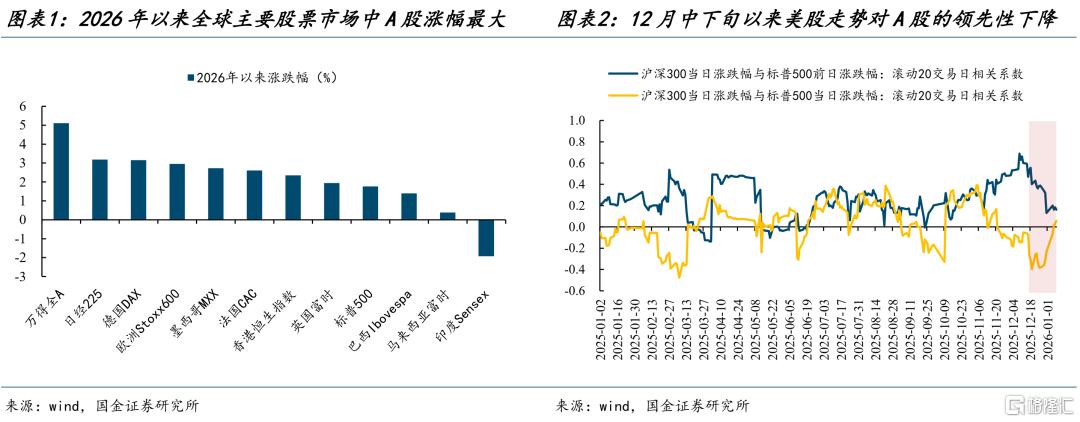
Group 1 - The recent improvement in market liquidity has driven the A-share market's rise, with a notable increase in margin trading balance by over 125 billion yuan in just half a month, leading to a more than 35% increase in trading volume [2][8] - Historical data indicates that similar market conditions have occurred six times in the past decade, with a high probability of continued strength in the A-share market over the next 10, 20, and 250 trading days following such volume increases [9][12] - However, there are signs of structural overheating, particularly in the commercial aerospace index, which has seen a significant increase in turnover rate and trading volume share, indicating a need for fundamental support for such rapid trading concentration [2][9] Group 2 - The negative impact of AI on the U.S. employment market is becoming evident, with December's non-farm payrolls falling short of expectations and a cumulative reduction of 340,000 jobs in sectors heavily affected by AI [3][15] - The ongoing concerns about a prolonged interest rate cut cycle by the Federal Reserve are alleviating fears of a second inflation wave, benefiting commodity prices as the demand-supply gap becomes more pronounced [3][23] - The geopolitical tensions are altering inventory behaviors among market participants, leading to increased stockpiling and a significant rise in copper and silver inventories since 2025 [24][27] Group 3 - Domestic policies aimed at reducing "involution" are being implemented, with industrial PPI showing a positive trend, indicating a shift from price drag to support for corporate revenues [4][35] - The recent regulatory focus on the photovoltaic industry has raised concerns about the commitment to anti-involution policies, but the overall direction remains focused on improving corporate profitability through reasonable policy guidance [4][40] - The market is expected to see improvements in corporate earnings as the anti-involution policies take effect, with a focus on preventing monopolistic practices while fostering innovation [4][42] Group 4 - The report maintains an optimistic outlook for the A-share market, suggesting that the ongoing liquidity improvements and fundamental changes will drive future performance [5][43] - Recommendations include focusing on industrial resource products that resonate with AI investments and global manufacturing recovery, as well as sectors benefiting from domestic consumption recovery [5][43]

A股策略周报20260111:趋势仍在,结构再平衡-20260111
SINOLINK SECURITIES· 2026-01-11 13:41
Group 1: Market Liquidity and A-Share Performance - The improvement in market liquidity has been a direct catalyst for the recent rise in A-shares, with margin trading balances increasing by over 125 billion yuan in just half a month, leading to a more than 35% increase in trading volume across the A-share market [3][13][22] - Historical data shows that similar situations, where the A-share market rose by nearly 10% over 16 trading days with trading volume expanding by over 30%, have occurred six times in the past decade, predominantly at the beginning of the year [3][18][22] - The recent surge in the commercial aerospace index has led to a significant increase in turnover rates and trading volume proportions, indicating a potential structural overheating in the market [3][22] Group 2: AI Impact on Employment and Economic Policy - The U.S. job market continues to face pressure, with December's non-farm payrolls adding only 50,000 jobs, below expectations, and a downward revision of 76,000 jobs for October and November [4][26][33] - The adoption of AI by large U.S. companies has significantly suppressed employment growth, particularly in the information, finance, and professional services sectors, which have collectively lost 344,000 jobs over the past three years [4][26][33] - The Federal Reserve's extended rate-cutting cycle is expected to benefit commodity markets, as inflation concerns related to AI investments are easing [4][40][41] Group 3: Domestic Economic Recovery and Policy Optimization - The Producer Price Index (PPI) for industrial enterprises in December showed a year-on-year increase, indicating a shift from price drag to price support for corporate revenues [5][56] - The Consumer Price Index (CPI) has also risen, with the core CPI maintaining its highest level in five years, reflecting a smoother transmission of prices from enterprises to consumers [5][56] - The ongoing anti-involution policies are expected to enhance corporate profitability, with regulatory measures aimed at preventing monopolistic practices and promoting fair competition [5][62] Group 4: Rebalancing and Investment Recommendations - The report suggests a positive outlook for A-shares, driven by improved liquidity and favorable domestic and international economic conditions [6][63] - Recommended investment areas include industrial resource products like copper, aluminum, and lithium, as well as sectors benefiting from the recovery of domestic manufacturing and consumer spending [6][63] - The report emphasizes the importance of capturing opportunities in sectors such as aviation, duty-free, and food and beverage, which are expected to benefit from increased consumer income and tourism recovery [6][63]
国金策略:趋势仍在,结构再平衡
Sou Hu Cai Jing· 2026-01-11 10:59
Group 1 - The recent improvement in market liquidity has driven the A-share market's rise, with historical patterns suggesting a strong performance in the upcoming period [1][5] - The A-share market has seen a significant increase in trading volume, with a 35% growth in total trading volume and a 10% rise in the overall A-share index over the past 16 trading days [2][14] - There is a notable structural overheating in the market, particularly in the commercial aerospace index, which has seen a sharp increase in turnover and trading volume [2][14] Group 2 - AI's negative impact on the U.S. employment market is becoming evident, with December's non-farm payrolls falling short of expectations and a downward revision of previous months' data [3][20] - The prolonged interest rate cut cycle by the Federal Reserve is expected to benefit commodity markets, as the demand for resources related to AI and new energy industries is increasing [3][33] - Geopolitical tensions are altering inventory behaviors among market participants, leading to increased stockpiling and a rise in copper and silver inventories [3][35] Group 3 - Domestic policies aimed at reducing "involution" are being implemented, with industrial prices showing signs of recovery, leading to improved corporate profitability [4][43] - The recent regulatory focus on the photovoltaic industry has raised concerns about the commitment to anti-involution policies, but the overall direction remains focused on improving corporate fundamentals [4][49] - The government is actively working on regulatory frameworks to support innovation while preventing monopolistic practices, which is expected to enhance corporate profitability in the long run [4][51] Group 4 - The report maintains an optimistic outlook for the A-share market, suggesting that the combination of improved liquidity, AI investments, and domestic policy support will lead to a favorable investment environment [5][52] - Recommended sectors include industrial resource products like copper, aluminum, and lithium, as well as equipment exports and consumer sectors benefiting from recovery trends [5][52]
冲刺5000点,韩国股市“开年红”,李在明能否推动经济回暖
Di Yi Cai Jing· 2026-01-09 09:26
Group 1 - The Korean stock market has shown strong performance at the beginning of 2026, with the KOSPI index breaking the 4600-point mark and closing at 4586.32 points on January 9, up 33.95 points from the previous day [1] - President Lee Jae-myung's commitment to improve corporate governance and modify business laws aims to push the KOSPI index above 5000 points, with analysts suggesting this could happen within the month [1] - The rise in the KOSPI index is significantly driven by the AI boom and the recovery of the semiconductor industry, with major companies like Samsung Electronics reporting substantial profit increases [3] Group 2 - The Korean government has implemented economic measures, including a 150 trillion won fund to stimulate high-tech industry innovation, addressing economic stagnation and aging population issues [4] - Reports indicate that the KOSPI index's rise is not solely due to tech stocks, as non-tech sectors like nuclear power and defense are also contributing to long-term growth trends [3] - Despite the positive outlook, concerns about potential AI bubbles and capital outflow risks have been raised, with foreign investment in the Korean stock market reaching a six-year high [5][7] Group 3 - Economic forecasts for Korea suggest a GDP growth target of over 2% for 2026, with optimistic predictions from Citibank indicating a potential growth rate of around 2.2% [6] - The implementation of new regulations and reforms is expected to be crucial for corporate performance in the latter half of the year, as most reforms will take effect then [6] - A survey indicates that many large Korean companies plan to reduce domestic investments and increase overseas spending starting in 2026, raising concerns about capital outflow [7]
冲刺5000点!韩国股市“开年红”,李在明能否推动经济回暖
Di Yi Cai Jing· 2026-01-09 08:30
Group 1 - The KOSPI index has shown strong performance since the beginning of 2026, breaking through the 4600-point mark and closing at 4586.32 points on January 9, 2026, with a rise of 33.95 points from the previous day [1] - President Lee Jae-myung's commitment to improve corporate governance and amend business laws aims to push the KOSPI index to exceed 5000 points, with analysts suggesting this could happen within the month [1] - The AI boom is identified as a significant driver of the current rise in the KOSPI index, with Goldman Sachs highlighting a new demand cycle driven by AI and the end of semiconductor inventory depletion as key factors [3] Group 2 - Samsung Electronics reported a substantial increase in its Q4 2025 operating profit, up 208.2% year-on-year, and a 22.7% increase in sales, indicating strong performance in the semiconductor sector [3] - The South Korean government has initiated a 150 trillion KRW fund to stimulate innovation in high-tech industries, addressing economic stagnation and an aging population [5] - UBS notes that the rise in the KOSPI index is not solely due to tech stocks, as momentum stocks in sectors like nuclear power and defense are also contributing to long-term growth trends [3] Group 3 - The South Korean government has set a GDP growth target of over 2% for 2026, aiming to make it a year of significant economic advancement [6] - Citibank forecasts that South Korea's economy could achieve a balanced state between overheating and cooling, with a growth rate of around 2.2% in 2026, supported by strong semiconductor exports and low energy prices [6] - Concerns about capital outflow are rising, as many large South Korean companies plan to reduce domestic investments and increase overseas spending starting in 2026, potentially adding pressure to the local economy [7]
电网ETF(561380)涨超2.3%,国家电网明确加大电网投资力度
Mei Ri Jing Ji Xin Wen· 2026-01-09 04:32
Core Insights - The National Grid has announced an increase in investment in the power grid, indicating a sustained high demand in the domestic electricity sector [1] - The government has issued guidelines to promote high-quality development of the power grid, aiming to establish a new grid platform by 2030 that includes a main distribution network and supplementary microgrids [1] Investment and Development Goals - The target includes a "West-to-East Power Transmission" capacity exceeding 420 million kilowatts and an additional inter-provincial power mutual assistance capacity of 40 million kilowatts [1] - The goal is to support renewable energy generation to account for approximately 30% of total power generation and to accommodate distributed renewable energy capacity of 900 million kilowatts [1] Technological Advancements - The initiative will also promote the flexible and intelligent transformation of distribution networks, supporting the construction of distributed independent energy storage and grid-replacement energy storage [1] - There will be a focus on developing technologies for the coordinated planning and operational scheduling of main distribution microgrids, with pilot projects for 100% renewable energy large bases for long-distance transmission [1] Regional Developments - Inner Mongolia aims to achieve a grid-connected energy storage scale of over 45 GWh by 2025 [1] - Gansu has introduced a compensation mechanism for energy storage capacity, with a compensation standard set at 330 yuan per kW per year, supporting the construction of a new power system [1] ETF Performance - The Electric Grid ETF (561380) rose over 2.3%, tracking the Hang Seng A-share Electric Grid Equipment Index, which covers various sub-industries including electronic equipment, instruments, and components [1]
电网设备板块1月8日涨0.77%,和顺电气领涨,主力资金净流出15.81亿元
Zheng Xing Xing Ye Ri Bao· 2026-01-08 08:56
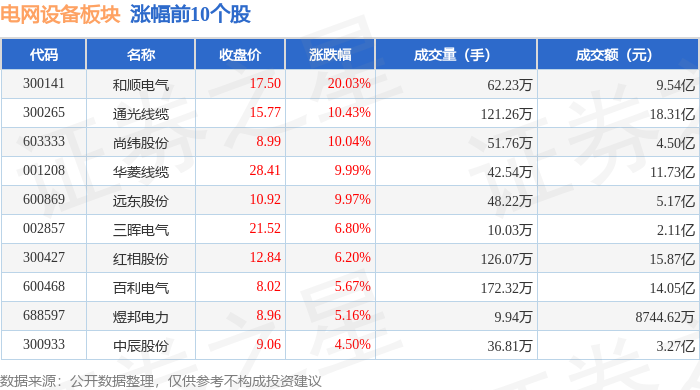
Market Overview - The grid equipment sector increased by 0.77% compared to the previous trading day, with HeShun Electric leading the gains [1] - The Shanghai Composite Index closed at 4082.98, down 0.07%, while the Shenzhen Component Index closed at 13959.48, down 0.51% [1] Stock Performance - HeShun Electric (300141) closed at 17.50, up 20.03% with a trading volume of 622,300 shares and a transaction value of 9.54 billion [1] - Tongguang Cable (300265) closed at 15.77, up 10.43% with a trading volume of 1,212,600 shares and a transaction value of 18.31 billion [1] - Shangwei Co. (603333) closed at 66.8, up 10.04% with a trading volume of 517,600 shares and a transaction value of 4.50 billion [1] - Other notable performers include Huazhe Cable (001208) up 9.99%, Far East Holdings (600869) up 9.97%, and Sanhui Electric (002857) up 6.80% [1] Capital Flow - The grid equipment sector experienced a net outflow of 1.581 billion from institutional investors, while retail investors saw a net inflow of 1.941 billion [2] - The overall capital flow indicates a mixed sentiment, with institutional investors withdrawing funds while retail investors are actively buying [2] Individual Stock Capital Flow - HeShun Electric saw a net inflow of 777.28 million from retail investors, while institutional investors had a net outflow of 545.97 million [3] - Shangwei Co. had a net inflow of 900.82 million from institutional investors, indicating strong institutional interest despite overall sector outflows [3] - Other stocks like Hongxiang Co. (300427) and Baili Electric (600468) also showed varied capital flows, with significant retail participation [3]


每日市场观察-20260108
Caida Securities· 2026-01-08 05:37
Market Overview - On January 7, the Shanghai Composite Index recorded a slight increase of 0.05%, marking its 14th consecutive day of gains, while the Shenzhen Component rose by 0.06% and the ChiNext Index increased by 0.31%[4] - The total trading volume in the Shanghai and Shenzhen markets exceeded 2.88 trillion yuan, an increase of 492 billion yuan compared to the previous trading day[1] Sector Performance - The market saw a mixed performance across sectors, with industries such as coal, electronics, telecommunications, machinery, and power equipment experiencing gains[1] - Over 2,100 stocks rose, accounting for approximately 40% of the total stocks traded, indicating a healthy market breadth despite some technical adjustment signals emerging[1] Investment Trends - The core sectors of the computing power industry, including photolithography machines and storage chips, are showing strong market certainty due to robust demand and technological advancements[2] - The cyclical sectors, such as energy, controlled nuclear fusion, coal, and lithium carbonate, are also highlighted as recent star sectors, suggesting a coherent investment logic along technology and cyclical themes[2] Fundraising Activity - From January 5 to January 7, 38 new public funds were launched, with a total of 77 funds planned for issuance in January 2026, indicating a significant increase in fundraising activity[14] - The first trading week of January is expected to see 48 new products launched, representing 62.33% of the total planned for the month, with equity products dominating the new fund landscape[14] ETF Trading Volume - The total trading volume of ETFs in both markets reached 480.618 billion yuan, with stock ETFs accounting for 186.7 billion yuan and bond ETFs for 167.924 billion yuan[15]
【机构策略】逐步聚焦主线板块 把握好轮动节奏
Zheng Quan Shi Bao Wang· 2026-01-08 01:19
Group 1 - The core viewpoint is that the A-share market is experiencing a phase of consolidation after a period of gains, with expectations for continued upward movement supported by favorable macroeconomic conditions and policy outlooks [1][2]. - The Shanghai Composite Index showed narrow fluctuations, while the Shenzhen Component and ChiNext indices experienced initial gains followed by pullbacks, indicating a mixed performance across sectors [1]. - Key sectors such as coal, non-ferrous metals, and power equipment performed well, while shipbuilding, securities, jewelry, and education sectors lagged behind [1]. Group 2 - The market's attractiveness is bolstered by expectations of increased credit issuance and a supportive monetary policy stance, with a continued "moderately loose" approach anticipated [1]. - There is a prevailing expectation that the Federal Reserve will maintain a rate-cutting cycle through 2026, contributing to a more accommodative global liquidity environment [1]. - The overall market sentiment suggests that the bull market in A-shares is likely to persist, driven by structural changes in corporate earnings and the emergence of new economic forces [2].
特朗普称委内瑞拉石油收入只买美货
Xin Lang Cai Jing· 2026-01-07 23:01
Core Viewpoint - Venezuela has agreed to use its oil sales revenue exclusively for purchasing American-made goods, including agricultural products, pharmaceuticals, medical equipment, and infrastructure improvements for its energy facilities [1] Group 1 - Venezuela's commitment to allocate oil revenue for American goods indicates a potential shift in its economic strategy [1] - The types of goods specified for purchase include essential items such as food, medicine, and energy infrastructure, which could impact both the Venezuelan economy and U.S. exports [1] - There has been no official response from the Venezuelan government regarding this announcement, leaving the details of the agreement unclear [1]