创新药

Search documents
20cm速递|创业板医药ETF国泰(159377)飘红,创新药与AI驱动行业复苏预期升温
Mei Ri Jing Ji Xin Wen· 2026-01-06 05:56
Group 1 - The pharmaceutical and biotechnology industry in China is expected to experience a convergence of industrial, policy, and capital cycles by 2026, leading to a performance inflection point and valuation reconstruction for innovative drugs [1] - Key areas of focus include next-generation innovative therapies represented by ADCs, bispecific/multispecific antibodies, cell and gene therapies, and small nucleic acids [1] - The medical device industry is seeing a reduction in policy impact, with domestic companies achieving technological breakthroughs in high-end sectors and rapid growth in overseas market expansion, indicating potential performance recovery for related companies [1] Group 2 - The blood products market is witnessing continuous growth in demand and plasma collection, with a clear trend of resource concentration towards leading companies [1] - The Guotai medical ETF (159377) tracks the innovative pharmaceutical index (399275), which has a daily price fluctuation limit of 20%, focusing on companies engaged in biotechnology, genetic engineering, and the development of new vaccines and drugs [1]

“中国为世界注入‘稀缺的确定性’”
Guo Ji Jin Rong Bao· 2026-01-06 02:51
在全球经济面临诸多不确定性的背景下,国际主流媒体以及包括国际货币基金组织在内的国际机构对 2026年中国经济前景持积极预期,认为其增长韧性与转型动力将为世界注入宝贵的确定性。 经济增长预期积极 2026年中国经济的增长动力将从何而来?外媒的观察指向两个关键领域:内需市场的纵深发展和新质生 产力的蓬勃兴起。 欧洲《现代外交》杂志网站预测,随着中国促进形成更多由内需主导的经济发展模式,2026年中国经济 将在高科技、智能制造、绿色能源和服务消费等领域实现显著增长。 彭博社分析,在全球经济放缓的背景下,内需驱动将成为中国主要的增长引擎。 与此同时,中国的"新质生产力"成为国际观察家理解中国经济增长新动能的关键。英国天空新闻台阿拉 伯语频道认为,中国经济成就源于长期的产业规划和对高附加值产业的持续投入。 如果说政策与内需是经济的稳定器,那么创新则被外媒视为2026年中国经济最活跃的加速器。 英国《经济学人》在一篇探究中国迈向创新强国原因的文章中,特别关注了中国在自动驾驶和创新药两 个前沿领域的加速推进。文章认为,中国技术实力的增长,主要得益于产学研的深度融合以及国家顶层 设计的创新体系支持。 美国《纽约时报》则注意到 ...
华安基金:领跑主流宽基,创业板50指数2025年涨幅57.45%
Xin Lang Cai Jing· 2026-01-06 02:24
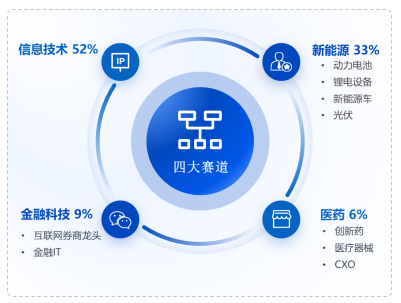
Market Overview - The A-share market performed outstandingly in 2025, with major indices rising across the board, led by growth styles: CSI 300 up 17.66%, CSI 500 up 30.39%, CSI 1000 up 27.49%, ChiNext 50 up 57.45%, and Sci-Tech 50 up 35.92% [1] - The market in 2025 was primarily driven by liquidity easing and thematic rotation, with expectations that 2026 may enter an "earnings verification period" [1] - It is recommended to focus on policy-driven, profit recovery, and economic recovery directions, particularly in technology growth and high-end manufacturing sectors [1] Industry Focus ChiNext 50 Index - The ChiNext 50 Index serves as a direct financing platform for innovative and entrepreneurial companies, focusing on "three innovations (innovation, creation, creativity)" and "four new (new technologies, new industries, new business formats, new models)" [1] - The index emphasizes sectors such as information technology, new energy, financial technology, and pharmaceuticals, showcasing pure technology growth attributes [1] Key Sectors Technology and AI - The ChiNext 50 Index includes 52% of the information technology sector, with 23% weight in optical modules, which were among the best-performing technology tracks in 2025 [4] - The industry is experiencing a "volume and price rise" pattern, with significant growth in 800G optical modules and the commercialization of 1.6T optical modules, leading to revenue growth exceeding 50% for major manufacturers [4][16] - Long-term demand for AI computing power is expected to surge, with optical modules serving as the "transmission foundation" [4] New Energy Photovoltaics - The new energy photovoltaic sector saw significant gains in 2025, with policies stabilizing prices and a recovery in single crystal silicon prices by approximately 40% and lithium carbonate prices by about 60% [6][16] - The midstream industry chain is optimizing, with leading companies like CATL experiencing profit recovery after a price war [6][16] Pharmaceuticals and Biotechnology - The pharmaceutical sector performed well in 2025, driven by the explosive growth of innovative drugs [6] - The license-out transaction value for Chinese innovative drugs is expected to grow at a compound annual growth rate of 125% from 2019 to 2024, with AI applications in medical imaging and diagnostics accelerating revenue growth [6][16] ChiNext 50 ETF - The ChiNext 50 ETF (159949) tracks the ChiNext 50 Index, focusing on high-quality leading companies in five major technology sectors: new energy vehicles, biomedicine, electronics, photovoltaics, and internet finance [7] - The ETF has a robust liquidity profile, with an average daily trading volume of 1.471 billion yuan over the past year, ranking among the top ETFs on the Shenzhen Stock Exchange [7] - The latest fund size is 30.652 billion yuan, making it one of the largest funds tracking the ChiNext-related indices [7]






金鹰基金杨晓斌:关注科技变革、出海优势、供给受限三大主线
Xin Lang Cai Jing· 2026-01-06 02:19
Core Viewpoint - The A-share market is expected to have significant potential in 2026, despite recent high volatility and a cautious sentiment among investors [1][7]. Valuation and Market Sentiment - A-shares are currently valued below historical averages, presenting a "valuation pit" advantage compared to international markets [1][7]. - The market's rational behavior reflects a correction of overly pessimistic expectations from previous years, primarily in specific growth and cyclical sectors rather than across the board [1][7]. Economic Outlook - The macroeconomic environment is likely to be friendly towards the stock market, with nominal GDP and corporate profit growth expected to rise from previous lows in 2026 [2][8]. - The central economic work conference indicates limited fiscal and monetary space in the first half of 2026, which may constrain domestic demand across various sectors, including real estate, automotive, and infrastructure [2][8]. Investment Opportunities - Three main investment themes are identified for 2026: 1. New demand driven by technological advancements [2][8]. 2. Opportunities in overseas markets [2][8]. 3. Industries with significant supply constraints [2][8]. Sector Focus - The AI sector is highlighted as a key growth area, with increased global capital expenditure driving demand for computing power, semiconductors, and industrial metals [3][9]. - The pharmaceutical sector, particularly innovative drug exports, is expected to benefit from China's engineering talent, with more products likely to enter international markets in 2026 [3][9]. Supply Constraints - The supply of non-ferrous metals is expected to remain limited, with prices likely to continue rising due to constrained exploration and geopolitical factors [4][10]. - The chemical sector may also see price stabilization or rebounds due to a lack of new production capacity in certain areas [4][10].
财通证券:小核酸药物龙头招股启动 赛道或成全年度医药主线
智通财经网· 2026-01-06 01:43
Group 1 - The core viewpoint is that small nucleic acid drugs are expected to become the main focus of the global pharmaceutical industry by 2026, driven by advancements in precision medicine and the transition from traditional chemical and biological drugs to targeted therapies [2][3] - Small nucleic acid drugs, as a third-generation therapy capable of intervening in disease processes at the genetic level, are seen as a disruptive innovation, with significant contributions expected from biotech leaders like Arrowhead [2] - The development of small nucleic acid drugs is anticipated to stimulate global pipeline transactions, with companies like Rego Bio focusing on RNA interference (RNAi) for chronic disease treatment [2][3] Group 2 - Rego Bio, established in 2007, specializes in the development of RNAi technology and small nucleic acid drug commercialization, creating a comprehensive R&D platform for small nucleic acid drugs targeting various diseases, particularly chronic conditions [3] - Investment recommendations include focusing on small nucleic acid CDMO companies and key raw material producers that meet FDA audit standards, with specific companies highlighted such as Chengda Pharmaceutical and WuXi AppTec [3]

【机构策略】把握好“春季躁动”行情下的主题投资机会
Zheng Quan Shi Bao Wang· 2026-01-06 01:30
Group 1 - The A-share market opened strong on Monday, with the Shanghai Composite Index returning above 4000 points, driven by sectors such as insurance, medical services, semiconductors, and electronic components [1][2] - The market is supported by the increasing attractiveness of RMB assets, expectations for early-year credit issuance, and positive changes in corporate earnings structures, particularly from advanced manufacturing and overseas enterprises [1] - There is a prevailing expectation that the Federal Reserve will continue its rate-cutting cycle into 2026, contributing to a more accommodative global liquidity environment [1] Group 2 - The A-share market is anticipated to maintain a slight upward trend, with investors encouraged to increase risk appetite and actively participate in the market to seize thematic investment opportunities during the "spring market" [1][2] - The domestic innovative drug market is expected to have significant growth potential in the medium to long term, despite a major adjustment anticipated at the end of 2025 [2]
史诗级“开门红”,这些ETF刷屏了!
Xin Lang Cai Jing· 2026-01-06 01:23
Core Viewpoint - The Chinese stock market has experienced a significant rally, with the Shanghai Composite Index achieving a record twelve consecutive days of gains, surpassing the 4000-point mark for the first time in 33 years since 1993, indicating a strong market sentiment and potential for a cross-year rally [1][27]. Group 1: Market Performance - The total trading volume in the two markets surged to 2.55 trillion yuan, with over 4100 stocks rising, reflecting heightened market enthusiasm and capital inflow [3][27]. - Goldman Sachs has released a report predicting that the Chinese stock market will rise by 15%-20% annually in 2026 and 2027, recommending an overweight position in Chinese stocks [3][27]. Group 2: ETF Performance - Hong Kong ETFs have seen substantial gains, particularly in the innovative drug, internet, and chip sectors, which have been the main drivers of the market's upward movement [4][28]. - The top-performing Hong Kong ETFs include the Hong Kong Innovative Drug ETF (520880) with a 5.4% increase, the Hong Kong Internet ETF (513770) with a 4.4% increase, and the Hong Kong Information Technology ETF (159131) with a 3.6% increase [4][29]. Group 3: Sector Highlights - The innovative drug sector is boosted by the implementation of a new national medical insurance drug list and a commercial health insurance list for innovative drugs starting January 1, 2026, which is expected to enhance industry confidence [6][30]. - In the internet sector, Baidu's Kunlun Chip has submitted a listing application to the Hong Kong Stock Exchange, raising expectations for its parent company's asset value [6][30]. - The chip sector is experiencing a rally due to a significant increase in global memory chip prices and the acceptance of Changxin Storage's IPO application on the Sci-Tech Innovation Board, with leading stocks like Hua Hong Semiconductor and SMIC showing strong performance [6][31]. Group 4: ETF Trends in 2025 - The top-performing ETFs in 2025 include the Entrepreneurial Board Artificial Intelligence ETF (159363) with a 105% increase, and the Nonferrous Metals ETF (159876) with over a 92% increase, indicating strong growth in technology and materials sectors [7][32]. - Other notable sectors include technology, electronics, and chemicals, which have also shown impressive performance, attracting significant investor interest [7][33]. Group 5: Fund Inflows - The top three ETFs by net inflow are the Broker ETF (512000) with 159.3 million yuan, the Hong Kong Internet ETF (513770) with 91.7 million yuan, and the Financial Technology ETF (159851) with 49.7 million yuan, highlighting investor preference for these sectors [9][35].
MNC早研已死,投行永生:中国创新药大时代
Xin Lang Cai Jing· 2026-01-06 01:17
Core Insights - The current recovery cycle of China's innovative pharmaceuticals is driven by significant industry trends, particularly the shift in multinational corporations (MNCs) from a comprehensive full-chain model to a more focused approach [1][17]. Group 1: Industry Changes - The "anti-Moore's Law" indicates that the number of new drugs produced per $1 billion in R&D investment is halving every nine years, highlighting a decline in productivity within the pharmaceutical industry [2][18]. - The R&D return on investment for leading pharmaceutical companies has plummeted from 10.1% in 2010 to just 1.2% in 2022, attributed to bureaucratic inefficiencies and risk aversion towards early-stage R&D [2][19]. - MNCs are increasingly relying on external solutions for drug development, as the failure rate for drug discovery is over 90%, making the acquisition of late-stage projects a more attractive option [3][20]. Group 2: Strategic Shifts - MNCs are consciously reducing internal early-stage R&D and expanding their mid-to-late stage pipelines through external collaborations and acquisitions, reflecting a trend towards a more investment banking-like approach [4][21]. - The essential capabilities for MNCs now include pipeline valuation and mergers & acquisitions, as well as large-scale clinical trial management and commercialization [5][22]. Group 3: Opportunities for Chinese Innovative Pharmaceuticals - The structural changes in the global pharmaceutical industry present a significant strategic opportunity for China's innovative drug sector, which can fill the gap in early-stage assets due to its unique advantages [6][23]. - The number and quality of external business development (BD) transactions for Chinese innovative drugs have surged, with total licensing deals reaching $135.655 billion in 2025, more than doubling from 2024 [7][24]. - Chinese innovative drug companies are becoming highly sought-after assets, as evidenced by the rapid growth of the Hong Kong Stock Connect innovative drug ETF, which increased from over 400 million yuan to over 2.1 billion yuan in 2025 [9][26]. Group 4: Future Prospects - Collaborating with MNCs allows Chinese innovative drug companies to gain essential cash flow and efficient growth methods, while also learning about global regulatory standards and complex clinical operations [11][28]. - The long-term outlook for China's innovative drug sector is promising, with expectations of developing its own global pharmaceutical giants in the future [14][28]. - The recent performance of innovative drug assets in the stock market, including a significant rise in the Hong Kong Stock Connect innovative drug ETF, indicates strong market confidence in this sector [16][28].
港股创新药ETF(159567)涨5.75%,成交额16.25亿元
Xin Lang Cai Jing· 2026-01-06 00:45
Group 1 - The Hong Kong Innovative Drug ETF (159567) closed with a gain of 5.75% on January 5, with a trading volume of 1.625 billion yuan [1] - The fund was established on January 3, 2024, with an annual management fee of 0.50% and a custody fee of 0.10% [1] - As of December 31, 2025, the fund's shares stood at 10.492 billion, with a total size of 7.896 billion yuan, indicating no change in shares or size year-to-date [1] Group 2 - The ETF's recent trading activity shows a cumulative trading amount of 16.006 billion yuan over the last 20 trading days, with an average daily trading amount of 800 million yuan [1] - The current fund manager, Ma Jun, has managed the fund since its inception, achieving a return of 50.52% during the management period [1] - The ETF's top holdings include companies such as BeiGene, CanSino Biologics, and Innovent Biologics, with significant weightings in the portfolio [2]
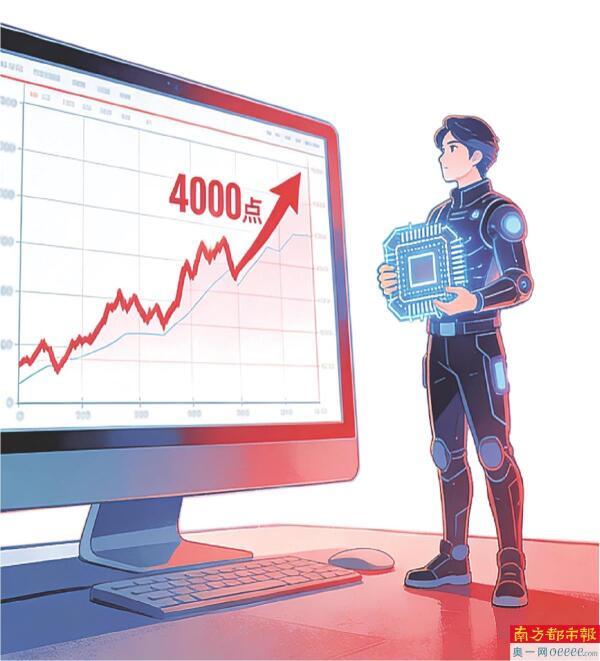
A股开门红 沪指重返4000点
Nan Fang Du Shi Bao· 2026-01-05 23:11
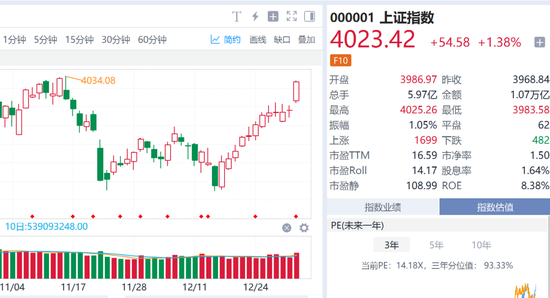
Group 1 - The A-share market opened positively on the first trading day of 2026, with all three major indices rising: the Shanghai Composite Index closed at 4023.42, up 1.38%, the Shenzhen Component Index at 13828.63, up 2.24%, and the ChiNext Index at 3294.55, up 2.85% [2] - The technology sector led the gains, particularly in brain-computer interface stocks, with companies like Beikang and Botao Bio reaching daily limits of 30% and other stocks like Aipeng Medical and Dineike hitting 20% limits [3] - Analysts predict that the technology bull market will continue into 2026, driven by China's economic transformation and the focus on technological innovation in the 14th Five-Year Plan [3] Group 2 - The spring market rally is expected to begin early, with January typically seeing the highest credit issuance of the year, estimated between 3 trillion to 4 trillion yuan, which could inject new capital into the market [4] - Institutional insights suggest that the A-share market may continue its structural rally, supported by positive policy expectations and industry trends, despite potential short-term disruptions from geopolitical risks [5] - The overall market sentiment remains optimistic, with strong liquidity and supportive economic data, indicating that the spring rally is likely to persist [5]