家具

Search documents
临沂商城价格指数分析(6月26日—7月2日)
Zhong Guo Fa Zhan Wang· 2025-07-07 07:59
Core Insights - The overall price index of Linyi Mall decreased slightly this week, indicating a minor decline in market prices across various categories [1] Price Index Summary - **Grain and Food Category**: The price index for grain and food increased to 95.11 points, up by 0.04 points, driven by rising prices in oil and food products, while other subcategories remained stable or saw minor declines [1] - **Board Category**: The price index for boards fell to 97.20 points, down by 0.27 points, due to weak demand and a slight decrease in raw material prices, leading to lower average sales prices [2] - **Home Appliances and Audio-Visual Equipment**: The index for this category decreased to 103.11 points, down by 0.15 points, primarily due to price drops in cooling and kitchen appliances, despite some seasonal sales boosts [3] - **Steel Category**: The steel price index dropped to 98.35 points, down by 0.11 points, as construction activity slowed due to adverse weather, leading to reduced demand and lower prices [4] - **Clothing and Accessories**: The index for clothing and accessories fell to 104.83 points, down by 0.07 points, influenced by price reductions in footwear and overall weak consumer demand [5] - **Furniture Category**: The furniture price index decreased to 89.03 points, down by 0.06 points, reflecting weakened market demand due to the sluggish real estate sector [6]


环球家居周报:《家具中有害物质限量》新国标实施,被窝整装新品发布,多家企业IPO获受理……
Huan Qiu Wang· 2025-07-07 06:32
Group 1: Furniture Industry Performance - In the first five months of the year, retail sales of furniture products in China increased by 21.4% year-on-year, while the overall revenue of the light industry reached 9.27 trillion yuan, with a 7.0% increase in added value for large-scale light industry [1][2] - The furniture industry reported a total revenue of 248.87 billion yuan from 7,421 large-scale enterprises, a decrease of 3.9% year-on-year, and a total profit of 7.92 billion yuan, down 27.9% year-on-year [1][2] - Exports of the furniture industry totaled 28.98 billion USD, reflecting a year-on-year decline of 8.2% [1] Group 2: New Standards and Guidelines - The "Healthy Consumption Guide for Wood-based Panels" was released, focusing on consumer-friendly information regarding formaldehyde limits and purchasing strategies [2] - A new national standard for harmful substances in furniture, effective from July 1, 2024, sets stricter limits on formaldehyde, benzene, toluene, xylene, and TVOC [2][3] Group 3: Market Developments - The water-based interior wall paint is now subject to mandatory CCC certification, with strict enforcement against unlicensed production and counterfeit certification [4] - The Cologne International Garden Exhibition featured over half of its exhibitors from China, showcasing advancements in green design and sustainable materials [4] Group 4: Company Initiatives - Juran Smart Home opened its 806th store in Shanghai with a total investment of 12.5 billion yuan, aiming to create a smart home experience center [4] - Kuka Home disclosed a blacklist of 97 unauthorized online stores, emphasizing strict control over sales channels and after-sales service [5] - Three companies, Rose Island, Tutu, and Hualai Technology, had their IPO applications accepted by the Beijing Stock Exchange, with plans to raise funds for various projects [6] - Serta won a trademark infringement case, receiving 1.1 million yuan in compensation [7] - Haoleke strategically invested in Jixiang Technology to enhance its smart home offerings [7] - Lixil Group's Guangzhou International R&D Center was inaugurated, focusing on local market investments and global sharing strategies [8] - Beiwow launched new products and opened a boutique showcasing three model homes, emphasizing a complete home decoration service [9][10]
碾压式带货!95后把床垫拍成“抗压神器” 退货率仅4%
Yang Shi Xin Wen Ke Hu Duan· 2025-07-05 01:41
Group 1 - The retail sales of furniture in Guangdong province increased by 67.7% year-on-year in the first five months of this year, with a significant rise of 96.5% in May, driven by the "old-for-new" policy [1] - A new trend in the furniture industry is the shift from selling products to providing comprehensive service solutions, exemplified by furniture coordinators like Liang Weiquan who offer tailored experiences for customers [2] - The introduction of AI technology in the furniture industry has improved efficiency, allowing young foreign trade professionals to overcome language barriers and manage customer inquiries more effectively [2] Group 2 - A "post-95" e-commerce team in Foshan has successfully reduced the return rate of mattresses to only 4% by utilizing engaging marketing strategies, such as demonstrating product durability through videos [3][4] - The team has achieved monthly sales exceeding 5 million yuan within just over six months of operation, highlighting the potential for growth in the online furniture market [3] - The demand for e-commerce talent in the furniture industry has surged, leading to collaborations between vocational schools and leading furniture companies to train new professionals [4]
前高后低,伺机而动
Xin Da Qi Huo· 2025-07-04 08:31
1. Report Industry Investment Rating No relevant content provided. 2. Core Views of the Report - The domestic economy is expected to be high in the first half and low in the second half. Policy support is in place, but domestic demand remains weak. The GDP growth target of around 5% for 2025 is expected to be achieved with relative ease [9][10]. - Fiscal policy will mainly rely on existing measures with limited incremental input, while monetary policy will continue with reserve requirement ratio cuts and interest rate cuts. Additional fiscal policies may be launched under special circumstances [2]. - There are three major external disturbances in the second half of the year: tariff negotiations, the OBBB Act, and the timing of the Fed's interest rate cuts [2]. - The outlook for major asset classes varies. Stocks are expected to have a bottom - line support with small - cap stocks outperforming; bond yields are expected to reach new lows; the RMB exchange rate is expected to appreciate following the US dollar index; and commodities' performance will depend on event and policy rhythms [2]. 3. Summary by Directory 3.1 Domestic Economy: Policy Support, Weak Domestic Demand - **Economic Overall Trend**: The economy is expected to be high in the first half and low in the second half. To counter the impact of exports, policies are targeted at consumption, infrastructure, and manufacturing. In the first half, with pre - emptive policy implementation, consumption, infrastructure, and manufacturing showed good growth, and the GDP growth rate in Q1 was 5.4%, with Q2 expected to be above 5%. In the second half, exports are likely to decline, and the probability of additional policies is low [9][10]. - **Consumption**: The increase in social retail sales is mainly supported by policies. After excluding the impact of the "trade - in" policy, the overall consumption has not improved significantly compared to 2024. Income expectations remain poor, and employment expectations are lower than income expectations. The consumption in Q3 is expected to maintain relatively high - speed growth, while there will be significant downward pressure in Q4 [11][16][17]. - **Real Estate**: The real estate market has basically reached the bottom, and the probability of a further sharp decline in the second half is low. However, the driving force for recovery is insufficient, and it is expected to continue to operate at the bottom, with a slight upward trend under optimistic expectations [19][21]. - **Infrastructure**: Infrastructure is expected to remain at a high level. The main sources of funds are two - fold policy funds and local government special bonds. In Q3, infrastructure will still have strong support, and it may decline in Q4 but remain at a high level overall. The new policy - based financial instruments may be introduced in September or October [34][35]. - **Exports**: Exports were high in the first half but are likely to decline in the second half due to factors such as over - drawn demand and the downward risk of the US economy [37][38]. - **Manufacturing**: Manufacturing is highly dependent on policy support. With the implementation of the equipment renewal policy, most of the funds have been allocated, and manufacturing is expected to remain at a high level at least in Q3 [40]. 3.2 Policy: Limited Fiscal Policy, Increased Monetary Policy - **Fiscal Policy**: The fiscal policy will mainly rely on existing measures with limited incremental input. The probability of introducing incremental fiscal policies is low unless there is a significant external shock. Key meetings in the second half of the year need to be monitored [42][43]. - **Monetary Policy**: Monetary policy will continue with reserve requirement ratio cuts and interest rate cuts. Based on historical experience and the current high real - interest - rate level, it is reasonable to expect an interest rate cut of 20bp this year [44][46]. 3.3 Three Major External Disturbances in the Second Half of the Year - **Tariff Negotiation Disturbance**: The outcomes of the US tariff negotiations on July 9 and the China - US tariff negotiations on August 12 will basically determine the export trend in the second half of the year [48]. - **OBBB Act Disturbance**: The OBBB Act will have an impact on the US economy and indirectly affect the domestic economy. The Senate version of the bill will increase the US debt, and if temporary measures are made permanent, the debt increase will be even greater. The bill may lead to a steeper yield curve and higher 10 - year US Treasury yields [49][51]. - **Fed Policy Rate Changes**: The first interest rate cut is expected to occur in September or later. The number of expected interest rate cuts within the year may be slightly overestimated considering the US economic resilience and Powell's style [54]. 3.4 Outlook for Major Asset Classes in the Second Half of the Year - **Stocks**: Stocks have a bottom - line support. Although they will face fundamental pressure, the Fed's interest rate cuts and domestic monetary policy will provide support. Small - cap stocks are expected to outperform [55]. - **Bonds**: Bond yields are expected to reach new lows. The bond market will be supported by the economic trend, and with lower supply pressure and a high probability of interest rate cuts, bond yields are expected to decline [58]. - **RMB Exchange Rate**: The US dollar index is expected to decline, and the RMB will appreciate following the US dollar index, which will help ease the pressure on export enterprises [60]. - **Commodities**: The performance of commodities will depend on event and policy rhythms. External tariff negotiations and domestic policy implementation schedules will affect commodity prices. Gold is expected to strengthen with support from the US debt issue and the approaching Fed interest rate cuts [63][64].
林氏木业新加坡首店开业 全球化战略再落关键一子
Sou Hu Wang· 2025-07-04 07:08
Core Insights - LINSY, the overseas brand of Lin's Wood Industry, has opened its first offline store in Singapore, marking the fifth store in Southeast Asia and indicating a new phase in its globalization strategy [1][4][12] - The global furniture market is projected to reach $766.2 billion in 2024, providing a favorable backdrop for LINSY's expansion [1] Expansion Strategy - The Singapore store is located in a key commercial area and reflects the brand's adaptive store format, incorporating local cultural elements into its design [2][4] - LINSY has accelerated its expansion since 2018, with additional stores opened in Malaysia, the Philippines, and Canada, and plans to further expand into Latin America and the Middle East over the next three years [4][12] Product Offering - The store features a diverse range of products that cater to various consumer needs, including integrated living, dining, and bedroom solutions [2][8] - LINSY emphasizes product innovation, targeting young consumers with trendy items like the "bag chair," and maintains a robust supply chain with over 270 suppliers, allowing for rapid product launches [8][10] Quality and Competitive Advantage - The company has established a rigorous quality control system and optimized costs through economies of scale, enabling it to offer high-quality products at competitive prices [10] - The "LINSY model" focuses on product innovation and a flexible supply chain, providing a new approach for Chinese home furnishing companies to succeed in international markets [10][12]

智能家居渗透率超20% 芝华仕头等舱8.18亿激活市场
Bei Jing Shang Bao· 2025-07-03 08:22
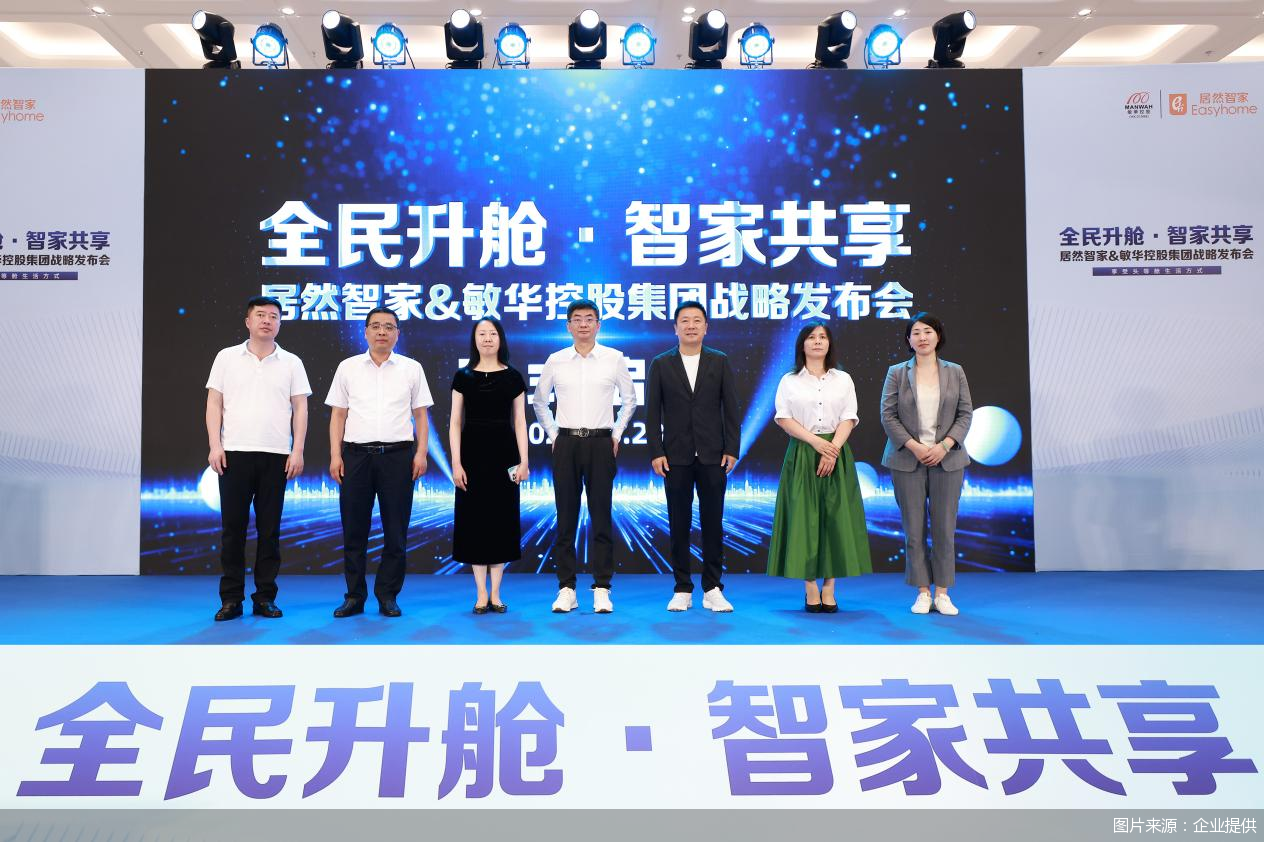
Group 1 - The demand for smart home products is increasing among consumers, leading companies to enhance their smart development initiatives [1][3] - The "芝华仕头等舱818全民升舱" event will invest 8.18 billion yuan to reward consumers, running from July 1 to August 31, 2025 [1] - The report "全民升舱白皮书Ⅳ" indicates that 72.7% of consumers watch shows on sofas, 64.5% work or study on sofas, and 48.5% relax on sofas [3] Group 2 - The Chinese furniture market is expected to exceed 1.5 trillion yuan by 2025, with smart home, customized furniture, and eco-friendly furniture as key growth drivers [3] - The shipment of smart home products is projected to reach 281 million units by 2025, with a penetration rate exceeding 20% [3] - Smart sofas are anticipated to evolve in three directions: integration of health monitoring technology, scenario-based smart interaction, and sustainable design [4] Group 3 - Smart sofas are expected to capture 30% of the market share, becoming central to home health management and smart living [4]
21社论|优化市场出清机制 治理低价无序竞争
2 1 Shi Ji Jing Ji Bao Dao· 2025-07-02 14:16
Group 1 - The central government emphasizes the need to advance the construction of a unified national market, focusing on addressing key challenges and regulating low-price disorderly competition among enterprises to enhance product quality and facilitate the orderly exit of outdated capacity [1] - The "involution" competition in various industries is primarily characterized by low-price disorderly competition, driven by complex factors such as economic structural adjustments and excessive investment in emerging industries like photovoltaics and new energy vehicles [1][2] - The implementation of a series of policies to promote consumption and investment has stabilized the economy, but low price levels persist, as evidenced by a 6.5% increase in total retail sales since the launch of the old-for-new consumption initiative, while the CPI remains low [1] Group 2 - In May, the PPI decreased by 3.3%, and the accounts receivable of large industrial enterprises reached 26.4 trillion yuan, with a year-on-year increase of 9.0%, indicating a slowdown in the industrial supply-demand cycle and a decline in enterprise profits by 9.1% [2] - To address the supply-demand imbalance, it is necessary to regulate low-price disorderly competition and promote the orderly exit of outdated capacity, while also implementing production restrictions in industries with significant supply-demand issues [2] - The need for improved government behavior is highlighted, as local government policies have stimulated redundant investments and hindered the exit of outdated capacity, necessitating the establishment of a high-quality development assessment system [2][3] Group 3 - The persistence of "involution" competition is attributed to the failure of substandard products and bankrupt enterprises to exit the market promptly, leading to safety and quality standards being compromised [3] - There is a call for enhanced market supervision to prevent the proliferation of counterfeit and inferior products, particularly in the e-commerce sector, where platforms often evade responsibility for product quality [3] - The need to improve the enterprise exit system is emphasized, including the establishment of a bankruptcy mechanism and reforms to facilitate enterprise deregistration, which would help eliminate unreasonable competition [3]
慕思荣膺中国家具协会2025年度“中国家具床垫十大品牌”
Sou Hu Wang· 2025-07-02 05:35
Core Insights - Company Musso has been recognized as one of the "Top Ten Brands in China's Furniture Mattress Industry for 2025," highlighting its innovation, technological strength, and leadership in the global health sleep sector [1] - Despite macroeconomic challenges, Musso demonstrated resilience with a reported revenue of 5.603 billion yuan and a net profit of 767 million yuan for 2024, showcasing its operational efficiency and risk management capabilities [2] - Musso has actively participated in standardization efforts, contributing to one international standard and 17 national and industry standards, earning recognition as a "Significant Contributor to Soft Bed Standardization" [4] Innovation and Technology - Musso has established a comprehensive R&D system with a reported R&D expenditure of 205 million yuan in 2024, a 10.51% increase year-on-year, representing 3.66% of its revenue [5] - The T11+ smart mattress, which integrates advanced technologies, won international awards at the 2024 International Consumer Electronics Show, showcasing Musso's commitment to innovation in the sleep industry [5] - The company has developed a "Smart Bedroom" system that connects various devices to enhance the sleep environment, along with a "Health Steward" service that provides daily sleep reports and health advice [7] Market Position and Future Outlook - Musso's two-decade journey reflects the transformation of China's manufacturing industry towards high-end, intelligent, and green production [9] - The company aims to continue driving industry development through technological innovation, enhancing consumer sleep experiences [9]

不拼低价拼产品,林氏家居618大促如何重构新零售增长逻辑?
Bei Jing Shang Bao· 2025-07-01 08:51
Core Insights - The 618 shopping festival has evolved into a test of comprehensive brand strength amid the home furnishing industry's transition to a stock competition era [1][19] - Lin's Home achieved significant sales and brand recognition during the 618 event, with flagship stores averaging sales of over 1.88 million and a 47.78% year-on-year increase in solid wood category sales [1][12] Brand Strategy - Lin's Home has successfully validated a replicable growth model through brand value elevation and dealer empowerment, showcasing the underlying logic for breaking through in the home furnishing sector [3][21] - The brand's core narrative revolves around "natural living spaces," utilizing strategic cross-industry collaborations to break consumer perception barriers and establish differentiated value competition [5][7] Marketing and Consumer Engagement - The collaboration with China National Geography and the Beautiful China environmental project positions Lin's Home's solid wood furniture as part of a "natural lifestyle" value proposition, enhancing emotional connections with consumers [7][11] - Lin's Home's marketing strategy includes high-visibility displays in key tourist areas in Yunnan, effectively reaching millions of travelers and creating a strong brand presence [9][19] Product Development - The home furnishing market is expected to see a significant rise in solid wood consumption, with solid wood furniture projected to account for 42% of the overall market by 2025 [12][16] - Lin's Home has introduced two new product lines, the "In the Wild" series and the "Little Island" series, to address consumer pain points and cater to both high-end and mass markets [14][16] Operational Excellence - The success of Lin's Home during the 618 event is attributed to the digital reconstruction of the "people, goods, and venue" model, focusing on enhancing consumer experience through scene-based upgrades [17][21] - The implementation of standardized sample rooms and extended warranties for solid wood products reflects Lin's Home's commitment to improving user service and operational efficiency [21] Industry Trends - The home furnishing industry is shifting towards value competition, moving away from traditional price wars as consumers demand more from products [21] - Lin's Home's performance during the 618 event demonstrates the importance of integrating product strength, marketing capabilities, and operational efficiency to create sustainable growth in a competitive market [21]

张平:在海外呆了8、9年,现在觉得中国制造真的是YYDS,太牛了
凤凰网财经· 2025-06-29 14:16
凤凰网财经讯 6月28-29日,"2025中国企业出海高峰论坛"在深圳举行,本次论坛由凤凰网主 办,雪花超高端系列品牌-醴首席赞助合作,中国企业出海全球化理事会联合主办,以"为开放的世 界"为主题,旨在全球产业链深度重构之际,为中国企业搭建思想碰撞、资源对接、规则对话的高 端平台,系统性破解出海难题,共探生态共赢转型路径。 山海图创始人兼CEO张平出席了本次论坛,并在圆桌对话环节分享了服务"一带一路"出海企业所观 察到的经验。 对于企业出海东南亚的首选国家,张平认为要具体看企业所在什么行业,服装、玩具、电子产品、 家具等行业基本首选越南;涉及资源类的行业如开矿等首选印尼;旅游业、电商等行业首选泰国; 中高端制造如半导体等行业首选马来西亚。而菲律宾虽然当地治安不好,但它对进口没有限制,不 适合大企业、上市公司,中小企业去冒险比较有机会。 山海图创始人兼CEO张平 谈到制造业的时候,张平表示:"以前我在国内的时候也没有觉得中国制造有多厉害,现在在海外 八九年,真的是YYDS,太牛了。" 张平表示,中国很多制造业企业在海外做的都是很辛苦的事情,他很敬佩这样的企业。张平以一家 去印尼盖冶炼厂的中国企业举例,这家企业从 ...