
家电制造

Search documents
海洋二所:系列培训助力非洲海洋观预测
Zhong Guo Zi Ran Zi Yuan Bao· 2025-09-17 07:28
Group 1 - The core objective of the training program is to enhance the marine observation and forecasting capabilities of African countries, sharing China's experience and technology in this field [1][2] - The training lasted for 10 days and involved 32 participants from five African countries: Nigeria, Egypt, Mauritius, Benin, and Eritrea, who engaged with Chinese experts across four locations [1][2] - The program was organized by the Ministry of Commerce and hosted by the Second Institute of Oceanography, aiming to build a bridge for knowledge exchange and collaboration to address global marine challenges [1][2] Group 2 - The training incorporated a "theory-practice-culture" integrated curriculum, allowing participants to learn about China's marine economy and technological innovations through high-quality classroom instruction and field visits [2] - Participants visited Qingdao Port and Haier Group to gain insights into China's marine economic development and technological advancements, fostering international research collaboration [2]


异动盘点0917|蔚来-SW涨超9%,黄金股集体走低;特斯拉涨超2%,携程网涨超3%
贝塔投资智库· 2025-09-17 04:00
Group 1: Hong Kong Stock Market Highlights - NIO-SW (09866) rose over 9% ahead of the NIO Day 2025 event on September 20, where the new ES8 will be launched [1] - Home appliance stocks collectively increased, with Haier Smart Home (06690) up over 4%, Hisense Home Appliances (00921) nearly 3%, and Midea Group (00300) up nearly 1%, as retail sentiment improved with the arrival of the third batch of national subsidies in August [1] - Baidu Group (09888) surged over 16% following a strategic cooperation framework agreement signed with China Merchants Group in Shenzhen on September 15 [1] - Guofu Hydrogen Energy (02582) fell over 4% after signing a cooperation agreement with South Korea's Hylium Industries, focusing on hydrogen energy systems [1] - Aneng Logistics (09956) rose nearly 1% after Morgan Stanley issued its first research report on the company, giving it an "overweight" rating [1] - Lingbang Group (02230) increased over 10% after announcing the establishment of a new subsidiary, Medialink Japan, set to launch on August 8, 2025 [1] Group 2: Sector Performance - Hesai Technology (02525) declined nearly 2% despite a "buy" rating from CMB International, which raised revenue forecasts for 2026-2027 by about 2% and net profit forecasts by 6%-7% [2] - Gold stocks collectively fell, with Chifeng Jilong Gold Mining (06693) down over 4%, Lingbao Gold (03330) down over 4%, Zhaojin Mining (01818) down over 3%, and Zijin Mining (02899) down over 2%, influenced by the Federal Reserve's interest rate outlook and the performance of the Chinese stock market [2] - Cement stocks experienced a downturn, with Dongwu Cement (00695) down over 12%, Western Cement (02233) down over 2%, Huaxin Cement (06655) down over 1%, and Anhui Conch Cement (00914) down over 1%, as August cement production fell 6.2% year-on-year to 148 million tons, indicating weak demand in the off-season [2] - Gilead Sciences-B (01672) rose over 1% after reporting results from its ASC30 oral small molecule GLP-1R agonist study at the 61st European Association for the Study of Diabetes annual meeting [2] Group 3: US Stock Market Highlights - Webtoon (WBTN.US) surged 39.04% after Disney announced plans to acquire a 2% stake and collaborate on a digital platform for Disney comic content [3] - Tesla (TSLA.US) rose 2.82% as Elon Musk announced plans for a technical evaluation of the AI5 chip design and a meeting regarding AI/autonomous driving systems [3] - Oracle (ORCL.US) increased 1.49% amid reports that it may play a key role in a potential TikTok deal that would allow the platform to continue operating in the US [3] - Yum China (YUMC.US) rose 2.23% as Morgan Stanley highlighted its resilient earnings and stable shareholder returns, maintaining an "overweight" rating [3] - Taiwan Semiconductor Manufacturing Company (TSM.US) increased 0.57% as Nvidia considers adopting TSMC's advanced process for future production [3] - Micron Technology (MU.US) rose 0.67% with reports of a potential 30% price increase for storage products, leading several major firms to raise their target prices ahead of earnings [3] Group 4: Additional US Stock Highlights - Trip.com (TCOM.US) rose 3.32% after completing the acquisition of Key Travel, with reports of increased travel intentions among residents during the upcoming Mid-Autumn Festival and National Day holidays [4] - Pinduoduo (PDD.US) increased 1.31% as Goldman Sachs reported a recovery in GMV for its Temu platform, with monthly active users growing by 20% [4] - Novo Nordisk (NVO.US) rose 2.84% after announcing that its oral semaglutide has been approved by European regulators for reducing cardiovascular risks [4] - NetEase (NTES.US) increased 1.45% as Goldman Sachs noted strong performance driven by popular games and expected sales growth in Q3 [5] - Apple (AAPL.US) rose 0.61% as Goldman Sachs indicated strong pre-order demand for the iPhone 17, supporting an 8% growth forecast for iPhone revenue in Q4 [5]



海信家电年内豪掷超110亿买信托 信托理财占比近七成
2 1 Shi Ji Jing Ji Bao Dao· 2025-09-17 03:49
Core Insights - Hisense Home Appliances Group has significantly increased its investment in trust financial products, with a total subscription amount of 160.43 billion yuan in 2023, of which 110.53 billion yuan is in trust products, accounting for 68.90% of the total [1][3] Group 1: Investment in Trust Products - Hisense Home Appliances has subscribed to trust products worth 68 billion yuan in 2023, increasing to 111 billion yuan in 2024, and has already surpassed 110 billion yuan in 2025 [2] - The company has engaged with six trust companies, including Western Trust and China Grain Trust, for its trust product subscriptions [2] - The recent investment includes 17.8 billion yuan in two fixed-income trust plans with Western Trust [1] Group 2: Financial Performance - Hisense Home Appliances reported a revenue of 927.46 billion yuan in 2024, a year-on-year increase of 8.35%, and a net profit of 33.48 billion yuan, up 17.99% [3] - In the first half of 2025, the company achieved a revenue of 493.40 billion yuan, reflecting a 1.44% year-on-year growth, with a net profit of 20.77 billion yuan, up 3.01% [3] Group 3: Regulatory Compliance and Strategy - The company operates within a compliant framework, having received approval to use up to 230 billion yuan of idle funds for short-term low-risk investments [3] - Hisense Home Appliances prefers low-risk fixed-income trust products, collaborating with trust companies that have state-owned enterprise backgrounds [3] Group 4: Industry Context - A total of 40 listed companies have invested over 158.74 billion yuan in trust products this year, with Hisense leading at 110.53 billion yuan [4] - Trust financial products are favored by listed companies for their efficiency in capital utilization and risk management, especially in the current fixed-income trend [4]
美的集团董事长方洪波:以丹纳赫为镜,锻造企业韧性
首席商业评论· 2025-09-17 03:46
Core Viewpoint - The article discusses the challenges faced by Chinese enterprises in a highly competitive environment characterized by homogenization, price wars, and rising costs, emphasizing the need for a systematic methodology to navigate these challenges and achieve sustainable growth [2][4]. Group 1: Challenges in the Business Environment - By 2025, the business landscape is undergoing unprecedented restructuring, with common issues such as homogenized competition eroding profits and price wars squeezing survival space [2]. - The failure rate of mergers and acquisitions remains high, indicating a pressing need for effective strategies among Chinese companies [2]. Group 2: The Danaher Model - The book "The Danaher Model" dissects the success strategies of Danaher, known as the "king of acquisitions," highlighting the Danaher Business System (DBS) as a key engine for success [2][10]. - Danaher’s approach involves transforming lean management from a tool into a core competency, validated by over 400 successful acquisitions [2]. Group 3: Midea Group's Implementation - Midea Group began learning from international advanced enterprises, specifically the Toyota Production System, but initially saw limited success [4]. - After engaging with Danaher, Midea developed its own Midea Business System (MBS), focusing on establishing a lean talent system and achieving factory lean transformation [4][5]. - By 2018, Midea completed the lean transformation of its domestic factories, leading to an average efficiency improvement of approximately 15% annually [5]. Group 4: Globalization and Core Competencies - Danaher’s strategy evolved from diversified acquisitions to a focus on healthcare, demonstrating that a company's boundaries are defined by its core competencies rather than capital [7]. - Midea's global strategy includes establishing 17 R&D centers and 22 manufacturing bases, emphasizing the importance of localizing R&D to meet local demands [8]. Group 5: Lessons for Chinese Enterprises - The book serves as a high-density management tool, addressing key questions about achieving capability integration through acquisitions, evolving lean management into a core competency, and balancing localization with integration in globalization [10]. - The success of Danaher, which grew from a $1 million loan for its first acquisition to a market value exceeding $200 billion, underscores the importance of adhering to fundamental principles such as process reliance, fact respect, and efficiency [10].



海尔智家HOPE平台上线“许愿池”板块
Huan Qiu Wang· 2025-09-17 02:53
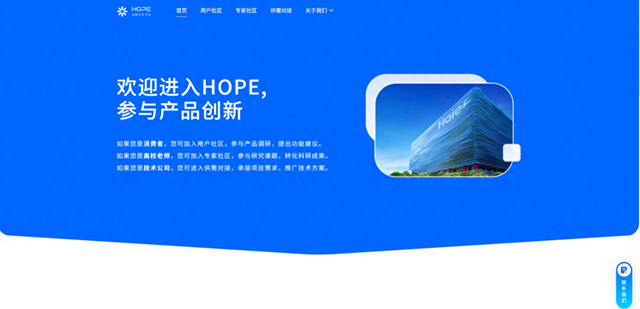
Core Viewpoint - The HOPE platform by Haier Smart Home has been upgraded with a new "Wishing Pool" section, aimed at facilitating direct user input for product innovation and development [1][4]. Group 1: User-Centric Product Development - Haier Smart Home emphasizes user needs as a driving force for product innovation, exemplified by the successful launch of the "Lazy Washing Machine," which was developed based on user feedback for a machine that can wash different types of clothing separately [3]. - Following the "Lazy Washing Machine," additional user requests led to the introduction of products like the "Lazy Washing and Shoe Washing Machine" and "Lazy Drying Machine," expanding the "Lazy Family" product line [3]. - The "Lazy Washing Machine" has been delivered to over 130,000 users in China, with plans for a European launch by the end of the year, showcasing the effectiveness of the user co-creation model [3]. Group 2: Wishing Pool Functionality - The "Wishing Pool" section allows users to submit product improvement suggestions directly to the R&D team, enhancing the efficiency of communication and idea generation [4][7]. - This platform enables R&D engineers and product managers to review and respond to user ideas, fostering a two-way interaction that accelerates the transition from concept to product [7]. - By integrating internal and external expert resources, the "Wishing Pool" aims to optimize the user co-creation mechanism, improving the accuracy and efficiency of responding to user demands [7].

第138届广交会首批展品顺利通关入境
Guang Zhou Ri Bao· 2025-09-17 01:43
Group 1 - The 138th China Import and Export Fair (Canton Fair) has successfully cleared its first batch of imported exhibits, marking the beginning of the exhibition setup [2] - The first batch consists of 103 home appliances, including water heaters, washing machines, and air conditioners, weighing a total of 6,248 kilograms, which is the heaviest single batch in the history of the Canton Fair [2] - Unionaire, an Egyptian company producing the exhibited appliances, holds approximately 35% market share in Egypt's air conditioning market and aims to expand its international market presence beyond Africa [2][3] Group 2 - The 138th Canton Fair will take place from October 15 to November 4, covering a total exhibition area of approximately 1.55 million square meters with 55 exhibition zones [2] - Over 30,000 enterprises are expected to participate, showcasing products across various categories, including industrial automation, new energy vehicles, hardware, home appliances, and light industrial gifts [2] - To enhance the efficiency of exhibit clearance, Guangzhou Customs has established a three-dimensional communication mechanism and implemented various measures for expedited customs clearance [3]
制造业巨头入局保险业背后的多维逻辑
Nan Fang Du Shi Bao· 2025-09-16 23:14
| | | 产业资本进入保险领域 | | | --- | --- | --- | --- | | | 表现方式 | 作用 | 零例 | | 讲入 方式 | 通过股权收购、参与增资等方式进 入保险领域 | 实现产业资本对保险业务的法律合规准入和控 制意图 | 美的间接持股三星财险,宁德时代 入股小康人寿,比亚迪收购并设立 | | | | | 比亚迪财险 | | 协同 方式 | 将保险嵌入产业链场景 | 提升产业风险管理能力,降低整体运营成本,同 时为保险业务带来直实场景和数据支持 | 基于美的智能家居、比亚迪汽车生 态,开发供应链保险、员工团险、设 | | | | | 备保障险等 | | 数据与 | 利用产业方积累的用户数据、设备 | (1)提升保险产品的精准度和服务效率,推动保 | | | 科技 | 数据等,改善保险产品定价和风控 | 龄从"标准化"向"场景化"转变。(2)通过保险优 | | | 赋能 | 精型,减少逆向选择 | 化产业链现金流,降低企业经营风险 | | | 面临的 挑战 | 公司治理结构复杂化,股东间目标 有差异,还面临关联交易与数据合 | | 美的入股后,能否帮助三星财险平 新规模与盈利备 ...
TCL智家:截至2025年上半年末公司母公司报表期末未分配利润为负数
Zheng Quan Ri Bao· 2025-09-16 13:40
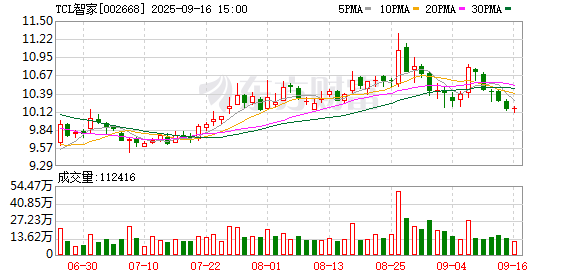
Core Viewpoint - TCL Smart Home indicated that as of the end of the first half of 2025, the company's parent company will have negative undistributed profits, which does not meet the profit distribution conditions outlined in its articles of association [2] Group 1: Financial Performance - The company has experienced continuous growth in operating scale and profitability in recent years [2] - TCL Smart Home has been optimizing products and services, expanding market share, and strengthening cost control to achieve steady profit growth [2] Group 2: Future Outlook - The company is committed to actively returning value to investors once it meets the profit distribution conditions, considering its strategy, current and future profit scale, and cash flow situation [2]


房地产与下游消费韧性及投资逻辑
GUOTAI HAITONG SECURITIES· 2025-09-16 12:23
Investment Rating - The report provides a cautious increase rating for the real estate sector, indicating a potential recovery in the market due to supportive policies and structural adjustments [61]. Core Insights - Since 2022, the real estate market in China has entered a multi-faceted adjustment phase, with significant declines in sales, development, and investment activities [7][14]. - Continuous policy support from central and local governments aims to stabilize the market, with measures focusing on risk mitigation and market confidence restoration [15][17]. - The smart home system market within the decorated housing sector has shown resilience, with increasing penetration rates despite overall market contraction [19][30]. - Downstream industries such as home appliances, light industry, and renovation credit have demonstrated strong resilience through proactive transformations and policy support [33][54]. Summary by Sections 1. Current Status of the Real Estate Market and Stabilization Policies - The sales area of commercial housing has significantly declined, with a 45.73% drop from 2021 to 2024 [7]. - The total sales value of commercial housing has also decreased by 46.82% during the same period [7]. - New construction and construction scale have seen a notable decline, with new housing starts down by 62.85% and construction area down by 24.82% by 2024 [9][11]. 2. Analysis of the Trend in Decorated Housing - The penetration rate of decorated housing peaked in 2022 but has since decreased by 16.92% by 2024, indicating a phase of adjustment [19]. - New decorated housing projects have decreased by 64.98% and the number of units has dropped by 76.79% by 2024 [26]. - The penetration of smart home systems has increased, with a growth of 12.29% from 2021 to 2024 [29]. 3. Resilience of Downstream Industries - The home appliance industry has shifted from dependence on new housing to benefiting from policies like the old-for-new program, leading to a retail value of 1,030.75 billion yuan in 2024, a year-on-year increase of 18.22% [36]. - The light industry has transitioned from a channel-driven model to a service-driven approach, resulting in an 11.11% increase in furniture production from 2021 to 2024 [48]. - The renovation credit industry has seen a 20% growth since 2022, with expectations to exceed 1.3 trillion yuan in market size by 2025 [53].
海信家电及附属公司合共认购19.7亿元的浦银理财产品
Zhi Tong Cai Jing· 2025-09-16 09:41
Core Viewpoint - Hisense Home Appliances (000921)(00921) has entered into a financial agreement to subscribe to a wealth management product with a total investment amount of RMB 1.97 billion, scheduled between January 17, 2025, and September 16, 2025 [1] Group 1 - The company and its subsidiaries, including the air conditioning marketing company, Beijing appliance company, Qingdao Yiyang company, refrigerator marketing company, and SanDian (China) company, are involved in this subscription [1] - The subscription is specifically for wealth management products offered by Pudong Development Bank [1]