
有色金属

Search documents
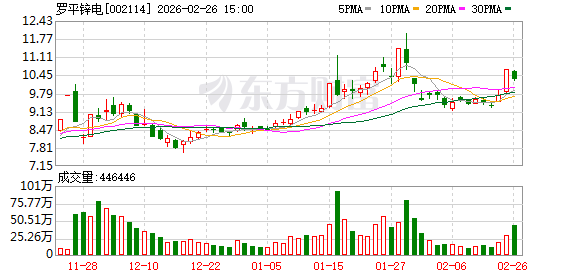
罗平锌电:截至2026年2月13日公司股东人数为48583户
Zheng Quan Ri Bao· 2026-02-26 13:40
(文章来源:证券日报) 证券日报网讯 2月26日,罗平锌电在互动平台回答投资者提问时表示,截至2026年2月13日公司股东人 数为48583户。 ...


十大宏观趋势分析报告
Sou Hu Cai Jing· 2026-02-26 12:31
Group 1 - The core viewpoint of the report is that China's economy will continue to experience "reparative growth" in 2026, with the real estate sector being a key variable affecting the overall economic landscape [2][13][26] - The real estate cycle is defined as an "L-shaped" bottoming phase, indicating that it will neither continue to decline deeply nor experience a V-shaped recovery, but will stabilize gradually [2][26] - The report emphasizes that real estate is no longer the primary driver of economic growth, with a shift in policy focus towards a "new development model" that includes affordable housing construction and urban renewal [2][26] Group 2 - Inflation is expected to rise moderately, with nominal GDP growth projected to rebound from 4% in 2025 to 5% in 2026, which is crucial for improving corporate profits and household incomes [3][30][38] - The report notes that the prolonged period of low inflation has pressured corporate profit margins, leading to a perception that earning money has become increasingly difficult [3][30] - The anticipated recovery in inflation is expected to be driven by stable food prices and a rebound in core service consumption, which will positively impact nominal GDP growth [3][30][38] Group 3 - Fiscal policy is expected to become more proactive, shifting from large-scale stimulus to optimizing expenditure structures, focusing on supporting livelihoods and technology rather than traditional infrastructure [4][13][26] - The report predicts that the fiscal deficit rate may remain high, around 4%, but emphasizes the importance of where the funds are allocated [4][15][26] - There is a notable shift in fiscal spending towards social security, employment, and technology, indicating a focus on long-term competitiveness and addressing demographic challenges [4][15][26] Group 4 - The consumption engine is transitioning from goods consumption to service consumption, with an expected increase in the household consumption rate [5][14][26] - In 2025, the "trade-in" policy for appliances and automobiles was a major driver of consumption, but by 2026, service consumption is expected to take over, supported by increased transfer income and improved nominal GDP [5][14][26] - The report highlights that young families, with higher marginal consumption tendencies, will particularly drive growth in service sectors such as dining, tourism, and healthcare [5][14][26] Group 5 - Investment growth is expected to stabilize and rebound, with a narrowing decline in real estate development investment, while manufacturing and infrastructure investments will act as stabilizers [6][14][26] - The report notes that fixed asset investment experienced negative growth in 2025, but factors such as relaxed housing policies in first-tier cities and increased fiscal support for investment may lead to a turnaround in 2026 [6][14][26] - Predictions indicate a 10% decline in real estate development investment, while manufacturing and infrastructure investments are expected to grow by 5%, leading to an overall fixed asset investment growth of around 2% [6][14][26] Group 6 - The transition from old to new economic drivers is accelerating, with capital expenditure in "new economy" sectors like artificial intelligence replacing traditional real estate and infrastructure investments [7][14][26] - The report confirms this shift through macro-level data and micro-level corporate spending, indicating that technology firms are maintaining high growth in capital expenditure while real estate companies are contracting [7][14][26] - This "temperature difference" in capital allocation reveals the core drivers of future growth, emphasizing the need for technological innovation and equipment upgrades rather than reliance on traditional construction [7][14][26] Group 7 - The global liquidity environment is expected to remain accommodative, with both the Federal Reserve and the People's Bank of China likely to pursue easing measures [8][15][26] - The report suggests that if financial markets face pressure, the Federal Reserve will likely inject liquidity again, while China may also implement a reserve requirement ratio cut and interest rate reduction in 2026 [8][15][26] - This "loose monetary" environment is seen as a crucial support for stock markets and resource performance [8][15][26] Group 8 - The US dollar is expected to maintain a strong position, while the Chinese yuan may appreciate further, driven by internal and external economic rebalancing [9][15][26] - The report explains that the strong fundamentals of the US economy compared to Europe and Japan support a strong dollar, while easing trade tensions between China and the US may increase demand for the yuan [9][15][26] - The appreciation of the yuan is viewed as a reflection of China's shift from external demand reliance to internal-driven growth, which will attract international capital inflows [9][15][26] Group 9 - A-shares are seen as having more favorable opportunities compared to bonds, with a "slow bull" market foundation remaining solid [10][15][26] - The report highlights that the friendly policy environment and rising inflation will benefit corporate profit recovery, while rising bond yields will enhance the relative attractiveness of stocks [10][15][26] - The re-evaluation of technology assets, particularly in AI, and the expectation of re-inflation are expected to guide the recovery of traditional economic fundamentals [10][15][26] Group 10 - Resource commodities, especially precious and non-ferrous metals, are expected to see their strategic value continue to rise, facing long-term opportunities [11][15][26] - The report identifies three key factors: the favorable impact of a global loose monetary environment on commodity prices, increased demand for non-ferrous metals driven by the AI revolution and high-end manufacturing, and the geopolitical uncertainties leading to a "security premium" for critical minerals [11][15][26] - Particularly for gold, the report suggests that its status as a reserve asset is returning, with prices likely to rise in the context of loose monetary policy and high debt levels [11][15][26]
北交所日报:温和上涨,关注金三银四和两会政策预期-20260226
Western Securities· 2026-02-26 12:08
Investment Rating - The report does not explicitly provide an investment rating for the industry, but it suggests a positive outlook based on structural opportunities and market conditions [3]. Core Insights - The North Exchange A-share market experienced a moderate increase, with a trading volume of 18.656 billion yuan on February 25, 2026, up by 2.277 billion yuan from the previous trading day. The North Exchange 50 Index closed at 1,547.201, rising by 0.77%, while the specialized index increased by 1.22% to 2,597.61 [1][8]. - A total of 294 companies were listed on the North Exchange, with 208 stocks rising, 6 remaining flat, and 80 declining. The top five gainers included Tonghui Information (10.3%), Anda Technology (8.2%), and Tianli Composite (6.3%), while the top five losers were Liancheng CNC (-7.1%) and Keli Co., Ltd. (-5.9%) [1][15][16]. - The report highlights structural characteristics within the North Exchange, aligning with the cyclical stock market trends, particularly in rare earths, phosphorus chemicals, and small metals [3]. Summary by Sections Market Review - On February 25, 2026, the North Exchange A-share trading volume reached 18.656 billion yuan, an increase of 2.277 billion yuan from the previous day. The North Exchange 50 Index rose by 0.77% to close at 1,547.201, with a PE_TTM of 65.09. The specialized index also saw a rise of 1.22% [1][8]. Important News - OpenAI's project faced funding issues, shifting its focus to managing internal data center resources rather than owning physical assets. Additionally, OpenAI is behind in custom chip development, with plans to start in 2025 [2][17]. - Murata Manufacturing, a major MLCC manufacturer, is considering raising prices for its passive components [2][18]. Key Company Announcements - Deere Chemical announced a projected revenue of 726 million yuan for 2025, a decrease of 7.21% year-on-year, with a net profit expected to drop by 33.54% [2][19]. - Hongzhi Technology expects a revenue of 47.228 million yuan for 2025, down 1.61% year-on-year, with a net profit decline of 16.96% [2][20][21].
【聚焦职代会】评论员文章(五)|数智赋能强根基 扬鞭奋蹄启新程——深入贯彻集团十二届四次职代会精神 高质量推进数智化转型
Xin Lang Cai Jing· 2026-02-26 12:01
Core Insights - The recent employee representative conference of Baotai Group marks a significant milestone, coinciding with the 60th anniversary of the company's establishment and the beginning of the "15th Five-Year Plan" [1][8] - The conference emphasized the importance of digital and intelligent upgrades, aligning with national strategies to enhance core competitiveness and address development bottlenecks [3][10] Digital Transformation Strategy - The conference elevated the importance of digital transformation to a strategic level, recognizing the need to overcome efficiency bottlenecks and improve responsiveness in traditional business models [4][11] - Digital transformation is viewed as a comprehensive initiative that requires participation from all employees to ensure effective implementation of the conference's spirit [4][11] Focus on Core Production and Management - The conference outlined key directions for digital transformation, emphasizing the integration of technological innovation with production and operations [5][12] - Initiatives include the construction of smart factories at various levels, the introduction of automation and digital twin technologies, and the development of intelligent production lines [5][12] - Management improvements will involve enhancing ERP system capabilities and utilizing AI to create a knowledge base for decision-making [5][12] Future Development Plans - The intelligent manufacturing center will focus on four main areas: identifying key application scenarios, enhancing design and maintenance capabilities, planning smart industrial parks, and integrating advanced technologies like AI and IoT into production processes [6][13] - The goal is to create a smart manufacturing ecosystem that is efficient, safe, and environmentally friendly, contributing to the overall high-quality development of the company [6][13] Commitment to Innovation - The company is committed to deepening the integration of digital technologies across all operational aspects, fostering innovation, and enhancing productivity and quality [7][14] - This transformation is seen as essential for the company's future growth and competitiveness in the high-end, intelligent, and green development landscape [7][14]


风险月报 | 权益情绪明显回落,但预期仍保持平稳
中泰证券资管· 2026-02-26 11:32
Core Viewpoint - The overall market is experiencing a slight valuation adjustment, with a focus on the alignment between valuation and performance, as well as the effectiveness of policy implementation [2] Market Overview - The Zhongtai Asset Management risk system score for the CSI 300 index is 50.78, down from 60.35 last month, indicating a decline in market sentiment [2] - The CSI 300 valuation has slightly decreased to 61.74 from 65.54, remaining within a reasonable range over the past year [2] - Market expectations remain stable at 60.00, with macro analysts projecting a GDP growth target of around 4.5-5% for 2026 [2] Sector Analysis - Among 28 first-level industries, 12 sectors including chemicals, non-ferrous metals, electronics, and real estate have valuations above the historical 60th percentile, while sectors like agriculture, food and beverage, and non-bank financials are below the historical 10th percentile [2] Market Sentiment - Market sentiment has significantly declined to 35.21 from 55.33, indicating a shift from a "slightly positive" to a "neutral" zone [4] - Margin financing scores have dropped sharply, reflecting a decrease in leveraged fund activity [4] Investment Recommendations - Focus on the alignment of valuation and performance, particularly in light of upcoming annual reports from listed companies, emphasizing high certainty in earnings and stable cash flows [5] - The current market valuation increase is supported by economic recovery and policy support, suggesting a strategic approach within manageable risk levels [5] Economic Indicators - In January, the national consumer price index (CPI) rose by 0.2% year-on-year, indicating a gradual improvement in consumer demand [9] - The producer price index (PPI) decreased by 1.4% year-on-year, but the decline has narrowed, with a month-on-month increase of 0.4% [9] Financial Data - In January, the total social financing reached 7.22 trillion yuan, marking a historical high for the same period, with broad money (M2) growing by 9.0% year-on-year [10] - The central bank has maintained a "moderately loose" monetary policy, providing substantial support for the bond market [11] Bond Market Dynamics - The bond market has transitioned from a previous unilateral trend, with a focus on stable liquidity and long-term expectations [8] - The yield on 10-year government bonds has dropped below 1.8%, while the 30-year bonds are fluctuating around 2.20% [11]

一键把握核心资产 银华中证有色金属ETF联接基金正在发行
Zheng Quan Ri Bao Wang· 2026-02-26 11:10
Core Viewpoint - The overall metal sector showed a strong oscillating pattern during the Spring Festival holiday, driven by a dual focus on risk aversion and stagflation trading, with investors encouraged to seize opportunities in the metal sector [1] Group 1: Market Analysis - Multiple uncertainties in the global macro environment during the holiday period supported the price increase of metal assets, including both non-ferrous and precious metals [1] - According to Zhongyin Securities, by 2026, the market is expected to enter a "profit-driven upward phase," with domestic re-inflation narratives strengthening under the influences of "anti-involution" and expanding domestic demand [1] - The strong cyclical attributes of metal assets are anticipated to manifest, with financial attributes and industrial trends leading to revaluation opportunities [1] Group 2: Investment Opportunities - Investors are advised to consider industrial metals and minor metals as offensive strategies, while using precious metals as a defensive measure to effectively capture market opportunities [1] - The ongoing issuance of the Yinhua CSI Non-Ferrous Metal ETF linked fund provides a convenient investment tool for investors seeking exposure to resource assets [1] - This fund closely tracks the CSI Non-Ferrous Metal Index, allowing investors to easily access core assets in the non-ferrous industry [1] Group 3: Investment Strategy - Given the diverse subcategories and significant stock volatility within the non-ferrous industry, investors can leverage the Yinhua Non-Ferrous ETF and its linked fund to significantly reduce stock selection difficulty and trading costs [1] - This approach enables more efficient participation in the overall growth of the industry [1]

沪铅库存增近两成 刷新四个半月最高位
Wen Hua Cai Jing· 2026-02-26 10:38
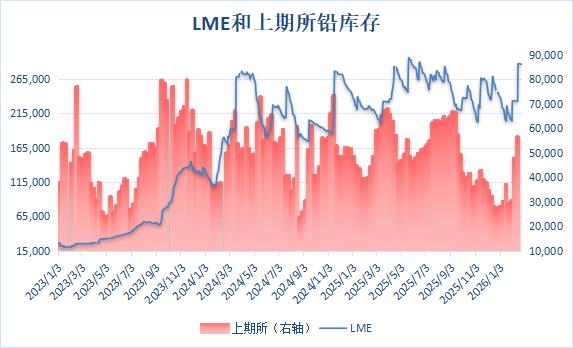
Group 1 - The London Metal Exchange (LME) reported an increase in lead inventory during the holiday period, reaching an eight-month high of 287,125 tons on February 17, followed by a slight decrease to 286,300 tons in the latest report [1] - The Shanghai Futures Exchange indicated that lead inventory rose by 18.22% to 56,539 tons for the week ending February 13, marking a four-and-a-half-month high [1] - Generally, a continuous decline in inventories at domestic and international exchanges tends to support prices, while an increase may exert downward pressure on prices [3] Group 2 - The data for LME and Shanghai Futures Exchange lead inventories since February 2026 is provided, measured in tons [4]
每日投行/机构观点梳理(2026-02-26)
Jin Shi Shu Ju· 2026-02-26 10:27
Group 1 - Bank of America predicts gold prices may reach $6,000 per ounce within the next 12 months, while silver prices could exceed $100 per ounce again this year despite current demand concerns from solar panel manufacturers [1] - Citigroup analysts indicate that emerging markets are expected to be the most favored trading markets this year, with major asset management firms investing in emerging market stocks and bonds, betting on strong global economic growth and a weaker dollar [1] - ING suggests that investors looking to avoid volatility in the U.S. stock market due to AI developments may find European government bonds attractive, as they offer relatively stable yields amid rising U.S. market volatility [1] Group 2 - JPMorgan forecasts that the Bank of Thailand will maintain its policy interest rate at 1% until 2027 to preserve policy space amid rising uncertainties, with the Thai economy expected to accelerate further due to political stability post-election [2] - CITIC Securities reports that Zimbabwe's ban on lithium exports is likely to lead to a significant increase in lithium prices, as the country is projected to account for 12% of global lithium resource output by 2026 [3] - Huatai Securities notes that the U.S. designation of phosphate-based agricultural inputs as strategic resources could impact market prices, particularly if demand increases due to supply stability concerns [3] Group 3 - CITIC Securities believes that the non-ferrous metals bull market is far from over, suggesting that investors should hold positions but avoid blindly chasing prices, with opportunities arising during market corrections [4][5] - CICC reports that recent policy adjustments in Shanghai may help stabilize housing prices in key cities, as the supply-demand structure shows positive changes [5][6] - Galaxy Securities indicates that the real estate industry may see overall valuation recovery as housing demand is expected to be released, leading to a healthier market development [6][7]




A股市场投资策略周报:春节消费温和复苏,市场呈现资金回流-20260226
BOHAI SECURITIES· 2026-02-26 09:25
投资策略 +-[Table_MainInfo]春节消费温和复苏,市场呈现资金回流 ――A 股市场投资策略周报 | 分析师: | 宋亦威 | 月 | SAC NO: S1150514080001 2026 | 26 | | | 年 | 日 | | 2 | | --- | --- | --- | --- | --- | --- | --- | --- | --- | --- | --- | | [Table_Analysis] 证券分析师 | | | | | [Table_Summary] 投资要点: | | | | | | | 宋亦威 | | | | | 市场回顾,节后 月 月 日),重要指数纷纷收涨; ⚫ 个交易日(2 24 日-2 26 | 3 | | | | | | 022-23861608 | | | | | 其中,上证综指收涨 1.58%,创业板指收涨 2.11%;风格层面,沪深 | | | | 300 | | | songyw@bhzq.com | | | | | 收涨 1.43%,中证 500 收涨 3.10%。成交方面有所放量,两市统计区间 | | | | | | | | | | | | 内成交 ...
长江有色:26日镍价下跌 下游采购谨慎回暖压价小单主导成交
Xin Lang Cai Jing· 2026-02-26 09:23
Core Viewpoint - Nickel prices are experiencing a downward trend due to weak macroeconomic sentiment and a sluggish fundamental reality, leading to a "supply surplus, demand weakness" situation in the nickel market [1][2][4]. Group 1: Market Performance - As of February 26, the Shanghai nickel main contract (2605) opened at 141,000 CNY/ton, reached a high of 141,870 CNY/ton, a low of 139,500 CNY/ton, and closed at 141,040 CNY/ton, down 480 CNY/ton, or 0.34% [1]. - The average price of 1 nickel in the Changjiang market was reported at 130,250 CNY/ton, remaining stable compared to the previous day [1]. - The overall trading in the spot market was quiet, with traders adjusting prices based on market conditions, and downstream purchasing intentions showing slight recovery but primarily focused on essential small orders [3]. Group 2: Supply and Demand Analysis - The current nickel market is characterized by ample supply from Indonesia and stable domestic refined nickel production, with no signs of raw material shortages [2]. - Demand from the main consumption sectors, stainless steel and new energy, is weak, with downstream orders being light and significant price reductions observed [2]. - Visible inventories remain at historically high levels, contributing to the ongoing pressure on prices due to the overall weak supply-demand dynamics [2]. Group 3: Price Outlook - The downward trend in nickel prices is expected to continue, with a forecast of weak fluctuations in the short term [4]. - Despite some support from Indonesian industrial policies, the core pressure from weak demand in stainless steel and new energy sectors is difficult to offset [4]. - The market lacks strong drivers to reverse the fundamental situation, leading to a characterization of the price movement as "easy to fall, hard to rise" [4].
