超市

Search documents
行业研究、行业周报:九兴控股2025Q2营收同增2.9%,Ciele品牌与滔搏达成合作-20250722
Shanxi Securities· 2025-07-22 09:52
Investment Rating - The report maintains an investment rating of "Synchronize with the market" for the textile and apparel industry [1]. Core Views - The textile and apparel industry has shown a steady performance with a year-on-year revenue growth of 2.9% for Q2 2025, driven by the collaboration between Ciele Athletics and Tabo [2][5]. - The overall retail sales in June 2025 increased by 4.8% year-on-year, indicating a stable demand in the market, although growth rates for major consumer categories have slowed down [2][44]. - The report highlights the resilience of the luxury goods sector, with Richemont's sales growing by 3% year-on-year, driven by strong performance in the jewelry segment [63]. Summary by Sections Company Performance - In Q2 2025, the company reported an unaudited revenue of $444 million, a 2.9% increase year-on-year, with the footwear manufacturing segment contributing $433 million, also up by 2.5% [15]. - The total revenue for the first half of 2025 reached $775 million, reflecting a 0.7% year-on-year growth [15]. Market Dynamics - The SW textile and apparel sector saw a slight increase of 0.24% in the week from July 14 to July 18, 2025, while the SW light industry manufacturing sector rose by 0.08% [16]. - The textile manufacturing sub-sector increased by 2.43%, while the apparel and home textile sub-sector rose by 0.29% [16]. Industry Data Tracking - In the first half of 2025, China's textile and apparel exports amounted to $705.19 billion and $734.59 billion, showing a year-on-year growth of 1.8% and a slight decline of 0.2%, respectively [37]. - The retail sales of gold and silver jewelry grew by 6.1% year-on-year in June 2025, indicating robust demand in the jewelry market [44]. Consumer Behavior - The report notes that online retail channels performed slightly better than the overall retail market, with a 6.0% year-on-year growth in online sales of physical goods in the first half of 2025 [43]. - The demand for sports and entertainment products remains strong, with a year-on-year growth of 22.2% in the first half of 2025 [44].

山姆又出事!有面包被指隐藏含转基因配料表,客服称若介意可不买
21世纪经济报道· 2025-07-22 06:37
Core Viewpoint - The article discusses recent controversies surrounding Sam's Club, particularly regarding the omission of ingredient information on a product's packaging, which has led to consumer concerns and discussions about the company's product selection and membership value [1][5][12]. Group 1: Product Controversy - A recent post by a consumer highlighted that the packaging of Sam's Club's MM Spicy Seed Meat Floss Bread no longer lists the ingredient details, which has raised concerns about transparency [1][5]. - The ingredient list on the online shopping platform includes "genetically modified soybean oil," which was not present in the previous offline packaging [3][5]. - Sam's Club staff acknowledged the issue and stated they would report it to relevant departments for improvement, emphasizing that the product meets sales standards and has quality assurance [5][6]. Group 2: Membership and Product Selection Issues - Recent discussions on social media indicate that consumers are dissatisfied with Sam's Club's product offerings, feeling that the store is losing its unique selection and becoming more like other supermarkets [9][11]. - Membership benefits have reportedly diminished, leading to customer complaints and some members expressing intentions not to renew their memberships [12]. - The company has seen a significant increase in paid memberships, with projections indicating over 9 million members by June 2025, generating substantial membership fee revenue [12]. Group 3: Expansion and Financial Performance - Sam's Club has been rapidly expanding in mainland China, opening 32 new stores in seven years, with plans for continued growth in 2024 [14]. - Despite strong sales growth reported by Walmart China, the high costs associated with store openings and operations pose challenges for Sam's Club's financial sustainability [14][15]. - The overall performance of the supermarket sector in China is underwhelming, raising questions about Sam's Club's ability to maintain profitability amid increasing competition and expansion [15][16].


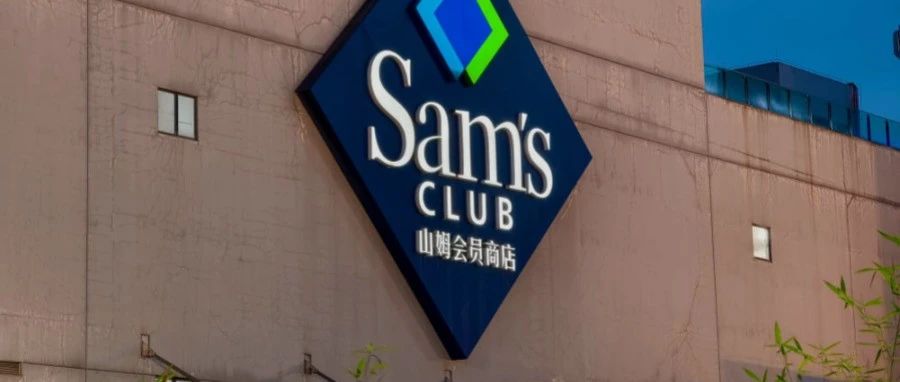
山姆会员店背叛了中产?
36氪· 2025-07-21 13:20
Core Viewpoint - The article discusses the recent backlash against Sam's Club in China due to its product selection changes, highlighting a clash between consumer expectations and the brand's strategy, reflecting broader issues of national identity and consumer trust in domestic brands [4][10][12]. Group 1: Sam's Club's Product Strategy - In July, Sam's Club removed several popular domestic products, replacing them with more common brands, leading to dissatisfaction among its members who felt disrespected [6][10]. - The membership fees for Sam's Club, which amount to at least 1.3 billion RMB annually from over 5 million members, are seen as a ticket to a premium shopping experience that is now perceived as compromised [6][12]. - The backlash is not just about product quality but also about the perceived betrayal of consumer trust and the value proposition of being a member [20][23]. Group 2: Consumer Sentiment and National Identity - The article highlights a growing anxiety among Chinese middle-class consumers regarding their national identity and the quality of domestic products, as they grapple with the perception that local brands are inferior [31][38]. - Despite advancements in product quality and safety in the domestic market, historical trust issues still linger, particularly among older consumers who experienced past quality failures [38][39]. - Younger consumers, however, show increasing trust in domestic brands, indicating a shift in sentiment that could reshape the market landscape [39][40]. Group 3: Industry Dynamics and Competitive Landscape - The success of competitors like Pang Donglai, which emphasizes transparency and high-quality service, has raised consumer expectations and challenged Sam's Club's traditional value proposition [24][25]. - The article suggests that the retail landscape in China is evolving, with a push towards quality and trust that transcends membership models, potentially diminishing the exclusivity of Sam's Club [25][42]. - The need for brands to resonate with consumer values and perceptions is emphasized, suggesting that the future of retail will depend on quality and accessibility rather than exclusivity [42][43].
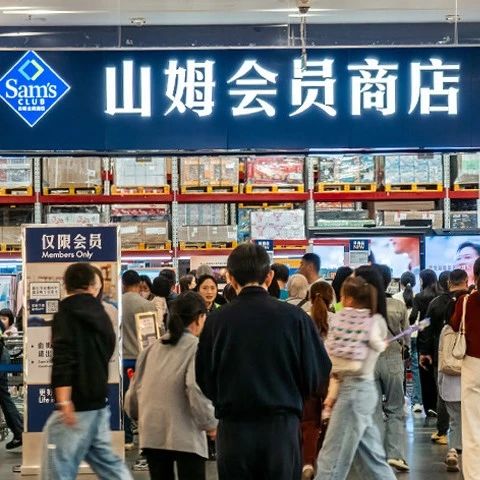
当一座县城有了“胖东来”
虎嗅APP· 2025-07-21 11:03
Core Viewpoint - The article discusses the transformation of consumer behavior and retail dynamics in a small county town, highlighting the rise of local brands and the impact of changing consumption patterns on traditional retail models [3][4][9]. Group 1: Consumer Behavior - There is a shift from top-down consumption upgrades to bottom-up upgrades, with local brands gaining prominence over international luxury brands [3][4]. - The presence of local supermarkets like "胖东来" reflects a change in consumer preferences, where affordability and local flavor are prioritized over brand prestige [4][9]. - Consumers in the county town are increasingly drawn to affordable high-end fruits and local clothing brands, indicating a shift in spending habits [9][10]. Group 2: Retail Dynamics - The article notes the emergence of various local brands and supermarkets that cater to the unique tastes and preferences of county residents, contrasting with the offerings of larger cities [4][9]. - The county town has seen a proliferation of tea and coffee shops, indicating a growing demand for such products despite the absence of aggressive marketing strategies typical in larger cities [23][28]. - The local retail environment is characterized by a mix of traditional and modern consumption patterns, with residents often opting for in-person shopping over online delivery services [30][31]. Group 3: Education and Training - There is a strong emphasis on education in the county, with parents willing to invest significantly in their children's education, leading to a proliferation of training institutions [20][21]. - The article highlights the competitive nature of local education, with families increasingly choosing to keep their children in local schools rather than sending them to larger cities [21][22]. - The rising costs of education and extracurricular activities are noted, with families spending substantial amounts on training despite the relatively low average income in the area [19][20]. Group 4: Economic Context - The county's economy is transitioning, with traditional land-based revenue models facing challenges, leading to a need for diversification [39]. - Despite economic pressures, the stability of life in the county provides a sense of security for residents, who are less burdened by urban financial pressures such as mortgages [39][40]. - The article suggests that while opportunities may be fewer compared to larger cities, the quality of life in the county remains appealing to many residents [39][40].
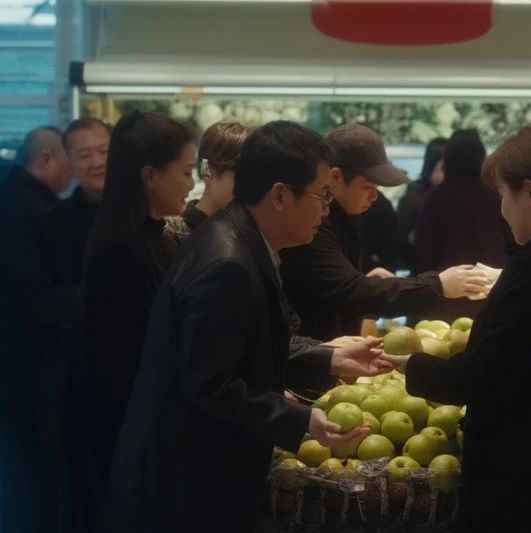
广东最好逛的超市,差点就闭店了
3 6 Ke· 2025-07-21 10:11
Core Viewpoint - The emotional attachment of Guangzhou residents to AEON (formerly JUSCO) highlights the challenges faced by traditional Japanese supermarkets in adapting to changing consumer preferences and competition from local and online retailers [1][3][19]. Group 1: Company Background - AEON entered Guangdong 29 years ago, introducing a market-oriented and refined product and service model to Chinese consumers [2]. - The company has been a significant player in the retail market, with over 400 stores nationwide, but has faced increasing competition from local supermarkets and membership-based stores like Sam's Club [11][12]. Group 2: Market Challenges - AEON's traditional business model is under pressure due to the rise of local supermarkets, instant retail, and changing consumer habits, particularly among younger generations [3][10]. - The company has seen a decline in revenue, with a reported 6.87% decrease in 2024 and a net profit drop of 79.2% to 338 million [12]. - AEON's mainland operations have been unprofitable since 2017, with a revenue of 4.339 billion HKD in 2024, down 4.68% year-on-year [12]. Group 3: Consumer Sentiment - Despite the challenges, many consumers express a strong emotional connection to AEON, viewing it as a nostalgic part of their childhood [1][19]. - The local community appreciates AEON's efforts in providing a personalized shopping experience, including the use of local dialects and high-quality prepared foods [21][22]. Group 4: Competitive Landscape - The retail landscape is shifting towards smaller, community-focused stores, with brands like Qian Dama and Hema gaining traction [12][14]. - AEON's reliance on traditional store formats and high rental costs has hindered its ability to compete effectively in this evolving market [16].
2025年零售品牌100强-Brand Finance
Sou Hu Cai Jing· 2025-07-21 05:17
Overall Summary - The Brand Finance report reveals that the total brand value of the world's top 100 retail brands has reached USD 1.3 trillion, with a 9% increase year-on-year, highlighting the dominance of US brands and the strong performance of Chinese e-commerce brands [16][26][29]. Group 1: Brand Performance - Amazon retains its position as the world's most valuable retail brand for the tenth consecutive year, with a brand value of USD 356.4 billion, reflecting a 15% growth [16][35][42]. - Walmart ranks second with a brand value of USD 137.2 billion, marking a 42% increase, driven by private-label expansion and a rebranding effort aimed at younger consumers [16][36]. - Kmart is noted as the fastest-growing brand, with a 79% increase in brand value to USD 2.2 billion, attributed to its successful private label strategy [16][53]. Group 2: Regional Insights - The United States leads with 36 brands contributing 68% of the total brand value, amounting to USD 856.1 billion [29][30]. - China, despite a 14% decline in overall brand value, remains the third-highest contributor with USD 66.7 billion [27][29]. - Germany ranks second in brand value contribution at USD 83.4 billion, with strong performances from discount retailers like Lidl and Aldi [27][29]. Group 3: Brand Strength and Leadership - ICA from Sweden is recognized as the strongest retail brand globally, with a Brand Strength Index (BSI) score of 93.2 [2][65]. - The Brand Guardianship Index ranks Philip Daniele of AutoZone as the top retail brand CEO, reflecting strong leadership in brand management [80][89]. - E-commerce brands are increasingly prominent, with four of the top ten strongest retail brands originating from this sector, including JD.com and Meituan from China [71][72]. Group 4: Sustainability Trends - Sustainability is becoming a critical factor in consumer choice, with 4.9% of consideration driven by sustainability practices in retail [93]. - Brands are focusing on energy efficiency, waste reduction, and ethical sourcing to meet growing consumer demand for transparency and responsible practices [93].


当一座县城有了“胖东来”
Hu Xiu· 2025-07-21 02:52
Group 1 - The article discusses the shift in consumer behavior in lower-tier cities, highlighting how local brands are gaining popularity over international luxury brands [4][5][20] - The presence of local supermarkets like "胖东来" is noted, which have adapted to the tastes and preferences of consumers in these areas [7][10][20] - The article emphasizes the unique shopping experience in these counties, where local culture influences service styles and product offerings [15][19][60] Group 2 - The rise of short video content is impacting consumer habits, with many residents engaging with this medium in various settings, including educational institutions and local shops [25][32][33] - The article points out the emergence of local influencers and content creators who are capitalizing on the popularity of short videos, although the market is competitive [34][35][36] - There is a noted trend of parents investing in education for their children, with a focus on local training institutions that offer affordable options compared to larger cities [39][43][46] Group 3 - The article highlights the proliferation of tea and coffee shops in these counties, indicating a growing demand for such beverages among residents [48][51][62] - It discusses the limited impact of the recent delivery service trends in these areas, where traditional shopping habits remain prevalent [54][57][60] - The article mentions the challenges faced by local businesses, including empty storefronts and reduced consumer spending, as the economy shifts [73][75]
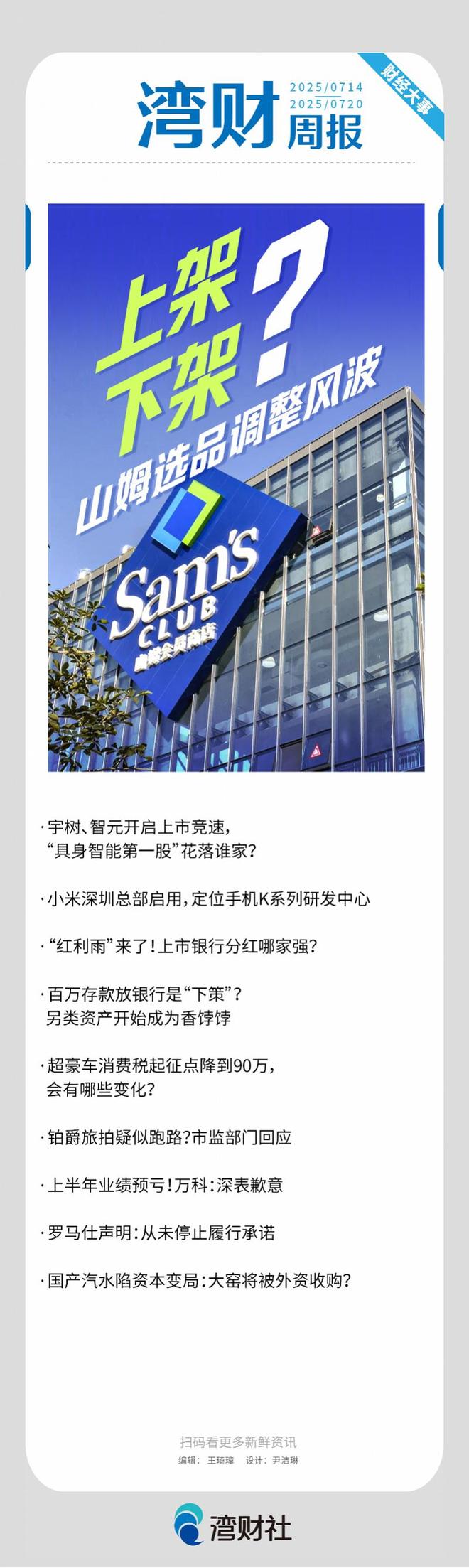
湾财周报 大事记 山姆选品调整风波;宇树科技要上市
Nan Fang Du Shi Bao· 2025-07-20 13:54
Group 1 - Sam's Club has faced controversy over the introduction of various domestic snack brands, leading to member dissatisfaction regarding the perceived quality of products available at the store [3] - Walmart has acknowledged the discussions on social media regarding product selection at Sam's Club and stated that it will consider these discussions in future product selection strategies [3] - Following the removal of certain products, multiple snack brands are seeking to leverage the Sam's Club channel for growth and brand positioning [3] Group 2 - The new consumption tax regulations for ultra-luxury cars will take effect on July 20, 2025, raising concerns about potential price increases and market sales impact [5] - The competition for the title of "first stock in embodied intelligence" is heating up, with Yuzhu Technology officially starting its listing guidance process [6] - Battery manufacturer Hive Energy has announced its entry into the humanoid robot and low-altitude economy sectors, indicating a strategic expansion [7] Group 3 - Xiaomi has opened its fourth regional headquarters in Shenzhen, which will focus on the development of its K series smartphones and AIoT ecosystem [8] - A total of 42 A-share listed banks have distributed approximately 632.6 billion yuan in dividends, with major contributors being Industrial and Commercial Bank of China and China Construction Bank [9] - The ETF market has seen significant growth, reaching a total scale of 4.39 trillion yuan, with notable inflows into bond, cross-border, and gold ETFs [15] Group 4 - The real estate sector is facing significant challenges, with 61 listed property companies expected to report a combined loss of over 400 billion yuan for the first half of 2025 [20] - Vanke has issued an apology for its anticipated net loss of 10 to 12 billion yuan for the first half of 2025 [21] - The domestic soda brand Dayao is undergoing a major capital shift, with KKR set to gain actual control over the brand [23]
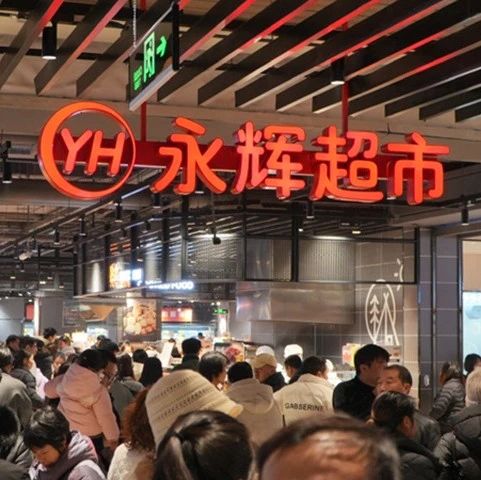
「胖改」路上,永辉超市阵痛加剧
36氪· 2025-07-20 13:16
Core Viewpoint - Yonghui Supermarket is undergoing a significant transformation, facing challenges and losses as it navigates this transition, with a notable shift in ownership and management dynamics [4][7][24]. Group 1: Financial Performance - In the first half of 2025, Yonghui Supermarket is expected to report a net loss of 240 million yuan and a non-recurring net loss of 830 million yuan, marking a shift from profit to loss compared to the previous year [7][9]. - The company experienced a revenue of 17.48 billion yuan in Q1 2025, with net profits of 148 million yuan and 137 million yuan respectively, indicating a significant decline in Q2 with estimated losses of approximately 387 million yuan and 967 million yuan [7][9]. - The losses are attributed to the impacts of transformation and reform, including the adjustment and opening of 93 stores and the closure of 227 underperforming stores, which incurred various costs [9][10]. Group 2: Transformation Strategy - Yonghui Supermarket is in a deep transformation phase, referred to as "entering the deep water zone," with increasing operational pains [4][7]. - The company is adopting a new operational model inspired by the successful "Fat Donglai" supermarket, which has gained popularity for its unique business approach [13][14]. - The first "Fat Donglai" style store opened in Zhengzhou achieved sales of 1.88 million yuan on its first day, significantly outperforming previous daily sales figures [18]. Group 3: Management Changes - Following a major shift in ownership, with Miniso's founder becoming the largest shareholder, Yonghui Supermarket is undergoing a leadership transition, with a new reform leadership group established to oversee the transformation [25][29]. - The previous CEO, Zhang Songfeng, was not re-elected to the board, raising concerns about the lack of a CEO appointment during this critical transition period [28][31]. - The company is currently in the process of a global search for a new CEO, reflecting its cautious approach to leadership during the transformation [31].

奥乐齐双店同开,重资产降维打击
Sou Hu Cai Jing· 2025-07-20 06:05
Core Viewpoint - Aldi is expanding its presence in East China with the opening of new stores in Suzhou and Wuxi, aiming to reach a total of 76 stores nationwide by July 2025, with a strong performance in these new locations compared to existing stores in Shanghai [2][3]. Expansion Strategy - Aldi's new stores in Suzhou and Wuxi are strategically located in high-traffic areas, indicating a focused approach to site selection as it expands beyond Shanghai [3]. - The company has experienced significant sales performance in its new stores, with early results placing them among the top three in sales within Aldi's existing store network [3]. Market Factors Supporting Growth - The competitive landscape in East China is less intense compared to Shanghai, allowing Aldi to operate with lower rental and labor costs, which is beneficial for its community-focused business model [5][6][8]. - Aldi's unique business model, which includes a focus on high-quality, low-priced products, is relatively rare in the Chinese market, providing a competitive edge as it enters less saturated markets [8][10]. Brand Influence - Aldi's brand recognition, built through its successful operations in Shanghai, is expected to facilitate its expansion into East China, leveraging established supply chains and consumer familiarity [12][13][14]. - The company has achieved a significant market penetration in Shanghai, with a reported 38% year-on-year growth in fresh food sales and nearly 25% of Shanghai households purchasing fresh food from Aldi [12]. Supply Chain Efficiency - Aldi has localized its supply chain, with over 80% of its suppliers being domestic, which enhances its operational efficiency in the East China market [15]. - The company has established a logistics network centered around Shanghai, ensuring efficient supply chain management for its new stores in Jiangsu [16]. Development Strategy - Aldi's approach in China is characterized by a "heavy asset" strategy, focusing on substantial investments in logistics and store infrastructure rather than a light asset model [18][19]. - The company continues to prioritize high-traffic and convenient locations for its stores, which aligns with its operational model and market strategy [21][22]. Differentiation Strategy - Aldi emphasizes differentiation through various strategies, including no membership fees, small packaging options, a focus on a limited number of high-quality SKUs, and a strong presence of private label products [27][28][29]. - The company aims to enhance customer experience through self-checkout systems, positioning itself as a leader in automation within the community retail sector [25].