
制造业

Search documents
12月和四季度经济数据点评:积极面对2026年全球形势的风高浪急
Bank of China Securities· 2026-01-19 12:33
Economic Growth - In 2025, the actual GDP grew by 5.0% year-on-year, achieving the annual growth target[3] - The GDP growth rate for Q4 2025 was 4.5%, a decrease of 0.3 percentage points from Q3 2025[4] - The nominal GDP growth rate for Q4 2025 was 3.8%, an increase of 0.1 percentage points from Q3 2025[4] Industrial Performance - In December 2025, industrial added value increased by 5.2% year-on-year, surpassing market expectations[13] - The cumulative year-on-year growth of industrial added value for 2025 was 5.9%[3] - The manufacturing sector showed a cumulative year-on-year growth of 6.4% in 2025, while the mining sector grew by 5.6%[19] Consumer Spending - In December 2025, retail sales of consumer goods grew by 0.9% year-on-year, marking the seventh consecutive month of decline[28] - The cumulative year-on-year growth of retail sales for 2025 was 3.7%, with service consumption growing by 5.5%[28] - The average disposable income per capita in 2025 was 43,377 yuan, with a year-on-year growth of 5.0%[52] Investment Trends - Fixed asset investment decreased by 3.8% year-on-year in 2025, with private investment down by 6.4%[39] - Real estate investment saw a cumulative year-on-year decline of 17.2% in 2025, with residential investment down by 16.3%[48] - The cumulative year-on-year growth of fixed asset investment in the manufacturing sector was 0.6%[43]
2025全年与12月宏观经济数据
Guan Tong Qi Huo· 2026-01-19 12:33
Report Summary 1. Report Industry Investment Rating No relevant information provided. 2. Core Viewpoint In 2025, facing complex changes in the domestic and international economic environment, China's national economy withstood pressure, moved forward, and achieved new results in high - quality development under the strong leadership of the Party Central Committee and the implementation of various policies, successfully fulfilling the main goals and tasks of economic and social development and concluding the "14th Five - Year Plan" victoriously [4]. 3. Summary by Directory Macroeconomic Data - **GDP**: The annual GDP was 1,401,879 billion yuan, a 5.0% increase at constant prices. The added values of the primary, secondary, and tertiary industries increased by 3.9%, 4.5%, and 5.4% respectively. Quarterly GDP growth rates were 5.4% in Q1, 5.2% in Q2, 4.8% in Q3, and 4.5% in Q4. The Q4 GDP increased by 1.2% quarter - on - quarter [5]. - **Industry**: The annual added value of large - scale industries increased by 5.9%. The added values of the mining, manufacturing, and power sectors increased by 5.6%, 6.4%, and 2.3% respectively. The added values of equipment manufacturing and high - tech manufacturing increased by 9.2% and 9.4% respectively. In December, the added value of large - scale industries increased by 5.2% year - on - year and 0.49% month - on - month [5]. - **Services**: The annual service industry added value increased by 5.4%. In December, the service industry production index increased by 5.0% year - on - year. The business activity index and business expectation index of the service industry increased in December [6]. - **Consumption**: The annual total retail sales of consumer goods were 501,202 billion yuan, a 3.7% increase. Online retail sales increased by 8.6%. In December, total retail sales of consumer goods increased by 0.9% year - on - year and decreased by 0.12% month - on - month. The annual service retail sales increased by 5.5% [7]. - **Investment**: The annual fixed - asset investment (excluding rural households) was 485,186 billion yuan, a 3.8% decrease. Real estate development investment decreased by 17.2%. In December, fixed - asset investment (excluding rural households) decreased by 1.13% month - on - month [8]. - **Import and Export**: The annual total goods import and export volume was 454,687 billion yuan, a 3.8% increase. Exports were 269,892 billion yuan, a 6.1% increase, and imports were 184,795 billion yuan, a 0.5% increase. In December, the total import and export volume increased by 4.9% year - on - year [9]. - **Prices**: The annual CPI was flat compared to the previous year. The core CPI increased by 0.7%. The annual PPI decreased by 2.6%, and the annual purchase price of industrial producers decreased by 3.0% [10]. - **Employment**: The annual average urban survey unemployment rate was 5.2%. In December, it was 5.1%. The total number of migrant workers increased by 0.5% [11]. - **Income**: The annual per - capita disposable income of national residents was 43,377 yuan, a 5.0% nominal increase. After deducting price factors, the real growth was also 5.0%. The per - capita consumption expenditure increased by 4.4% [12]. - **Population**: The year - end national population was 1,404.89 million, a decrease of 3.39 million. The birth rate was 5.63‰, the death rate was 8.04‰, and the natural growth rate was - 2.41‰. The urbanization rate was 67.89%, an increase of 0.89 percentage points [13]. Economic Growth and Business Climate Index No specific summary content other than the index names such as GDP quarterly growth rate, sub - industry GDP growth rate, and PMI index is provided [16]. Industrial Production No specific summary content other than the names of indicators such as industrial added value, power generation, steel production, coal production, railway freight volume, and Keqiang Index is provided [18]. Import and Export No specific summary content other than the names of indicators such as import and export amounts, growth rates, main export country growth rates, and export quantity and price indices is provided [23]. Investment No specific summary content other than the names of indicators such as real estate investment, infrastructure investment, manufacturing investment, and real estate - related indicators is provided [25]. Consumption No specific summary content other than the names of indicators such as total retail sales of consumer goods, automobile and petroleum product retail sales, furniture and building decoration material retail sales, and per - capita disposable income is provided [26]. Finance No specific summary content other than the names of indicators such as M1 and M2 growth rates, M2 - M1 growth rate difference and CPI, loan and social financing total, and corporate and household medium - and long - term loan amounts is provided [32]. Inflation No specific summary content other than the names of indicators such as CPI, PPI, and prices of pork and vegetables is provided [34].
【招银研究|宏观点评】圆满收官——中国经济数据点评(2025年全年及12月)
招商银行研究· 2026-01-19 12:29
Overview - The core viewpoint of the article is that China's economy in 2025 is characterized by a deepening supply-demand imbalance, with strong supply and weak demand, as well as a resilient external demand compared to internal demand. The GDP is projected to exceed 140 trillion yuan, with nominal growth of 4% and real growth of 5% [1][4]. Economic Structure - The economic operation in 2025 shows three main features: a deepening supply-demand imbalance, stronger external demand than internal demand, and initial success in price governance. The industrial added value increased by 5.9%, which is higher than GDP, investment, and consumption growth rates [4][5]. - The contribution rates to GDP growth from final consumption expenditure, capital formation, and net exports are 52%, 15.3%, and 32.7%, respectively [1]. Consumption - The total retail sales of consumer goods grew by 3.7% in 2025, with a "front high and back low" rhythm. The growth rates for goods and catering were 3.8% and 3.2%, respectively, indicating stronger performance in goods [12][15]. - In December, the retail sales growth rate dropped to 0.9%, reflecting a further weakening of growth momentum. Durable goods consumption faced significant pressure, with home appliances down by 14.3% [15][18]. Fixed Asset Investment - Fixed asset investment decreased by 3.8% in 2025, primarily due to declines in infrastructure (-1.5%) and real estate investment (-17.2%). Private investment continued to shrink for the third consecutive year, with a significant drop of 6.4% [18][20]. - Real estate sales showed a smaller decline compared to investment, with sales area and amount down by 8.7% and 12.6%, respectively, indicating a slight recovery in sales [20][21]. Foreign Trade - In 2025, exports maintained resilience with a cumulative growth of 5.5%, while imports showed no growth. Exports to the US fell by 19.9%, while exports to non-US regions grew by 9.9%, becoming the main support for overall export growth [29][30]. - In December, exports increased by 6.6%, driven by strong performance in automobiles and integrated circuits, which grew by 71.7% and 47.7%, respectively [29][30]. Supply Side - Industrial production growth accelerated in 2025, with the industrial added value increasing by 5.9%. The contribution rate of industry to economic growth reached 35%, up by 1.8% from 2024 [31][35]. - In December, industrial production showed a year-on-year growth of 5.2%, with a notable increase in high-tech industries [31][35]. Inflation - Inflation showed moderate recovery in 2025, with the CPI remaining flat year-on-year and core CPI rising to 1.2%. The PPI contracted by 2.6%, influenced by supply-demand balance and rising international metal prices [36][37]. - In December, CPI rose by 0.8%, marking the fourth consecutive month of increase, while PPI contracted by 1.9% [36][37]. Outlook - Looking ahead to 2026, it is expected to be a pivotal year for the "14th Five-Year Plan," with a GDP growth target of around 5%. Industrial production is anticipated to grow steadily, supported by resilient external demand and a recovery in consumption [40].

分析|2025年中国经济增长5%,哪些领域在发力?
Xin Lang Cai Jing· 2026-01-19 11:50
Economic Overview - In 2025, China's GDP reached 1401879 billion yuan, growing by 5.0% year-on-year, with quarterly growth rates of 5.4%, 5.2%, 4.8%, and 4.5% respectively [1][8] - The contribution rates to economic growth from final consumption expenditure, gross capital formation, and net exports of goods and services were 52%, 15.3%, and 32.7% respectively for the year [7][8] Consumer Spending - The total retail sales of consumer goods for 2025 amounted to 501202 billion yuan, reflecting a year-on-year increase of 3.7%, slightly up from 3.5% in the previous year [3][10] - In December, retail sales showed a year-on-year growth of 0.9%, with a month-on-month decline of 0.12% [3][10] Fixed Asset Investment - Total fixed asset investment (excluding rural households) for 2025 was 485186 billion yuan, down 3.8% from the previous year, with a notable decline in real estate investment by 17.2% [5][12] - Infrastructure investment decreased by 2.2%, while manufacturing investment saw a slight increase of 0.6% [12] Economic Trends - The economic performance in 2025 exhibited a pattern of high growth in the first half followed by a slowdown in the second half, attributed to reduced fiscal support and a weakening real estate market [9] - The decline in investment growth since the second quarter has been a significant drag on economic performance, prompting a focus on stabilizing investment in 2026 [12][15] Future Outlook - For 2026, there are expectations for a stabilization in investment, particularly in infrastructure, with a potential recovery in consumer spending driven by increased fiscal support [15][16] - Manufacturing investment is anticipated to continue evolving, focusing on high-tech industries and technological upgrades, despite short-term fluctuations [17]

预期目标圆满实现!2025年各项经济数据公布→
Jin Rong Shi Bao· 2026-01-19 11:33
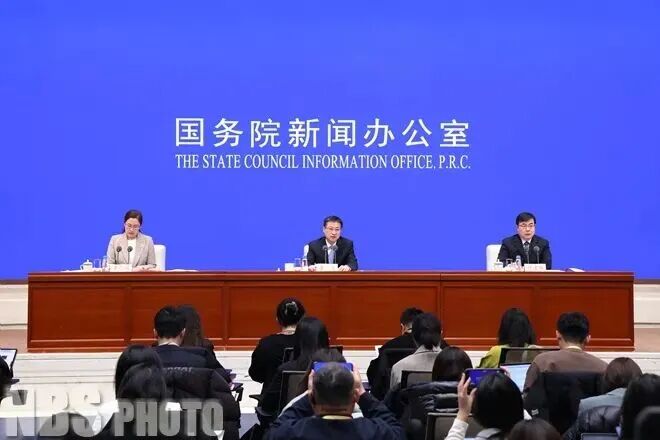
据介绍,初步核算,2025年全年国内生产总值(GDP)1401879亿元,按不变价格计算,比上年增长 5.0%。 "2025年,面对国内外经济环境的复杂变化,我国国民经济运行顶压前行、向新向优,高质量发展取得 新成效,经济社会发展主要目标任务圆满实现,'十四五'胜利收官。"1月19日,在国新办举行的新闻发 布会上,国家统计局局长康义介绍2025年国民经济运行情况。 1401879亿元 "放眼全球,我国经济,贡献率预计达到30%左右。"康义表示。 71488万吨 粮食增产丰收 全年全国粮食总产量71488万吨,比上年增加838万吨,增长1.2%。 全年猪牛羊禽肉产量10072万吨,比上年增长4.2%,首次超过1亿吨。 5.9% 工业生产较快增长 全年全国规模以上工业增加值比上年增长5.9%。 分三大门类看,采矿业增加值增长5.6%,制造业增长6.4%,电力、热力、燃气及水生产和供应业增长 2.3%。 装备制造业增加值增长9.2%,高技术制造业增加值增长9.4%。3D打印设备、工业机器人、新能源汽车 产品产量分别增长52.5%、28.0%、25.1%。 5.4% 服务业平稳增长 全年服务业增加值比上年增长5.4% ...
国金证券:2025年A 股上市公司治理专题白皮书
Sou Hu Cai Jing· 2026-01-19 11:30
Core Viewpoint - The "2025 A-share Listed Company Governance White Paper" by Guojin Securities outlines the core reforms and development trends in the governance of A-share listed companies, providing comprehensive guidance for optimizing corporate governance [1][3]. Group 1: Governance Structure Optimization - The implementation of the new Company Law is driving A-share listed companies from a "three meetings and one layer" structure to a "two meetings and one layer" structure, with the supervisory board set to exit by January 1, 2026, and its functions to be taken over by the audit committee [1][16]. - Over half of the listed companies have established employee directors, with many having 10%-20% of board seats occupied by them, and over 20% in some ChiNext companies, highlighting a new trend in governance reform [1][17][21]. Group 2: Strengthening Board Committee Effectiveness - The audit committee, now a mandatory institution, is taking on some functions of the supervisory board, but issues such as non-compliance in member composition and procedural flaws still exist [1][25][27]. - The nomination committee and the remuneration and assessment committee have a setting rate exceeding 90%, with the former required to conduct dynamic checks on the qualifications of directors and senior executives [1][25][35]. Group 3: Full Process Management of Directors and Senior Executives - New regulations require strict qualification reviews, standardized appointment procedures, and the establishment of a scientific assessment and incentive system for directors and senior executives, enhancing supervision and accountability [2][45]. - The remuneration system reform mandates that performance-based pay must account for at least 50% of total remuneration, with a significant concentration of executive pay in the range of 500,000 to 1,000,000 yuan [2][61]. Group 4: Cash Dividends as a Means of Enhancing Investor Returns - Cash dividends have become a crucial method for improving investor returns, with total dividends expected to grow continuously from 2020 to 2024, and over 94% of profitable companies projected to distribute dividends in 2024 [2].


浙江民营企业在册总量超370万户 同比增长7.52%
Zhong Guo Xin Wen Wang· 2026-01-19 11:07
Group 1 - The total number of registered private enterprises in Zhejiang Province exceeds 3.7 million, with a year-on-year growth of 7.52%, accounting for 91.9% of the province's total enterprises [1] - Among the registered private enterprises, 70% are concentrated in Hangzhou, Ningbo, Wenzhou, and Jinhua, with Hangzhou alone having 1.0096 million enterprises, representing 26.8% [1] - The distribution of registered private enterprises by industry shows that 4.28 million are in the primary sector, 905.4 million in the secondary sector, and 2.8206 million in the tertiary sector, with nearly 75% operating in the tertiary sector [1] Group 2 - The "2025 China Private Enterprises Top 500" list includes 38 enterprises from Hangzhou, 23 from Ningbo, 11 from Shaoxing, and 10 from Wenzhou [1] - Hangzhou is experiencing strong growth in artificial intelligence, big data, and cloud computing, leading to the emergence of innovative companies like the "Six Little Dragons of Hangzhou" [2] - Jinhua's foreign trade capabilities are expected to achieve a qualitative leap, with an estimated export total exceeding 900 billion RMB by 2025 [2]
普莱得(301353.SZ):拟推131万股限制性股票激励计划
Ge Long Hui A P P· 2026-01-19 10:42
Group 1 - The core point of the article is that Pruitt (301353.SZ) announced a restricted stock incentive plan for 2026, which involves granting a total of 1.31 million shares to selected recipients [1] - The total number of shares to be granted represents approximately 1.33% of the company's total share capital of 98.1812 million shares at the time of the announcement [1] - The initial grant will be awarded to 31 individuals, with a grant price set at 14.30 yuan per share, and the reserved portion of restricted stock will have the same grant price as the initial grant [1]
全年经济增长目标顺利完成
ZHONGTAI SECURITIES· 2026-01-19 10:26
Report Summary - The annual GDP growth rate in 2025 was 5%, achieving the annual target. Exports grew by 5.5%, consumption by 3.7%, and investment declined by 3.8%. Compared with 2024, the economic structure was further transformed, with high-tech industries standing out. The growth rate of total retail sales of consumer goods increased by 0.2 pct, exports decreased by 0.3 pct, and investment growth declined by 7 pct [3]. - In December, the production of the manufacturing industry improved significantly, while the growth rate of the mining industry declined. The year-on-year growth rates of the mining, manufacturing, and production and supply of electricity, heat, gas, and water industries were 5.4%, 5.7%, and 0.8% respectively, with changes of -0.9 pct, +1.1 pct, and -3.5 pct compared to the previous month [1]. - The service industry's business climate improved, especially the producer services. In December, the production index increased by 5% year-on-year, up 0.8 pct from the previous month. Among service industries, information software, leasing and business services, and the financial industry increased by 14.8%, 11.3%, and 6.5% respectively, with growth rates up 1.9 pct, 2.9 pct, and 1.4 pct from the previous month [2]. - In December, the growth rate of the three major investment categories declined, but the investment growth rate of some high-tech manufacturing industries showed resilience. The investment growth rates of manufacturing, infrastructure, and real estate were -10.6%, -16.0%, and -35.8% respectively, down 6.1 pct, 4.0 pct, and 5.5 pct from the previous month [4]. - Real estate sales showed marginal stabilization, and new construction and completion improved. In December, the year-on-year sales volume and area of commercial housing were -23.6% and -15.6% respectively, with growth rates up 1.5 pct and 1.7 pct from the previous month. The year-on-year unit price was -9.5%, almost the same as the previous month. In terms of investment, the new construction and completion areas of real estate improved, with year-on-year rates of -19.4% and -18.3% respectively [4]. - Consumption growth slowed down, and the year-on-year growth of catering revenue was weaker than the previous month. In December, total retail sales of consumer goods increased by 0.9% year-on-year, down 0.4 pct from the previous month and lower than the market consensus forecast of 1.48%. Both catering revenue and commodity sales declined from the previous month [4][5]. - In commodity retail, post-real estate cycle products improved, while general consumer goods weakened. In December, the sales growth rates of decoration materials, furniture, home appliances, and automobiles improved compared to the previous month. In contrast, the retail growth rates of grains, oils, beverages, office supplies, and clothing declined. Although precious metals rose rapidly in December, the sales growth rate of gold and silver jewelry declined for the second consecutive month [5]. - In the short term, interest rates showed a muted reaction to economic data. After the data release, the 10-year Treasury bond yield fluctuated by only about 0.3 bp. In the medium to long term, the annual economic data was generally in line with expectations. Two trends emerged: economic structural transformation and improved internal growth momentum. For 2026, "anti-involution" and rising prices suggest limited downside for interest rates [6]. Industry Investment Rating No industry investment rating is provided in the report. Core Viewpoints - The 2025 economic data shows that the economy achieved the growth target, with structural transformation and high-tech industry development being prominent features [3]. - In December, there were mixed trends across different sectors, with manufacturing production improving, service industry business climate rising, investment growth slowing, and consumption growth weakening [1][2][4]. - In the medium to long term, the economic structure is transforming, and internal growth momentum is improving. Interest rates are expected to have limited downside in 2026 [6].
华菱精工:2025年预亏1.2亿元至1.45亿元
Ge Long Hui· 2026-01-19 10:05
Core Viewpoint - Hualing Precision (603356.SH) is expected to report a net loss attributable to shareholders of the parent company ranging from -145 million to -120 million yuan for the fiscal year 2025 [1] Financial Performance - The projected net profit attributable to shareholders after deducting non-recurring gains and losses for 2025 is estimated to be between -140 million and -115 million yuan [1]
