油气

Search documents
市场全天震荡拉升,沪指涨0.73%刷新十年新高,全市场逾百股涨停
Feng Huang Wang Cai Jing· 2025-11-13 07:16
Core Points - The market experienced a significant rally, with major indices closing higher, including the Shanghai Composite Index reaching a ten-year high [1] - The total trading volume in the Shanghai and Shenzhen markets was 2.04 trillion yuan, an increase of 969 billion yuan compared to the previous trading day [1] Index Performance - Shanghai Composite Index closed at 4029.50, up 0.73% with 1659 gainers and 596 losers [2] - Shenzhen Component Index closed at 13476.52, up 1.78% with 2103 gainers and 728 losers [2] - ChiNext Index closed at 3201.75, up 2.55% with 988 gainers and 376 losers [2] Sector Performance - The lithium battery industry chain saw a significant increase, with nearly 30 stocks hitting the daily limit, including Tianqi Lithium and Ningde Times [2] - The consumer sector was active, with multiple stocks like Bubugao hitting the daily limit [2] - The energy and oil sectors experienced declines, with companies like China National Offshore Oil Corporation showing weak performance [3]



沪指涨0.73%刷新十年新高 全市场逾百股涨停
Mei Ri Jing Ji Xin Wen· 2025-11-13 07:05
Core Viewpoint - The market experienced a significant rally on November 13, with major indices rebounding from a low opening, leading to the Shanghai Composite Index reaching a ten-year high and the ChiNext Index rising over 2% [1] Market Performance - The total trading volume in the Shanghai and Shenzhen markets was 2.04 trillion yuan, an increase of 969 billion yuan compared to the previous trading day [1] - The Shanghai Composite Index rose by 0.73%, the Shenzhen Component Index increased by 1.78%, and the ChiNext Index surged by 2.55% [1] Sector Highlights - The lithium battery industry chain saw a widespread increase, with nearly 30 stocks, including Tianqi Lithium (002709), hitting the daily limit [1] - Consumer sectors were active, with stocks like Bubugao (002251) also reaching the daily limit, and San Yuan (600429) achieving a four-day consecutive limit-up [1] - The Fujian sector continued to rise, with over ten stocks, including Xiamen Construction Machinery (600815) and China Wuyi (000797), hitting the daily limit [1] - Alibaba Cloud-related stocks experienced a late surge, with Data Port (603881) hitting the daily limit [1] Declining Sectors - The oil and gas sector faced declines, with stocks like Zhun Oil (002207) and China National Offshore Oil Corporation (600938) showing weak performance [1] - Energy metals, battery, and non-ferrous metals sectors were among the top gainers, while fentanyl and oil and gas sectors recorded the largest declines [1]
8年累计签约金额超 890亿美元
Zhong Guo Zi Ran Zi Yuan Bao· 2025-11-13 05:51
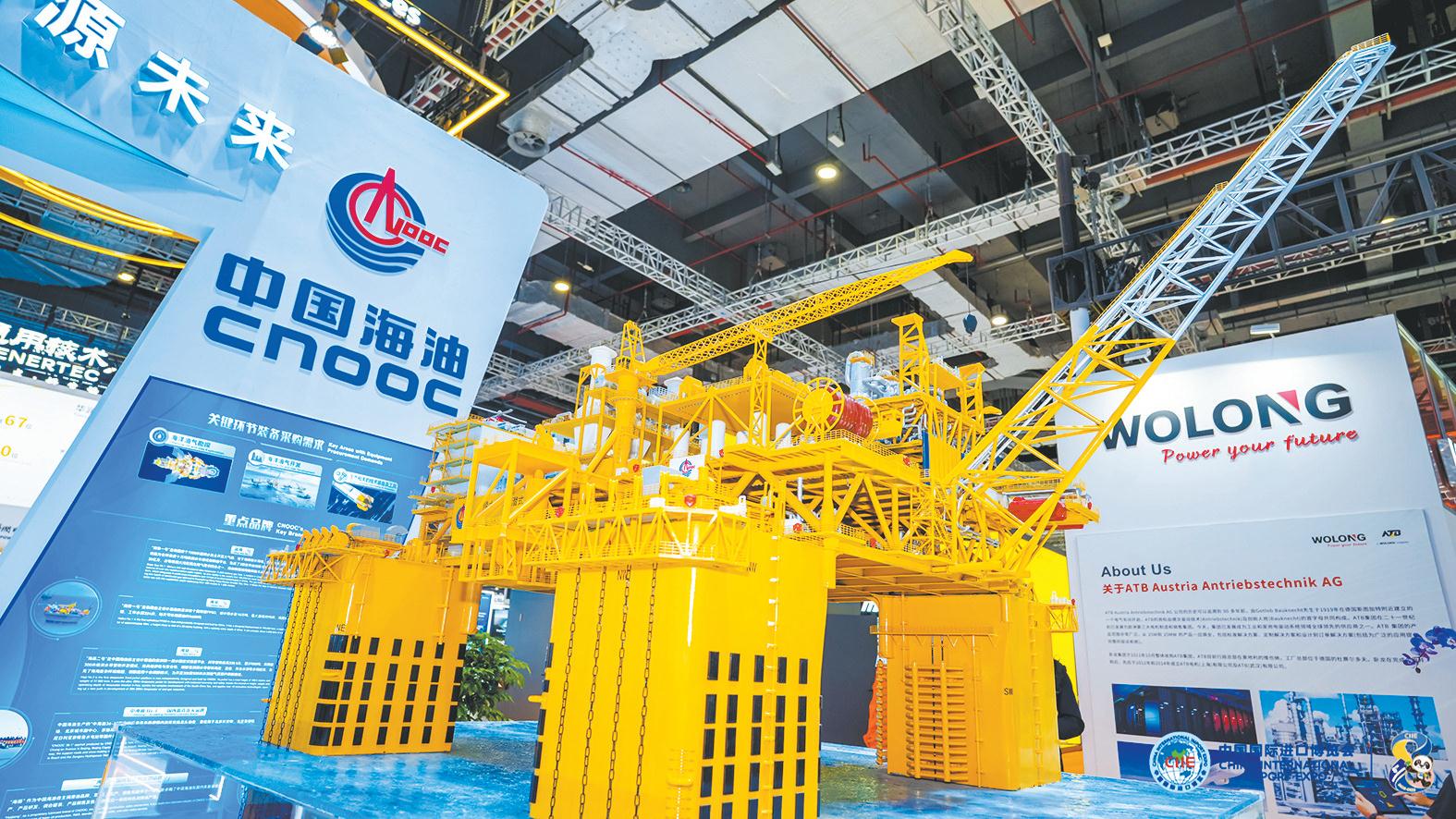
Core Insights - The eighth China International Import Expo (CIIE) saw China National Offshore Oil Corporation (CNOOC) sign contracts exceeding $13 billion, marking a historical high for a single CIIE event [2] Group 1: Contract Details - The signed contracts cover products including crude oil, natural gas, deepwater oil and gas equipment, and advanced technology services, indicating an ongoing optimization and upgrade in procurement structure [2] - Since the first CIIE, CNOOC has signed import contracts and agreements with over 100 global suppliers from more than 30 countries and regions, accumulating a total contract value exceeding $89 billion over 8 years [2] Group 2: Trade Volume - CNOOC has conducted oil trade exceeding 900 million tons and imported over 22 million tons of LNG, which accounts for 43% of China's total LNG imports [2] Group 3: Procurement Initiatives - The current CIIE introduced a dedicated procurement corridor, inviting large state-owned enterprises with strong purchasing power to participate, enhancing direct communication and collaboration opportunities between CNOOC and exhibitors [2]

股价创十七年新高 底气何来?
Shang Hai Zheng Quan Bao· 2025-11-13 04:45
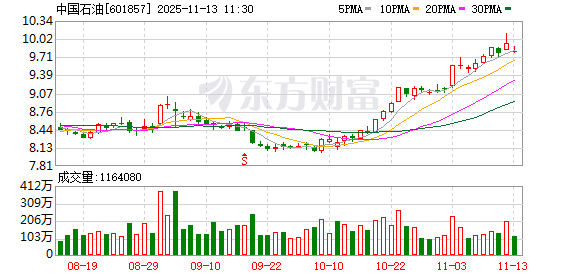
Core Viewpoint - The oil and gas sector has seen a rise of 1.36%, with China National Petroleum Corporation (CNPC) shares reaching a new high since 2008, driven by favorable international oil price factors and expectations of U.S. interest rate cuts [2][3]. Group 1: Oil Price Dynamics - OPEC+ has reversed its production strategy, deciding to increase oil supply by 137,000 barrels per day starting December, while halting monthly production increases from January to March 2026 [2]. - The market anticipates a 61.9% probability of the Federal Reserve lowering interest rates to 3.5%-3.75% in December, up from 59.3% the previous week [2]. - Historical trends suggest that a decrease in U.S. interest rates could lead to a rise in oil prices, especially with OPEC+ halting production increases and implementing compensatory cuts [3]. Group 2: Company Performance - CNPC's stock price closed at 9.94 yuan per share, with a total market capitalization of 1.82 trillion yuan, ranking 7th among A-share companies [2]. - In Q3, the three major oil companies reported a total net profit of 83.038 billion yuan, with CNPC contributing over half of this profit, amounting to 42.287 billion yuan [4]. - CNPC signed procurement agreements worth 17.485 billion USD at the recent China International Import Expo, reflecting a stable upward trend compared to last year [4]. Group 3: Strategic Initiatives - CNPC is accelerating its transition towards renewable energy, aiming for 7% of its capacity to come from renewable sources by the end of the year, with a long-term goal of achieving a balanced energy portfolio by 2050 [5]. - The company has a strong dividend history, with a projected mid-2025 dividend of 0.22 yuan per share, reflecting a pre-tax dividend yield of 2.55% [5].
股价创十七年新高,底气何来?
Shang Hai Zheng Quan Bao· 2025-11-13 04:39
11月12日,油气板块收涨1.36%。中国石油A股、H股股价双双上扬,其中H股股价创出2008年以来新 高。截至A股收盘,中国石油报9.94元/股,总市值达到1.82万亿元,位列A股公司总市值第7位。 基本面上,从中长期来看,国际油价迎来利好因素。一是"欧佩克+"(产油国联盟)自今年4月开始的持 续增产策略迎来了重要的逆转信号。11月2日,八国部长在视频会议上决定,自12月起增加每日13.7万 桶石油供应,同时宣布2026年1月至3月将不再逐月增产。 今年以来,"欧佩克+"的增产举措持续影响供需格局。东吴证券研究所能源化工行业首席分析师陈淑娴 此前在接受上证报记者采访时表示,"欧佩克+"生产策略的转变是今年原油供给端最大的变化。10月2 日,受"欧佩克+"增产消息预期的推动,国际油价曾一度跌至近4个月来的最低水平。 从三季报的数据来看,受此前国际油价承压的影响,"三桶油"的传统油气板块表现欠佳,但整体呈现出 较强韧性。数据显示,"三桶油"第三季度共实现归母净利润830.38亿元,相当于日赚9.23亿元。其中, 中国石油贡献了超过一半的利润。按照国际财务报告准则,中国石油第三季度归母净利润达到422.87亿 元 ...
超3800股上涨!锂电池大爆发,宁德时代涨超8%,超20股涨停
Mei Ri Jing Ji Xin Wen· 2025-11-13 04:15
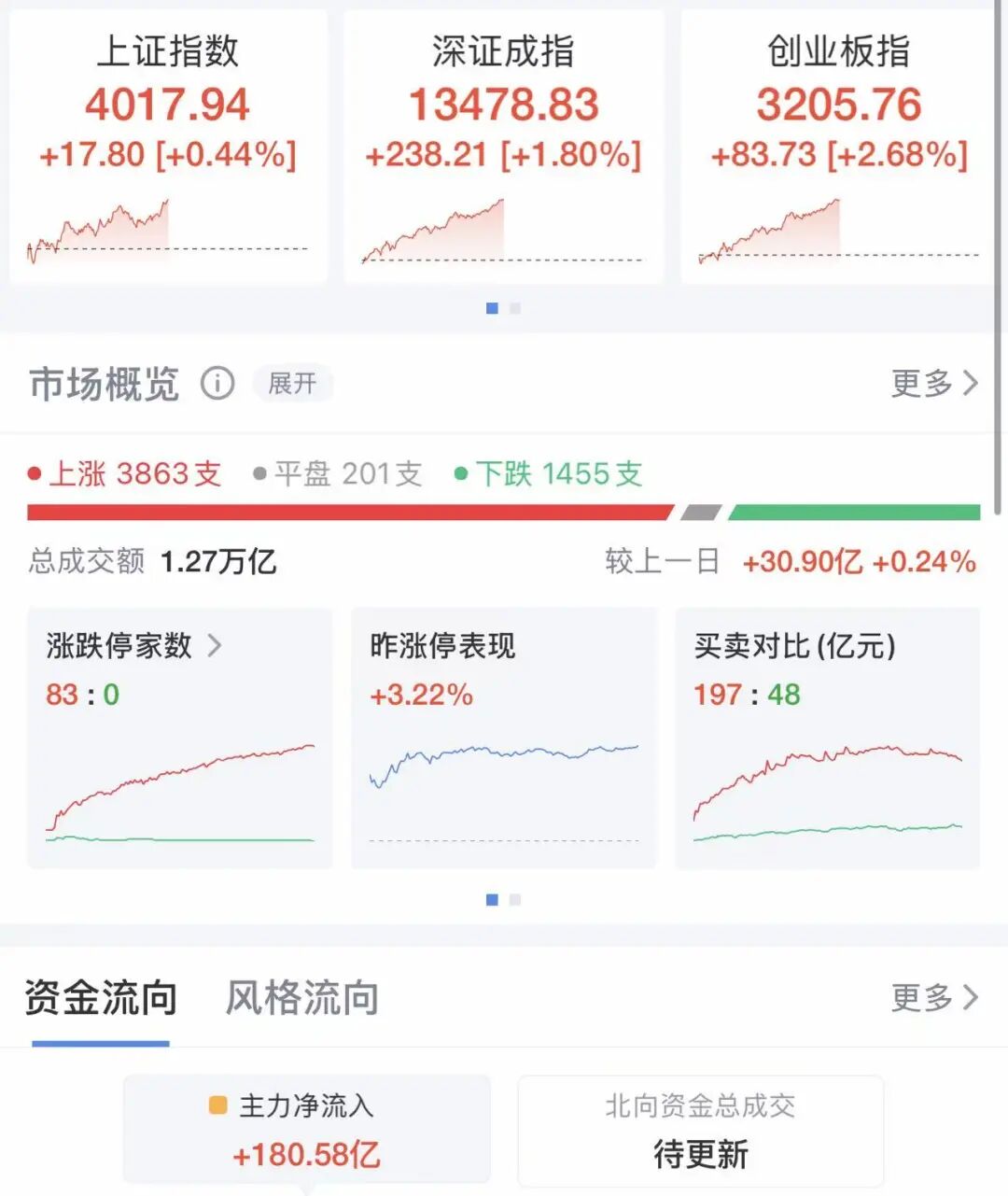
Market Overview - The A-share market showed a strong upward trend in the morning session, with the Shanghai Composite Index rising by 0.44%, the Shenzhen Component Index increasing by 1.8%, and the ChiNext Index gaining 2.68%. The total trading volume for the half-day reached 1.27 trillion yuan [1]. Sector Performance - Over 3,800 stocks in the market experienced gains, with notable sectors including energy metals, batteries, and phosphate chemicals leading the increases. Conversely, oil and gas, as well as banking sectors, saw declines [3]. - The lithium battery supply chain experienced a significant surge, with over 20 stocks hitting the daily limit, including Tinci Materials. Furi Shares achieved six consecutive trading limit increases, while CATL rose over 8%, approaching historical highs [3]. Lithium Battery Industry Insights - Since the third quarter, the lithium battery industry has seen a comprehensive recovery, with stabilized prices, frequent large orders, and notable performance growth, leading to a significant increase in industry prosperity. Lithium hexafluorophosphate has been a price leader, with its price doubling within a month [4]. - On November 12, the 2025 World Power Battery Conference in Yibin, Sichuan, successfully signed 180 projects totaling 86.13 billion yuan, covering key areas in green energy such as power batteries, new energy storage, photovoltaics, and smart connected new energy vehicles, showcasing strong industrial clustering effects and development momentum [5]. Industry Dynamics - Longcheng Securities noted that the power battery industry exhibits significant head concentration effects, with inefficient tail-end capacities needing orderly elimination. The industry has maintained a concentrated market structure due to its technical intensity and manufacturing complexity. However, the rapidly growing demand for new energy vehicles has resulted in substantial absolute demand for power battery installations, increasing competitive pressure on battery prices [5]. - Chinese lithium battery companies possess a clear advantage in global production capacity and high-end technology, indicating a promising long-term growth trend. This is supported by a sufficiently large domestic market demand for new energy vehicles and a well-established supply chain, allowing companies to participate in global competition while maintaining reasonable profit margins [5].
热点杂乱且个股普跌,诱空还是倒车?
Ge Long Hui· 2025-11-13 03:38
Market Performance - The three major indices collectively declined, with the Shanghai Composite Index down 0.24%, the Shenzhen Component Index down 1.07%, and the ChiNext Index down 1.58% [1] - Over 3,800 stocks in the two markets fell, with a total trading volume of 1.257 trillion [1] Sector Performance - The superhard materials sector experienced a significant drop of 4.65%, with Wald down 12.04% and other stocks like Hengsheng Medical Energy and Huifeng Diamond also seeing declines over 8% [3] - The photovoltaic sector faced heavy losses, with Tongwei Co. and Longi Green Energy reporting substantial declines [3] - The insurance sector opened strong, rising 2.45%, with China Pacific Insurance and New China Life Insurance both increasing over 3% [3] - The banking sector showed resilience, with Agricultural Bank of China and Industrial and Commercial Bank of China reaching historical highs [3] - The oil and gas sector strengthened, with PetroChina Oilfield Services and Jun Oil Co. both hitting the daily limit [3] - The food and beverage sector performed well, with Sanyuan Foods and Zhongrui Co. achieving consecutive gains [3] News Impact - SanDisk, a leader in flash memory, announced a significant price increase of up to 50% for NAND flash contracts in November [3] - The Ministry of Industry and Information Technology (MIIT) announced plans to promote the large-scale application of new technologies, particularly in industrial and humanoid robots [3] - MIIT emphasized strict control over new low-technology printed circuit board projects aimed solely at capacity expansion [3]
一份指南:关于“高低切”
Guotou Securities· 2025-11-13 03:05
Group 1 - The report outlines the "A-share high-low cut index" as a tool to track the pricing patterns in the A-share market, indicating that an increase in the index suggests a rise in the differentiation of returns among industries, while a peak followed by a decline indicates the emergence of high-low cut phenomena [1][2] - The report notes that typically, the A-share market experiences 2-3 significant high-low cut pricing cycles within a year, each lasting approximately 2-3 months. When the index exceeds the upper range (around 60%), it often signals an overheated high-position sector, while a drop to the lower range (around 30%) suggests the end of a low-position rebound or the brewing of a new differentiation cycle [1][3] - The report explains that high-low differentiation in the A-share market is driven by chip differentiation and fundamental divergence, particularly when there is a significant influx of capital and stark growth differences between high and low sectors [2][3] Group 2 - The report discusses the relationship between the high-low cut index and market structure, indicating that when the index peaks and declines, it often signals a recovery in low-position sectors, but the clarity of style switching depends on the logic signals from low-position sectors [3][4] - The report highlights that the high-low cut index often correlates with the overall market index, particularly when the index peaks and declines, which can signal a transition from a bull to a bear market [3][4] - The report emphasizes that since late October, the outperformance of overseas and low-position cyclical sectors has begun to manifest, with the report suggesting that true style switching will occur when liquidity transitions to a fundamental-driven market [4][5] Group 3 - The report provides a historical review of high-low cut phenomena, detailing significant transitions in market styles from 2017 to 2025, including shifts from cyclical sectors to consumer and technology sectors, and from high-dividend defensive sectors to low-position rebounds [6][10] - The report notes that the high-low cut phenomenon in 2023 was characterized by a shift from technology-driven sectors to low-position cyclical sectors, driven by policy catalysts in the real estate market [19][22] - The report indicates that the most recent high-low cut in October 2025 reflects a transition from high-position technology sectors to low-position cyclical resources, influenced by macroeconomic factors and policy expectations [27][28]
FICC日报:市场避险情绪升温,关注美国10月CPI数据-20251113
Hua Tai Qi Huo· 2025-11-13 02:13
Report Summary 1. Report Industry Investment Rating No industry investment rating information is provided in the report. 2. Core View of the Report - Amid rising market risk - aversion, focus on the US October CPI data. In the commodity market, during the current inflation - expectation game phase, pay attention to non - ferrous metals and precious metals with high certainty. Consider buying precious metals and non - ferrous metals on dips [2][4][5]. 3. Summary by Related Catalogs Market Analysis - In the domestic market, positive news has emerged, but the economic foundation needs further consolidation. The "15th Five - Year Plan" proposal was released on October 28, and the average GDP growth rate during the 15th Five - Year Plan period is expected to be around 5%. On October 30, the China - US economic and trade teams reached a three - aspect consensus, and China officially postponed tariffs on November 5. In October, the national manufacturing PMI was 49, a 0.8 decline from the previous month. China's October exports (in US dollars) decreased by 1.1% year - on - year, compared with an 8.3% increase in the previous value. China's October CPI increased by 0.2% year - on - year, and the core CPI reached the highest level since March 2024. The PPI increased month - on - month for the first time this year. On November 12, the A - share market adjusted with a slight decline in the three major indices, the bond market rose across the board, most commodities fell, and precious metals rose [2]. - In the US, the liquidity risk has temporarily eased. The Fed cut interest rates by 25BP as expected and announced the end of balance - sheet reduction on December 1. On November 10, the US Senate voted to pass the "Continuing Appropriations and Extensions Act". The US October ISM manufacturing index dropped to 48.7%, shrinking for eight consecutive months. The ADP private - sector employment in October decreased by 45,000, the largest decline in two and a half years. There are uncertainties regarding the Fed chair candidate and future tariff policies [3]. Commodity Analysis - In the black sector, it is still dragged down by downstream demand expectations, and focus on the "anti - involution" situation. The long - term supply limitation in the non - ferrous sector has not been alleviated, and it has been boosted by the global easing expectation recently. The medium - term supply of the energy sector is considered to be relatively loose as OPEC + announced an additional production increase of 137,000 barrels per day in November. In the chemical sector, the "anti - involution" space of methanol, caustic soda, urea and other varieties is worth attention. In the agricultural products sector, with the China - US peace talks, pay attention to China's procurement plan for US goods and next year's weather forecast. For precious metals, after the short - term sharp adjustment risk is cleared, consider buying on dips [4]. Strategy - For commodities and stock index futures, consider buying precious metals and non - ferrous metals on dips [5]. A - Share Market - The A - share market recovered after hitting the bottom, with the three major indices slightly declining. More stocks fell than rose, and over 3500 stocks in the Shanghai, Shenzhen and Beijing stock markets closed down. The trading volume was 1.96 trillion yuan. At the close, the Shanghai Composite Index fell 0.07%, the Shenzhen Component Index fell 0.36%, and the ChiNext Index fell 0.39% [6]. US Tariff and Economic News - US Treasury Secretary Bessent said that there will be major tariff news in the next few days, and tariff dividends are under discussion. Trump mentioned a $2000 tax refund for families with an annual income of less than $100,000. Bessent also said that the economic situation was good before the government shutdown, and he expects real income to rebound in the first and second quarters of next year [3][6].
A股三大指数均低开0.09%
Di Yi Cai Jing Zi Xun· 2025-11-13 01:57
Group 1 - Lithium battery upstream material stocks continue to show strength, with electrolyte direction leading the gains. Companies like Furui Co., Ltd. have achieved six consecutive trading limits, while Lianhong New Science and Technology reached the daily limit, and Haike New Source increased by over 5% [2] - The A-share market opened with slight declines across the three major indices, with the Shanghai Composite Index, Shenzhen Component Index, and ChiNext Index all down by 0.09% [3][4] - In the market, photovoltaic glass, duty-free shops, and Hainan Free Trade Zone concepts saw the largest declines, while lithium battery electrolytes experienced strong increases. International gold prices surged, boosting the precious metals sector, while the oil and gas sector faced a pullback [4] Group 2 - The Hong Kong stock market opened lower, with the Hang Seng Index down by 0.53% and the Hang Seng Technology Index down by 0.82%. Notably, China Resources Mixc Lifestyle fell nearly 8% due to the controlling shareholder's plan to place 49.5 million shares, while Giant Star Legend dropped over 13% following a proposed discounted share placement [5]