
咖啡

Search documents
茶咖日报|星巴克海外店员被指辱骂广东消费者,公司回应:已解雇
Guan Cha Zhe Wang· 2025-09-25 12:08
Group 1: Starbucks Incident - A Starbucks employee in Malaysia was accused of insulting a customer, leading to public outrage [1] - The employee has been terminated, and Starbucks issued an apology through its official overseas account [1] - The incident highlights the importance of respect in customer service, as emphasized by the franchise owner, Success Food Group [1] Group 2: JD's Seven Fresh Coffee - JD is launching a low-cost coffee brand, Seven Fresh Coffee, aiming to enter the affordable coffee market with products priced under 10 yuan [2] - The company is recruiting business partners under a light-asset model, where partners provide the location and initial investment while JD manages operations [2] - A unique revenue-sharing mechanism allows partners to earn 5% of each coffee sale, with additional incentives for using their own staff [2][3] Group 3: 7 Fen Tian's Frozen Mango Controversy - The fruit tea brand 7 Fen Tian has been accused of using frozen mangoes with a shelf life of 24 months in its drinks [4] - Customer service confirmed the use of frozen mangoes but did not clarify why fresh mangoes were not used despite their availability [4] Group 4: Tea Baidao Management Change - Sichuan Tea Baidao announced a change in its joint company secretary, with Li Zhongcheng resigning and Zou Xinglong taking over [5][6] - Zou Xinglong brings over 14 years of experience in company secretarial and legal fields, enhancing the company's governance and investor relations [6]



争议营销背后,瑞幸Q2净营收增长47.1%
Sou Hu Cai Jing· 2025-09-25 06:36
Core Insights - Luckin Coffee has reported impressive financial results for Q2 2025, with net revenue reaching approximately 12.4 billion yuan, a year-on-year increase of 47.1% [1][4] - The controversy surrounding the advertising campaign has sparked significant public debate, overshadowing the company's strong performance metrics [2][3] Financial Performance - The net revenue for Q2 2025 was 12.36 billion yuan, marking a substantial growth rate that exceeds the industry average [4] - Same-store sales have rebounded strongly, increasing from 8.1% in Q1 to 13.4% in Q2, reversing a decline of 20.9% in the same period last year [4] - The company opened 2,109 new stores in Q2, bringing the total number of stores to 26,206, averaging about 23 new stores per day [4] - GAAP operating profit reached 1.7 billion yuan, a 61.8% increase, with the operating profit margin rising from 12.5% to 13.8% [4] - Non-GAAP operating profit was 1.85 billion yuan, with a profit margin expanding to 15.0% [4] User Engagement - Monthly active customers reached a record high of 91.7 million, a year-on-year increase of 31.6%, indicating that over 60% of the Chinese population has engaged with the brand [5] - Despite a 45% increase in operating expenses to 10.66 billion yuan, the proportion of expenses relative to net revenue decreased from 87.5% to 86.2% [5] Marketing Strategy - The controversy surrounding the advertising campaign has drawn significant attention, which may have inadvertently benefited the company's visibility and engagement [5][7] - Marketing expenses for Q2 were relatively restrained at 590 million yuan, accounting for 4.8% of total revenue, down from 5.1% [5] - The company has adopted a cautious approach to international expansion, opening 24 overseas stores in Q2, including 6 in Singapore and 16 in Malaysia [5] Cash Flow and Financial Health - As of June 30, the company had cash and cash equivalents totaling 8.17 billion yuan, a 37.7% increase from the beginning of the year, providing strong support for ongoing expansion [6] Brand Controversies - The recent advertising controversy is not an isolated incident; Luckin Coffee has faced multiple marketing challenges over the past two years, indicating a pattern of leveraging controversial topics for visibility [7] - The marketing risks are primarily associated with sensitivity to social values, particularly regarding gender issues, and the authenticity of promotional claims [7] - While the strategy of generating buzz through controversy may yield short-term benefits, it poses potential long-term risks to brand image and consumer perception [7]

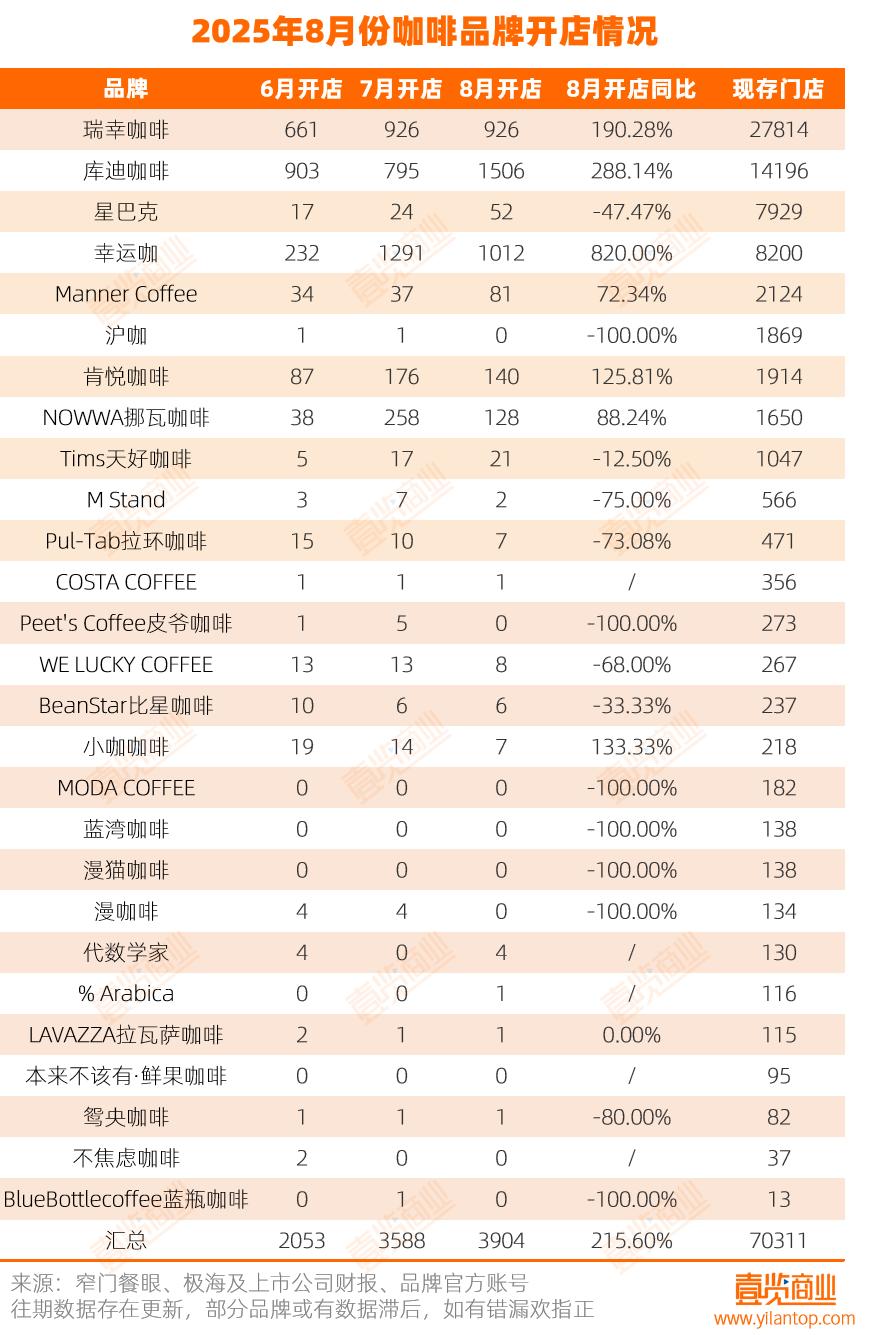
咖啡,8月开店3904家
3 6 Ke· 2025-09-25 03:13
Core Insights - In August, 27 tracked chain coffee brands opened a total of 3,904 new stores, representing a month-on-month increase of 8.81% and a year-on-year growth of 215.6% [1][3] - The total number of coffee stores surpassed 70,000, reaching 70,311, with a net increase of 3,853 stores month-on-month, reflecting a growth rate of 5.80% [1][3] - The market growth is highly concentrated among leading brands, with only six brands showing month-on-month growth [1][4] Brand Performance - Luckin Coffee opened 926 new stores in August, achieving a year-on-year growth of 190.28%, with a total of 27,814 existing stores [3][4] - Kudiz Coffee and Lucky Coffee also showed significant growth, with new store openings of 1,506 and 1,012 respectively, marking year-on-year increases of 288.14% and 820% [3][4] - Starbucks, despite opening 52 new stores, experienced a year-on-year decline of 47.47%, indicating challenges in maintaining growth [3][4] Market Dynamics - The market is witnessing a "Matthew Effect," where leading brands like Luckin Coffee dominate with 39.5% of total stores, creating significant barriers to entry for smaller brands [4][6] - Brands like Kenyue Coffee and NOWWA Coffee are in the second tier, each opening over 100 new stores, but showing a decline compared to July [4][6] - Nine brands did not open any new stores in August, highlighting the competitive pressures faced by mid-tier and smaller brands [4][6] Product Innovation - A total of 81 new SKUs were launched across the 27 brands, with Luckin and Starbucks each introducing 11 new products [6][8] - Brands are increasingly focusing on health-oriented products, with Kudiz Coffee and NOWWA Coffee introducing healthier options to align with consumer trends [9] - Collaborative marketing efforts were prominent, with 14 partnerships occurring in August, maintaining the same level as July [9] Conclusion - The coffee market is characterized by rapid expansion among leading brands, significant product innovation, and a growing emphasis on health and collaboration, indicating a dynamic and competitive landscape [1][4][9]
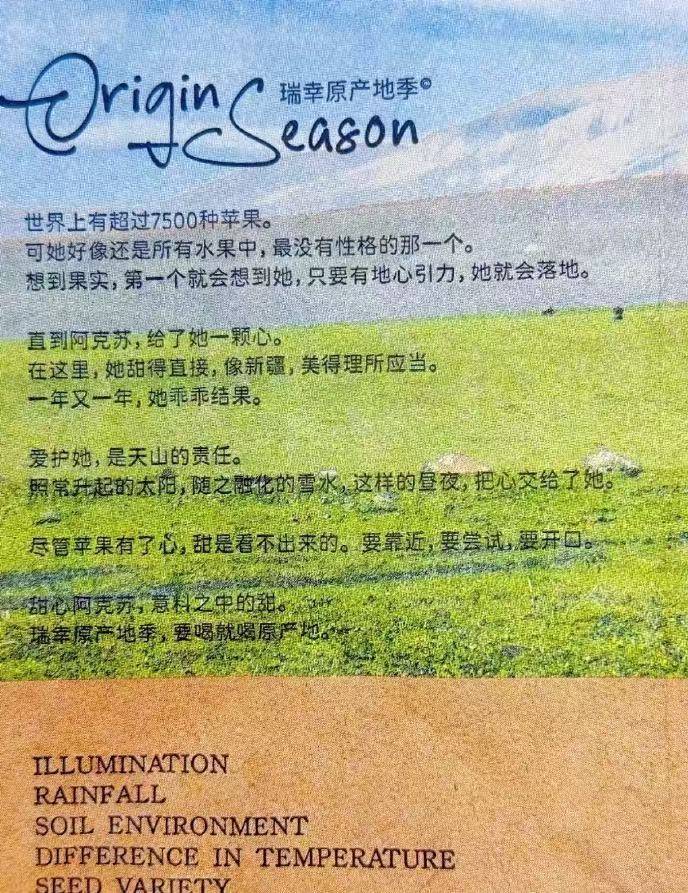
业内人士称瑞幸靠争议广告博流量
Xin Lang Cai Jing· 2025-09-25 01:56
Core Viewpoint - Luckin Coffee's recent controversial advertisement has sparked significant public attention, suggesting that the company may be leveraging controversy for marketing purposes rather than focusing solely on product sales [1] Group 1: Controversy and Marketing Strategy - The advertisement featuring the phrase "as long as there is gravity, she will fall" has been criticized for objectifying women by personifying an apple as female [1] - Industry insiders believe that the controversy may not be accidental, as Luckin's profits are not solely derived from coffee sales, but rather from stock market performance [1] - Despite the backlash, a portion of consumers still appreciates the brand for its affordability, indicating a mixed reception [1] Group 2: Financial Metrics - Luckin's marketing expenses in the second quarter were reported at 590 million yuan, which represents a decrease in the proportion of total revenue from 5.1% to 4.8% [1] - The controversy surrounding the advertisement has generated social attention that far exceeds the company's marketing investment, suggesting effective engagement from a marketing perspective [1]
主理人咖啡到底惹着谁了?
虎嗅APP· 2025-09-24 13:10
Core Viewpoint - The article discusses the decline of the "principal coffee" trend, which was once popular among consumers but is now facing backlash due to high prices, poor quality, and pretentiousness in service [10][22][30]. Group 1: Principal Coffee Experience - The "principal coffee" experience is characterized by a unique atmosphere, often featuring a personal story from the owner, high prices, and a focus on aesthetics over product quality [6][9][20]. - Consumers are increasingly frustrated with the high costs and perceived low quality of the coffee, leading to a growing disdain for the "principal" label [22][23][24]. Group 2: Market Dynamics - The rise of social media has amplified consumer dissatisfaction, allowing negative experiences to spread quickly and leading to a collective mockery of the "principal coffee" concept [11][30]. - The initial appeal of "principal coffee" was rooted in a rejection of standardized coffee experiences, but this has evolved into a formulaic approach that lacks authenticity [29][41]. Group 3: Consumer Expectations - Consumers are now more discerning and expect a balance between storytelling and actual product quality; when these do not align, the narrative becomes unconvincing [36][41]. - The article highlights that true "principal" coffee shops should focus on product quality and customer experience rather than solely on personal branding and storytelling [36][41]. Group 4: Future of Principal Coffee - The future of "principal coffee" lies in finding a balance between individuality and market demands, ensuring that the product meets consumer expectations while maintaining a unique identity [34][41]. - The article suggests that the "principal" label must be reclaimed by those who genuinely care about quality and customer experience, rather than those who exploit the trend for profit [42].
主理人咖啡到底惹着谁了?
Hu Xiu· 2025-09-24 09:24
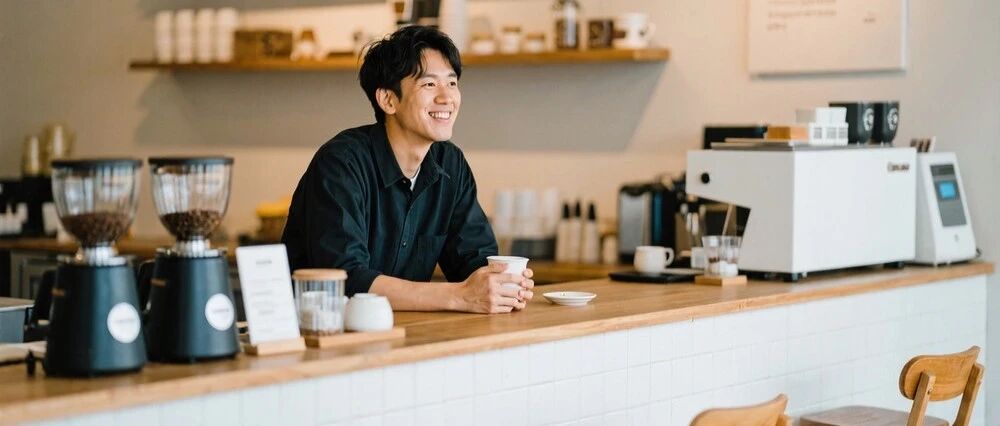
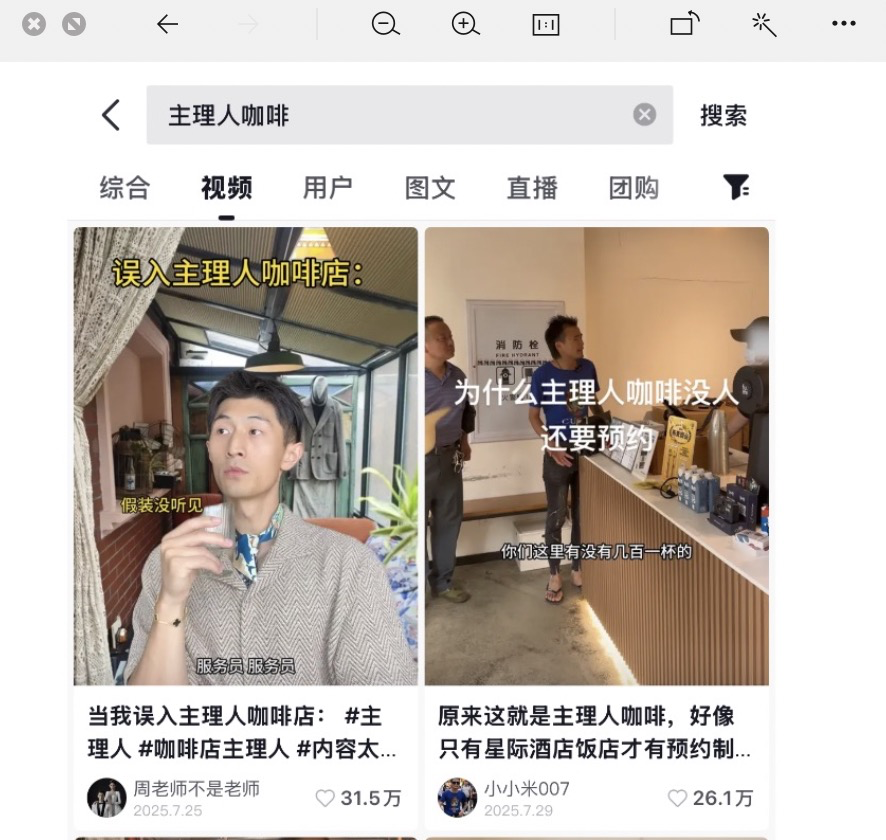
爱喝咖啡茶饮的,正开始躲着"主理人"。 2025年短视频起号的方式之一,是竞相模仿"95后海归咖啡主理人"的段子: 当你走在路上,不小心误入一家主理人咖啡店,你会体验到一套标准的主理人流水线:店里的主理人(店主)和他的朋友在聊天,极具冲击力的潮人穿搭可 能让你感到些许不适或格格不入。 主理人通常来自江浙沪,自称有海外留学经历,会对着你夹杂外语说一堆。通常你会听到,5分钟咖啡豆"庄园故事"讲解,顺带一句"你在别家喝不到"。店 里一定有主理人的猫或狗。 60元低消,一杯手冲瑰夏48元起,最后,你花168元买了一份隐藏菜单,喝到了一杯酸味尖锐的咖啡和一块刚从冰箱拿出解冻的巴斯克。总体体验是,味道 和瑞幸差不多,价格贵了3倍。不过,店里放了几个黑胶唱片、墙上挂了幅抽象画,设计感很强。 这还是进店流程最简单的,没有要求你提前3天进行预约。 在星巴克、瑞幸教育完咖啡市场,将咖啡拉下神坛后,消费者厌倦了千店一面的体验,于是,一个不错的"IP故事"变成主理人咖啡品牌的重要资产。主理人 们都深谙此道。打开大众点评"必打卡咖啡馆"榜单,主理人模式的门店能占一半。 然而,这股浪潮席卷到今年,主理人咖啡的光环正迅速褪色,取而代之的是 ...
响应国家体重管理行动 挪瓦咖啡首创0脂拿铁
Zheng Quan Ri Bao Wang· 2025-09-24 08:46
Group 1 - The core viewpoint of the article is that Nova Coffee has launched the world's first zero-fat latte, marking a significant shift in the coffee industry towards zero-fat products, responding to consumer demand and national weight management initiatives [1] - Nova Coffee has opened over 7,000 stores across more than 300 cities, including Macau, and has expanded into Southeast Asia and Australia, positioning itself as a top 5 global coffee chain [1] - The company has maintained a unique positioning as the only coffee brand that offers a full range of products with zero sugar, zero fat, and low calories since its establishment in 2019, aligning with health-conscious consumer trends [1] Group 2 - Nova Coffee employs effective marketing strategies that resonate with young consumers, utilizing a combination of "bestselling new products, brand ambassadors, and IP collaborations" to drive engagement [2] - The launch of a collaboration with the trendy brand Wakuku resulted in a significant increase in daily sales, with nearly 1,000 cups sold per day and a member acquisition efficiency increase of over 1,100% compared to the previous week [2] - During the "first cup of coffee in autumn" campaign in 2025, Nova Coffee experienced explosive growth in orders, with a 458% year-on-year increase in order volume and over 1,000% growth in sales at key stores [2]
茶咖日报|国内关店收缩,奈雪的茶开始押注美国?
Guan Cha Zhe Wang· 2025-09-23 12:11
Group 1: Naixue Tea's Expansion and Challenges - Naixue Tea will open its first store in the United States on October 3, marking a significant step in its global strategy after entering Southeast Asian markets like Thailand and Singapore [1] - The brand's recent pop-up event in Flushing, New York, attracted long queues, indicating strong initial interest from both Chinese expatriates and local consumers [1][2] - Despite the overseas expansion, Naixue Tea faces significant challenges in the domestic market, where competition has intensified, leading to a 14.4% year-on-year decline in revenue to 2.178 billion yuan in the first half of the year [1] - The company reported a net loss of 118 million yuan, although this was a 73.1% improvement compared to the previous year [1] - As of June 30, 2025, Naixue Tea had 1,321 stores across 111 cities, a decrease of 132 stores from the end of the previous year, indicating a total of 160 store closures in the first half of the year [1] Group 2: Challenges in the U.S. Market - The U.S. market presents various challenges for Naixue Tea, including high operational costs, local supply chain issues, and differing consumer habits [2] - The location of the new pop-up store is surrounded by competitors like Heytea and Hu Shang Ayi, making it crucial for Naixue to convert initial interest into sustained customer loyalty [2] Group 3: Coffee Market Developments - U.S. lawmakers are proposing a bill to exempt imported coffee products from tariffs, which has led to a decline in Arabica coffee futures prices by up to 5.9% [3][4] - The proposed exemption would apply to various coffee products, including roasted coffee and decaffeinated coffee, but requires presidential approval to take effect [3] - Recent price fluctuations in the coffee market are attributed to supply uncertainties, particularly due to tariffs imposed on Brazilian coffee imports [3][4] Group 4: Innovations in Coffee Products - Nova Coffee has launched a zero-fat latte made from high-quality raw milk, utilizing membrane concentration technology to reduce fat while maintaining protein content [5] - The company has over 7,000 stores and has expanded into Southeast Asia and Australia, with significant sales growth reported in recent months [5] Group 5: Regulatory Issues in the App Market - The Ministry of Industry and Information Technology in China has reported 29 apps, including Tims Coffee, for infringing on user rights, necessitating compliance and potential penalties [6] Group 6: Logistics Developments - Kudi Coffee has established logistics and transportation companies in Anhui, focusing on low-temperature storage and general cargo services [7]
国际手语日,瑞幸这批“无声门店”迎来10位特殊的咖啡师
Zhong Guo Xin Wen Wang· 2025-09-23 08:11
Core Viewpoint - Luckin Coffee is actively promoting the integration of disabled individuals into the workforce, exemplified by their collaboration with the Chengdu Disabled Persons' Federation on International Sign Language Day, showcasing their commitment to social responsibility and inclusivity [1][2]. Group 1: Company Initiatives - Luckin Coffee has launched the "Tao Hua" project, which aims to provide fair employment opportunities for disabled individuals, having already assisted 10 individuals in securing jobs [1][2]. - The company has committed to the "Tao Hua Convention," which will be officially launched on January 1, 2025, advocating for an accessible environment for disabled individuals [1]. - Luckin Coffee has been recognized as a leading employer in the ESG sector, winning the title of "China's Best ESG Employer" for 2023 and 2024, and receiving the "2025 Outstanding Employer" certification from the Top Employers Institute [2]. Group 2: Social Impact - There are approximately 27 million hearing-impaired individuals in China, and Luckin Coffee aims to provide them with a nurturing environment that offers equal learning and employment opportunities [2]. - The "Tao Hua" project is expected to expand to more cities, creating additional employment channels for disabled individuals and fostering their integration into society [2][3]. - The company's mission is to create job opportunities and provide warmth and strength to disabled individuals, with the hope that more social forces will join in supporting fair employment opportunities [3].
2025年中国新消费品牌势能创新增长研究白皮书-百思特
Sou Hu Cai Jing· 2025-09-23 07:23
Core Insights - The report highlights the emergence of new consumer brands in China, emphasizing the need for innovative marketing strategies to thrive in a rapidly changing competitive landscape [1][2][18] - The PMC (Potential Marketing Communication) theory is introduced as a framework for understanding the growth logic and innovative models of new consumer brands [1][2][18] Group 1: Market Dynamics - The competitive environment has drastically changed, with the rise of new consumer demographics and the advent of new consumerism, leading to the decline of traditional brand marketing methods [1][2][18] - New consumer brands like Gao Fan and Li Du have achieved exponential growth through innovative approaches, such as premium product offerings and immersive consumer experiences [1][2][19][20] Group 2: Brand Growth Characteristics - New consumer brands share common growth characteristics, including a focus on niche markets, preference for high-end positioning, and the use of content marketing over traditional advertising [1][2][19][20] - Successful brands have utilized strategic public relations and new retail channels, such as online short video and live-streaming e-commerce, to reach target audiences effectively [1][2][19][20] Group 3: PMC Marketing Innovation Model - The PMC model encompasses several key elements: market growth positioning, celebrity endorsements from entrepreneurs and KOLs, and the creation of star products that stand out in the market [2][18][46] - The report also analyzes successful case studies of traditional brands that have revitalized their market presence through innovative strategies, such as Yaya's transformation and the collaboration of Da Bai Tu with new brands [2][18][46] Group 4: Case Studies of New Consumer Brands - Gao Fan achieved a sales breakthrough of 1.7 billion yuan in three years, becoming the top brand in high-end down jackets [19] - Li Du transformed its business model, resulting in a 60-fold revenue increase over ten years and becoming the first stock of light bottle liquor in Hong Kong [20][22] - Three Dunsan, with its freeze-dried coffee innovation, reached a valuation of 4.5 billion yuan, outperforming Nestlé in the instant coffee market [28][29] - Lululemon surpassed Adidas in market capitalization, becoming the third-largest sports brand globally, with a revenue growth of over 10 times in a decade [30][32] Group 5: Future Trends - The report emphasizes the importance of emotional and cultural values in brand building, suggesting that brands must create additional benefits to remain competitive in the new commercial era [2][18][46] - The shift from traditional advertising to customer value innovation is identified as a fundamental change in brand-building strategies, with a focus on building brand equity through authentic consumer engagement [46][47]
