
家具

Search documents
刚挂断中方电话,特朗普突然收到一则噩耗:1800万桶原油被拒之门外
Sou Hu Cai Jing· 2025-06-09 11:45
Core Viewpoint - The ongoing trade tensions between China and the United States have led to significant shifts in trade patterns, particularly in the oil sector, with China halting imports of U.S. crude oil for two consecutive months, resulting in the lowest U.S. crude oil export levels since 2020 [1][8]. Group 1: Trade Relations and Tariffs - The U.S.-China trade war began in 2018, initiated by the Trump administration's imposition of tariffs on $34 billion worth of Chinese goods, citing trade deficits and intellectual property concerns [1][3]. - China responded with tariffs ranging from 5% to 25% on U.S. products, significantly impacting U.S. agricultural exports, particularly soybeans [3]. - The trade conflict escalated with the U.S. targeting Chinese tech firms like Huawei, leading to further tariffs on $1.2 trillion and $1.8 trillion worth of Chinese goods [3][4]. Group 2: Economic Impact - The U.S. trade deficit has increased from $950.2 billion in 2018 to $1,211.75 billion in 2024, indicating that the tariffs have not achieved their intended goal of reducing the trade deficit [7]. - Over 90% of the tariff costs have been passed on to U.S. importers, downstream businesses, and consumers, leading to increased prices and living costs in the U.S. [7]. - Despite facing some export pressures, China has shown resilience by expanding domestic demand and diversifying trade partnerships, maintaining stable economic growth [7]. Group 3: Energy Sector Dynamics - The halt in U.S. crude oil imports by China is attributed to the U.S. tariff policies, which have diminished the price advantage of U.S. crude oil for China [8]. - The U.S. shale oil producers are projected to face losses of at least $10 billion due to the absence of the Chinese market, with U.S. crude oil exports dropping to 3.883 million barrels per day, a 4% decrease [8]. - China is actively seeking to diversify its energy imports, with agreements in place with Russia and Qatar to secure alternative oil and gas supplies [8]. Group 4: Global Economic Implications - The trade war has disrupted global supply chains, forcing multinational companies to reallocate resources and adjust production strategies, thereby increasing operational costs and risks [10]. - The unilateral actions by the U.S. have undermined the multilateral trade system, leading to slower progress in global trade negotiations and increasing trade disputes among nations [10]. - Some Southeast Asian countries have benefited from the trade war as they become alternative production bases for multinational companies, while those reliant on U.S.-China trade face economic slowdowns [10].


深圳出台“39条” 多措并举提振消费
Shen Zhen Shang Bao· 2025-06-07 16:48
Group 1: Core Objectives of the Implementation Plan - The Shenzhen government has officially issued the "Implementation Plan for Boosting Consumption," which includes 39 specific measures aimed at enhancing residents' consumption capacity and willingness, increasing the supply of quality and diverse consumption options, and strengthening policy support and guarantees [1][2][4] Group 2: Enhancing Residents' Consumption Capacity and Willingness - The plan proposes actions to increase residents' income, ensure consumption capacity, and optimize consumption restrictions, including subsidies for eligible job-seeking graduates of up to 100,000 yuan [2][3] - Measures include expanding access to basic medical insurance for children, increasing educational resources, and improving healthcare services [3][4] Group 3: Increasing Quality and Diverse Consumption Supply - The plan emphasizes the promotion of artificial intelligence products and encourages local businesses to launch limited edition and co-branded products [4][5] - It supports the development of new service models in the housing market and encourages the establishment of integrated service spaces for various community needs [5][6] Group 4: Promoting New Consumption Trends - The plan aims to develop pet-friendly commercial areas and enhance cross-border pet services, reflecting the growing "pet economy" [6][7] - It also focuses on boosting tourism by enhancing duty-free shopping options and creating a world-class travel destination [7][8]
河北养出了电商巨兽,却养不出名牌?
Sou Hu Cai Jing· 2025-06-07 02:22
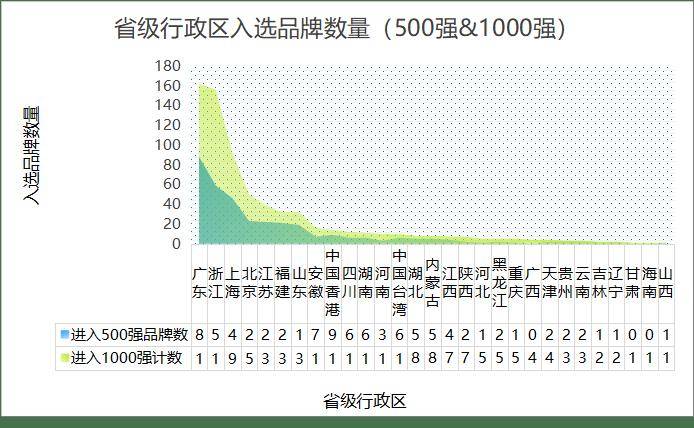
Core Insights - The report from Peking University highlights a significant gap between industrial strength and brand recognition in Hebei, with only one brand, Junlebao, making it to the top 500 brands list despite the province's strong industrial clusters [1][2][4] - Hebei's industrial growth has been impressive, surpassing the national average since 2020, yet it struggles with brand development, indicating a disconnect between production capabilities and market presence [4][14] Industry Analysis - Hebei ranks sixth nationally in terms of industrial clusters, yet it has only six brands in the top 1000, showcasing a stark contrast between production and branding [2][4] - The White Gou bag industry exemplifies this issue, producing 1 billion bags annually but lacking a widely recognized brand, while competing regions have established strong brand identities [2][3][9] - The furniture industry in Hebei also reflects this trend, with no local brands making it to the CBI rankings despite having a significant production base [2][4] E-commerce Impact - E-commerce has played a crucial role in Hebei's industrial growth, with online sales accounting for a substantial portion of revenue, particularly in the White Gou bag sector [6][8] - However, the low-price competition model limits the potential for brand development, as businesses focus on volume rather than brand identity [8][9] - The lack of private traffic and reliance on public traffic for sales further hampers brand recognition and growth [8][9] Brand Development Challenges - The absence of a unified quality standard at the national level has hindered brand development, with many manufacturers still operating under an OEM mindset [10][11] - Successful brand creation often requires a shift in mindset from production to branding, which many Hebei manufacturers struggle to achieve [11][14] - The case of Snowline illustrates how data-driven insights can help brands identify and target specific consumer segments, a strategy that is often overlooked in Hebei [12][13] Market Opportunities - The CBI index report indicates a steady upgrade in consumer spending, suggesting that there is a growing market for quality brands, which presents an opportunity for Hebei to rethink its branding strategies [14] - The ultimate battleground for industrial regions like Hebei lies in consumer perception and brand loyalty, rather than just production capabilities [14]
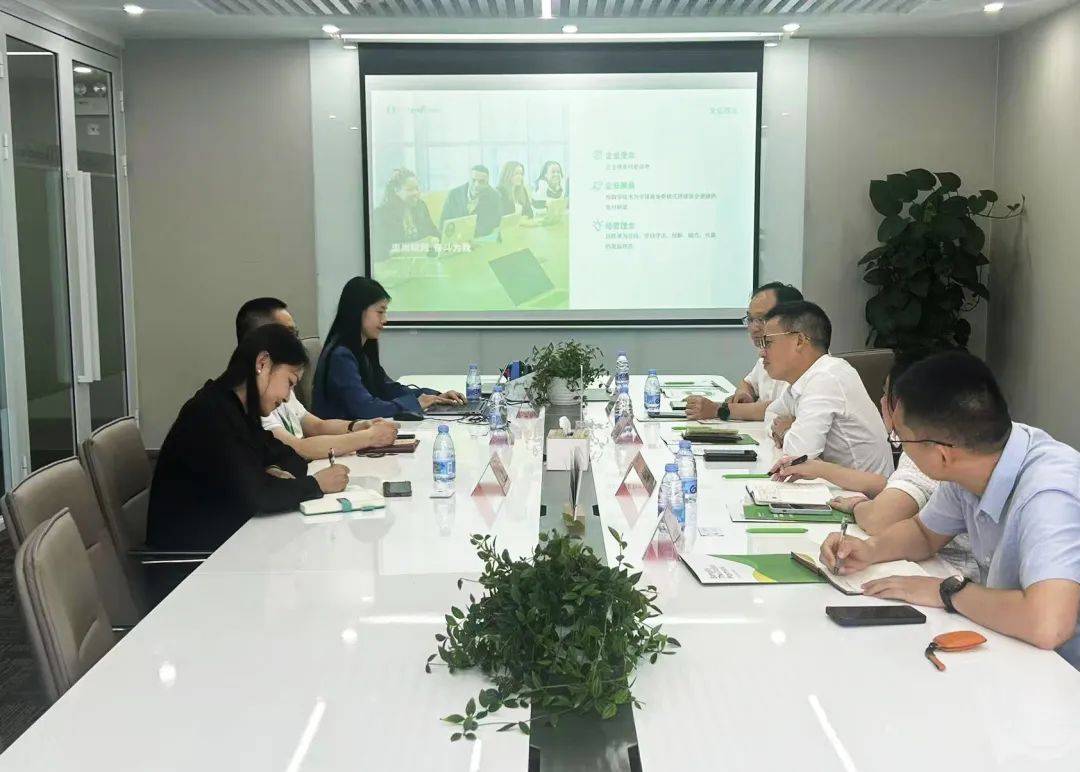
共商出海破局之道 助力企业行稳致远——市工商联走访调研钱海网络技术有限公司、市家具行业协会
Sou Hu Cai Jing· 2025-06-06 04:30
Group 1: Company Overview - Qianhai Company, established in May 2014, operates with a dual headquarters model in Hong Kong and Shenzhen, providing payment solutions across over 200 countries and regions [3] - The company offers more than 500 payment product technical supports for various sectors including cross-border trade, tourism, and digital entertainment [3] - Qianhai Company holds PCI DSS LEVEL 1 security certification and qualifications from major international payment systems, ensuring safe and efficient payment solutions for global merchants and consumers [3] Group 2: Strategic Insights - Qianhai's chairman, Liu Chaofeng, emphasizes the importance of elevating brand strategy to a core development level, moving beyond traditional ODM manufacturing [3] - Companies are advised to focus on differentiated market demands and avoid broad, unfocused market strategies, instead creating benchmark products through refined operations [3] - It is recommended that firms leverage their core advantages and innovate in technology and service to build competitive barriers in the international market [3] Group 3: Industry Challenges and Support - The chairman of the Furniture Association, Hou Keping, highlights the impact of fluctuating international trade policies on the furniture industry and calls for more government support in policy assistance and international cooperation [4] - There is a suggestion for the government to establish special funds to support industry associations, ensuring they can effectively serve their member companies [4] - The research team acknowledges the Furniture Association's significant contributions to the development of traditional industries and brands in Shenzhen [6]
美国经济:服务PMI预警滞涨风险
Zhao Yin Guo Ji· 2025-06-06 01:23
Economic Indicators - The US Services PMI unexpectedly contracted in May, dropping from 51.6 in April to 49.9, below market expectations of 52[2] - The Manufacturing PMI decreased by 0.2 to 48.5, also below the expected 49.5, indicating a continued contraction in the manufacturing sector[2] - The New Orders Index for services plummeted from 52.3 to 46.4, reflecting a significant decline in demand[2] Inflation and Price Pressures - The Prices Index for services surged from 65.1 to 68.7, marking the highest expansion rate since late 2022, indicating inflationary pressures[2] - The Manufacturing Prices Index remained high at 69.4, despite a slight decrease from 69.8, suggesting persistent inflation in goods[2] Economic Growth Projections - The projected GDP growth rates for the US are expected to decline from 2.1% in Q1 to 1.8% in Q2, 1.3% in Q3, and 1% in Q4 of this year[2] - The PCE inflation rate is anticipated to rise from 2.5% in Q1 to 3% in Q3 and 2.9% in Q4[2] Policy Environment - The policy environment is expected to remain unfavorable in the next three months, with the White House likely to continue pressuring trade partners and the Federal Reserve possibly pausing interest rate cuts[1] - Improvement in the policy environment is anticipated in Q4, with potential agreements with major trading partners and a return to interest rate cuts by the Federal Reserve[1]
关税风波下中国内需消费成焦点 Global X 中国消费龙头品牌ETF投资多个政策受益板块
Zhi Tong Cai Jing· 2025-06-05 10:35
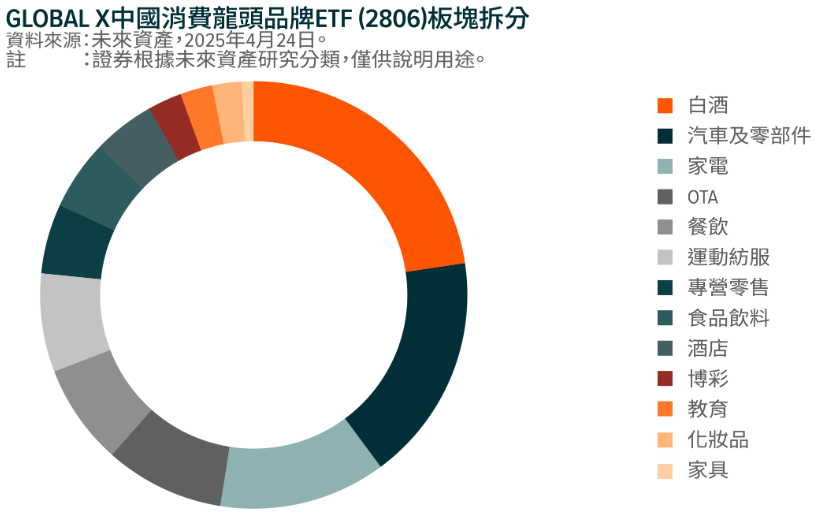
Group 1 - The core viewpoint of the report is that the Chinese consumer goods sector is becoming a defensive area in the market due to limited direct risks from exports and increasing expectations for the Chinese government to accelerate domestic consumption stimulus policies [1][2] - The Global X China Consumer Leaders ETF (02806) has only 4% of its revenue coming from the U.S., primarily affecting the home appliance and sportswear OEM industries [1] - Macroeconomic data supports the resilience of Chinese consumption, with Q1 GDP growing by 5.4%, surpassing the market expectation of 5.2%, and March retail sales increasing by 5.9%, higher than the expected 4.2% [1] Group 2 - Future Asset anticipates that stimulus policies will focus on several areas, including: 1) fertility support policies, which may benefit the milk powder and dairy industries; 2) consumption vouchers applicable to dining and general retail; 3) service consumption subsidies benefiting tourism, education, entertainment, and domestic services; 4) expansion of the "old-for-new" policy, which will continue to benefit home appliances, furniture, home decoration, automobiles, and consumer electronics [1] - The expectation of increased stimulus policies is likely to enhance immediate consumption growth, improve profit growth expectations, and lead to a revaluation of the sector [2] - The Global X China Consumer Leaders ETF captures recovery opportunities in the Chinese consumer sector through a balanced investment portfolio, investing in multiple policy-benefiting sub-sectors and defensive industries with low tariff risks [2]
环球家居周报:智能家居消费高速增长,上海厨卫展举办,志邦推出全维健康家……
Huan Qiu Wang· 2025-06-03 06:55
Group 1: Industry Overview - In the first four months of 2023, the home decoration consumer goods sector saw the addition of 1.332 million new products, marking a year-on-year increase of 560.8%, with smart home products experiencing a staggering growth of 1985.5% [1] - The Chinese furniture industry reported a 20.2% year-on-year increase in retail sales due to the "old-for-new" policy, while exports faced a 7.9% decline [2] - The 29th China International Kitchen and Bathroom Facilities Exhibition showcased over 1,300 leading brands, focusing on integrated, smart, and green technologies [3] Group 2: Company Developments - Red Star Macalline plans to issue asset-backed securities worth up to 1.768 billion yuan to optimize its financing structure [4] - A flagship store of Yiqizhuangxiu, covering 20,000 square meters, has opened, emphasizing a one-stop home decoration service [5] - Zhigang Home launched a "Whole Health Home" standard system, aiming to address diverse family health needs [6] Group 3: Financial Performance - Yueshen Health reported a loss of 452 million yuan in undistributed profits and plans to use 214 million yuan from its surplus to cover losses [7] - The HuRun Global Ceramics List revealed that China has the highest number of listed ceramic companies, with seven firms making the top rankings [8] Group 4: New Projects and Initiatives - The Nankang Furniture Brand Operation Center project has commenced with a total investment of 2 billion yuan [9] - Golden Home opened its first overseas shared store in Malaysia, marking a significant step in its international expansion [10] - Mengbaihe launched its first flagship store for the VALUE series, targeting cost-effective solutions for families in lower-tier cities [11] Group 5: Market Trends - Oppein Home reported a 47.4% increase in contract liabilities due to national subsidies, while revenue decreased by 4.8% [12] - Wanhua Ecological New Home Decoration Group opened a new facility in Chengdu, focusing on green industrialized customization [13] - Serta Smart Bed partnered with Tmall Genie to offer smart sleep solutions, indicating a shift towards integrated smart home experiences [14] - JD.com launched its self-operated home decoration brands, enhancing its market presence through direct connections with manufacturers [15]
林氏木业家具怎么样引领行业?以用户需求驱动"健康家居生态"构建
Zhong Guo Chan Ye Jing Ji Xin Xi Wang· 2025-05-29 07:42
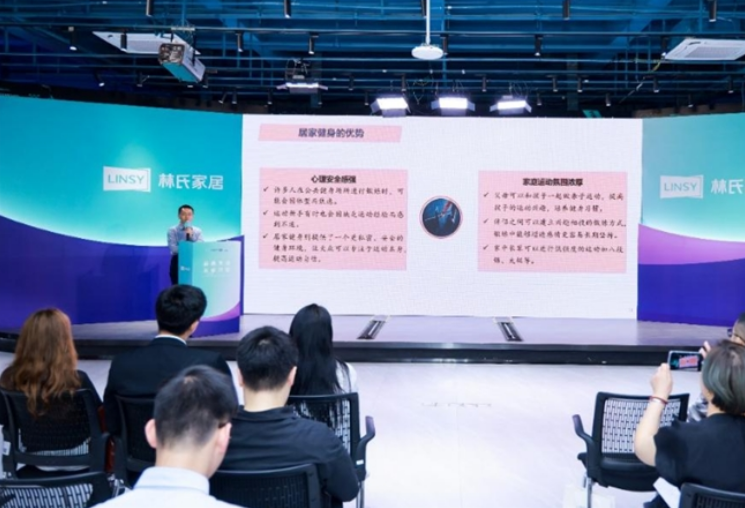
Core Insights - The home furnishing industry is undergoing a transformation focused on health and intelligence, driven by the "Healthy China 2030" initiative [1] - Lin's Home has redefined home health scenarios through innovative products, showcasing its forward-looking layout and industry leadership [1] Group 1: Health and Wellness Focus - A study released during the 2025 Quality Season event indicates that relaxation and quality sleep are core needs for contemporary individuals [1] - Lin's Home launched the "Comfort Zone Series" products, including smart bed frames and zoned mattresses, to address these needs [1] Group 2: Innovative Product Development - Lin's Home has broken traditional functional limitations in home health, emphasizing the importance of recovery and relaxation post-exercise [3] - The ergonomic zoned mattress is supported by over 1,000 human data points to address lumbar support misalignment [3] - The smart bed frame caters to diverse needs through scenario-based adjustments, including reading and yoga [3] Group 3: Cross-Industry Collaboration - Lin's Home collaborates with Keep to develop home stretching courses, leveraging data from 400 million users to create a scientific training system [3] - The partnership includes co-branded zoned mattresses and electric sofas, facilitating seamless transitions between exercise and recovery [3] Group 4: Technological Innovation - Lin's Home has established differentiated competitive barriers through its self-developed comfort seating system and three-segment backrest design [4] - The focus of the home furnishing industry has shifted from functional competition to ecosystem construction, with Lin's Home leading this transition [4] Group 5: Future Directions - The company aims to continue developing advanced technologies such as snoring monitoring and smart adjustments to expand the boundaries of the health home ecosystem [5] - The transformation initiated by product innovation and ecosystem construction is redefining the value of "home" as a proposal for a quality health lifestyle [7]
【环球财经】2025年4月澳大利亚通胀率继续保持在2.4%不变
Xin Hua Cai Jing· 2025-05-28 02:19
Group 1 - The core consumer price index (CPI) in Australia for April 2025 shows a year-on-year increase of 2.4%, slightly above the market expectation of 2.3% [1] - The monthly inflation rate, excluding volatile items like fruits, vegetables, and automotive fuel, rose to 2.8% in April from 2.6% in March [1] - The trimmed mean inflation rate, a key indicator of core inflation, increased from 2.7% to 2.8%, remaining within the Reserve Bank of Australia's target range of 2-3% [1][2] Group 2 - Specific price changes in April include a 3.1% year-on-year increase in food and non-alcoholic beverages, down from 3.4% in March, and a decrease in tobacco and alcohol prices from 6.7% to 5.7% [1] - Housing prices increased from 1.8% to 2.2%, with rental prices decreasing from 5.2% to 5% and new housing prices rising from 1% to 1.2% [1] - Electricity prices shifted from a decline of 9.6% to a decline of 6.5%, while furniture and household equipment prices rose from 0.6% to 1% [2]
东南亚客商逐浪西博会 国际合作热潮涌动
Zhong Guo Xin Wen Wang· 2025-05-27 15:43
Core Viewpoint - The 20th China Western International Expo (West Expo) is showcasing Laos as a guest country, emphasizing its ecological products and regional cooperation, attracting Southeast Asian enterprises to seek collaboration opportunities [1] Group 1: Laos Participation - Laos is presenting itself as an "ecological hub" with abundant natural resources, focusing on green development and regional cooperation [1] - The Laos National Pavilion is experiencing high visitor traffic, highlighting the country's unique charm through products like solid wood furniture and ancient tree tea [1] - The Laos Million Elephant Trading Company aims to establish ancient tree tea as a new brand for Laos, leveraging the expo to enhance cooperation with China [1] Group 2: Other Southeast Asian Companies - Indonesian company TiOet is participating to connect with suppliers and businesses from various regions, recognizing the potential of the Chinese market [1] - TiOet has already established preliminary cooperation intentions with importers from Sichuan and Chongqing, indicating a proactive approach to market entry [1] - Vietnamese company Qi Nan Agarwood is targeting the vast Chinese market, aiming to expand its sales beyond major cities like Beijing and Shanghai [1] - Qi Nan Agarwood seeks suitable distributors in Western China to further grow its business footprint [1]