酒店

Search documents
美国的MAGA梦能实现吗?回溯美国制造业百年变迁
虎嗅APP· 2025-12-24 10:17
Group 1 - The article discusses the historical significance of American manufacturing as a backbone of national strength and social structure, highlighting the decline of stable job opportunities for the middle class due to the loss of manufacturing jobs [4][5]. - It raises critical questions about whether the U.S. can bring back some manufacturing capabilities and if the service sector can fill the gap left by manufacturing in providing stable, middle-class jobs [5][36]. Group 2 - The formation of American manufacturing civilization was characterized by the ability of companies to integrate resources across states and industries, supported by government initiatives that set clear demand through public works and military procurement [7][8]. - The post-war period saw significant contributions from education and population structure, with the GI Bill expanding access to higher education and vocational training, while infrastructure projects like the Interstate Highway Act fueled domestic demand [11][12]. Group 3 - The decline of American manufacturing is attributed to three main forces: rising institutional friction, globalization pushing manufacturing to low-cost regions, and the concentration of wealth among high-skilled workers due to technological and financial trends [22][24][25]. - Institutional friction has led to a preference for less risky projects, making it harder for manufacturing to thrive in the U.S. as the approval processes become longer and more complex [24][26]. Group 4 - The article emphasizes that while nominal GDP share of manufacturing has decreased, the actual output has remained stable, indicating that manufacturing has not disappeared but rather shifted in its role within the economy [30][34]. - Employment in manufacturing peaked in June 1979 at 19.6 million and has since declined to approximately 12.8 million by June 2019, reflecting a significant drop in its share of total employment [35][68]. Group 5 - The service sector's ability to absorb displaced manufacturing jobs is questioned, as it struggles to provide sufficient, well-paying jobs with clear career advancement paths, particularly in a high-cost living environment [36][39]. - The article outlines that the service sector is characterized by a "dumbbell structure," where high-end jobs require significant education and skills, while low-end jobs offer low wages and instability, making it difficult to support a middle-class lifestyle [39][40]. Group 6 - The discussion on re-industrialization in the U.S. highlights the need for a dual approach: ensuring national security in critical industries while also addressing the social structure to allow ordinary people to share in economic growth [44][46]. - The article suggests that a realistic path forward involves selective return of manufacturing capabilities, focusing on key industries while also investing in infrastructure, energy transition, and skill development to create stable job opportunities [49][51]. Group 7 - The challenges of re-establishing manufacturing in the U.S. are not solely financial; they also include regulatory hurdles, skill shortages, supply chain density, and overall cost structures that complicate the return of manufacturing jobs [53][54][55]. - The article argues that simple policies like tariffs and subsidies are insufficient to address the complex structural issues facing American manufacturing and that a more nuanced approach is necessary [56][58]. Group 8 - The article concludes that if manufacturing cannot recreate a robust middle class, the U.S. must explore a combination of industries to provide dignified work for ordinary people, including infrastructure, energy transition, and restructured service sectors [60][61]. - It emphasizes that the ultimate goal is to restore a social structure where ordinary people can achieve dignity through work, rather than merely focusing on the number of manufacturing jobs [62][63].


300万留学,我成了LV柜姐
投资界· 2025-12-24 07:33
Core Viewpoint - The article discusses the challenges faced by international students in the hospitality industry in Europe, highlighting the disconnect between high educational costs and the realities of the job market, particularly for Asian students in a competitive environment dominated by local labor preferences [8][30][42]. Group 1: Student Experiences - A student named Xiao Yuan expresses concerns about the significant financial investment of approximately 3 million RMB (around 300,000 CNY) for his education, which has not translated into expected career opportunities [8][9]. - Clara, another student, struggles to find suitable internships and realizes that her prestigious education does not guarantee a desirable job, as she ends up receiving an offer for a sales associate position at LVMH instead of a management role in a hotel [17][20]. - Both students feel the impact of a "glass ceiling" in the Swiss job market, where local candidates are prioritized for employment, making it difficult for them to secure positions despite their qualifications [28][30]. Group 2: Market Conditions - The European hospitality industry is currently facing economic challenges due to rising energy prices and inflation, which have led to reduced training budgets and a preference for cheaper labor [36][38]. - The demand for skilled labor has shifted, with employers now favoring local or Eastern European workers who require less complex hiring processes and have lower salary expectations [41][42]. - The article notes that the previous trend of investing in diverse talent for enhancing service quality has diminished, as companies focus on cost-cutting measures [39][40]. Group 3: Educational Value - The article questions the return on investment for a 300,000 RMB education in hotel management, suggesting that the skills learned are becoming commoditized and easily replaceable [61][63]. - It argues that the true value of such an education may lie in the social capital and networking opportunities it provides, rather than in direct job placement [70][72]. - The narrative indicates a growing divide in the service industry, where standardized services are increasingly performed by low-cost labor, while high-end services require specialized professionals with unique skills [81][83].
首旅酒店涨2.02%,成交额2.34亿元,主力资金净流出15.61万元
Xin Lang Zheng Quan· 2025-12-24 05:54
Group 1 - The core viewpoint of the news is that Shoulu Hotel's stock has shown a positive performance, with a year-to-date increase of 16.49% and a recent uptick in trading activity [2] - As of December 24, Shoulu Hotel's stock price reached 16.67 yuan per share, with a market capitalization of 18.614 billion yuan [1] - The company has a diverse revenue structure, with hotel operations contributing 61.02%, hotel management 30.89%, and scenic area operations 8.08% to its total revenue [2] Group 2 - In terms of shareholder dynamics, the number of shareholders decreased by 18.33% to 36,200, while the average circulating shares per person increased by 22.45% to 30,830 shares [2] - The company has distributed a total of 1.834 billion yuan in dividends since its A-share listing, with 648 million yuan distributed over the past three years [3] - Institutional holdings show that Hong Kong Central Clearing Limited is the third-largest circulating shareholder, increasing its stake by 11.28 million shares [3]

22.6亿,金茂卖掉了三亚丽思卡尔顿酒店
3 6 Ke· 2025-12-24 04:57
Core Viewpoint - The sale of Sanya Tourism by China Jinmao for 2.2646 billion RMB signifies a strategic shift towards a "light asset" model, reflecting the evolving landscape of China's commercial real estate market under new REITs regulations by 2025 [1][3][12]. Group 1: Transaction Details - China Jinmao's subsidiary, Shanghai Jinmao, sold 100% of Sanya Tourism, which owns the Ritz-Carlton Hotel in Sanya, for 2.2646 billion RMB [1][3]. - The Ritz-Carlton Hotel features 446 guest rooms and 33 private villas, generating approximately 236 million RMB in revenue and a net profit of about 37.78 million RMB over eight months ending August 31, 2025 [3][4]. Group 2: Strategic Implications - The transaction is part of China Jinmao's broader strategy to optimize asset structure and enhance capital efficiency, moving away from a heavy asset model to focus on higher-return investments in core urban residential developments [7][14]. - The sale is seen as a precursor to potential asset securitization, with the buyer likely preparing for a future REITs offering by improving the asset's financial performance [14][16]. Group 3: Market Context - The timing of the sale coincides with the National Development and Reform Commission's new REITs policy, which includes four-star and above hotels as eligible assets, marking a significant shift in the investment landscape for hotel properties [9][10][12]. - The transaction highlights a trend where top-tier luxury hotels are becoming more liquid assets, with a shift in valuation methods from replacement cost to income-based approaches [16][17]. Group 4: Future Outlook - The industry is expected to see more major players like China Jinmao listing mature properties for sale or pushing them towards the REITs market, indicating a transition to a more financially driven operational model [17][18].
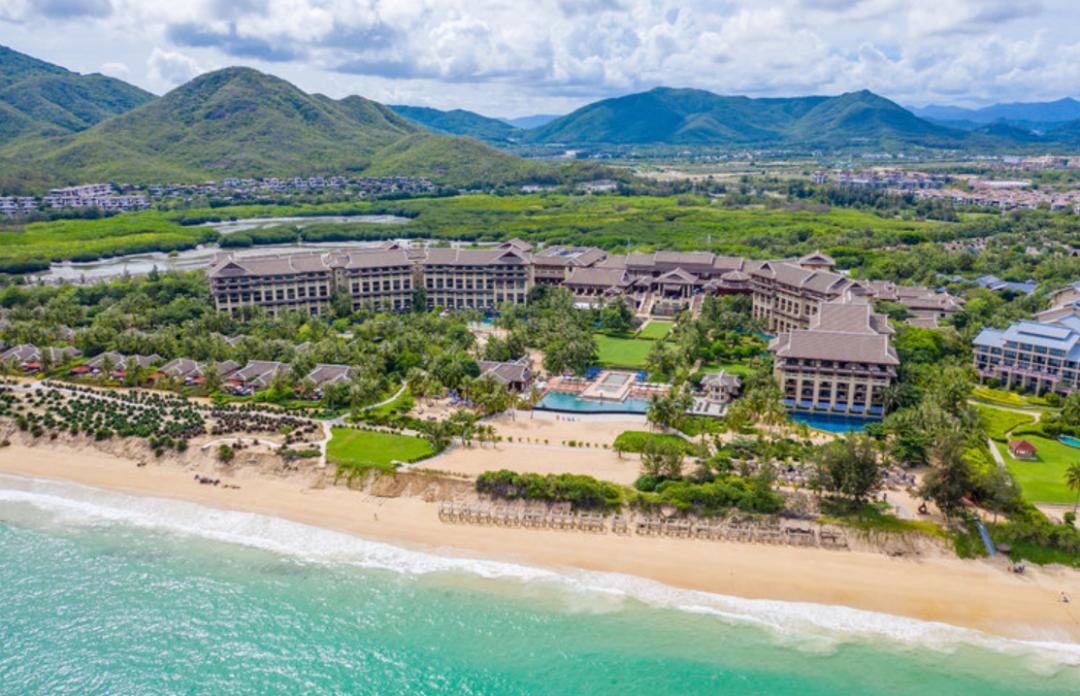
文旅融合深化时代,雅阁酒店如何与目的地共创“生态圈”?
Jin Tou Wang· 2025-12-24 02:32
Core Insights - The Chinese cultural tourism industry is entering a new era characterized by "quality enhancement, ecological co-creation, and value co-existence" as outlined in the 14th Five-Year Plan [2] - Hotels are evolving from traditional accommodation providers to core hubs that drive cultural tourism consumption and build ecological systems, exemplified by the actions of the Accor Hotels Group [1][2] Industry Transformation - The domestic cultural tourism sector is undergoing profound changes, reshaping destinations and altering the roles and survival rules of all participants [2] - The definition of a "good hotel" is being redefined, focusing on broader "cultural tourism+" initiatives that cater to diverse customer groups and create new consumption scenarios through deep integration [2][3] Case Studies of Hotel Innovations - The Qinhuangdao Accor Resort Hotel integrates marine culture and coastal charm, offering unique experiences such as beach bonfire parties and seafood cooking classes, transforming the hotel into a regional vacation destination [3] - The transformation of the Dongjiang Lake Accor Resort Hotel in Hunan showcases local cultural expression through unique architectural designs and connections to local attractions, enhancing the tourism experience [4] New Business Models - The Accor Hotel in Guangxi Chongzuo collaborates with the Detian Waterfall Scenic Area, allowing guests to book tickets and customize tours seamlessly, creating a new integrated tourism model [5] - The hotel industry must evolve beyond being isolated service facilities to actively empower destinations and integrate into local ecosystems [6] Co-Creation Models - Accor Hotels aims to be a pioneer in cultural tourism co-creation, leveraging its dual advantages of state-owned enterprise resources and international standards to build a value co-creation model [7] - The model includes "upward integration" of resources from the larger ecosystem, "downward activation" of local ecosystems, and "horizontal connections" with cross-industry partners [8][9][11] Strategic Partnerships - The collaboration with Guangdong Nanyue Cultural Tourism Development Co., exemplifies the role of hotels as "co-evolutionaries" that contribute to local economic development and community growth [10] - Accor Hotels' partnerships not only enhance brand value but also create job opportunities and promote local consumption, aligning commercial and social values [10] Brand Strategy - Accor Hotels has restructured its brand portfolio to provide a diverse range of offerings that cater to various market segments, ensuring both breadth and depth in its service [16][17] - The "three-horse carriage" and "two light cavalry" strategy allows for targeted positioning in different cultural tourism scenarios, enhancing competitive advantages [17] High-End Vacation Focus - High-end vacation products are crucial for attracting affluent customers and enhancing destination consumption levels, with Accor Hotels having a long-standing commitment to this market segment [18][19] - The development of high-end resorts not only elevates the brand image of destinations but also drives overall consumption upgrades, creating a beneficial ecological effect [18][19] Conclusion - The evolution of Accor Hotels reflects the broader transformation of the hotel industry from standard accommodation providers to co-creators of cultural tourism value, responding to the strategic goals of building a strong tourism nation [19]
酒店如何迎接“阶段性居所”经济?
3 6 Ke· 2025-12-24 02:07
Core Insights - The article discusses the rising trend of long-term hotel stays as a viable living option for various demographics, including single parents, expatriates, and young professionals, highlighting a shift in living arrangements in urban areas [1][4][16] Group 1: Long-term Hotel Stays - A single mother in Beijing spent approximately 250,000 yuan over three years living in a five-star hotel to secure her child's education, which sparked discussions about the practicality of such arrangements [1][2] - The average annual cost of living in a hotel, when calculated, is around 83,333 yuan, which is competitive compared to traditional rental options when factoring in additional services [2][3] - The hotel experience offers bundled services such as breakfast, cleaning, and utilities, which can lead to significant savings compared to renting a traditional apartment [3][6] Group 2: Demographic Shifts - Families, especially those with children, are increasingly opting for long-term hotel stays due to the convenience and stability they provide, as seen in various case studies across different cities [4][5] - Young professionals are also choosing hotels over traditional rentals, citing lower costs and fewer hassles associated with rental agreements, such as deposits and maintenance issues [6][7] - Elderly individuals are exploring hotel living as a viable option for care and community, with some hotels offering tailored services for senior residents [7][8] Group 3: Industry Response - The hotel industry is beginning to recognize the demand for long-term stays, with brands adapting their offerings to cater to this emerging market segment [10][11] - Major hotel chains are launching long-stay brands and modifying their operational models to accommodate the needs of long-term residents, moving away from traditional short-stay models [10][12] - The operational approach is shifting from high-frequency service to more tailored, low-frequency interactions, focusing on quality and responsiveness to enhance guest satisfaction [13][15] Group 4: Market Dynamics - The growing trend of long-term hotel stays is reshaping the competitive landscape, with brands differentiating themselves based on their ability to cater to this new demand [12][16] - The industry is witnessing a division between brands that embrace long-stay models and those that maintain traditional short-stay operations, reflecting varying capabilities and market strategies [15][16] - As the concept of "living in hotels" becomes more mainstream, the industry faces challenges in adapting to the responsibilities and expectations associated with longer stays [13][14]
君亭酒店12月23日获融资买入1623.21万元,融资余额1.32亿元
Xin Lang Cai Jing· 2025-12-24 01:31
Core Viewpoint - Junting Hotel's stock experienced a decline of 2.06% on December 23, with a trading volume of 229 million yuan, indicating a challenging market environment for the company [1]. Group 1: Financial Performance - For the period from January to September 2025, Junting Hotel reported a revenue of 506 million yuan, reflecting a year-on-year growth of 0.58% [2]. - The net profit attributable to shareholders for the same period was 9.90 million yuan, showing a significant decrease of 45.92% compared to the previous year [2]. Group 2: Shareholder and Market Data - As of September 30, 2025, the number of shareholders for Junting Hotel was 17,700, which represents a decrease of 5.33% from the previous period [2]. - The average circulating shares per shareholder increased by 5.40% to 10,034 shares [2]. - The total financing balance for Junting Hotel was 133 million yuan, accounting for 2.51% of its market capitalization, which is below the 50th percentile level over the past year, indicating a low financing position [1]. Group 3: Institutional Holdings - As of September 30, 2025, the fourth largest circulating shareholder was the Fortune CSI Tourism Theme ETF, holding 1.53 million shares, an increase of 519,000 shares from the previous period [3]. - The ninth largest circulating shareholder was the Huaxia CSI Tourism Theme ETF, which entered the list with a holding of 353,800 shares [3]. - Several funds, including Huaxia Return Mixed A and Penghua Quality Governance Mixed A, exited the top ten circulating shareholders list [3].
谊砾控股(00076)股东将股票由大湾区深港证券转入星展银行香港 转仓市值336.72万港元
智通财经网· 2025-12-24 00:16
Group 1 - The core point of the article is that Yili Holdings (00076) has transferred shares worth HKD 3.3672 million, representing 5.49% of its stock, from Greater Bay Area Shen Kong Securities to DBS Bank Hong Kong on December 23 [1] - Yili Holdings announced a three-year cooperation management contract with Qingdao Tiantai Cultural Tourism Industry Group, effective from December 23, 2025 [1] - The contract involves collaboration to expand Qingdao's golf courses and natural hot spring hotels, integrating artificial intelligence and health concepts into the business [1] Group 2 - Qingdao Tiantai will pay Yili Holdings a management fee of RMB 1 million, with 10% due within 30 days of signing and the remaining 90% by December 31, 2026 [1] - If Qingdao Tiantai achieves a profit of RMB 50 million by 2026, Yili Holdings will receive an additional 10% share of the profits, to be paid by January 31, 2027 [1] - As of November 30, 2025, Qingdao Tiantai reported a revenue of RMB 65 million and a profit of RMB 25 million for the 11 months [1]
港股配置性价比较高 国产AI龙头等方向获机构看好
Zhong Guo Zheng Quan Bao· 2025-12-23 22:40
Group 1 - The Hong Kong stock market has experienced increased volatility since the fourth quarter, with investors speculating on the potential for a "Christmas rally" similar to the A-share "spring rally" [1][2] - Analysts suggest that while the "Christmas rally" narrative may drive a rebound from oversold conditions, its investment guidance may be limited due to changing market dynamics and the predominance of passive over active funds [2][3] - The Hang Seng Index and other major indices have shown fluctuations, with a recent net inflow of over 6 billion HKD from southbound funds, totaling more than 240 billion HKD since the fourth quarter [2] Group 2 - The current market sentiment indicates that the Hong Kong stock market is still in a left-side layout phase, with strong expectations for an early spring rally, but supply and demand pressures remain at year-end [3] - Analysts believe that the market's basic fundamentals are expected to improve, driven by favorable macroeconomic conditions and a potential shift in liquidity as the Federal Reserve's policies evolve [3][4] - The "14th Five-Year Plan" is expected to catalyze growth in emerging industries such as solid-state batteries, brain-computer interfaces, and quantum technology, which could lead to a sustainable upward trend in revenue and profits for Hong Kong stocks [4][5] Group 3 - Investment recommendations include focusing on upstream resources in the power chain, travel chain leaders, and domestic AI leaders, with an emphasis on sectors that may benefit from policy developments and economic recovery [4][5] - Long-term investment strategies should consider technology sectors, particularly AI and consumer electronics, as well as healthcare, resources benefiting from inflation expectations, and undervalued consumer staples [5]
读懂“追光跨年”消费新主张
Xin Lang Cai Jing· 2025-12-23 22:11
Group 1 - The core idea of the articles highlights the surge in demand for "New Year’s Eve" activities such as fireworks shows, concerts, and camping, leading to a significant increase in hotel bookings and overall tourism consumption, with Beijing experiencing a 92% growth in travel reservations by December 21 [1] - The focus on ritual and atmosphere during the New Year’s Eve celebrations is driving a shift in consumer behavior, prompting various events and activities to enhance the experience, including performances at historical sites and extended museum hours [1] - Businesses are preparing to capitalize on this trend by integrating dining experiences with festive themes, offering unique combinations like "hot pot + hot springs" and "hot pot + skiing," thereby creating new consumption scenarios [1] Group 2 - The "Chasing Light New Year" concept provides insights into the integration of culture and tourism, emphasizing that night economy is not merely about lighting and street markets but involves a comprehensive approach to enhance urban identity and extend industry chains [2] - Despite climate constraints, there is potential for cities like Beijing to innovate in product offerings, improve consumer environments, leverage technology, and enhance safety measures to explore new opportunities in the night economy [2] - The emerging consumer trends reflect a desire for quality, experience, and emotional connections, indicating a shift towards a market that values these aspects in future developments [2]