
战略性新兴产业

Search documents
如何认识“十四五”时期我国发展取得重大成就
Xin Hua Wang· 2025-11-17 05:10
Core Insights - The article discusses the approval of the "15th Five-Year Plan" by the 20th Central Committee of the Communist Party of China, emphasizing the strategic design for China's development over the next five years amidst complex international and domestic challenges [1] Economic Development - China's economy is projected to reach approximately 140 trillion yuan by 2025, with per capita GDP exceeding the world average, positioning the country among upper-middle-income nations [2] - The overall productivity is improving, with an annual growth rate of 6.0% in labor productivity, and China dominates about half of the key nodes in the global value chain [2] Technological Innovation - Significant advancements in technology have been made, with record-high investments in R&D and foundational research, particularly in fields like integrated circuits, artificial intelligence, and renewable energy [2] Reform and Opening Up - Continuous reforms are being implemented with a focus on institutional development, aiming for a more mature and defined system by the centenary of the Party [2] - The Belt and Road Initiative is being advanced, alongside the establishment of free trade zones, creating new opportunities for economic and social development [2] Social and Cultural Development - The article highlights the progress in socialist democracy and the legal system, with a focus on enhancing public cultural services and improving social civilization [3] - The achievements in poverty alleviation and the establishment of a moderately prosperous society are emphasized, with ongoing efforts in employment, education, and social security [3] Environmental Sustainability - The transition to a green and low-carbon economy is accelerating, with significant improvements in ecological quality and the establishment of the world's largest carbon trading market [4] National Security and Defense - Enhancements in national security capabilities and social governance are noted, with a focus on maintaining stability and safety within the country [5] - Major advancements in national defense and military capabilities are highlighted, with a commitment to modernizing the military [5] International Relations - China's diplomatic efforts are expanding, promoting a community with a shared future for mankind and opposing hegemonism [6] - The article discusses the importance of maintaining stability in Hong Kong and Macau while addressing Taiwan issues [5] Party Governance - The effectiveness of strict party governance and anti-corruption measures is underscored, contributing to the Party's strength and cohesion [6]
学习规划建议每日问答丨如何认识“十四五”时期我国发展取得重大成就
Xin Hua She· 2025-11-17 05:04
Group 1 - The core viewpoint of the article emphasizes the strategic planning and top-level design for China's development during the "15th Five-Year Plan" period, highlighting the achievements and challenges faced during the "14th Five-Year Plan" [1] - The article outlines that China's economy is expected to reach approximately 140 trillion yuan by 2025, with a continuous increase in economic quality and productivity, indicating China's role as a major driver of global economic growth [2] - It mentions significant advancements in technology and innovation, with record-high investments in R&D and breakthroughs in key technologies such as integrated circuits and artificial intelligence, which are crucial for industrial upgrades [2] Group 2 - The article discusses the deepening of reforms and expansion of high-level opening-up, focusing on institutional development and the Belt and Road Initiative, which provide new opportunities for economic and social development [2] - It highlights the progress in cultural development and the enhancement of public cultural services, which contribute to the improvement of social civilization and national cultural influence [3] - The article notes the solidification of poverty alleviation achievements and the implementation of various policies aimed at improving employment, income distribution, and social welfare, marking a significant step towards common prosperity [3][4] Group 3 - The article emphasizes the acceleration of green and low-carbon transformation, with the establishment of the world's largest carbon trading market and improvements in ecological quality [4] - It outlines advancements in national defense and military construction, reinforcing the absolute leadership of the Party over the military and enhancing modern capabilities [5] - The article discusses the expansion of China's diplomatic efforts, promoting a community with a shared future for mankind and enhancing China's international influence [6] Group 4 - The article concludes by stating that the achievements during the "14th Five-Year Plan" period are attributed to the leadership of the Party and the guiding principles of Xi Jinping's thought, setting the stage for further advancements in the "15th Five-Year Plan" period [7]
稳市机制建设蹄疾步稳 A股回购增持贷款申请额超3300亿元
Shang Hai Zheng Quan Bao· 2025-11-14 18:40
Core Viewpoint - The implementation of the stock repurchase and increase loan policy has significantly impacted the market, with over 330 billion yuan in proposed repurchase loans and more than 120 billion yuan already disbursed, contributing to market stability and resilience against external shocks [1][2]. Group 1: Policy Implementation and Impact - As of the end of September, listed companies have disclosed plans to apply for stock repurchase loans exceeding 330 billion yuan, with financial institutions signing contracts for the same amount [1]. - The stock repurchase and increase loan policy has established a transmission path of "policy incentives - corporate response - market stability," becoming a crucial part of the market stabilization mechanism [1][2]. - The policy has effectively provided thousands of billions of yuan in potential incremental funds, supporting stock price expectations and enhancing the resilience of the A-share market [1]. Group 2: Participation and Financing - A total of 763 listed companies have disclosed special loan announcements, involving amounts exceeding 150 billion yuan, indicating a broad participation across various sectors [1][3]. - Major state-owned capital management companies have announced plans to utilize 180 billion yuan in stock repurchase loans to increase their holdings in invested listed companies [1]. - The policy has seen diverse participation from key sectors such as chemicals, agriculture, technology, energy, pharmaceuticals, and consumer goods, reflecting its broad support for different types of enterprises [3]. Group 3: Future Outlook - Analysts believe that the stock repurchase and increase loan policy will evolve from a temporary tool to a normalized mechanism, enhancing market stability and investor confidence [3][4]. - The ongoing simplification of approval processes and dynamic adjustment mechanisms for pledge rates are expected to encourage more companies to initiate "repurchase + increase" operations, further strengthening the policy's stabilizing function [4]. - The tool is anticipated to play a significant role in supporting the cultivation of new productive forces and achieving high-quality economic development, injecting more certainty into the stable operation of the capital market [4].

张瑜:有独立于PPI的行业价格吗?
一瑜中的· 2025-11-09 12:53
Core Viewpoint - The report analyzes the independence of certain industry prices from the overall Producer Price Index (PPI) in the context of China's economic transformation and the impact of the real estate market adjustment and supply-demand mismatches in various industries [2][10]. Group 1: Price Independence Analysis - There are two main conclusions: first, approximately 24% of industries exhibit relative independence in pricing, but their price elasticity is low, making macro analysis challenging; these industries are significantly influenced by government pricing and specific policies [2][5][7]. - Most industries still show a high correlation with PPI trends, indicating that the PPI cycle remains significant for nominal growth, corporate profits, and inflation expectations during the transition to high-quality economic development [2][5]. Group 2: Analysis by Product Use - The estimated weights of production and living materials are approximately 75% and 25%, respectively; production materials include mining, raw materials, and processing, while living materials encompass food, clothing, general daily necessities, and durable goods [4][13]. - Production material prices are highly correlated with PPI, with a correlation coefficient of 0.999, while living material prices lag behind PPI by about two quarters, with a correlation coefficient of 0.67 [4][16]. Group 3: Industrial Classification Perspective - In the broadest industry classification, the weights of mining, upstream manufacturing, midstream manufacturing, downstream manufacturing, and electric heat gas water are approximately 4%, 31%, 41%, 14%, and 9%, respectively [5][20]. - Among 39 major industries analyzed, 9 industries are relatively independent, accounting for about 10.4% of the total, including instruments, clothing, pharmaceuticals, and tobacco products [5][27]. Group 4: Mid-Level Industry Analysis - Among 198 mid-level industries, 78 are relatively independent, representing about 24% of the total; these include industries significantly influenced by government pricing or specific policies, as well as certain high-tech sectors [7][31]. - The price movements of relatively independent industries have been stable, fluctuating between -1% and 2% since 2014, with no clear cyclical pattern [7][32]. Group 5: High-Tech and Strategic Emerging Industries - Despite the growth of high-tech and equipment manufacturing industries, their prices remain closely tied to PPI trends, with correlation coefficients of 0.91 and 0.87, respectively, lagging PPI by about two months [8][36]. - Some sub-sectors of strategic emerging industries show relative price independence, particularly in areas like next-generation information technology and biotechnology, while others remain correlated with PPI [8][41].


国家级“耐心资本”布局科创进入新阶段
Shang Hai Zheng Quan Bao· 2025-11-04 00:18
Core Insights - The establishment of social security science and technology innovation funds in Jiangsu and Zhejiang provinces, each with an initial scale of 50 billion yuan, marks a new phase in the national-level "patient capital" strategy for deepening investment in the science and technology sector [1] Group 1: Fund Establishment and Structure - The Jiangsu social security science and technology innovation fund was launched in Suzhou on October 31, with contributions from the National Social Security Fund, Jiangsu provincial government, Suzhou municipal government, and ICBC Investment [1] - The Zhejiang social security science and technology innovation fund was established on October 27, formed by the Zhejiang provincial government, the National Social Security Fund, and Agricultural Bank of China, aiming to leverage social capital for innovation-driven development [1] - Both funds represent a milestone in the service of new productive forces, showcasing a new paradigm of "strong governance + precise operation" [1] Group 2: Differentiated Operations - The funds are designed to adapt to local industrial characteristics, with Jiangsu focusing on high-end manufacturing and biomedicine, while Zhejiang emphasizes strategic emerging industries and future industries [2][3] - Jiangsu's fund employs a "mother fund + direct investment" dual-layer structure, allowing for rapid adjustments in investment strategies based on local industrial strengths [3] - Zhejiang's fund utilizes a "1+6" mother-son fund matrix, aiming to establish six sub-funds by the end of 2025, each targeting specific sectors [2] Group 3: Central-Local-Financial Collaboration - The establishment of these funds aligns with the national development reform commission's guidelines for enhancing coordination between national and local funds [4] - The collaboration between the National Social Security Fund, local governments, and major financial institutions aims to maximize capital efficiency and address the "last mile" issue in project identification [5] - This model is expected to create a replicable framework for national-level "patient capital" to support local development, potentially influencing nationwide practices [5]

瞭望“十五五”时期的“十大工程”
Guo Ji Jin Rong Bao· 2025-11-03 05:59
Core Points - The article discusses the "Ten Major Projects" outlined in the Central Committee's proposal for the 15th Five-Year Plan, emphasizing significant achievements in high-quality economic and social development, technological self-reliance, and enhanced national security [2] Group 1: Industrial Innovation Project - The Industrial Innovation Project aims to enhance China's international competitive advantages by focusing on strategic emerging industries such as new energy, aerospace, and quantum technology [3] - It emphasizes the need for a new type of national system to support key technological breakthroughs in areas like integrated circuits and high-end instruments, while also promoting the integration of the real economy with the digital economy [3] Group 2: Industrial Internet Innovation Development Project - The Industrial Internet is crucial for the digital transformation of manufacturing, requiring advancements in network infrastructure, key technologies, and the development of intelligent industrial models [4] - The project aims to foster cross-industry platforms and support the integration of industrial internet with key industry chains to enhance collaborative transformation [4] Group 3: Housing Quality Improvement Project - The Housing Quality Improvement Project shifts the focus from mere housing availability to enhancing living conditions, emphasizing safety, comfort, and sustainability [6] - It aims to implement a new model of real estate development that meets the public's aspirations for a better life through meticulous management of the entire housing process [6] Group 4: Healthcare Strengthening Project - The Healthcare Strengthening Project focuses on transitioning from a disease-centered approach to a health-centered one, enhancing public health services and accessibility [7] - It aims to optimize the layout of grassroots healthcare institutions and improve service delivery through various actions, including digital empowerment [7] Group 5: Major Ecological Protection and Restoration Project - The project emphasizes green development and ecological protection, aiming to enhance biodiversity and establish a robust ecological safety barrier [8] - It focuses on integrating ecological restoration with economic development, promoting the transformation of ecological benefits into economic value [8] Group 6: National Defense Development Project - The National Defense Development Project is a key pillar of national strategy, directly impacting national security and military modernization [9] - It emphasizes technological innovation and the establishment of an intelligent military system to enhance defense capabilities [9] Group 7: Military Theory Modernization Project - The Military Theory Modernization Project aims to innovate military theories by analyzing potential adversaries and establishing a logical relationship between strategy, demand, and planning [11] - It seeks to integrate theoretical research with technological advancements to create effective military strategies [11] Group 8: Marxist Theory Research and Construction Project - The project focuses on deepening the study of Marxist theory and enhancing the construction of related academic disciplines [12] - It aims to develop high-quality educational materials and promote international academic exchanges to strengthen China's academic voice in Marxism [12] Group 9: Traditional Culture Inheritance and Development Project - The project emphasizes the protection and innovative development of traditional Chinese culture, focusing on the preservation of cultural heritage and the promotion of cultural participation [13] - It aims to create a collaborative environment for the transmission and development of traditional culture across society [13] Group 10: New Era Moral Education Project - The New Era Moral Education Project aims to cultivate a comprehensive educational system that emphasizes moral, intellectual, physical, and aesthetic development [14] - It seeks to innovate educational pathways and integrate various educational aspects to foster well-rounded individuals [14]
河南18城三季报全部揭晓丨极刻
Sou Hu Cai Jing· 2025-11-01 11:47
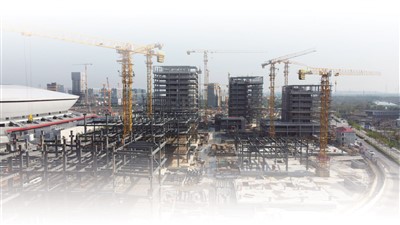
Core Insights - The economic performance of 18 cities in Henan province for the first three quarters has been released, showing a GDP growth of 5.6%, surpassing the national average by 0.4 percentage points [2][4]. Economic Performance - Henan's GDP for the first three quarters reached 48,867.57 billion yuan, with a year-on-year growth of 5.6% [2]. - 15 cities in Henan outperformed the national GDP growth rate, with notable performances from cities like Luohe and Xuchang, which recorded growth rates of 7% and 6.6% respectively [2][4]. - Zhengzhou, Luoyang, and Nanyang maintained the top three GDP positions in the province, with Zhengzhou's GDP exceeding 1.1 trillion yuan, growing by 5.4% [4][5]. Industrial Performance - Zhengzhou's industrial output value increased by 8.8%, with significant contributions from the automotive and electronic information sectors, which grew by 19.2% and 11.8% respectively [4][6]. - Luoyang's high-tech manufacturing sector saw a remarkable growth of 75.7%, contributing significantly to its industrial growth [4][6]. - Nanyang's industrial sectors also showed strong performance, with 76.9% of its major industries reporting growth [6]. Consumption and Investment - The consumption sector demonstrated resilience, with several cities like Xuchang and Kaifeng achieving retail sales growth rates above 7% [7]. - Investment growth rates across various cities remained robust, with all reported cities showing growth rates above 4.4% [7]. Future Outlook - The fourth quarter is critical for achieving annual economic targets, with a focus on balanced development across investment, exports, and consumption [9]. - Continued efforts in industrial upgrading and service sector development are expected to enhance growth structures in key cities like Zhengzhou and Luoyang [10].
固收专题:量化视角看“十五五”规划建议20251030
China Post Securities· 2025-10-30 11:15
Group 1: Report Industry Investment Rating - No relevant content provided Group 2: Core Views of the Report - The "15th Five-Year Plan" Proposal reaffirms "taking economic development as the center" and aims to empower the real economy with technology and lead the construction of a modern industrial system [2][5][11] - Keywords such as "innovation", "technology", "consumption", and "investment" become prominent, reflecting the focus on technological innovation, domestic demand expansion, and investment efficiency [3][5][13] - The total target is to improve total factor productivity and keep economic growth within a reasonable range, implying an expected annual average economic growth rate of 3.7% - 5.4% in the next 10 years [4][5][18] - The industrial structure should maintain a reasonable proportion of the manufacturing industry and significantly increase the household consumption rate, which will be important guidelines for economic structure adjustment [5][22][24] Group 3: Summary by Relevant Catalog 1.1 General Overview: Taking Economic Development as the Center and Modern Industrial System as the Core Task - The "15th Five-Year Plan" Proposal reaffirms the principle of "taking economic development as the center", with the external environment becoming more complex and domestic challenges remaining in new and old kinetic energy conversion and effective demand [11] - It emphasizes seizing the opportunities of the new round of technological revolution and industrial transformation, and proposes specific goals for industrial development, such as optimizing traditional industries and cultivating emerging and future industries [11] 1.2 Word Frequency: Innovation, Technology, Consumption, and Investment Become Keywords - "Innovation" and "technology" appear 61 and 46 times respectively, with more refined key core technology research goals and an emphasis on technological transformation [13] - The frequency of "consumption" - related words rises to 23, and specific measures are proposed to boost consumption, indicating more consumption - promoting policies in the future [14] - The frequency of "investment" - related words reaches 29, suggesting that government investment may be more inclined to high - efficiency areas and the optimization of investment structure [15] - The frequency of "trade" - related words increases to 22, emphasizing the expansion of independent opening - up and the promotion of RMB internationalization [15] 1.3 Total Target: Improving "Total Factor Productivity" and Keeping Economic Growth within a Reasonable Range - The "15th Five - Year Plan" and the 2035 target imply an expected annual average economic growth rate of 3.7% - 5.4% in the next 10 years, providing a basis for judging the annual economic growth target [18] - The Proposal aims to steadily increase total factor productivity. Considering the structural constraints of the Chinese economy in the next decade, achieving high - quality growth requires continuous improvement of total factor productivity and release of institutional dividends [20] 1.4 Industrial Structure: Maintaining a Reasonable Proportion of the Manufacturing Industry and Significantly Increasing the Household Consumption Rate - The goal of maintaining a reasonable proportion of the manufacturing industry implies the need to upgrade traditional manufacturing and adhere to the real economy. The high - tech industry has become a strong growth driver [22] - The new goal of significantly increasing the household consumption rate is proposed. China's current household consumption rate has great room for improvement, and measures such as promoting employment and increasing income are proposed to boost consumption [24]
规模510亿元战略基金启动,投早、小、长期、硬科技
Sou Hu Cai Jing· 2025-10-30 10:38
Core Insights - The establishment of the Central Enterprise Strategic Emerging Industry Development Special Fund (referred to as "Central Enterprise Emerging Fund") aims to enhance investment in strategic emerging industries, with a total fundraising of 51 billion yuan [3][4] - The fund has a total duration of 15 years, including a 5-year investment period and an 8-year management exit period, with a possible 2-year extension [3][4] - The fund's primary investment focus includes artificial intelligence, high-end equipment, quantum technology, and future industries such as future energy, future information, and future manufacturing [3] Fund Structure and Contributions - The fund has 15 contributors, with China Reform Holdings Corporation Limited (China Reform) being the largest shareholder, contributing 15 billion yuan and holding a 29.4% stake [3] - Other contributors include state-owned enterprises such as China Mobile (6 billion yuan), Sinopec (5 billion yuan), and China National Offshore Oil Corporation (3 billion yuan), among others [3] - The total scale of various central enterprise venture capital funds established this year is approaching 100 billion yuan, focusing on technology attributes and emerging fields [4] Policy and Investment Strategy - The fund is part of a broader initiative to support the development of strategic emerging industries as mandated by the central government [4] - The investment strategy emphasizes early-stage, small-scale, long-term investments in hard technology, creating a new model of integration between industry and finance [4][6] - Recent policy measures aim to address concerns regarding state-owned capital's risk tolerance and investment willingness, establishing a lifecycle assessment mechanism for venture capital funds [7][8] Market Impact and Collaboration - State-owned capital is expected to stimulate market-oriented funds' investment enthusiasm, particularly in larger financing projects where state capital can lead the investment [8] - Central enterprises possess rich application scenarios for collaboration, as evidenced by recent procurement orders in the robotics sector [8]




大江洪流姜昧军:把握未来十年投资主线,布局产业链优势核心领域
Sou Hu Cai Jing· 2025-10-30 04:45
Core Insights - The future ten years present significant investment opportunities for the Chinese economy, driven by advantages in the industrial chain, technological innovation, and infrastructure upgrades [1][2] - China's economic transition from factor-driven to innovation-driven growth is crucial for industrial structure upgrades, leading to a self-reinforcing development phase [1] - The capital market is expected to experience a prosperous development period, becoming a true barometer of the economy, with increased reliance from technology innovation enterprises [2] Investment Opportunities - Focus on strategic emerging industries such as new energy, new materials, high-end equipment, and low-altitude economy [3] - Attention to cutting-edge technology fields including quantum technology, biomanufacturing, hydrogen energy, brain-computer interfaces, embodied intelligence, and sixth-generation mobile communication [3] - Identify small and medium enterprises within the industrial chain ecosystem that can collaborate with leading companies and possess global perspectives and technological barriers [3]