社会保障

Search documents
10月9日起北京离退休人员可申请换发第三代社保卡
Zhong Guo Xin Wen Wang· 2025-10-09 05:48
Core Viewpoint - Beijing has initiated the fifth batch of centralized issuance of the third-generation social security card for retired personnel starting from October 9, 2023, allowing them to apply online through various platforms [1]. Group 1: Issuance Process - Retired personnel can apply for the third-generation social security card through the Beijing Human Resources and Social Security Bureau's official website, WeChat public account, and other online channels [1]. - The card issuance will be completed within 30 calendar days from the date of application, with two options for card collection: at a designated bank service point or via free postal delivery [2]. Group 2: Card Activation and Usage - The original social security card remains valid and can be used until the new card is activated, ensuring that social security and medical insurance functions continue without interruption [3]. - Users are advised to protect their personal information and avoid sharing their new card details to prevent fraud [3].
重新审视社会保障问题的核心|宏观经济
清华金融评论· 2025-10-05 08:00
Core Viewpoint - The article emphasizes the urgent need to address the sustainability of the pension system in China, driven by factors such as aging population, labor market challenges, and the potential for increased productivity through artificial intelligence. It argues that the issue is not a lack of material wealth but rather inadequate institutional arrangements to support social security [4][5][10]. Group 1: Factors Affecting Pension Sustainability - The first factor is demographic, with a rapidly increasing aging rate. By 2032, over 21% of China's population will be aged 65 and above, indicating a significant aging society while income levels remain relatively low compared to developed nations [7]. - The second factor is the labor market, characterized by structural employment issues, high youth unemployment (17.8% for ages 16-24), and the challenges faced by older workers nearing retirement [8][9]. - The third factor is labor productivity, which has the potential for unlimited growth due to advancements in artificial intelligence. The expected annual growth rate of the "supporting productivity" for the working-age population is projected at 5.55%, outpacing the growth of the elderly dependency ratio [9][10]. Group 2: Institutional Arrangements and Recommendations - Current social security arrangements are insufficient to share the benefits of increased productivity, necessitating reforms in the pension system to ensure equitable distribution of wealth generated by productivity gains [12][19]. - The article suggests establishing a universal social security system that includes a "living wage" and "unconditional basic income" to address the challenges posed by artificial intelligence and ensure comprehensive coverage for all citizens [19][20]. - It also advocates for a reconsideration of nominal account systems, emphasizing the need for a record-keeping approach that does not require actual funding but ensures the sustainability of the pay-as-you-go pension system [20][21].


2026 Social Security COLA Predictions Have Increased: What This Means for Retirees
Yahoo Finance· 2025-09-29 13:18
Core Insights - The Social Security Administration (SSA) is expected to announce a 2.7% cost-of-living adjustment (COLA) for 2026, an increase from 2.5% in 2025 [1] - The average retiree's monthly benefit will rise from $2,008.31 to $2,062.53, resulting in an additional $54.22 per month [3] - Despite the COLA increase, inflation rates may erode purchasing power, with the July consumer price index showing a 2.7% year-over-year inflation rate [3][4] Inflation and Expenses - The projected 2.7% COLA may not keep pace with rising costs in key expense categories for retirees, including housing, healthcare, transportation, food, and utilities [5] - Specific increases in expenses include housing up 4.0%, medical care up 4.2%, transportation up 3.5%, and food up 3.2% [8] Medicare Impact - Part B premiums for Medicare are projected to rise by 11.6% in 2026, reducing the effective COLA increase from $54.22 to $32.72 [6] - The total monthly premium for Medicare is expected to reach $206.50, an increase of $21.50 [6]
社会保障体系更加健全 就业形势保持总体稳定
Jin Rong Shi Bao· 2025-09-29 01:07
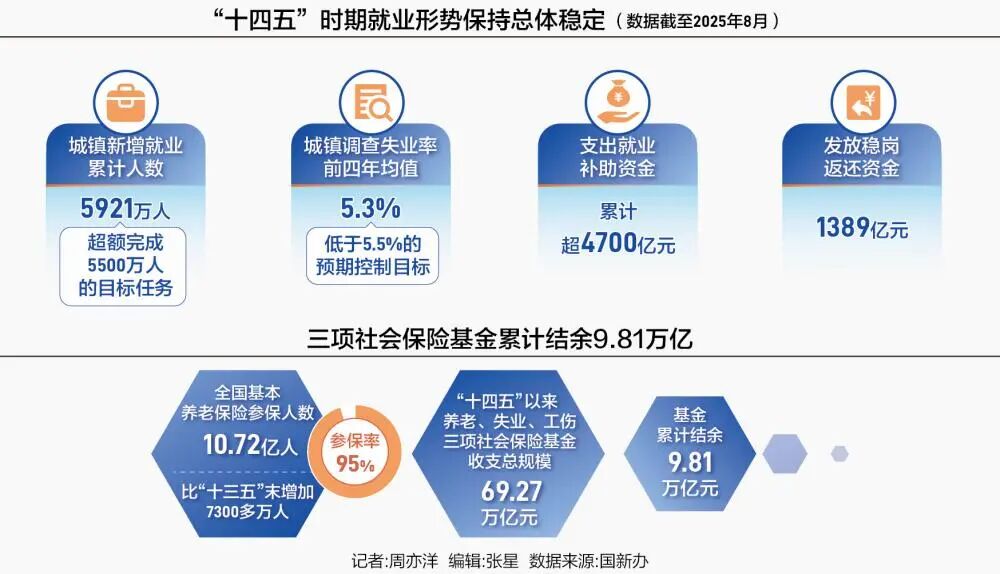
Core Insights - The "14th Five-Year Plan" period has seen significant achievements in employment and social security, with a focus on high-quality development [1] Group 1: Pension Fund and Social Security - The scale of basic pension insurance fund investment operations has reached 2.6 trillion yuan, doubling since the end of the "13th Five-Year Plan" [2] - The average annual investment return rate of the basic pension insurance fund is 5.15%, achieving the goal of preserving and increasing value [2] - The enterprise (occupational) annuity fund has expanded to 7.56 trillion yuan, with an increase of 4.02 trillion yuan since the end of the "13th Five-Year Plan" [2] Group 2: Employment and Labor Market - The number of people covered by basic pension insurance has reached 1.072 billion, an increase of over 73 million since the end of the "13th Five-Year Plan" [3] - Urban new employment has reached 59.21 million, exceeding the target of 55 million [4] - The average urban survey unemployment rate over the past four years is 5.3%, below the expected control target of 5.5% [4] Group 3: Labor Relations and Rights Protection - Over 2,300 one-stop mediation centers for new employment forms have been established to address labor disputes [5] - More than 10,000 major wage arrears violations have been published and handled since the beginning of the "14th Five-Year Plan" [6] - A pilot program for occupational injury protection has been launched in seven provinces, covering various industries and platforms, with over 20 million new employment form workers participating [6]
国家统计局:社会保障体系全球规模最大,保障水平不断提升
Bei Jing Shang Bao· 2025-09-28 02:20
Group 1: Pension Insurance - The number of participants in the basic pension insurance is projected to reach 1.07 billion by the end of 2024, with the average monthly pension for enterprise retirees increasing from approximately 2900 yuan in 2020 to 3162 yuan in 2023 [1] - The number of employees participating in enterprise annuities is expected to be 32.42 million by the end of 2024, with the accumulated fund scale of enterprise annuities reaching 3.6422 trillion yuan, representing growth of 19.3% and 61.9% respectively since the end of 2020 [1] Group 2: Medical Insurance - The number of participants in the basic medical insurance is anticipated to reach 1.33 billion by the end of 2024, maintaining a coverage rate of around 95% since 2018 [2] - The per capita financial subsidy standard for urban and rural residents' basic medical insurance has increased to 670 yuan, reflecting a growth of 21.8% since 2020 [2] - Policies such as basic medical insurance, serious illness insurance, and medical assistance are expected to benefit 220 million visits for low-income rural populations in 2024 [2] - The proportion of personal health expenses in total health expenditure has decreased from 27.7% in 2020 to 27.3% in 2023, indicating a reduction in the financial burden on individuals seeking medical care [2] Group 3: Social Assistance - By the end of 2024, the number of individuals receiving minimum living security in urban and rural areas is projected to be 6.25 million and 33.615 million respectively [2] - The average monthly minimum living security standards for urban and rural areas are expected to be 798.1 yuan and 593.9 yuan, showing increases of 17.8% and 19.5% respectively since 2020 [2]
“十四五”就业目标超额完成
2 1 Shi Ji Jing Ji Bao Dao· 2025-09-27 02:40
Employment and Social Security Achievements - The "14th Five-Year Plan" has achieved significant results in employment and social security, with urban new employment reaching 59.21 million by the end of August, exceeding the target of 55 million [1][4] - The unemployment rate for urban youth aged 16-24 was reported at 18.9% in August, reflecting a 0.1 percentage point increase year-on-year and a 1.1 percentage point increase from the previous month [2] New Employment Forms and Rights Protection - The rise of new employment forms, such as delivery workers and ride-hailing drivers, has led to a growing need for occupational injury protection, with pilot programs initiated in seven provinces since 2022 [5][7] - Over 20 million new employment form workers have participated in occupational injury insurance in pilot areas, with the program expanding to 17 provinces [7] Skills Training and Employment Services - The government is implementing a "1131" service model for graduates, providing multiple support services to enhance employment opportunities [2] - A large-scale vocational skills training initiative aims to train 30 million people over three years, addressing the skills mismatch in the labor market [3] Social Security Fund Growth - The total scale of social insurance funds during the "14th Five-Year Plan" reached 69.27 trillion yuan, with a cumulative surplus of 9.81 trillion yuan [10] - The basic pension insurance fund's investment scale has doubled to 2.6 trillion yuan, achieving an average annual return of 5.15% since its investment operations began [11] National Social Security Fund Development - The National Social Security Fund has grown to 3.22 trillion yuan, with an average annual return of 7.55% since its establishment [13] - The government is committed to enhancing the sustainability of the pension insurance system through the transfer of state-owned capital to the social security fund [13]
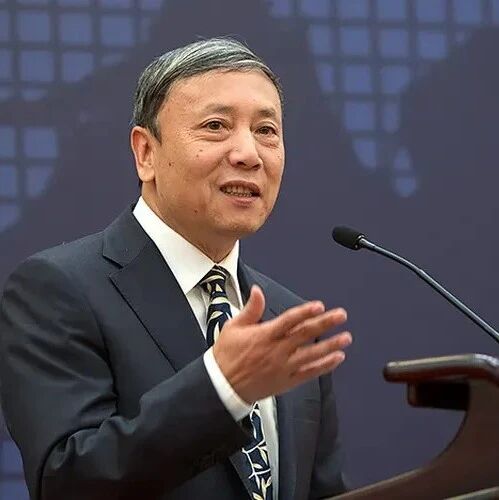
蔡昉:重新审视社会保障问题的核心
和讯· 2025-09-22 09:58
Core Viewpoint - The article emphasizes the urgent need to reform China's social security system, particularly the pension scheme, in light of demographic changes, labor market challenges, and the potential for increased productivity through artificial intelligence [5][7][12]. Group 1: Factors Affecting Social Security Sustainability - The three main factors impacting the sustainability of social security are population dynamics, labor market conditions, and labor productivity [5][8]. - Population aging is accelerating, with projections indicating that by 2032, over 21% of China's population will be aged 65 and above, marking a significant demographic shift [8]. - The labor market faces structural employment issues, including high youth unemployment rates and challenges for older workers nearing retirement [9][10]. - Labor productivity has the potential for significant growth, particularly with advancements in artificial intelligence, which could enhance the capacity to support the elderly [11][12]. Group 2: Institutional Arrangements for Sharing Productivity Gains - Current social security arrangements are inadequate for sharing the benefits of increased productivity, necessitating reforms in the pension system [12][16]. - The first pillar of social security is crucial; without a robust first pillar, the second and third pillars cannot function effectively [6][15]. - There is a need to improve the formalization of employment to ensure broader coverage of social security, especially for non-standard employment [13][14]. Group 3: Recommendations for Reform - Establish a universal social security system that includes a living wage and unconditional basic income to address the challenges posed by artificial intelligence [18]. - Reconsider the nominal account system, focusing on a bookkeeping approach that records contributions without requiring them to be fully realized, thus addressing the current paradox in the pay-as-you-go system [19].
四川推进社保卡“一卡通”建设,到2027年实现各类民生服务事项“应接尽接” 看病出行发资金一卡搞定
Si Chuan Ri Bao· 2025-09-22 06:46
Core Viewpoint - The Sichuan Provincial Government aims to accelerate the construction of a "one card" social security card system, facilitating its application across various sectors including public services, healthcare, transportation, cultural tourism, and financial disbursement by 2027 [1][2][4] Public Services - The social security card will serve as an effective identity credential for citizens to access public and government services, allowing for functions such as queuing and business processing at service halls [2] - The electronic social security card will enable users to log into the "Sichuan Digital Government Platform" for comprehensive access to all government services [2] Human Resources and Social Security - Employment subsidies and social security benefits will be integrated into the social security card, supporting functions related to work injury medical settlements and various employment services [2] Healthcare - The integration of the social security card with electronic health cards will allow for medical services such as appointment scheduling, hospitalization registration, and medication retrieval [2] Transportation - The social security card will facilitate public transport access through card swiping and QR code scanning, with potential discounts for users in certain areas [3] Cultural Tourism - The card will be used for entry verification at tourist attractions and cultural venues, serving as an identity credential for accessing museums and libraries [3] Financial Disbursement - Financial aid, social insurance benefits, and other subsidies will be prioritized for distribution through the social security card, while also allowing for traditional bank card channels [3] Other Services - The social security card will support various daily services such as utility payments, elder care services, and shopping, while encouraging insurance companies to utilize the card for claims [3] Implementation Strategy - The "one card" system will be incorporated into the digital government construction plan, with a focus on unified standards and enhanced cross-regional service capabilities [4]
中国十五五规划前瞻上篇:社保体系改革
2025-09-22 01:00
Summary of Conference Call on China's Social Welfare Reform Industry Overview - The conference call discusses the social welfare reform in China as part of the upcoming 14th Five-Year Plan, focusing on addressing economic challenges such as debt, population aging, and deflation [1][6][10]. Key Points and Arguments 1. **Importance of Social Welfare Reform**: Social welfare reform is crucial for breaking deflation and achieving a balanced economic development. It is seen as a key measure to facilitate a unified market cycle [1][10]. 2. **Progress in Addressing "3D" Challenges**: China has made progress in dealing with debt, demographic changes, and deflation over the past five years, with government support helping to mitigate risks associated with local government debt [1][6]. 3. **Economic Rebalancing**: The government aims to achieve economic rebalancing through targeted policies that can enhance total factor productivity, despite the short-term pain associated with reforms [1][10]. 4. **Rural vs. Urban Disparities**: There is a significant gap in social security coverage and benefits between urban and rural populations, necessitating reforms to enhance rural residents' welfare [2][11]. 5. **Long-term Benefits of Reform**: While short-term adjustments may lead to increased costs for households and businesses, the long-term benefits include improved consumption, reduced defensive savings, and enhanced economic resilience [2][12][27]. 6. **Fiscal Pressure from Aging Population**: The aging population is expected to increase fiscal pressure on the social security system, with projections indicating that fiscal transfers will need to rise from approximately 2% of GDP to over 3% [12][27]. 7. **Investment vs. Social Spending**: There is a need to shift resources from low-return investments to support social welfare, which requires a departure from the current investment-heavy growth model [12][13]. 8. **High Savings Rate**: China's high household savings rate, which has remained around 44% of GDP, reflects structural imbalances in the economy and underscores the need for reforms to stimulate consumption [16][22]. 9. **Social Security System Overview**: The current social security system is characterized by a dual-track structure, with urban workers receiving significantly higher benefits compared to rural residents [33][41]. 10. **Challenges in Implementation**: The complexity of the social security system, including high contribution rates and low perceived benefits, discourages participation, particularly among low-income groups [56][57]. Other Important but Overlooked Content - **Potential for Future Reforms**: The upcoming Fourth Plenary Session is expected to discuss key points of the 14th Five-Year Plan, which may provide a critical window for implementing more substantial reforms [10][12]. - **International Comparisons**: The report highlights that China's social security spending as a percentage of GDP is lower than that of many OECD countries, indicating room for improvement in social welfare provisions [41][42]. - **Impact of Social Security on Consumption**: Increased social security spending is correlated with higher consumption levels, suggesting that enhancing the social safety net could stimulate economic growth [30][31]. This summary encapsulates the essential insights from the conference call regarding China's social welfare reform and its implications for the economy.
2025社保与养老金融论坛聚焦 “高质量低成本” 健康保障之路
Xin Hua Cai Jing· 2025-09-21 14:54
Core Viewpoint - The "2025 Social Security and Pension Finance International Summit Forum" held in Shanghai emphasizes the importance of advancing the Healthy China strategy and achieving high-quality development in social security as critical issues for national welfare and social stability [1][2]. Group 1: Current Challenges in Social Security - China's aging population is accelerating, leading to a growing demand for quality health services and a reinforcement of traditional family caregiving roles, highlighting a mismatch between the increasing health security needs of the elderly and the existing social security system's adaptability [2]. - The current pension system faces three major bottlenecks: significant disparities in basic pension benefits across regions and urban-rural areas, a narrow coverage of enterprise annuities, and low participation in third-pillar pension financial products [2][5]. Group 2: Proposed Solutions and Innovations - Financial technology is suggested as a means to reconstruct the pension ecosystem, utilizing AI and big data for dynamic analysis of user needs and personalized asset allocation [3]. - A unified national health information platform is recommended to manage health throughout the life cycle, supported by wearable devices and cloud technology [3]. - The need for a dual approach to address the challenges of the aging population is emphasized, focusing on both supply-side technological innovations and demand-side consumption upgrades [6]. Group 3: International Perspectives and Economic Implications - The silver economy is viewed as a potential driver for global growth, with China's approach to aging governance providing valuable insights for other countries [2]. - The aging population impacts the economy through reduced labor supply, lower savings and investment rates, and diminished innovation capacity [6]. Group 4: Research and Policy Developments - The establishment of a comprehensive evaluation index system for the "Healthy China" initiative aims to enhance health levels and promote a healthy lifestyle [6]. - The release of the "Shanghai Social Security Reform and Development Report (2025)" outlines innovative practices and policy recommendations in social security and pension finance [6].