智能汽车

Search documents
价格战逼近,华为智驾也要“放下身段”了
Xin Lang Cai Jing· 2025-09-22 09:40
Core Insights - Huawei is advancing its high-level autonomous driving technology with the launch of the QianKun ADS 4.0 system, which supports commercial use of high-speed L3 driving [1] - The company is exploring new collaboration models with automakers, named "HI PLUS," which involves ceding data and algorithm sovereignty to partners while moving away from brand co-construction and channel control [1][2] - The competitive landscape is intensifying, with other automakers like BYD adopting aggressive pricing strategies for autonomous driving features, prompting Huawei to rethink its pricing and sales models [3][5] Group 1: Business Model Evolution - Huawei's previous business models included component sales, full-stack solutions (HI model), and a more consumer-oriented approach (Smart Selection model) [1][2] - The new "HI PLUS" model allows for collaborative development with automakers from the product design stage without entering Huawei's sales channels, increasing automaker autonomy [2] - The shift aims to break the limitations of the Smart Selection model and provide more open cooperation options to automakers [2] Group 2: Market Dynamics and Competition - The autonomous driving market is experiencing a price war, with competitors like BYD offering advanced features at lower prices, leading to a significant drop in market prices [3][4] - Huawei's high-end positioning is being challenged as it faces pressure to lower prices while maintaining quality, similar to the competition between Apple and Android ecosystems [4][5] - The company has been reducing prices for its autonomous driving service packages to attract more users and build a larger data pool, indicating a shift in focus from immediate revenue to long-term user engagement [5][6] Group 3: Sales and Performance Metrics - In the first half of 2025, the domestic automotive market saw a total sales volume of 15.653 million units, with a year-on-year growth of 11.4% [7] - Huawei's smart automotive solutions business reported a revenue of 26.353 billion yuan, a staggering year-on-year increase of 474.4%, marking its first profitable year [8] - Despite strong sales of the AITO series, other models under Huawei's brand are struggling to maintain momentum, highlighting the need for increased sales volume to offset high R&D costs [8][9] Group 4: Strategic Adjustments - Huawei is expanding its partnerships with various automakers, indicating a growing acceptance of its autonomous driving technology across the industry [10] - The company is facing challenges in its current business model, necessitating a shift towards a more flexible approach that allows for greater collaboration and data sharing with automakers [12][13] - The introduction of the "HI PLUS" model reflects Huawei's intent to foster a win-win ecosystem rather than exerting deep control over its partners [13]
斑马智行司罗:智能座舱正经历范式重构,端到端+主动感知成破局关键
Zhong Guo Jing Ji Wang· 2025-09-22 09:07
Core Insights - The core argument presented by the CTO of Zebra Zhixing is that smart cockpits are becoming a crucial entry point for user experience and the Internet AI ecosystem in smart vehicles, representing a golden track with both technological depth and commercial value [3][4]. Industry Overview - Smart cars are identified as a significant testing ground for Physical AI, with the potential for AI value in physical spaces being more substantial than in digital realms [3]. - The smart cockpit is characterized by three core features: high complexity, high safety, and high commercial value, with Zebra Zhixing having collaborated on over 8 million vehicles to validate the feasibility of large-scale technology applications [3]. Technical Architecture - The smart cockpit's five-layer integration architecture includes: 1. Chip and computing power layer, centered around companies like NVIDIA and Qualcomm. 2. System layer, led by companies such as Zebra Zhixing and Huawei, providing efficient system-level services. 3. Large model layer, integrating general and vehicle-specific models to address multi-modal processing and data privacy. 4. Intelligent agent layer, responsible for central decision-making and service module coordination. 5. Platform service layer, enabling AI-native services through natural language interaction [4]. Development Phases - The development of smart cockpits is categorized into three phases: 1. "Verification Period" (2024 to early 2025) focusing on whether large models can be integrated into vehicles. 2. "Application Period" (2025) emphasizing the implementation of intelligent agent systems for practical service delivery. 3. "Reconstruction Period" (current to 2026) where the industry shifts from traditional assembly line architectures to end-to-end models [4][5]. Interaction Experience - The transition from a "passive response" to "active perception" in smart cockpits is highlighted, where intelligent assistants can proactively identify user needs through sensory inputs, evolving from mere tools to supportive partners [5]. - Zebra Zhixing aims to drive the smart cockpit towards a trillion-level commercial market, positioning it as a core hub in the Physical AI ecosystem [5].

聚合智能产业发展大会(2025)成功举办,聚合“三大件”成产业新焦点
Zhong Guo Jing Ji Wang· 2025-09-22 08:01
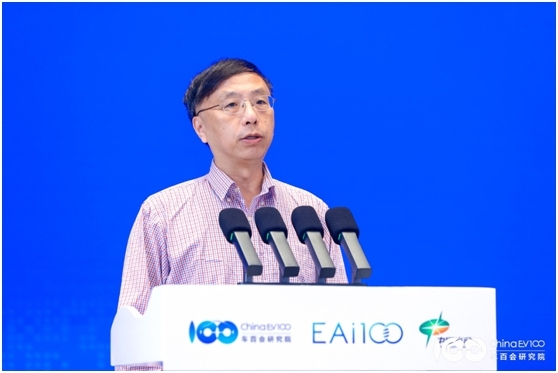
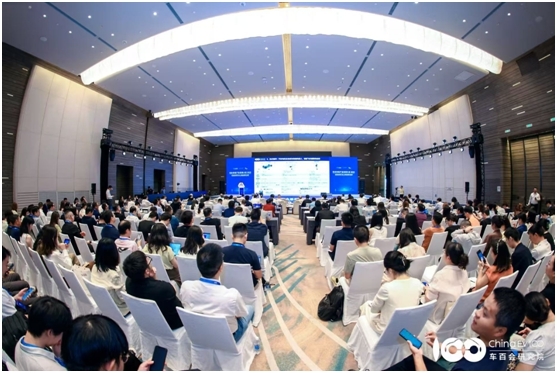
Core Insights - The first Aggregated Intelligent Industry Development Conference (2025) was held in Wuhan, focusing on the theme of "Collaborative Integration of Innovation Chains and Industry Chains to Promote the Development of Aggregated Intelligent Industries" [1] - The conference highlighted the potential of smart vehicles, smart robots, and low-altitude flying vehicles as key components of the aggregated intelligent industry, with a projected global market size of nearly $240 billion by 2030, and China's market expected to exceed $120 billion [1] Group 1: Industry Development and Trends - Zhang Yongwei, Chairman of the Car Hundred Association, emphasized the interconnectedness of smart vehicles, robots, and low-altitude flying vehicles, suggesting they could become new engines for China's industrial exports [1] - The conference featured a forum on the aggregated intelligent industry chain, discussing the need for efficient collaboration and addressing technological bottlenecks in the development of smart robots, low-altitude flying vehicles, and smart vehicles [3] - The low-altitude economy is projected to reach a market size of trillions by 2030, with the need for widespread adoption of personal flying vehicles to achieve market breakthroughs [10] Group 2: Technological Innovations and Applications - Experts discussed the importance of integrating AI capabilities in smart vehicles and robots, highlighting the need for advancements in both physical and cognitive functionalities [5][11] - The development of low-altitude transportation is seen as a crucial solution to urban traffic challenges, with electric flying vehicles expected to significantly reduce manufacturing costs and improve efficiency [4] - The conference underscored the necessity of cross-disciplinary collaboration and the establishment of innovation platforms to drive the aggregated intelligent industry's growth [1][9] Group 3: Policy and Market Dynamics - The former deputy director of the National Postal Bureau proposed six directions for promoting the aggregated intelligent industry, including focusing on practical applications and overcoming key challenges such as cost and safety [10] - The integration of the automotive and aviation industries is expected to facilitate rapid cost reduction and efficiency improvements in low-altitude flying vehicles [11] - The conference also highlighted the importance of developing standards and regulations to keep pace with technological advancements in the aggregated intelligent sector [10][12]
智能汽车ETF(159889)涨超2.7%,机构:关注AI终端革命与政策催化
Mei Ri Jing Ji Xin Wen· 2025-09-22 05:07
Group 1 - The core viewpoint of the article emphasizes that smart cars are a revolutionary terminal in the AI era, characterized by decentralization and technological equity, which will transform social productivity and relationships [1] - The shift in the AI era is moving from "traffic is king" to "product is king," indicating that the value of smart cars will depend on their complexity in helping humans complete tasks rather than user scale [1] - The Robotaxi market is projected to reach a scale of 83.1 billion yuan by 2030 and increase to 709.6 billion yuan by 2035, highlighting significant growth potential in the industry [1] Group 2 - The smart car ETF (159889) tracks the CS Smart Car Index (930721), which selects listed companies involved in smart car terminal perception and platform applications from the Shanghai and Shenzhen markets [1] - The index components cover multiple sub-sectors closely related to the development of smart car technology, including but not limited to autonomous driving and vehicle networking [1] - Key elements in the industry chain include chips, algorithms, and data closed-loop capabilities, with technology providers and operators expected to become the core profit segments [1]
苏州坐标系智能科技有限公司发生工商变更
Sou Hu Cai Jing· 2025-09-22 03:30
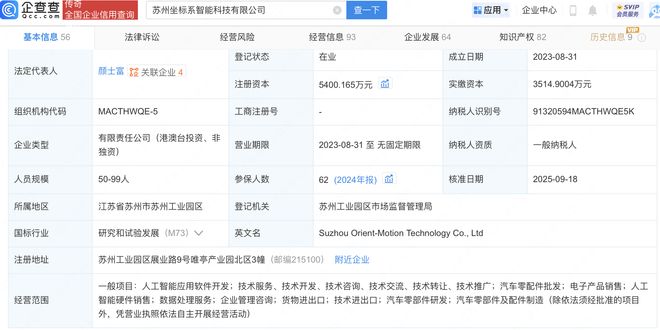
天眼查App显示,近日,苏州坐标系智能科技有限公司发生工商变更,新增美团旗下汉海信息技术(上 海)有限公司为股东,同时注册资本由约4761万人民币增至约5400万人民币。苏州坐标系智能科技有限 公司成立于2023年8月,法定代表人为颜士富,经营范围包括人工智能应用软件开发、汽车零配件批 发、电子产品销售等。股东信息显示,该公司现由苏州时睿智能科技有限公司、越超创新有限公司及上 述新增股东等共同持股。公开资料显示,该公司专注于智能汽车线控底盘核心技术的研发与产业化。 ...
美团入股智能汽车线控底盘开发商坐标系智能
Qi Cha Cha· 2025-09-22 02:28
Group 1 - Suzhou Orient-Motion Technology Co., Ltd. has recently undergone a business change, adding Meituan's affiliated company, Hanhai Information Technology (Shanghai) Co., Ltd., as a shareholder [1] - The registered capital of Suzhou Orient-Motion Technology has increased to 54.00165 million yuan from 47.610922 million yuan, marking an increase of 6.390728 million yuan [2] - The company was established in August 2023 and focuses on the development of core technologies for intelligent automotive line control chassis [1][2] Group 2 - The company operates in various sectors, including artificial intelligence application software development, artificial intelligence hardware sales, and automotive parts research and development [1][2] - The company is located in Suzhou Industrial Park, Jiangsu Province, and has a workforce of 50-99 employees [2] - The business scope includes technology services, technical consulting, and import-export activities related to automotive components [2]

【重磅深度】AI智能车时代是【产品为王】
东吴汽车黄细里团队· 2025-09-21 15:16
Core Viewpoints - The AI era emphasizes "product supremacy" rather than "traffic supremacy," marking a shift from the PC and mobile internet eras where user scale and network effects were paramount [4][14][25] - AI agents are expected to emerge across various subfields, focusing on task complexity and revenue generation rather than user numbers [4][25] Investment Opportunities in AI Smart Vehicles - AI smart vehicles represent a significant investment opportunity, potentially greater than that seen during the internet era, with China expected to innovate at the foundational level, leading to globally competitive companies [6][17] - The Robotaxi industry chain is identified as the best investment theme for the next five years, with various categories of companies involved, including integrated models, technology providers, and traditional ride-hailing services transitioning to smart vehicles [8][19][20] Valuation Methods for AI Smart Vehicles - The valuation approach for AI smart vehicles may differ from previous eras, with a focus on "smart agent revenue valuation," where the revenue potential is determined by the number of smart agents and their capability levels [7][20] Key Investment Targets in the AI Smart Vehicle Industry Chain - The investment landscape includes various categories such as integrated models (e.g., Tesla, Xiaopeng), technology providers (e.g., Horizon Robotics, Baidu), traditional ride-hailing companies (e.g., Didi), vehicle manufacturers (e.g., BAIC BluePark), and core hardware suppliers (e.g., chip manufacturers) [8][19][21][10] - The Robovan industry chain is also highlighted as a significant opportunity, with lower technical barriers and faster commercialization potential compared to Robotaxi [9][21] Consumer Market for L4 Smart Vehicles - The consumer market for L4 smart vehicles is expected to emerge later than the B2B market but could present substantial investment opportunities once it gains traction [10][21]



中小盘周报:看好智慧消防及AI+基层医疗-20250921
KAIYUAN SECURITIES· 2025-09-21 11:57
Group 1: Smart Firefighting - The global smart firefighting system market is rapidly expanding, driven by the integration of IoT, big data, cloud computing, AI, and 5G technologies[14] - Key trends include remote monitoring acting as the "cloud brain" for 24/7 intelligent alerts and firefighting robots serving as "ground troops" for high-risk scenarios[3] - Qingniao Firefighting is entering the remote monitoring and firefighting robot sectors, establishing a new growth curve with its integrated service model[3][17] Group 2: AI in Grassroots Healthcare - The national health strategy prioritizes enhancing grassroots healthcare service capabilities, aiming for full coverage of basic medical services by 2027[19] - AI technology is increasingly seen as a solution to address issues like staff shortages and low technical levels in grassroots healthcare institutions[20] - Kangzhong Medical is actively investing in AI+ grassroots healthcare, forming strategic partnerships and launching community health service initiatives[21][22] Group 3: Market Performance - This week, the small-cap indices such as CSI 1000 and CSI 500 outperformed large-cap indices like SSE 50, with Qingdao Firefighting and Xinquan Co. leading in stock performance[5][24] - The average discount rate for new share placements was 14.2%, with an average yield of 17.1% this week[5][11]
基金市场跟踪:中小盘收正,板块分化明显TMT板块基金今年收益反超医药板块
ZHONGTAI SECURITIES· 2025-09-21 09:10
Report Title - **中小盘收正,板块分化明显,TMT板块基金今年收益反超医药板块——基金市场跟踪2025.09.19** [2] Investment Rating - No investment rating information is provided in the report. Core Viewpoints - This week, the TMT sector funds' year-to-date returns successfully exceeded those of the pharmaceutical sector, becoming the top performer. The pharmaceutical sector's general weakness led to a 2.3% pullback in its funds this week, while the technology and media sectors drove the TMT sector funds up by 2.2% [6][32]. - In terms of style labels, small and medium market capitalization and medium to high valuation have obvious advantages [6][32]. Summary by Directory 1. This Week's Market Fluctuations 1.1 Performance of Major Asset Classes - The A-share market fluctuated slightly. The CSI 300, representing the large-cap market, had a 0.4% pullback, while the CSI 500 and CSI 1000 rose slightly. There was obvious differentiation in style, with the financial sector having a relatively high pullback and the growth sector recording a 1.5% positive return, a gap of nearly 5% [6][10]. - In the bond market, government bonds and corporate bonds fluctuated slightly, and convertible bonds fell 1.5% driven by the stock market [10]. - The Hong Kong and US stock markets rose to varying degrees [10]. - Among representative commodities, agricultural products had a pullback [10]. 1.2 Performance of Industry Themes - This week, each sector in the market showed differentiation. The pharmaceutical sector weakened overall, with all sub - industries having a pullback of over 1.5%. Most of the technology sector closed positive, but cloud computing had a 3.1% pullback. The media sector had a relatively high increase, with the positive return of the animation and game sub - sector exceeding 5%. The mid - stream manufacturing sector was also clearly differentiated, with smart cars rising 4.7% and rare earths falling 4.3%, a gap of 9% [6][12]. 1.3 Performance of Concept Indexes - The top five concepts with the highest gains this week were lithography machines, optical modules (CPO), semiconductor equipment, cameras, and selected auto parts, with the lithography machine concept rising 9%. The top five concepts with the highest losses were rare earths, gold and jewelry, operating systems, selected insurance, and small metals, with rare earths falling 7.4% [17]. 1.4 Trading Heat Tracking - The top five concepts with the highest trading heat this week were state - owned enterprise comprehensive, fund heavy - holding, core assets, 5G applications, and technology leaders. The average daily trading volume of the state - owned enterprise comprehensive concept reached 56.13 billion shares [21]. - Compared with last week, the top five concepts with rising heat were selected coal mining, selected air transportation, urban village renovation, recent IPO stocks, and cross - border e - commerce; the top five concepts with falling heat were digital twin, spatio - temporal big data, gold and jewelry, selected shipping, and fluorine chemical industry [22][23]. 2. Active Equity Fund Tracking 2.1 Classification Returns and Rising Ratios - The median return of international (QDII) stock - type funds in the past week was the highest at 1.4%, and the lowest was enhanced index - type bonds at - 0.3%. The median return of partial - stock hybrid funds in the past month was the highest at 7.0%, and the lowest was hybrid bond - type level 1 at - 0.0% [29]. - The proportion of rising funds in the past month was the highest for enhanced index - type bonds at 100.0%, and the lowest was hybrid bond - type level 1 at 37.7%. The minimum maximum drawdown in the past month was for short - term pure - bond funds at - 0.0%, and the highest was for ordinary stock - type funds at - 5.0% [29]. 2.2 Sub - label Return Situations - In terms of sectors, the TMT sector funds had a 2.2% return in the past week, 15.0% in the past month, and 47.9% year - to - date; the mid - stream manufacturing sector had 2.2%, 9.3%, and 31.8% respectively; the pharmaceutical sector had - 2.3%, - 2.1%, and 43.8% respectively [31]. - In terms of style labels, small - cap and medium - to - high - valuation funds showed obvious advantages [32]. 2.3 Fund Differentiation within Sectors - At the sector level, the consumer sector had the lowest differentiation degree in the past week, with a return range of 6.0%, and the highest was the TMT sector, with a return range of 18.8%. In the past month, the consumer sector also had the lowest differentiation degree, with a return range of 15.1%, and the highest was the TMT sector, with a return range of 44.0% [34]. 2.4 Fund Differentiation within Styles - At the style level, the low - profit - quality funds had the lowest differentiation degree in the past week, with a return range of 13.9%, and the highest were low - cap and high - valuation funds, with a return range of 22.8%. In the past month, the low - valuation funds had the lowest differentiation degree, with a return range of 40.7%, and the highest were high - valuation, high - growth, and high - quality funds, with a return range of 50.1% [38]. 2.5 Top - performing Funds in Each Sector - The report lists the top five funds in each sector in terms of one - month returns [43][44]. 2.6 Top - performing Funds in Each Style - The report lists the top five funds in each style in terms of one - month returns [46]. 3. Private Equity Market Performance 3.1 Overall Performance of the Private Equity Market - The private equity type with the highest return this year is the event - driven type, with a return rate of 39.3% [4][50]. 3.2 Returns of Various Private Equity Types - For stock - strategy private equity, the top - performing products are mostly stock subjective long - only, and most of their year - to - date returns are in the 0% - 20% range [53]. - For bond - strategy private equity, the top - performing products are all bond composites, and most of their year - to - date returns are in the 0% - 5% range [57]. - For portfolio fund - strategy private equity, the top - performing products are all FOFs, and most of their year - to - date returns are above 10% [61]. - For money - market - strategy private equity, the top - performing products are all trust products, and most of their year - to - date returns are in the 0% - 2% range [64]. - For managed - futures private equity, the top - performing products mostly use program trading strategies, and their year - to - date returns are widely distributed, with products in both the <-10% and >10% ranges [67]. - For relative - value - strategy private equity, the top - performing products are all stock - market neutral, and most of their year - to - date returns are in the 10% - 20% range [70]. - For macro - strategy private equity, only 8 products announced their net values this week, and most of their year - to - date returns are above 20% [73]. - For composite - strategy private equity, the top - performing products are mostly trust products, and most of their year - to - date returns are in the 0% - 10% and >30% ranges [77]. - For other - strategy private equity, the top - performing products are mostly under foreign - trade trusts, and most of their year - to - date returns are in the 0% - 10% range [80].
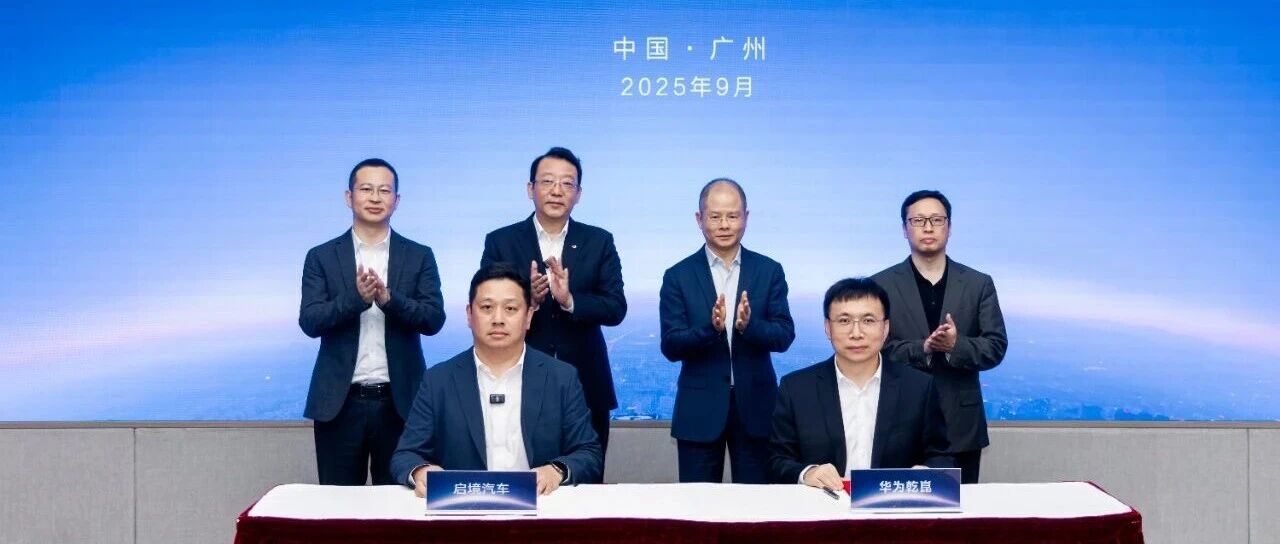
【启境】品牌官宣:华为牵手广汽,打造高端智能汽车新标杆
雷峰网· 2025-09-21 04:05
Core Viewpoint - The collaboration between Huawei and GAC Group to create the new high-end smart electric vehicle brand "Qijing" is seen as a significant strategic move, aiming to enhance both companies' positions in the competitive automotive market, particularly targeting younger consumers and emphasizing technology integration [2][9][22]. Group 1: Strategic Importance of Qijing - The establishment of Qijing represents a deep collaboration between traditional automaker GAC Group and tech giant Huawei, marking a critical strategic initiative for both companies [8][9]. - For GAC, Qijing serves as a vehicle for elevating its high-end brand capabilities, addressing the need for a strong brand to attract new-generation consumers in the competitive high-end electric vehicle market [8][9]. - Huawei's involvement positions Qijing as a showcase for its advanced smart automotive technologies, enhancing its recognition in the high-end market [9][10]. Group 2: Unique Collaboration Dynamics - This partnership is characterized as a new paradigm of cooperation between tech companies and traditional automakers, where Huawei retains control over core smart modules while GAC manages brand operations and sales channels [10][12]. - The collaboration allows for a streamlined product development process, ensuring that Qijing's vehicles are designed with a consistent smart technology framework from the outset [10][12]. Group 3: Product Development and Market Potential - Qijing is strategically targeting the high-end electric vehicle market, which is expected to be highly competitive, especially as many established players face market challenges [14][18]. - The first product from Qijing is set to launch in mid-2026, coinciding with a pivotal moment in smart automotive technology advancements, including the rollout of L3 autonomous driving capabilities [18][20]. - The brand's focus on user needs in product design, along with a collaborative operational model starting in 2025, positions Qijing to effectively respond to market demands and optimize user experience [15][20]. Group 4: Future Outlook - Qijing is anticipated to leverage Huawei's successful product methodologies and GAC's extensive automotive experience to carve out a competitive edge in the market [22]. - The upcoming launch of Qijing's first vehicle is expected to introduce innovative product experiences that resonate with younger consumers, potentially disrupting the current market dynamics [20][22].