
饮料

Search documents
东鹏饮料、圣桐特医、优乐赛等10家企业完成境外上市备案
Sou Hu Cai Jing· 2025-12-01 06:24
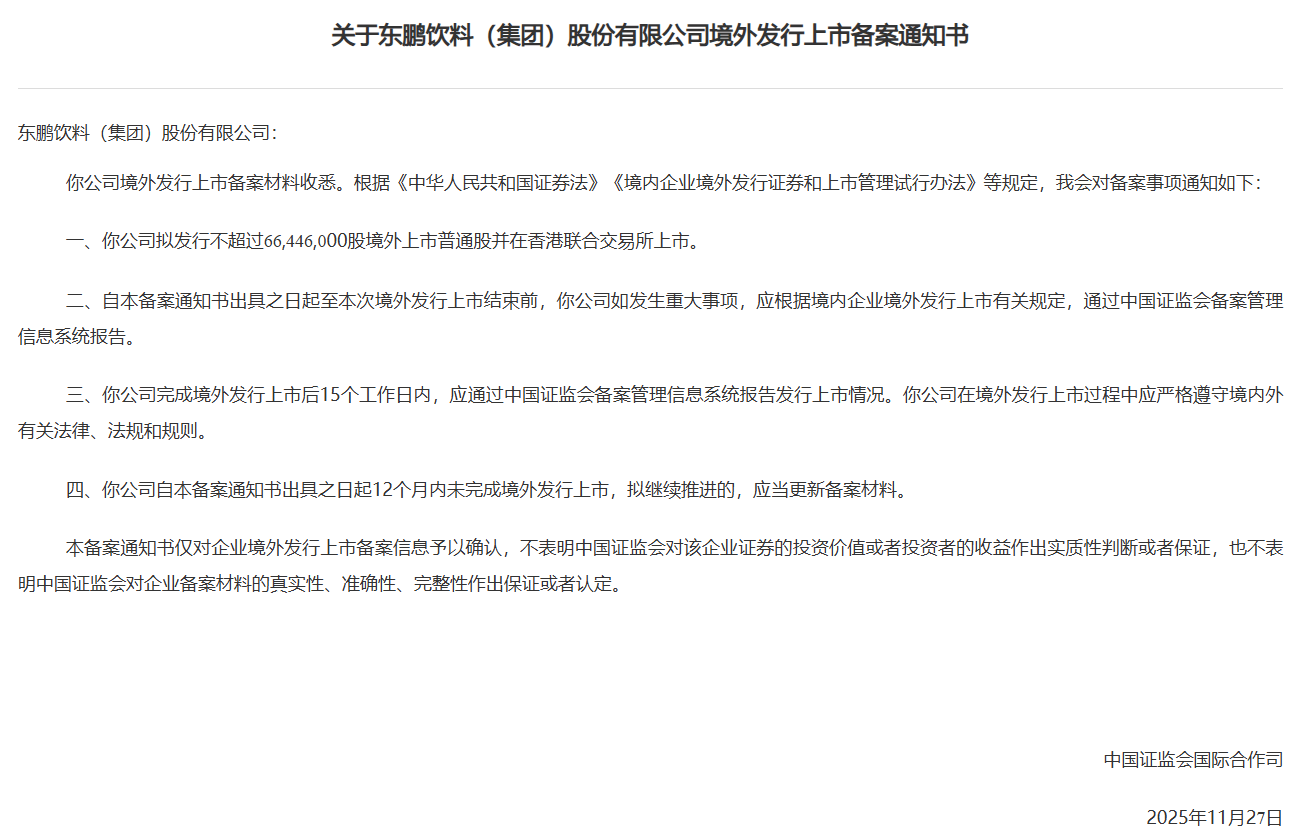
Core Viewpoint - The China Securities Regulatory Commission has confirmed the overseas listing applications for several companies, including Dongpeng Beverage, Saintong Medical, Youlesai, Linqingxuan, Jinxun Co., Muyuan Foods, Basic Semiconductor, Huasheng Technology, Xiantong International, and Wuyi Vision, with Huasheng Technology applying for a listing in Taiwan and the others in Hong Kong [1]. Group 1: Dongpeng Beverage - Dongpeng Beverage plans to issue no more than 66,446,000 overseas ordinary shares and list on the Hong Kong Stock Exchange [1]. - The company focuses on beverage R&D, production, and sales, particularly in the functional beverage sector, with products including energy drinks, sports drinks, tea, coffee, plant protein drinks, and fruit and vegetable juices [3]. - Financial projections for Dongpeng Beverage show revenues of 8.5 billion, 11.257 billion, 15.83 billion, and 10.732 billion for 2022 to 2025, with corresponding net profits of 1.441 billion, 2.04 billion, 3.326 billion, and 2.375 billion [3]. Group 2: Saintong Medical - Saintong Medical intends to issue no more than 12,298,300 overseas ordinary shares and list on the Hong Kong Stock Exchange [1]. - The company specializes in the R&D, production, and sales of special medical purpose formula foods, particularly in the infant medical food sector [5]. - Financial forecasts for Saintong Medical indicate revenues of 491 million, 654 million, and 834 million for 2022 to 2024, with net profits of 83.89 million, 170 million, and 91.14 million [5]. Group 3: Youlesai - Youlesai plans to issue no more than 26,833,500 overseas ordinary shares and list on the Hong Kong Stock Exchange [1]. - The company is a leading integrated circular packaging service provider for the automotive industry, offering solutions and smart logistics systems [8]. - Financial projections for Youlesai show revenues of 648 million, 794 million, and 838 million for 2022 to 2024, with net profits of 3.12 million, 64.15 million, and 50.74 million [8]. Group 4: Linqingxuan - Linqingxuan intends to issue no more than 16,061,400 overseas ordinary shares and list on the Hong Kong Stock Exchange [1]. - The company is a high-end skincare brand focusing on plant-based skincare products, using camellia oil as a core ingredient [10]. - Financial forecasts for Linqingxuan indicate revenues of 691 million, 805 million, and 1.21 billion for 2022 to 2024, with net profits of -5.93 million, 84.52 million, and 187 million [10]. Group 5: Jinxun Co. - Jinxun Co. plans to issue no more than 42,280,400 overseas ordinary shares and list on the Hong Kong Stock Exchange [1]. - The company is involved in the development, smelting, and processing of non-ferrous metal new energy materials, with core businesses including cathode copper production and cobalt product processing [11]. - Financial projections for Jinxun Co. show revenues of 637 million, 676 million, and 1.77 billion for 2022 to 2024, with net profits of 84 million, 29 million, and 202 million [11]. Group 6: Muyuan Foods - Muyuan Foods intends to issue no more than 546,276,700 overseas ordinary shares and list on the Hong Kong Stock Exchange [1]. - The company operates a full industry chain in pig farming, including feed processing, breeding, and meat processing [12]. - Financial forecasts for Muyuan Foods indicate revenues of 124.8 billion, 110.9 billion, and 138 billion for 2022 to 2024, with net profits of 14.933 billion, -4.168 billion, and 18.925 billion [12]. Group 7: Basic Semiconductor - Basic Semiconductor plans to issue no more than 39,357,800 overseas ordinary shares and list on the Hong Kong Stock Exchange [1]. - The company focuses on the R&D and industrialization of silicon carbide power devices, with products used in photovoltaic storage and industrial control [15]. - Financial projections for Basic Semiconductor show revenues of 117 million, 221 million, and 299 million for 2022 to 2024, with net losses of 242 million, 342 million, and 237 million [15]. Group 8: Huasheng Technology - Huasheng Technology intends to issue no more than 9,100,000 ordinary shares and list on the Taiwan Stock Exchange [1]. - The company specializes in manufacturing electronic connectors and related products, including automotive wiring harnesses and RF antennas [17]. Group 9: Xiantong International - Xiantong International plans to issue no more than 9,259,900 overseas ordinary shares and list on the Hong Kong Stock Exchange [1]. - The company is a comprehensive enterprise focusing on pharmaceutical R&D, production, and sales, with a pipeline targeting oncology and neurodegenerative diseases [19]. - Financial forecasts for Xiantong International indicate revenues of 10.23 million and 44.06 million for 2022 to 2024, with net losses of 309 million and 156 million [19]. Group 10: Wuyi Vision - Wuyi Vision intends to issue no more than 77,600,840 overseas ordinary shares and list on the Hong Kong Stock Exchange [1]. - The company focuses on digital twin technology, providing applications for smart cities and industrial simulation [21]. - Financial projections for Wuyi Vision show revenues of 170 million, 256 million, and 287 million for 2022 to 2024, with net losses of 190 million, 87 million, and 82 million [21].


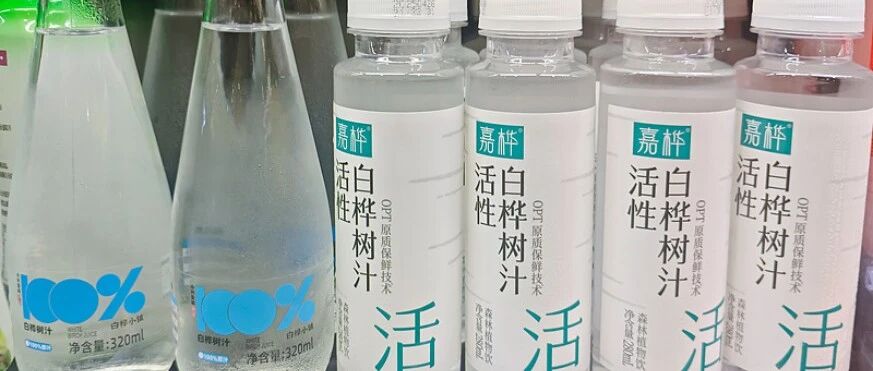
巨头们都在押注的白桦树汁是智商税吗?
首席商业评论· 2025-12-01 04:29
Core Viewpoint - The article discusses the rising popularity of birch sap as a trendy health drink, highlighting its nutritional claims and the influx of major beverage companies entering the market despite skepticism about its health benefits [5][7][20]. Market Overview - Birch sap, priced between 8 to 30 yuan, with some premium products reaching over 50 yuan, has seen a surge in sales, exceeding 100 million yuan in revenue within a year [5][8]. - Major brands like Nongfu Spring, Huiyuan, and Yuanqi Forest have launched their own birch sap products, indicating a competitive market landscape [7][17]. Nutritional Claims - Birch sap is claimed to contain 17 amino acids, 8 trace elements, and various polyphenols and flavonoids, marketed as a "liquid gold" with health benefits such as anti-fatigue and detoxification [7][10]. - However, some experts argue that the actual health benefits are overstated, with the drink primarily serving as a hydration source [12][21]. Consumer Perception - Consumer feedback is mixed, with some praising its taste and health benefits, while others criticize it as merely sweetened water with minimal health effects [10][12]. - The market's current demand is driven by a trend towards natural and health-oriented beverages, as consumers shift away from sugary drinks [20][24]. Industry Dynamics - The cost of birch sap has increased from approximately 1,700 yuan per ton to 6,000 yuan per ton, leading to inflated product prices and concerns about quality control among various brands [20][21]. - The entry of large companies into the birch sap market is motivated by the potential for high profit margins and alignment with health trends, despite challenges in raw material supply and sustainability [21][24]. Future Considerations - The sustainability of birch sap sourcing is a concern, as increased demand may threaten local ecosystems and product quality [23][26]. - For long-term success, brands must focus on product innovation, quality control, and responsible marketing, moving away from exaggerated health claims to ensure a stable market presence [26].
宗馥莉彻底“出局”,一切都结束了!
Sou Hu Cai Jing· 2025-12-01 03:46
Core Viewpoint - The recent resignation of Zong Fuli from key positions at Wahaha marks a significant shift in the company's management structure, with Xu Simin taking over as the new leader, indicating a transition from personal leadership to a more systematic management approach [2][14][21]. Group 1: Management Changes - Zong Fuli has stepped down from her roles as legal representative, chairman, and general manager of Wahaha, with Xu Simin, aged 31, appointed as her successor [2][12]. - The timing of Xu Simin's rise to power is notable, as he has been groomed within the Wahaha ecosystem, having previously worked in the legal department of Hongsheng Group, which is fully controlled by Zong Fuli [7][12]. Group 2: Ownership and Control - Despite her resignation, Zong Fuli retains a significant 29.40% stake in Wahaha, which allows her to maintain substantial influence within the company [8][11]. - The operational control remains crucial, as Zong Fuli has established a robust supply chain that is integral to Wahaha's operations, ensuring her continued impact on the company's direction [12][13]. Group 3: Strategic Implications - Zong Fuli's departure from frontline roles is seen as a strategic move to alleviate the pressures of public scrutiny and allow for long-term planning without the burden of constant media attention [13][20]. - This transition is viewed as a shift towards a management model that emphasizes professional management alongside family oversight, moving away from a singular focus on individual leadership [14][21]. Group 4: Industry Context - The beverage industry is currently facing intense competition and challenges, making it essential for Wahaha to adapt its management style to remain competitive [14][18]. - The absence of a "star CEO" in favor of a more operationally focused management team reflects the changing dynamics in the fast-moving consumer goods sector [18][20].

12.1犀牛财经早报:年末公募自购热情升温 安妮股份拟筹划控制权变更事项股票停牌
Xi Niu Cai Jing· 2025-12-01 01:47
Group 1 - Public fund self-purchase enthusiasm has increased, with net subscriptions for equity funds reaching 2.1 billion yuan in November, and total net subscriptions for the year exceeding 4.5 billion yuan, more than double the same period last year [1] - The public fund issuance market saw a "small spring" in November, with new fund establishment totaling 966.16 billion yuan, indicating strong investor interest and increased demand for year-end capital allocation [1][2] - The scale of public funds has reached nearly 37 trillion yuan, growing over 4 trillion yuan this year, reflecting the industry's maturation and the potential for further breakthroughs in serving the real economy and enhancing residents' wealth [1] Group 2 - The pilot program for commercial real estate REITs has made significant progress, with the China Securities Regulatory Commission seeking public feedback on the draft announcement, indicating a key period for the development of the REITs market [2] - The launch of commercial real estate REITs is expected to support a new model for real estate development and inject new vitality into the REITs market by revitalizing trillions of yuan in existing assets [2] Group 3 - The importance of the energy storage industry is increasing as the demand for AI computing power surges, with energy storage becoming a key driver for electricity supply in the AI era [3] - By 2025, China's energy storage industry is expected to shift to a market-oriented profit model, with installed capacity surpassing 100 million kilowatts, highlighting the growing market potential of energy storage [3] Group 4 - The first automatic nuclear power calibration system in China's nuclear power industry has been put into operation, significantly reducing calibration time from 8 hours to 70 seconds, enhancing operational efficiency [2] - The launch of the "Heqi No. 1" nuclear energy industrial steam project provides a low-carbon solution with a carbon footprint only 1/600 of that of coal, supporting industrial structure upgrades and energy transition [2] Group 5 - The valuation of Teslian Smart Technology has increased by approximately 310 times over nine years, with participation from SenseTime and JD.com, although the company has not yet achieved profitability [5] - Dongpeng Beverage is in the process of issuing H-shares and has received a filing notice from the China Securities Regulatory Commission, with plans to issue no more than 66.45 million shares [6]

A股风格频切,机构建议关注四大方向
Ge Long Hui· 2025-12-01 01:28
中国官方PMI表现平稳,本周关注RatingDog PMI 国家统计局服务业调查中心和中国物流与采购联合会于11月30日发布了中国采购经理指数。11月份,制造业采购经理指数为49.2%,较上月上升0.2个百分 点;非制造业商务活动指数为49.5%,较上月下降0.6个百分点;综合PMI产出指数为49.7%,较上月下降0.3个百分点,我国经济景气水平总体平稳。 而在12月1日,中国将发布11月RatingDog制造业PMI,此前该指数已连续三个月站稳荣枯线,10月录得50.6,显示扩张态势延续但增速放缓,新业务与产 出动力减弱。市场正观察本轮修复势头的可持续性。同时,市场也将关注12月3日公布的中国11月RatingDog服务业/综合PMI。 中国11月官方储备资产数据将公布 中国11月官方储备资产数据将于12月7日公布。此前央行数据显示,中国10月末黄金储备报7409万盎司,环比增加3万盎司,为连续第12个月增持黄金。10 月末外汇储备3.343万亿美元,9月末为3.339万亿美元。 央行公开市场将有15118亿元逆回购到期 Wind数据显示,本周央行公开市场将有15118亿元逆回购到期,其中本周一至周五分别到 ...
产业景气前瞻-大众品全品类专家交流
2025-12-01 00:49
Summary of Industry and Company Insights from Conference Call Industry Overview - The overall food and beverage industry is experiencing sluggish growth, with compound seasoning showing a negative growth of approximately 5-6% as of October 2025. However, the snack food sector has exceeded expectations with growth over 20%, primarily due to the shift from small B customers to large C customers, leading to increased orders through instant retail channels [1][2][3]. - The ban on alcohol has impacted the restaurant industry, resulting in decreased dining frequency and average spending from March to October 2025. There has been an increase in demand for night markets and small Chinese restaurants, but a decline in demand for compound seasonings [1][5]. Company Performance - **Haitian Flavor Industry**: From January to November 2025, Haitian achieved an overall growth of about 6%, with a growth rate of approximately 5.7% from January to September. The company is expected to maintain a growth trend in the fourth quarter [6][7]. - **Chubang**: Experienced negative growth from January to November, with uncertainty regarding year-end rebates. The brand's growth was negative by about 2% for the year [7]. - **Qianhe**: Reported a negative growth of approximately 9% from January to November, with e-commerce growth failing to reverse the overall decline [1][7]. - **Yihai International**: The hot pot base saw a negative growth of about 4% from January to November, with significant fluctuations in sales due to its smaller overall sales volume [1][8]. - **Frozen Food Market**: The market is entering a recovery phase, with Anjui Foods expected to achieve a 5% growth for the year, primarily driven by new products. Other brands like Sanquan and Si Nian reported sales declines of about 3% and 2%, respectively [1][10][13]. Market Trends and Dynamics - The beverage market is experiencing severe differentiation, with brands like Nongfu Spring and Dongpeng showing growth rates of 20% and 13%, respectively. In contrast, brands like Master Kong and Pepsi are facing negative growth of -7% and -10% [2][18][20]. - The market is characterized by severe homogenization, with many brands launching similar products without significant innovation. This has led to a lack of differentiation and innovation across the market [20][21]. - The shift from small B to large C customers has resulted in a slight decrease in shipment volume by about 2-3% and a more significant decline in transaction value by approximately 5-6% [4]. Future Outlook - The company anticipates continued recovery in the seasoning and frozen food markets, although achieving annual targets will remain challenging. Specific brands like Qianhe and Chubang will require close observation for strategic adjustments [12]. - There is a focus on increasing investment in snack foods and infant formula, while maintaining a cautious approach towards beverage projects that are experiencing significant negative growth [22][23]. Additional Insights - The impact of the alcohol ban has led to a notable change in consumer purchasing habits, particularly affecting mid-to-high-end restaurants, while smaller establishments have shown resilience [5]. - The overall sales performance of the frozen food market has varied significantly among brands, with some achieving growth through effective inventory management and promotional strategies [14][13]. This summary encapsulates the key insights and trends from the conference call, highlighting the challenges and opportunities within the food and beverage industry as well as specific company performances.
8点1氪丨取款超5万元不再需要登记;爱马仕继承人被25年财管好友骗光财产;罗永浩称周一有大事件官宣
3 6 Ke· 2025-11-30 23:57
Group 1 - Canon's printer factory in Zhongshan has ceased operations and is currently settling accounts with employees and suppliers [5] - The first batch of frozen durians imported from Indonesia has arrived in China, with expected prices ranging from 40 to 50 yuan per pound [7] - The film "Zootopia 2" has surpassed 1.9 billion yuan in box office revenue [8] - Shanghai Lego Park has welcomed over one million visitors and plans to initiate a second phase of expansion [8] Group 2 - Under Armour has experienced a decline in sales for eight consecutive quarters, with a market value drop of 140 billion yuan over the past decade [9] - The bond market in October issued a total of 63,574.6 billion yuan in various bonds, including government and corporate bonds [9] - The number of one-person households in South Korea has surpassed 36%, reaching 8.045 million households [10] Group 3 - Spain's pork exports are hindered due to the discovery of African swine fever cases, affecting about one-third of export licenses [11] - Yushun Technology has completed its IPO counseling, indicating readiness for IPO application [12] - Dongpeng Beverage has received approval for its overseas listing, planning to issue up to 66.446 million shares [12] Group 4 - Micron plans to invest 9.6 billion USD in Japan for the production of AI memory chips [12] - The iPhone 17e design has been leaked, expected to launch in the first half of next year [13]


8点1氪:取款超5万元不再需要登记;爱马仕继承人被25年财管好友骗光财产;罗永浩称周一有大事件官宣
36氪· 2025-11-30 23:53
Group 1 - The new regulation allows for simplified measures for cash withdrawals over 50,000 yuan, depending on risk assessment, eliminating the previous requirement for all individuals to register the source of funds [4] - The heir of Hermes, Nicolas Piesch, claims to have lost approximately 15 billion USD in Hermes shares due to betrayal by a long-time wealth manager, who recently died under suspicious circumstances [5][6] - The Canon printer factory in Zhongshan has ceased operations and is currently settling accounts with employees and suppliers [9] Group 2 - The Airbus company has ordered a global recall of about 6,000 A320 aircraft due to a software defect related to solar radiation, which has caused safety concerns [10] - Beyond Meat, known as the first public company in the plant-based meat sector, has closed its flagship store on Tmall and is currently selling off existing inventory [11] - The first batch of frozen durians imported from Indonesia has arrived in China, with expected prices between 40 to 50 yuan per pound [12] Group 3 - Under Armour has reported a continuous decline in sales for eight consecutive quarters, with a market value drop of 14 billion USD over the past decade [13] - The People's Bank of China reported that the bond market issued a total of 63,574.6 billion yuan in October, with various types of bonds contributing to this figure [14] - The proportion of one-person households in South Korea has surpassed 36%, indicating a significant demographic shift [14]
东鹏饮料(集团)股份有限公司关于发行境外上市股份(H股)获得中国证监会备案的公告
Shang Hai Zheng Quan Bao· 2025-11-30 19:14
Core Points - The company is in the process of applying for the issuance of overseas listed shares (H-shares) and plans to list on the Hong Kong Stock Exchange [1][2] - The company has received a filing notice from the China Securities Regulatory Commission (CSRC) regarding the overseas issuance and listing [1] - The company intends to issue no more than 66,446,000 overseas listed ordinary shares [1] Summary by Sections - **Filing Notice Details** - The filing notice confirms the company's intention to issue H-shares and lists the maximum number of shares to be issued [1] - The company must report any significant events to the CSRC during the period from the issuance of the filing notice until the completion of the overseas issuance [2] - **Regulatory Compliance** - The company is required to report the issuance and listing status within 15 working days after the completion of the overseas issuance [2] - The company must adhere to relevant laws, regulations, and rules during the overseas issuance process [2] - **Future Actions and Uncertainties** - If the company does not complete the overseas issuance within 12 months from the issuance of the filing notice, it must update its filing materials [3] - The filing notice does not imply any judgment or guarantee from the CSRC regarding the investment value of the company's securities [3] - The company still needs to obtain approvals from the Hong Kong Securities and Futures Commission and the Hong Kong Stock Exchange, indicating uncertainties in the process [3]
每经热评|娃哈哈可以不姓“宗” 企业家创业精神不能“丢”
Mei Ri Jing Ji Xin Wen· 2025-11-30 14:53
Core Viewpoint - The departure of Zong Fuli from Wahaha Group marks the end of an era led by the Zong family, with a strategic shift towards new beginnings under the leadership of Xu Simin, who is now the chairman and general manager [1][4]. Group 1: Leadership Transition - Xu Simin, at 31 years old, has taken over as chairman and general manager of Wahaha Group, indicating a generational shift in leadership [1]. - Zong Fuli's journey of succession has been tumultuous, characterized by a series of resignations and returns, culminating in her final departure [1][2]. - The power struggle within the company has led to significant changes, including management reshuffles and strategic reforms initiated by Zong Fuli [1][4]. Group 2: Strategic Challenges - Zong Fuli's resignation is accompanied by challenges such as brand fragmentation, equity disputes, and the need for corporate restructuring [1][3]. - The trademark rights dispute has reached a stalemate, with major shareholders blocking the transfer of the "Wahaha" trademark to the Hongsheng Group [3]. - Family inheritance disputes have intensified, with Zong Fuli facing lawsuits from half-siblings over a $2.2 billion trust, complicating her position [3][4]. Group 3: Shift in Business Focus - Zong Fuli has transitioned from being an "inheritor" to an "entrepreneur," focusing on developing her own business empire through Hongsheng Group [4][5]. - The strategic decision to move away from the Wahaha brand signifies a bold gamble, as the brand's value is estimated in the hundreds of billions [4][5]. - Zong Fuli retains a 29.4% stake in Wahaha Group, maintaining some influence despite her departure [4]. Group 4: Industry Implications - The departure of Zong Fuli signals the onset of a "professional manager era" for Wahaha Group, while she embarks on her own entrepreneurial journey [5]. - The dynamics of the beverage industry in China are poised for change as Zong Fuli's decisions reshape the competitive landscape [5].
