
半导体制造

Search documents
安世半导体事件陷入僵局,荷兰分析人士发声,欧洲不愿看到的局面已经出现了
Sou Hu Cai Jing· 2025-10-28 18:19
Core Viewpoint - The takeover of Nexperia by the Netherlands has led to a stalemate, raising questions about the motivations behind the actions taken against a profitable company and the implications for the European semiconductor supply chain [1][3][12]. Group 1: Takeover and Control - The Netherlands swiftly took control of Nexperia's headquarters, replacing executives and transferring 99% of shares into a trust account, effectively removing the Chinese CEO from management [1]. - The European Automobile Manufacturers Association has warned that inventory levels can only sustain operations for a few weeks, while Ford and GM have retained the right to claim over €100 million from Nexperia [2][10]. - The takeover, initially perceived as a decisive action, has turned into a self-inflicted crisis as European automakers face supply chain disruptions due to export controls initiated by China [2][10]. Group 2: Geopolitical Context - Analysts suggest that the takeover is part of a broader strategy orchestrated by the West, with the U.S. pressuring the Netherlands to replace Chinese leadership at Nexperia [5][6]. - The timing of the takeover coincided with the announcement of new U.S. export regulations, indicating a coordinated effort rather than an independent Dutch decision [6]. - The situation highlights Europe's strategic vulnerability, as it relies on both U.S. security and Chinese economic ties, creating a dilemma in navigating the geopolitical landscape [12][14]. Group 3: Industry Implications - The semiconductor industry is deeply interconnected globally, and the loss of Chinese manufacturing capabilities could render the Dutch headquarters ineffective [7][8]. - European car manufacturers, including Volkswagen and BMW, are beginning to exert pressure on the Dutch government due to the impending supply shortages [10]. - The incident underscores the urgent need for Europe to achieve strategic autonomy in the face of U.S.-China tensions, as the current situation may lead to further conflicts in the future [19].


环旭电子20251028
2025-10-28 15:31
Summary of Huanxu Electronics Conference Call Company Overview - **Company**: Huanxu Electronics - **Industry**: Electronics and Semiconductor Key Points and Arguments Financial Performance - Q3 2025 revenue reached RMB 16.43 billion, a 21.1% increase quarter-over-quarter but a 1.2% decrease year-over-year [4] - Year-to-date revenue for the first three quarters was RMB 43.64 billion, down 0.8% year-over-year [4] - Operating profit for Q3 was RMB 1.26 billion, with an operating margin of 4.4%, up 1.1 percentage points year-over-year [4] - Net profit attributable to shareholders was RMB 630 million, with a basic earnings per share of RMB 0.29 for Q3 [4] Revenue Breakdown by Product Category - Consumer electronics revenue was RMB 7.15 billion, up 20.6% year-over-year, driven by wearable products [6] - Communication products revenue was RMB 4.82 billion, down 14.3% year-over-year due to strategic product adjustments [6] - Industrial products revenue was RMB 1.86 billion, up 2.8% year-over-year [6] - Cloud and storage products revenue was RMB 340 million, down 10.1% year-over-year [6] - Automotive electronics revenue was RMB 940 million, down 37.1% year-over-year [6] - Medical products revenue was RMB 80 million, down 3.2% year-over-year [6] Cash Flow and Profitability - Q3 gross profit was RMB 1.55 billion, down 2.6% year-over-year but up 12.4% quarter-over-quarter, with a gross margin of 9.5% [7] - Year-to-date gross profit was RMB 4.22 billion, down 0.7% year-over-year [7] - Operating cash flow for the first three quarters was RMB 1.83 billion, indicating stable cash inflow [7] Strategic Developments - Progress in the SIP (System in Package) sector, securing exclusive supply rights for WiFi modules from a leading wearable device client [2][8] - Development of a 1.6T optical communication module, with functionality testing expected to complete by the end of 2025 [5][19] - AI accelerator card business projected to grow over 200% by 2025, with plans for capacity expansion [2][16] - Collaboration with the parent company, ASE Group, to enhance capabilities in AI and semiconductor packaging [3][15] Future Growth Drivers - Innovation in SIP and AI accelerator cards, along with advancements in optical communication technologies, are expected to drive growth [9] - Anticipated strong demand in the North American market for consumer electronics, with ongoing development of new products [17][18] - Plans to establish production bases for smart glasses and WiFi modules in Shanghai [5][27] Industry Positioning - Huanxu Electronics aims to leverage its strategic position within the semiconductor industry, focusing on integrated solutions and collaboration with key players [10][11] - The company is adapting to changes in the semiconductor landscape, emphasizing cooperation over competition [10] Challenges and Responses - Addressing supply chain challenges in optical components through strategic partnerships and collaborations [19][23] - Plans to enhance production capabilities and meet increasing demand for AI-related products [20][28] Capital Expenditure Plans - Future capital expenditures will focus on AI accelerator cards, smart glasses, and optical modules, with specific amounts to be disclosed in Q1 2026 earnings [27][28] Conclusion - Huanxu Electronics is positioned for growth through innovation in key technology areas, strategic partnerships, and a focus on emerging markets, despite facing challenges in certain product categories. The company is committed to enhancing its competitive edge in the semiconductor industry through collaboration and technological advancements.

美股异动丨恩智浦跌超4%,Q3调整后每股收益同比降10%略低于预期
Ge Long Hui· 2025-10-28 14:13
Core Viewpoint - NXP Semiconductors (NXPI.US) experienced a decline of over 4%, trading at $212.6, following its third-quarter earnings report which showed a slight revenue drop year-over-year [1] Financial Performance - The company's third-quarter revenue was $3.17 billion, representing a 2% year-over-year decrease, which was slightly above analyst expectations of $3.16 billion [1] - Adjusted earnings per share (EPS) were $3.11, down 10% year-over-year, and slightly below the expected $3.12 [1] - The adjusted gross margin was 57%, reflecting a decrease of 1.2 percentage points compared to the previous year [1]

美股前瞻 | 三大股指期货齐涨,日对美投资大单或成美股牛市催化剂
Zhi Tong Cai Jing· 2025-10-28 11:46
Market Overview - US stock index futures are all up before the market opens, with Dow futures rising by 0.27%, S&P 500 futures up by 0.03%, and Nasdaq futures increasing by 0.12% [1] - European indices show mixed results, with Germany's DAX up by 0.16%, UK's FTSE 100 down by 0.07%, France's CAC40 up by 0.14%, and Europe's Stoxx 50 up by 0.16% [2] - WTI crude oil prices fell by 1.24% to $60.55 per barrel, while Brent crude oil dropped by 1.17% to $64.14 per barrel [3] Key Market Events - President Trump is hosting a dinner in Tokyo with business leaders, including OpenAI and Salesforce CEO Marc Benioff, to celebrate Japan's significant investment in the US, amounting to $550 billion [4] - Japan's government has unveiled a $550 billion investment plan targeting sectors such as nuclear energy, AI, and semiconductors, which is expected to act as a major catalyst for the ongoing US stock market bull run [5] Company News - PayPal has signed an agreement with OpenAI to integrate its digital wallet into ChatGPT, allowing users to make payments directly through the AI tool. PayPal's Q3 revenue reached $8.417 billion, exceeding expectations [7] - NXP Semiconductors reported a 2% year-over-year decline in Q3 revenue to $3.17 billion but provided positive guidance for Q4, indicating a potential return to revenue growth [7] - Nomura's net profit fell by 6% in Q2, but strong performance in stock trading revenue is seen as a positive catalyst for the Japanese brokerage [8] - Novartis reported a 6% increase in operating profit for Q3, driven by new drug sales that offset the impact of the patent expiration of its heart drug Entresto [9] - Shengda Technology announced a core operating profit of $2.5 million for H1 2025, with its new energy vehicle insurance business growing by 111% [10] - UnitedHealth exceeded Q3 expectations and raised its full-year profit guidance, with a Q3 medical loss ratio of 89.9% [11] - Amazon plans to cut approximately 14,000 corporate jobs as part of its ongoing restructuring efforts influenced by AI advancements [12][13] Economic Data and Events - Upcoming economic data includes the US Conference Board Consumer Confidence Index for October, scheduled for release at 22:00 Beijing time [14] - API crude oil inventory changes for the week ending October 24 will be reported at 04:30 Beijing time [15]


钨价飙升,韩国半导体要涨价了?
财联社· 2025-10-28 08:34
Core Viewpoint - The price of tungsten has surged, leading suppliers of tungsten hexafluoride (WF6) in South Korea to initiate significant price increases for semiconductor manufacturers, with hikes ranging from 70% to 90% starting next year [1] Group 1: Price Increases - SK Specialty, Hoosung, and Kanto Chemical have notified major semiconductor manufacturers, including Samsung Electronics and SK Hynix, about the upcoming price increases [1] - The price increase is attributed to a doubling of tungsten prices over the past five months, resulting in increased cost burdens for suppliers [1] Group 2: Supplier Justifications - A representative from the industry indicated that Japanese natural gas companies are also requesting a 90% price increase, citing factors such as exchange rates [1] - Semiconductor manufacturers are aware of the rising tungsten prices and feel compelled to accept the price hikes from suppliers [1]

韩国六氟化钨供应商针对半导体制造商大规模涨价:涨幅70%-90%
Ge Long Hui· 2025-10-28 07:18
Group 1 - The core point of the article is that due to a significant increase in tungsten prices, suppliers of tungsten hexafluoride (WF6) in South Korea are initiating substantial price hikes for semiconductor manufacturers, with increases expected to be between 70% and 90% starting next year [1] - Major manufacturers such as SK Specialty, Hoosung, and Kanto Chemical have notified semiconductor companies including Samsung Electronics, SK Hynix, DB HiTek, and Magnachip about the price adjustments [1] - The reason for the price increase is attributed to tungsten prices doubling within five months, leading to increased cost burdens for suppliers [1] Group 2 - A representative from the industry indicated that Japanese natural gas companies are also requesting a 90% price increase, citing factors such as exchange rates [1] - Semiconductor manufacturers are aware of the rising tungsten prices and feel compelled to accept the price hikes from suppliers [1]
台积电高管:供应商目前有足够的稀土库存!烟雾弹?
是说芯语· 2025-10-28 05:43
Core Viewpoint - The article discusses the impact of China's rare earth export control policies on TSMC, highlighting the company's current confidence in its suppliers' inventory levels while acknowledging potential long-term risks if supply constraints persist [1][2][6]. Group 1: TSMC's Current Situation - TSMC's executives express confidence that their suppliers currently have sufficient rare earth inventory to sustain operations for 1-2 years despite potential supply chain disruptions [2][4]. - The company is exploring alternative sources for rare earth materials, such as Australia, but acknowledges that transitioning to these suppliers will take time due to the underdeveloped state of Australia's rare earth mining industry [6][10]. Group 2: Impact of Export Controls - China's recent announcement of export controls on certain rare earth materials could significantly affect TSMC's supply chain, particularly if its main suppliers like ASML and TEL face restrictions [4][9]. - The export controls cover a range of rare earth elements and related items, with stringent measures similar to those imposed by the U.S. on technology exports [9][10]. Group 3: China's Dominance in Rare Earths - China dominates the global rare earth market, controlling approximately 40% of rare earth mineral reserves, nearly 70% of global extraction, and about 90% of processing capacity [8][10]. - The article emphasizes that many modern high-tech devices rely on Chinese rare earths, making it challenging for countries like the U.S. and its allies to establish independent supply chains [10][11].

中美经贸凌晨达成框架共识!TikTok或迎最终协议,全球股市直线拉升
Sou Hu Cai Jing· 2025-10-28 04:14
Core Insights - The U.S.-China trade negotiations have reached a significant turning point with the announcement of the "Framework Agreement on Economic and Trade Relations in the Digital Age," coinciding with a final operational agreement for TikTok, leading to a surge in global capital markets [3] Group 1: U.S.-China Trade Breakthrough - Tariff Ceasefire Upgrade: The U.S. confirmed the cancellation of 91% of tariffs on Chinese goods set to increase in April 2025, with the remaining 10% frozen until after the 2026 elections. China will lift import restrictions on U.S. soybeans and chips, committing to purchase 3 million tons of U.S. soybeans [3] - TikTok Ultimate Solution: U.S. user data will be stored in Oracle's Texas data center, encrypted, and prohibited from being transmitted to China. ByteDance retains algorithm ownership but will open API access for audits, while a U.S. consortium will hold 80% equity [3] - New Mechanism for Tech Cooperation: Establishment of the "U.S.-China Digital Governance Committee" to review tech export compliance quarterly, with predictions of cross-border e-commerce exceeding $300 billion by 2026 [4] Group 2: Capital Market Reactions - Cross-Border E-commerce Surge: Amazon and Temu announced a reduction in commission rates for Chinese sellers to 5%, with logistics times cut to three days [4] - Semiconductor Industry Restructuring: SMIC received U.S. export licenses for 14nm chips, and Nvidia's H20 chip pre-orders in China surpassed 500,000 units [4] - AI Application Ecosystem Explosion: ByteDance opened TikTok's recommendation algorithm to Microsoft, boosting Bing's search integration by 40%, while major companies announced a 35% reduction in large model training costs [4] Group 3: Implications of the Agreement - Technological Standards Contest: The U.S. acknowledged the validity of Chinese AI algorithm patents and promised equal representation in IEEE standard-setting, while China agreed to adopt the U.S.-led ISO/IEC 42001 AI management certification [5] - Cross-Border Data Flow Testing: A "data sandbox" will be established in Hainan and Texas to test compliance for financial and medical data, exploring a cross-border CBDC settlement mechanism limited to $10 billion initially [5] - New Geoeconomic Balance: The U.S. recognized the contributions of the Belt and Road Initiative in developing countries and committed to not obstruct third-party participation, while China will increase agricultural imports from the U.S. to $50 billion annually [5] Group 4: Outstanding Issues - Risk of Technological Decoupling: The U.S. requires ByteDance to complete the "de-China" transformation of its algorithms by 2027, removing all Chinese training data, while Huawei's 5G equipment remains excluded from U.S. government procurement [5] - Ongoing Regulatory Conflicts: The U.S. SEC mandates Chinese companies to adopt new accounting standards, which differ from domestic standards, and the TikTok content review committee will have a 4:3 member ratio between the U.S. and China, potentially leading to cultural conflicts [5] - Industry Subsidy Disputes: The U.S. Commerce Department identified Chinese renewable energy subsidies as violations of WTO rules, threatening a 301 investigation, while China demands the removal of investment restrictions in the U.S. CHIPS Act [5]

还不悔改?荷兰继续甩锅,“中方想掏空我们”
Guan Cha Zhe Wang· 2025-10-28 03:27
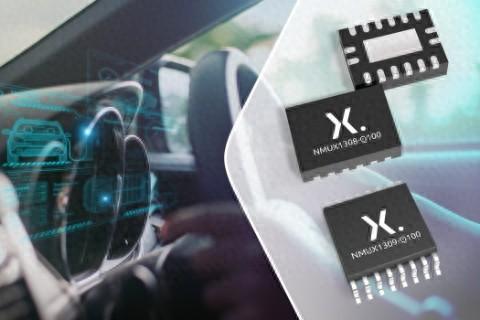
Core Viewpoint - The Dutch government's forced takeover of the Chinese-controlled ASML Semiconductor has caused significant disruptions in the global automotive supply chain, with the government attempting to deflect blame onto the Chinese team involved in the company [1][3]. Group 1: Government Actions and Justifications - The Dutch government invoked a law not used since 1952 to impose restrictions on ASML Semiconductor, citing "national security" concerns, which include preventing any adjustments to assets, intellectual property, business, and personnel for one year [3][4]. - Dutch officials allege that the Chinese team planned to dismantle European operations and transfer production to China, including laying off 40% of the workforce and relocating sensitive technology [1][3]. - The government believes it can negotiate a solution that would restructure ASML Semiconductor's management into a "Dutch-Chinese structure" [1]. Group 2: Impact on the Automotive Industry - ASML Semiconductor is crucial for the global automotive industry, with its chips being integral to vehicle production; it is projected to generate approximately 14.7 billion yuan in revenue in 2024, accounting for one-sixth of its parent company, Wingtech Technology's total revenue [3]. - The disruption caused by the Dutch government's actions has led to significant supply chain interruptions, affecting major automotive manufacturers in the US, Europe, and Japan, particularly the German automotive sector, which heavily relies on ASML Semiconductor's chips [7][8]. - Analysts have noted that this incident highlights Europe's precarious position between the US and China, struggling to meet the demands of both sides without incurring economic or security risks [8]. Group 3: Responses and Future Developments - In response to the Dutch government's actions, ASML Semiconductor's operations in Dongguan have been restricted, and the company is seeking regulatory exemptions, although the timeline for resuming normal operations remains uncertain [7]. - The European automotive industry is facing a potential crisis, prompting threats of retaliatory measures from Germany, France, and the European Commission against China, as the situation escalates [8]. - A video conference between China and the EU took place on October 27, with a high-level Chinese technology delegation scheduled to visit Brussels for discussions [9].
中原证券晨会聚焦-20251028
Zhongyuan Securities· 2025-10-28 02:15
Core Insights - The report highlights the ongoing recovery and growth in various sectors of the Chinese economy, particularly in the automotive and AI industries, driven by favorable policies and market dynamics [5][21][24] - The A-share market is experiencing a steady upward trend, supported by positive macroeconomic indicators and government strategies aimed at enhancing capital market quality [8][14][15] Domestic Market Performance - The Shanghai Composite Index closed at 3,996.94, with a daily increase of 1.18%, while the Shenzhen Component Index rose by 1.51% to 13,489.40 [3] - The average price-to-earnings ratios for the Shanghai Composite and ChiNext are 16.18 and 49.51, respectively, indicating a favorable environment for medium to long-term investments [8][14] Industry Analysis - The automotive industry achieved record production and sales figures in September 2025, with 3.28 million vehicles produced and 3.23 million sold, marking year-on-year increases of 17.15% and 14.86% respectively [21][22] - The new energy vehicle penetration rate reached 49.72% in September, reflecting strong growth in this segment [22] - The software industry is witnessing a continuous increase in revenue, with a 12.6% year-on-year growth in the first eight months of 2025, driven by domestic demand and technological advancements [24][25] Investment Recommendations - The report suggests maintaining a "stronger than market" rating for the automotive sector, focusing on the impact of policies promoting vehicle upgrades and the commercialization of smart driving technologies [23] - In the AI sector, companies like DeepSeek are making significant advancements in model efficiency, which could enhance the overall market potential for AI applications [37][38] - The report emphasizes the importance of investing in companies that are adapting to the evolving landscape of IP derivatives and digital consumption trends, particularly among younger consumer demographics [19][20]
