
潮玩

Search documents
2025年轻人消费“暗号”
Sou Hu Cai Jing· 2025-12-27 00:36
Core Insights - The core philosophy of consumer spending in 2023 is summarized as "willingness to spend," reflecting a shift towards more conscious and personalized consumption choices [4] Group 1: Consumer Trends - Consumers are increasingly focused on product ingredients and efficacy, with significant growth in skincare products, particularly anti-aging and hydrating items, showing double-digit growth on platforms like Tmall [6] - Outdoor and sports equipment have seen a rise in interest, with smart wearables experiencing nearly 50% growth in sales, indicating a trend towards informed and specialized purchases [6] - The popularity of niche and domestic luxury brands has surged, with sales of certain categories like earphones and bags increasing over 200% on Tmall, highlighting a shift towards unique and personalized fashion choices [9][11] Group 2: Emotional and Cultural Spending - Emotional spending is on the rise, with consumers willing to invest in products that enhance their mood, such as plush toys and home decor, with categories like EDC seeing over 500% growth [14] - There is a notable resurgence in traditional Chinese aesthetics, with gold jewelry sales increasing over 300% and a growing interest in cultural products, indicating a blend of modern and traditional values in consumer behavior [16] - The demand for multifunctional smart home devices has increased, with sales of electric smart beds and multifunctional furniture doubling, reflecting a desire for convenience and efficiency in home life [18] Group 3: Long-term Investment Mindset - Consumers are adopting a long-term investment approach to their purchases, particularly in clothing, with a significant increase in the budget for winter wear above 2000 yuan, indicating a preference for quality over quantity [11][12] - The trend of "financially savvy" spending is evident, as consumers seek products that offer longevity and value, with classic luxury items becoming more popular as they are viewed as investment pieces [11]

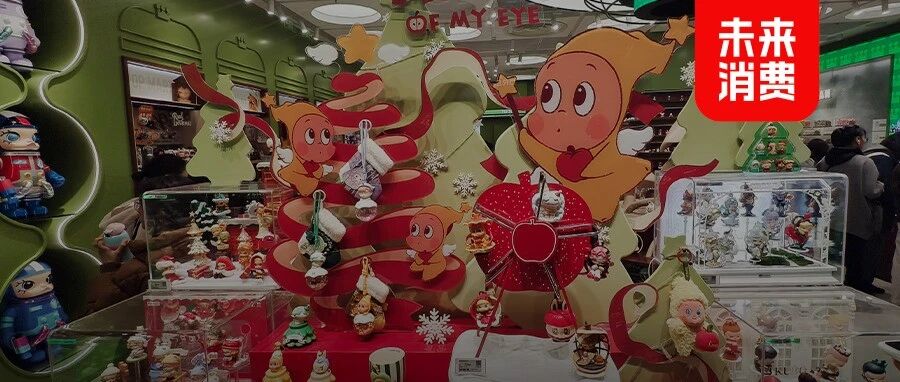
众品牌加码潮玩IP 情绪消费的狂热与风险
Xin Lang Cai Jing· 2025-12-26 21:01
Group 1: Core Insights - The holiday season, particularly Christmas, is a significant time for emotional consumption, with brands leveraging various IPs to boost sales and profits [1] - Companies are increasingly focusing on audience segmentation to create scarcity and collectability for core fans while emphasizing practicality and trendiness for broader audiences [1][5] - The IP collaboration trend is gaining momentum, with brands like Heineken and Pop Mart successfully launching products that resonate with consumers [2][3] Group 2: Market Trends - The Chinese IP retail market is experiencing historic growth, with retail sales reaching $13.77 billion in 2023, a 9.6% increase year-on-year [6] - The interest consumption market is projected to exceed 380 billion yuan by the end of 2025, reflecting a growth rate of over 10% compared to the previous year [2] - The collaboration between brands and popular IPs, such as Disney's "Zootopia 2," is seen as a benchmark for IP commercialization, with over 60 brands participating [5][6] Group 3: Business Models - There are three main business models for IP: self-owned IP, licensed IP, and short-term collaborations for exposure [7] - Successful IPs typically possess cross-media content value, allowing for low-cost and precise connections with users [7] - Companies like Disney have established a robust commercial ecosystem, generating $62 billion in retail sales from IP licensing [8] Group 4: Strategic Approaches - Brands are exploring innovative strategies to avoid homogenization in IP collaborations, such as creating unique product categories [6][7] - Miniso is actively signing original toy artists to build its own IP matrix, aiming for a dual strategy of international licensed IP and exclusive artist collaborations [8][9] - The emotional connection between consumers and IP characters is crucial for successful branding, requiring a deeper understanding of consumer needs [9]

美股异动 | 奇梦岛(HERE.US)涨10% 旗下核心IP WAKUKU新品掀“情绪消费”热潮
智通财经网· 2025-12-26 15:17
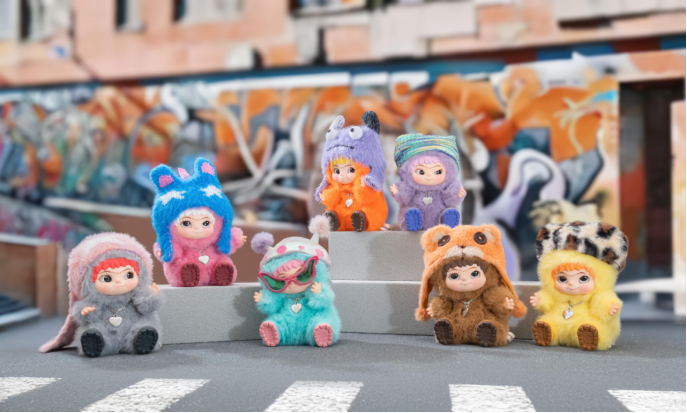
奇梦岛集团联合创始人、执行总裁施广强表示:"公司将以更具创新性的产品与更贴近用户的场景,为 年轻人提供更丰富的情绪陪伴体验,让WAKUKU成为真正具有时代意义的年轻文化载体。" 智通财经APP获悉,周五,奇梦岛(HERE.US)涨10%,报5.79美元。消息面上,近日,奇梦岛首家线下 品牌旗舰店开业,成为品牌深化线下布局的里程碑。凭借11月底推出的全新毛绒三代产品"立刻开挂 吧",奇梦岛集团旗下核心IP WAKUKU品牌热度再次飙升,该系列开售首周全渠道销售额突破1800万 元。 ...
河南如何陪民企穿越周期|何以“豫”时俱进
Sou Hu Cai Jing· 2025-12-26 09:55
Group 1 - The recent trial operation of the new store by Pang Donglai in Xinxiang has attracted significant attention, alongside the opening of the first store by Mixue Ice City in the United States [1][3] - The rapid growth of private enterprises in Henan reflects the vitality of the province's private economy, which is crucial for integrating into the national market and building a modern industrial system [3][5] - The threshold for entering the top 100 private enterprises in Henan has increased from approximately 2.569 billion yuan in 2021 to about 3.29 billion yuan this year, marking an increase of over 20% [6] Group 2 - The number of private economic entities in Henan has surpassed 11 million, which is nearly 50% more than the total number of market entities at the end of the 13th Five-Year Plan [6][7] - The increase in individual businesses by nearly 2.5 million indicates a healthy and active market environment, showcasing a competitive landscape that adheres to the principle of survival of the fittest [6][10] - The resilience of Henan's private economy is attributed to both external factors, such as the business environment, and internal factors, including the entrepreneurial spirit of successive generations of Henan merchants [10][11] Group 3 - The provincial government has made efforts to optimize the business environment, including initiatives like dining with entrepreneurs and implementing innovative mechanisms for feedback [10][11] - Entrepreneurs in Henan, whether local like Pang Donglai or internationally recognized like Mixue Ice City, have evolved from grassroots origins to significant enterprises, demonstrating market insight and steadfastness [11][12] - The government aims to provide more opportunities for private enterprises by creating a conducive business environment and focusing on future industries such as intelligent manufacturing and quantum technology [14][15]


星星人会是下一个LABUBU吗?
36氪未来消费· 2025-12-26 09:11
Core Viewpoint - The article discusses the rapid rise of the new IP "Star People" under Pop Mart, highlighting its successful collaboration with Heytea and the overwhelming consumer demand for related products, indicating a strong market presence and potential for future growth [4][5][7]. Group 1: Product Launch and Market Response - On December 22, the collaboration products between "Star People" and Heytea were launched, leading to immediate sellouts, particularly for the popular tea bowl priced over 78 yuan [4]. - The products achieved the highest popularity on Meituan, surpassing other notable collaborations, indicating strong consumer interest [5]. - A store employee noted that "Star People" and LABUBU are currently the best-selling IPs, with many products frequently out of stock [6]. Group 2: Financial Performance and Projections - By the first half of 2025, 13 artist IPs under Pop Mart are expected to generate over 100 million yuan in revenue, with "Star People" contributing approximately 400 million yuan, making it the fastest-growing new IP [7]. - Morgan Stanley predicts that "Star People" will account for 8% of the company's total sales by 2027, up from 2.8% in the first half of 2025 [7]. Group 3: Market Dynamics and Pricing - The article highlights the high demand for "Star People" products, with significant price premiums in the secondary market, such as a plush accessory priced at 929 yuan, reflecting a 16-fold increase before its release [10]. - The resale prices for blind boxes have also surged, indicating strong market speculation and consumer interest [10][11]. Group 4: Marketing and Brand Strategy - Pop Mart's marketing strategy includes placing "Star People" prominently in stores and developing a dedicated theme song to enhance brand visibility and consumer engagement [15]. - The company has effectively utilized celebrity endorsements to boost the IP's popularity, with various stars promoting "Star People" [15]. Group 5: Operational Strategy - Pop Mart employs a testing approach for IPs, assessing their performance across different regions and stores, which allows for rapid feedback and scaling of successful products [20][21]. - The company's extensive network of direct stores enables it to minimize costs and receive timely market insights, facilitating the growth of successful IPs like "Star People" [20].
摸LABUBU过河后 奇梦岛「上岸」开店了
Hua Er Jie Jian Wen· 2025-12-26 07:00
Core Viewpoint - Qimengdao has officially opened its first offline store in Beijing, marking its entry into the trendy toy and plush market, positioning itself as a significant player alongside Pop Mart in the capital market [1][2]. Company Overview - Qimengdao is the only publicly listed company in the trendy toy sector, focusing on IP creation and operation, figurines, and plush toys, apart from Pop Mart [2]. - The transformation of Qimengdao originated from the acquisition of the trendy toy brand Letsvan by the online learning service provider "Quantum Song" for 235 million yuan, acquiring a 61% stake [2]. - In November, the company rebranded itself as "HERE Qimengdao" after divesting its online education business, fully committing to the trendy toy sector [2]. Market Dynamics - The trendy toy market is characterized by high fragmentation and continuous growth, with leading players like Pop Mart holding only a 10% market share in China's toy market [2]. - Qimengdao's revenue from trendy toys reached 127 million yuan in Q3, a 93.3% increase quarter-on-quarter, with a gross margin improvement of 6.5 percentage points to 41.2% [2]. Product Launch and Marketing Strategy - The WAKUKU IP, launched by Letsvan, has drawn comparisons to the successful LABUBU brand, with a focus on unique character design and marketing strategies [5][11]. - Qimengdao has leveraged celebrity collaborations for product exposure, including placements in popular dramas and endorsements from various celebrities, enhancing brand visibility [7][12]. - The initial sales of WAKUKU products have been strong, with record-breaking sales at MINISO LAND stores [8][9]. Financial Performance and Projections - Qimengdao aims for revenue of 750 million to 800 million yuan for the fiscal year 2026, building on a Q3 revenue of approximately 127 million yuan [18]. - The company has reported that three major IPs, including WAKUKU, contributed 97% of its revenue, with WAKUKU alone accounting for over 70% [19]. Operational Challenges - As the company expands, it faces operational challenges, including a significant increase in inventory and accounts receivable [20]. - Despite these challenges, Qimengdao has accumulated nearly 800 million yuan in cash and short-term investments, providing a financial cushion for future business exploration [20].
信语丨对话奇梦岛CFO谢东:一家跨界潮玩的「闪电战」是如何打响的
Hua Er Jie Jian Wen· 2025-12-26 07:00
Core Insights - In 2025, the toy industry welcomes a new player, "HERE Qimengdao," which has transitioned from an online adult education service provider to a toy brand after acquiring the brand Yiqi Culture [2][3] Group 1: Company Transition and Performance - Qimengdao, formerly known as "Quantum Song," has rebranded after acquiring Yiqi Culture and divesting its education business, marking a full pivot to the toy sector [2] - The company reported a significant revenue increase in Q3, reaching 127 million yuan, a 93.3% quarter-over-quarter growth, exceeding previous performance expectations [2] - The gross margin improved by 6.5 percentage points to 41.2%, indicating strong operational efficiency [2] Group 2: Strategic Direction and Market Positioning - Management has set a revenue guidance of 750 million to 800 million yuan for the fiscal year 2026, reflecting confidence in continued growth [2] - The company plans to open its first six self-operated stores in major cities like Beijing, Chongqing, and Shenzhen by the end of 2025 to enhance brand presence and user experience [8] Group 3: Acquisition and Integration Strategy - The acquisition of Yiqi Culture was driven by its strong product development capabilities and alignment in values, with the integration completed in under a year [4] - The focus on IP and product-driven strategies is seen as essential for long-term value creation, with the team’s core competencies in operations, marketing, and traffic management [4][12] Group 4: Supply Chain and Production Challenges - Initial supply chain challenges were faced due to rapid demand growth, with production capacity initially falling short, leading to stockouts [5][6] - By the end of December, production capacity is expected to reach approximately 400,000 units, addressing previous supply constraints [7] Group 5: Marketing and Brand Development - Qimengdao employs a flexible marketing budget based on total revenue, allowing for adaptive strategies in celebrity endorsements and other promotional activities [11] - The company emphasizes the importance of emotional value in the toy industry, using self-operated stores to strengthen user connections and gather feedback [8][13] Group 6: Future Outlook and Industry Trends - The company anticipates that the toy industry will experience cyclical trends, focusing on product iteration and operational innovation to extend the lifespan of its IPs [15] - Qimengdao maintains a cautious approach to future investments and acquisitions, prioritizing strategic resource acquisition over indiscriminate spending [16]
万联证券:26年零售业消费分级时代开启 情绪消费带动潮玩、黄金珠宝与国货美妆产业新机遇
智通财经网· 2025-12-26 02:13
Core Viewpoint - China's consumption is transitioning into a new phase of "consumption stratification," characterized by a pursuit of cost-effectiveness for mass-market products while consumers are willing to pay a premium for innovative products and services that provide emotional value [1][2] Group 1: Consumption Stratification - The current consumption landscape in China has shifted from "consumption upgrading" to "consumption stratification," where consumers are more rational and seek cost-effectiveness for traditional, low-tech, and highly homogeneous products [2] - Emotional consumption is on the rise, driven by fast-paced lifestyles and information overload, leading to increased interest in sectors such as trendy toys, traditional gold, and beauty skincare [2] Group 2: Trendy Toys Market - The trendy toy market in China is rapidly expanding, with market size projected to grow from 22.9 billion yuan in 2020 to 76.3 billion yuan by 2024, reflecting a CAGR of 35.11% [3] - The market is currently fragmented, with the top five companies holding only 20.8% market share in 2024, indicating potential for leading companies with comprehensive supply chains and strong IP resources to strengthen their market positions [3] Group 3: Gold and Jewelry Sector - The gold and jewelry sector is shifting from channel-driven growth to product-driven strategies, with some companies achieving rapid growth through superior craftsmanship and marketing despite a slowdown in store expansion due to rising gold prices [4] - The demand for gold jewelry is expected to increase as craftsmanship improves and the "self-indulgence" consumption trend gains traction, particularly in non-wedding scenarios [4] Group 4: Cosmetics Industry - The domestic cosmetics market is showing a strong recovery, with local brands performing well during promotional events like "Double 11," driven by increased R&D investment and effective marketing strategies [5] - Young consumers are increasingly accepting domestic beauty brands, allowing these brands to capture market share from foreign competitors [5]
万联晨会-20251226
Wanlian Securities· 2025-12-26 00:41
Core Insights - The A-share market saw collective gains on Thursday, with the Shanghai Composite Index rising by 0.47%, the Shenzhen Component Index by 0.33%, and the ChiNext Index by 0.3%. The total trading volume in the Shanghai and Shenzhen markets reached 1,924.381 billion yuan [2][8]. Market Review - The leading sectors included defense and military, light industry manufacturing, and machinery equipment, while the comprehensive, non-ferrous metals, and commercial retail sectors lagged behind. Concept stocks such as Chengfei Concept, aviation engines, and commercial aerospace saw significant gains, whereas Hainan Free Trade Zone, lead metal, and zinc metal concepts experienced declines [2][8]. Important News - The National Development and Reform Commission and the Ministry of Commerce released the "Encouragement Directory for Foreign Investment Industries (2025 Edition)," effective from February 1, 2026. Key changes include encouraging foreign investment in advanced manufacturing and modern service industries, as well as in the central and western regions, Northeast China, and Hainan Province [3][9]. - The People's Bank of China emphasized the need for robust monetary policy adjustments to maintain ample liquidity, suggesting a comprehensive use of various tools to manage policy implementation effectively [3][9]. Industry Analysis - The retail industry is shifting towards emotional consumption, with a focus on consumer sentiment driving demand for related sectors. The current consumption landscape in China has transitioned from "consumption upgrade" to "consumption stratification," where consumers are increasingly seeking value for money while also willing to pay a premium for certain new products or services [10]. Specific Sector Insights - **Trendy Toys**: The trendy toy market in China is rapidly expanding, with market size projected to grow from 22.9 billion yuan in 2020 to 76.3 billion yuan by 2024, reflecting a CAGR of 35.11%. The market is currently fragmented, and companies with comprehensive supply chains and strong IP resources are expected to thrive [11]. - **Gold and Jewelry**: The sector is transitioning from channel-driven to product-driven strategies. Despite rising gold prices suppressing consumer demand, some companies are achieving rapid growth through superior craftsmanship and marketing. The demand for gold jewelry is expected to increase as consumer preferences evolve [13]. - **Cosmetics**: The rise of domestic brands is evident, with local companies focusing on R&D and successfully capturing market share from foreign brands. The demand for domestic beauty products is increasing among younger consumers, suggesting a positive outlook for strong domestic brands [13].
“两区”新增入库项目全市居首
Xin Lang Cai Jing· 2025-12-25 18:25
Group 1 - Chaoyang District has completed its "14th Five-Year" planning tasks, leading the city in the number of new projects and investment amounts in the "Two Zones" initiative, with over 10,000 beds provided for urban builders [1] - The district has implemented national pilot projects in data cross-border and value-added telecommunications, with six institutional innovation cases being replicated nationwide, achieving an A-level in city evaluations for two consecutive years [1] - Actual foreign investment and total import-export volume in Chaoyang account for over 30% of the city's totals, reflecting a strong economic performance [1] Group 2 - Chaoyang District is advancing urban planning by promoting layered land development around Taikoo Li and implementing 23 urban renewal projects, including old buildings and public spaces [2] - The district is enhancing its garden city demonstration area with various community parks and has won international awards for environmental sustainability [2] - Infrastructure improvements include the construction of 69 road projects and 9 rail transit projects, adding 28 kilometers of new roads and 7.2 kilometers of rail, along with 14,000 new parking spaces [2] Group 3 - In terms of public welfare, Chaoyang is focusing on high-quality education development, with seven new schools opening, and is advancing the construction of new and expanded hospitals [3] - The district is optimizing services for the elderly and children, creating a national-level childcare demonstration project and developing a smart elderly care industry [3]