
金融

Search documents
北京丰台:轨道交通、航天航空两大主导产业集群产值突破4000亿元
Bei Jing Shang Bao· 2026-01-13 12:56
Group 1 - Fengtai District has achieved significant industrial cluster development, with the output value of the rail transit and aerospace industries exceeding 400 billion yuan, and the financial and technology services contributing nearly 80% to economic growth [1] - The Lize Financial Business District is entering a new operational phase, with tax contributions expected to exceed 10 billion yuan by 2025 and an average growth rate of over 20% over five years [1] - More than 1,520 enterprises have settled in Fengtai, optimizing the "finance + technology" industrial ecosystem, with key projects like the Digital Financial Technology Demonstration Park accelerating construction [1] Group 2 - The South Central Axis area is undergoing rapid planning and construction, with 61 projects in Fengtai included in the action plan, accounting for 74% of the total, with a total investment of approximately 71.95 billion yuan [2] - Major cultural facilities such as the National Museum of Nature and the Capital Planning Exhibition Hall have commenced construction, while the Nanyuan Forest Wetland Park has been rated as a national 3A tourist attraction [2] - Infrastructure connectivity is accelerating, with the completion of the main structure of eight stations on the subway line 1 in Fengtai, and the initiation of construction on the Beijing-Xiong'an Expressway city connection line [2]
星展银行2026年投资展望:看好科技和医疗等具有长期增长趋势的行业
Zheng Quan Ri Bao Wang· 2026-01-13 12:51
Core Viewpoint - The global market landscape is shifting, and investors are advised to focus on key industries and quality core assets for long-term strategies [1] Group 1: Investment Opportunities - In 2026, technology and healthcare sectors are expected to remain critical anchors for asset allocation due to their core driving positions in global AI applications and public demand [1] - The value of investment-grade bonds and traditional safe-haven assets like gold should not be overlooked, as they enhance the overall risk resilience of investment portfolios in volatile environments [1][3] Group 2: Technology Sector Analysis - The current price-to-earnings ratio of the S&P 500 technology sector is 40 times, similar to the internet bubble period, but with significant differences in cash flow and profitability [2] - Current technology stocks have a much higher free cash flow compared to the internet bubble era, with solid revenue growth and sustainable business models [2] - The average return on equity for current tech companies is significantly higher than in the past, indicating strong support for profitability despite high stock prices [2] Group 3: Market Dynamics - The compound annual growth rate of M2 money supply from 2021 to 2025 is 4%, while the technology stock index's growth rate is only 20%, reflecting a more rational investor behavior compared to the past [2] - The concentration of the top five technology stocks in the U.S. market is 28%, higher than the 21% during the internet bubble, yet the current average return on equity is much stronger [2]
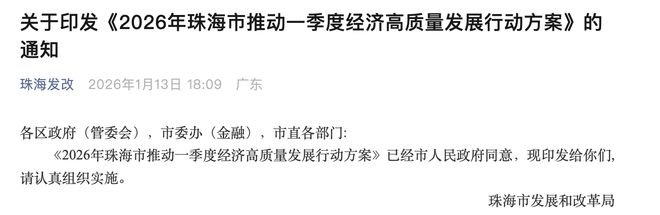
70 万奖励 + 消费补贴!力拼经济开门红,珠海重磅发文
Nan Fang Du Shi Bao· 2026-01-13 11:30
Core Viewpoint - Zhuhai City has introduced a comprehensive policy package aimed at promoting high-quality economic development in the first quarter of 2026, with various financial incentives for industries, services, and consumer spending [1][3]. Group 1: Industrial Incentives - Industrial enterprises can receive rewards for increased production, with a maximum reward of 700,000 yuan for those achieving over 20 billion yuan in output [9]. - For industrial investment, companies can earn up to 400,000 yuan based on their investment progress, with additional rewards for new projects [4]. - The policy encourages a rapid investment process and aims to create a positive cycle of project funding and construction efficiency [4][5]. Group 2: Consumer Subsidies - Consumers can benefit from various subsidies, including 5,000 yuan for car purchases and 30,000 yuan for housing "trade-ins" [6][8]. - Retail and wholesale businesses can receive financial support based on sales growth, with rewards reaching up to 40,000 yuan for significant sales increases [7]. - The "Yue Enjoy Warm Winter" campaign will provide additional consumer incentives across various sectors [7]. Group 3: Service Industry Support - The support for the service industry has been expanded to include finance, leasing, and scientific research, with potential rewards of up to 600,000 yuan for qualifying companies [11][12]. - Financial institutions can receive funding support based on their revenue growth, with specific percentages allocated for different sectors [11]. - The policy aims to enhance the quality and capacity of the service sector, promoting digital transformation and innovation [12]. Group 4: Employment and Community Support - Zhuhai will implement recruitment services and support for workers returning to jobs, enhancing employment opportunities [13]. - Community activities and welfare programs will be organized to support local residents during the New Year, fostering a positive environment [13]. - The government will encourage businesses to engage in community events and provide benefits to employees during the festive season [13]. Group 5: Implementation and Duration - The measures will be effective from the date of issuance until March 31, 2026, with specific guidelines to be established by the end of January [14]. - Local governments are encouraged to develop their own measures based on the city-level policies, ensuring that benefits are accessible and efficiently distributed [14].

上海发布28条新政促消费
Di Yi Cai Jing Zi Xun· 2026-01-13 10:50
Core Insights - Shanghai has introduced a new policy document aimed at enhancing service quality and boosting consumption, marking a shift from short-term stimulus measures to a long-term strategic focus on service and consumption interlinkage [2][3] Group 1: Policy Measures - The new measures consist of 28 policy initiatives designed to optimize supply and expand consumption, fostering new growth points in service supply and consumer demand [2][3] - The focus is on systemic interlinkage, emphasizing quality competition on the supply side and signaling a clear policy direction to promote consumption through quality [2][4] Group 2: Economic Context - The service sector and consumption in Shanghai have shown positive growth trends, with service value added increasing by 5.9% and retail sales of consumer goods growing by 5% in the first eleven months of 2025, both surpassing national averages [3][4] - The interlinkage between service and consumption is seen as essential for stabilizing growth and supporting domestic demand [3][4] Group 3: Industry Focus - The policy targets six key industries: finance, information services, transportation, cultural and entertainment services, life services, and inspection and certification, which together account for about 60% of Shanghai's service sector value added [5][6] - Financial innovation is highlighted as a crucial driver for consumption and industry growth, with an emphasis on integrating consumption scenarios with financial products [5][6] Group 4: Consumer Experience Enhancement - The measures aim to enhance the quality and diversity of life services, including the establishment of employee-based housekeeping companies and the promotion of "no companion care" services in medical institutions [7][8] - The document outlines initiatives to improve brand certification, standard systems, and inspection services, aiming to enhance consumer trust and service quality [8] Group 5: Implementation Strategy - The Shanghai government plans to ensure effective implementation of the measures by coordinating service supply with consumer demand and creating a conducive policy environment [9][10] - Emphasis is placed on cross-departmental collaboration to avoid policy fragmentation and to establish a dynamic evaluation mechanism for monitoring policy effectiveness [10]
中捷资源:广州农商银行转让所持公司8.84%股份
Zheng Quan Shi Bao Wang· 2026-01-13 10:49
Core Viewpoint - The announcement reveals a significant change in the shareholding structure of Zhongjie Resources, with Guangzhou Rural Commercial Bank transferring 106 million shares, representing 8.84% of the total share capital, to Qianrun Investment for a total consideration of 287 million yuan, resulting in Guangzhou Rural Commercial Bank no longer holding any shares in the company [1]. Group 1 - Guangzhou Rural Commercial Bank signed a share transfer agreement with Qianrun Investment on January 9 [1]. - The total number of shares transferred is 106 million, which constitutes 8.84% of Zhongjie Resources' total share capital [1]. - The total transfer price for the shares is 287 million yuan [1]. Group 2 - Following this transaction, Guangzhou Rural Commercial Bank will no longer hold any shares in Zhongjie Resources [1]. - The company currently remains without a controlling shareholder or actual controller [1].

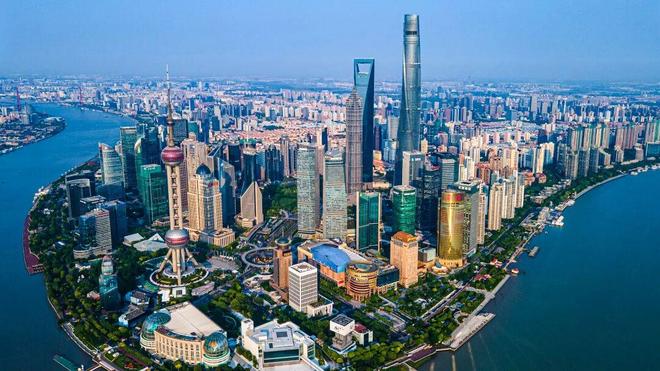
上海发布28条新政促消费
第一财经· 2026-01-13 10:11
Core Viewpoint - The article discusses the recent measures introduced by Shanghai to enhance the quality of the service industry and stimulate consumption, emphasizing a strategic shift from short-term stimulus to long-term systemic development [3][5]. Group 1: Policy Measures - Shanghai has issued 28 policy measures aimed at optimizing supply and expanding consumption to foster new growth points in service supply and consumer demand [3][5]. - The focus of the new policies is on systemic linkage, emphasizing quality competition on the supply side to enhance service industry value and stimulate consumption [3][6]. Group 2: Economic Context - Since 2025, Shanghai's service industry has shown a positive growth trend, with a 5.9% increase in value added and a 5% rise in retail sales of consumer goods, both surpassing national averages [5][6]. - The measures aim to address challenges such as supply structure lagging behind consumption upgrades and the need for better integration of service and consumption sectors [5][6]. Group 3: Key Industries - The policies target six key sectors: finance, information services, transportation, cultural and entertainment services, life services, and inspection and certification, which together account for about 60% of Shanghai's service industry value added [7][8]. - The integration of these sectors is expected to create a closed-loop policy chain that enhances service consumption [7]. Group 4: Financial Innovation - The new policies emphasize the integration of consumption scenarios with consumer finance, supporting the development of financial products tailored to needs such as elderly care and wealth management [8]. - E-commerce platforms are encouraged to shift from price competition to quality competition, driving traffic to offline and quality consumption [8]. Group 5: Cultural and Entertainment Sector - The measures include initiatives to enhance the supply of cultural and entertainment services, such as supporting high-quality exhibitions and sports events, which have shown significant demand growth [9]. - For instance, a recent exhibition in Shanghai attracted over 2.77 million visitors and generated over 760 million yuan in revenue, significantly boosting overall city consumption [9]. Group 6: Institutional Support - The policies aim to strengthen institutional support by transitioning from policy support to a dual-driven approach of "institution + market," focusing on regulatory standards and credit systems to foster sustainable development [10]. - Key initiatives include enhancing brand certification, improving standard systems, and strengthening inspection and testing services to boost consumer confidence [10]. Group 7: Implementation and Coordination - The Shanghai government plans to ensure effective implementation of the measures by coordinating service supply with consumer demand and creating a conducive environment for policy support [12][13]. - Emphasis is placed on cross-departmental collaboration to avoid policy fragmentation and to establish a dynamic evaluation mechanism to monitor the effectiveness of the policies [13].

港交所消息:1月7日,瑞银集团持有的中兴通讯H股空头头寸从4.00%增至5.65%
Xin Lang Cai Jing· 2026-01-13 09:51
Group 1 - UBS Group's short position in ZTE Corporation's H-shares increased from 4.00% to 5.65% as of January 7 [1]

王庆:当前中国房地产市场企稳逻辑与人民币汇率升值趋势分析
Xin Lang Cai Jing· 2026-01-13 09:20
Group 1: Real Estate Market Stabilization Logic - The current real estate market in China is characterized by a decline in both volume and price, with new home sales down 55.8% since the peak in June 2021, while second-hand home sales have increased by over 70% [3][15] - In 2025, total sales are expected to reach 1.34 billion square meters, a 32% decline from the peak of 1.95 billion square meters, with second-hand home sales accounting for over 46% [3][15] - Prices in 70 major cities have dropped by 13% for new homes and 20% for second-hand homes, with some indices showing a decline of 37% for second-hand home prices [3][15] Group 2: Inventory and Demand Dynamics - The issue in the real estate market is increasing visible inventory, with a residential vacancy rate of approximately 18.8% in first and second-tier cities, while third and fourth-tier cities face declining demand and significant inventory challenges [4][16] - The transformation of potential demand into effective demand is hindered by high housing prices, which affect both rigid and improved demand, relying on payment capacity [4][16] - The price-to-income ratio is approximately 6 times nationally, but remains high in tier-one cities, indicating a need for price adjustments to facilitate demand conversion [4][16] Group 3: Rental Market and Policy Implications - The rental yield across 100 cities is low at 2.36%, with major cities like Shenzhen at around 1.3%, suggesting significant room for improvement in rental yields [5][17] - The policy goal set for the end of 2024 is to stabilize the real estate market, but it remains unclear whether this refers to transaction volume or price stabilization [5][17] - A stable rental market is deemed essential for the overall stabilization of the real estate market, with the expectation that rental prices must stabilize before any significant price recovery can occur [5][17] Group 4: Renminbi Exchange Rate Appreciation Trend - Since late 2025, the Renminbi has shown signs of appreciation, driven by a significant current account surplus and a financial account deficit, indicating that the exchange rate is primarily market-driven [8][19] - The appreciation trend is influenced by the changing interest rate differential between China and the US, with the US entering a rate-cutting cycle, which has contributed to the Renminbi's strengthening [9][20] - Long-term trends suggest that the Renminbi's appreciation is inevitable, as it reflects China's economic development and transition towards a higher income status [11][22] Group 5: International Trade and Economic Relations - The Renminbi's exchange rate should be assessed against a basket of currencies rather than solely against the US dollar, as this provides a more comprehensive view of export competitiveness [10][21] - The potential for increased trade tensions due to the Renminbi's depreciation against the euro highlights the need for a balanced approach to currency valuation in the context of international trade relations [10][21] - The ongoing shift towards de-globalization may lead to a fundamental restructuring of global economic dynamics, impacting both the US and China, and necessitating a careful consideration of currency policies [12][23]

大摩:将中材科技
Zhi Tong Cai Jing· 2026-01-13 08:57
Group 1 - Morgan Stanley has included China National Materials (002080.SZ) in its focus list for China and Hong Kong, while removing PetroChina (00857) from the list [1] - The outlook for China National Materials is positive, driven by the booming development of artificial intelligence infrastructure and the demand for energy storage systems (ESS) in China, which significantly boosts the demand for key raw materials for printed circuit boards (PCB) [1] - China National Materials is expected to see a rebound in profitability and revenue from its battery separator business, with projected earnings growth of 101%, 63%, and 45% year-on-year from 2025 to 2027 [1] Group 2 - China Ping An (601318.SH) has been added to the focus list for A-shares, with Morgan Stanley suggesting a re-evaluation of its rating due to improving fundamentals [1] - The valuation for China Ping An's A-shares is considered attractive, with a projected price-to-book ratio of 1.1 times for the fiscal year 2026 and a dividend yield exceeding 4% [1] - The return on equity (ROE) for China Ping An is expected to be around 15% [1]


上海发布28条新政促销费,战略重心转变,聚焦六大行业
Di Yi Cai Jing· 2026-01-13 08:51
Core Viewpoint - Shanghai's service industry and consumption are showing strong growth, with service value added increasing by 5.9% in the first three quarters of 2025 and retail sales of consumer goods growing by 5% from January to November, both surpassing national averages. The new policy measures aim to enhance the synergy between service quality improvement and consumption expansion, marking a strategic shift from short-term stimulus to long-term development [1][3][4]. Group 1: Policy Measures - The newly issued measures include 28 policy initiatives focused on optimizing supply and expanding consumption, aiming to cultivate new growth points in service supply and consumer demand [1][4]. - The measures emphasize a systematic linkage between supply and demand, highlighting the importance of quality competition in the service sector and signaling a shift from scale expansion to value enhancement [2][4]. - The policy aims to create a virtuous cycle of "supply upgrade—consumption boost—industry income—reinvestment," particularly through the integration of cultural, tourism, and sports sectors [3][4]. Group 2: Industry Focus - The measures target six key industries: finance, information services, transportation, cultural and entertainment services, life services, and inspection and certification, which together account for approximately 60% of Shanghai's service industry value added [5][6]. - Financial innovation is highlighted as a crucial support for consumption and industry development, with a focus on integrating consumption scenarios with financial products tailored to various needs [6][8]. - The transportation sector is set to enhance service quality through refined management and diverse product offerings, aiming to boost both tourist and consumer flows [6][7]. Group 3: Implementation and Coordination - The government emphasizes the need for effective implementation of the measures, focusing on coordinating service supply with consumer demand and ensuring supportive policy environments [9][10]. - A cross-departmental collaboration mechanism is essential to avoid policy fragmentation and ensure that financial product innovations align with market needs [10]. - Continuous monitoring and evaluation of policy effectiveness through consumer data will be crucial for timely adjustments and resource allocation [10].