网约车

Search documents
浙商早知道-20250818
ZHESHANG SECURITIES· 2025-08-17 23:30
Group 1: Zhaofeng Co., Ltd. (兆丰股份) - The company is a leader in automotive wheel hub bearings, with stable growth in its core business and strategic investments in humanoid robot manufacturers and screw rod production capacity [3] - The market may perceive a slowdown in the growth rate of the wheel hub bearing unit, but the company is expected to realize investment benefits, with approximately 8.75 million in investment income in Q1 2025, driving a 20% year-on-year increase in net profit attributable to shareholders [3][4] - Key growth drivers include a dual-driven model of "aftermarket + main engine," benefiting from the increasing vehicle ownership and age in Europe and the US, as well as the expansion of production capacity and the rising demand for new energy vehicles in China [3] Group 2: Financial Projections for Zhaofeng Co., Ltd. - Projected revenues for 2025-2027 are 757 million, 973 million, and 1.287 billion, with growth rates of 13.7%, 28.6%, and 32.3% respectively; net profits are expected to be 169 million, 204 million, and 248 million, with growth rates of 21.0%, 20.9%, and 21.4% [4] - The company is expected to benefit from new domestic new energy clients and accelerated orders for humanoid robot screw rod production [4] Group 3: Cao Cao Travel (曹操出行) - The company is the second-largest ride-hailing platform in China, leveraging Geely's automotive supply chain to empower a customized vehicle ecosystem, which is expected to enhance cost barriers [5] - The company is expanding its operations significantly with a light-asset model, which is anticipated to further increase its market share in the ride-hailing sector [5] - The establishment of a closed-loop ecosystem combining customized vehicles, intelligent driving, and ride-hailing platforms is underway, with a pilot for Robotaxi set to begin in February 2025 [5] Group 4: Financial Projections for Cao Cao Travel - Expected revenues for 2025-2027 are 19.7 billion, 25.6 billion, and 30 billion, with year-on-year growth rates of 34%, 30%, and 17%; net profits are projected to be -710 million, -310 million, and 30 million [6] - The company is valued at a target market capitalization of 56.2 billion HKD, with a target stock price of 103.17 HKD per share based on a 2x PS valuation for 2026 [6] Group 5: Macro Insights - The core idea of the "Two Mountains" concept emphasizes the realization of ecological product value, aiming to transform from "aesthetic value" to "economic value" through innovative pathways [7] - The report anticipates a continued shift towards a new energy-based economic model supported by technological innovation and a robust supply chain, aiding the green transition of developing countries [7] Group 6: A-Share Strategy - The strategy suggests a balanced allocation in "large finance + broad technology" sectors, maintaining focus on financial stocks despite short-term fluctuations [8] - The report indicates that the current bull market is characterized as a "systematic slow bull," with expectations for continued performance from a diversified portfolio [8]
市场过热了吗?——A股一周走势研判及事件提醒
Datayes· 2025-08-17 16:03
Core Viewpoint - The recent market sentiment has shifted from a slow bull to a fast bull, with significant capital inflows and historical highs in net purchases from both domestic and foreign investors [2][30]. Group 1: Market Dynamics - On a single day, main funds net bought over 100 billion yuan, while southbound funds net bought over 30 billion HKD, marking a historical high [2]. - The trading volume of northbound funds also saw a substantial increase, indicating heightened market activity [2]. - Concerns about market overheating are present, but indicators suggest that the current bull market has not yet peaked [4]. Group 2: Key Indicators - The absolute turnover rate is currently around 4%, which is typical for strong market conditions, suggesting that the current bull market is expected to be robust [4]. - The long-term trend of turnover rates indicates that the market is still climbing, with no signs of reaching a peak yet [4]. - The financing balance relative to the free float market value is at a median level, indicating that leveraged funds still have room to grow [5]. Group 3: Economic Context - Despite lower-than-expected economic indicators, the stock market remains strong, driven by liquidity rather than short-term economic fluctuations [13]. - The People's Bank of China has shown a cautious attitude towards further monetary easing, with no immediate plans for rate cuts unless there are unexpected actions from the Federal Reserve [12]. Group 4: Sector Performance - The most favored sectors by market funds include non-bank financials, electronics, and computers, with significant net inflows recorded [31]. - Conversely, sectors such as defense, banking, and public utilities experienced the largest net outflows [31]. Group 5: Industry Trends - The textile, apparel, and commercial trade sectors are currently in a recession quadrant, while the computer and steel industries are in an expansion quadrant [35]. - The pharmaceutical, media, and commercial trade sectors are expected to see an increase in their economic outlook over the next six months, while the banking and agricultural sectors may experience a decline [36].







交通运输行业周报:航协发布自律公约,网约车平台降佣曹操出行个股梳理-20250817
Minsheng Securities· 2025-08-17 10:24
Investment Rating - The report maintains a cautious recommendation for the transportation industry, indicating a potential increase in stock prices relative to the benchmark index within the next 12 months [5]. Core Insights - The China Air Transport Association has released a self-discipline convention aimed at regulating market order and reducing chaotic price competition in the aviation industry, which is expected to enhance the core competitiveness and sustainable development of the air passenger transport sector [2][15]. - Major ride-hailing platforms, including Didi and Cao Cao, have collectively reduced their commission rates, which is anticipated to stabilize the market and benefit leading platforms in the long term [3][21]. - The report suggests that the recovery of business travel demand is crucial for the aviation sector, with a strong likelihood of price increases in the fourth quarter if there are signs of improvement in this area [3][18]. Summary by Sections Market Review - From August 1 to August 15, 2025, the A-share transportation index rose by 1.49%, with the aviation sector leading at 3.3%, while the overall market performance ranked 20th out of 28 industries [1][8]. Event Commentary - The self-discipline convention by the China Air Transport Association aims to adapt pricing to changing passenger structures and longer booking cycles, which is expected to improve pricing dynamics during the off-peak season [2][15]. - The collective reduction of commission rates by ride-hailing platforms is seen as a move towards a healthier industry development and market share concentration, particularly benefiting Cao Cao, which is leveraging its relationship with Geely Group for technological and manufacturing advantages [3][21][25]. Investment Recommendations - The report emphasizes the importance of monitoring business travel demand recovery and suggests that the aviation sector has a solid foundation for price increases, particularly in the fourth quarter, contingent on improvements in demand [3][18]. - Companies such as Huaxia Airlines, Juneyao Airlines, Spring Airlines, and the three major state-owned airlines are highlighted as potential investment opportunities [3].
美股三大指数开盘涨跌互现,芯片股多数下跌
Feng Huang Wang Cai Jing· 2025-08-15 13:41
Group 1 - US stock market opened mixed with Dow Jones up 0.57%, S&P 500 up 0.11%, and Nasdaq down 0.02% [1] - Chip stocks mostly declined, with Applied Materials dropping over 13% due to Q4 earnings outlook falling short of analyst expectations, while Intel rose over 4% amid reports of potential US government investment [1] Group 2 - WeRide announced a multi-million dollar equity investment from Grab, aimed at large-scale deployment of L4 Robotaxis and other autonomous vehicles in Southeast Asia [2] Group 3 - Apple officially entered Xiaohongshu, hinting at a potential iPhone 17 series launch event on September 10, with invitations likely to be sent out around September 2 [3] Group 4 - Tongyi Qianwen announced multiple product upgrades, including the upcoming launch of the Qwen-Image editing model [4] Group 5 - Ford is recalling 41,875 Lincoln Aviator vehicles in the US due to rearview camera display malfunctions [5] Group 6 - SoftBank Group announced that its subsidiary PayPay has filed for an IPO in the US, with details on timing, scale, and pricing yet to be determined [6]

Q2业绩创纪录、Q3展望强劲,但UBER股价还是跌了?!
Jin Rong Jie· 2025-08-15 05:46
Core Insights - Uber reported strong Q2 earnings, with revenue and total bookings exceeding market expectations, alongside a $20 billion stock buyback plan, indicating strong confidence in its business [1] - Despite the positive financial results, concerns regarding competition from Waymo and Tesla in the autonomous taxi sector led to a slight decline in Uber's stock price [1][8] Q2 Financial Performance - Total bookings reached $46.76 billion, a 17% year-over-year increase, surpassing expectations [1] - Revenue was $12.65 billion, up 18% year-over-year, exceeding market forecasts [1] - Adjusted EPS was $0.63, a 34% increase year-over-year, meeting expectations [1] - Adjusted EBITDA reached $2.1 billion, a 35% year-over-year increase, marking a record high [1] - Free cash flow for the past 12 months hit a record $8.5 billion, with a $20 billion stock buyback announced [1] Business Segments Performance Mobility (Ride-hailing) - Total bookings for Mobility were $20.55 billion, an 18% year-over-year increase, accounting for 43.9% of total bookings [1] - Significant contributions from airport rides and premium services (Uber Black, Comfort) [1] - Uber One membership (36 million users) drove over 40% of Mobility and Delivery orders [1] Delivery (Food and Retail) - Total bookings for Delivery reached $18.13 billion, a 20% year-over-year increase, representing 38.7% of total bookings [3] - New business lines such as grocery and retail delivery showed significant growth [3] - Advertising revenue increased, with EBITDA margin rising from 1.7% to 2.8% [3] Advertising and Platform Integration - The CEO highlighted the effectiveness of the platform strategy, with increased user engagement and improved profitability [4] - Uber One membership service and unified app experience enhanced user retention and cross-service usage, positioning Uber as a "super platform" for lifestyle services [4] Q3 Outlook - Total bookings are expected to reach between $48.25 billion and $49.75 billion, with a year-over-year growth rate of 17%-21% [5] - EBITDA is projected to be between $2.19 billion and $2.29 billion, maintaining over 30% year-over-year growth [5] Autonomous Driving Developments - Uber is collaborating with Waymo in Phoenix, Austin, and Atlanta, with Austin showing strong performance [7] - A $300 million investment in Lucid for autonomous vehicle deployment was announced [7] - A pilot for Robotaxi services with Nuro is set to launch next year, indicating ongoing expansion in the autonomous driving sector [7] Market Reaction - Despite strong overall business performance, Uber's stock price fell by 0.19% due to profit-taking and concerns over the Robotaxi strategy potentially undermining the current driver-based profit model [8] - Investors remain cautious about the significant investments required for autonomous driving and the uncertain short-term returns [8] Conclusion - The financial data from Uber's report is solid, with strong platform scale, profitability, and cash flow [9] - The short-term stock fluctuation reflects market sentiment regarding uncertainties in the future of autonomous driving [9]

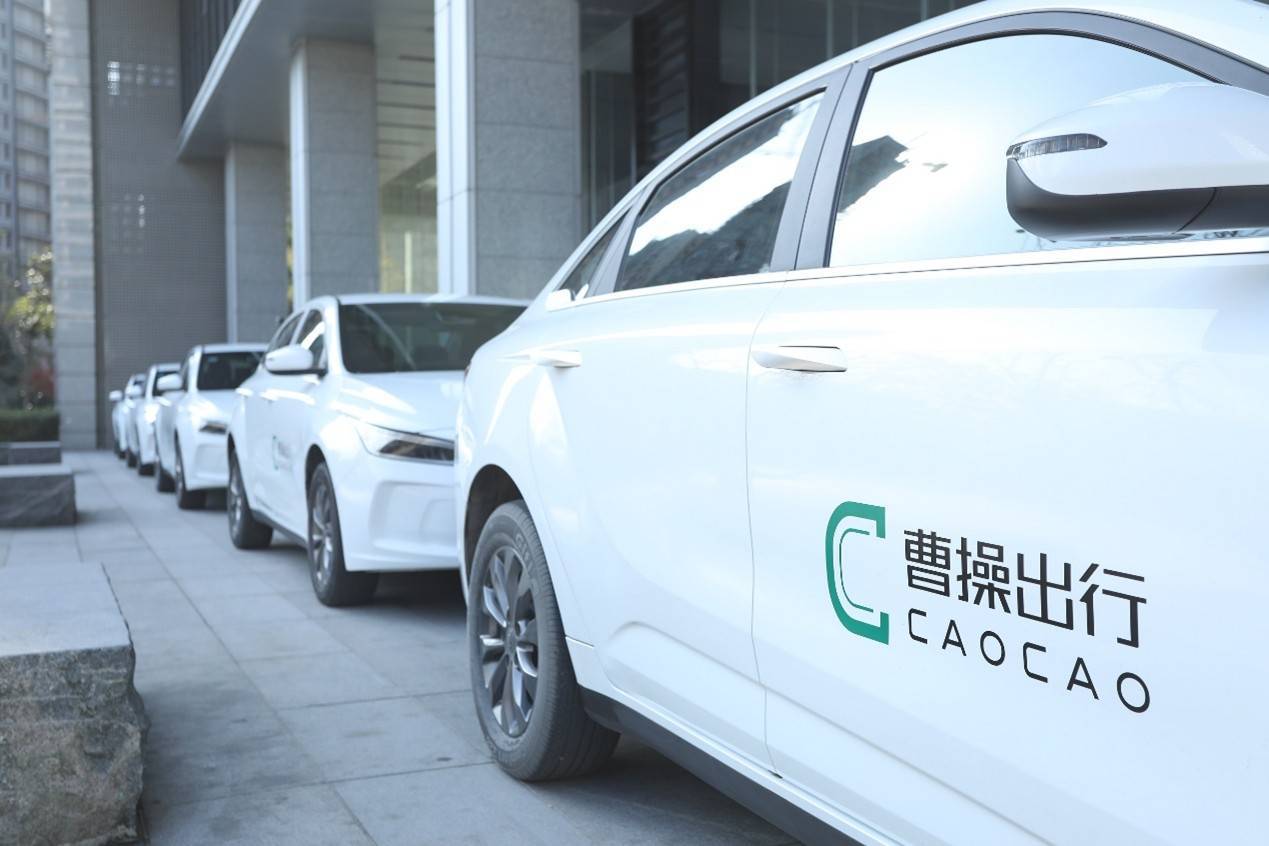
浙商证券首次覆盖曹操出行给予"买入"评级,目标价103.17港元,预计9月8日纳入港股通
Ge Long Hui· 2025-08-15 05:40
Core Viewpoint - The report by Zheshang Securities on Cao Cao Mobility (2643.HK) initiates coverage with a "Buy" rating and a target price of HKD 103.17 per share, implying a market capitalization of HKD 56.2 billion by 2026, highlighting the company's strong position in the ride-hailing industry and potential for growth in the upcoming Robotaxi commercialization wave [1][2] Group 1: Company Performance and Strategy - As of the end of 2024, Cao Cao Mobility has become the second-largest player in the ride-hailing industry, with approximately 1.5 million active vehicles and a Gross Transaction Value (GTV) of about CNY 17 billion [1] - The company operates in 136 cities nationwide and plans to expand into 85 new cities using a light-asset model, selling customized vehicles to local partners and incentivizing them to provide services on the platform [1] - By the end of 2024, the company aims to have over 1,000 cooperative partners, with partner revenue expected to grow by 34% year-on-year, and plans to open 200 new cities by 2025 [1] Group 2: Cost Control and Operational Efficiency - Cao Cao Mobility leverages the Geely ecosystem to introduce customized electric vehicles specifically designed for shared mobility, with 34,000 of these vehicles deployed in 31 core cities by the end of 2024, leading the fleet size in its category [1] - The Total Cost of Ownership (TCO) of the customized vehicles is 36% lower than typical electric vehicles, contributing to an expected gross margin increase to 8.1% in 2024, indicating ongoing improvements in profitability [1] Group 3: Future Growth Potential - The Robotaxi business is identified as the company's largest growth engine, with the "Cao Cao Zhixing" autonomous driving platform launched in February 2025, currently piloting in Suzhou and Hangzhou [2] - The company is collaborating with Geely to develop L4-level Robotaxi models, which are anticipated to have a significantly lower TCO compared to industry peers [2] - According to Frost & Sullivan, the Chinese Robotaxi market is projected to reach CNY 1.6 trillion by 2035, positioning Cao Cao Mobility to benefit from industry growth through its integrated approach of customized vehicles, smart driving, and a comprehensive mobility platform [2] Group 4: Financial Projections - Zheshang Securities forecasts that the company's revenue will reach CNY 19.7 billion, CNY 25.6 billion, and CNY 30 billion in 2025, 2026, and 2027 respectively, with a compound annual growth rate of approximately 27% [2] - EBITDA is expected to be CNY 430 million, CNY 860 million, and CNY 1.27 billion for the same years, with EBIT turning positive in 2026 and net profit attributable to shareholders expected to be realized in 2027 [2] - Following its IPO on June 25, 2023, at HKD 41.94 per share, the stock price has risen by 57.6% to HKD 66.1 as of August 14, 2023, with expectations of inclusion in the Hong Kong Stock Connect on September 8, potentially attracting significant new capital [2]

对冲基金潘兴广场二季度建仓亚马逊
Zheng Quan Shi Bao Wang· 2025-08-15 01:06
Core Insights - The hedge fund Pansing Square Capital Management made significant portfolio adjustments in Q2 2025, with a total market value of $13.7 billion, reflecting a 15% quarter-over-quarter increase [1] Group 1: Portfolio Adjustments - The company added one new stock, increased holdings in four stocks, and completely exited one position during the second quarter [1] - The top five holdings include Uber, Brookfield, Howard Hughes Holding, Restaurant Brands International, and Amazon, with Amazon being a newly established position [1] - The company significantly increased its stake in Alphabet shares [1] Group 2: Exits - Pansing Square completely exited its position in Canadian Pacific Railway, a railway operator [1]

社保新规与人服企业机会
2025-08-14 14:48
Summary of Conference Call Records Industry Overview - The records discuss the impact of new social security regulations on the flexible employment model prevalent in industries such as express delivery, food delivery, and ride-hailing services. Workers in these sectors often register as individual business owners, forming cooperative relationships with companies to avoid traditional social security obligations, but they face issues of insufficient protection [1][2][3]. Key Points and Arguments - **Social Security Payment Willingness**: The willingness to pay social security is significantly influenced by economic factors. Low-income blue-collar workers prefer immediate income over long-term social security benefits. Under the new regulations, if employees regret their previous agreement not to pay social security, courts typically support back payments [1][9]. - **Legal Interpretations**: The Supreme Court's interpretation supports back payments for social security but only on a case-by-case basis. Companies are not required to pay for all employees unless regulatory bodies enforce comprehensive recovery, which requires legislative support [1][10]. - **Tax Reporting Regulations**: New tax reporting regulations for internet platform companies have increased tax rates for flexible employment platforms, potentially pushing companies to larger professional firms to mitigate risks. The impact on food delivery riders and domestic service workers remains to be seen [1][15]. - **Cost Implications**: Compliance with social security payments can increase labor costs by 20% to 50%, with higher costs in major cities. Hiring retirees and student interns typically involves labor relations that do not require social security payments [1][17][19]. - **Employment Types**: There are three main employment types: labor relations, employment relations, and cooperative relations. Flexible employment primarily involves cooperative relations, where workers do not need to pay social security [2][4]. - **Social Security Payment Variability**: The payment of social security varies by brand. For instance, JD Express typically pays social security, while other companies may not. The proportion of food delivery riders paying social security is very low, as most prioritize immediate income [6][7]. - **Impact of New Regulations**: The new regulations may lead to increased scrutiny and potential back payments for social security by large companies in the food and internet sectors. This could impose significant financial burdens and necessitate adjustments in human resource management strategies [1][20][23]. - **Labor Resource Companies**: Human resource service companies are expected to see increased demand for their services due to policy changes. These companies provide various services, including helping individuals register as individual business owners and ensuring compliance with tax obligations [14][19]. - **Market Opportunities**: The new regulations may create opportunities for large human resource companies as businesses seek compliance and risk mitigation. The shift towards compliance could lead to more orders being consolidated with larger, capable firms [21][23]. Other Important Content - **Challenges in Implementation**: The execution of new social security regulations faces challenges due to high enforcement costs. The actual impact on sectors like food delivery and ride-hailing will depend on how strictly these regulations are enforced [24][25]. - **Social Security Payment Locations**: There are concerns about compliance with social security payment locations, as some platforms allow workers to choose their payment locations, which can be considered a violation of regulations [26]. - **Rising Labor Costs**: The overall trend of rising labor costs is expected to drive up service prices. This trend is correlated with economic growth and increasing social security payment rates [27].
曹操出行:上市首日跌14.16%,盈利难题待解
Sou Hu Cai Jing· 2025-08-14 11:47
Core Viewpoint - On June 25, 2025, Cao Cao Mobility was listed on the Hong Kong Stock Exchange, but its stock price fell by 14.16% on the first day, indicating investor skepticism about the sustainability of its profit model [1] Company Overview - Founded in 2015, Cao Cao Mobility is part of Geely's strategy to develop a "new energy vehicle sharing ecosystem" [1] - The company initially focused on a self-owned fleet and contracted drivers, emphasizing a premium ride experience with differentiated advantages in customized electric vehicles [1] - By 2024, Cao Cao Mobility's business had expanded to cover 136 cities, ranking second in China's ride-hailing market by total transaction volume [1] Financial Performance - Revenue increased from 7.63 billion to 14.66 billion yuan from 2022 to 2024, with a narrowing net loss and rising order volume and average revenue per order [1] - Gross margin improved from -4.4% to 8.1% during the same period [1] - Despite these improvements, the company has accumulated a net loss of over 5.2 billion yuan in the past three years, with a debt-to-asset ratio reaching 149% [1] Market Dynamics - The ride-hailing industry has become increasingly concentrated since regulatory measures were implemented in 2016, with the top five platforms holding over 90% of the market share by 2024 [1] - The rise of aggregation platforms around 2019 has shifted the control of traffic distribution, with Cao Cao Mobility's reliance on these platforms increasing significantly [1] - The share of Gross Transaction Value (GTV) from aggregation platforms rose from 49.9% to 85.4% from 2022 to 2024, while expenses paid to these platforms surged from 50.3% to 85.6% of sales and marketing costs [1] Operational Challenges - Cao Cao Mobility operates on a "heavy asset" model, having deployed over 34,000 customized vehicles by the end of 2024, but faces high sales costs that account for over 90% of revenue [1] - The company has been criticized for compliance issues, with a ranking of 8th in order compliance among leading platforms, and has received a total of 10,748 complaints as of May 10, 2025 [1] - Driver dissatisfaction is evident, with average hourly wages dropping to 35.7 yuan, leading to concerns about income sustainability [1] Future Outlook - The company plans to launch an autonomous driving platform in February 2025, in collaboration with Geely, with a target to introduce a new model by the end of 2026 [1] - Approximately 17% of the funds raised from the IPO will be allocated to technology and autonomous driving development [1] - Immediate priorities include improving cash flow, reducing dependency on aggregation platforms, and enhancing compliance rates [1]
赴港上市后,曹操出行要回答资本光环下的三道难题
Sou Hu Cai Jing· 2025-08-14 06:45
Core Viewpoint - Cao Cao Mobility, after ten years of operation, went public on the Hong Kong Stock Exchange, raising approximately HKD 1.718 billion, but faced skepticism regarding its sustainable profitability despite a strong market narrative in the new energy and mobility sector [1][3]. Company Overview - Founded in 2015, Cao Cao Mobility is a strategic business of Geely Holding Group focused on the "new energy vehicle sharing ecosystem" [3]. - The company has differentiated itself by emphasizing high-quality, low-carbon ride experiences with its own fleet of new energy vehicles and contracted drivers, rather than engaging in subsidy wars like competitors [3]. - By 2024, the company had expanded its operations to 136 cities, with revenue growth from CNY 7.631 billion in 2022 to CNY 14.657 billion in 2024, while reducing net losses from CNY 20.07 billion to CNY 12.46 billion over the same period [3]. Market Position - Cao Cao Mobility ranked among the top three ride-hailing platforms in China by gross transaction value (GTV) since 2021 and is projected to become the second-largest player by 2024 [3]. - The ride-hailing market in China has become highly concentrated, with the top five platforms holding over 90% market share by the end of 2024 [4]. Financial Performance - The company’s GTV from third-party aggregation platforms increased significantly, from 49.9% in 2022 to 85.4% in 2024, indicating a heavy reliance on external platforms for order volume [5]. - Cao Cao's sales and marketing expenses have seen a rise in commission payments to aggregation platforms, from 50.3% to 85.6% of total expenses, highlighting vulnerability to changes in platform commission structures [5]. - The company has incurred over CNY 5.2 billion in net losses over the past three years, with a high asset-liability ratio of 149% as of 2024 [5]. Regulatory and Compliance Issues - As of October 2024, a significant portion of Cao Cao's active vehicles and drivers lacked the necessary operating licenses, with 8.6% of vehicles and 11.1% of drivers not compliant [7]. - The company ranked eighth in compliance rates among major platforms, reflecting broader industry challenges in meeting regulatory requirements [7]. User Experience Challenges - Complaints against Cao Cao Mobility have been prevalent, with issues related to pricing transparency and service quality, indicating systemic problems within the industry [7][8]. - Driver dissatisfaction has been noted due to low earnings and the imposition of low-paying "special orders," which has led to high turnover rates among drivers [8]. Future Outlook - The company is investing in autonomous driving technology, with plans to launch a Robotaxi service by 2026, although this is not expected to provide immediate financial support [10]. - Addressing cash flow issues, reducing dependency on aggregation platforms, and improving compliance and user experience are critical for gaining investor confidence in the near term [10].