
军工

Search documents
港股收评:单边下挫!恒指跌1.28%,科技金融等权重齐跌,有色金属活跃
Ge Long Hui· 2025-12-03 08:41
Market Overview - The Hong Kong stock market experienced a downward trend, with the Hang Seng Index closing down 1.28%, falling below the 26,000-point mark [1] - The Hang Seng China Enterprises Index and the Hang Seng Tech Index also declined by 1.68% and 1.58%, respectively, with both indices dropping nearly 2% during the trading session [1] Sector Performance - Major sectors such as large technology stocks, financials (including banks, insurance, and brokerage firms), and state-owned enterprises saw collective declines, negatively impacting market sentiment [1] - Notable declines included China Pacific Insurance down 4%, and significant drops in stocks of Everbright Securities, Shenwan Hongyuan, Industrial and Commercial Bank of China, China Construction Bank, and Agricultural Bank of China [1] Real Estate and Pharmaceuticals - According to a Morgan Stanley report, the year-on-year sales of new homes in mainland China dropped by 57%, leading to a continued decline in property stocks [1] - Pharmaceutical stocks also continued to experience downward pressure [1] Electric Vehicles and Semiconductors - The electric vehicle sector showed weakness, with most stocks underperforming [1] - Semiconductor leader SMIC saw a decline of over 2% [1] Commodities and Interest Rates - The probability of a 25 basis point rate cut by the Federal Reserve in December is at 89.2%, which has led to strong performance in non-ferrous metal stocks [1] - Companies such as China Molybdenum, China Aluminum, and Daye Nonferrous Metals saw notable gains [1] Aviation and Other Sectors - The tourism market is experiencing growth, boosting travel demand, with all three major airline stocks rising [1] - Heavy machinery, home appliance, and military industry stocks were mostly active [1] - Kingstone New Materials (2693.HK) saw a first-day listing gain of over 2% [1]

华金证券:12月A股可能震荡偏强 科技成长、部分周期和消费板块相对占优
Sou Hu Cai Jing· 2025-12-03 06:21
行业配置方面,该机构预计,在日历效应及美联储降息周期叠加影响下,12月科技成长、部分周期和消 费可能相对占优,建议继续均衡配置:一是政策和产业趋势向上的电子(半导体、AI硬件)、通信 (AI硬件)、传媒(AI应用、游戏)、计算机(AI应用)、电新(储能、锂电)、创新药、机械设备 (机器人)等行业;二是可能补涨和基本面可能边际改善的消费(食品、商贸零售等)、大金融、军工 (商业航天)等行业。 华金证券发布研报称,12月A股可能震荡偏强,上行趋势不变。理由在于,12月政策和外部事件可能偏 积极,流动性可能进一步宽松,且经济和企业盈利可能延续弱修复趋势。 上证报中国证券网讯(记者 严晓菲)华金证券发布研报称,12月A股可能震荡偏强,上行趋势不变。理 由在于,12月政策和外部事件可能偏积极,流动性可能进一步宽松,且经济和企业盈利可能延续弱修复 趋势。 ...
早盘直击|今日行情关注
申万宏源证券上海北京西路营业部· 2025-12-03 02:26
Market Overview - The A-share market struggled to maintain the 3900-point level, experiencing weak fluctuations and a decline in trading volume to approximately 1.6 trillion yuan, indicating low market sentiment [1] - As the year-end approaches, investor participation has decreased, leading to a shrinking trading volume and a cautious market atmosphere [1] - The market is expected to remain in a consolidation phase for the next few weeks, with potential upward movement as conditions improve [1] Future Outlook - The market is anticipated to experience fluctuations around the 4000-point level, which may prepare for a new upward phase [1] - Key focus areas for November include the impact of the 14th Five-Year Plan on industries, event-driven dynamics in the technology sector, and price recovery driven by anti-involution trends [1] Sector Highlights - In December, sectors benefiting from dividends and price increases are expected to outperform, with short-term attention on banking, public utilities, coal, and non-ferrous metals [2] - Technology remains a primary focus for 2026, with particular attention on AI, lithium batteries, military industry, and robotics [2] - The trend of AI hardware is solidifying, with increasing token usage in major AI models, indicating a peak in AI applications by 2026 [2] - The domestic production of robots is expected to expand, with opportunities arising in sensors, controllers, and dexterous hands as the market evolves [2] - The semiconductor industry is moving towards domestic production, with a focus on semiconductor equipment, wafer manufacturing, materials, and IC design [2] - The military sector is expected to see a recovery in orders, with signs of bottoming out in the performance of various military sub-sectors [2] - The innovative drug sector is entering a recovery phase after nearly four years of adjustment, with positive net profit growth expected to continue into 2026 [2]

A股军工股普跌,航天环宇跌超7%
Ge Long Hui· 2025-12-03 02:24
Group 1 - The A-share market saw a widespread decline in military stocks, with significant drops in various companies [1] - TeFa Information approached the daily limit down, while QianZhao Optoelectronics fell by 8% [1] - Other companies such as GaoHua Technology, JiaYuan Technology, and Aerospace Huanyu experienced declines exceeding 7% [1] Group 2 - Aerospace Power and YaGuang Technology both saw declines of over 6% [1] - Companies like SanWei TianDi, Aerospace Software, Aerospace ZhiZhuang, HongXiang Shares, and ZhongFuTong dropped more than 5% [1]




2026年春季行情可期 券商建议均衡配置成长及周期方向
Zhong Guo Zheng Quan Bao· 2025-12-02 22:05
Core Viewpoint - The upcoming spring market in 2026 is expected to be positively influenced by various factors including policy, fundamentals, and liquidity, with a likelihood of an earlier onset due to the late timing of the 2026 Spring Festival and the deepening "learning effect" in the market [1][2]. Market Dynamics - Spring market is a notable calendar effect in A-shares, typically occurring annually, with variations in timing and magnitude. The 2026 spring market may be advanced due to the late Spring Festival and increased market awareness leading to a "rush" for early positioning [2]. - The concentration of credit and fiscal measures at the beginning of the year is anticipated to boost market confidence, with historical patterns showing that the spring market often starts in January or February [2]. Historical Context - The spring market of early 2025 saw a rebound after a quick drop in early January, with major indices maintaining an upward trend for over two months. Historical analysis indicates that spring markets rarely begin in December of the previous year, providing opportunities for investors to position themselves in December for the following spring [3]. Sector Focus - The AI sector remains a key focus, with recommendations for balanced allocation between growth and cyclical sectors. Specific attention is drawn to military, AI applications, chemicals, and resource products [4]. - Analysts suggest focusing on high-value segments within growth and cyclical styles, including aerospace equipment and AI-related energy storage, while also considering financials and consumer goods as long-term holdings [4]. Investment Opportunities - In the AI sector, there are several subfields currently underperforming due to limited short-term catalysts. However, potential industry events could lead to significant returns, making downstream AI applications a strategic investment opportunity [5]. - Specific areas of interest include AI in innovative pharmaceuticals, military applications, AIGC, media gaming, humanoid robotics, and autonomous driving, which are viewed as promising investment avenues [5].
2026年春季行情可期券商建议均衡配置成长及周期方向
Zhong Guo Zheng Quan Bao· 2025-12-02 20:22
Group 1 - The upcoming spring market in 2026 is expected to be positively influenced by policy, fundamentals, and liquidity, with a likelihood of an earlier onset due to the late timing of the Chinese New Year and deepening market "learning effects" [1][2] - Analysts suggest a balanced allocation between growth and cyclical sectors, with particular attention on military industry, AI applications, chemicals, and resource products [1][3] Group 2 - The spring market typically starts in January or February, driven by concentrated credit and fiscal measures, alongside rising policy expectations before the National People's Congress in March [2] - The current liquidity remains accommodative, and the fundamentals are in a phase of mild recovery, which supports the potential spring market [2][3] Group 3 - The 2025 spring market saw a strong rebound in A-shares, particularly in technology sectors driven by AI, which is expected to remain a key focus in the upcoming market [3][4] - Analysts recommend focusing on high-value segments within growth and cyclical styles, including aerospace equipment, AI-related energy storage, and chemical products [3][4] Group 4 - The technology sector is anticipated to maintain a long-term advantage, with specific interest in military, media gaming, AI applications, and core AI hardware [4] - Investment opportunities in AI-related fields are highlighted, particularly in AI applications combined with innovative pharmaceuticals, military, and autonomous driving sectors [4]
博格是止疼药~2025年12月2日 市场温度
Sou Hu Cai Jing· 2025-12-02 18:35
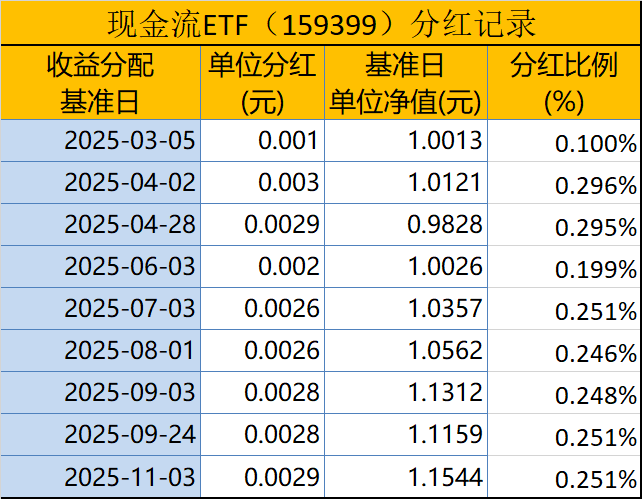
Group 1 - The cash flow ETF has shown a significant increase in performance, with a growth rate of 15.96% since its launch, compared to the 4.95% increase of the CSI Dividend Index [4] - The cash flow ETF's assets have grown from 1.6 billion units at launch to nearly 3.9 billion units, indicating increasing investor interest [4] - The cash flow ETF tracks the FTSE China A-Share Free Cash Flow Focus Index, which currently has a price-to-earnings (P/E) ratio of less than 14 times, suggesting it is undervalued [4] Group 2 - The innovation drug sector in Hong Kong is highlighted as having better value compared to A-shares, with leading companies concentrated in Hong Kong due to earlier listings [8] - The innovation drug sector has seen significant valuation adjustments this year, placing it in a reasonable range for future recovery [8] - The industry fundamentals are strong, with improved profitability for listed companies and ongoing policy support for innovation [8][9] Group 3 - The Hang Seng Technology Index is currently valued at around 20 times P/E, presenting a compelling investment opportunity [8] - The report suggests that the market is likely to experience a period of "boring" fluctuations without significant movements, advising investors to hold core positions [8] - The report emphasizes the importance of active management in the innovation drug sector, as internal differentiation may lead to better returns than simply tracking the index [10]
热议“春季躁动”行情!券商看好哪些方向?
Zhong Guo Zheng Quan Bao· 2025-12-02 14:18
Core Viewpoint - The A-share market is expected to see an early "spring rally" in 2026, driven by positive factors from policy, fundamentals, and liquidity, with a focus on balanced allocation across growth and cyclical sectors [1][2][4] Group 1: Market Trends - The "spring rally" in early 2025 was characterized by a rebound after a quick drop in January, with major indices showing upward trends for two months [2] - Analysts believe that the "spring rally" in 2026 may be advanced due to a "learning effect" in the market and the later timing of the 2026 Spring Festival, leading to potential early positioning by investors [2][3] - Historical analysis indicates that the performance of the "spring rally" is positively correlated with the overall market performance for the year, suggesting that sectors that perform well in December may underperform in the subsequent "spring rally" [3] Group 2: Sector Allocation - Institutions recommend a balanced allocation between growth and cyclical sectors, with a focus on military, AI applications, chemicals, and resource products [1][4] - Specific recommendations include focusing on high-value growth areas such as aerospace equipment and the AI industry chain, while also considering cyclical sectors like chemicals and energy metals [4] - The technology sector is expected to maintain a long-term advantage, with particular attention on military, media (gaming), AI applications, and core AI hardware for investment opportunities [4][5]
ETF及指数产品网格策略周报(2025/12/2)
华宝财富魔方· 2025-12-02 10:18
Core Viewpoint - The article emphasizes the significant advancements in AI applications across various sectors, particularly in internet services, automotive, military, and robotics, highlighting the potential for investment opportunities in related ETFs as these technologies scale up and become more integrated into core business operations [3][4][10][13]. Group 1: Internet Sector - The Chinese internet sector is witnessing a surge in AI product launches, with Alibaba's AI assistant achieving over 10 million downloads within a week of its public testing [3]. - The integration of AI into core products enhances user engagement and service capabilities, thereby solidifying traffic advantages and creating new revenue streams for internet companies [4]. Group 2: Automotive Sector - Recent government policies, such as vehicle purchase tax exemptions and subsidies for new energy vehicles, have effectively boosted domestic demand for electric vehicles [6][7]. - China's cumulative sales of new energy vehicles reached 9.47 million units by September 2025, marking a year-on-year growth of 28.1%, while exports surged to 1.758 million units, up 89.4% [7]. Group 3: Military Sector - China's defense budget for 2025 is set at 1.81 trillion yuan, a 7.2% increase, indicating a focus on modernizing military capabilities [10]. - The military ETF tracks the aerospace and defense sectors, which are expected to benefit from a new procurement cycle and improved industry fundamentals [10]. Group 4: Robotics Sector - The Chinese government is actively promoting the development of intelligent robots and advanced manufacturing equipment, with significant investments in the robotics sector exceeding 24 billion yuan by mid-2025 [13]. - The country is transitioning from concept validation to large-scale application of robotics, supported by a complete supply chain and strong commercialization capabilities [13].

李迅雷:AI有泡沫,但还没到破的时候
Shang Hai Zheng Quan Bao· 2025-12-02 09:23
Core Insights - The key highlights of the "14th Five-Year Plan" include accelerating high-level technological self-reliance and boosting consumption while actively addressing population aging [1][2] - The future industrial output value in China is projected to reach approximately 11.7 trillion yuan in 2024, with expected growth to 13.4 trillion yuan in 2025 and 15.5 trillion yuan in 2026, reflecting a compound annual growth rate of 15% [2] - The integration of "Artificial Intelligence+" into six key areas is anticipated to deepen by 2027, with new generation smart terminals and applications expected to exceed a 70% penetration rate [2] Investment Opportunities - The rise in risk appetite is identified as a core driver of the current market uptrend, influenced by multiple factors including breakthroughs in AI and technology, policy focus on the stock market, and China's enhanced global standing [4] - Four main asset allocation themes are highlighted: low-interest-rate assets, sectors benefiting from global geopolitical tensions, AI technology revolution, and new consumption trends related to younger demographics [5] - The importance of diversified investment strategies is emphasized due to increased volatility in global capital markets, necessitating cross-market and diversified asset allocation [5] Economic Transformation - The need to reduce the investment contribution to GDP while increasing consumption is critical during China's economic transition, with a focus on improving residents' income levels [3] - Recommendations include constructing a fertility support policy system, developing the silver economy, and achieving equalization of public services, particularly in healthcare and elderly care [3] - The goal is to establish a comprehensive pension service network by 2029, ensuring a robust social security system [3]