化工

Search documents
大炼化系列一:聚酯链景气向上
Guotou Securities· 2026-02-24 09:22
Group 1: Core Insights - The report highlights a clear trend of "East rising, West falling" in the global chemical industry, with Chinese companies leveraging cost advantages to capture market share as European chemical firms face high energy and compliance costs [1] - The "PX-PTA-Polyester filament" industry chain is expected to show resilience due to improved supply-demand dynamics [1] Group 2: PX Supply and Demand - PX production growth is limited, with no new capacity added since 2024, leading to a forecasted production increase of only 1% in 2026 [2][3] - The supply of PX is expected to remain tight in 2026, with only one new plant (200,000 tons) coming online in Q4, while demand is projected to grow by 5% due to downstream polyester industry expansions [3][30] Group 3: PTA Market Dynamics - The PTA industry is at a turning point, with a significant slowdown in capacity expansion expected after 2025, leading to a projected production growth of 5% in 2026 [4][42] - The concentration of PTA supply among a few major players (CR6 around 75%) is expected to facilitate better industry coordination and improve profitability [41][43] Group 4: Polyester Filament Outlook - The polyester filament industry is anticipated to benefit from a new round of production cuts, with expectations for a strong seasonal demand in the first half of the year [10][12] - The supply-demand balance for polyester filament is improving, with a projected production growth of 4% in 2026, driven by domestic consumption and favorable external factors [12][30]


浦东新材料龙头企业,冲刺港股IPO
Sou Hu Cai Jing· 2026-02-24 09:20
Core Viewpoint - Tongcheng New Materials Group Co., Ltd. (referred to as "Tongcheng New Materials") has submitted a prospectus for an IPO on the Hong Kong Stock Exchange, aiming to list on the main board [1]. Company Overview - Tongcheng New Materials, located in Shanghai's Pudong New District, is a leading global provider of new material comprehensive services, originally established as Tongcheng Chemical in 1999, focusing on tire rubber additives in its early development [4]. - The company began building its R&D and technical service teams in 2005, establishing R&D centers in Beijing and Shanghai, and production bases in Jiangsu and Shanghai, breaking the foreign monopoly on high-end phenolic resin products for tires [4]. - In 2016, the company underwent a shareholding reform and was renamed Tongcheng New Materials Group Co., Ltd., subsequently listing on the Shanghai Stock Exchange in 2018 [3][4]. Business Segments - Tongcheng New Materials operates in three main business segments: electronic materials, tire rubber additives and other chemical products, and fully biodegradable materials [4]. - The electronic materials segment includes semiconductor materials (such as photoresists and CMP polishing pads) and display panel materials (including photoresists and organic insulating films), primarily used in semiconductor and display panel production [4]. - The tire rubber additives segment includes rubber resins and additives, such as phenolic resins, used to enhance the performance of rubber products, with established relationships with major tire manufacturers [5]. - The fully biodegradable materials segment focuses on PBAT products for packaging and agricultural films, which have received food safety certifications and serve as efficient alternatives to traditional polyethylene films [6]. Market Position - As of the first nine months of 2025, Tongcheng New Materials ranked first in sales in both the Chinese semiconductor photoresist market and the Chinese TFT array photoresist market [5]. - The company also holds the top position in the global and Chinese tire phenolic resin rubber additive markets, with significant relationships with the top 20 global tire manufacturers, collectively holding over 70% of the market share [5]. Financial Performance - The company's revenue for the fiscal years 2023, 2024, and the first nine months of 2025 were RMB 29.37 billion, RMB 32.63 billion, and RMB 25.17 billion, respectively, with corresponding net profits of RMB 4.04 billion, RMB 5.34 billion, and RMB 5.22 billion [9][11]. - The increase in profit for 2024 is attributed to higher gross margins and increased other income, while the profit growth in the first three quarters of 2025 is mainly due to increased gross margins and reduced other expenses [10].

马年A股喜迎开门红!沪指涨近1%,机构聚焦两大主线
Guang Zhou Ri Bao· 2026-02-24 09:17
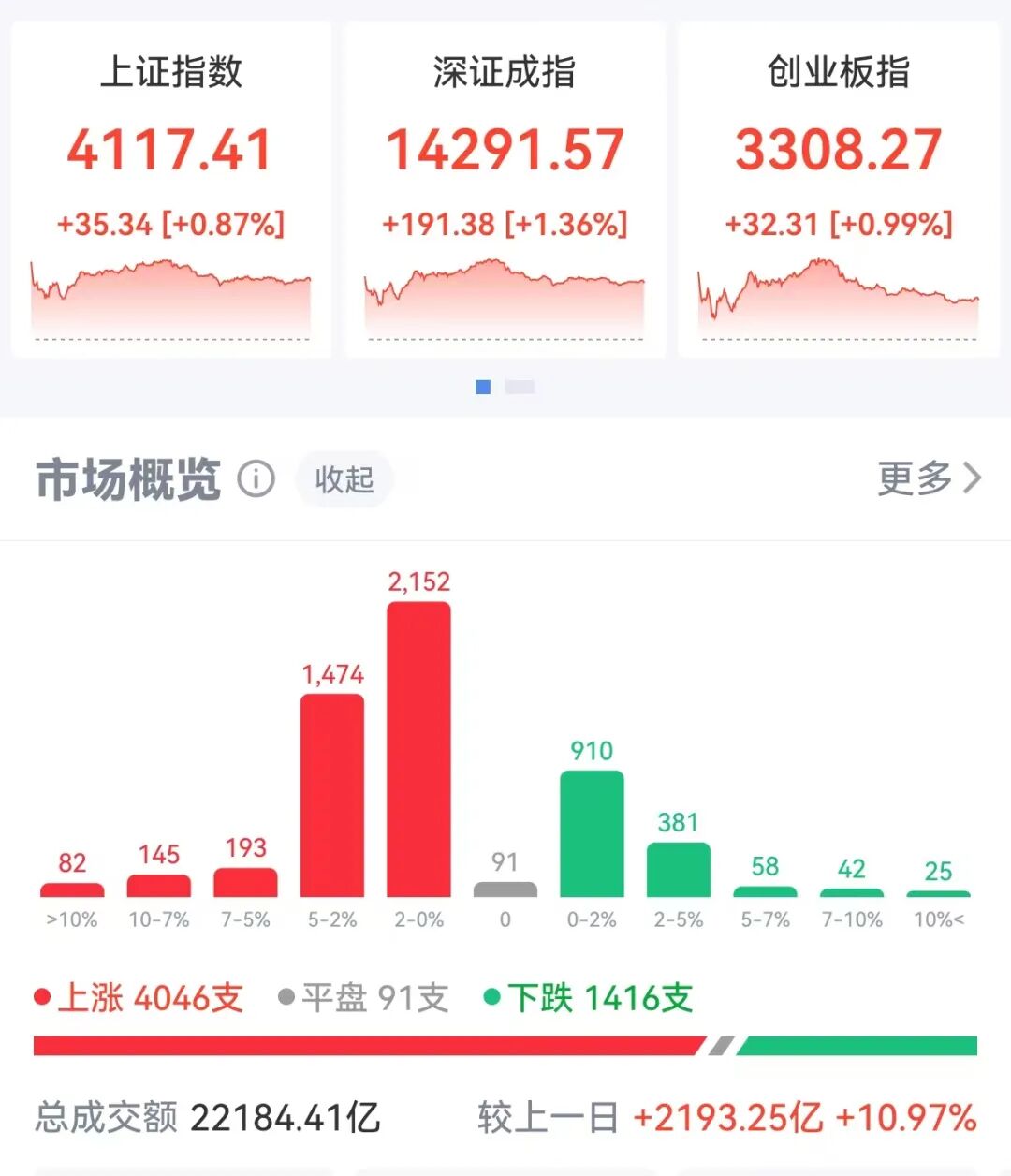
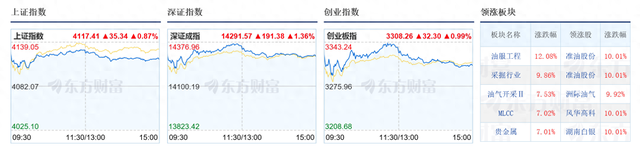
Market Performance - On February 24, the A-share market opened positively with all three major indices rising: the Shanghai Composite Index increased by 0.87%, the Shenzhen Component Index rose by 1.36%, and the ChiNext Index gained 0.99% [1] - The total trading volume in the Shanghai, Shenzhen, and Beijing markets reached 22,182 billion yuan, an increase of 2,192 billion yuan compared to the previous trading day, with over 4,000 stocks rising and more than 100 stocks hitting the daily limit [1] Resource Sector Activity - Resource stocks, including oil, natural gas, and gold, saw a significant increase, with companies like Zhongman Petroleum, Hunan Silver, and Jinniu Chemical hitting the daily limit [3] - Spot gold prices surged to $5,200 per ounce, marking a continuous rise over four trading days [4] Geopolitical Factors - The rise in resource prices is linked to the ongoing negotiations between the U.S. and Iran, with a new round of talks scheduled for February 26 in Geneva [4] - The geopolitical tensions have contributed to the upward trend in gold prices, as the situation remains unresolved, leading to a bullish outlook for resource sectors such as precious metals and oil [4] AI Industry Insights - The AI sector is experiencing continuous catalytic developments, with numerous domestic and international AI companies releasing new models around the Spring Festival [5] - Analysts predict that 2026 will be a pivotal year for AI commercialization, with advancements in multimodal models expected to drive growth in creative industries such as film, gaming, and advertising [5] - Investment focus is recommended on "pan-AI assets," including infrastructure for computing power and commercial applications, with specific interest in sectors like optical modules, energy storage, and semiconductor supply chains [5]
投顾晨报-20260224
Orient Securities· 2026-02-24 09:16
Market Strategy - The market is currently in a volatile yet upward trend, driven by position recovery, maintaining a cautious optimism for February. The index is expected to oscillate around the high and low points of January, with a focus on mid-cap blue chips for investment opportunities [2][6] - The strategy suggests actively adjusting portfolios towards mid-cap blue chips, particularly in the chemical and livestock sectors, which are seen as having strong cyclical performance post-holiday [2][6] Industry Strategy - The agricultural sector is encouraged to expand into international markets to overcome growth limitations faced by domestic agricultural enterprises. Successful international ventures typically involve product and technology exports, asset investments, and mergers or joint operations, emphasizing the importance of core product advantages and complete industry chain layouts [3][6] - Key investment targets in the agricultural sector include Muyuan Foods (002714, buy) and Haida Group (002311, buy), with relevant ETFs being Agricultural ETF (159825/159827) and Grain ETF (159698) [3][6] Thematic Strategy - The rare earth sector is poised for a dual boost in profitability and valuation, with expectations of rising rare earth prices in 2026 due to sustained demand and supply-side improvements. The geopolitical landscape enhances the strategic value of rare earths, making it a key area for investment [4][6] - Notable investment targets in the rare earth sector include China Northern Rare Earth Group (600111, buy) and China Rare Earth Group (600259, not rated), with relevant ETFs being Rare Earth ETF (159713/516150) [4][6]


马年全年展望:三重支撑夯实基础,结构性重估可期
Xin Lang Cai Jing· 2026-02-24 09:13
Market Overview - During the Spring Festival period (February 16 to 23), the Hong Kong stock market showed a fluctuating upward trend, with the Hang Seng Index rising by 1.94% [1] - The materials and energy sectors performed strongly, with increases of 7.37% and 4.66% respectively, driven by rising international precious metal and energy prices alongside heightened geopolitical risks [1] - In contrast, both essential and non-essential consumer sectors experienced slight declines, indicating cautious expectations regarding the pace of consumer recovery [1] Sector Performance - The technology sector underperformed overall, with the Hang Seng Technology Index only increasing by 0.47% for the week, although it showed signs of recovery with a significant rise of 3.64% on February 23 [1] - The structural characteristics observed in the Hong Kong market during the holiday period may also reflect in the A-share market post-holiday, with cyclical industries linked to resource sectors expected to gain traction [1][2] A-share Market Outlook - The A-share market is anticipated to focus on two main lines post-holiday: resource products and technology manufacturing [2] - The recent market differentiation is not merely a short-term rotation but reflects a shift in risk preference from high-valuation growth sectors to more comfortable valuation ranges [3] - The strong performance of resource sectors indicates a growing consensus among global investors regarding the strategic value of assets like precious metals and oil amid geopolitical risks and a weak dollar [5] Economic and Industry Fundamentals - The Chinese economy is at a convergence point between the bottom of the inventory cycle and a new round of industrial upgrades, with industrial profits expected to improve in 2026 [6] - High-tech manufacturing is projected to be a core support for profit recovery, with significant growth in profits expected in sectors like electronic equipment and smart consumer devices [7] - The liquidity environment remains supportive, with a stable monetary policy and a trend of declining risk-free interest rates enhancing the attractiveness of equity assets [7] Long-term Market Drivers - The market's cautious expectations regarding economic growth may lay the groundwork for future recovery, with policies aimed at boosting domestic demand and consumption being prioritized [8] - The ongoing evolution of new industries, particularly in technology, is expected to support long-term growth, with no significant bubbles observed in the technology sector despite recent valuation increases [8] - The market is likely to experience structural revaluation supported by a recovering profit cycle, declining interest rates, and the acceleration of new productive forces transitioning from policy planning to industrial implementation [9]
上海国企改革板块2月24日涨0.01%,氯碱化工领涨,主力资金净流出11.5亿元
Sou Hu Cai Jing· 2026-02-24 08:58
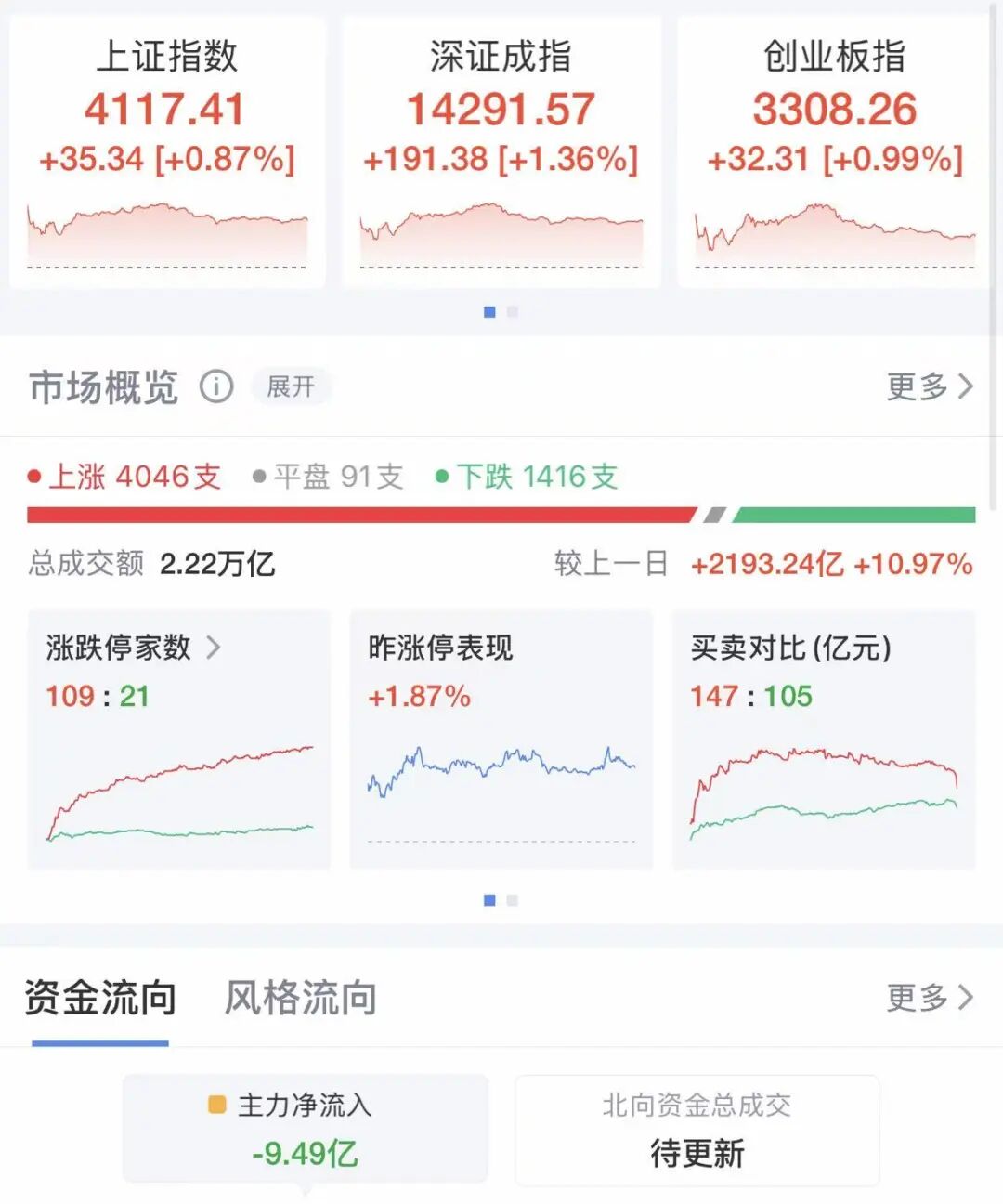
Group 1 - The Shanghai state-owned enterprise reform sector increased by 0.01% compared to the previous trading day, with chlor-alkali chemicals leading the gains [1] - The Shanghai Composite Index closed at 4117.41, up by 0.87%, while the Shenzhen Component Index closed at 14291.57, up by 1.36% [1] - The main funds in the Shanghai state-owned enterprise reform sector experienced a net outflow of 1.15 billion yuan, while retail investors saw a net inflow of 1.22 billion yuan [1] Group 2 - The net outflow of funds from speculative capital was 70.3751 million yuan on the same day [1] - A detailed table of individual stock fund flows in the Shanghai state-owned enterprise reform sector was provided [1]


A股马年首日“开门红”!成交额重返2万亿元,逾百股涨停
Shen Zhen Shang Bao· 2026-02-24 08:19
Market Performance - The A-share market opened positively in the Year of the Horse, with the Shanghai Composite Index rising by 0.87% to close at 4117.41 points, the Shenzhen Component Index increasing by 1.36% to 14291.57 points, and the ChiNext Index up by 0.99% to 3308.27 points [1] - The total trading volume in the Shanghai and Shenzhen markets reached 22,184 billion yuan, an increase of 2,193 billion yuan compared to the previous trading day, marking a return to the 20 trillion yuan trading range [1] Sector Performance - The market exhibited broad-based gains across multiple sectors, including technology growth, cyclical resources, and new energy [2] - Over 4,000 stocks rose, with more than 100 stocks hitting the daily limit up [2] - The precious metals and oil & petrochemical sectors saw significant surges, with Tongyuan Petroleum hitting the daily limit up, alongside several other stocks in these sectors [2] - The chemical sector also performed well, with Meibang Co. achieving four consecutive limit ups, and several other stocks in this sector hitting the daily limit [2] - The cultivated diamond concept surged, with Sifangda hitting the daily limit, and Huanghe Xuanfeng also reaching the limit up [2] Commodity Futures - Most major contracts in domestic commodity futures closed higher, with silver rising nearly 13%, lithium carbonate over 10%, and crude oil increasing by over 6% [3] - Other commodities such as low-sulfur fuel oil, platinum, and palladium also saw significant gains, with increases ranging from 4% to nearly 6% [3] - Conversely, polysilicon experienced a decline of over 4%, while other commodities like coke and live pigs fell by more than 2% [4]
节后首日,A股全线飘红,超4000股上涨,百股涨停!参投《飞驰人生3》票房大卖股价却跌停,博纳回应
Mei Ri Jing Ji Xin Wen· 2026-02-24 08:11
Market Overview - On the first trading day of the Year of the Rabbit, A-shares saw a broad increase, with the Shanghai Composite Index rising by 0.87%, the Shenzhen Component Index by 1.36%, and the ChiNext Index by 0.99% [1] - The total trading volume in the Shanghai and Shenzhen markets reached 2.2 trillion yuan, an increase of 219.4 billion yuan compared to the previous trading day [1] Sector Performance - Oil and gas stocks collectively surged, with several stocks hitting the daily limit, including Tongyuan Petroleum, Zhun Oil, Shandong Molong, and CNOOC Services [3] - The chemical sector experienced significant growth, with Meibang Co. achieving a four-day consecutive limit-up, alongside other stocks like Hongbaoli, Hongqiang Co., and Chengxing Co. also hitting the limit [3] - Gold stocks saw substantial gains, with Sichuan Gold hitting the limit, and other companies like Western Gold and Chifeng Jilong Gold also experiencing significant increases [5] - The cultivated diamond concept stocks rose sharply, with Sifangda hitting a 20% limit-up and Huanghe Xuanfeng also reaching the limit [5] Company Highlights - Huagong Technology resumed operations on the first day of the Lunar New Year, with multiple business segments running continuously, ensuring the production of high-speed optical modules [9] - The company reported that its order backlog extends to the fourth quarter of 2026, with production lines operating at full capacity [9] Declining Sectors - The film and cinema sector faced notable declines, with several stocks, including Light Media and China Film, hitting the daily limit down [10] - Despite the success of the film "Fast and Furious 3" at the box office, Bona Film's stock price plummeted, closing at 11.49 yuan per share, with a total market value of 15.79 billion yuan [11][12] Market Outlook - According to招商证券, the market is expected to maintain a volatile upward trend leading up to the Two Sessions, with cyclical price increases and the expansion of AI-related sectors being the main drivers [13] - The upcoming Two Sessions are anticipated to boost investment expectations, particularly in major infrastructure projects, which could stabilize market sentiment [13]
A股马年开门红:三大股指集体收涨,油气、化工爆发
Xin Lang Cai Jing· 2026-02-24 08:00
Market Performance - The A-share market experienced a collective rise on the first trading day of the Year of the Horse, with the Shanghai Composite Index closing at 4117.41 points, up 0.87% [1] - The Shenzhen Component Index closed at 14291.57 points, up 1.36%, and the ChiNext Index closed at 3308.26 points, up 0.99% [1] Trading Volume - The total trading volume in the Shanghai and Shenzhen markets was approximately 22020.62 billion yuan, an increase of about 2193.82 billion yuan compared to the previous trading day [2] - A total of 4006 stocks rose, while 1392 stocks fell, with 109 stocks hitting the daily limit up and 21 stocks hitting the daily limit down [2] Sector Performance - Industries such as MLCC, fiberglass, cultivated diamonds, precious metals, petroleum and petrochemicals, and coal mining saw significant gains [2] - Conversely, sectors like short dramas, intellectual property, film and television, film theaters, cultural media, and computers experienced notable declines [2] Individual Stock Highlights - The precious metals and petroleum sectors saw substantial increases, with Tongyuan Petroleum hitting the daily limit up, along with several other stocks such as Hunan Silver, China Oil Engineering, and Zhongman Petroleum [2] - The chemical sector also performed well, with Meibang Co. achieving a four-day limit up streak, and stocks like Hongbaoli, Hongqiang Co., Chengxing Co., and Jinpu Titanium hitting the daily limit up [2] - In contrast, film and theater concept stocks collectively fell, with companies like Light Media and China Film hitting the daily limit down [2]
关税政策大调整:美国终止 IEEPA 关税,全球贸易再迎变数
Sou Hu Cai Jing· 2026-02-24 07:45
Core Viewpoint - The U.S. Customs and Border Protection (CBP) announced the termination of additional tariffs imposed under the International Emergency Economic Powers Act (IEEPA), marking a significant shift in U.S. trade policy following a Supreme Court ruling that deemed these tariffs legally unfounded [1][2]. Group 1: Tariff Termination Details - The termination affects seven presidential executive orders, including tariffs aimed at illegal drug imports, synthetic opioids from China, punitive tariffs on Venezuelan oil, and tariffs designed to address the U.S. trade deficit [2]. - The CBP will update its Automated Commercial Environment (ACE) system, rendering all HTSUS numbers applicable to IEEPA tariffs ineffective from February 24, 2026 [2]. - The adjustment only pertains to IEEPA measures and does not alter other core U.S. trade protection policies, such as Section 232 and Section 301 tariffs [2]. Group 2: New Tariff Measures - Following the Supreme Court ruling, the Trump administration quickly introduced a temporary 10% import tariff on all goods from all countries, which was later raised to 15% [3]. - This new tariff will apply to all trade partners, including those with existing bilateral agreements, disrupting previous trade negotiation frameworks [3]. - The administration aims to offset the revenue loss from the IEEPA tariff termination and maintain overall tariff income for 2026 [3]. Group 3: Impact on U.S. Economy and Trade - The termination of IEEPA tariffs is expected to alleviate cost pressures on U.S. businesses, potentially enhancing profit margins and leading to a temporary rise in stock market indices [4]. - However, the new 15% global tariff raises concerns for industries reliant on global supply chains, leading to increased costs [4]. - The issue of refunding over $130 billion in previously paid IEEPA tariffs has emerged, with many companies seeking reimbursement, which could lead to prolonged legal disputes [4]. Group 4: Implications for U.S.-China Trade - The termination of certain tariffs signals a potential easing of trade tensions between the U.S. and China, allowing for increased trade volumes in specific sectors [5]. - Despite this, the Section 301 tariffs on Chinese goods remain unchanged, limiting the scope for improvement in U.S.-China trade relations [5]. Group 5: Global Trade System Effects - The termination of IEEPA tariffs may lower trade barriers in some sectors, benefiting global trade flows, particularly in energy and chemicals [6]. - However, the introduction of new tariffs creates uncertainty, prompting other nations to consider retaliatory measures, which could disrupt global trade recovery [6]. - The adjustment reflects broader domestic political dynamics and the ongoing struggle between protectionism and globalization [6]. Group 6: Long-term Trade Outlook - The recent changes in U.S. tariff policy introduce both opportunities and challenges for global trade, necessitating enhanced bilateral and multilateral cooperation to mitigate the impacts of unilateral trade actions [7]. - The emphasis on economic globalization and adherence to global trade rules is crucial for sustainable trade development [7].