家电

Search documents
海立股份发预增,预计2025年度归母净利润同比增加92%到130%
Zhi Tong Cai Jing· 2026-01-26 09:28
Core Viewpoint - Haili Co., Ltd. (600619.SH) expects a significant increase in net profit for the fiscal year 2025, projecting a net profit attributable to shareholders of the parent company between 65 million to 78 million yuan, representing a year-on-year increase of 92% to 130% compared to the previous year [1] Group 1 - The projected net profit increase of 31.15 million to 44.15 million yuan is primarily driven by the old-for-new policy stimulating demand in the air conditioning market [1] - The company continues to leverage its core competencies in heating and cooling-related products, leading to a year-on-year increase in product sales [1] - The automotive parts segment has improved global operational efficiency, resulting in a significant reduction in losses [1] Group 2 - The synergy between the two main business segments is driving overall performance growth [1]

消费首破50万亿元背后
Xin Hua Wang· 2026-01-26 09:27
Group 1 - The core viewpoint of the articles indicates that by 2025, China's total retail sales of consumer goods are expected to reach 50.1 trillion yuan, with a growth rate of 3.7%, contributing 52% to economic growth, an increase of 5 percentage points [1] - In terms of product consumption, the trade-in policy is projected to drive sales of automobiles, home appliances, and mobile phones to 2.61 trillion yuan, benefiting 366 million people [3] - The retail sales of durable goods are expected to grow rapidly, with retail sales of home appliances, communication equipment, and furniture increasing by 11%, 20.9%, and 14.6% respectively, while passenger car retail volume is expected to rise by 3.8% [5] Group 2 - New consumption patterns are emerging, with digital, green, and health consumption gaining traction, and online retail sales of physical goods expected to grow by 5.2%, while the market penetration rate of new energy passenger vehicles is projected to reach 53.9% [7] - Rural consumption is showing active performance, with retail sales of consumer goods in rural areas reaching 6.8 trillion yuan, growing by 4.1%, outpacing urban growth by 0.5 percentage points [7] - The inbound consumption trend is rising, with the sales of tax refund goods nearly doubling due to the expansion of visa-free countries and the optimization of tax refund policies, alongside a nearly 30% increase in foreign visitors under the 240-hour visa-free transit policy [9] Group 3 - In 2026, measures to boost consumption will focus on policy implementation, event organization, and improving consumption environments, including optimizing the trade-in policy and promoting durable goods consumption [11] - The Ministry of Commerce plans to organize over 20 "Buy in China" themed events and support local activities to create a strong consumption atmosphere [11] - Efforts will be made to accelerate the cultivation of international consumption center cities and promote new consumption scenarios to enhance the overall consumer experience [11]


市场定位模糊!贝莱德基金本土化试水困局,主动权益产品边缘化
Sou Hu Cai Jing· 2026-01-26 09:25
Core Insights - The 2025 public fund quarterly report indicates a "stronger getting stronger" trend in the active equity fund market, with performance and scale highly correlated to the technology sector and research capabilities [2][10] Group 1: Performance of Active Equity Funds - The median average return for active equity funds in 2025 was 38.30%, with the top ten managers achieving returns as high as 148.78% [2] - Allianz Fund was the only foreign-owned public fund company among the top ten managers, benefiting from deep investments in Chinese tech stocks [2][13] - BlackRock Fund faced challenges in China, with an average return of 27.79% for its ten active equity funds, ranking second to last among foreign-owned public funds [2][3] Group 2: Challenges Faced by BlackRock Fund - BlackRock Fund's core issue is a vague market positioning and lack of a clear "technology growth" brand, leading to underperformance in the 2025 structural bull market [3][7] - The fund's active equity products are seen as "trial" issues, lacking sustained marketing and investor education, resulting in a marginalization of these products [4][9] - Despite having a global research platform, BlackRock's local team has not established an independent active equity research system in China, leading to conservative product strategies [7][8] Group 3: Fund Structure and Holdings - BlackRock's active equity product line includes various fund types, but its active equity products have not seen new issues in 2025, indicating a lack of focus [4][7] - The fund's holdings are primarily concentrated in manufacturing, finance, and consumer sectors, with over 60% of the portfolio in these areas [7] - The flagship product, "BlackRock Advanced Manufacturing One-Year Holding A," led foreign peers with a 63.34% annual return, but other products underperformed [8][14] Group 4: Comparison with Other Foreign Funds - Other foreign public funds in China are transitioning from "trial" to "deep cultivation," showing significant differentiation in product layout, research systems, and performance [10][11] - Allianz Fund stands out with a focused market strategy, achieving a return of 96.01% for its only active equity product since its inception [13][14] - The overall trend indicates that foreign public funds are increasingly focusing on AI, high-end manufacturing, and semiconductor sectors, with a significant portion of their portfolios allocated to these areas [11][15]

百年商脉续新章! “广货行天下·中山百货进上海”即将启幕
Nan Fang Du Shi Bao· 2026-01-26 09:25
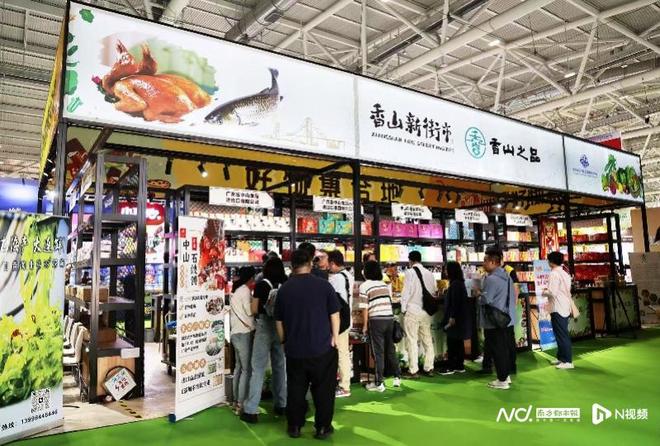
Group 1 - The event "Guanghuo Xing Tianxia: Zhongshan Department Store Enters Shanghai" will take place from January 31 to February 2 in Shanghai, showcasing Zhongshan's quality products and cultural charm, continuing the century-old commercial relationship between Xiangshan and Shanghai [1][7] - The event is guided by the Guangdong Provincial Department of Industry and Information Technology and hosted by the Zhongshan Municipal Government, featuring three days of exhibitions, interactions, performances, and investment promotion activities [3][5] - The exhibition will highlight various categories including home appliances, furniture, consumer electronics, clothing, daily chemicals, food, and cultural tourism, showcasing the latest achievements in Zhongshan's urban image, technological innovation, and quality of life [3][5] Group 2 - Zhongshan has a strong manufacturing base with 38 national-level industrial bases and 18 provincial-level specialized towns, emphasizing its robust real economy and active private sector [5] - The event will include interactive activities such as consumer lotteries, photo opportunities, and performances of traditional Guangdong music, enhancing the cultural atmosphere [5] - Online marketing efforts will be coordinated through major e-commerce platforms like Tmall and Douyin, promoting Zhongshan's industrial products and increasing brand influence [5]
看世界 | 中国降温神器热销东南亚
Jing Ji Ri Bao· 2026-01-26 09:13
Core Insights - The extreme heat in Southeast Asia, exacerbated by the El Niño phenomenon, has led to a surge in demand for cooling products, particularly air conditioners, cooling mats, and fans produced in China [1][2]. Air Conditioning Market - The Southeast Asian air conditioning market is projected to exceed $5.5 billion by 2025, with an expected annual growth rate of over 10% from 2025 to 2030 [1]. - The International Institute of Refrigeration (IIF) forecasts a 13.9% increase in room air conditioner sales in Southeast Asia in 2024, with Indonesia being a key market attracting international brands, especially Chinese ones [1]. Cooling Mats and Fans Market - The demand for cooling mats and fans in Southeast Asia has significantly increased, with sales in the Philippines reportedly growing several times compared to previous years [2]. - Chinese cooling mats, including ice silk and linen varieties, are gaining popularity in markets like Vietnam, Indonesia, and Thailand, thanks to advancements in materials and manufacturing techniques [3]. - Chinese fans are recognized for their variety, reliability, and affordability, catering to diverse consumer needs across the region [3]. Marketing and Distribution Strategies - Chinese companies are investing heavily in marketing channels, collaborating with major retail chains and e-commerce platforms like Lazada and Shopee to enhance product availability and consumer access [4]. - Partnerships with local retailers, such as Gree's collaboration with Thailand's Central Group, have facilitated better product placement and promotional activities [4]. Economic Impact - The influx of Chinese cooling products is stimulating trade in Southeast Asia, benefiting logistics, warehousing, and transportation sectors, and creating more job opportunities [5]. - Retail sectors are experiencing increased foot traffic and sales, with reports of Malaysian logistics companies expanding their operations due to high demand for Chinese air conditioning and fan products [5]. Social Impact - The widespread availability of Chinese cooling products is improving the quality of life for Southeast Asian residents, with no significant increase in heat-related hospital visits despite record temperatures [6]. - The popularity of these products is enhancing consumer awareness of Chinese brands and fostering cultural exchange [6]. - There is a growing demand for energy-efficient and environmentally friendly cooling products, which presents an opportunity for Chinese companies to innovate and contribute to sustainable development in the region [6].



海尔首创用户全生命周期管理平台,大幅提升用户满意度
Jin Rong Jie· 2026-01-26 09:06
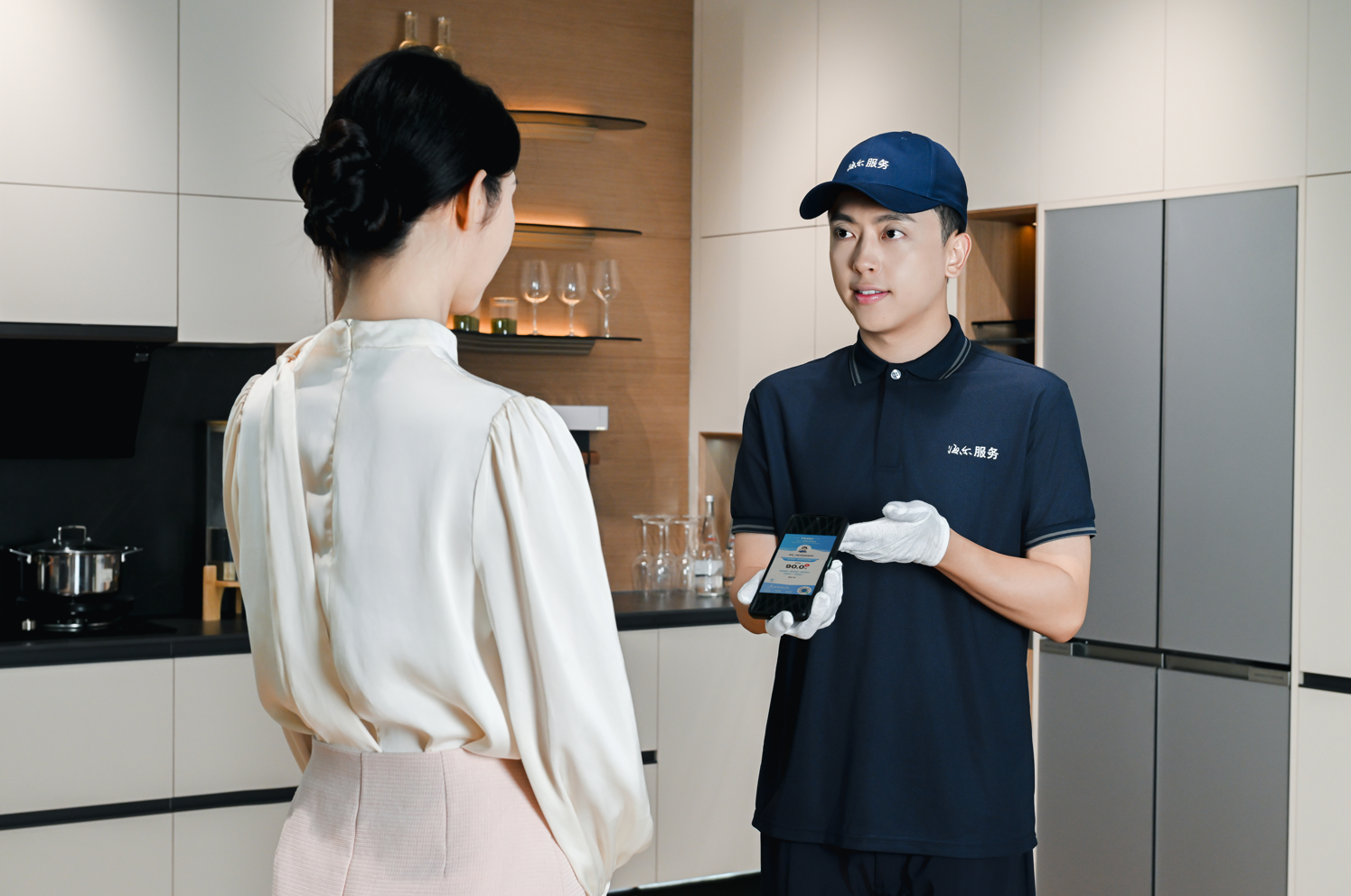
Core Viewpoint - Haier Smart Home has been recognized for its user-centric service model, which enhances customer satisfaction and addresses challenges in home appliance services through a comprehensive lifecycle management platform [1]. Group 1: User Experience and Satisfaction - The platform provides a seamless service experience from the purchasing stage to the end of the product's lifecycle, significantly improving user satisfaction by 27.18% by 2025 [1]. - Users can access real-time product status, service progress, and interact with service personnel, ensuring transparency throughout the purchasing process [3]. Group 2: Installation and Maintenance Services - The platform has introduced a three-phase service process ("design, construction, delivery") to ensure consistency between installation and design, enhancing control over the installation process [3]. - AI technology is utilized to improve service efficiency, allowing users to receive instant video solutions for their appliance queries through voice commands [4]. Group 3: Comprehensive Service Offerings - The platform offers proactive services, such as automatic reminders for filter replacements, and facilitates easy scheduling for service appointments [4]. - Haier's service model extends beyond traditional after-sales support, encompassing a wide range of home needs, including cleaning and home improvement services [5].
商务部:2025年乡村消费品零售额达6.8万亿元 增长4.1%
Yang Shi Wang· 2026-01-26 08:48
Core Insights - The 2025 consumer market in China has achieved significant growth in both scale and quality, with total retail sales of consumer goods reaching 50.1 trillion yuan, marking a historic milestone of surpassing 50 trillion yuan. The contribution of consumption to GDP growth has reached 52%, reinforcing its role as a key driver of economic development [1] Group 1: Consumer Trends - Durable goods consumption has seen rapid growth, driven by the "old for new" policy, with retail sales of major appliances, communication devices, and furniture increasing by 11%, 20.9%, and 14.6% respectively, while passenger vehicle retail volume rose by 3.8% [1] - New types of consumption are thriving, with digital, green, and health-related consumption gaining momentum. The online retail sales of physical goods grew by 5.2%, and the market penetration rate of new energy passenger vehicles reached 53.9% [1] Group 2: Regional and International Consumption - Rural consumption has shown active performance, with the retail sales of consumer goods in rural areas reaching 6.8 trillion yuan, growing by 4.1%, outpacing urban growth by 0.5 percentage points [2] - The heat of inbound consumption is rising, supported by the expansion of visa-free countries and the optimization of tax refund policies for outbound travelers. Sales of tax refund goods have nearly doubled, and the implementation of the 240-hour visa-free transit policy has led to a nearly 30% increase in foreign visitors [2]
商务部:深化云计算、生物技术、外商独资医院等领域开放试点 引导外资投向服务消费领域
智通财经网· 2026-01-26 08:48
Core Viewpoint - The Chinese government is focusing on enhancing service consumption and promoting high-quality development in various sectors, including culture, tourism, and healthcare, as part of its 2025 business strategy [1][3][44]. Group 1: Consumption and Economic Growth - In 2025, China's total retail sales of consumer goods reached 50.1 trillion yuan, marking a 3.7% increase, with consumption contributing 52% to economic growth, up by 5 percentage points [3][14]. - The implementation of the "old for new" policy boosted sales of durable goods, with sales in related categories like automobiles and home appliances reaching 2.61 trillion yuan, benefiting 366 million people [3][14]. - Service retail sales grew by 5.5%, with sectors like cultural and recreational services, tourism, and transportation seeing double-digit growth [3][14][44]. Group 2: Foreign Trade and Investment - In 2025, China's total goods imports and exports reached 45.47 trillion yuan, a 3.8% increase, while service trade grew by 7.1% [4][5]. - The number of enterprises engaged in foreign trade exceeded 780,000, with private enterprises accounting for 57.3% of total foreign trade [4][5]. - Foreign direct investment saw a 19.1% increase, with over 70,000 new foreign enterprises established, and high-tech industries accounted for 32.3% of total foreign investment [5][6]. Group 3: Bilateral and Multilateral Cooperation - China signed 24 free trade agreements with 31 countries and regions, covering 45% of its total goods trade [6][9]. - The government is actively participating in multilateral trade discussions and has proposed reforms to the World Trade Organization to enhance global trade stability [27][28]. - The "Belt and Road" initiative has led to a 6.3% increase in trade with partner countries, reaching 23.6 trillion yuan in 2025 [9][10]. Group 4: Future Strategies - The government plans to continue promoting service consumption by optimizing supply and removing unreasonable restrictions in the service sector [44][46]. - There will be a focus on enhancing the quality of service consumption, including expanding the service industry and encouraging fair competition [44][46]. - The strategy includes fostering new growth points in service consumption, such as transportation, home services, and digital services, to meet evolving consumer demands [46].
从税收数据看2025我国消费市场亮点:以旧换新激活大众消费 新业态拓展消费边界
Ren Min Wang· 2026-01-26 08:37
Core Insights - The 20th Central Committee's Fourth Plenary Session emphasizes the need to boost consumption and implement targeted actions to invigorate the consumer market by 2025, highlighting significant growth in various sectors such as home appliances, mobile phones, and new energy vehicles [1][3]. Group 1: Consumer Demand Trends - The "trade-in" policy is stimulating consumer demand, with retail sales of home appliances like refrigerators, kitchenware, and mobile devices showing year-on-year increases of 17.4%, 12.9%, and 18.6% respectively [1] - New energy vehicle sales are also on the rise, with a 24.3% increase in unit sales and a 21.1% increase in sales revenue in 2025 [1]. Group 2: Cultural and Tourism Consumption - The integration of culture and tourism is igniting new consumer vitality, with sales in cultural creation and performance increasing by 17.3% year-on-year, and related services such as travel agencies and scenic spots seeing growth rates of 11.2%, 26.1%, and 14.6% respectively [2]. Group 3: Digital Empowerment in Consumption - The incorporation of technologies like AI and VR is driving new consumption patterns, with internet life service platforms and food delivery services experiencing year-on-year sales growth of 9.4% and 13.3% respectively [2]. - Digital cultural services, particularly in gaming and animation, are also showing potential, with a 16.6% increase in sales revenue [2]. Group 4: Health and Sports Consumption - The sports and health industries are witnessing robust demand, with sales in sports exhibition services and consulting services growing by 12.2% and 27.8% respectively [2]. - Health-related services, including health management and wellness, are emerging as new consumer hotspots, with sales increasing by 11.7%, 12%, and 16.5% respectively [2]. Group 5: Elderly and Child Consumption - The growing elderly population is driving demand for elder care services, with spending on elder care, social assistance, and nursing home services increasing by 24.9%, 23.1%, and 15.4% respectively [2]. - The development of childcare services is also progressing, with nursery service sales rising by 5.4% [2]. Group 6: Inbound Consumption and Tax Refunds - The expansion of tax refund policies for outbound travelers is enhancing inbound consumption, with the number of travelers benefiting from tax refunds increasing by 305% and the sales of tax refund goods rising by 95.9% [3]. - The implementation of new tax refund policies has led to the establishment of 12,930 tax refund stores across several regions, with over 7,000 offering "buy and refund" services [3].
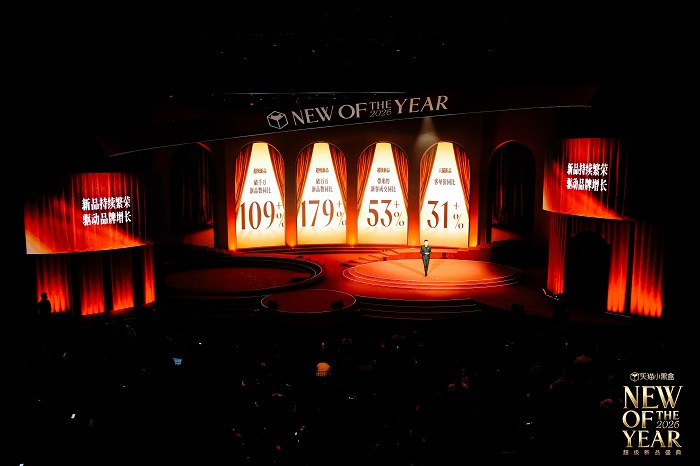
2026天猫超级新品盛典举办,加码新品扶持、致敬顶尖商业人物
Sou Hu Wang· 2026-01-26 08:11
Core Insights - The NEWty 2026 Tmall Super New Products Festival highlighted the impressive growth of new products in 2025 and announced key support measures for high-quality new products in 2026, including six major new product awards and a special recognition for women, linking business with public welfare and fostering industry innovation [1][16] Group 1: Growth Data and Brand Performance - Tmall serves as the primary launch platform for new products, achieving significant growth with over 16 million quality new products launched in 2025, a historical high, and over 30,000 quality new products achieving sales exceeding 1 million, representing a 35% year-on-year increase in quantity and a 34% increase in overall sales [2] - Leading brands shared exclusive methodologies for new product launches, with Adidas reporting a 25-fold increase in sales for its new Chinese-style series, and Pantene's new product achieving over 100 million new customer assets within a month of launch [4] Group 2: Awards and Recognition - Several brands received annual awards for their outstanding innovation and marketing performance, including Yaya, which achieved over 100 million in sales during Tmall Super Brand Day, and Talanis, which launched a children's running shoe that became the first Tmall super product to exceed 100 million in sales [5] - The Tmall Annual Business Person Award recognized three influential figures in the industry for their contributions to market evolution and innovation, including Gao Dekang from Bosideng, Adrian Siu from Adidas, and Jasmine Xu from Procter & Gamble [9][10] Group 3: Women's Empowerment and Social Responsibility - The festival established two special awards focused on women's empowerment, recognizing brands that integrate commercial practices with support for women's growth, such as Erdos Group and Estée Lauder, and honoring individuals like Ma Xiaoyu from L'Oréal for their contributions to women's rights [13][14] Group 4: Future Initiatives and Strategies - Tmall announced its core support measures for high-quality new products in 2026, committing to increase resource investment and enhance the success rate of new product launches through smarter tools, richer resources, and deeper value connections [16]