
智能硬件

Search documents
400亿,“扫地茅”又要IPO了
投中网· 2025-07-18 06:10
Core Viewpoint - Stone Technology is set to go public on the Hong Kong Stock Exchange, marking its second IPO after its debut on the STAR Market in 2020. The company has shown significant growth in revenue but faces challenges with profitability and cash flow [4][8][9]. Company Overview - Stone Technology, founded in 2014 by Chang Jing and his partners, initially gained traction as a part of Xiaomi's ecosystem, launching the "Mijia Smart Vacuum Cleaner" in 2016. The company has since evolved into an independent brand [6][7]. - The company achieved a peak stock price of 1494.99 CNY in 2021, making it the second-highest priced stock in A-shares after Kweichow Moutai [4][8]. Financial Performance - Stone Technology's revenue has shown a consistent upward trend, with projected revenues of 66.11 billion CNY in 2022, 86.40 billion CNY in 2023, and 119.19 billion CNY in 2024. The first quarter of 2025 saw a year-on-year revenue increase of 86.22% to 34.28 billion CNY [8]. - The company's smart vacuum cleaner segment is the primary driver of this growth, contributing 63.46 billion CNY, 80.85 billion CNY, and 108.48 billion CNY in sales for the respective years [8]. Profitability Challenges - Despite revenue growth, Stone Technology has encountered a "growth without profit" scenario, with net profits declining significantly in 2024. For instance, the net profit dropped by 45.25% in Q3 2024 despite an 11.91% revenue increase [9]. - The company's operating costs surged, with total costs reaching 31.20 billion CNY in Q1 2025, a year-on-year increase of 118.65%. Sales and R&D expenses have also risen sharply [9]. Market Position and Competition - Stone Technology holds a 23.4% market share by GMV and a 16.7% share by sales volume in the global smart vacuum cleaner market, making it the leading brand [8][12]. - The smart vacuum cleaner market is highly competitive, with the top five brands accounting for over 60% of the market share [11]. Expansion Strategies - The company is diversifying its product line, having launched a washing and drying machine in 2023, and is exploring other cleaning appliances. In 2024, these new products generated 10.70 billion CNY in revenue, a 33% increase [11]. - Stone Technology is also focusing on international expansion, with its products available in over 170 countries and regions, contributing to 63.88 billion CNY in overseas revenue in 2024, which is 53.48% of total revenue [12]. Market Trends - The Hong Kong stock market is seeing a trend of A-share companies seeking dual listings, with notable examples including Haitian Flavoring and Seasoning and Hengrui Medicine [13][14]. - The anticipated influx of companies into the "A+H" listing model is expected to continue as market conditions improve [15].


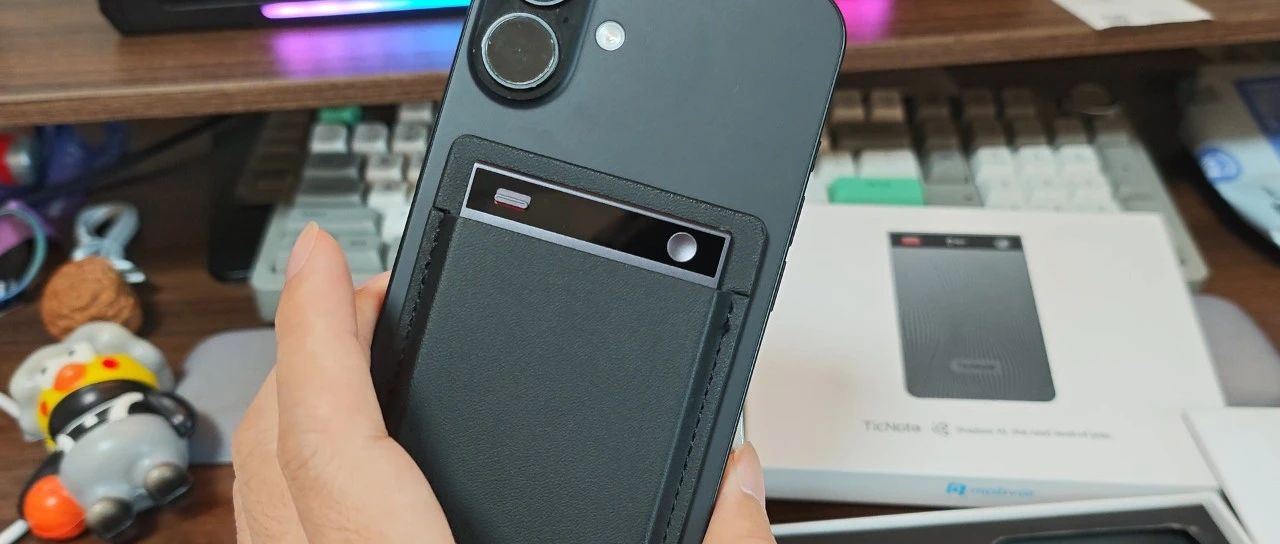
被iPhone逼急了,我决定花1499买了个AI录音卡片。
数字生命卡兹克· 2025-07-18 03:57
Core Viewpoint - The article discusses the functionality and user experience of the AI recording hardware TicNote, highlighting its advantages and limitations in the context of recording meetings and conversations [1][3][20]. Product Overview - TicNote serves three main functions: recording, transcription, and AI summarization [5][14]. - The device is designed to be compact, resembling a small card that can attach to the back of a smartphone, facilitating easy use [7][9]. - It features a storage capacity of 64GB and can record for approximately 15 to 20 hours on a single charge [11]. User Experience - The device allows for seamless recording of both environmental sounds and phone calls, enhancing the user's ability to capture important discussions [5][19]. - The operation is simplified with only two buttons for switching recording modes and starting the recording process [13]. - Users have reported a significant increase in comfort and ease when recording, as it separates the recording function from the smartphone [19]. Pricing and Membership - TicNote offers two versions priced at 999 and 1499, with the latter providing 18 months of software membership, which is deemed more cost-effective for frequent users [18]. - The membership includes a limited number of transcription minutes, with additional costs for extended use [17]. Limitations - The audio quality is noted to be inferior compared to other devices, with issues related to noise reduction and transcription accuracy [19]. - The summarization model used in TicNote is less effective than other advanced models available in the market [19].
长城战略咨询武文生:深圳独角兽企业领跑全国!新增第一!
Feng Huang Wang Cai Jing· 2025-07-18 03:40
Core Insights - The report highlights Shenzhen's dominance in the growth of unicorn companies, with 42 unicorns and a total valuation of $159.9 billion, making it the city with the highest number of new unicorns in China [2][4] Group 1: Unicorn Growth in Shenzhen - In 2024, Shenzhen added 13 new unicorns, accounting for 25% of the national total, while the overall number of new unicorns in China decreased by 10 [2] - Shenzhen's unicorns have an average valuation of $3.71 billion, with a total valuation of $159.9 billion [2] - The city is the only one among "Beijing, Shanghai, Shenzhen, Guangzhou, and Hangzhou" to see an increase in unicorn numbers [2] Group 2: Characteristics of Shenzhen Unicorns - Shenzhen's unicorns are heavily concentrated in "hard technology" sectors, with 66.7% of them in advanced technology fields such as integrated circuits and robotics [4] - The average number of authorized invention patents per unicorn in Shenzhen is 141, significantly higher than Beijing and Shanghai [4] - Over 80% of Shenzhen's unicorns are global companies, expanding through overseas factories and marketing networks [4] Group 3: Regional Distribution - Nanshan District leads with 20 unicorns, accounting for 48% of the total, followed by Bao'an District with 7 [5] - Nanshan's unicorns contribute a valuation of over $70 billion, representing 45% of the total valuation [5] - The presence of two super unicorns, Honor and Huolala, significantly boosts the valuation in the Futian District, which has a total valuation of over $49 billion [5]
创始人套现9亿后退网,“扫地茅”转战港股求活?
凤凰网财经· 2025-07-16 13:58
Core Viewpoint - The article discusses the recent challenges faced by Stone Technology, including layoffs in its washing machine division, leadership changes, and declining consumer trust, all occurring as the company prepares for its secondary listing on the Hong Kong Stock Exchange [5][14][19]. Group 1: Company Challenges - Stone Technology has initiated significant layoffs in its washing machine division, reducing staff in various teams, which has raised concerns about its operational capabilities and customer service [3][5][7]. - The company has faced numerous consumer complaints regarding the quality and reliability of its washing machines, leading to increased dissatisfaction among customers [6][11]. - The departure of key executives, including the president of the cleaning products unit, has created instability within the company, further complicating its strategic direction [4][12]. Group 2: Financial Performance - In 2024, Stone Technology reported a revenue of 11.94 billion, a year-on-year increase of 38.03%, but its net profit declined by 3.64% to 1.977 billion [11][18]. - The company's washing machine business has shown a low return on investment, with a gross margin of only 33%, significantly lower than its core business of robotic vacuums, which has a gross margin of 52% [18]. - Despite substantial investments in research and development, particularly in the washing machine segment, the financial returns have not met expectations, indicating a potential misalignment in strategy [18][19]. Group 3: Market Position and Strategy - Stone Technology is attempting to enter the washing machine market, which is dominated by established players like Haier and Midea, posing significant challenges in terms of supply chain and market penetration [15][16]. - The company aims to leverage its upcoming secondary listing to enhance its capital structure and attract new investors, although investor confidence has been shaken by recent performance issues [14][19]. - The strategic shift towards washing machines is seen as a response to market pressures, but the effectiveness of this pivot remains uncertain given the current operational and financial challenges [19][20].
解读智能眼镜、智能玩具电话会
2025-07-16 06:13
Summary of Conference Call Records Industry Overview - The conference call primarily discusses the smart eyewear industry, highlighting key players and their developments in the sector [1][2][3]. Key Companies and Developments 1. **康奈特 (Connect)** - The company has established partnerships with several global consumer electronics manufacturers, which is expected to enhance its market position [1]. - The construction of a factory in Thailand is anticipated to reduce tariff risks, as the current tariff impact is only around 10% [2]. - A new innovative eyewear product is in development, featuring a small display screen embedded below the lens, aiming to enhance user experience with improved camera capabilities comparable to the iPhone 13 [2]. 2. **博世 (Bosch)** - Bosch is collaborating with various smart eyewear brands, including 雷鸟 (Thunderbird) and 李威可 (Liweike), to market AI-enhanced eyewear [3]. - The company reported a profit growth exceeding 20% in Q1, indicating strong performance in the market [4]. 3. **明月晶片 (Mingyue Chip)** - Mingyue Chip has reported a revenue growth of 12% year-over-year and a profit growth of 20% in Q1, with new product launches contributing to a sales increase of over 30% [4]. Market Dynamics - The smart eyewear market is characterized by a diverse range of participants and significant collaboration among electronic companies, which is expected to accelerate the development of smart eyewear products [3]. - The overall performance of companies in this sector appears robust, with many reporting strong profit growth and innovative product launches [4]. Additional Insights - The conference also touched on the broader implications of AI in various sectors, including smart home devices and cross-border e-commerce, indicating a trend towards increased efficiency and cost optimization [5][7]. - The potential for AI-driven solutions to enhance operational efficiency in B2C and B2B sectors was highlighted, with specific mention of AI translation and smart advertising technologies [8]. Conclusion - The smart eyewear industry is poised for growth, driven by innovation and strategic partnerships among key players. The financial performance of companies in this sector suggests a healthy market outlook, with ongoing developments in AI technology further enhancing operational capabilities across various industries [9].
中国AI硬件市场今年将首破万亿元,未来五年还会持续高增长
Di Yi Cai Jing· 2025-07-16 03:27
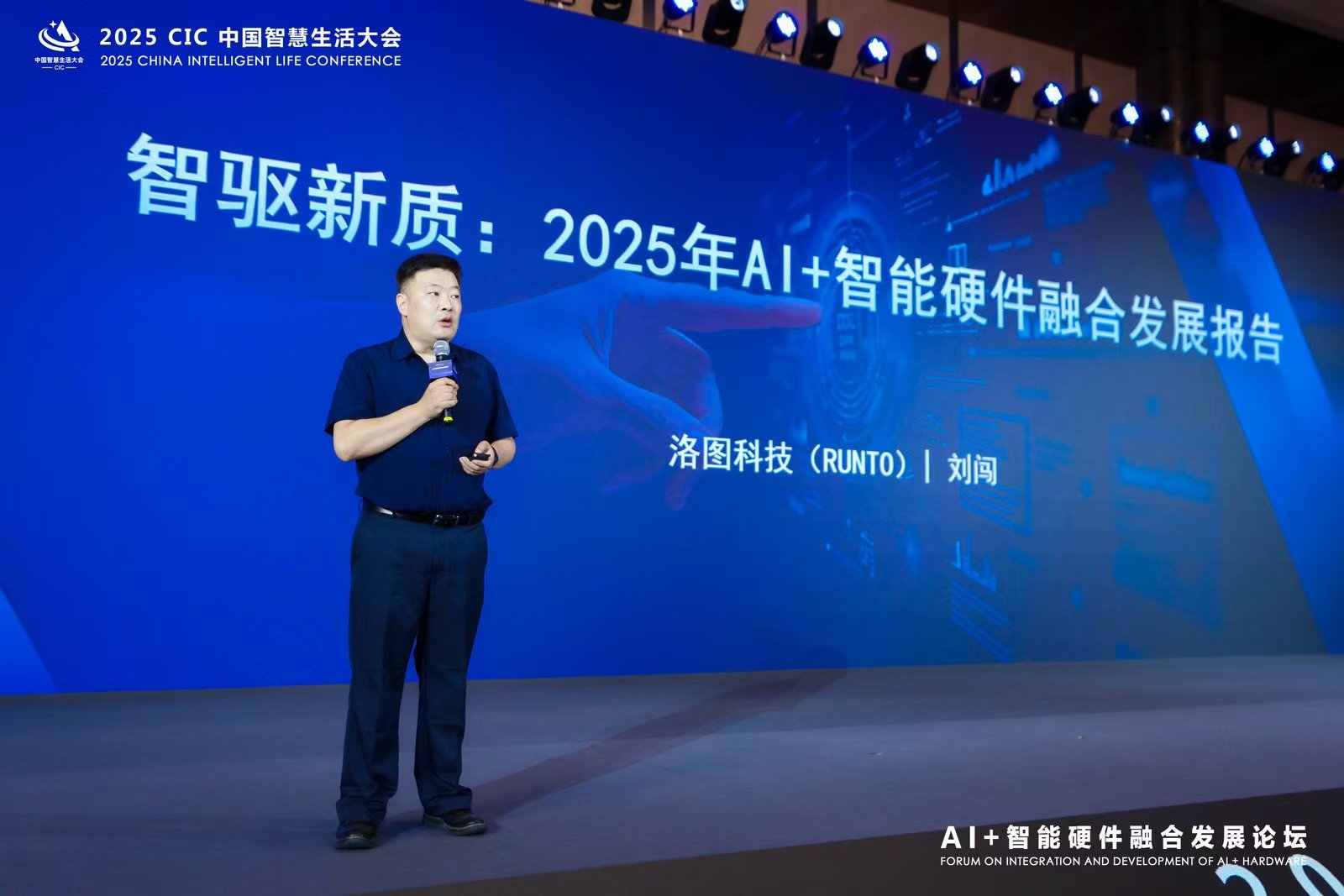
Core Insights - The Chinese AI hardware market (excluding AI smartphones and AI vehicles) is projected to exceed 1 trillion yuan for the first time in 2023 and will continue to grow rapidly over the next five years [1][3][5] Market Growth and Projections - The market size for AI hardware in China is expected to reach 1,102 billion yuan by 2025, representing a 13.4% increase from 971.8 billion yuan in the previous year [5] - The compound annual growth rate (CAGR) for the domestic AI hardware market over the next five years is conservatively estimated at 18% [5] Market Drivers - Four key drivers are identified for the rapid development of the AI industry in China: 1. Policy support 2. Technological breakthroughs, such as the DeepSeek model being integrated with over 200 companies 3. Application scenarios and data support 4. Capital investment, with AI-related investment expected to reach 80 billion yuan in 2023, doubling from the previous year [3][5] Market Segmentation - In 2023, the AI consumer electronics hardware market is estimated to be approximately 461 billion yuan, while the public service AI hardware market is projected to be around 641 billion yuan [5] - The breakdown of the AI hardware market includes: - Smart wearables: 1,190 million yuan - Black electronics (including projectors): 1,180 million yuan - White goods: 760 million yuan - Home appliances: 480 million yuan - Kitchen appliances: 290 million yuan - Educational smart hardware: 340 million yuan - Smart home hardware: 370 million yuan [6] AI Penetration in Consumer Electronics - The penetration rates of AI in various consumer electronics are as follows: - 90% in robotic vacuum cleaners, air purifiers, and smart mattresses - Over 70% in AI televisions - Over 30% in kitchen appliances - 20% in refrigerators, washing machines, and air conditioners - 87% in projectors for smart voice interaction [7][8] Characteristics of AI and Smart Hardware Integration - The integration of AI with smart hardware exhibits several characteristics: 1. Intelligent interaction through voice and gesture recognition 2. Lightweight technology requiring low power consumption 3. Ecosystem-oriented scenarios emphasizing cross-device interaction 4. Market differentiation with high-end premium products alongside accessible AI solutions 5. The need for deep experience to appreciate AI enhancements in products [8]
余杭打造更具科技感和未来感的智慧之城
Hang Zhou Ri Bao· 2025-07-16 03:14
Core Viewpoint - The article highlights the implementation of the "dual list" of urban opportunity scenarios in Yuhang District, focusing on areas such as artificial intelligence, low-altitude economy, industrial upgrading, urban governance, and public services, aiming to transform Yuhang into a smart city with enhanced technological and futuristic elements [1][2]. Group 1: Public Services - Yuhang is incorporating applications like smart elderly care robots and "CT + AI" technology into its public service initiatives, making technology a warm and helpful assistant in daily life [1]. - The "CT + AI" technology allows doctors to screen for multiple cancers and chronic diseases with a single scan, significantly improving screening efficiency [1]. - Smart elderly care robots can engage with seniors and monitor their health, ensuring professional care is always available [1]. Group 2: Urban Governance - The urban governance aspect is being transformed from passive response to proactive sensing, with robots and machine dogs assisting in cleaning tasks [2]. - The urban intelligence platform acts as the city's "nervous system," monitoring risks such as geological hazards and providing early warnings for disasters, thus saving critical time for evacuation and rescue [2]. - Yuhang's "demand list" includes 20 urban application scenarios, creating a testing ground for new technologies and solutions [2]. Group 3: Innovation Ecosystem - Yuhang is building an innovation ecosystem characterized by "demand-driven - technology-driven - precise matching," facilitating the application and promotion of new technologies and products [3]. - The "capability list" gathers 20 hard-tech solutions to accelerate the implementation of these scenarios, inviting innovative enterprises and research institutions to contribute [2][3]. - This initiative serves as a showcase of Yuhang's technological innovations while effectively addressing economic and social development challenges [2].
博实结20250715
2025-07-16 00:55
Company and Industry Summary Company Overview - The company is projected to achieve total revenue of approximately 1.4 billion in 2024, with profits around 180 million. The first quarter of 2025 is expected to show rapid revenue growth, with profit growth anticipated to outperform the first quarter in the second quarter, primarily due to non-Spring Festival factors [2][7] Revenue and Profit Structure - The overseas market now accounts for 22%-23% of total revenue, with stronger profitability compared to the domestic market. However, some overseas business segments have lower gross margins, while the smart video terminal business maintains a high net profit margin, minimally impacting the overall net profit margin [2][8] - The smart vehicle terminal business targets the aftermarket, with a comprehensive gross margin of about 30%, slightly higher in overseas markets compared to domestic markets. Products include navigation devices, cameras, and dashcams [2][9][10] Business Segments - The smart mobility components business, which includes shared bicycle and electric bicycle components, is benefiting from high-end customer engagement and cost improvements. It is expected that the gross margin will recover to 15%-20% in 2025, indicating a potential return to growth [2][11] - The company has launched a smart bed cover aimed at the North American market, with projected revenue of about 200 million in 2024 and a gross margin of approximately 17%, positively impacting net profit with promising future applications [2][13][14] Research and Development - The company possesses self-research and production capabilities for modules, leading to high research efficiency. Each business unit operates independently in profit accounting and allows core personnel to participate in profit sharing, with active cost control measures in place [2][17] Market Expansion and Future Outlook - The company is optimistic about expanding its overseas market presence, with expectations of continued revenue growth. The overseas market's profitability is anticipated to enhance overall gross margins [2][16] - The company is focusing on three main growth points: expanding high-margin overseas markets, developing the smart video terminal sector, and improving overall gross margins due to cost reductions and increased overseas business share. A profit growth of over 25% is expected in 2025, with a current valuation of approximately 36 times [3][19] Shareholding and Incentive Mechanism - The chairman holds approximately 34% of the shares directly and has allocated nearly 18% of shares to executives and core employees before the IPO, establishing a robust long-term incentive mechanism that motivates employees in daily operations [2][5] Additional Product Lines - The company’s other smart hardware product lines include various categories such as payment speakers, electronic student IDs, smart wearable watches, AI cameras, attendance machines, pet locators, and manhole cover positioning terminals. These products currently generate smaller revenue volumes and are categorized under "other smart hardware" [2][15]
威马汽车复工计划曝光,2027年计划IPO;泡泡玛特业绩狂飙;极氪正式并入吉利汽车;朱啸虎:大模型会吃掉90%Agent丨邦早报
创业邦· 2025-07-16 00:16
Group 1 - Nvidia's H20 chip is set to return to the Chinese market, with Tencent and ByteDance potentially being the first buyers after receiving export approval from the U.S. government [3][5] - Nvidia's stock rose by 4.04% to $170.7, increasing its market capitalization by $161.8 billion (approximately 1160.5 billion RMB) overnight [3] - WM Motor has announced plans to resume production and aims to produce 1 million vehicles by 2030, with projected revenue of 120 billion RMB [3][5][6] Group 2 - Geely Holding Group has signed a merger agreement with Zeekr, with Zeekr shareholders having the option to receive cash or exchange for Geely shares [6] - JD Health has opened its first self-operated medical beauty clinic in Beijing, with plans for a second location, but currently lacks corresponding subsidy policies [8] - Pop Mart anticipates a revenue increase of no less than 200% and a profit increase of no less than 350% for the six months ending June 30, 2025, compared to the same period in 2024 [8] Group 3 - The U.S. startup financing reached $162.8 billion in the first half of the year, a 75.6% increase year-on-year, driven largely by investments in artificial intelligence [29] - IDC reported a 4% year-on-year decline in China's smartphone shipments in Q2 2025, with Huawei regaining the top market position after more than four years [30]


新就业动能加速形成,多举措提振企业用人信心
2 1 Shi Ji Jing Ji Bao Dao· 2025-07-15 15:11
Employment Situation - The national urban survey unemployment rate averaged 5.2% in the first half of the year, a decrease of 0.1 percentage points from the first quarter, indicating overall stability in the employment situation [1] - In June, the urban survey unemployment rate was 5.0%, remaining stable both year-on-year and month-on-month, reflecting a steady employment landscape [1] - The unemployment rate for local registered labor was 5.1%, up 0.1 percentage points from the same period last year, while the rate for migrant labor was 4.8%, unchanged from last year but down 0.2 percentage points from the previous month [1] Policy Measures - The State Council issued a notification with 19 policy measures aimed at stabilizing employment, enterprises, markets, and expectations to promote high-quality economic development [1][3] - The notification includes social insurance subsidies for small and medium-sized enterprises that sign contracts with key groups, covering 25% of individual contributions for one year [3] - A proposal was made to provide insurance subsidies for youth aged 21-26, potentially benefiting 67 million people annually and a total of 340 million over five years [3] Job Market Trends - Traditional industries such as real estate, internet, and finance have seen a reduction in job openings, while new employment drivers are emerging in modern services and new industries [2] - The human-shaped robot industry experienced a 409% increase in job openings, with significant growth also noted in new materials, pet services, and smart hardware sectors [2] - Experts noted that despite fluctuations due to U.S. tariff policies, China's economy has shown resilience and continued stable growth [2] Youth Employment and Consumption - High-quality employment is expected to stimulate consumer spending, particularly among youth, who are significant contributors to consumption demand [4] - Social insurance subsidies can enhance disposable income for youth and improve their employment expectations, thereby boosting consumer confidence and reducing conservative savings [5]