
船舶制造

Search documents
目标10万亿,新机遇来了
3 6 Ke· 2025-11-23 23:30
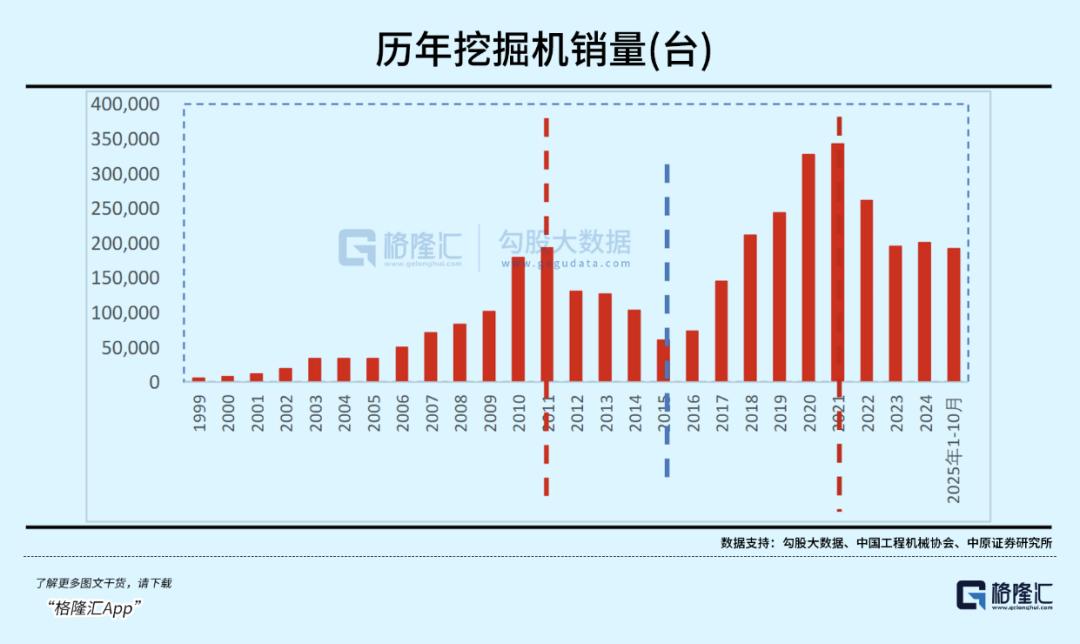
Core Viewpoint - The mechanical industry is experiencing a dual opportunity of technological iteration and demand expansion, becoming a core pillar for high-quality development of the real economy [1] Group 1: Mechanical Industry Overview - Domestic companies are accelerating breakthroughs in key technologies such as high-end machine tools and industrial robots, leading to a simultaneous increase in both volume and price [1] - The 14th Five-Year Plan emphasizes high-level technological self-reliance and control over the industrial chain, indicating strong future support for the basic components industry [1] - The "Mechanical Industry Stabilization Growth Work Plan (2025-2026)" targets an average annual revenue growth rate of 3.5%, aiming to exceed 10 trillion yuan [1] Group 2: Engineering Machinery - The engineering machinery sector is characterized by significant cyclical attributes, with equipment updates and export expansion being the main demand drivers [3] - The new equipment update cycle is expected to begin in 2025, following the previous cycle from 2016 to 2021, and is projected to last until 2030 [3] - In Q3 2025, the revenue of the engineering machinery sector reached 2,449.72 billion yuan, with a year-on-year increase of 11.49% [6] Group 3: Shipbuilding Industry - In the first nine months of 2025, China's shipbuilding industry completed a total of 38.53 million deadweight tons, a year-on-year increase of 6.0% [7] - The industry maintains a leading global position, with a 53.8% share of global completed shipbuilding volume [7] - The shipbuilding sector's revenue in Q3 2025 was 1,191.5 billion yuan, reflecting a year-on-year growth of 17.57% [10] Group 4: Lithium Battery Equipment - The lithium battery equipment sector is witnessing a recovery in demand, driven by the explosive growth in domestic and international energy storage markets [14] - In Q3 2025, the revenue of the lithium battery equipment sector reached 263.32 billion yuan, with a year-on-year increase of 8.75% [17] - The industry is transitioning from a phase of "scale expansion" to "quality improvement," supported by effective policies and expanding demand [14] Group 5: Investment Outlook - The engineering machinery sector is expected to continue its recovery in 2025, with a confirmed bottom and the initiation of an equipment update cycle [21] - The shipbuilding industry is in a prolonged recovery phase, with a focus on high-value orders and structural optimization [21] - The lithium battery equipment sector is benefiting from the growth of new energy vehicles and energy storage demand, indicating a reversal in supply and demand dynamics [21]

A股本轮上涨行情基础并未改变,短期调整或带来布局良机
Sou Hu Cai Jing· 2025-11-23 23:15
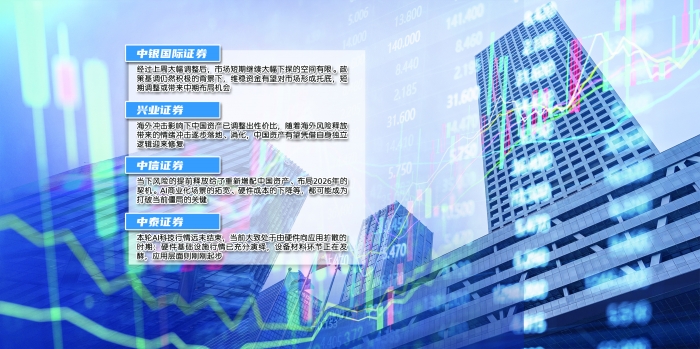
上周,避险情绪主导全球金融市场,全球主要股市悉数下跌,其中科技股波动幅度显著。在这一传导效 应下,A股市场同样经历调整,上证指数失守3900点。新能源、光伏、电力设备等板块回调明显,银 行、船舶制造、消费等少数概念相对抗跌。对于近期市场的波动,券商研报分析认为,海外"AI泡沫"焦 虑、美联储降息预期回落、资金情绪趋于谨慎等因素共振,引发了全球主要市场联动下挫。在这一背景 下,A股市场也难以完全避免冲击。但支撑本轮中国股市上涨行情的基本面因素并未出现变化。前期热 门主线的估值消化完成后,投资者可积极布局来年春季行情。(上证报) ...
加快产业创新步伐,培育现代化产业体系
Ren Min Ri Bao· 2025-11-23 22:20
第二十届中国经济论坛"医院高质量发展与科技创新"平行 论坛现场,与会嘉宾拍照记录。 张 赫摄 第二十届中国经济论坛"全球经贸新格局:出海的机遇与 挑战"平行论坛现场。 《中国经济周刊》供图 让优良生态成为幸福生活的"绿色增长点" 广东省肇庆市怀集县委书记 于晓军 近年来,广东省怀集县大力传承弘扬"岳山造林"光荣传统,努力探索生态美、产业兴、百姓富的可持续 发展之路。 20世纪70年代,怀集县干部群众在艰苦卓绝的条件下将贫瘠荒山变成万亩林海,铸就了"忠诚奉献、艰 苦创业、团结奋斗、久久为功"的"岳山造林"光荣传统。时光流转,精神永存,怀集县传承光荣传统, 在怀集大地铺展开一幅生态宜居的美丽画卷:全县森林资源面积达393万亩,森林覆盖率达73.88%,森 林蓄积量达1599.2万立方米,年度空气质量优良天数比率稳定在98%以上。 绿水青山就是金山银山。我们坚持发展生态产业,拓宽富民路径,让优良生态成为群众幸福生活的"绿 色增长点"。依托粤港澳大湾区肇庆(怀集)绿色农副产品集散基地这一重要平台,盘活7个国家地理标 志产品,擦亮"岭南蔬菜之乡"品牌,全力打造粤港澳大湾区"菜篮子""果盘子""米袋子""茶罐子"。 怀集 ...

近5000只个股下跌!这一板块,直线拉升
Sou Hu Cai Jing· 2025-11-23 20:10
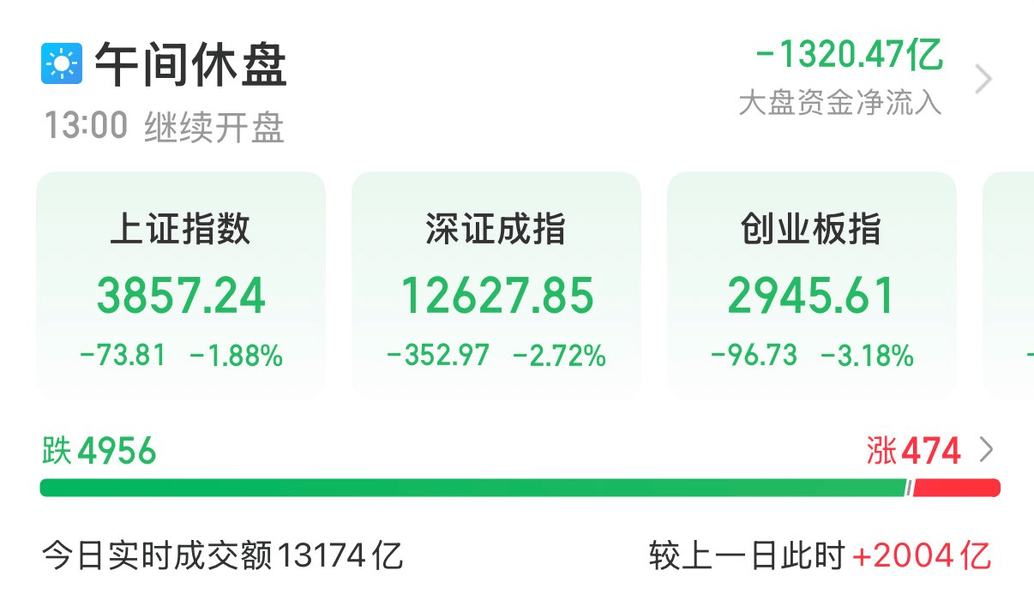
Market Overview - On November 21, A-shares experienced a collective adjustment, with the Shanghai Composite Index falling by 1.88%, the Shenzhen Component Index by 2.72%, and the ChiNext Index by 3.18%. The North China 50 Index decreased by 2.78%. The total trading volume in the Shanghai and Shenzhen markets reached 1.3174 trillion yuan, an increase of 200.4 billion yuan compared to the previous day. Over 4,900 stocks in the market declined [1]. Sector Performance - The China Shipbuilding Industry was active, while sectors such as batteries, energy metals, and silicon energy experienced adjustments [3]. Asian Market Trends - The Asia-Pacific markets opened sharply lower, following the overnight decline in U.S. stocks. The South Korean stock market saw significant drops, with the KOSPI index gapping down and breaking below the 4,000 and 3,900 points, with a decline exceeding 4% at one point. The Japanese stock market also faced similar declines, with the Nikkei 225 index dropping over 2% and falling below the 49,000 points mark, with a drop of over 1,000 points during the session [6].
A股本轮上涨行情基础并未改变短期调整或带来布局良机
Shang Hai Zheng Quan Bao· 2025-11-23 18:02
Market Overview - The recent global market downturn, driven by heightened risk aversion, has led to a significant adjustment in the A-share market, with the Shanghai Composite Index falling below 3900 points [2][3] - Key sectors such as new energy, photovoltaic, and power equipment have experienced notable pullbacks, while banking, shipbuilding, and consumer sectors have shown relative resilience [2] External Influences - The adjustment in the A-share market is primarily attributed to external factors, including concerns over the "AI bubble," a retreat in expectations for Federal Reserve interest rate cuts, and a cautious shift in market sentiment [3][4] - The volatility in global risk assets has been exacerbated by year-end fund settlement periods, prompting some investors to lock in profits and rankings through selling [3] Fundamental Support - Despite recent market fluctuations, the fundamental factors supporting the current rally in the Chinese stock market remain intact, including steady macroeconomic recovery, improved competitiveness of key industries, and enhanced capital market positioning [4][5] - The adjustment is viewed as a short-term disturbance rather than a fundamental shift in market dynamics, with expectations for a potential recovery as market sentiment stabilizes [4] Investment Opportunities - The current market adjustment presents a strategic opportunity for investors to reposition their portfolios ahead of the anticipated spring market rally in 2026 [6] - There is a consensus among institutions that the internal certainties of the Chinese market, such as new growth momentum and clear policy direction, will not be adversely affected by external disturbances [5][6] - Following the adjustment, sectors such as banking and insurance, along with consumer stocks with stable fundamentals, may present rotation opportunities before the technology sector regains momentum [6]






如何看待近期市场的调整?| 每周研选
Shang Hai Zheng Quan Bao· 2025-11-23 15:05
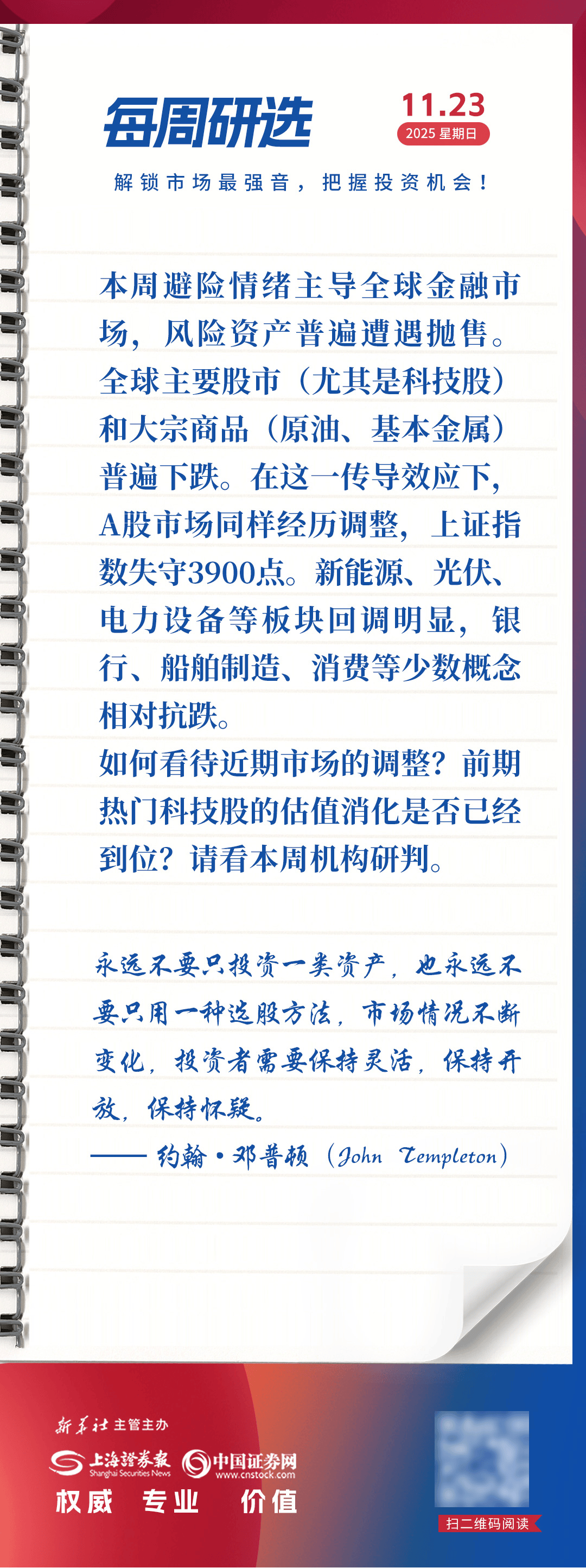
Core Viewpoint - The recent global financial market is dominated by risk aversion, leading to widespread sell-offs in risk assets, including major stock markets and commodities, with A-shares also experiencing adjustments [1] Group 1: Market Adjustments - The A-share market has seen significant adjustments, with the Shanghai Composite Index falling below 3900 points, particularly in sectors like new energy, photovoltaic, and power equipment [1] - The current market adjustment is viewed as a short-term disturbance rather than a fundamental change in the upward trend of the Chinese stock market, driven by macroeconomic recovery and improved corporate fundamentals [7][11] Group 2: Investment Opportunities - The early release of risks in the market presents an opportunity for investors to reallocate assets towards A-shares and Hong Kong stocks, particularly for those looking to position for 2026 [3] - After the current adjustments, the spring market is expected to be more promising, with technology growth likely to be a key theme [4][19] Group 3: Sector Performance - Defensive sectors such as banking and insurance are expected to show resilience during the current market turbulence, while high-dividend stocks and consumer goods may present rotation opportunities [10] - The AI sector's current phase is seen as just beginning, with significant growth potential remaining, as the market transitions from hardware to application layers [15] Group 4: Future Outlook - The market is anticipated to stabilize post-adjustment, with a potential recovery in Chinese assets driven by internal factors such as new economic momentum and clear policy direction [9][18] - The historical pattern suggests that the current adjustments align with typical seasonal fluctuations, with expectations for a spring rally to commence soon [16]
上市公司因技术创新导致年报错报,北京金融法院一审宣判
Xin Jing Bao· 2025-11-23 14:49
北京金融法院审理后认为,案涉行为构成虚假陈述。考虑到某上市公司股价波动与大盘同步,虚假陈述 行为对市场无独立影响,所涉金额整体占比较小且未改变盈亏性质,对投资者决策造成影响的可能性极 小,北京金融法院认为案涉虚假陈述不具有重大性。 在法官看来,案涉会计差错的发生存在部分客观因素。本案中,某上市公司的下属子公司制造的某船, 是为了打破国外技术垄断和封锁、填补国家技术空白的新型深潜水工作母船。该艘船系全球首制,并无 先例可以借鉴。正是由于建造周期长,随着技术的研发和投入,造船成本和最终订单结算价格可能会由 此上涨,导致存货减值数据出现差错。由此可见,某上市公司的存货减值数据出现差错并非出于主观恶 意,更多的原因在于技术创新过程中存在的客观不确定性因素,且考虑该差错整体占比较小,也并未导 致某上市公司当年的盈亏性质发生根本性的改变。 值得关注的是,法院认为,案涉的全球首制船,属于新质生产力。新质生产力是以科技创新为主导、实 现关键性颠覆性技术突破而产生的生产力。科技创新是新质生产力发展的核心要素,科技创新通过技术 突破和产业升级为新质生产力的发展提供高质量的平台和增长点。因此,应当对技术创新过程中的非主 观恶意轻微 ...
每周研选 | 如何看待近期市场的调整?
Sou Hu Cai Jing· 2025-11-23 12:59
癌周研选 本周避险情绪主导全球金融市场,风险资产普遍遭遇抛售。全球主要股市(尤其是科技股)和大宗商品(原油、基本金属)普遍下跌。在这一传导效应 下,A股市场同样经历调整,上证指数失守3900点。新能源、光伏、电力设备等板块回调明显,银行、船舶制造、消费等少数概念相对抗跌。 11.23 2025 星期日 如何看待近期市场的调整?前期热门科技股的估值消化是否已经到位?请看本周机构研判。 解 锁 市场 最 强 音,把 握 投 资 机 会! 本周避险情绪主导全球金融市 场,风险资产普遍遭遇抛售。 全球主要股市(尤其是科技股) 和大宗商品(原油、基本金属) 普遍下跌。在这一传导效应下, A股市场同样经历调整,上证指 数失守3900点。新能源、光伏、 电力设备等板块回调明显,银 行、船舶制造、消费等少数概念 相对抗跌。 如何看待近期市场的调整?前期 热门科技股的估值消化是否已经 申万宏源:调整后春季行情更值得期待 9月以来AI产业链已处于高位震荡阶段。与此同时,近期美联储货币宽松低于预期,这进一步引发了全球高风险资产普跌。调整背后的本质还是资产性价 比降低,脆弱性提高,对流动性冲击的敏感度提升。对比2014年初的创业板、 ...
目标10万亿!新机遇来了!
格隆汇APP· 2025-11-23 07:17
Group 1 - The mechanical industry is experiencing dual opportunities from technological iteration and demand expansion, becoming a core pillar for high-quality development of the real economy [2] - Domestic companies are accelerating breakthroughs in key technologies such as high-end machine tools and industrial robots, leading to a simultaneous increase in volume and price, providing rich investment targets for the capital market [3] - The "14th Five-Year Plan" emphasizes high-level technological self-reliance and the autonomy of the industrial chain, indicating strong policy support for the basic components industry over the next five years, significantly accelerating the process of domestic substitution [3] Group 2 - The engineering machinery sector has significant cyclical attributes, with core demand drivers being the replacement of existing equipment and export expansion, especially as the previous investment cycle from 2016-2021 will lead to a new equipment replacement cycle starting in 2025 [5] - The engineering machinery industry is expected to enter an upward cycle starting in 2024, with major products showing continuous positive growth, confirming the recovery trend in the industry [10] Group 3 - The shipbuilding industry is in a recovery cycle, with significant improvements in corporate profitability, as evidenced by a 17.57% year-on-year increase in revenue to 1191.5 billion yuan in Q3 2025, and a substantial 88.5% increase in net profit [15] - China's shipbuilding industry maintains a leading global position, with a completion volume of 38.53 million deadweight tons in the first nine months of 2025, accounting for 53.8% of the global market [12] Group 4 - The lithium battery equipment sector is witnessing a recovery, with a revenue increase of 8.75% year-on-year to 263.32 billion yuan in Q3 2025, and a significant turnaround in net profit [25] - The industry has completed a bottoming out and is entering a recovery phase, with leading companies experiencing nearly doubled net profit growth [28] Group 5 - The investment outlook for the mechanical industry indicates a new cycle of investment and growth, with engineering machinery, shipbuilding, and lithium battery equipment sectors all showing signs of recovery and demand improvement [30]

别被暴跌吓倒!下周或现黄金坑
Sou Hu Cai Jing· 2025-11-23 03:30
Core Viewpoint - The global capital markets experienced a significant sell-off of risk assets, with the A-share market also declining sharply, indicating a shift in investor sentiment towards defensive sectors [1] Market Performance - The Shanghai Composite Index fell by 3.90%, the Shenzhen Component dropped by 5.13%, and the ChiNext Index decreased by 6.15%, all reaching new lows [1] - Over 5,000 stocks declined, with nearly 100 hitting the daily limit down, reflecting extreme market pessimism [1] - Defensive sectors such as shipbuilding, cultural media, and agriculture showed resilience, while previously popular sectors like energy metals, batteries, and photovoltaic equipment faced significant losses [1] Global Market Context - The Hang Seng Index fell by 5.09%, the S&P 500 dropped by 1.95%, and the Nasdaq decreased by 2.74%, influenced by cooling expectations for interest rate cuts from the Federal Reserve and instability in the U.S. AI narrative [1] - Federal Reserve officials began to signal dovish stances, with New York Fed President Williams stating there is still room for rate cuts, potentially alleviating liquidity concerns [1] Technical Analysis - The Shanghai Composite Index has broken below the lower Bollinger Band, indicating significant short-term overselling [2] - Following the panic selling, some institutional funds are starting to position themselves against the trend, increasing the likelihood of a technical and emotional market recovery [2] Key Factors to Watch - Upcoming U.S. economic data, including September retail sales and PPI, could influence market sentiment, especially if they underperform, potentially reinforcing expectations for a December rate cut [3] - International events such as the progress of the Russia-Ukraine peace plan and the UK's autumn budget may also impact market emotions [4] Sector Opportunities - Performance certainty will remain a core theme, with technology sectors like AI applications, robotics, and storage chips showing potential for recovery due to their recent declines and technological advancements [4] - Low-valuation, high-dividend sectors like banks and utilities are suitable for risk-averse investors [4] Investment Strategy - Prioritize high-quality stocks with solid performance and significant pullbacks while avoiding speculative stocks [5] - Continuous monitoring of Federal Reserve policy and global economic data is crucial, as these will be key variables determining market direction [6] Market Signals - A successful market rebound, even if limited, would indicate the market's self-repair mechanism is functioning, suggesting underlying resilience [6] - Conversely, a failure to rebound would signal that market confidence is still fragile and that a trend reversal is not yet imminent [6][7] Observational Approach - Investors should remain vigilant, recognizing that the market may still be searching for a true bottom, requiring patience and careful observation [7] - Quality rebounds should be accompanied by increasing trading volume and orderly rotation of market hotspots, while weak performance may indicate deeper adjustment pressures [8]