咖啡

Search documents
康师傅少卖了11亿元:饮料、方便面都在跌丨消费参考
2 1 Shi Ji Jing Ji Bao Dao· 2025-08-12 00:08
Summary of Key Points Core Viewpoint - 康师傅 is experiencing significant growth pressure, with a decline in revenue despite an increase in net profit, indicating a shift in consumer preferences and market dynamics [1][2]. Revenue Performance - 康师傅 reported a revenue of approximately 400.92 billion yuan for the first half of 2025, a year-on-year decrease of 2.7%, with sales dropping by over 1.1 billion yuan [1]. - The company's net profit attributable to shareholders was 22.71 billion yuan, reflecting a year-on-year increase of 20.5% [1]. Segment Analysis - The sales of 康师傅's main product categories are declining: - Instant noodles sales decreased by 2.5% to 134.65 billion yuan, with container noodles down 1.3% to 67.71 billion yuan, high-priced bag noodles down 7.2% to 50.92 billion yuan, and mid-priced bag noodles up 8.0% to 13.72 billion yuan [2]. - The beverage segment saw a revenue decline of 2.6% to 263.59 billion yuan, with tea drinks down 6.3%, water down 6.0%, and fruit juice down 13.0%, while carbonated and other beverages increased by 6.3% [3]. Market Strategy - 康师傅 is reducing its distribution network in response to market pressures, with the number of marketing agents decreasing from 67,215 to 63,806 and direct retailers from 220,623 to 219,124 [4]. Competitive Landscape - In contrast, the food business of 统一企业 is performing well, with a revenue increase of 8.8% to 53.8 billion yuan, highlighting a trend towards "consumption upgrade" in the market [2][3].
中国给出5年大单,1.3万亿替巴西兜底,巴总统:对中国感激不尽
Sou Hu Cai Jing· 2025-08-11 22:59
Core Viewpoint - The article discusses China's strategic support to Brazil in response to the aggressive tariff policies imposed by the Trump administration, highlighting the economic and political implications of this support for Brazil and the broader geopolitical landscape [1][3][4]. Economic Impact - The Trump administration imposed tariffs as high as 50% on Brazilian goods, severely impacting key sectors such as coffee and beef, leading to a significant drop in Brazil's foreign exchange income [1][3]. - China's expected foreign trade volume exceeds $1.3 trillion this year, providing substantial economic support to Brazil, akin to a "super ammunition depot" [3][5]. - In July, Brazil's soybean exports to China reached 4.812 million tons, reinforcing China's position as Brazil's largest soybean buyer [3]. Political Implications - Following China's support, Brazil's government initiated a formal request for consultations with the World Trade Organization (WTO) regarding the U.S. tariffs, marking a significant step in global resistance against U.S. economic bullying [4]. - The Brazilian government is also investigating corruption cases involving former President Bolsonaro, asserting judicial independence and resisting U.S. interference in domestic affairs [4][5]. Strategic Cooperation - Brazil's advisor praised the "iron friendship" with China, expressing a desire to deepen cooperation within the BRICS framework and enhance trade relations [5]. - The deepening of China-Brazil trade cooperation is expected to stabilize supply chains and enhance China's ability to counter U.S. decoupling strategies [5]. - Brazil has increased its reserve of Renminbi to 12% and signed a 190 billion Renminbi currency swap agreement with China, facilitating direct trade settlements in local currencies [5]. Conclusion - The economic defense strategy culminated in a win-win scenario for both China and Brazil, with China solidifying its strategic partnership and advancing the internationalization of the Renminbi, while the U.S. risks diminishing its global influence due to its tariff policies [5].


财经观察:大批巴西咖啡或将来华,中国商家准备好了吗?
Huan Qiu Shi Bao· 2025-08-11 22:45
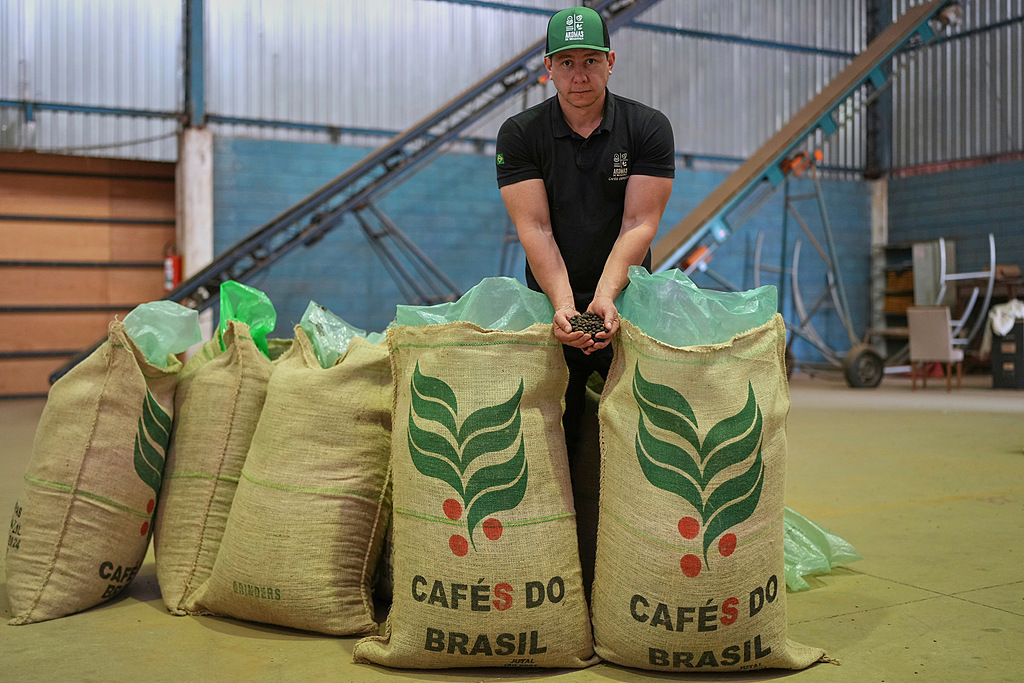
【环球时报记者 陈子帅 环球时报驻巴西特派记者 陈海琪】 编者的话 :"在美国对巴西产品征收50%关税之际,中国极力赞扬'巴西咖啡豆深受消费 者喜爱'。"美国有线电视新闻网(CNN)近日以此为题报道称,中国已经批准183家巴西咖啡出口商获得为期5年的对华销售许可。"这对关税下愁 眉不展的巴西咖啡出口商来说无疑是一个好消息。"路透社评价道。巴西是世界最大的咖啡生产国,约占世界产量的1/3。伴随着更多巴西咖啡豆 进入中国市场,全球咖啡产业格局将面临怎样的重构?两国业界人士对此又作何评价?《环球时报》记者对此进行了调查。 巴西种植户:美国关税下,一切都在崩塌 据路透社报道,美国于8月6日起对部分巴西产品征收50%的关税,这对大宗商品贸易商和巴西咖啡出口商来说是一个挑战,后者每年卖给美国咖 啡加工商约800万袋咖啡,如今他们急需为这些产品寻找新的市场。巴西业界人士表示,关税不仅将冲击该国数十万个家庭的生计,还迫使咖啡出 口商加快开拓包括中国在内的新兴市场,以应对美国贸易保护主义带来的不确定性。 据报道,巴西全国有逾30万咖啡种植户,其中75%是小农户。来自里约热内卢州波尔丘库拉镇的咖啡种植户达席尔瓦在收到美国加征关税 ...
被投诉喝出苍蝇,加盟商承受巨大压力,库迪咖啡能否完成5万店目标?
Xin Jing Bao· 2025-08-11 14:39
Group 1 - The core issue revolves around food safety complaints against Kudi Coffee, with multiple consumers reporting finding foreign objects, including flies, in their drinks [1][3][4] - Kudi Coffee has rapidly expanded its store count, aiming for 50,000 locations by the end of 2025, but faces skepticism from industry insiders regarding the feasibility of this target [2][9] - The company has introduced a convenience store model as part of its strategy to penetrate the coffee market further, but this has led to challenges for franchisees, including financial losses due to high operational costs [6][7][8] Group 2 - Kudi Coffee's marketing strategy includes a low-price approach, with drinks priced at 9.9 yuan, which has contributed to its rapid growth in a competitive market [1][2] - The company has faced criticism for its handling of food safety issues, with consumers demanding higher compensation than what has been offered [3][4][5] - The convenience store initiative has been met with mixed results, as franchisees report difficulties in profitability and competition from other brands [7][8][11] Group 3 - Kudi Coffee's rapid expansion has resulted in market saturation in some areas, leading to complaints from franchisees about declining sales due to the opening of new stores nearby [11][12] - The company has attempted to diversify its offerings by introducing food items like boxed meals and breakfast options, but these efforts have not yet proven to be significantly profitable [10][11] - Kudi Coffee's growth strategy is under scrutiny as it competes with established brands like Luckin Coffee and others, which have shown strong performance and expansion [12]
二八酱奶茶爆火,七鲜美食MALL成哈尔滨网红新地标丨创新消费力
Bei Jing Shang Bao· 2025-08-11 13:54
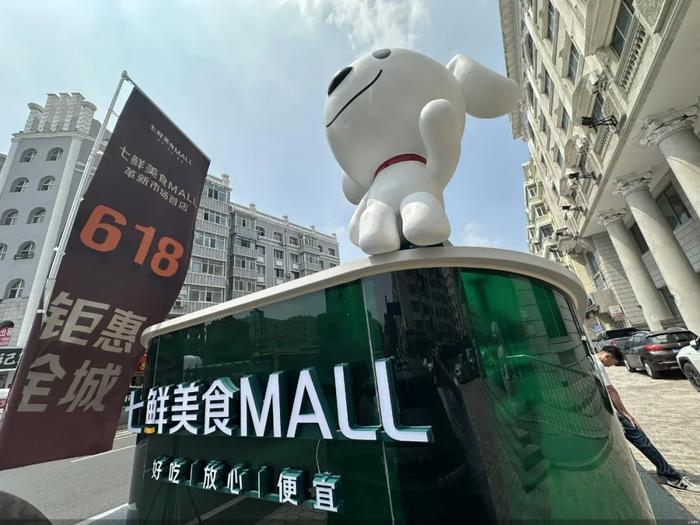
Core Insights - JD.com has launched the innovative "Qixian Meishi MALL," a 2,300 square meter food complex that attracts over 20,000 daily visitors, comparable to larger shopping centers [1] - The MALL features 30 dining brands, including traditional Chinese brands and trendy snacks, and aims to enhance the restaurant industry's supply chain efficiency [1][12] - JD.com emphasizes a "quality dine-in + quality takeout" model, ensuring high standards through live kitchen broadcasts and a dual evaluation system for both dine-in and delivery services [2][4] Company Developments - The MALL has successfully transformed brands like Coffee Bear and Leshou Yufang from B2B suppliers to consumer-facing retail brands, achieving significant sales growth [5][6] - Coffee Bear has reached an average daily sales of 300 cups, with monthly sales exceeding twice that of leading coffee chains [5] - Leshou Yufang has seen a sales increase of 2-3 times since opening, selling 1,800 ducks in a week, which is equivalent to a month's sales at other locations [6][7] Industry Trends - The MALL has become a new landmark in Harbin, driving innovation among participating brands, such as the launch of the popular "Erba Sauce Milk Tea" by Liu Biju [7] - Brands are adapting to consumer preferences by optimizing their offerings and reducing operational costs, with some reducing their store sizes and menu prices significantly [8][9] - The collaboration with JD.com allows brands to leverage advanced supply chain solutions, reducing initial investment costs from 3 million to 200,000 yuan [11][12] Supply Chain Strategy - JD.com focuses on enhancing supply chain efficiency, which is a core advantage of the company, by providing logistical support and reducing costs for restaurant partners [13][14] - The MALL's model aims to create a win-win situation for merchants, consumers, and delivery personnel by optimizing the supply chain and improving service quality [12][14] - The integration of digital technology in the supply chain is expected to enhance food preparation and delivery efficiency, contributing to the overall success of the MALL [14]

视频投稿精选 | 如果商战也会“邪修”
Hu Xiu· 2025-08-11 12:57
Core Insights - The article discusses a video contest themed around "business warfare," showcasing unconventional approaches to storytelling in the commercial world [1] Group 1: Contest Overview - The contest invited creators to submit videos focusing on various aspects of business competition, with an emphasis on unique narratives rather than traditional brand or price wars [1] - Five standout videos were selected based on metrics such as views and interactions, highlighting innovative takes on business conflicts [1] Group 2: Featured Videos - Video 1: "Behind the Scenes of Wahaha's Inheritance Battle" by "Self-Talking CEO," praised for its detailed exploration of a controversial topic, engaging viewers for 30 minutes [2] - Video 2: "Why Did Dumpling King 'Yuanji Yunjiao' Fail?" by "Big Eye Theory," addressing food safety concerns that resonate with consumers [4] - Video 3: "Government Intervention in Food Delivery Wars: What’s Next for the Single Economy?" by "Xijing Comrade," which garnered nearly 2 million views and over 8,000 comments, reflecting the interests of young singles [6] - Video 4: "Discussing the Power Games of Hong Kong's 'Four Families' Starting from 'Nezha 2'" by "Canned Fish Ball," noted for its engaging narrative style [8] - Video 5: "Starbucks Should Pay You Instead of the Other Way Around" by "Half Buddha," recognized for its humorous and thought-provoking content [12] Group 3: Conclusion - The article emphasizes that business conflicts can occur in various settings beyond traditional corporate environments, illustrating the diverse nature of commercial competition [12] - The contest encourages further participation from creators, inviting them to share their unique perspectives on business themes [13]
“普洱茶第一股”不好当,澜沧古茶上半年预亏超2800万元
Guan Cha Zhe Wang· 2025-08-11 11:11
Group 1: 澜沧古茶业绩预告 - 澜沧古茶预计上半年净亏损2800万元-3200万元,收入约为人民币1.17亿元-1.2亿元,同比下降38.5%至40.0% [1] - 亏损主要原因是营业收入下降,受终端消费市场复苏缓慢和公司管理层调整影响 [1] - 2024年营业收入为3.61亿元,同比下滑31.5%;毛利为1.88亿元,同比下滑46.8% [1] Group 2: 云南咖啡产业数智化项目 - 云南咖啡产业启动全球首个山地农业低空数智化系统工程改造项目,采用无人机、区块链和AI技术 [2] - 无人机生态矩阵可减少生物药剂用量40%,山地物流网络可压缩鲜果加工时效67% [2] - 该项目旨在提升云南咖啡的加工率和降低物流成本,推动农业工业化 [2] Group 3: 吴裕泰跨界咖啡业务 - 吴裕泰在北京开设"牛牛咖啡&面包"烘焙咖啡馆,主营烘焙咖啡业务,茶叶销售为副业 [3] - 产品包括桂花拿铁和焙茶饼干,价格在9.9-35元之间,融合茶元素特色 [3] - 吴裕泰此前已有多次跨界餐饮尝试,推出手工茶饼干和冰淇淋等产品 [3] Group 4: IFBH椰子水品牌评级 - 里昂首次覆盖泰国椰子水品牌IFBH,给予目标价43港元及"跑赢大市"评级 [4] - IFBH在内地和香港市场具备竞争优势,有望把握椰子水快速普及的机遇 [4] - 公司在采购、产品质量和品牌价值等方面有竞争优势,可能进一步扩展线下业务 [4] Group 5: 葛根茶销量激增 - 演员赵露思在直播中推荐四川广元产野生葛根茶,销量激增200倍,从10余单飙升至2000多单 [5] - 单日进店人数超4万人次,店铺粉丝数从100多暴涨至破千,因库存告罄商品被迫下架 [5] - 品牌负责人表示单日订单量相当于过去七八年的销量总和,产能压力巨大 [5]
茶咖日报|“普洱茶第一股”不好当,澜沧古茶上半年预亏超2800万元
Guan Cha Zhe Wang· 2025-08-11 11:00
Group 1: 澜沧古茶业绩预告 - 澜沧古茶预计上半年净亏损在2800万元至3200万元之间,收入约为1.17亿元至1.2亿元,同比下降38.5%至40.0% [1] - 亏损主要原因是营业收入下降,受终端消费市场复苏缓慢和公司管理层调整影响 [1] - 2024年营业收入为3.61亿元,同比下滑31.5%,毛利为1.88亿元,同比下滑46.8% [1] Group 2: 云南咖啡产业数智化项目 - 云南咖啡产业数智化联盟启动全球首个山地农业低空数智化系统工程改造项目,利用无人机、区块链和AI技术 [2] - 无人机生态矩阵可减少生物药剂用量40%,山地物流网络可压缩鲜果加工时效67% [2] - 该项目旨在提升云南咖啡的加工率和物流效率,助力咖啡产业转型 [2] Group 3: 吴裕泰跨界咖啡业务 - 吴裕泰在北京开设了名为"牛牛咖啡&面包"的烘焙咖啡馆,主营烘焙咖啡业务,茶叶销售为副业 [3] - 新店提供多种茶元素特色的咖啡和烘焙产品,价格在9.9元至35元之间 [3] - 吴裕泰此前已有多次跨界餐饮的尝试,包括推出手工茶饼干和冰淇淋等 [4] Group 4: IFBH椰子水品牌 - 里昂首次覆盖泰国椰子水品牌IFBH,给予目标价43港元及"跑赢大市"评级 [5] - IFBH在内地和香港市场具备竞争优势,有望把握椰子水快速普及的机遇 [5] - 公司在采购、产品质量和品牌价值等方面具有优势,可能进一步扩展线下业务 [5] Group 5: 葛根茶销量激增 - 演员赵露思在直播中推荐四川广元产的野生葛根茶,销量激增200倍,从原月销10余单飙升至2000多单 [6] - 直播后店铺粉丝数从100多暴涨至破千,单日订单量相当于过去七八年的销量总和 [6] - 品牌负责人表示因产能压力已紧急招募临时工以满足订单需求 [6]

被投诉喝出苍蝇、加盟商苦于门店加密,库迪咖啡如何开出5万店?
Bei Ke Cai Jing· 2025-08-11 09:36
Group 1: Company Overview - Kudi Coffee has rapidly expanded its store count, aiming for 50,000 stores by the end of 2025, with approximately 15,000 stores currently operational, indicating a need to open about 8,750 stores per month in the remaining four months of the year [2][10][13] - The company has faced multiple food safety complaints, including incidents where consumers found foreign objects in their drinks, raising concerns about its food safety standards [1][3][4][6] Group 2: Business Strategy - Kudi Coffee has launched a "Touch Accessible" plan to enter the convenience store sector, aiming to leverage its brand and product offerings to enhance revenue [2][7][10] - The company has attempted to diversify its product offerings by introducing ready-to-eat meals and snacks in its stores, aiming to attract more customers [10][12] Group 3: Market Challenges - The convenience store business has faced significant challenges, including high operational costs and competition, leading to some franchisees reporting losses [8][9][12] - The rapid expansion strategy has led to market saturation in certain areas, with reports of multiple Kudi Coffee stores opening within close proximity to each other, negatively impacting sales [13] Group 4: Competitive Landscape - Kudi Coffee is competing with established brands like Luckin Coffee, which has over 26,206 stores, and other emerging brands like Lucky Coffee, which aims to surpass 10,000 stores by early 2025 [13] - The coffee market in China is highly competitive, with many players vying for market share, making Kudi Coffee's ambitious expansion plans challenging to execute successfully [9][13]
40元咖啡接连“败走”中国,谁还买单?
东京烘焙职业人· 2025-08-11 08:33
Core Viewpoint - Peet's Coffee, referred to as the "ancestor of Starbucks," is facing significant challenges in the Chinese market, including store closures and increased competition from lower-priced coffee brands [7][8][15]. Industry Trends - Peet's Coffee has closed several key locations in China, including its first store in South China, which was considered a benchmark for its market presence [8][11]. - The brand's expansion has slowed, with new store openings dropping from 98 in 2023 to 51 in 2024, and only 16 in the first half of 2025 [11]. - Despite a reported 23.8% organic growth in adjusted EBIT and a global sales increase of 7.9% to €88.37 billion in 2024, Peet's Coffee is experiencing anxiety over its market position in China [11][12]. Market Challenges - The premium coffee market in China is facing a collective struggle, with brands like Seesaw Coffee also experiencing significant store closures and financial difficulties [15][17]. - The overall growth rate of the premium coffee market in China is projected to decline from 25% in 2023 to 12% in 2025, contrasting with a global growth forecast of 9.2% [24]. - The average consumer price for coffee is decreasing, with the average takeout coffee price dropping from ¥63.8 in 2020 to ¥53.5 in 2023 [30][32]. Competitive Landscape - The coffee market is becoming increasingly saturated, with a 19.54% year-on-year increase in the registration of coffee-related businesses, reaching approximately 26,400 in the first half of 2025 [29]. - Brands like M Stand and %Arabica are also facing challenges, with M Stand experiencing a significant reduction in store openings and closures [21][28]. Consumer Behavior - A shift in consumer preferences is evident, with 80% of coffee consumers making decisions based on price, and only 4% willing to pay over ¥25 for coffee [35]. - The perception of coffee is evolving towards a more everyday necessity, leading to a decline in the appeal of premium coffee brands among younger consumers [39]. Strategic Recommendations - To navigate the current challenges, premium coffee brands need to abandon the "Western superiority complex" and focus on local flavors and cultural narratives to create a unique market position [41][42]. - The industry is undergoing a significant transformation, and brands must find a balance in cost control, product innovation, and localization to meet the changing demands of Chinese consumers [42].