自动驾驶

Search documents
【看新股】主线科技港股IPO:L4级自动驾驶卡车龙头 博世、蔚来等参投
Zhong Guo Jin Rong Xin Xi Wang· 2025-12-19 00:16
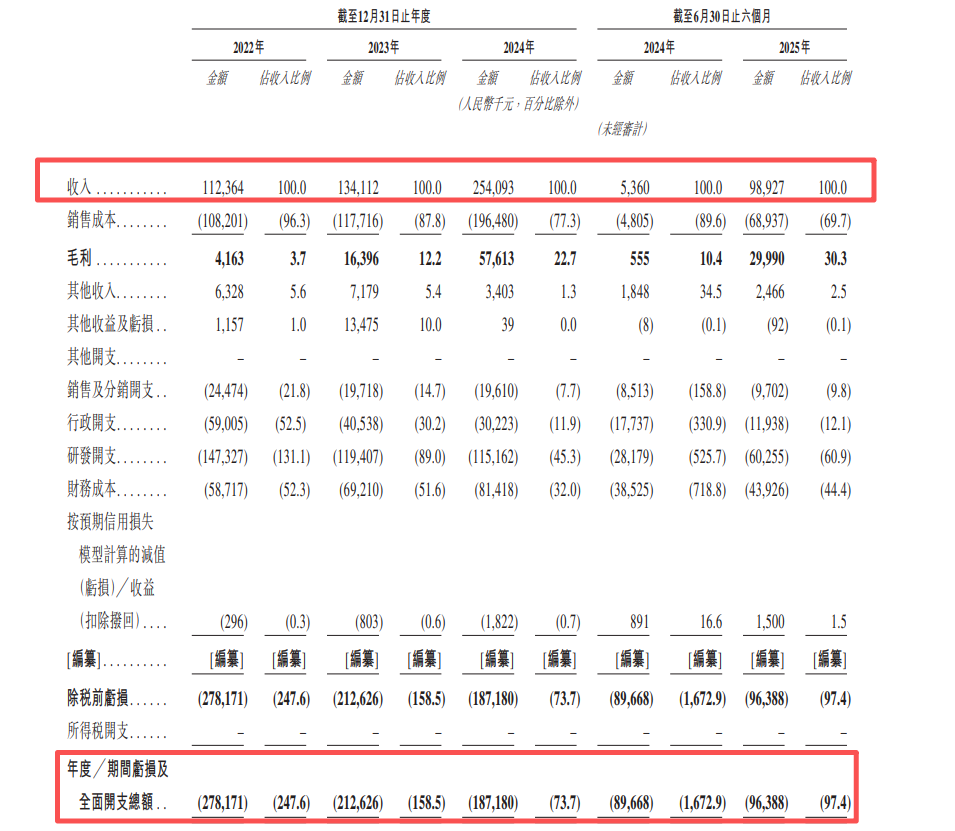
Core Viewpoint - Mainline Technology (Beijing) Co., Ltd. has submitted an IPO application to the Hong Kong Stock Exchange, aiming to raise funds for enhancing R&D capabilities, market expansion, and product brand ecosystem development, despite having accumulated losses exceeding 600 million yuan since 2022 [1][10]. Group 1: Company Overview - Mainline Technology, established in 2017, is a leading provider of L4 autonomous driving trucks and solutions in China, focusing on a "vehicle-terminal-cloud" integrated product ecosystem [2]. - The company has delivered a total of 830 AiTrucks and 349 AiBoxes, with additional orders for 821 AiTrucks and 920 AiBoxes [2]. Group 2: Financial Performance - In 2022, 2023, 2024, and the first half of 2025, the company reported revenues of 112.36 million yuan, 134.11 million yuan, 254.09 million yuan, and 98.93 million yuan, respectively [3]. - The net losses for the same periods were 278.17 million yuan, 212.63 million yuan, 187.18 million yuan, and 96.39 million yuan, totaling over 600 million yuan in losses since 2022 [4]. Group 3: Profitability and Margins - The gross margin improved from 3.7% in 2022 to 22.7% in 2024, with a further increase to 30.3% in the first half of 2025 [5]. Group 4: Customer Concentration - The company has a high customer concentration, with revenue from the top five customers accounting for 79.4%, 64.6%, 67.9%, and 73.7% during the specified periods [7]. Group 5: Funding and Investment - The IPO proceeds will be used for R&D enhancement, production and supply chain development for core components, market expansion, strategic investments, and general corporate purposes [10].


端到端落地中可以参考的七个Project
自动驾驶之心· 2025-12-19 00:05
Core Viewpoint - The article emphasizes the importance of end-to-end production in autonomous driving technology, highlighting the need for practical experience in various algorithms and applications to address real-world challenges in the industry [2][7]. Course Overview - The course is designed to provide in-depth knowledge on end-to-end production techniques, focusing on key algorithms such as one-stage and two-stage frameworks, reinforcement learning, and trajectory optimization [2][4]. - It includes practical projects that cover the entire process from theory to application, ensuring participants gain hands-on experience [2][12]. Instructor Background - The instructor, Wang Lu, is a top-tier algorithm expert with a strong academic background and extensive experience in developing and implementing advanced algorithms for autonomous driving [3]. Course Structure - The course consists of eight chapters, each focusing on different aspects of end-to-end algorithms, including: 1. Overview of end-to-end tasks and integration of perception and control systems [7]. 2. Two-stage end-to-end algorithm frameworks and their advantages [8]. 3. One-stage end-to-end algorithms with a focus on performance [9]. 4. Application of navigation information in autonomous driving [10]. 5. Introduction to reinforcement learning algorithms and training strategies [11]. 6. Optimization of trajectory outputs using various algorithms [12]. 7. Post-processing strategies for ensuring reliable outputs [13]. 8. Sharing of production experiences and strategies for real-world applications [14]. Target Audience - The course is aimed at advanced learners with a foundational understanding of autonomous driving algorithms, including familiarity with reinforcement learning and diffusion models [15][17].
清华UniMM-V2X:基于MOE的多层次融合端到端V2X框架
自动驾驶之心· 2025-12-19 00:05
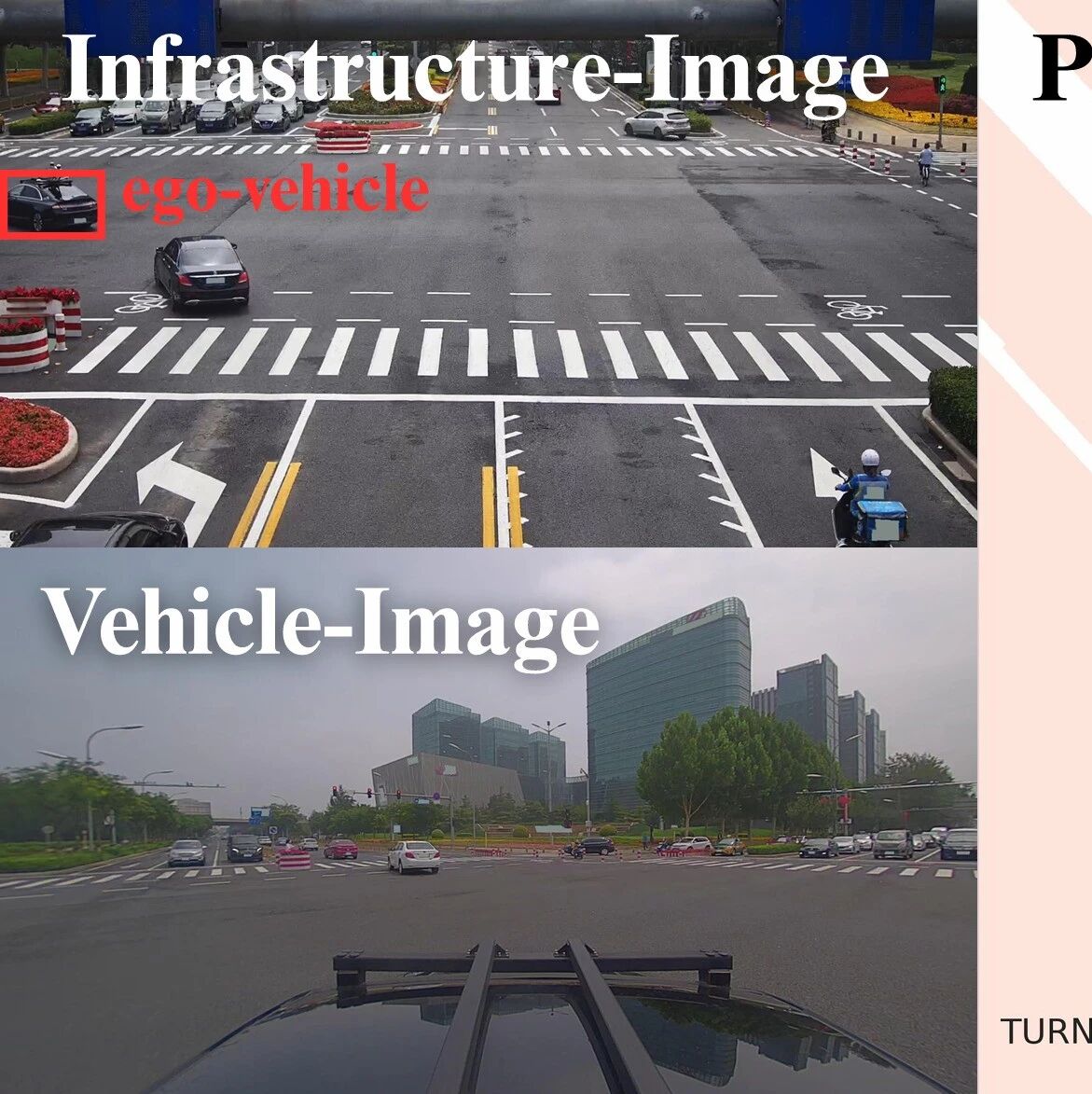
Core Insights - The article discusses the limitations of traditional modular autonomous driving systems and introduces the UniMM-V2X framework, which enhances multi-agent end-to-end systems through multi-level collaboration in perception and prediction [1][3][25] - UniMM-V2X utilizes a mixture of experts (MoE) architecture to improve the adaptability and specialization of perception, prediction, and planning tasks, achieving state-of-the-art (SOTA) performance [1][7][25] Group 1: UniMM-V2X Framework - UniMM-V2X consists of three main components: an image encoder, a collaborative perception module, and a collaborative prediction and planning module, all integrated with MoE architecture [8][24] - The framework enhances planning by integrating information from multiple agents at both perception and prediction levels, significantly improving decision-making reliability in complex scenarios [6][7][8] Group 2: Performance Metrics - The framework demonstrated a 39.7% improvement in perception accuracy, a 7.2% reduction in prediction error, and a 33.2% enhancement in planning performance, showcasing the effectiveness of the MoE-enhanced multi-level collaboration paradigm [7][25] - In the DAIR-V2X benchmark tests, UniMM-V2X achieved the lowest average planning error of 1.49 meters and a collision rate of only 0.12% over 3 seconds, outperforming all baseline models [15][16][25] Group 3: Comparative Analysis - Compared to the leading single-agent driving solution SparseDrive, UniMM-V2X improved mean Average Precision (mAP) by 39.7% and Average Multi-Object Tracking Accuracy (AMOTA) by 77.2% without incurring additional communication costs [17][25] - In motion prediction, UniMM-V2X achieved a minimum Average Displacement Error (minADE) of 0.64 meters and a minimum Final Displacement Error (minFDE) of 0.69 meters, contributing significantly to overall planning performance [19][20][25] Group 4: Multi-Level Fusion and MoE Impact - The multi-level fusion approach ensures high-quality intermediate features are propagated throughout the framework, leading to performance improvements across all modules [22][23] - The integration of MoE in both the encoder and decoder yields the best results, enhancing environmental understanding and capturing complex motion behaviors effectively [22][23] Group 5: Practicality and Reliability - UniMM-V2X significantly reduced communication costs by 87.9 times compared to traditional methods while maintaining planning quality, achieving a frame rate of 5.4 FPS [24][25] - The framework demonstrates reliability and scalability under various bandwidth conditions, making it suitable for real-world autonomous driving applications [24][25]
两大自动驾驶巨头“内讧”:谁在吹牛?谁在数钱?
汽车商业评论· 2025-12-18 23:05
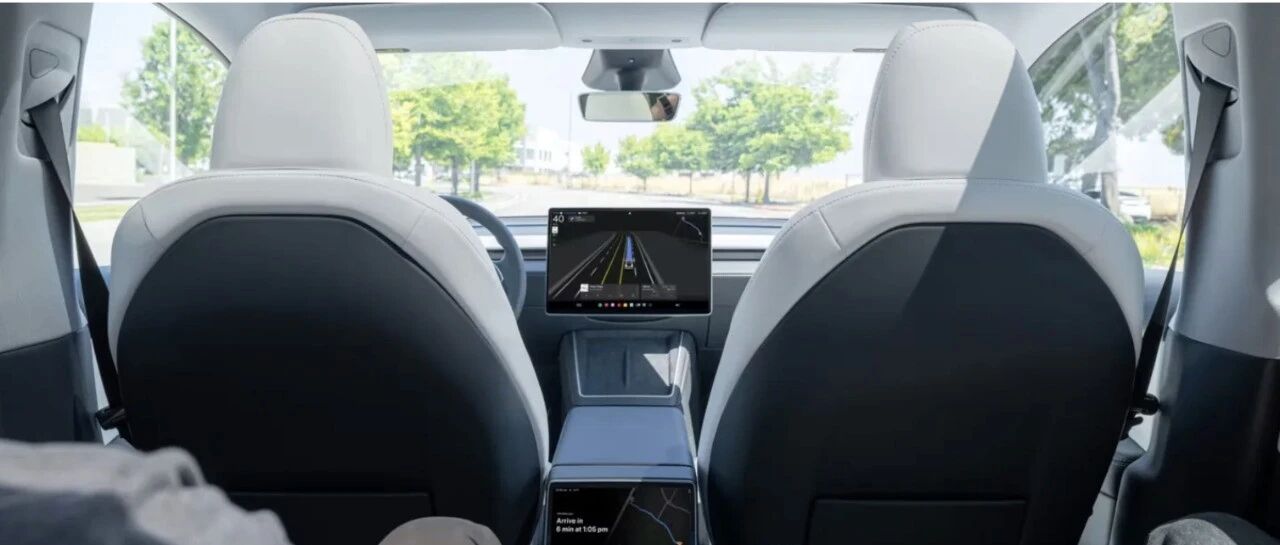
Core Viewpoint - The article discusses the competitive landscape of the autonomous driving industry, focusing on the significant developments from Waymo and Tesla, highlighting their strategies, advancements, and the challenges they face in achieving fully autonomous driving [4][5]. Group 1: Waymo's Developments - Waymo is in talks for a new funding round led by its parent company, Alphabet, aiming to raise between $15 billion to $20 billion, which would increase its valuation to over $100 billion, doubling from $45 billion in October 2024 [8]. - Waymo has expanded its service area significantly, covering approximately 260 square miles in Silicon Valley and becoming the first company to offer paid autonomous driving services on highways without a driver [16][21]. - The company has completed 127 million miles of fully autonomous passenger miles, achieving a 90% reduction in severe accidents and a 92% reduction in pedestrian injuries compared to human drivers [19][21]. Group 2: Tesla's Strategy - Tesla is attempting to leverage its unique vision-based Full Self-Driving (FSD) system and extensive data from mass-produced vehicles to catch up with Waymo [22]. - The company has launched a taxi network in Austin, where vehicles are monitored by a safety operator, marking a significant step towards fully autonomous operations [22][30]. - As of October 2025, over 2 million Tesla vehicles are equipped with the FSD beta, generating vast amounts of road scene data daily [28]. Group 3: Challenges Faced - Both Waymo and Tesla face ongoing challenges related to technology maturity, safety performance, and regulatory compliance [32]. - Waymo has encountered operational difficulties, such as traffic congestion caused by its vehicles in San Francisco, highlighting the complexities of real-world scenarios [33][37]. - Tesla's FSD software has faced scrutiny due to incidents of traffic violations and accidents, with seven collisions reported in Austin as of mid-October 2025, despite the presence of human safety operators [40][41]. Group 4: Regulatory Environment - Tesla is under strict scrutiny from state and federal regulators, which poses risks to its business model, especially as it aims to launch fully autonomous taxi services [44]. - The California DMV has mandated Tesla to change the name of its "Autopilot" system to clarify its nature as an advanced driver assistance system, with a deadline for compliance [44]. Group 5: Future Outlook - The future of autonomous driving may hinge on the safety data generated by Tesla's autonomous taxi operations, suggesting that superior safety metrics could determine market leadership [45].

部分车型获准入许可 L3级自动驾驶大规模落地还有多远?
Xin Hua She· 2025-12-18 15:24
新华社记者唐诗凝 新华社北京12月18日电 题:部分车型获准入许可 L3级自动驾驶大规模落地还有多远? 随着L3大幕拉开,产业充满热情,社会充满期待。距离真正的大规模商业化落地还有多远?当前 还有哪些问题需要厘清?记者18日采访了专家。 两者在定位与目标上存在较大差异。 自动驾驶是汽车产业发展、国际科技竞争的重要方向。近日,我国两款L3级自动驾驶车型获附条 件准入许可,引发广泛讨论。 近些年,很多地方都在积极推动智能网联汽车道路测试与示范应用工作,不少车企也都拿到了L3 级自动驾驶"路测牌照"。这和近日工业和信息化部许可的两款产品准入申请有何区别? 刘法旺说,道路测试与示范应用的主体较为多元,既可以是汽车生产企业,也包括科研院所、科技 企业、零部件公司等相关单位,车辆使用测试牌照,核心目标是"以测促研",推动相关功能与性能的持 续完善,属于研发测试阶段。 问题一:获得产品准入许可是否等于L3"量产在即"? 不能画等号。 "根据工业和信息化部、公安部等四部门共同确定的方案,试点工作包括产品准入试点与上路通行 试点两个阶段。"工业和信息化部装备工业发展中心副主任刘法旺告诉记者,车辆获得准入许可,表明 其在自愿申报 ...
看懂这些关键领域,在2026年捡回“上行”信心(限免阅读)
3 6 Ke· 2025-12-18 15:17
Group 1 - The core theme of the articles revolves around the impact of AI on the workplace, highlighting both the potential benefits and challenges faced by employees and companies in adapting to AI technologies [2][3]. - The narrative discusses the cautious approach of capital investment in AI applications, emphasizing that many startups have failed due to pursuing "pseudo-demand" [2]. - The emergence of AI tools has led to a significant shift in job dynamics, with the introduction of "super individuals" potentially displacing other workers in the same demand unit [2]. Group 2 - The articles reflect on the harsh realities faced by employees in China, where few companies invest in employer branding, focusing instead on product strength and performance [3]. - There is a trend of companies expanding job descriptions to seek "composite talents," raising questions about the necessity of teamwork in the workplace [3]. - The narrative also touches on the struggles of an entrepreneurial team from 36Kr, noting the challenges faced in the AI startup landscape and the impact of rising price sensitivity among consumers [3]. Group 3 - The articles mention various events organized by the company, including AI talent salons and large recruitment fairs, aimed at fostering community and industry engagement [4]. - The company has produced influential deep reports, despite facing pushback from some companies regarding content [4]. - The focus remains on maintaining high content standards and neutrality while exploring monetization through paid content [4]. Group 4 - The "Top 50 Employers for Workplace Benefits" list includes companies in advanced manufacturing, such as Momenta, SiLing Robotics, and Gree Electric, showcasing leaders in the industry [6][10]. - The articles highlight the growth and challenges faced by these companies, including the need for skilled talent in areas like AI and robotics [8][11]. - The narrative emphasizes the importance of innovation and adaptation in the rapidly evolving job market, particularly in sectors influenced by AI and automation [13].

工信部公布首批L3车型准入许可:吹响L3的号角,迎来L4的曙光
GUOTAI HAITONG SECURITIES· 2025-12-18 14:57
Investment Rating - The report indicates a positive outlook for the L3 autonomous driving industry, suggesting a transition towards commercialization and increased market penetration [3][16]. Core Insights - The issuance of conditional permits for the first L3 autonomous vehicles by the Ministry of Industry and Information Technology marks a significant step towards commercial application, with expectations for rapid growth in the smart vehicle penetration rate [3][16]. - The year 2026 is projected to be a pivotal year for autonomous driving, with L4 scenarios beginning to commercialize, indicating a shift in consumer vehicle usage towards robotaxi applications [20][21]. Summary by Sections 1. Approval of L3 Autonomous Vehicle Models - On December 15, the Ministry of Industry and Information Technology granted conditional approval for the first two L3 autonomous vehicle models, specifically Changan and Arcfox brands, with restrictions on driving routes, speeds, and user entities [2][10][15]. 2. L3 Implementation and Industry Benefits - The approval signifies a transition from testing to commercial application, with expectations for increased demand in smart vehicle technologies, including sensors and high-performance driving chips [3][16][19]. - The penetration rate of advanced driver-assistance systems (ADAS) is expected to rise significantly, with projections indicating an increase from approximately 10% to 28.21% by August 2025 [17][19]. 3. Outlook for L4 and Market Expansion - The report anticipates that L4 autonomous driving will begin to see commercial applications in various scenarios by 2026, with significant market opportunities in urban logistics and mining sectors [20][21][26]. - The logistics sector is expected to see a market size of 65.75 billion yuan by 2030, driven by the adoption of logistics unmanned vehicles [21][22]. - The mining sector is projected to exceed 30 billion yuan by 2030, with a compound annual growth rate of 57.4% from 2024 to 2030, highlighting the commercial viability of autonomous solutions in structured environments [26][27].


广州经济“U型”回升,谁在支撑?
2 1 Shi Ji Jing Ji Bao Dao· 2025-12-18 14:44
Group 1: Economic Overview - Guangzhou's GDP growth trajectory has formed a clear "U-shaped" curve, with a forecasted growth rate of 2.1% for 2024, lower than the national and provincial averages [1] - In 2025, GDP growth is expected to rebound significantly, starting from 3.0% in Q1 and reaching 4.1% in the first three quarters, aligning with Guangdong province's growth rate [1] Group 2: Emerging Industries - The "3+5" strategic emerging industries in Guangzhou achieved an added value of 751.73 billion yuan, with a year-on-year growth of 4.6%, contributing 35.2% to GDP growth [2] - Key sectors such as new energy vehicles, OLED production, and low-altitude economy are showing strong growth, with significant increases in production and new business formations [2][3] Group 3: Automotive Industry - The automotive industry remains a pillar of Guangzhou's economy, with a decrease in added value of 2.6% in Q3, but a notable improvement from earlier declines [3] - Guangzhou Automobile Group reported a Q3 sales volume of 428,400 vehicles, a quarter-on-quarter increase of 11.49%, with significant growth in overseas sales [3][4] Group 4: Traditional Manufacturing Upgrades - Traditional manufacturing sectors, including home appliances and display manufacturing, are experiencing double-digit growth, with integrated circuit manufacturing value increasing by 37.4% [5] - The automotive sector's strategic adjustments focus on electrification, intelligence, and internationalization, contributing to its recovery [4][5] Group 5: New Economic Drivers - New economic drivers are emerging, with significant projects like the G8.6 OLED production line and flying car production facilities being established [7][8] - The low-altitude economy is rapidly developing, with over 4,200 companies in the sector and substantial growth in aerospace manufacturing and drone production [9] Group 6: Policy Support and Ecosystem - Guangzhou's supportive policies in the autonomous driving sector have attracted companies, facilitating advancements in technology and commercial applications [10] - The presence of unicorns and specialized enterprises in emerging industries is crucial for further economic growth, with a focus on strengthening supply chains [11]
2025年白犀牛累计融资额破1亿美元
Bei Jing Shang Bao· 2025-12-18 14:03
据了解,白犀牛已与顺丰、中国邮政、京东等多家物流巨头建立深度合作,并启动规模明确的大批量交 付部署。截至目前,白犀牛活跃运营车辆已经突破2000台,常态化运营覆盖全球超170座城市。 北京商报讯(记者何倩)12月18日,北京商报记者获悉,L4级自动驾驶企业白犀牛宣布完成新一轮融资, 本次由九坤创投、启赋资本、元禾厚望、正景资本等共同注资,庚辛资本担任长期财务顾问。至此,白 犀牛在2025年内已完成3轮融资,全年累计融资额突破1亿美元。 ...
【快讯】每日快讯(2025年12月18日)
乘联分会· 2025-12-18 11:33
Domestic News - The Ministry of Industry and Information Technology (MIIT) is soliciting public opinions on seven mandatory national standards, including safety technical requirements for car door handles and an English version of the mandatory national standard for electric vehicle safety [2] - Chongqing is promoting the development of "AI+" smart connected new energy vehicles, focusing on AI applications in areas such as assisted driving and intelligent interaction [3] - Sichuan is increasing support for the hydrogen energy industry, with significant progress in the hydrogen energy application and infrastructure development over the past year and a half [4] - Guangzhou has achieved full-scale open demonstration operations for autonomous driving, with 19 operational routes connecting major transport hubs to the city center [5] - CATL and Lantu have signed a ten-year deepening cooperation agreement, focusing on battery technology and supply chain collaboration [6] - BYD has officially announced the production of its 15 millionth new energy vehicle, achieving this milestone in just 13 months [7] - Li Auto has officially entered the markets of Egypt, Kazakhstan, and Azerbaijan, expanding its global presence with three main models [8] - Envision AESC has launched its battery super factory in Sunderland, UK, with a planned capacity of 15.8 GWh, capable of supplying batteries for over 200,000 electric vehicles annually [9] International News - The EU plans to expand the carbon border tax to include automotive parts, aiming to close loopholes that allow foreign manufacturers to evade climate-related costs [10] - Thailand will impose VAT and customs duties on all imported goods starting January 1, 2026, affecting automotive parts and aiming to protect local businesses [11] - Japan's NTT Group plans to deploy over 1,000 autonomous vehicles nationwide by 2030 to address the shortage of drivers in an aging society [12] - Kia intends to restart its sales operations in Malaysia through a new wholly-owned subsidiary in early 2026 [13] Commercial Vehicles - Dongfeng Liuzhou Automobile has joined Huawei's supercharging alliance to promote all-electric logistics, with a reported 34% year-on-year increase in commercial vehicle sales [14] - GAC Aion has secured 300 million yuan in financing to enhance its capabilities in the new energy commercial vehicle sector [15] - Cangzhou has issued a plan to improve air quality, emphasizing the transition to new energy vehicles in various sectors by 2027 [16] - Bosch is betting on hydrogen-powered heavy trucks, predicting a market explosion around 2027 as hydrogen fuel cell technology matures [17][18]